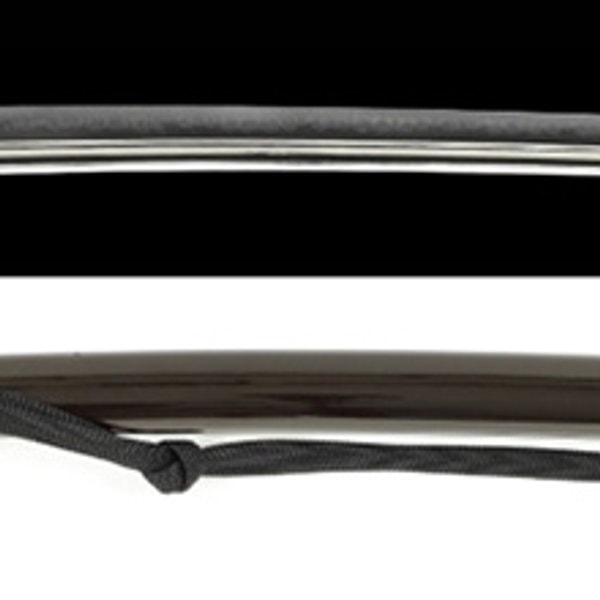
This katana was made by Fujiwara Fusanobu, who resided in Kakegawa, Enshu (Totomi Province). It was crafted in Edo, Bushu (Musashi Province) in March of the 4th year of the Keio era (late Edo period). Fusanobu is said to be a student or son of Hirofusa, who was part of the Mishina school, and he specialized in Bizen-den style gonome-choji blades, using the name Yoshimasa.
 NihontoWatchBETA
mei · Keio (1865-1868)
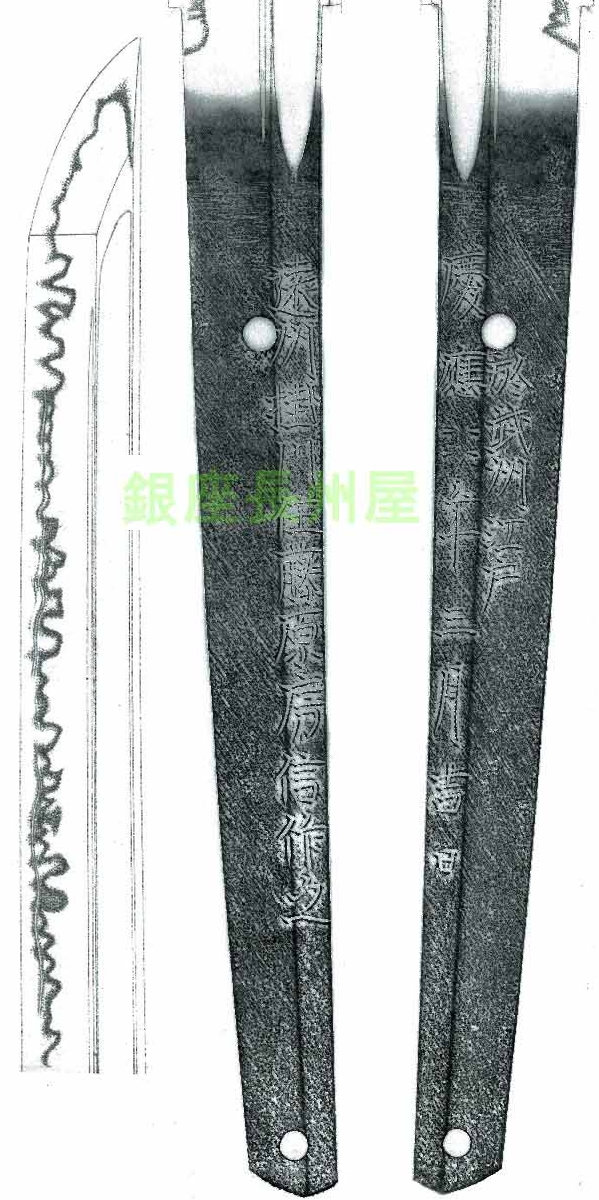
Totomi · around 1865-1868
Tōken Taikan top 91%
1 piece on the market now
We could not find an authenticity certificate on the seller’s listing. Japanese swords and fittings are normally papered by the NBTHK (or the NTHK). Without one, the attribution is the seller’s own assessment and has not been independently verified — treat it with caution and ask the dealer about certification before buying.
If, due to our fault, the item differs significantly from its proper condition, the item may be returned. Cooling-off is within one week of the item's arrival.
This katana was made by Fujiwara Fusanobu, who resided in Kakegawa, Enshu (Totomi Province). It was crafted in Edo, Bushu (Musashi Province) in March of the 4th year of the Keio era (late Edo period). Fusanobu is said to be a student or son of Hirofusa, who was part of the Mishina school, and he specialized in Bizen-den style gonome-choji blades, using the name Yoshimasa.
NihontoWatchBETAmei · Keio (1865-1868)
Totomi · around 1865-1868
Tōken Taikan top 91%
1 piece on the market now
We could not find an authenticity certificate on the seller’s listing. Japanese swords and fittings are normally papered by the NBTHK (or the NTHK). Without one, the attribution is the seller’s own assessment and has not been independently verified — treat it with caution and ask the dealer about certification before buying.
If, due to our fault, the item differs significantly from its proper condition, the item may be returned. Cooling-off is within one week of the item's arrival.