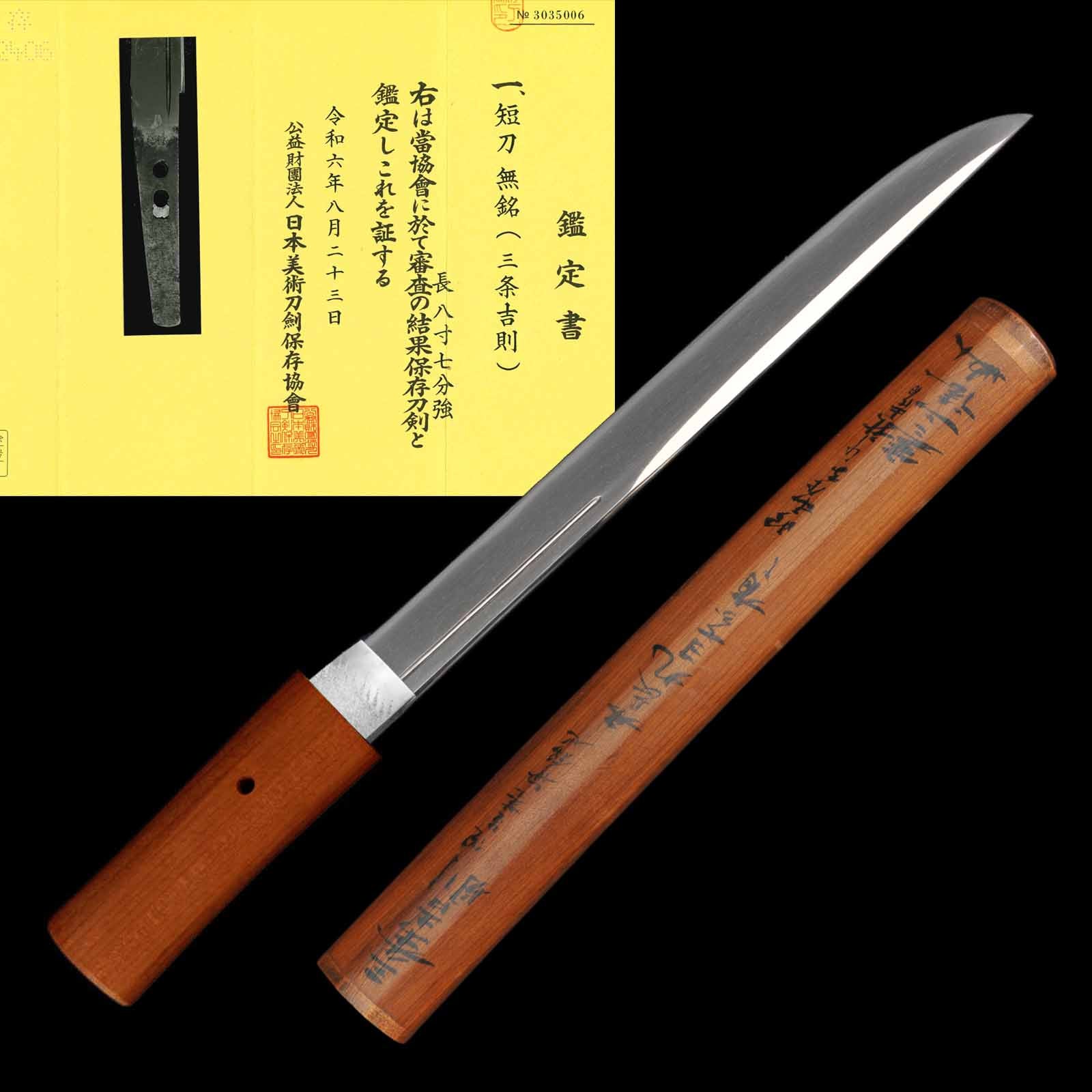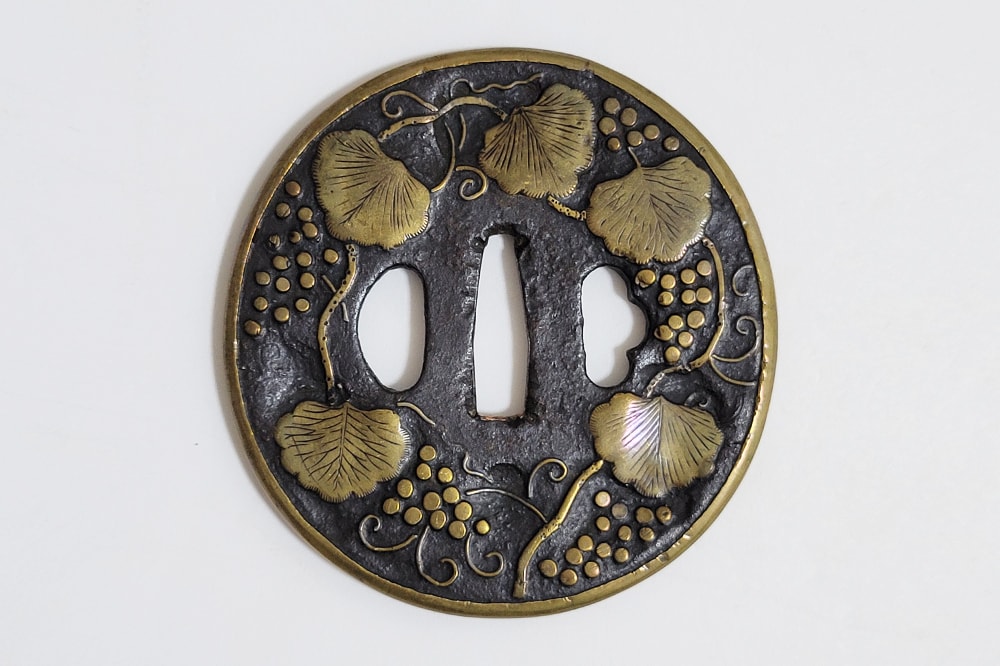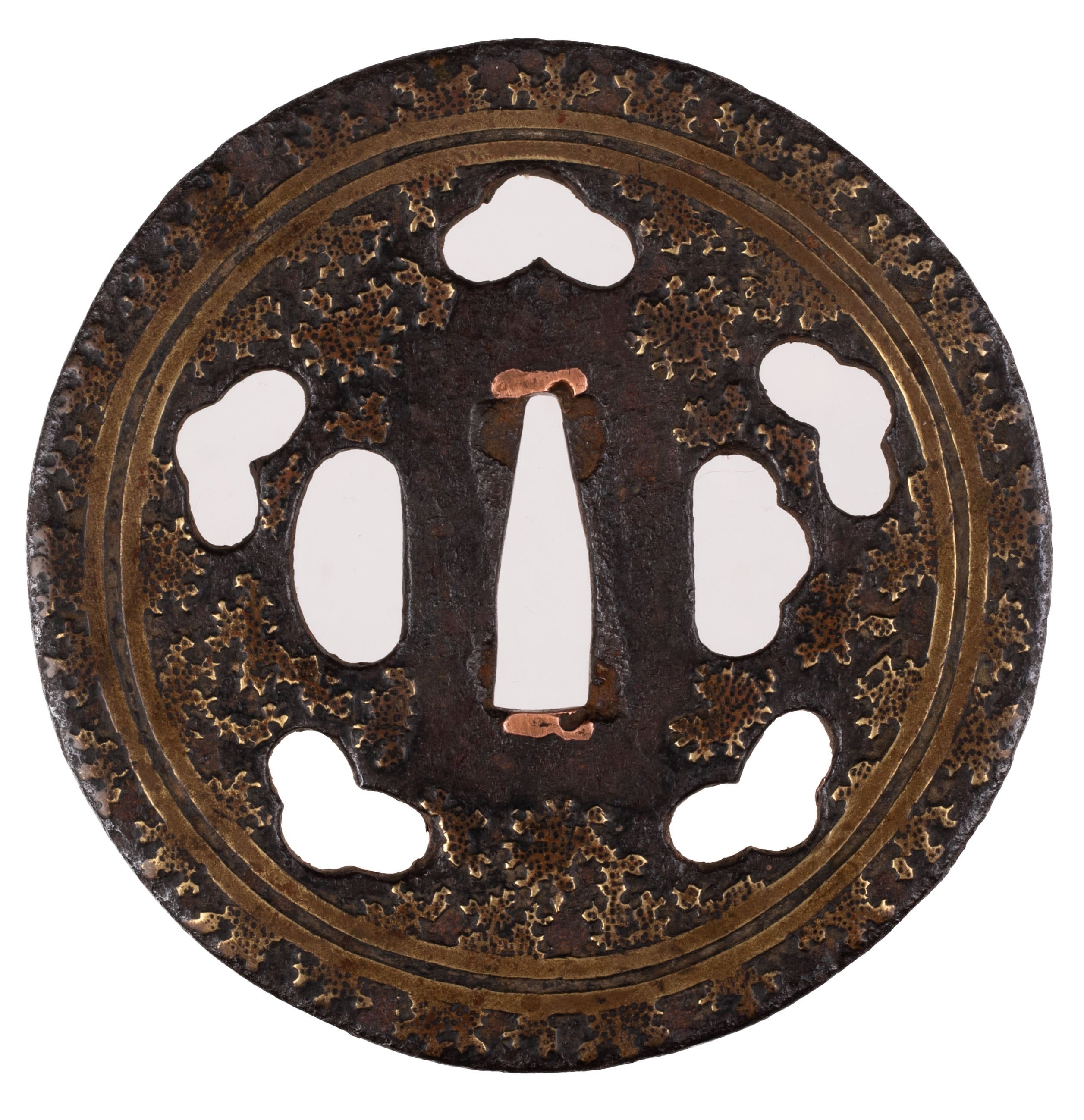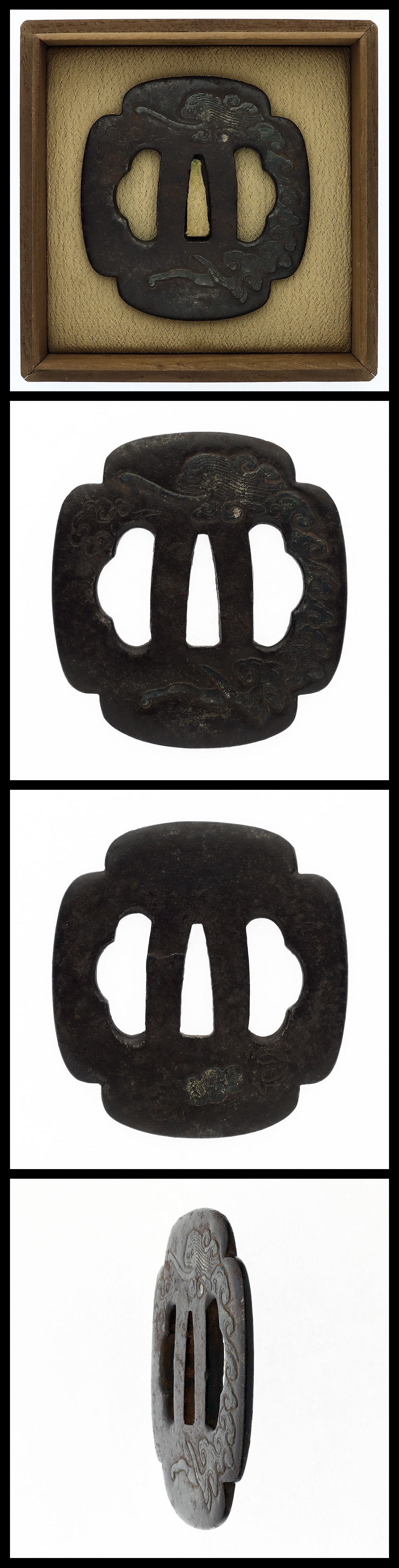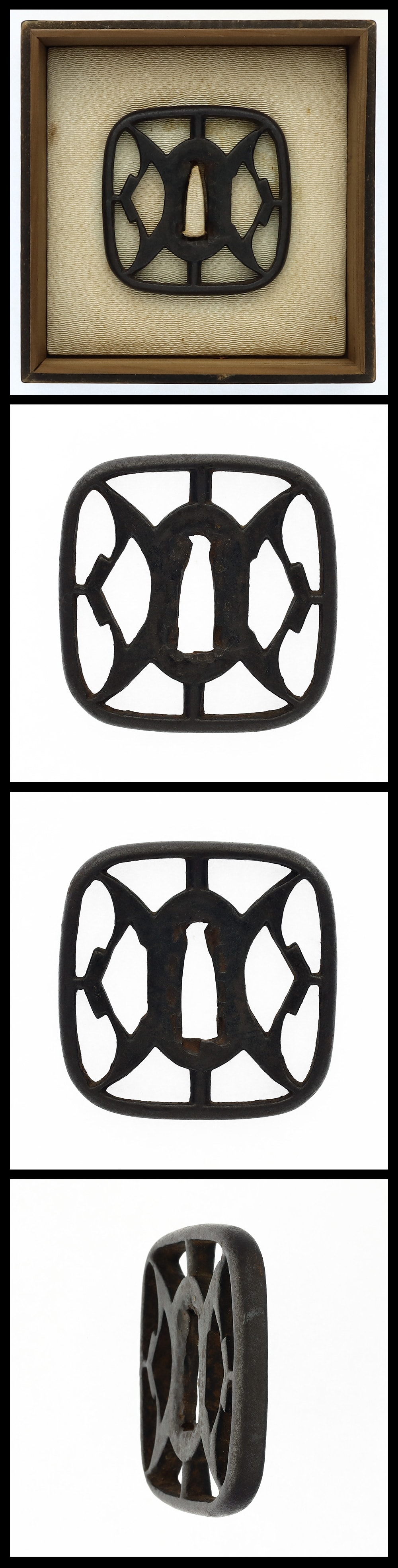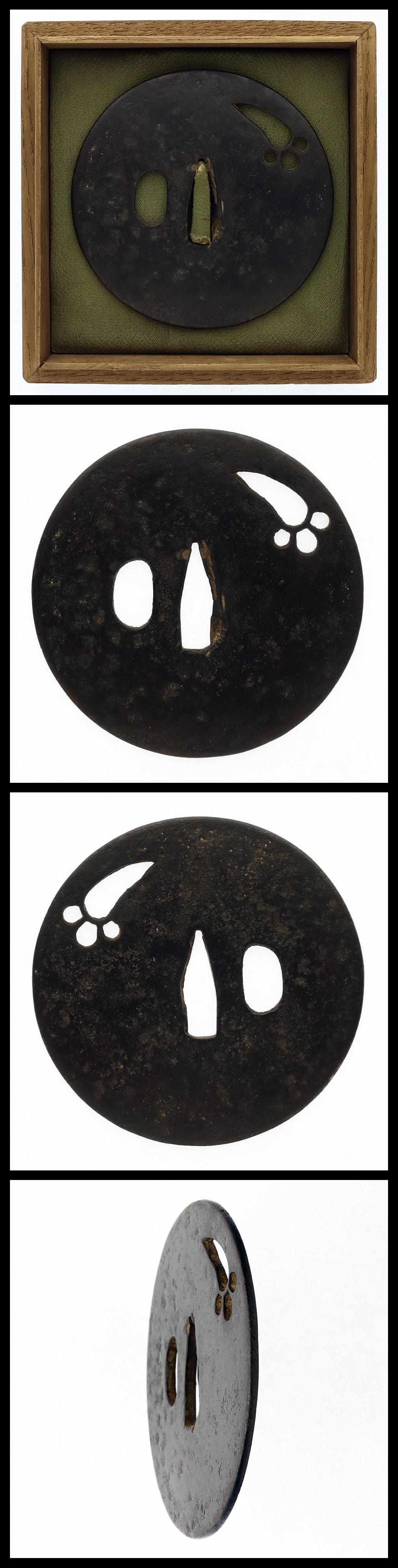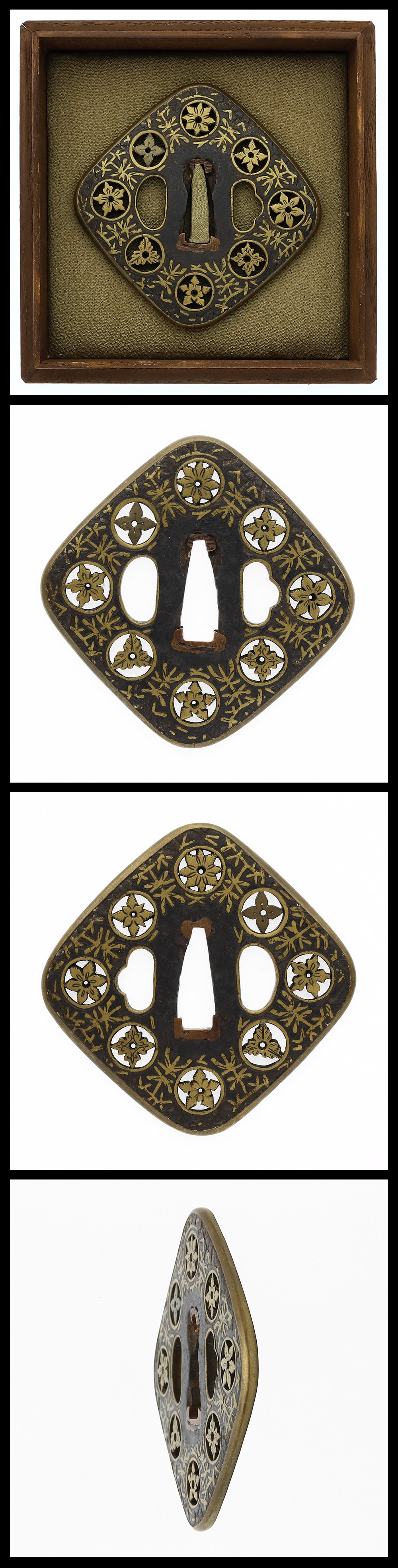
Tsuba: Mumei(unsigned)(Heianjo)
¥75,000
Tracked across 76 dealers worldwide · price history · sold archive
Edo
About the school
Heianjo School平安城派
The Heianjō school (平安城) of swordsmiths represents the principal lineage of Kyōto sword production during the Muromachi period. "Heianjō" is the classical name for Kyōto (Heian-kyō), and the school's smiths — resident in the Sanjō district of the capital — signed variously with the 平安城 (Heianjō) and 三条 (Sanjō) prefixes, a usage that has often caused them to be confused with the far earlier Sanjō school of Munechika. They are an entirely distinct, late group: its two representative masters, Heianjō Nagayoshi (平安城長吉, also read Chōkichi) and Sanjō Yoshinori (三条吉則, of the Fuse 布施 family), are counted as the leading makers of Muromachi-period *Kyō-mono* (Kyoto-made blades), carrying forward the capital's swordmaking after the Nanbokuchō-period Nobukuni and Hasebe lineages. Both names continued through several generations from the late Nanbokuchō era into the sixteenth century, and the smiths are known to have travelled to forge (*desaku*) in provinces such as Izumi, Mikawa, and Echizen during the late Muromachi period. The Heianjō style is dominated by a flamboyant *hitatsura* (full-temper) idiom adopted from Sōshū tradition: a foundation of large *gunome-midare* mixed with *chōji*, *togariba*, and *yahazu-ba*, with abundant *tobiyaki* and *muneyaki* spreading temper across the entire blade surface, *nie* adhering strongly, and *sunagashi* and *kinsuji* coursing through a bright, clear *nioiguchi*. The finest examples are so accomplished that they are difficult to distinguish from late Sōshū (*Sue-Sōshū*) work. A quieter *suguha*- and *ko-notare*-based mode close to the Nobukuni tradition is also seen. High-quality *horimono* — *kurikara*, *bonji*, *suken*, and *gomabashi* — frequently accompany the blades. The school is not to be confused with the unrelated Heianjō-*zōgan* (平安城象嵌) inlay tradition of *tōsōgu* makers.