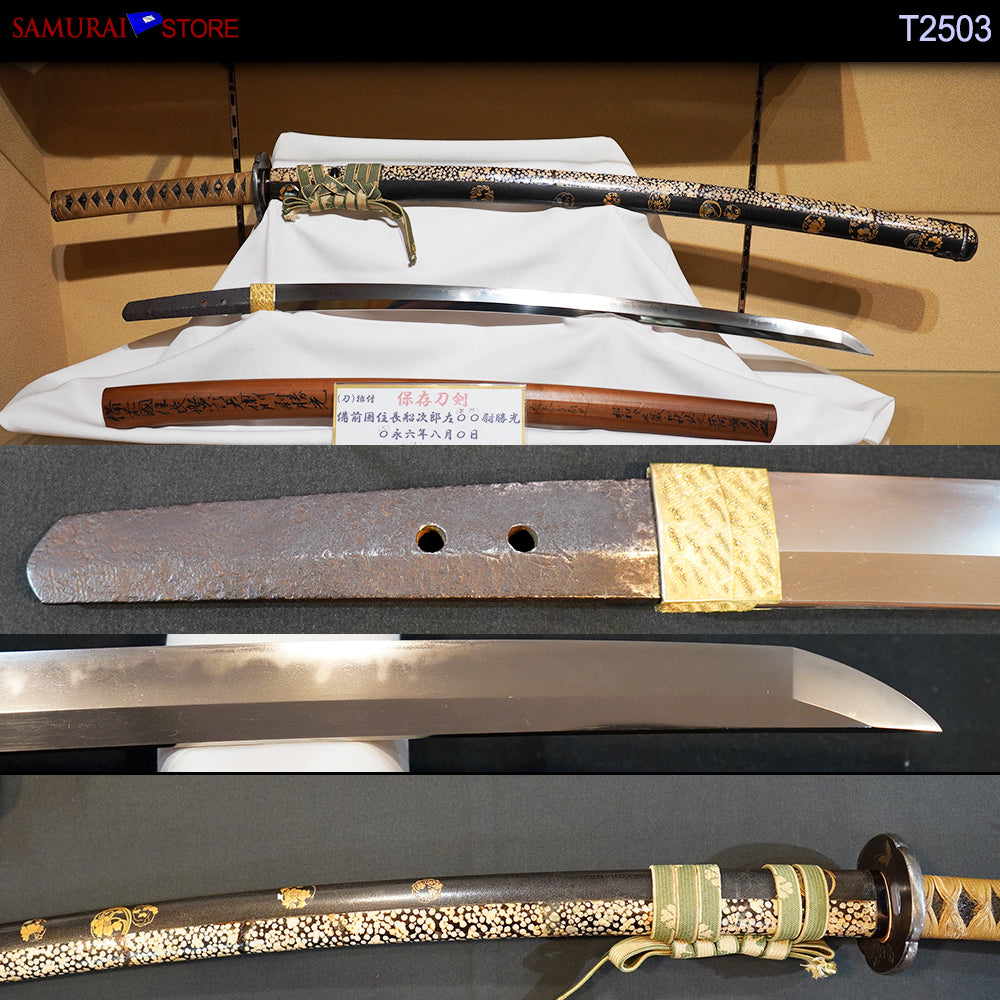
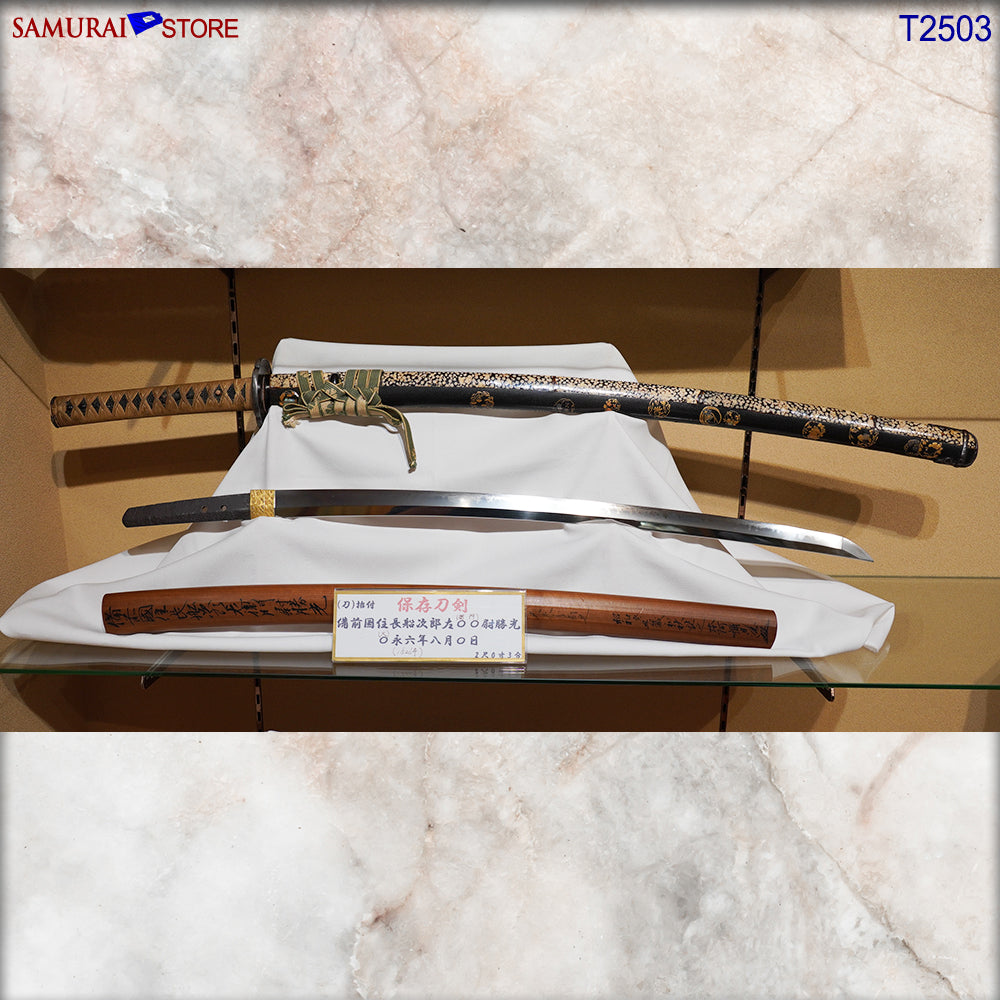
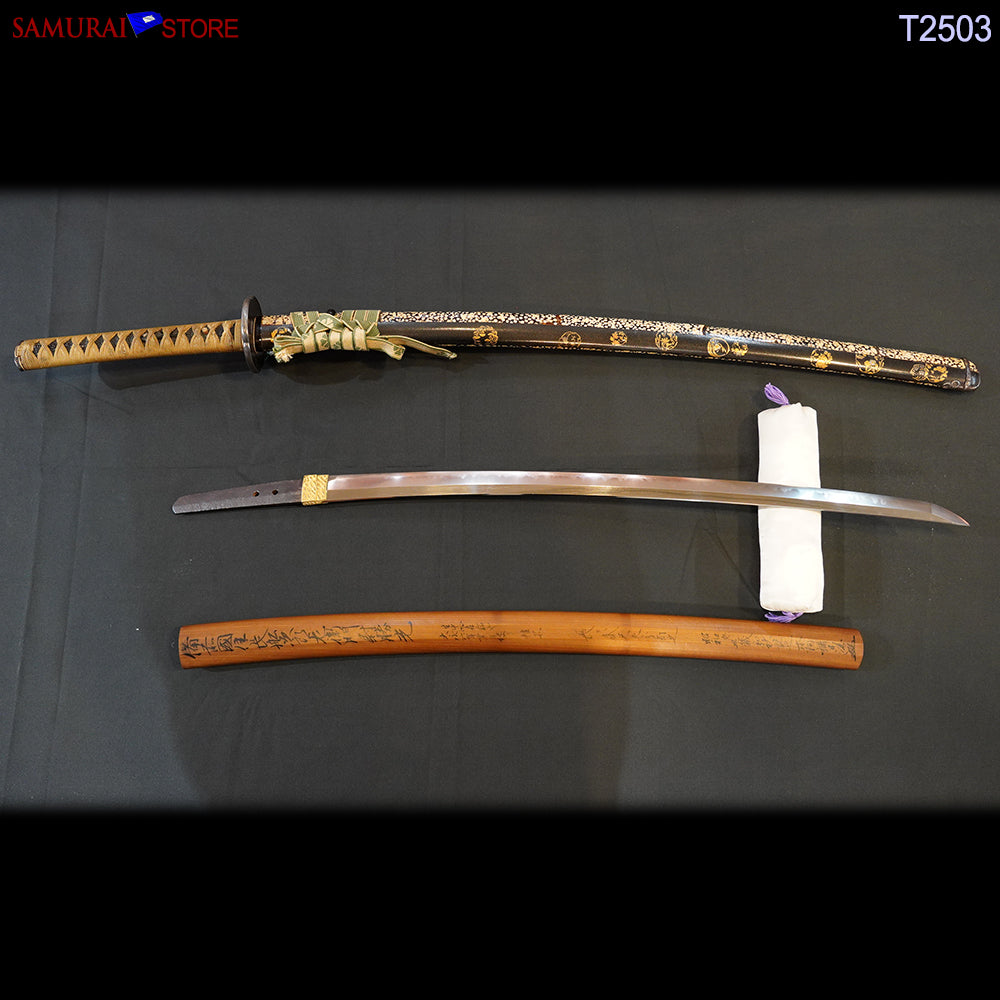
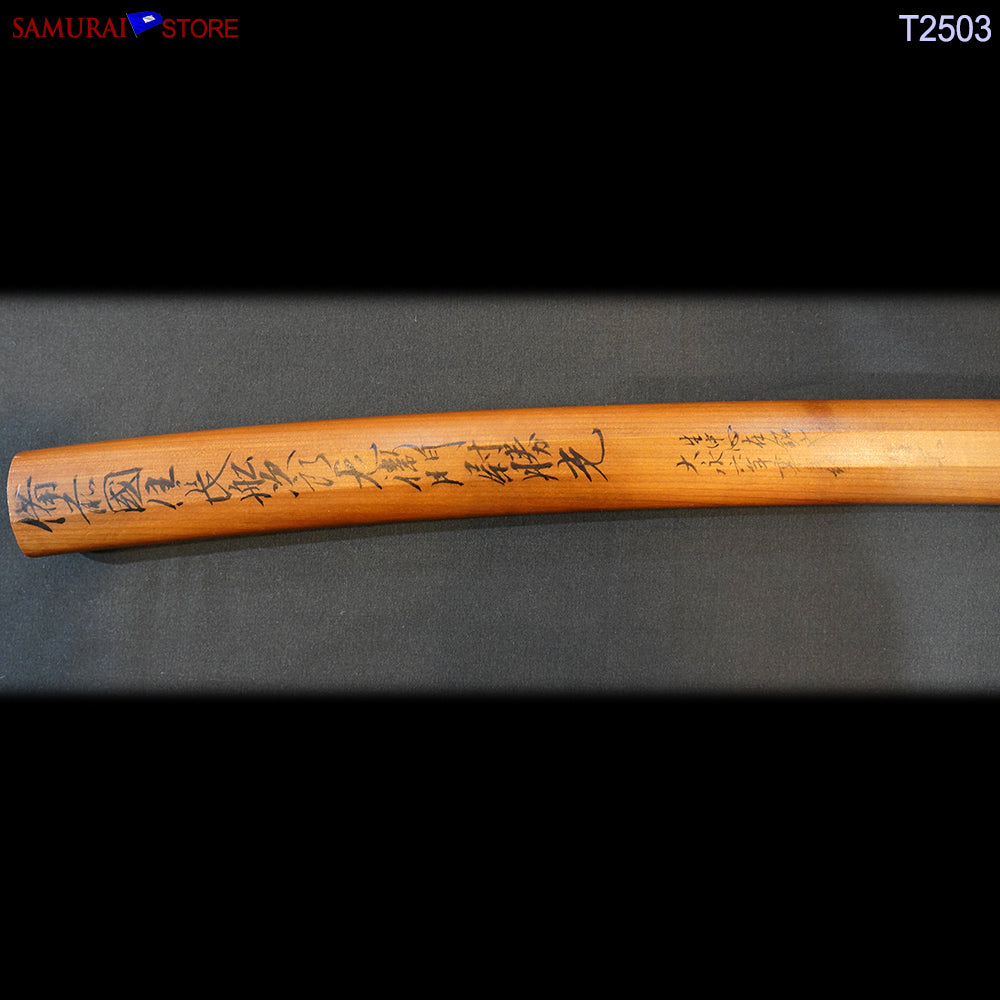
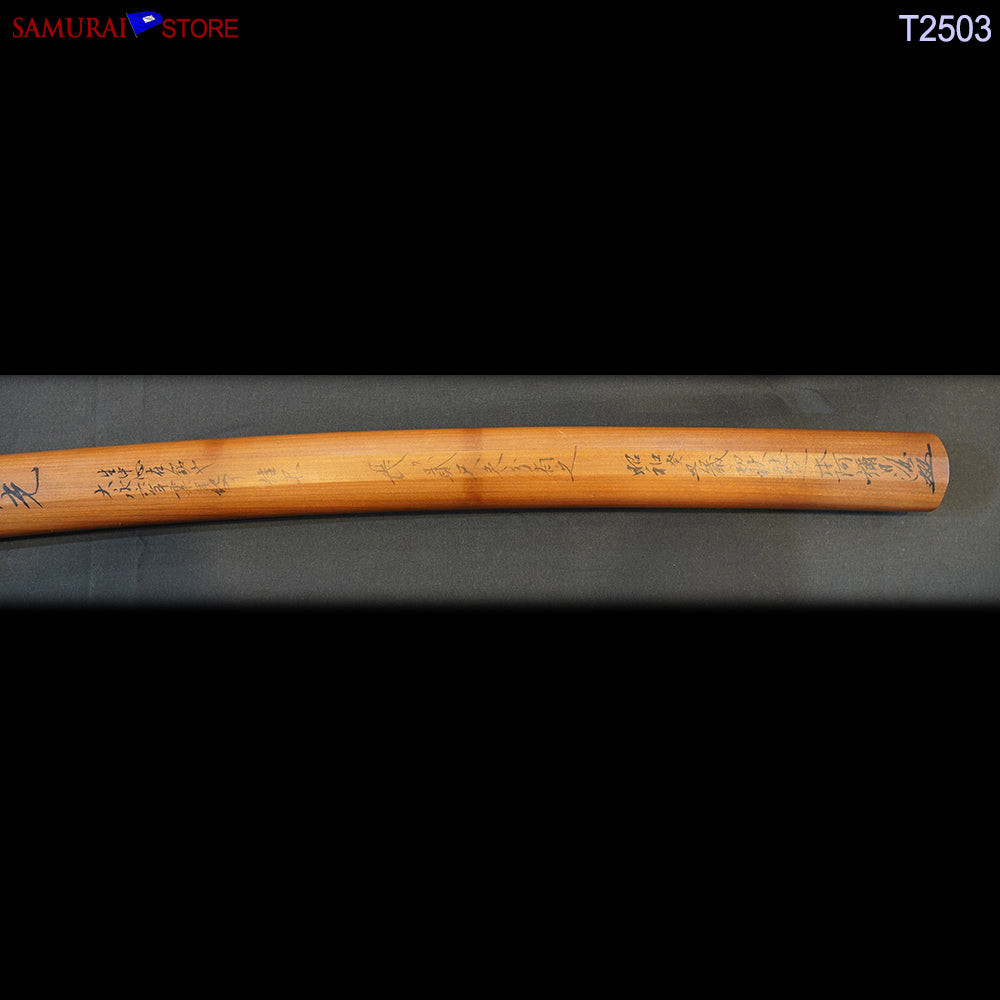
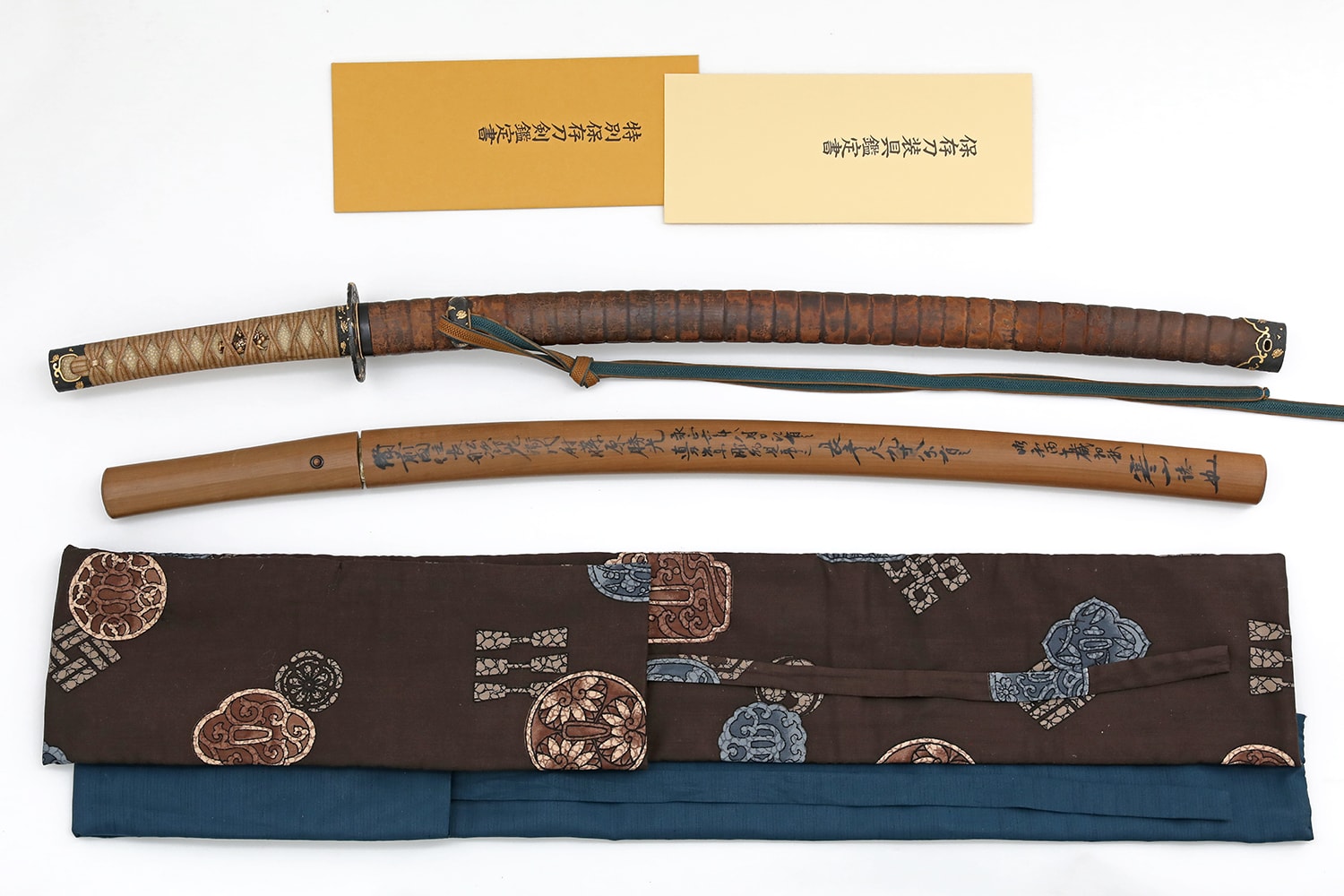
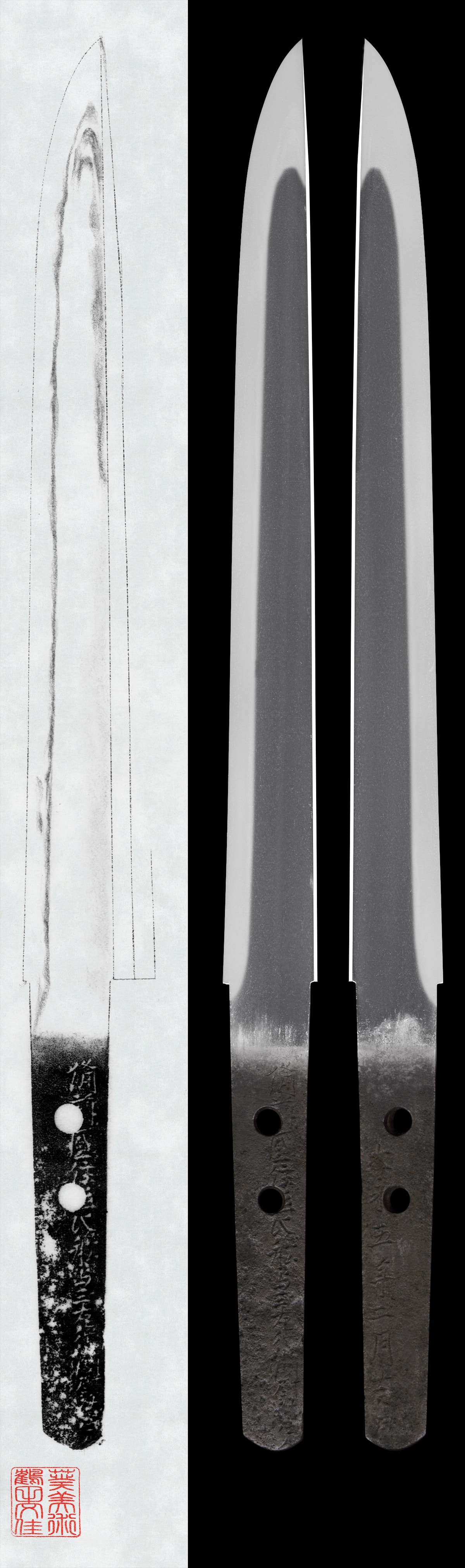
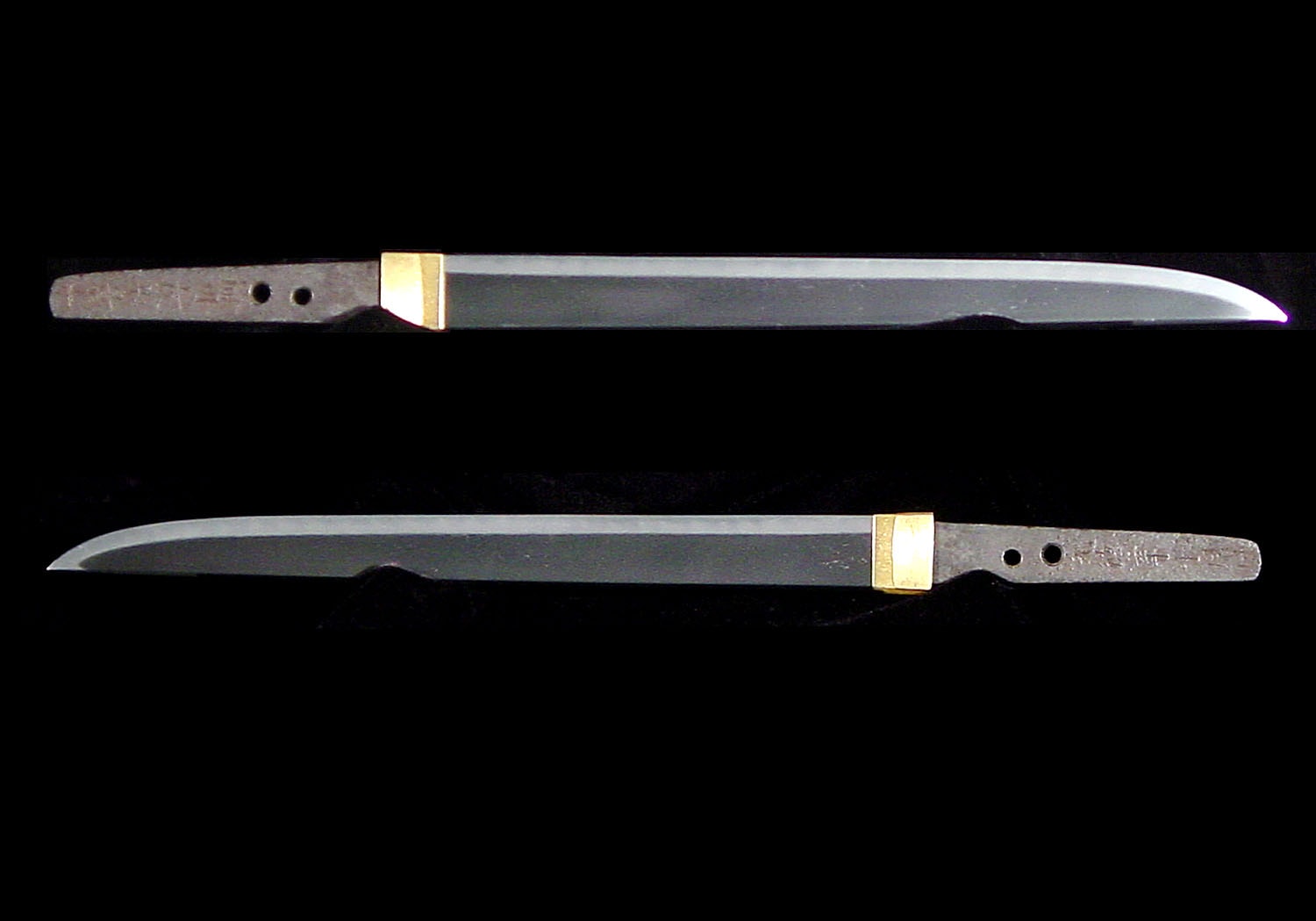
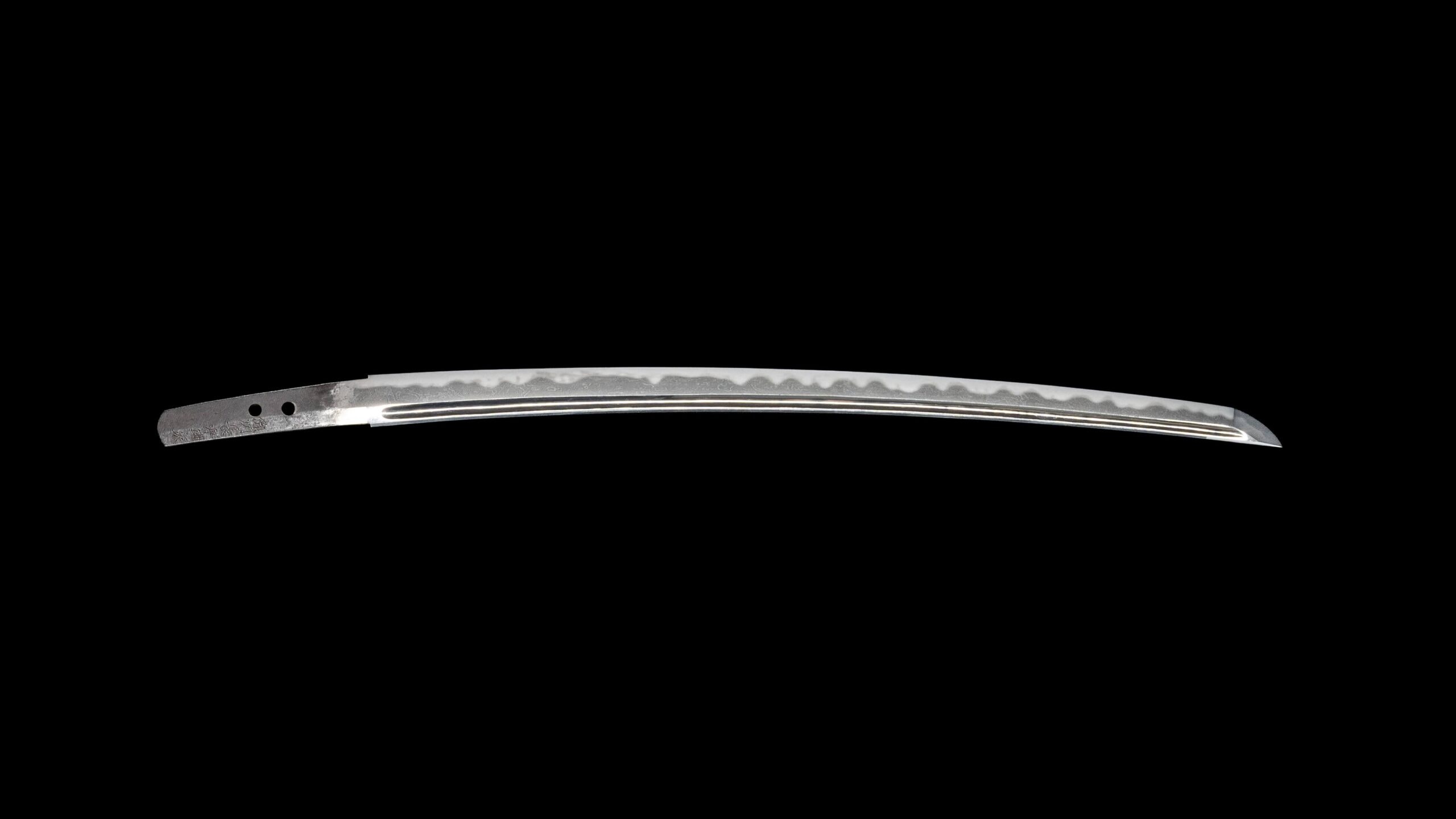
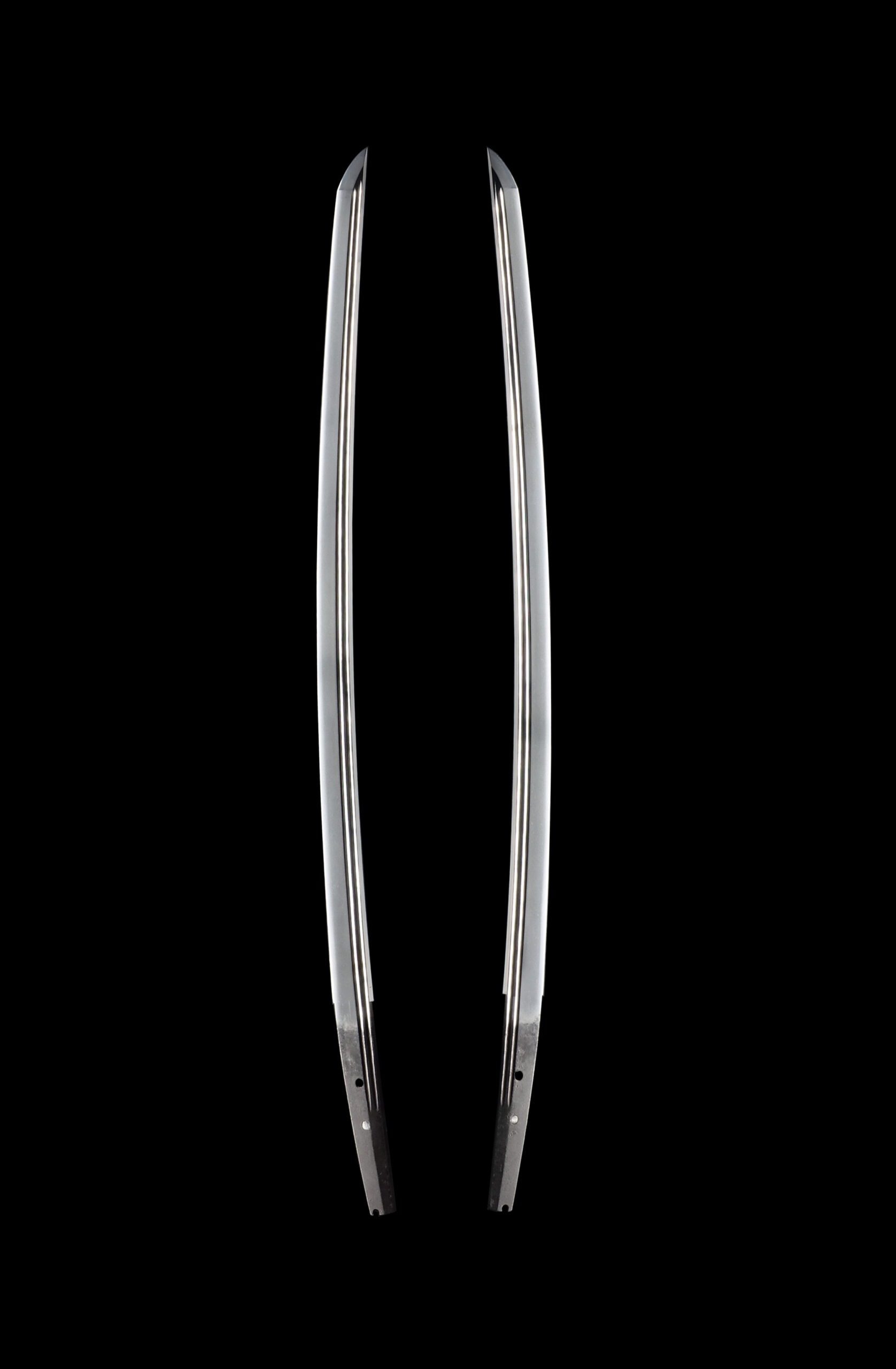
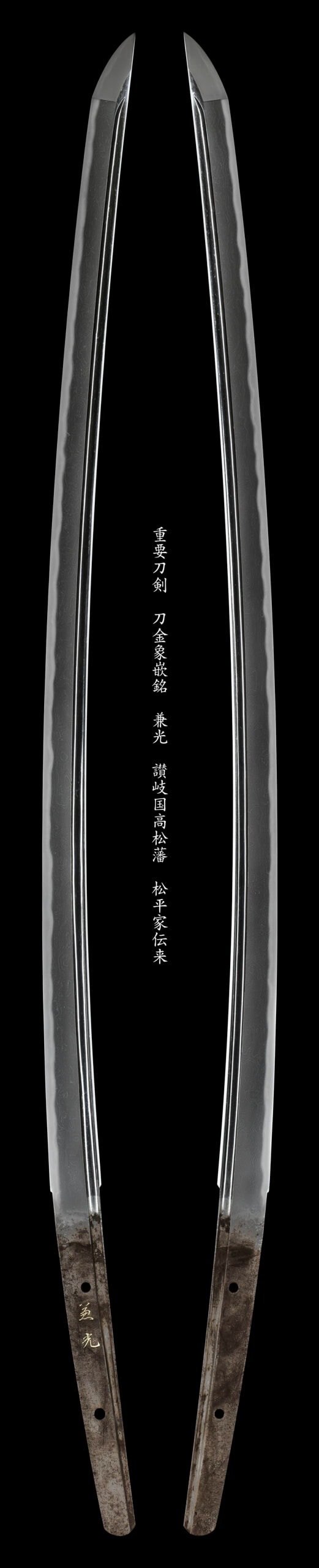
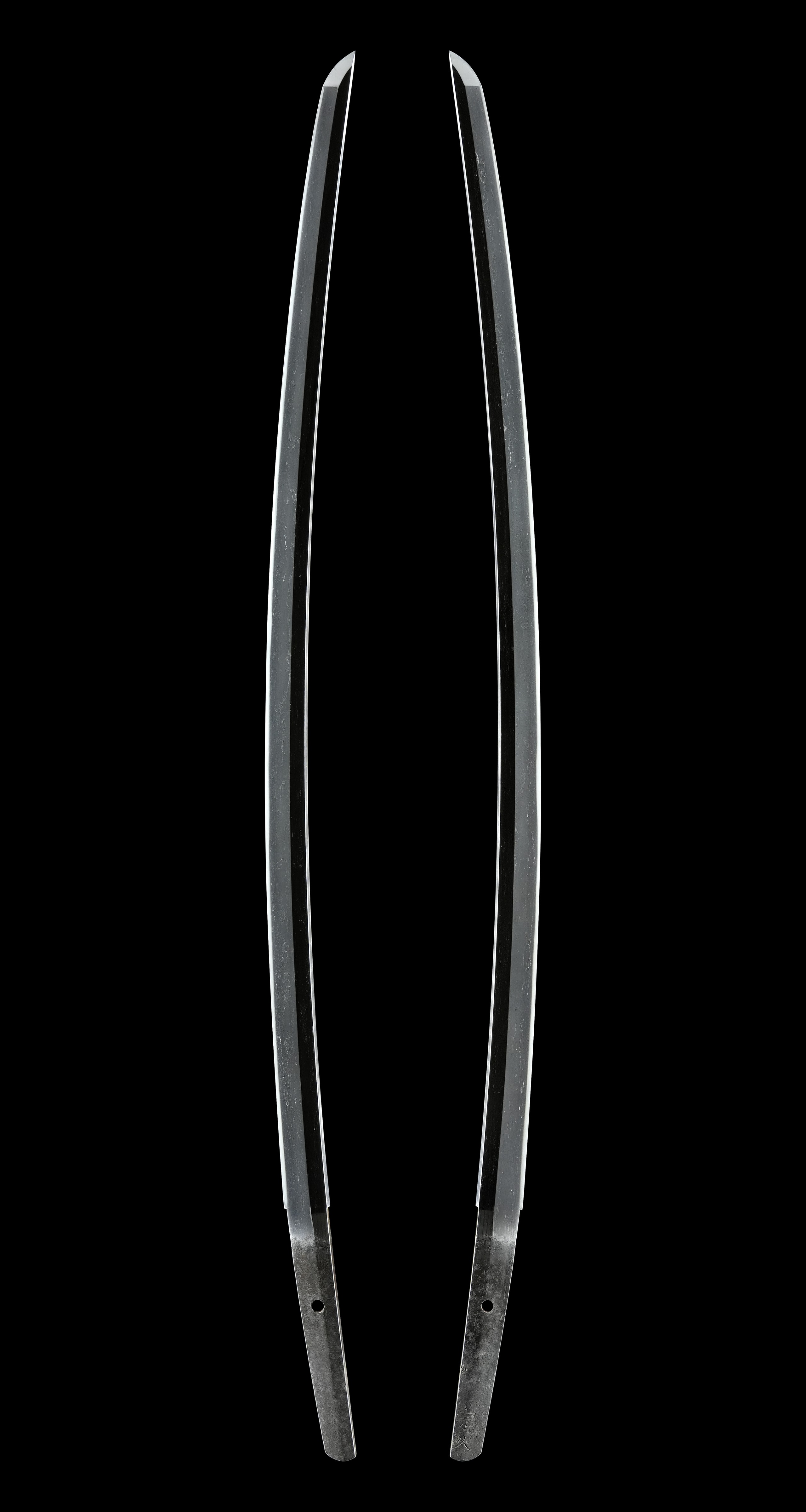
On a katana of Eisho 9 (1512), beneath the long signature of Jirozaemon-no-jo Fujiwara Katsumitsu, the smith added a phrase of his own: "as far as my heart can reach, nothing could surpass this"[[c:1]], declaring the blade a work that fully satisfied him. The maker of that boast is the most accomplished bearer of a crowded name. The published sources record that several generations and more than a dozen smiths used the name Katsumitsu among the late-Muromachi Osafune forges collectively called Sue-Bizen, and that within that crowd the branch titled Jirozaemon-no-jo, the son of Ukyo-no-suke Katsumitsu, is especially accomplished, counted with Yosozaemon-no-jo Sukesada and Gorozaemon-no-jo Kiyomitsu as a representative smith of the late Bizen tradition.
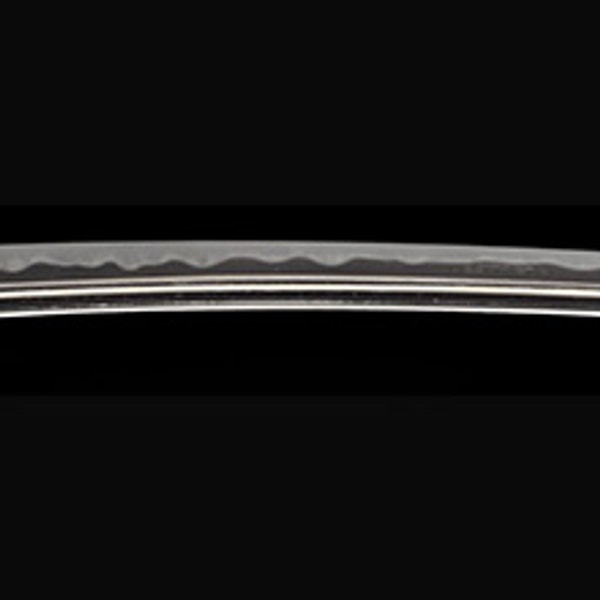
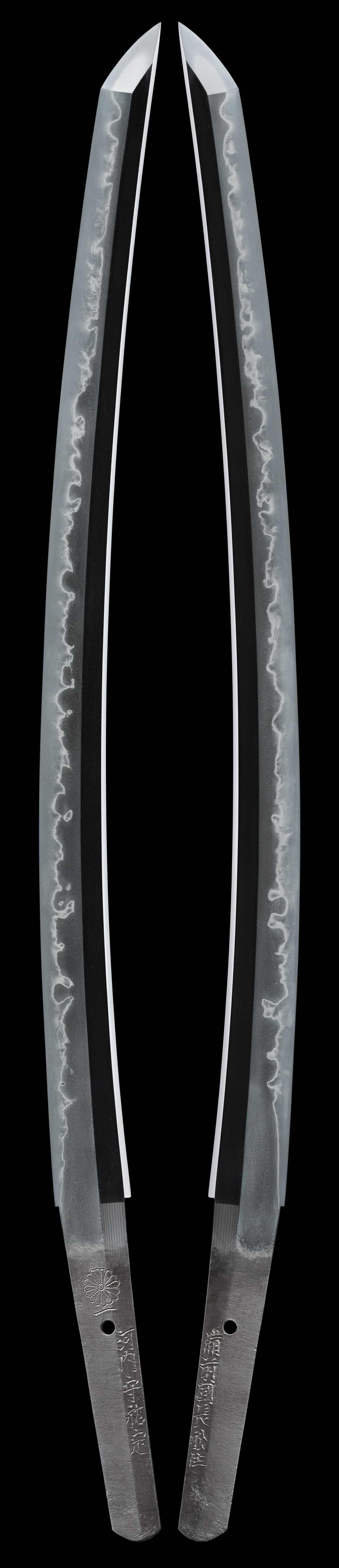
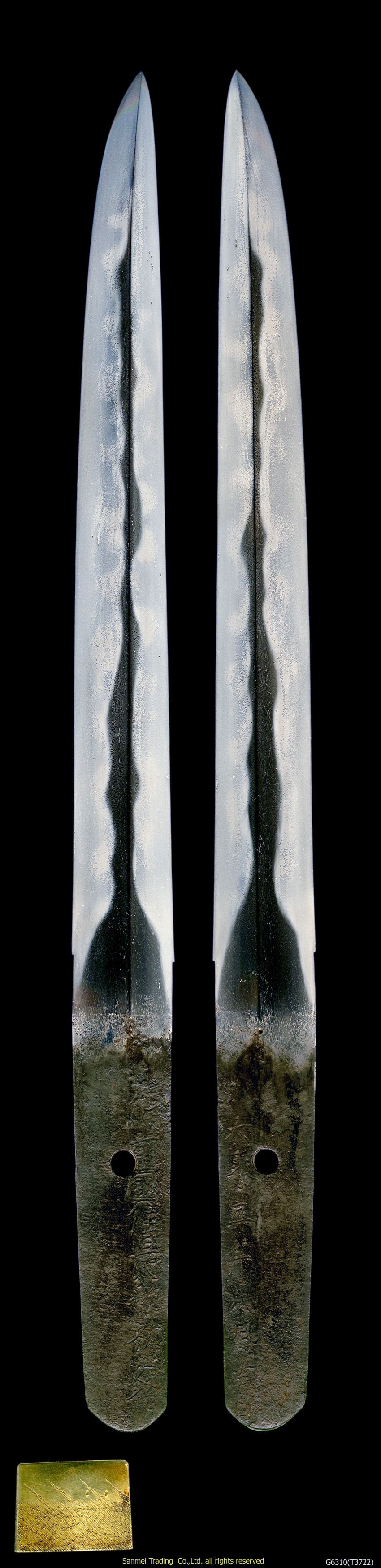
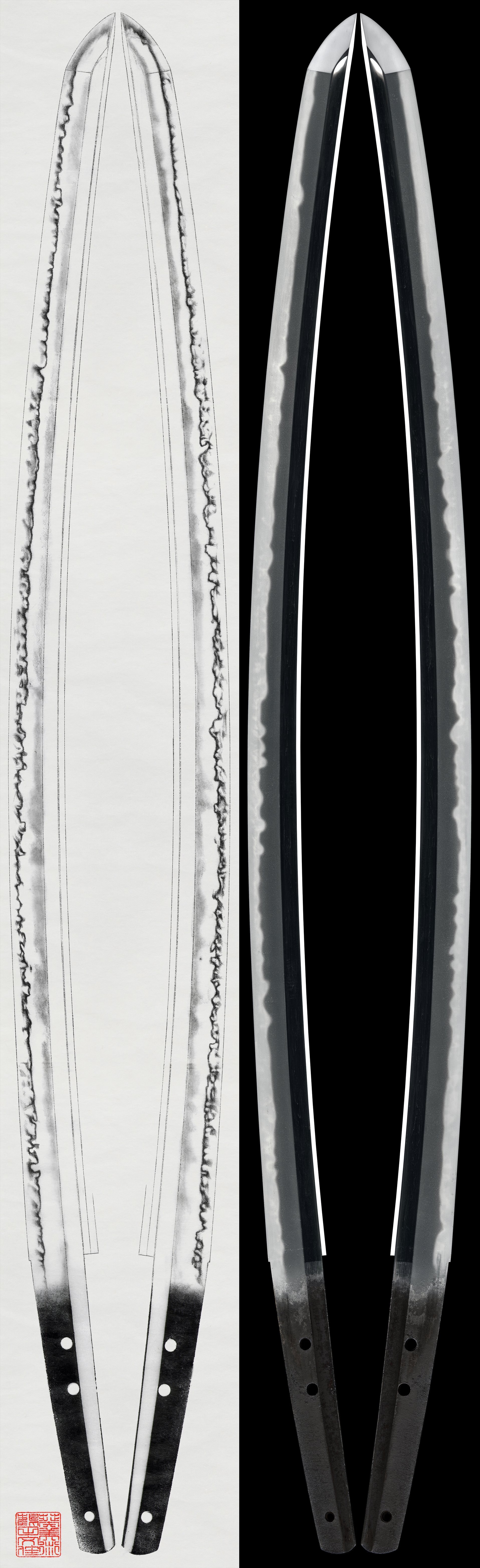
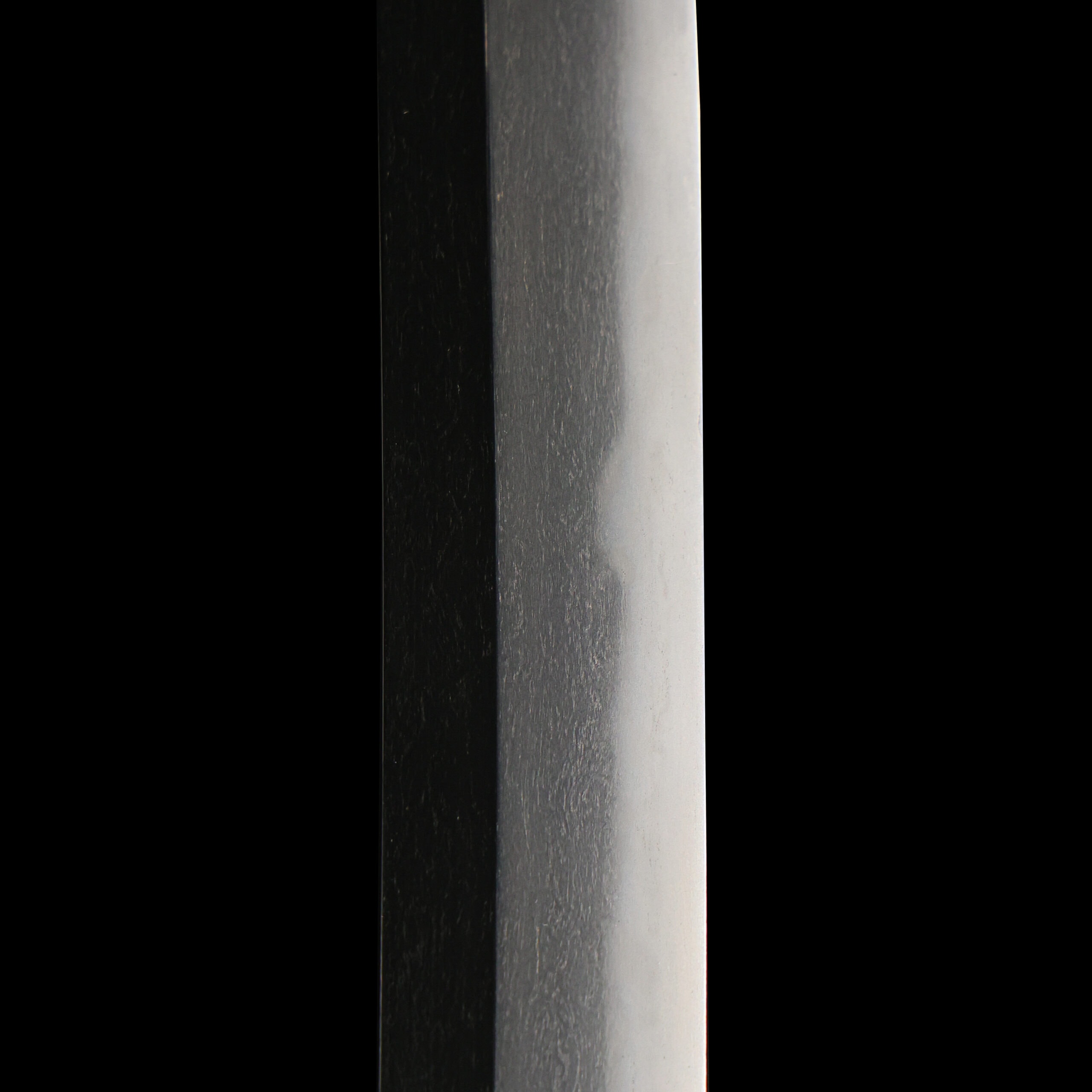
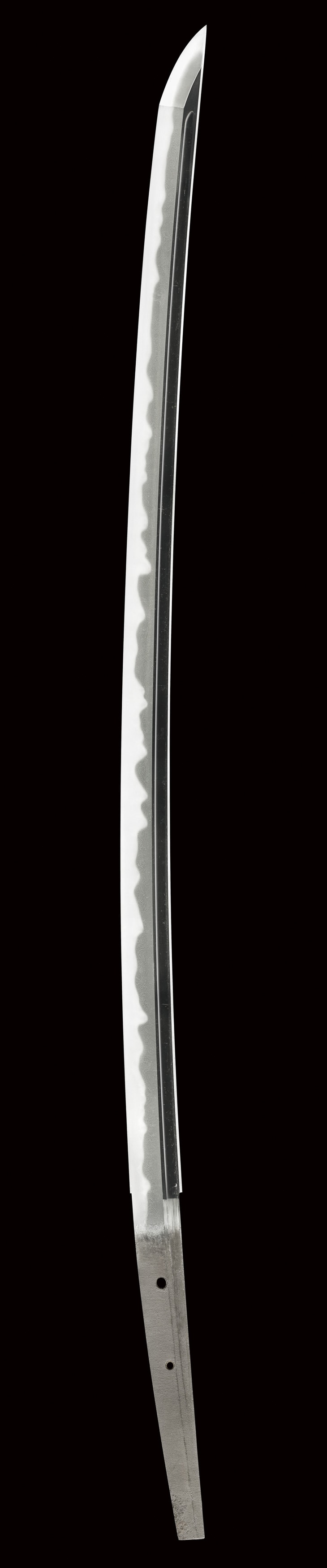
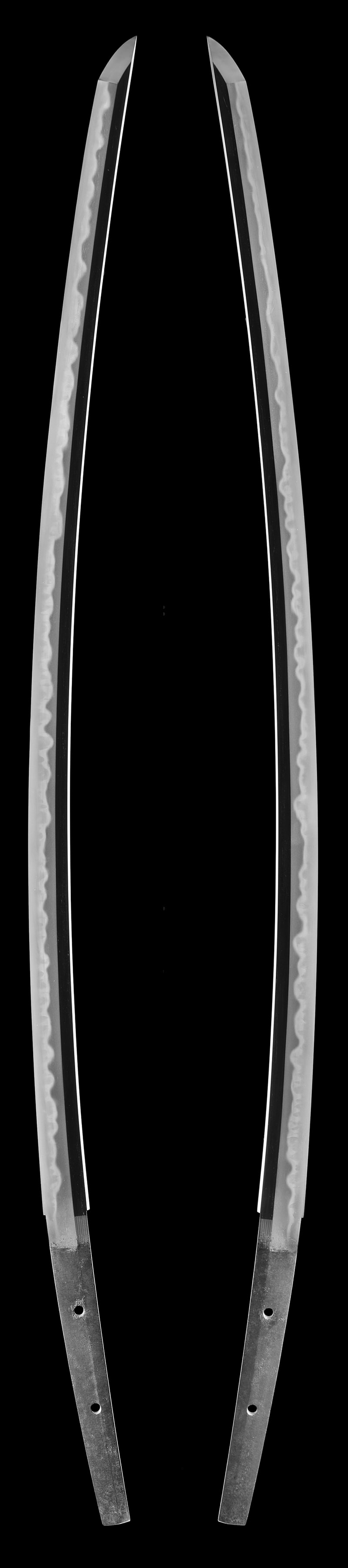
What the published sources name as his individuality is a matter of degree within a shared idiom. Every Sue-Bizen smith tempers the open-waisted, double-structured gunome, the fukushiki-gunome that is the diagnostic late-Bizen line; Katsumitsu builds his prime on the same base, well-packed ko-itame carrying ji-nie and fine chikei, over which the temper rides high and bright with ashi and yo entering richly, the nioiguchi clear and tightening, small tobiyaki interspersed. The distinction the judges draw is that he mixes choji into that gunome more freely than his fellows, for a more flamboyant effect. "Compared with Sukesada," the sources write, "Katsumitsu shows more conspicuous choji in the temper, and the so-called crab-claw (kani-no-tsume) irregularities appear relatively less often"[[c:2]]. On his finest dated wakizashi the same point is put positively: he is "particularly adept at a more splendid workmanship in which abundant choji are intermingled within the midare"[[c:3]].
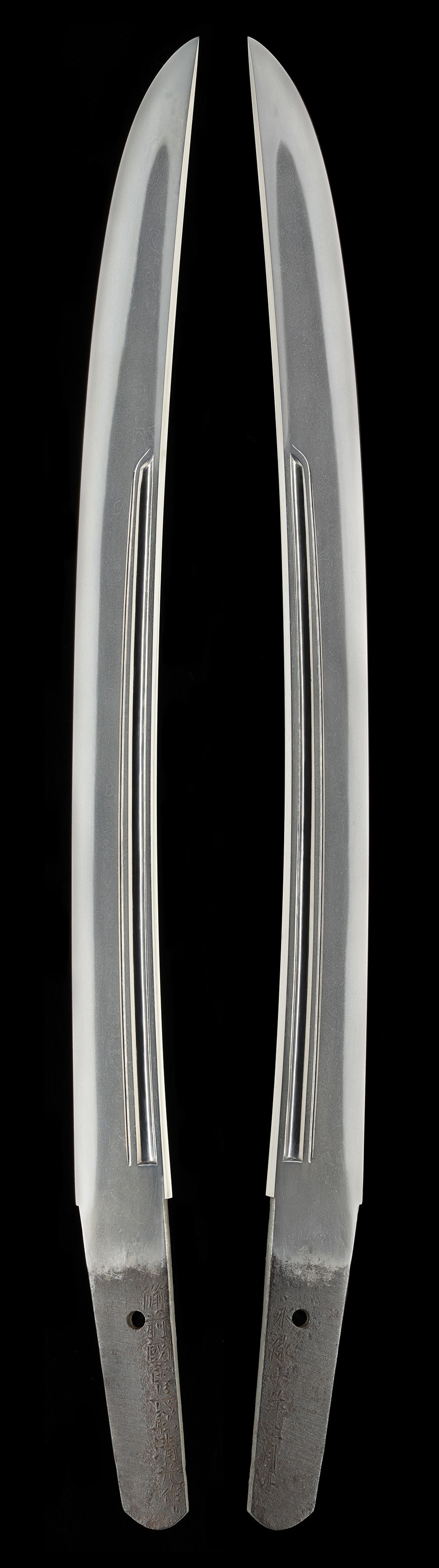
The jigane is the constant beneath that flamboyance. It is the well-packed ko-itame of late Osafune, ji-nie attaching, chikei finely woven, in places a little standing or flowing; on the best pieces the ji-nie lies fine as dust (ji-nie michin). The classical midare-utsuri of old Bizen has largely gone from this late steel and appears only faintly on a few blades; one Eisho-2 katana is read as showing little utsuri precisely because the ji-nie is so strong, so that the jigane itself looks powerful. The boshi answers the hamon, running midare-komi to a ko-maru or a pointed tendency, hakikake at the tip and a turnback. Across both faces lie the devotional carvings of Sue-Bizen, a kurikara, bonji with suken, and shrine names such as Hachiman Daibosatsu and Amaterasu Kotaijin, which the sources are careful to call the work of collaborating horimonoshi rather than the smith's own hand.
Katsumitsu is, above all, the great collaborator of the house, and his record is largely one of joint work. With his brother Sakyo-no-shin Munemitsu he cut the blades long prized as Munekatsu gassaku, the two names signed together on katate-uchi uchigatana and wakizashi; on one Eisho-7 wakizashi the inscription explicitly reads "younger brother, Sakyo-no-shin Munemitsu"[[c:4]], a line the sources call extremely important material urging a reexamination of the Osafune genealogy. The single most celebrated work is the joint naginata with Yosozaemon-no-jo Sukesada, dated Eisho 18, a bold and magnificent naginata-zukuri with the incised inscriptions Hagun-no-ken and Sanshin-soku-ittai, commissioned by Ukita Yoshie and called "a masterpiece among Sue-Bizen naginata"[[c:5]]. A katana of Daiei 3 is a joint work with his son Jirobei-no-jo Harumitsu, and the sources place his working span roughly from the Meio into the Kyoroku era[[c:6]], late in which, dated Kyoroku 2, he forged a father-and-son joint katana with another son, Shuri-no-jo Katsumitsu, prized as a record of the collaboration. Beside the flamboyant gunome he tempers a calm, broad suguha and hiro-suguha with equal command, the sources observing that the master famed for flamboyant midare through the Juyo-Bijutsuhin Asa-arashi shows, with his uncle's help, an advanced skill even in a straight temper.
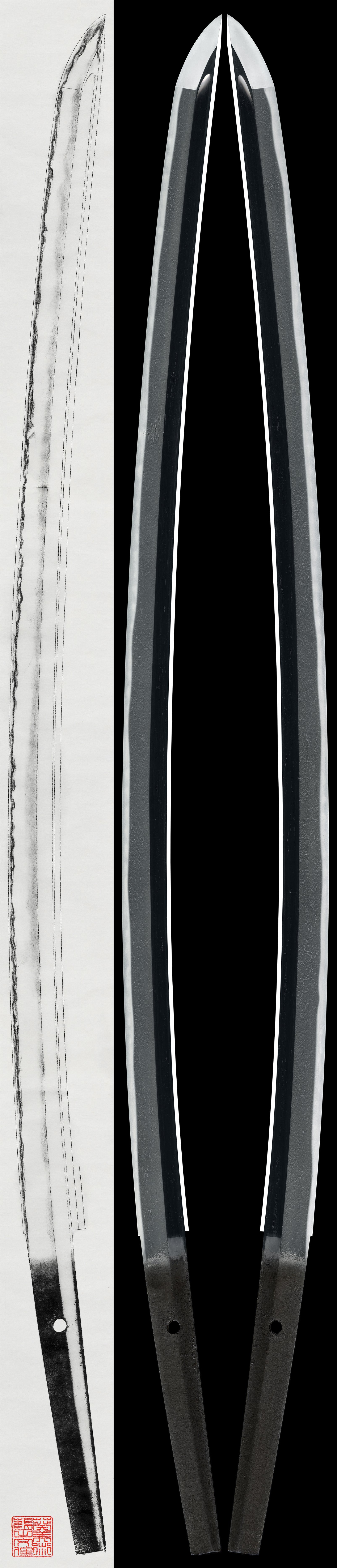
What sets Katsumitsu apart within his own school is therefore the reach of his hand rather than a single tell. His bright, choji-mixed gunome distinguishes his prime from the plainer Sukesada manner, while his command of a clear suguha and his ambition outside the standard idiom mark the upper edge of late-Bizen workmanship. The clearest sign of that ambition is a signed Bunki-2 tachi, slender with sakizori, that abandons the contemporary uchigatana for a suguha-based ko-midare with ko-choji over a ko-itame in which a midare-utsuri rises; it is read as "a piece conceived with the late-Kamakura Osafune of Kagemitsu and his fellows as its aim"[[c:7]], an unusually forceful work, though the sources add that its technique does not reach its model. At the far edge a Daiei-6 tanto carries the temper up the mune into a hitatsura-like muneyaki with tobiyaki, more varied than usual. These outliers map the breadth across which the Sue-Bizen Katsumitsu hand can be known.
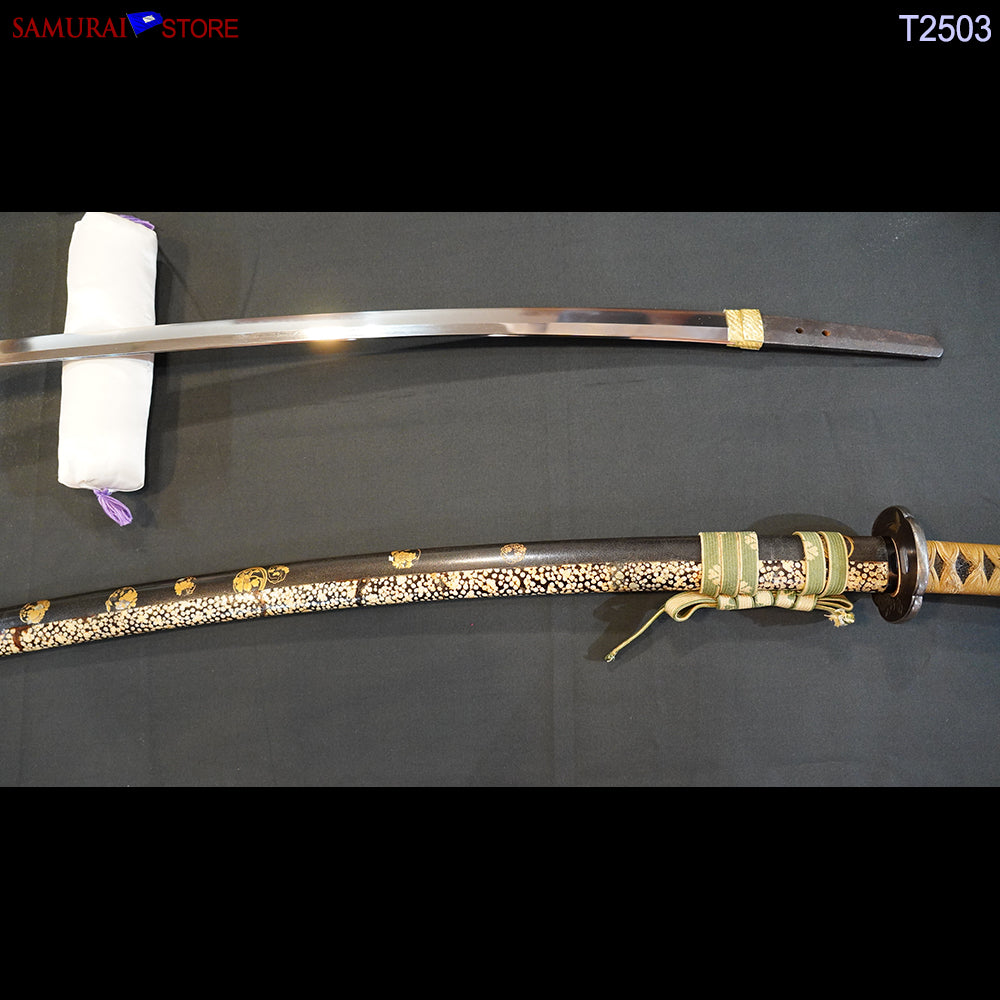
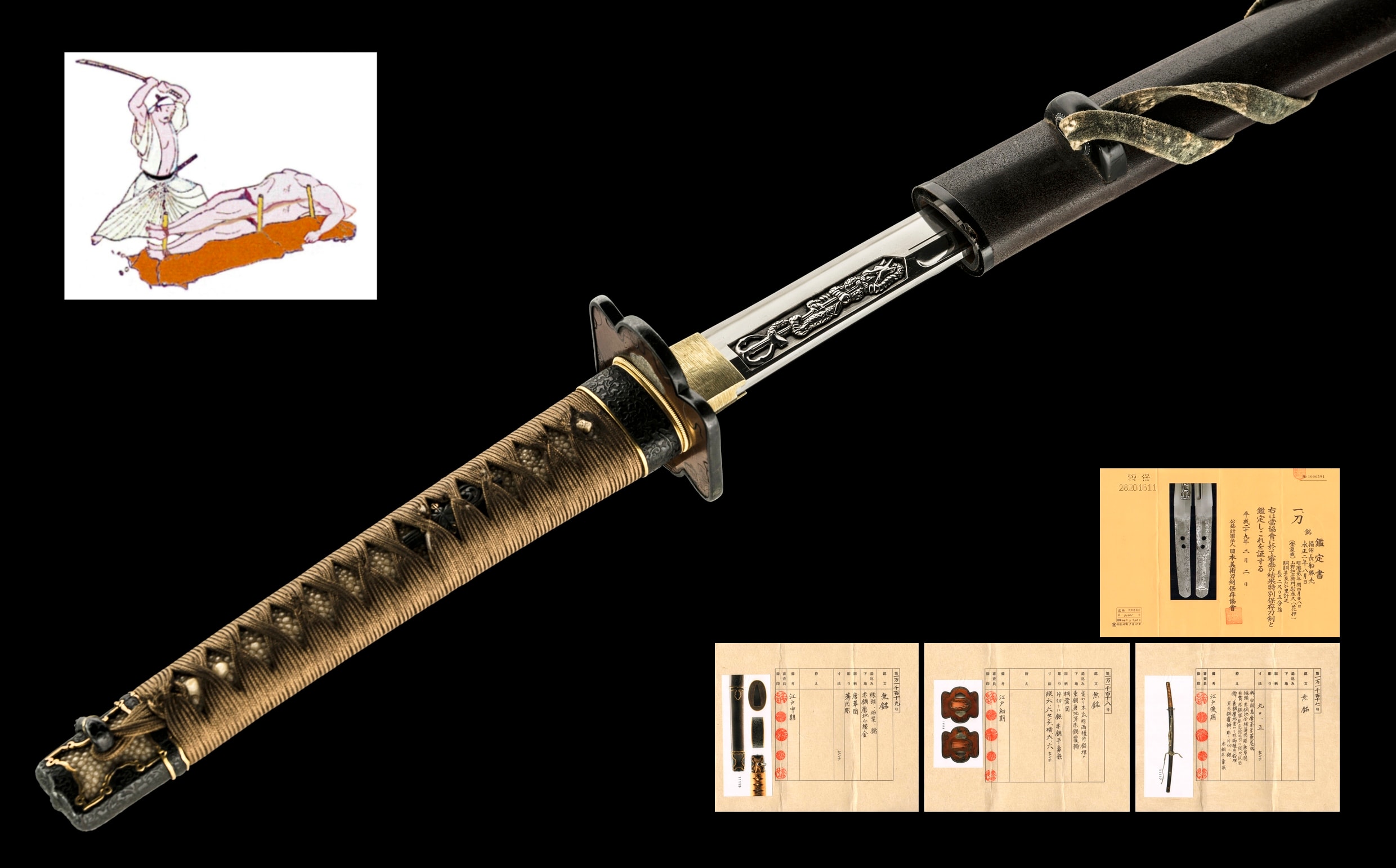
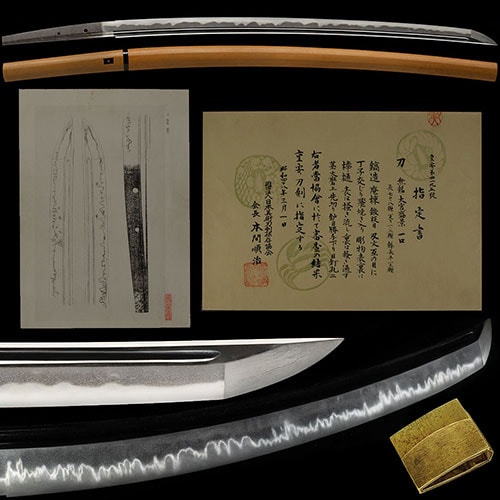
Katsumitsu was a productive smith and signed and dated work survives in fair number, yet little of it can ever change hands. Fujishiro grades him Sai-jo saku. He has no National Treasures; his record runs instead through one Important Cultural Property, the joint katana with his son Harumitsu held at Nogi Shrine in Tokyo and inscribed Ichigo-ikkoshi, and through the Imperial collection, where katana signed Bishu Osafune Katsumitsu are kept as Gyobutsu. The patrimony continues in the daimyo houses and old collections grounded in their own provenance, the joint naginata for Ukita Yoshie a treasured heirloom of the Sendai Date family, other blades recording owners such as Uyama Hida-no-kami and Kitamura Yukinao, the Jubi katana Asa-arashi once held by Matsushita Masatoshi. Beyond these, of the two dozen-odd designated works on record, only a small number sit in the Tokubetsu Juyo and Juyo tiers, so a signed Jirozaemon-no-jo Katsumitsu comes to market only from time to time, and a dated, devotionally carved example, the kind on which the smith once wrote that nothing could surpass it, is a rewarding thing for a collector of late Bizen to encounter.