二つの朝廷が争った六十年、刀身は長大化し、長船がその需要に応えた。兼光と長義の工房は実際に戦う国人層の武士に仕え、軍勢とともに相州風が届いて相伝備前が生まれた。
 NihontoWatchNihontoWatch
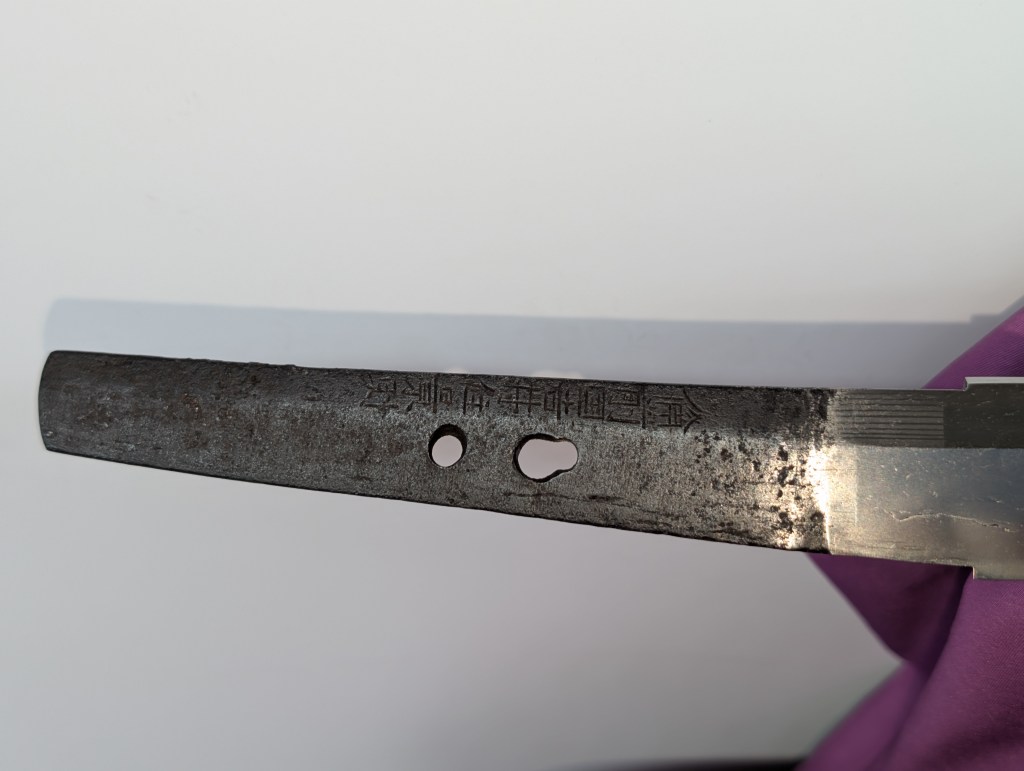
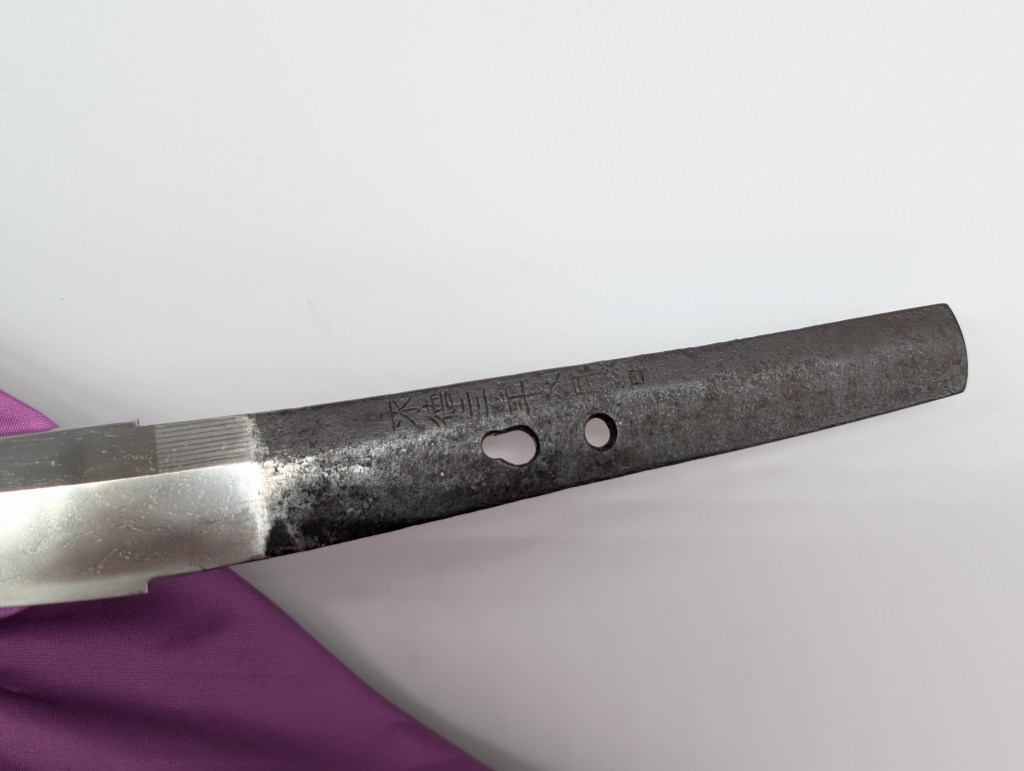
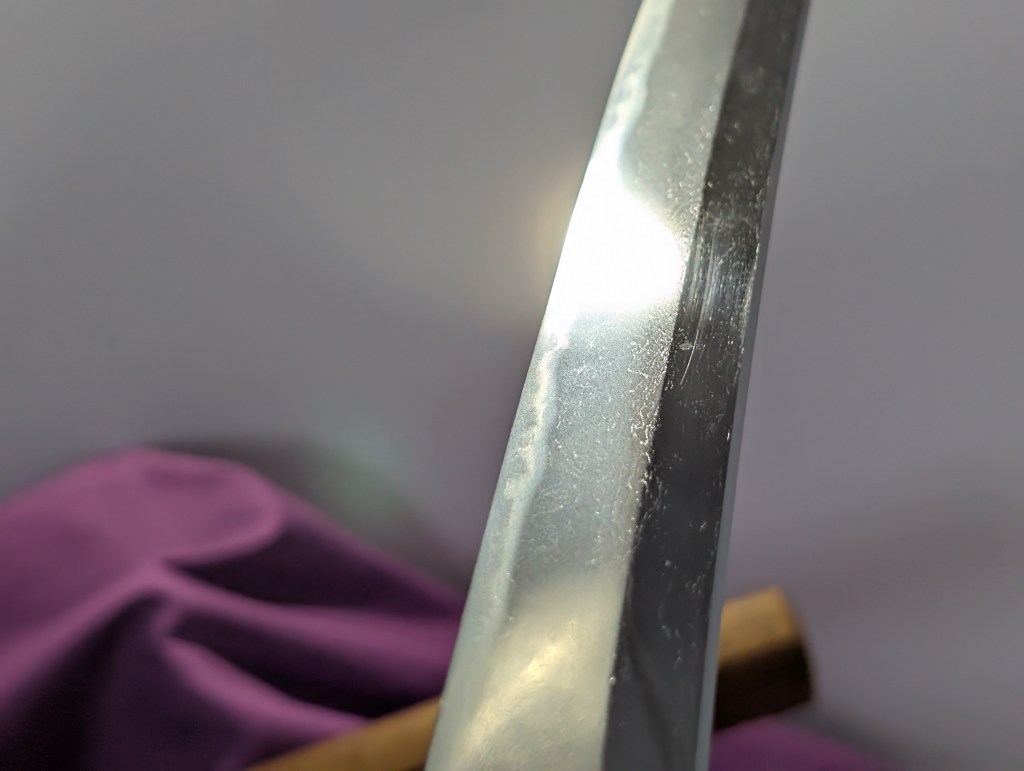
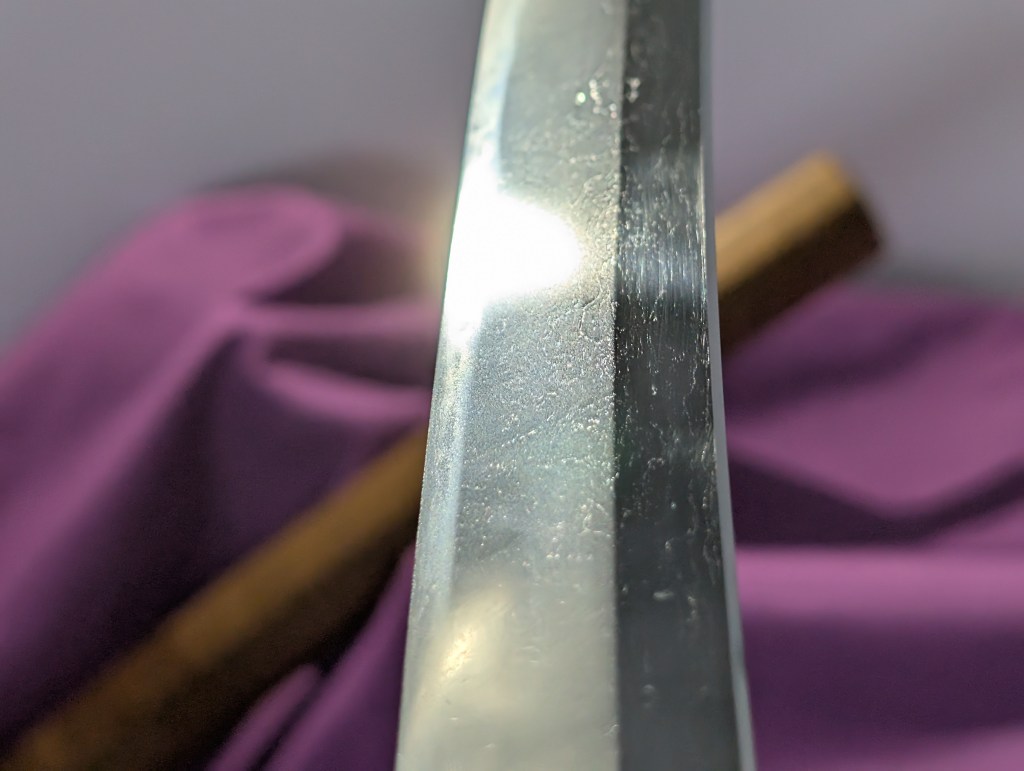
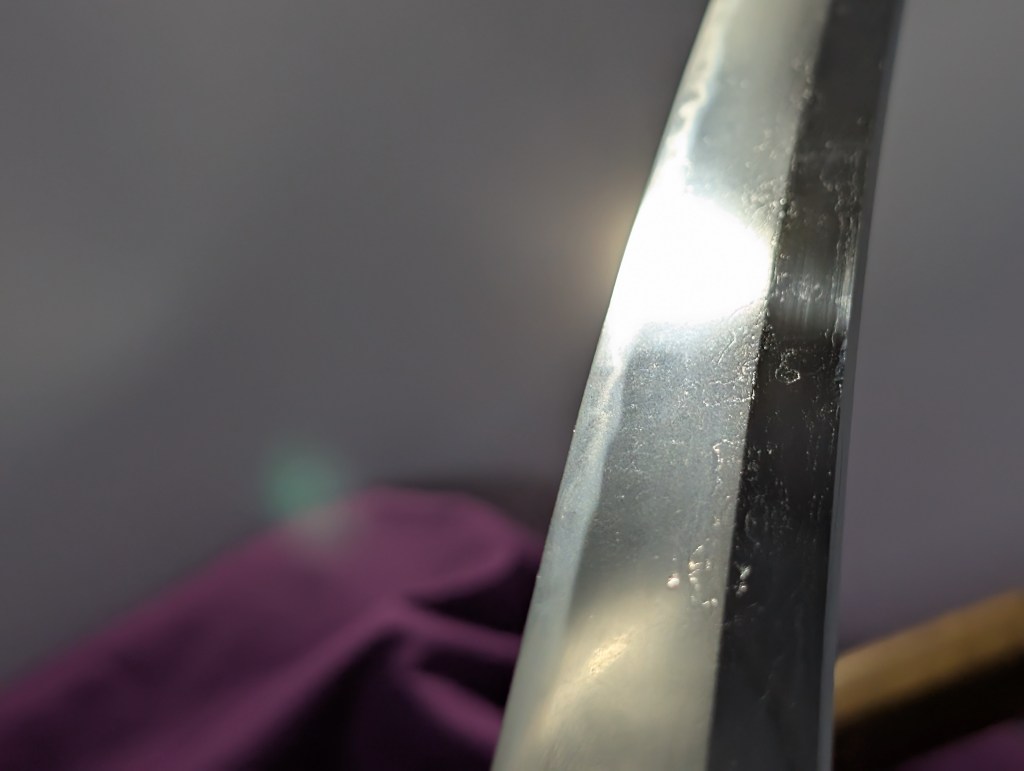
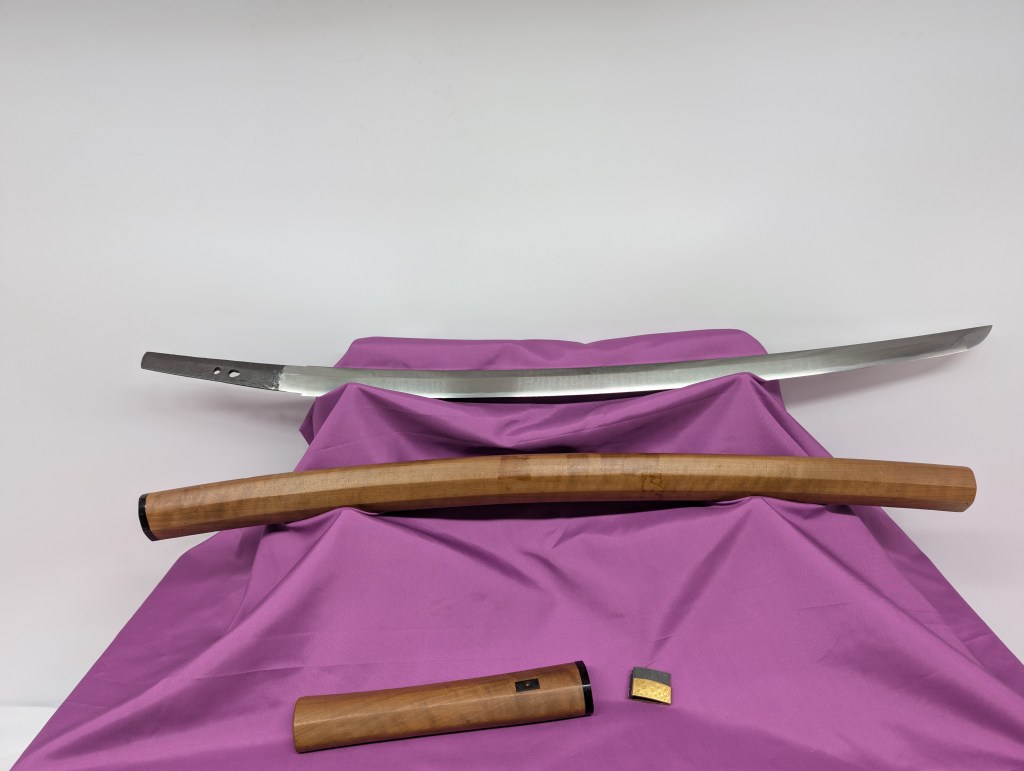
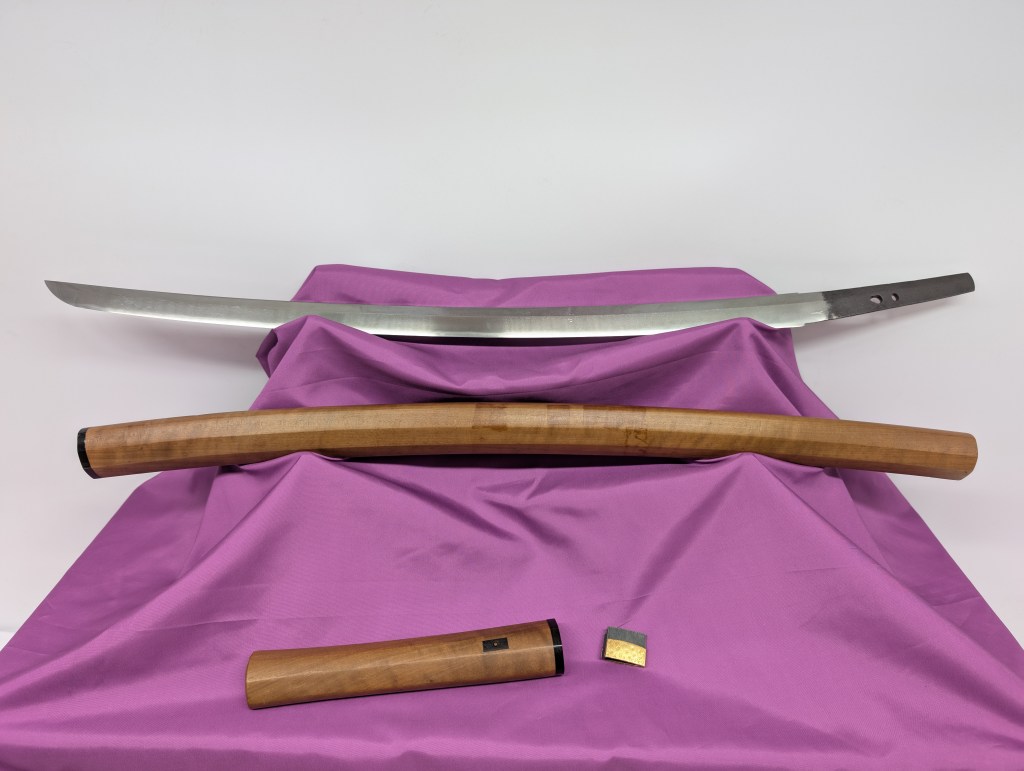
● This Bizen Kagenori Tachi is an extremely rare, signed work, which is not only ubu, but is also signed and dated. In terms of Koto era blades, this makes it an extremely relevant and rare piece since unshortened, let alone signed and dated works from the Nanbokucho era in the form of daito are scarce, to the point where, before this piece, I have never personally held one that was in the private market for sale. This sword also has an extremely large figure, which, for the Yoshii School, is almost unheard of because they are much more well known for having feminine, slender blades, even when quite healthy. As said above, the dated signature is inscribed as “On a day in August on Eitoku 1384” (永徳二二年八月 日), which would indicate that this is a work done by the fourth Kagenori. The hamon on this sword is done in a beautiful choji-gunome style, which is very reminiscent of the Fukuoka Ichimonji School, and is atypical for the Yoshii School as well, making this not just a unique sword in the signature, date, condition, and shape, but in the very deki in the hamon as well. The itame mokume mix is absolutely stunning to behold as well and suits the sword perfectly. There are also multiple old kirikomi on this sword, one very visible on the mune, with some exceedingly small ones which are less visible as well, and a single kirikomi on the shinogi alongside as a dent in the ha towards the ha-machi, where the user repelled an enemy strike. It is interesting to see such a dent on the blade so low because, in most cases, these result in a substantial chip to the blade. These kinds of dents are much more common to see on the kissaki on account of their use in thrusting. This sword is also remarkably healthy given its age, and given its signs of use in combat, I have seen many Gendaito in similar or even worse condition in my time studying swords. The boshi appears to be a standard ko-maru boshi, as it is similar to many swords of the era. The boshi is finished remarkably close to the edge of the kissaki, and is also in fine condition. The dimensions of the sword are ● Nagasa: 63cm ● Motohaba 3.1cm ● Motokasane 5.9mm ● Sakihaba: 2.1cm ● Sakikasane: 4.4mm THE BIZEN YOSHII SCHOOL 備前吉井派 The Bizen Yoshii were a group of swordsmiths who worked in Bizen Province in the Kamakura Period until the Muromachi Period. They were called the Yoshii School on account of their being situated along the Yoshii River in Bizen Province. This river was extremely rich in iron sand, which they used to produce high-quality swords. The Yoshii school, in general, was rather large and spanned multiple provinces. There were Yoshii smiths in, of course, Bizen Province, which is the core focus of this written piece; however, Mimasaka Province, just north of Bizen, alongside two groups in Izumo Province called Yoshii Doei and Yoshii Chutei, respectively. The Bizen Yoshii group had two main lines: the Kagenori line and the Naganori line. The Kagenori line learned from the swordsmith Osafune K
NihontoWatch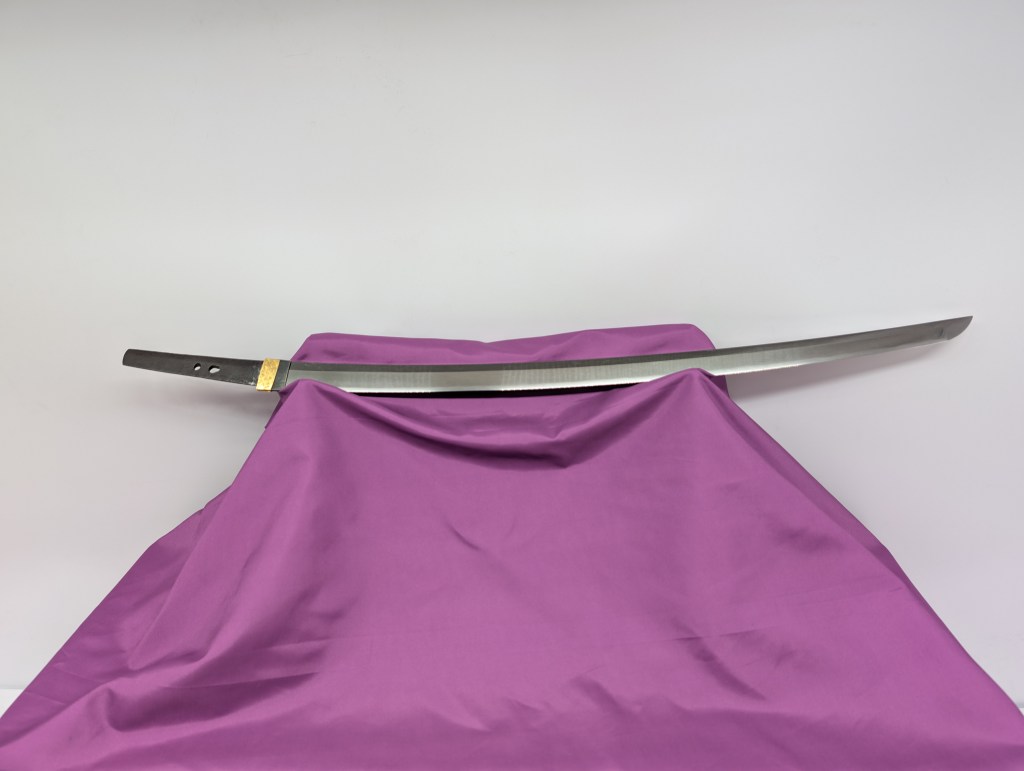
備前伝 · 備前 · 1381-1384頃
刀剣大鑑 上位17%
景則の位置づけを、日本刀全体および伝法・時代・時期ごとに示します。各区分(随一・屈指・有数・著名)は、日刀保および文化庁による指定に加え、三作や名物帳などの歴史的栄誉を加味したものです。
各項目を選ぶと評価方法が表示されます。
在銘年紀作が示す、確実に活動していた年代
備前伝 · 備前
現在4点販売中
備前国吉井川をへだてて長船村と相対する吉井の地に、室町期に至って他の備前諸派が長船本流に統合される中、ただ一派その流れに与せず独自の作風を保って続いた一門がある。これが吉井派である。鎌倉後期の為則を祖として始まると伝えるが、その頃まで遡る作は稀有で、現存して年代の知れる作は鎌倉末期から南北朝期に始まる。NBTHKは南北朝を降らぬ作を古吉井、室町期のものを吉井として区別する。一門は「次」ならぬ「則」の字を通字とし、清次の伝えとともに景則・盛則・清則・永則と「則」字の名跡が連なる。中でも景則は名跡が最も長く続き、一説に吉井の嫡流とも伝えて、鎌倉末から室町中期まで一派の縦糸をなす。清則の子永則はのち出雲へ移住したとの伝えがあり、同国には後代の永則が数工あって伝えに符合する。 この一門を決するのは、規則的に連れて焼かれる小互の目である。やや肌立つ板目の上にこの刃を焼き、尖り刃・角がかる刃を交えて尖りごころを生み、しばしば逆がかって小丁子を交える。整然と反復するこの「吉井刃」を背骨として、清則・盛則らはこれを匂本位に控えめな小沸で締め、景則は刃中の強い沸を立てて、伊達家旧蔵の太刀が古備前と極められるほど最も古い備前へと結びつく。地鉄は杢を交えてつんだ板目で、処々綾杉風を呈し、地沸つき地景入る。その上に一門は備前物中独特の映りを立てる。これは焼刃の形がそのまま地に影となって映じたようなもので、長船本流の柔らかな雲のような乱れ映りのように漂うのではなく、上の刃文の輪郭を地に呼応させて繰り返す。連れた互の目の華やかな半面に対し、僅かに小互の目を交えた細直刃という静かな半面があり、同じ工が両様を打ち分ける。永則の細直刃に交じる小互の目のように、最も静かな刃にも畳み込まれた互の目が窺え、これが則光風の尋常な直刃と紛れるところを吉井へと引き戻す。銘は逆鏨を多用して切られ、銘字までもが一門の標を帯びる。 鑑定の勘所は、何よりこの整然たる連れにある。吉井の刀を分かつのは華やかさでも大きさでもなく、刀身の全長を一定の調子で走る小互の目の反復であり、これによって長船嫡流と分かたれる。背後に立つ影のごとき映りと、逆鏨の銘とが、これを補強する。逆にその作風の強さゆえ、後代のものが往々美濃物と誤鑑され易い点も心得るべきである。主要工の格は名高い鎌倉の名工というよりは記録の明確な上手で、藤代は清則を中作、盛則・永則を中上作とし、一門の手の平均を上回る位置に置く。その作はことごとく在銘で多くは年紀をもつため、求める者は年代まで定め得る工に出会い、これは室町備前の手にとってそれ自体が一つの魅力である。連れた互の目と映りに惹かれる収集家にとって、年紀作はこの一派の作風を最も明快に手にする道であり、伝来の知れるものでは景則の太刀が佐野美術館に、清則の太刀が靖國神社に、永則の大太刀が徳川美術館に納まる。古吉井の精緻な基準に最も近づくのは清則文安の脇指のような頂点の作で、室町期の吉井物にしてはよく沸づき、説示はこれを古吉井の作域にせまる出来と評する。 詳しく見る →
南北朝時代の備前
二つの朝廷が争った六十年、刀身は長大化し、長船がその需要に応えた。兼光と長義の工房は実際に戦う国人層の武士に仕え、軍勢とともに相州風が届いて相伝備前が生まれた。
海外からの返品は原則としてお受けしておりません。デポジットをお支払いいただいた時点で、商品を最長3か月間お取り置きします。頭金は返金不可です。