NihontoWatch Mon

NihontoWatchBETA

マーケットオークション
事典
NihontoWatch Mon

NihontoWatchBETA

マーケットオークション
事典

説明

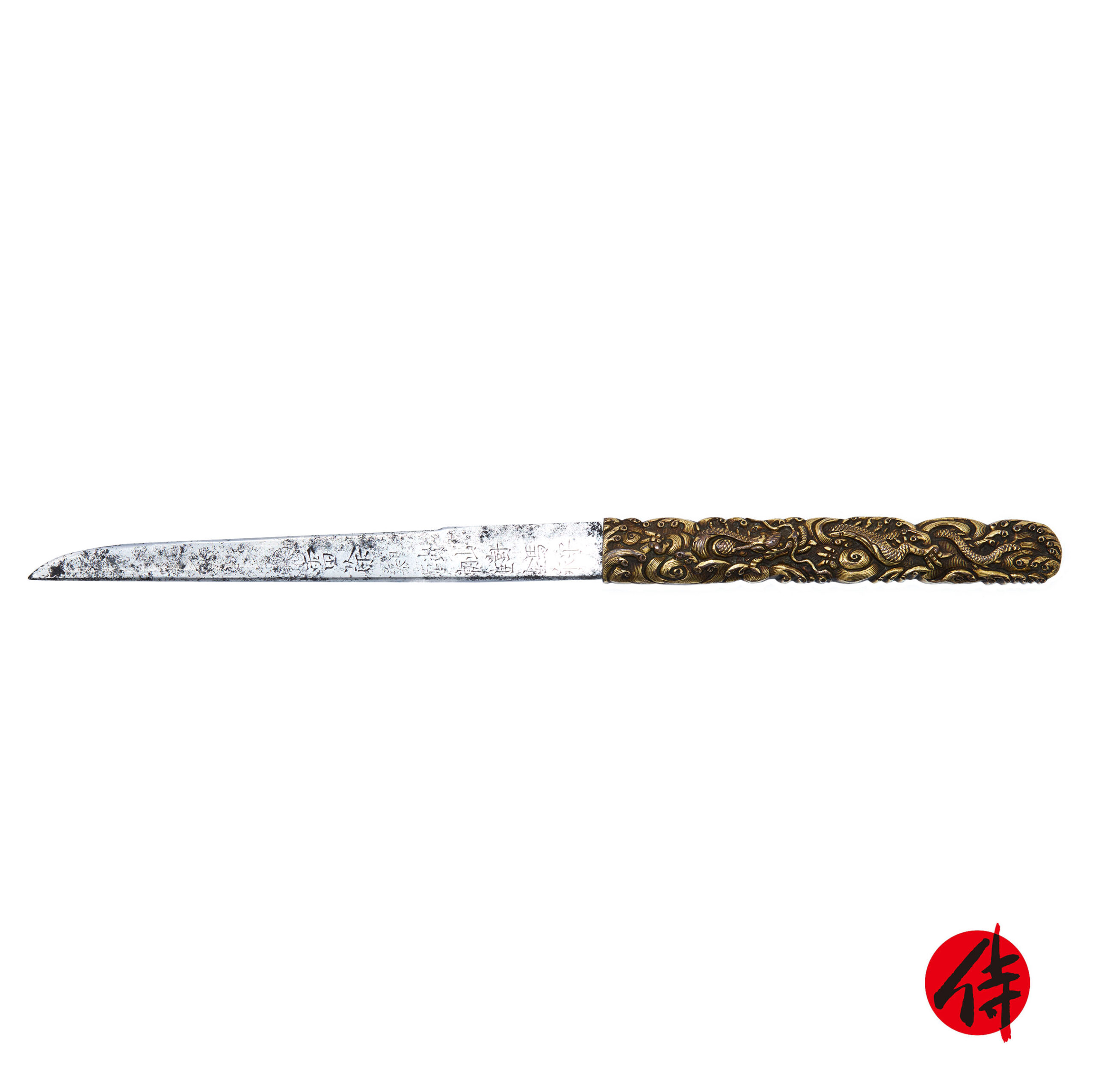
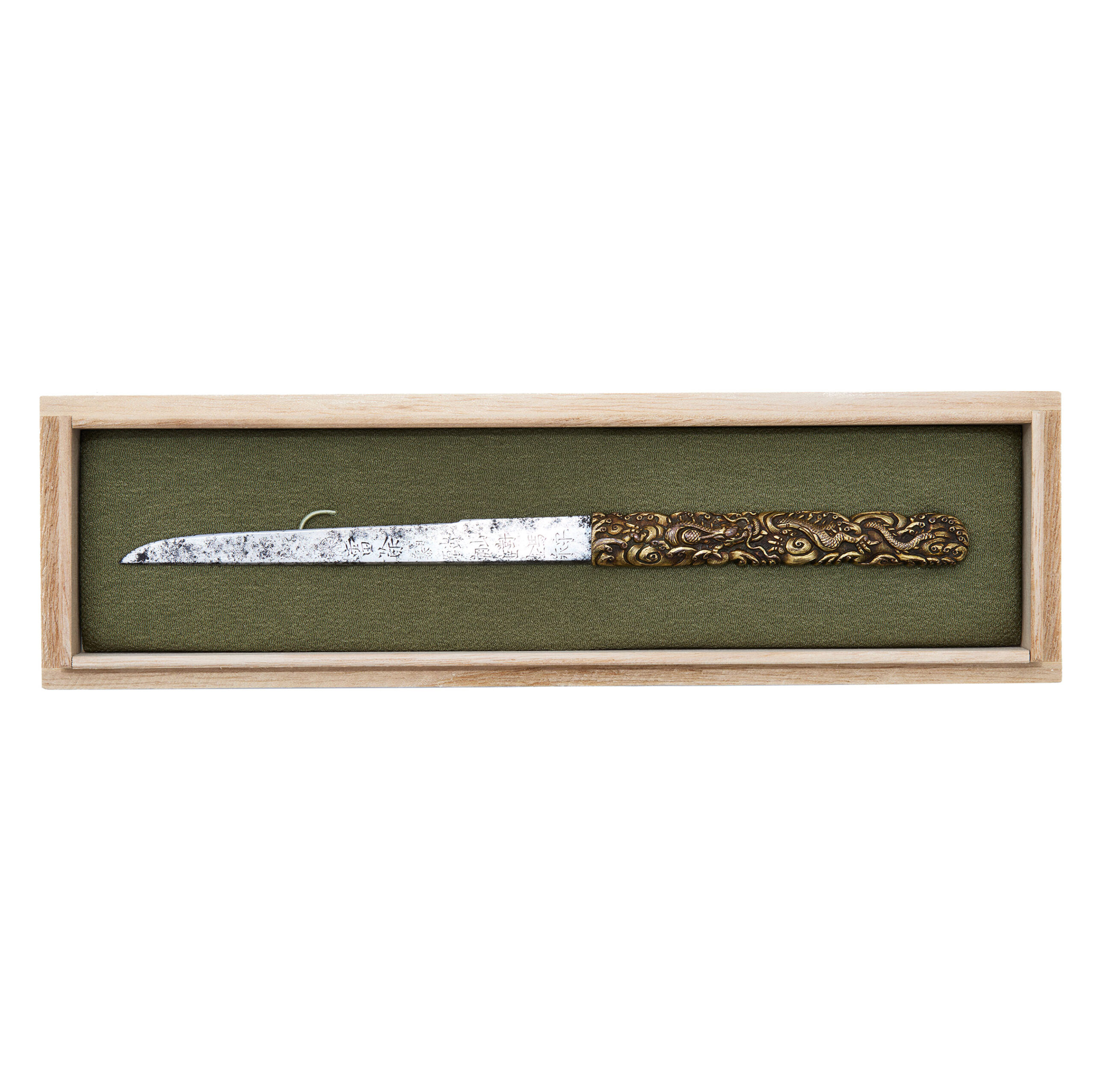
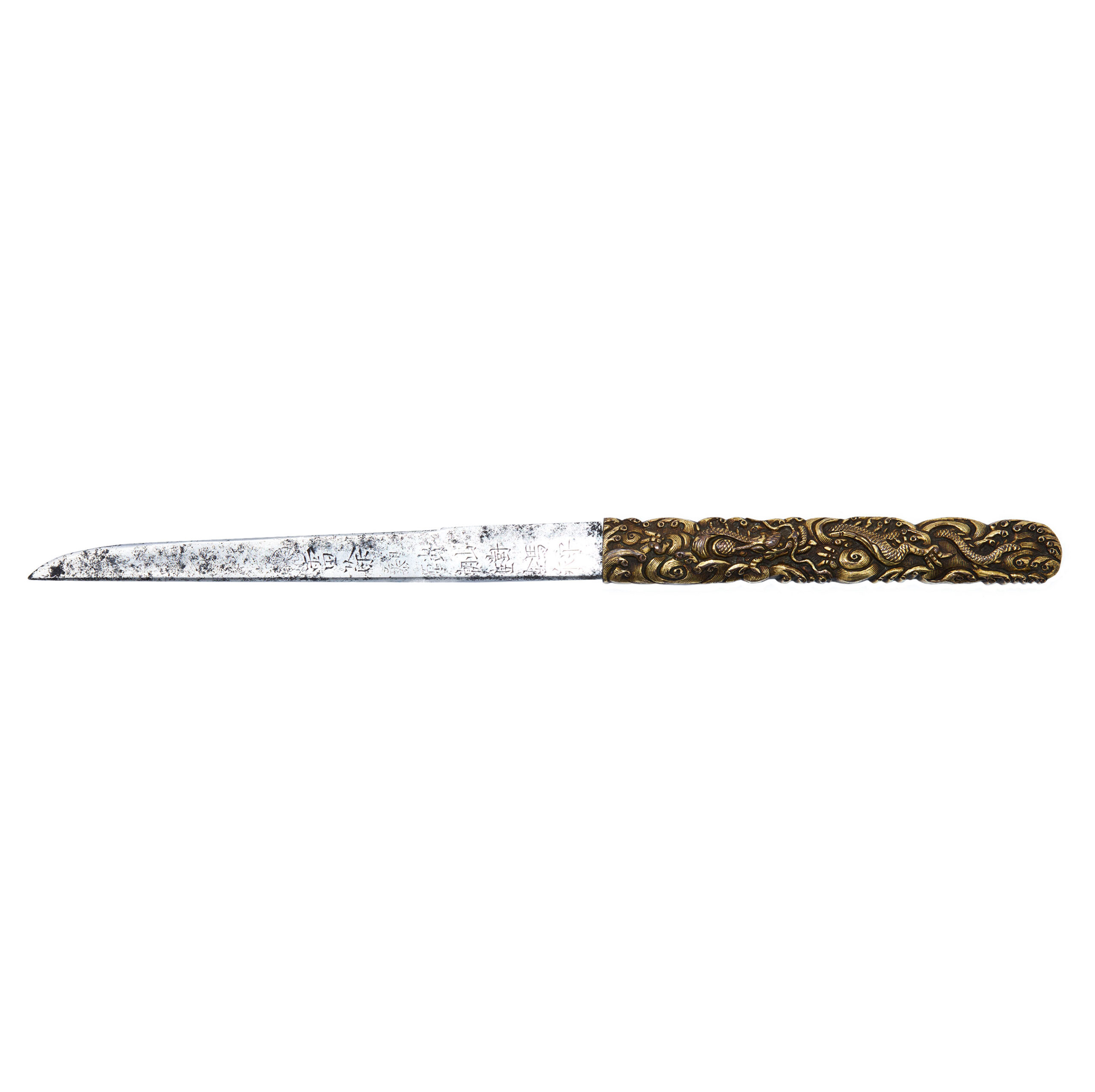
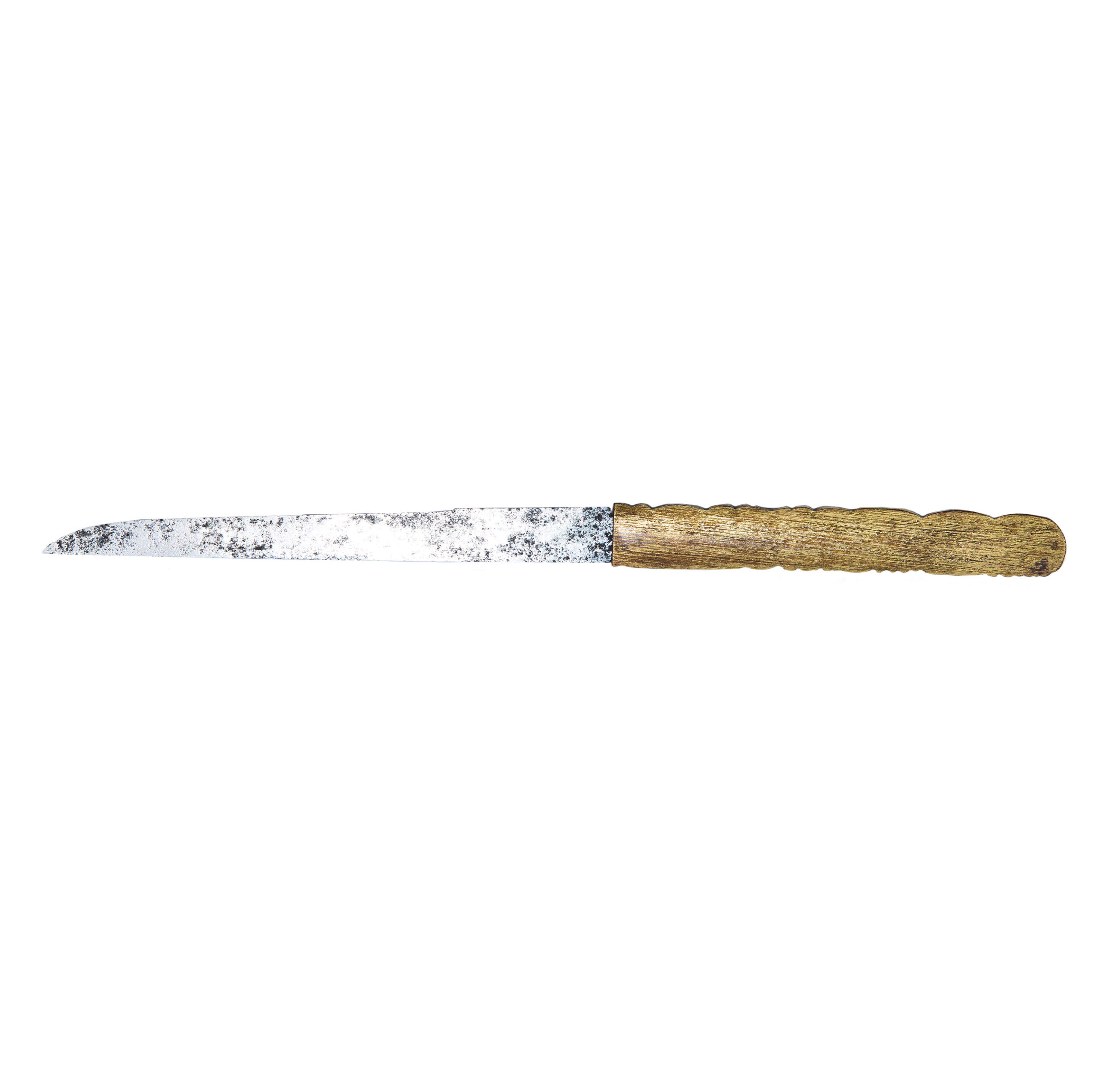
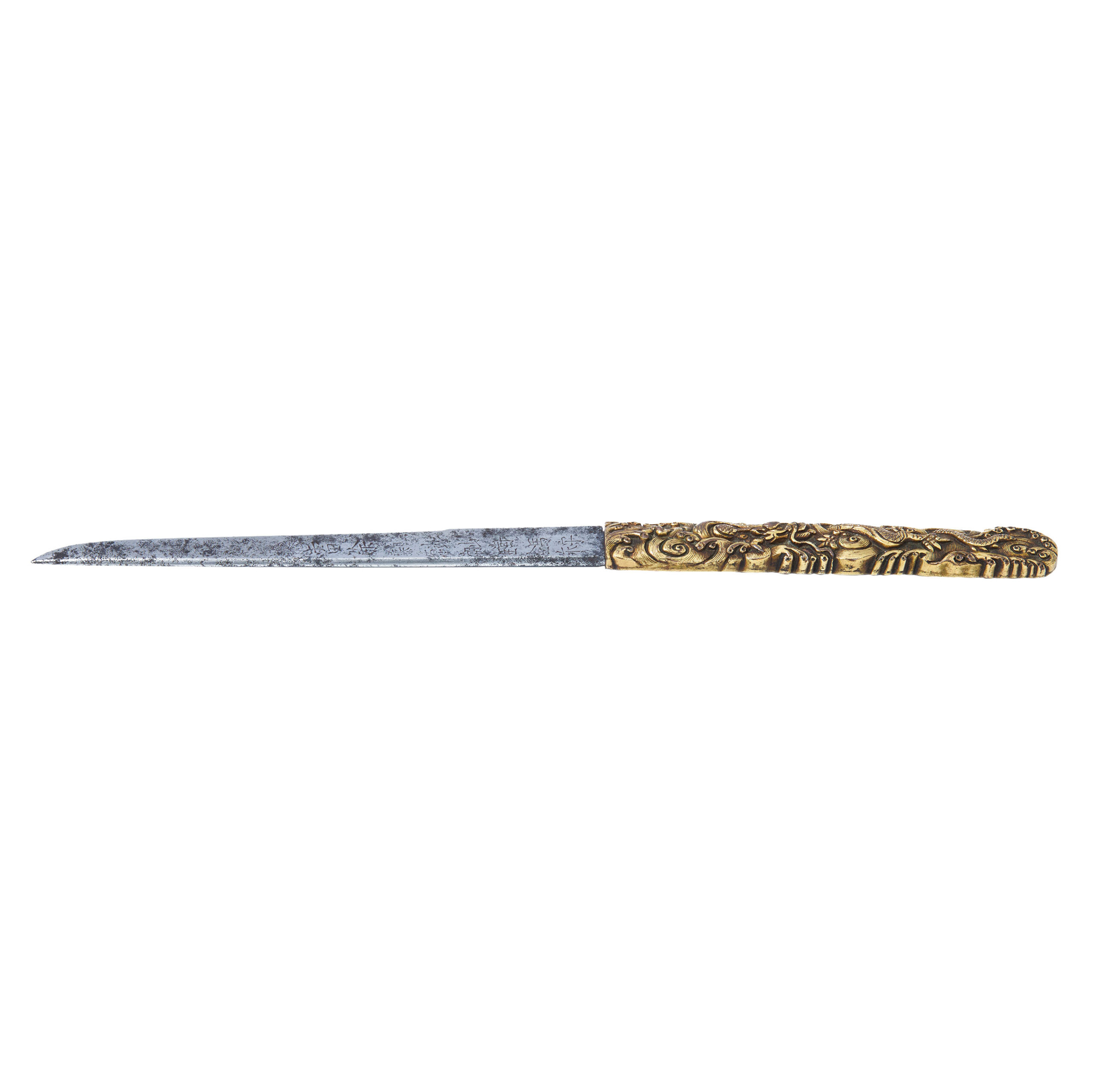
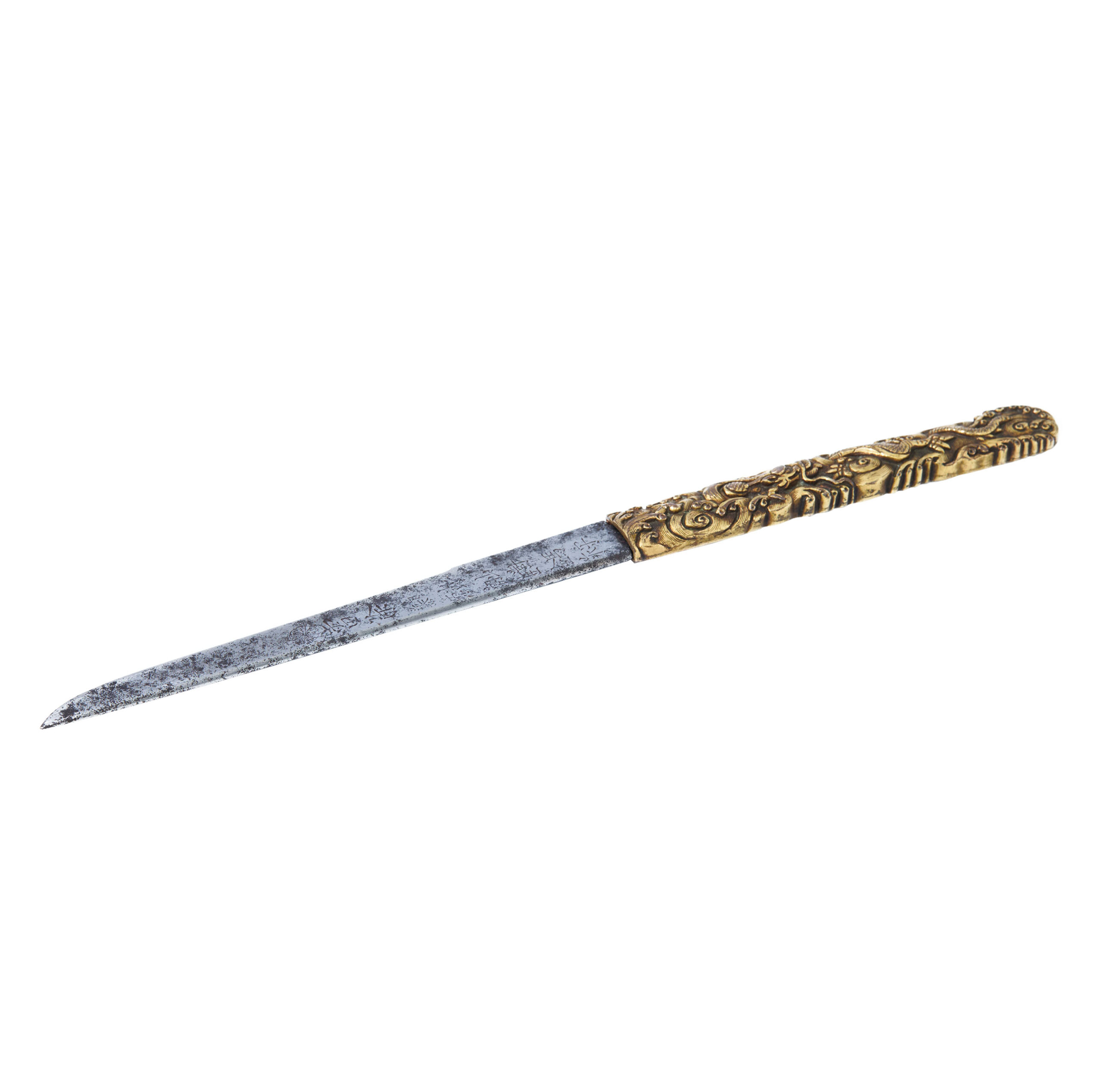
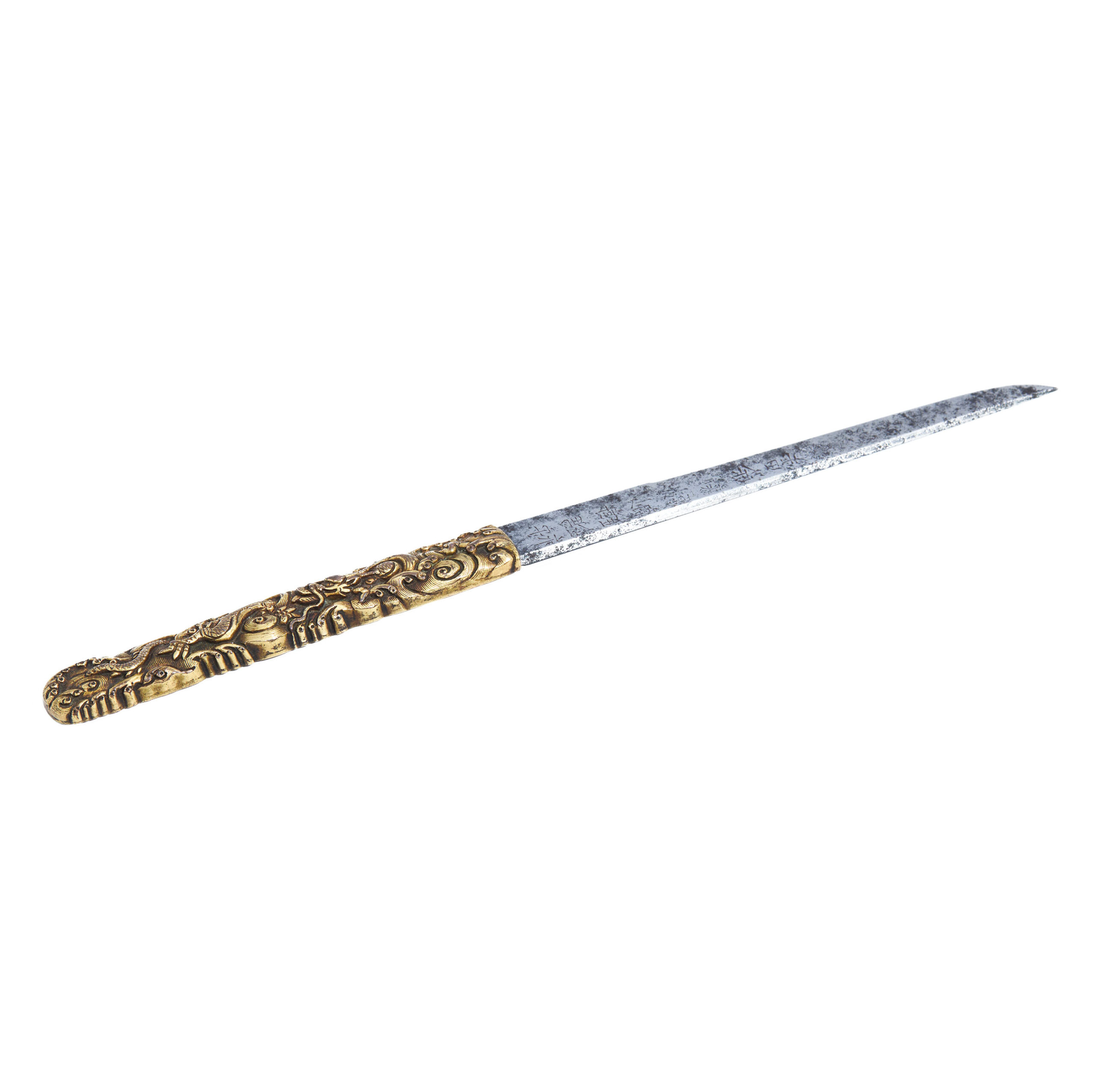
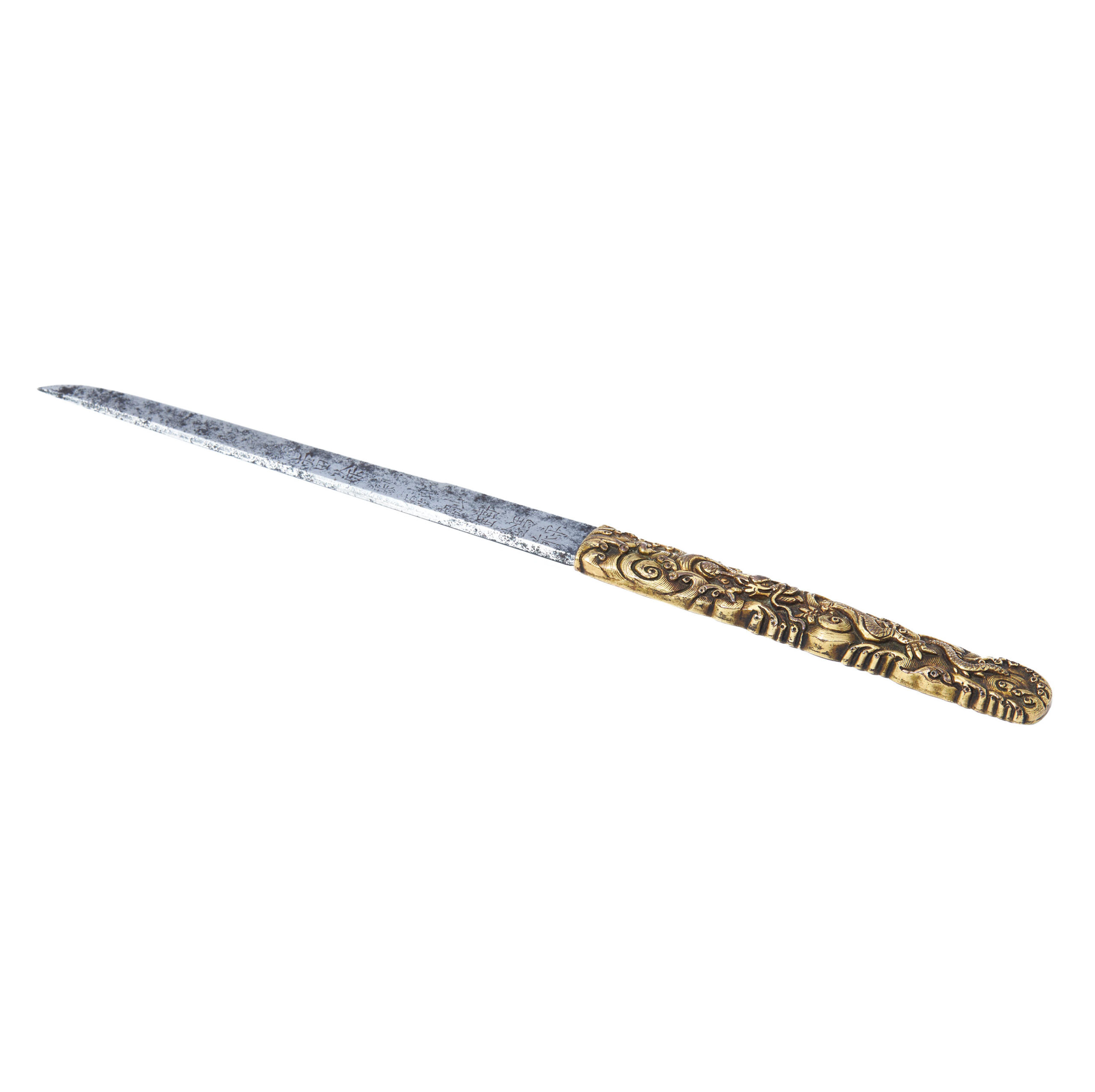
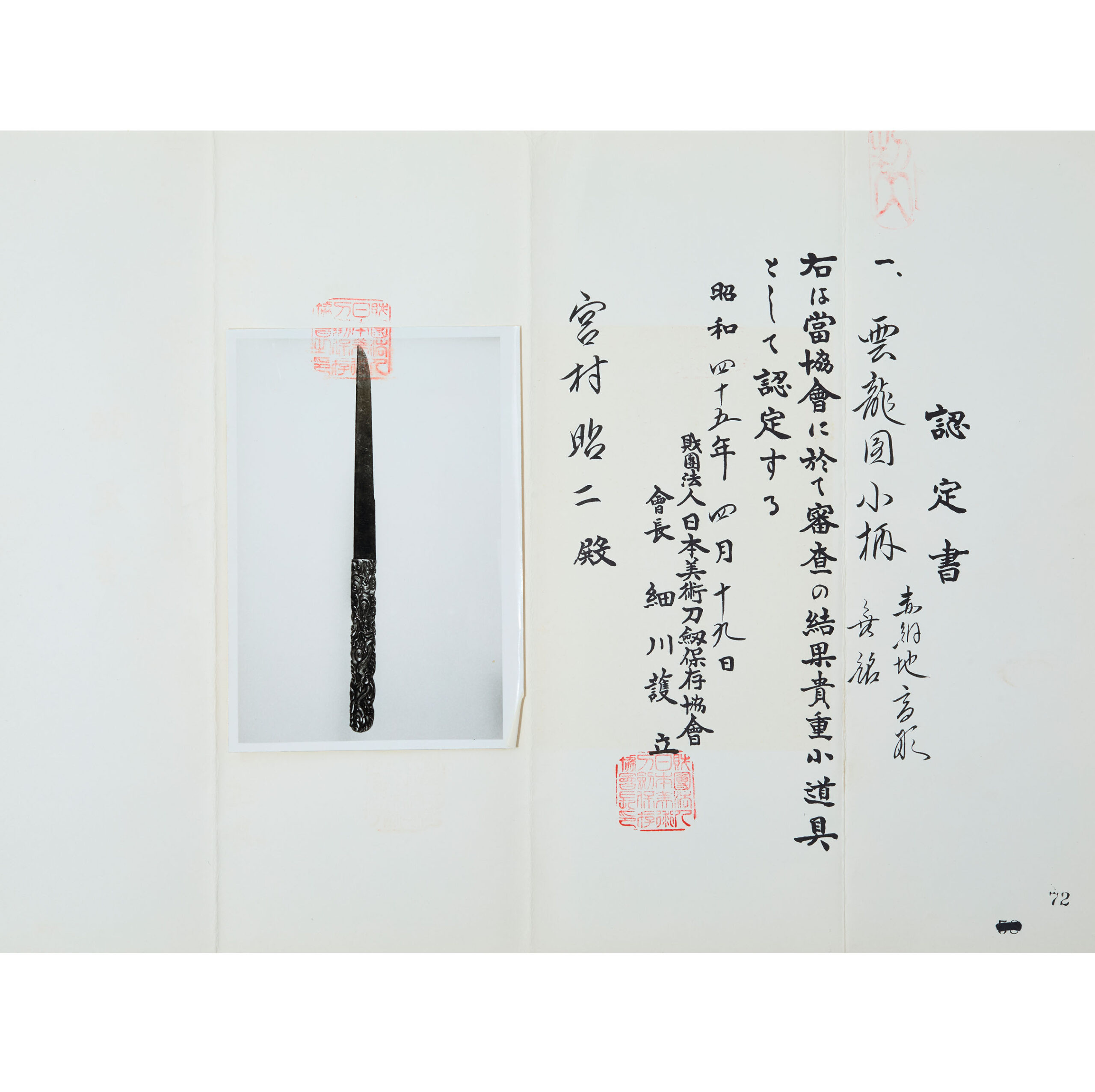
Title: Unryū-Zu Description This kozuka is made of shakudō-ji (赤銅地), a metal alloy of copper and gold that, after heat treatment, develops a darkened surface color characteristic of this material used in Japanese metal fittings. The surface is executed in takabori (高彫, high-relief carving), in which the design is carved in relief from the base metal, creating clear depth and three-dimensional form. In addition, kin-iroe (金色絵, gold coloring) is applied in selected areas, using gold as a decorative element within the design. The decoration depicts an Unryū-zu (雲竜図, Cloud and Dragon motif). The dragon appears emerging from swirling clouds, its body rendered with vigorous movement and intricate detail. The scales, claws, whiskers, and flowing mane are carefully carved to convey both energy and grace, while the surrounding clouds are softly modeled to create a sense of depth and atmospheric motion. The contrast between the dark shakudō ground and the luminous gold highlights further emphasizes the dramatic presence of the dragon as it moves through the heavens. In Japanese mythology, the dragon (ryū, 竜) is regarded as a sacred and benevolent creature associated with water, rain, storms, and celestial forces. Unlike the destructive dragons of many Western traditions, Japanese dragons are protectors and bringers of life-giving energy. They are believed to govern rivers, oceans, and clouds, and are often linked with wisdom, authority, and spiritual power. Clouds, meanwhile, symbolize the heavenly realm and the unseen forces of nature from which divine power manifests. The image of a dragon emerging from clouds therefore represents the appearance of transcendent strength and auspicious energy descending into the human world. *As this item is an antique, please check each photo and ensure its condition. What is Kozuka? Kozuka is the small knife stored in Kozuka Hitsu (groove of the sheath of the Japanese sword). Many Tsubas (handguard) have two holes to put Kozuka and Kougai (equipment for appearance) next to Nakagoana (a hole of the Tsuba to put sword), so that Samurai didn’t need to draw his sword out of the scabbard when he wanted to use Kozuka or Kougai. Initially, Samurai used it for cutting wood or attacking enemies in an emergency. It is said that Kozuka was used as a craft knife rather than a weapon. The decorative designs of Kozuka were more emphasized than its practical use in the Edo period when Samurai society enjoyed one of the most peaceful times. And there were many ornamental Kozuka and Kougai created by Japanese metalworkers. Why is it that the sword mounting was important for Samurai? The sword mountings of the Japanese sword have many kinds of decorations such as handguards (Tsuba), sword hilt (Menuki), pommel (Fuchi Kashira). The Japanese sword worked as a weapon and as an object to show who he was. For example, it shows their personalities and beliefs. You could say that it is like decorations for smartphones today. We recommend you zoom in on the pictures of the sword fittings. When you do so, you can see the skill of Japanese metal engraving techniques. They are mainly made of iron and copper with inlays of gold, silver, and bronze. When it comes to handguard (Tsuba), each one has a different outline and weight. These sword fittings that have lived with Japanese swords of the same age might be worth as much as the Japanese swords. They are inconspicuous parts of the Japanese sword. Nevertheless, if you are knowledgeable or particular about it, you will become a connoisseur of the Samurai. Authentication Paper : NBTHK Kicho Certificate (No.72) NBTHK, also known as Nihon Bijutsu Touken Hozon Kyokai (the Society for the Preservation of the Japan Art Sword), is one of the oldest Japanese sword appraising organizations in modern-day Japan. They authenticated the Kozuka on April 19th in the 45th year of Showa (1970). They appraised it as Kicho Kodougu, the Kozuka worth preserving for Japanese society. The purchaser will

NihontoWatch MonNihontoWatchBETA
MarketAuctionsEncyclopedia
刀装具›Kozuka›Antique Kozuka for Samurai Sword with NBTHK Kicho Certificate (K-96)
小柄Kicho

Antique Kozuka for Samurai Sword with NBTHK Kicho Certificate (K-96)

無銘 · 江戸

売却済
Antique Kozuka for Samurai Sword with NBTHK Kicho Certificate (K-96) — 1 of 9
Antique Kozuka for Samurai Sword with NBTHK Kicho Certificate (K-96) — 2 of 9
Antique Kozuka for Samurai Sword with NBTHK Kicho Certificate (K-96) — 3 of 9
Antique Kozuka for Samurai Sword with NBTHK Kicho Certificate (K-96) — 4 of 9
Antique Kozuka for Samurai Sword with NBTHK Kicho Certificate (K-96) — 5 of 9
Antique Kozuka for Samurai Sword with NBTHK Kicho Certificate (K-96) — 6 of 9
Antique Kozuka for Samurai Sword with NBTHK Kicho Certificate (K-96) — 7 of 9
Antique Kozuka for Samurai Sword with NBTHK Kicho Certificate (K-96) — 8 of 9
Antique Kozuka for Samurai Sword with NBTHK Kicho Certificate (K-96) — 9 of 9
1 / 9
1 / 9
Antique Kozuka for Samurai Sword with NBTHK Kicho Certificate (K-96) — 1 of 9Antique Kozuka for Samurai Sword with NBTHK Kicho Certificate (K-96) — 2 of 9Antique Kozuka for Samurai Sword with NBTHK Kicho Certificate (K-96) — 3 of 9Antique Kozuka for Samurai Sword with NBTHK Kicho Certificate (K-96) — 4 of 9Antique Kozuka for Samurai Sword with NBTHK Kicho Certificate (K-96) — 5 of 9Antique Kozuka for Samurai Sword with NBTHK Kicho Certificate (K-96) — 6 of 9Antique Kozuka for Samurai Sword with NBTHK Kicho Certificate (K-96) — 7 of 9Antique Kozuka for Samurai Sword with NBTHK Kicho Certificate (K-96) — 8 of 9Antique Kozuka for Samurai Sword with NBTHK Kicho Certificate (K-96) — 9 of 9
法量・詳細
時代

江戸

銘

無銘

説明

Title: Unryū-Zu Description This kozuka is made of shakudō-ji (赤銅地), a metal alloy of copper and gold that, after heat treatment, develops a darkened surface color characteristic of this material used in Japanese metal fittings. The surface is executed in takabori (高彫, high-relief carving), in which the design is carved in relief from the base metal, creating clear depth and three-dimensional form. In addition, kin-iroe (金色絵, gold coloring) is applied in selected areas, using gold as a decorative element within the design. The decoration depicts an Unryū-zu (雲竜図, Cloud and Dragon motif). The dragon appears emerging from swirling clouds, its body rendered with vigorous movement and intricate detail. The scales, claws, whiskers, and flowing mane are carefully carved to convey both energy and grace, while the surrounding clouds are softly modeled to create a sense of depth and atmospheric motion. The contrast between the dark shakudō ground and the luminous gold highlights further emphasizes the dramatic presence of the dragon as it moves through the heavens. In Japanese mythology, the dragon (ryū, 竜) is regarded as a sacred and benevolent creature associated with water, rain, storms, and celestial forces. Unlike the destructive dragons of many Western traditions, Japanese dragons are protectors and bringers of life-giving energy. They are believed to govern rivers, oceans, and clouds, and are often linked with wisdom, authority, and spiritual power. Clouds, meanwhile, symbolize the heavenly realm and the unseen forces of nature from which divine power manifests. The image of a dragon emerging from clouds therefore represents the appearance of transcendent strength and auspicious energy descending into the human world. *As this item is an antique, please check each photo and ensure its condition. What is Kozuka? Kozuka is the small knife stored in Kozuka Hitsu (groove of the sheath of the Japanese sword). Many Tsubas (handguard) have two holes to put Kozuka and Kougai (equipment for appearance) next to Nakagoana (a hole of the Tsuba to put sword), so that Samurai didn’t need to draw his sword out of the scabbard when he wanted to use Kozuka or Kougai. Initially, Samurai used it for cutting wood or attacking enemies in an emergency. It is said that Kozuka was used as a craft knife rather than a weapon. The decorative designs of Kozuka were more emphasized than its practical use in the Edo period when Samurai society enjoyed one of the most peaceful times. And there were many ornamental Kozuka and Kougai created by Japanese metalworkers. Why is it that the sword mounting was important for Samurai? The sword mountings of the Japanese sword have many kinds of decorations such as handguards (Tsuba), sword hilt (Menuki), pommel (Fuchi Kashira). The Japanese sword worked as a weapon and as an object to show who he was. For example, it shows their personalities and beliefs. You could say that it is like decorations for smartphones today. We recommend you zoom in on the pictures of the sword fittings. When you do so, you can see the skill of Japanese metal engraving techniques. They are mainly made of iron and copper with inlays of gold, silver, and bronze. When it comes to handguard (Tsuba), each one has a different outline and weight. These sword fittings that have lived with Japanese swords of the same age might be worth as much as the Japanese swords. They are inconspicuous parts of the Japanese sword. Nevertheless, if you are knowledgeable or particular about it, you will become a connoisseur of the Samurai. Authentication Paper : NBTHK Kicho Certificate (No.72) NBTHK, also known as Nihon Bijutsu Touken Hozon Kyokai (the Society for the Preservation of the Japan Art Sword), is one of the oldest Japanese sword appraising organizations in modern-day Japan. They authenticated the Kozuka on April 19th in the 45th year of Showa (1970). They appraised it as Kicho Kodougu, the Kozuka worth preserving for Japanese society. The purchaser will

真贋は保証されません

本作はNBTHKの旧鑑定書(貴重・特別貴重)を有しますが、これらは現在発行されておらず、信頼性に欠けるとされています。極めを確認するには、公的な鑑定機関(NBTHK・NTHKなど)への再提出による現代の鑑定をご検討いただけます。

販売店
サ
サムライミュージアム
🇯🇵日本から発送
›
✓認証販売店samuraimuseum.jp
✓海外発送可✓英語対応PayPalクレジットカード
返品ポリシー

Returns/exchanges limited to defects caused by shipping (except willful misconduct or gross negligence by the company); customers must contact within 72 hours of receiving the product.

サムライミュージアムの出品一覧を見る→販売店サイトでこの商品を見る→

刀剣

  • 刀
  • 脇差
  • 短刀
  • 太刀
  • 薙刀
  • 槍

刀装具

  • 鍔
  • 縁頭
  • 小柄
  • 目貫

鑑定別

  • 特重
  • 重要
  • 特別保存
  • 保存

リソース

  • 刀剣商一覧
  • 刀工一覧
  • すべて見る
Nihontowatch© 2026
利用規約プライバシーCookie運営者情報

説明

Title: Unryū-Zu Description This kozuka is made of shakudō-ji (赤銅地), a metal alloy of copper and gold that, after heat treatment, develops a darkened surface color characteristic of this material used in Japanese metal fittings. The surface is executed in takabori (高彫, high-relief carving), in which the design is carved in relief from the base metal, creating clear depth and three-dimensional form. In addition, kin-iroe (金色絵, gold coloring) is applied in selected areas, using gold as a decorative element within the design. The decoration depicts an Unryū-zu (雲竜図, Cloud and Dragon motif). The dragon appears emerging from swirling clouds, its body rendered with vigorous movement and intricate detail. The scales, claws, whiskers, and flowing mane are carefully carved to convey both energy and grace, while the surrounding clouds are softly modeled to create a sense of depth and atmospheric motion. The contrast between the dark shakudō ground and the luminous gold highlights further emphasizes the dramatic presence of the dragon as it moves through the heavens. In Japanese mythology, the dragon (ryū, 竜) is regarded as a sacred and benevolent creature associated with water, rain, storms, and celestial forces. Unlike the destructive dragons of many Western traditions, Japanese dragons are protectors and bringers of life-giving energy. They are believed to govern rivers, oceans, and clouds, and are often linked with wisdom, authority, and spiritual power. Clouds, meanwhile, symbolize the heavenly realm and the unseen forces of nature from which divine power manifests. The image of a dragon emerging from clouds therefore represents the appearance of transcendent strength and auspicious energy descending into the human world. *As this item is an antique, please check each photo and ensure its condition. What is Kozuka? Kozuka is the small knife stored in Kozuka Hitsu (groove of the sheath of the Japanese sword). Many Tsubas (handguard) have two holes to put Kozuka and Kougai (equipment for appearance) next to Nakagoana (a hole of the Tsuba to put sword), so that Samurai didn’t need to draw his sword out of the scabbard when he wanted to use Kozuka or Kougai. Initially, Samurai used it for cutting wood or attacking enemies in an emergency. It is said that Kozuka was used as a craft knife rather than a weapon. The decorative designs of Kozuka were more emphasized than its practical use in the Edo period when Samurai society enjoyed one of the most peaceful times. And there were many ornamental Kozuka and Kougai created by Japanese metalworkers. Why is it that the sword mounting was important for Samurai? The sword mountings of the Japanese sword have many kinds of decorations such as handguards (Tsuba), sword hilt (Menuki), pommel (Fuchi Kashira). The Japanese sword worked as a weapon and as an object to show who he was. For example, it shows their personalities and beliefs. You could say that it is like decorations for smartphones today. We recommend you zoom in on the pictures of the sword fittings. When you do so, you can see the skill of Japanese metal engraving techniques. They are mainly made of iron and copper with inlays of gold, silver, and bronze. When it comes to handguard (Tsuba), each one has a different outline and weight. These sword fittings that have lived with Japanese swords of the same age might be worth as much as the Japanese swords. They are inconspicuous parts of the Japanese sword. Nevertheless, if you are knowledgeable or particular about it, you will become a connoisseur of the Samurai. Authentication Paper : NBTHK Kicho Certificate (No.72) NBTHK, also known as Nihon Bijutsu Touken Hozon Kyokai (the Society for the Preservation of the Japan Art Sword), is one of the oldest Japanese sword appraising organizations in modern-day Japan. They authenticated the Kozuka on April 19th in the 45th year of Showa (1970). They appraised it as Kicho Kodougu, the Kozuka worth preserving for Japanese society. The purchaser will

NihontoWatch MonNihontoWatchBETA
MarketAuctionsEncyclopedia
刀装具›Kozuka›Antique Kozuka for Samurai Sword with NBTHK Kicho Certificate (K-96)
小柄Kicho

Antique Kozuka for Samurai Sword with NBTHK Kicho Certificate (K-96)

無銘 · 江戸

売却済
Antique Kozuka for Samurai Sword with NBTHK Kicho Certificate (K-96) — 1 of 9
Antique Kozuka for Samurai Sword with NBTHK Kicho Certificate (K-96) — 2 of 9
Antique Kozuka for Samurai Sword with NBTHK Kicho Certificate (K-96) — 3 of 9
Antique Kozuka for Samurai Sword with NBTHK Kicho Certificate (K-96) — 4 of 9
Antique Kozuka for Samurai Sword with NBTHK Kicho Certificate (K-96) — 5 of 9
Antique Kozuka for Samurai Sword with NBTHK Kicho Certificate (K-96) — 6 of 9
Antique Kozuka for Samurai Sword with NBTHK Kicho Certificate (K-96) — 7 of 9
Antique Kozuka for Samurai Sword with NBTHK Kicho Certificate (K-96) — 8 of 9
Antique Kozuka for Samurai Sword with NBTHK Kicho Certificate (K-96) — 9 of 9
1 / 9
1 / 9
Antique Kozuka for Samurai Sword with NBTHK Kicho Certificate (K-96) — 1 of 9Antique Kozuka for Samurai Sword with NBTHK Kicho Certificate (K-96) — 2 of 9Antique Kozuka for Samurai Sword with NBTHK Kicho Certificate (K-96) — 3 of 9Antique Kozuka for Samurai Sword with NBTHK Kicho Certificate (K-96) — 4 of 9Antique Kozuka for Samurai Sword with NBTHK Kicho Certificate (K-96) — 5 of 9Antique Kozuka for Samurai Sword with NBTHK Kicho Certificate (K-96) — 6 of 9Antique Kozuka for Samurai Sword with NBTHK Kicho Certificate (K-96) — 7 of 9Antique Kozuka for Samurai Sword with NBTHK Kicho Certificate (K-96) — 8 of 9Antique Kozuka for Samurai Sword with NBTHK Kicho Certificate (K-96) — 9 of 9
法量・詳細
時代

江戸

銘

無銘

説明

Title: Unryū-Zu Description This kozuka is made of shakudō-ji (赤銅地), a metal alloy of copper and gold that, after heat treatment, develops a darkened surface color characteristic of this material used in Japanese metal fittings. The surface is executed in takabori (高彫, high-relief carving), in which the design is carved in relief from the base metal, creating clear depth and three-dimensional form. In addition, kin-iroe (金色絵, gold coloring) is applied in selected areas, using gold as a decorative element within the design. The decoration depicts an Unryū-zu (雲竜図, Cloud and Dragon motif). The dragon appears emerging from swirling clouds, its body rendered with vigorous movement and intricate detail. The scales, claws, whiskers, and flowing mane are carefully carved to convey both energy and grace, while the surrounding clouds are softly modeled to create a sense of depth and atmospheric motion. The contrast between the dark shakudō ground and the luminous gold highlights further emphasizes the dramatic presence of the dragon as it moves through the heavens. In Japanese mythology, the dragon (ryū, 竜) is regarded as a sacred and benevolent creature associated with water, rain, storms, and celestial forces. Unlike the destructive dragons of many Western traditions, Japanese dragons are protectors and bringers of life-giving energy. They are believed to govern rivers, oceans, and clouds, and are often linked with wisdom, authority, and spiritual power. Clouds, meanwhile, symbolize the heavenly realm and the unseen forces of nature from which divine power manifests. The image of a dragon emerging from clouds therefore represents the appearance of transcendent strength and auspicious energy descending into the human world. *As this item is an antique, please check each photo and ensure its condition. What is Kozuka? Kozuka is the small knife stored in Kozuka Hitsu (groove of the sheath of the Japanese sword). Many Tsubas (handguard) have two holes to put Kozuka and Kougai (equipment for appearance) next to Nakagoana (a hole of the Tsuba to put sword), so that Samurai didn’t need to draw his sword out of the scabbard when he wanted to use Kozuka or Kougai. Initially, Samurai used it for cutting wood or attacking enemies in an emergency. It is said that Kozuka was used as a craft knife rather than a weapon. The decorative designs of Kozuka were more emphasized than its practical use in the Edo period when Samurai society enjoyed one of the most peaceful times. And there were many ornamental Kozuka and Kougai created by Japanese metalworkers. Why is it that the sword mounting was important for Samurai? The sword mountings of the Japanese sword have many kinds of decorations such as handguards (Tsuba), sword hilt (Menuki), pommel (Fuchi Kashira). The Japanese sword worked as a weapon and as an object to show who he was. For example, it shows their personalities and beliefs. You could say that it is like decorations for smartphones today. We recommend you zoom in on the pictures of the sword fittings. When you do so, you can see the skill of Japanese metal engraving techniques. They are mainly made of iron and copper with inlays of gold, silver, and bronze. When it comes to handguard (Tsuba), each one has a different outline and weight. These sword fittings that have lived with Japanese swords of the same age might be worth as much as the Japanese swords. They are inconspicuous parts of the Japanese sword. Nevertheless, if you are knowledgeable or particular about it, you will become a connoisseur of the Samurai. Authentication Paper : NBTHK Kicho Certificate (No.72) NBTHK, also known as Nihon Bijutsu Touken Hozon Kyokai (the Society for the Preservation of the Japan Art Sword), is one of the oldest Japanese sword appraising organizations in modern-day Japan. They authenticated the Kozuka on April 19th in the 45th year of Showa (1970). They appraised it as Kicho Kodougu, the Kozuka worth preserving for Japanese society. The purchaser will

真贋は保証されません

本作はNBTHKの旧鑑定書(貴重・特別貴重)を有しますが、これらは現在発行されておらず、信頼性に欠けるとされています。極めを確認するには、公的な鑑定機関(NBTHK・NTHKなど)への再提出による現代の鑑定をご検討いただけます。

販売店
サ
サムライミュージアム
🇯🇵日本から発送
›
✓認証販売店samuraimuseum.jp
✓海外発送可✓英語対応PayPalクレジットカード
返品ポリシー

Returns/exchanges limited to defects caused by shipping (except willful misconduct or gross negligence by the company); customers must contact within 72 hours of receiving the product.

サムライミュージアムの出品一覧を見る→販売店サイトでこの商品を見る→

刀剣

  • 刀
  • 脇差
  • 短刀
  • 太刀
  • 薙刀
  • 槍

刀装具

  • 鍔
  • 縁頭
  • 小柄
  • 目貫

鑑定別

  • 特重
  • 重要
  • 特別保存
  • 保存

リソース

  • 刀剣商一覧
  • 刀工一覧
  • すべて見る
Nihontowatch© 2026
利用規約プライバシーCookie運営者情報
NihontoWatch Mon

NihontoWatchBETA

マーケットオークション
事典
NihontoWatch Mon

NihontoWatchBETA

マーケットオークション
事典