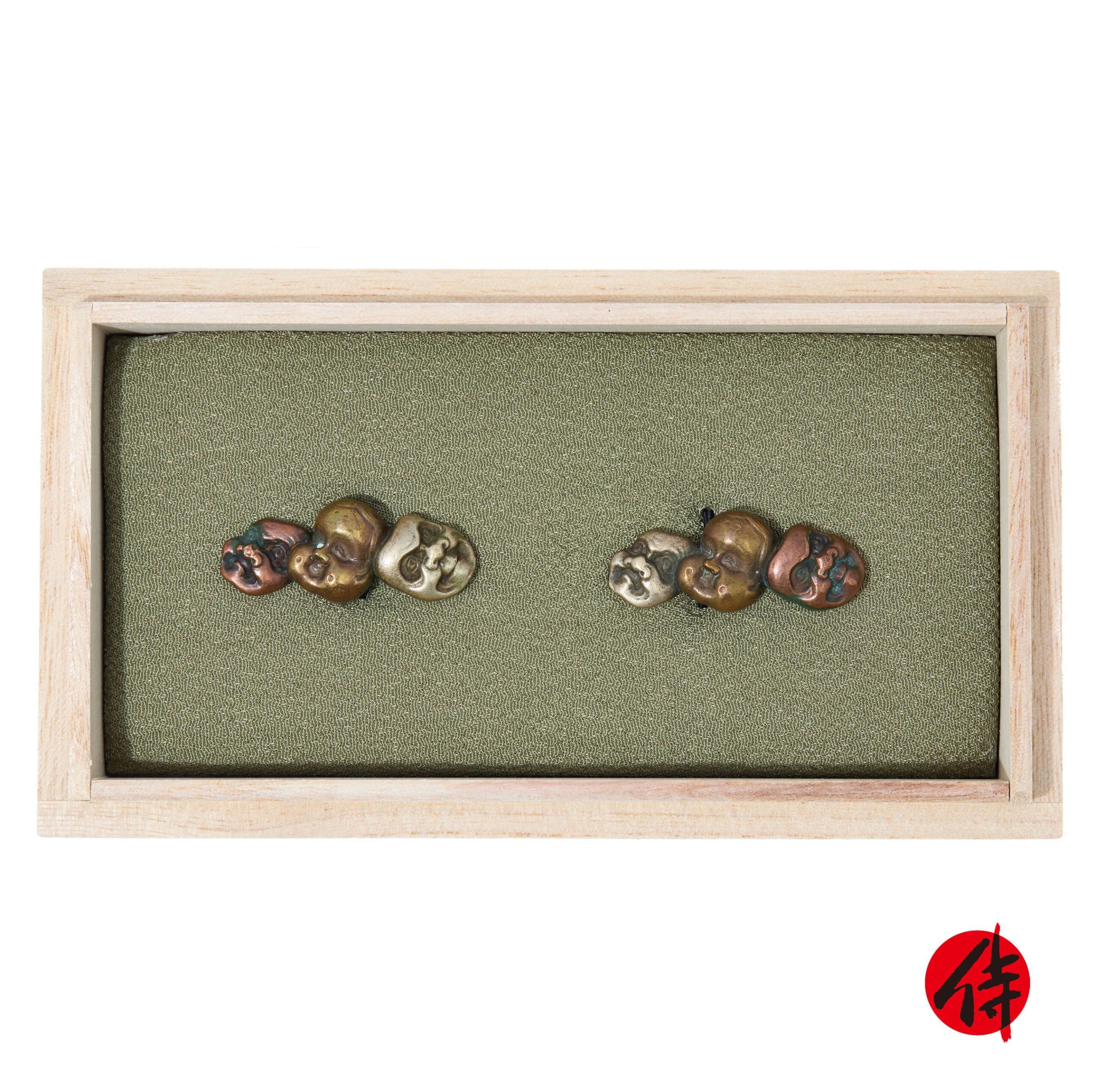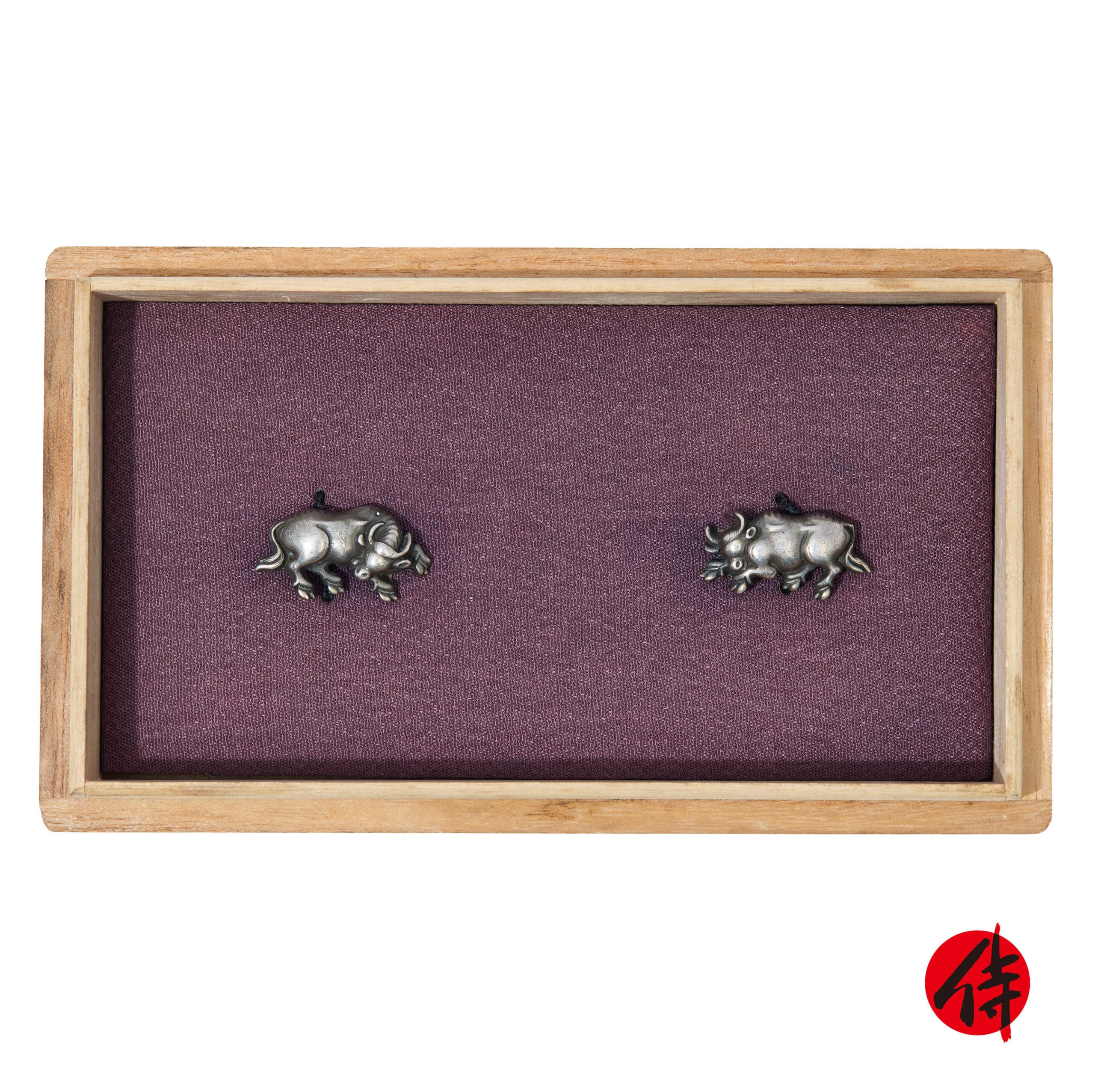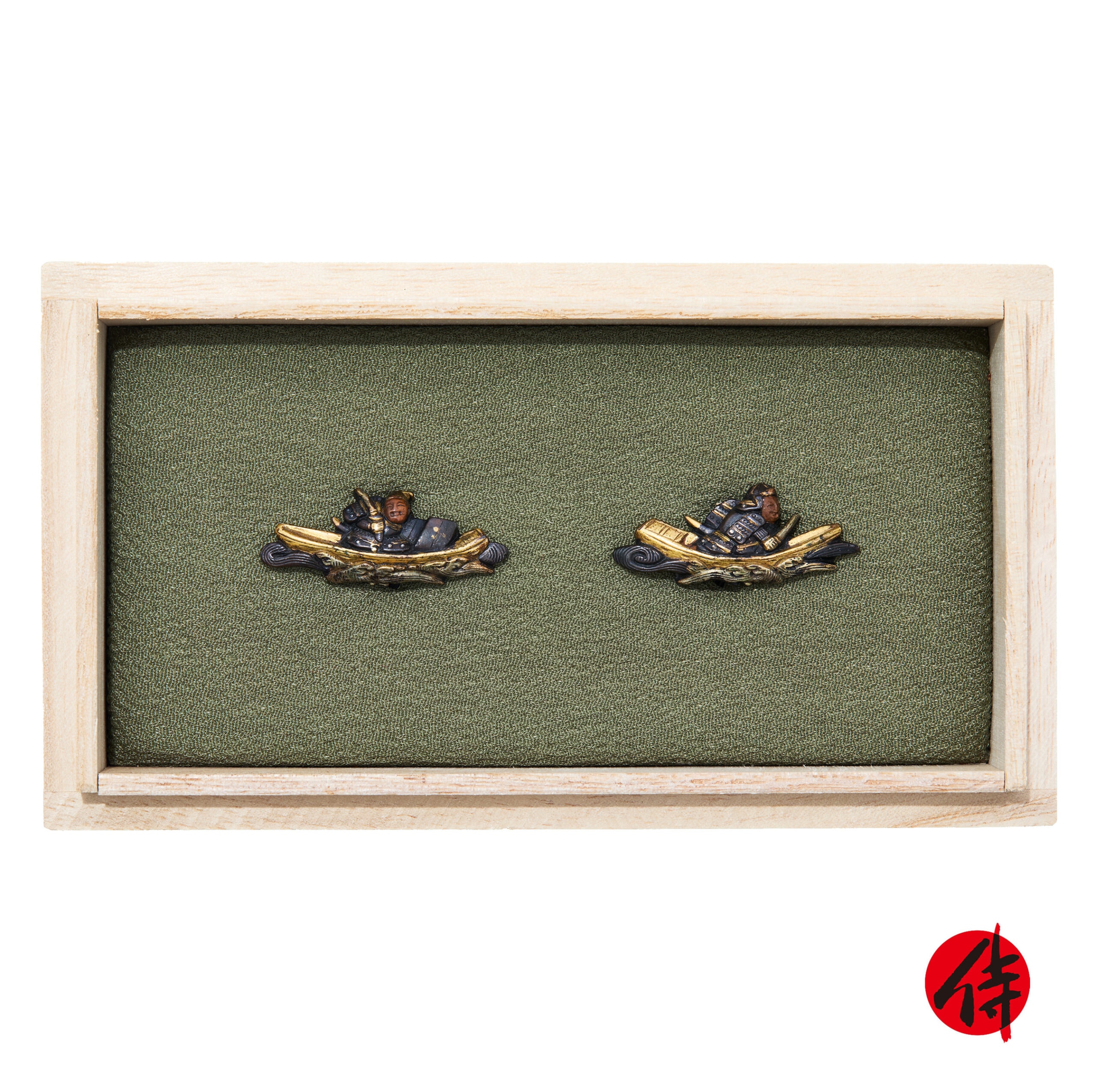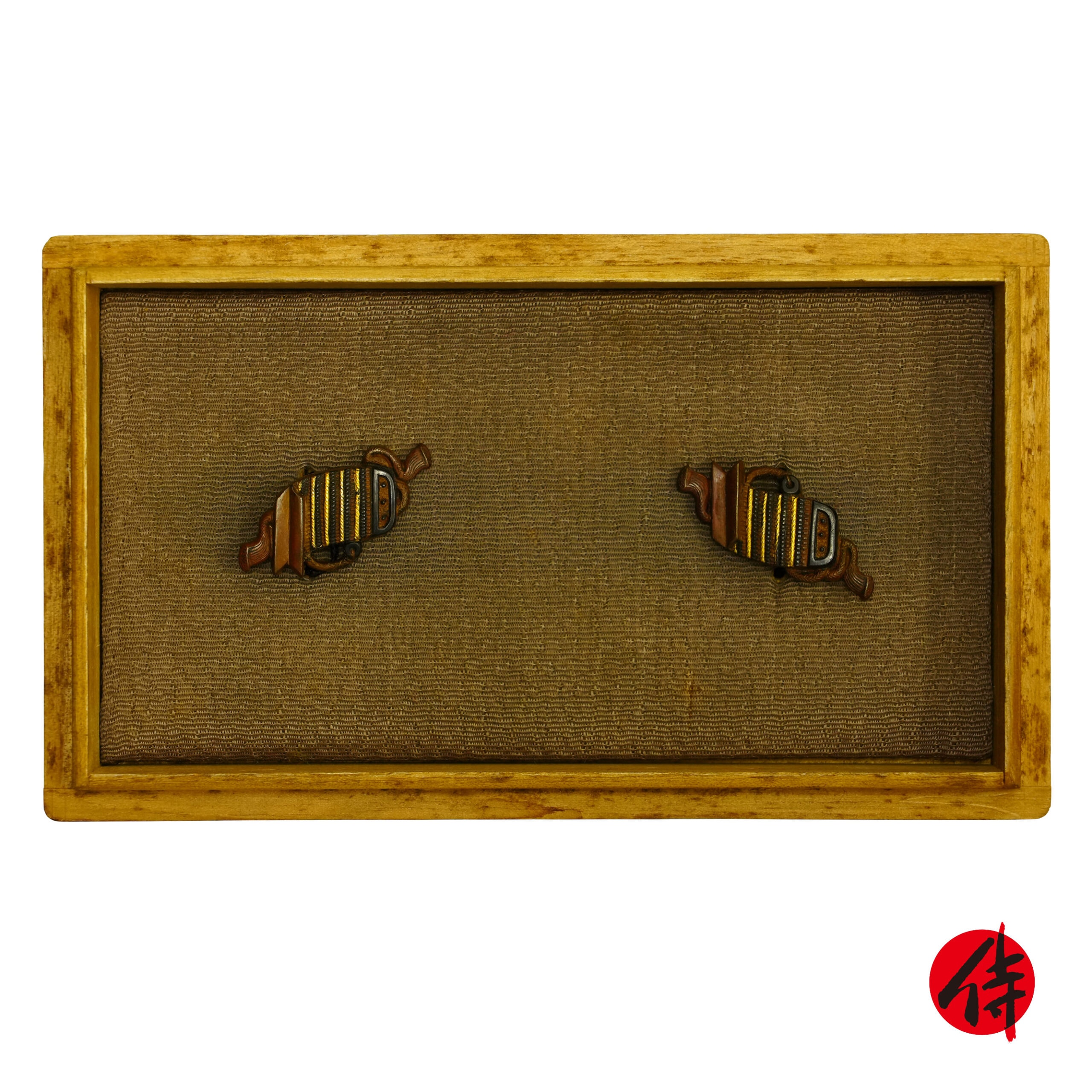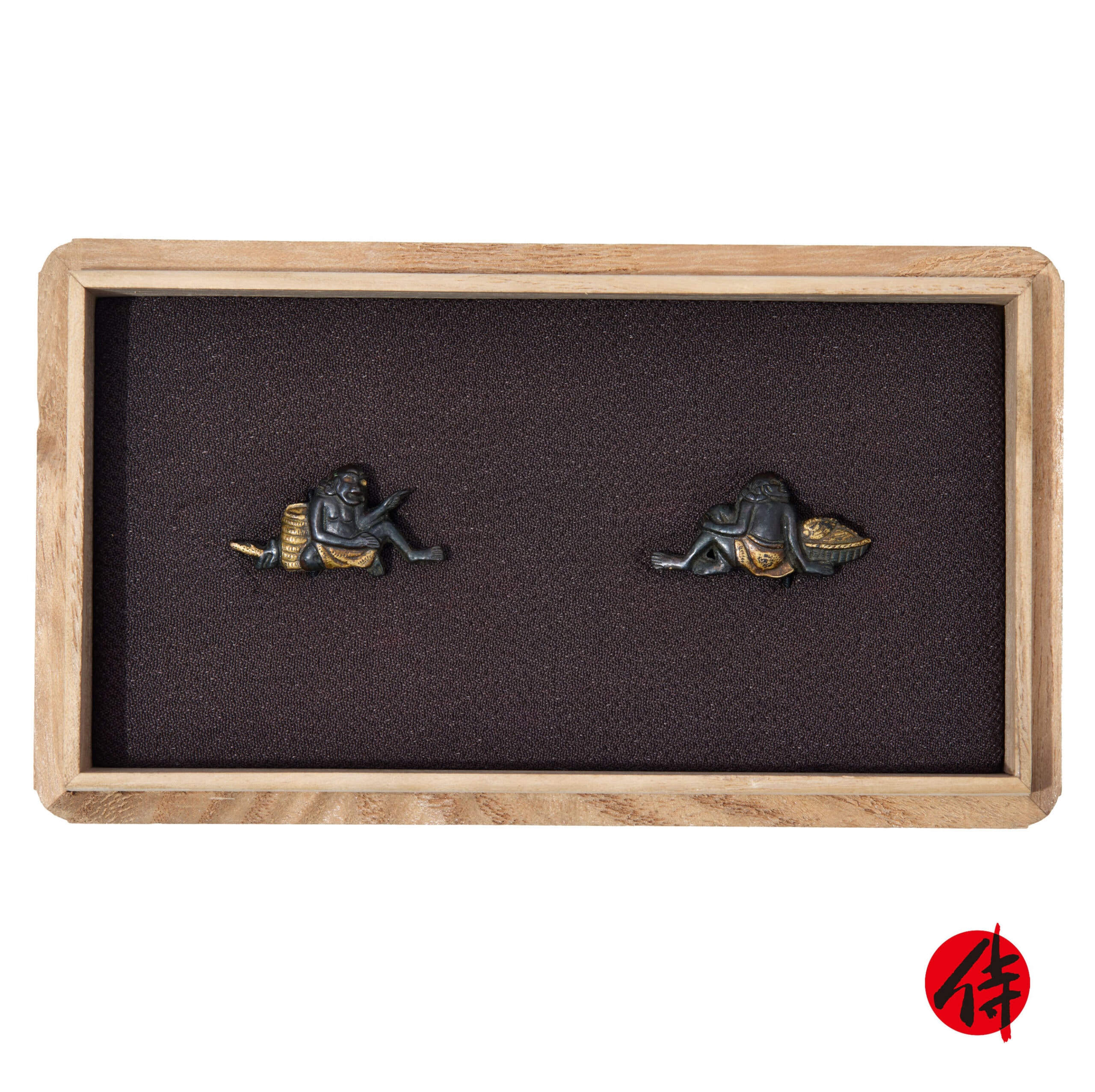
Mid Edo period antique Menuki for Samurai Sword (M-68)
$620
世界81社の刀剣商を横断追跡 · 価格履歴 · 売却アーカイブ
時代
Edo
Title: Dattan-jin Zu Description According to the authentication paper, the theme of this menuki is Dattan-jin (韃靼人). The term Dattan historically referred to the Tatar or Mongol-related nomadic peoples who appeared around the Inner Mongolian region from around the 8th century onward. In Japan, the word Dattan was used more broadly to describe people from the northern continental regions of Asia, particularly Central Asia and the Mongolian steppe. In Japanese art of the Edo period, figures identified as Dattan-jin were often depicted wearing distinctive foreign-style clothing and hairstyles, representing people from distant lands and reflecting Japan’s historical fascination with cultures beyond its borders. This menuki also demonstrates the carving technique known as Katachibori (容彫). In this technique, the main subject—such as a human figure, animal, or plant—is carved directly from the metal without adding background elements or surrounding scenery. By leaving the outline of the motif itself as the primary form, the design emphasizes the presence and shape of the subject, creating a clear and powerful expression. What is Menuki? Menuki is a kind of metal fitting of the Japanese sword, which was initially put into the handle’s hole. It covers Mekugi (nail) so that the blade of a sword will be fixed. Originally, Menuki was used to hold Mekugi, but they became separated over time. And then, Menuki had developed its practicality and beauty for the decoration of the Japanese sword. Menuki became more decorative than in early modern times. Since it had been attached under the Tsukamaki (the handle of the Japanese sword wrapped by thread), Menuki played an essential role in making it easier to grip the sword’s handle. Why is it that the sword mounting was important for Samurai? The sword mountings of the Japanese sword have many kinds of decorations such as handguards (Tsuba), sword hilt (Menuki), pommel (Fuchi Kashira). The Japanese sword worked as a weapon and as an object to show who he was. For example, it shows their personalities and beliefs. You could say that it is like decorations for smartphones today. We recommend you zoom in on the pictures of the sword fittings. When you do so, you can see the skill of Japanese metal engraving techniques. They are mainly made of iron and copper with inlays of gold, silver, and bronze. When it comes to handguard (Tsuba), each one has a different outline and weight. These sword fittings that have lived with Japanese swords of the same age might be worth as much as the Japanese swords. They are inconspicuous parts of the Japanese sword. Nevertheless, if you are knowledgeable or particular about it, you will become a connoisseur of the Samurai. A B Authentication Paper : NTHK Kanteisho Certificate for the (No. 13500) NTHK , also known as NPO Nihon Touken Hozon Kai, is the oldest organization for sword authentication of Japanese swords in modern times. It was established in 1889 during the post-Samurai era. They authenticated the Menuki on December 21st in the 7th year of Reiwa (2025). The purchaser will receive this original certificate as well. We can also translate what is written into English and make a PDF file for your record if you request. 【About us】 Samurai Museum is located in Tokyo, Japan, exhibiting antique artifacts related to the Samurai history. Samurai Museum Shop is the place for those who are interested in Japanese culture and craftsmanship. We deal with antique Samurai swords/armor, traditional crafts made in Japan and so on. 【Payment method】 We accept payment through Stripe (Credit card), PayPal , Apple Pay or ChromePay, all of which are secure payment methods. Also, you don’t need to make an account on Stripe for the checkout. If you prefer other payment method, please contact us. You may either pay in JPY , USD , AUD , CAD , EUR , CHF or GBP . The price is set in Japanese Yen. Prices in other currencies are automatically calculated based on the latest exchange rate.
 NihontoWatchBETA
$620
世界81社の刀剣商を横断追跡 · 価格履歴 · 売却アーカイブ
Edo
$620
Title: Dattan-jin Zu Description According to the authentication paper, the theme of this menuki is Dattan-jin (韃靼人). The term Dattan historically referred to the Tatar or Mongol-related nomadic peoples who appeared around the Inner Mongolian region from around the 8th century onward. In Japan, the word Dattan was used more broadly to describe people from the northern continental regions of Asia, particularly Central Asia and the Mongolian steppe. In Japanese art of the Edo period, figures identified as Dattan-jin were often depicted wearing distinctive foreign-style clothing and hairstyles, representing people from distant lands and reflecting Japan’s historical fascination with cultures beyond its borders. This menuki also demonstrates the carving technique known as Katachibori (容彫). In this technique, the main subject—such as a human figure, animal, or plant—is carved directly from the metal without adding background elements or surrounding scenery. By leaving the outline of the motif itself as the primary form, the design emphasizes the presence and shape of the subject, creating a clear and powerful expression. What is Menuki? Menuki is a kind of metal fitting of the Japanese sword, which was initially put into the handle’s hole. It covers Mekugi (nail) so that the blade of a sword will be fixed. Originally, Menuki was used to hold Mekugi, but they became separated over time. And then, Menuki had developed its practicality and beauty for the decoration of the Japanese sword. Menuki became more decorative than in early modern times. Since it had been attached under the Tsukamaki (the handle of the Japanese sword wrapped by thread), Menuki played an essential role in making it easier to grip the sword’s handle. Why is it that the sword mounting was important for Samurai? The sword mountings of the Japanese sword have many kinds of decorations such as handguards (Tsuba), sword hilt (Menuki), pommel (Fuchi Kashira). The Japanese sword worked as a weapon and as an object to show who he was. For example, it shows their personalities and beliefs. You could say that it is like decorations for smartphones today. We recommend you zoom in on the pictures of the sword fittings. When you do so, you can see the skill of Japanese metal engraving techniques. They are mainly made of iron and copper with inlays of gold, silver, and bronze. When it comes to handguard (Tsuba), each one has a different outline and weight. These sword fittings that have lived with Japanese swords of the same age might be worth as much as the Japanese swords. They are inconspicuous parts of the Japanese sword. Nevertheless, if you are knowledgeable or particular about it, you will become a connoisseur of the Samurai. A B Authentication Paper : NTHK Kanteisho Certificate for the (No. 13500) NTHK , also known as NPO Nihon Touken Hozon Kai, is the oldest organization for sword authentication of Japanese swords in modern times. It was established in 1889 during the post-Samurai era. They authenticated the Menuki on December 21st in the 7th year of Reiwa (2025). The purchaser will receive this original certificate as well. We can also translate what is written into English and make a PDF file for your record if you request. 【About us】 Samurai Museum is located in Tokyo, Japan, exhibiting antique artifacts related to the Samurai history. Samurai Museum Shop is the place for those who are interested in Japanese culture and craftsmanship. We deal with antique Samurai swords/armor, traditional crafts made in Japan and so on. 【Payment method】 We accept payment through Stripe (Credit card), PayPal , Apple Pay or ChromePay, all of which are secure payment methods. Also, you don’t need to make an account on Stripe for the checkout. If you prefer other payment method, please contact us. You may either pay in JPY , USD , AUD , CAD , EUR , CHF or GBP . The price is set in Japanese Yen. Prices in other currencies are automatically calculated based on the latest exchange rate.
NihontoWatchBETA$620
世界81社の刀剣商を横断追跡 · 価格履歴 · 売却アーカイブ
Edo
$620