二世紀半の泰平のあいだ、刀は武器である以上に武士の身分の標章であった。江戸の実証と大坂の華やぎのように都市ごとの作風が育ち、時代の末には需要も細っていく。
Skip to content ITEM# UJTA049 – Catalogue 34 – Sold A Teruyoshi Tantô (於東武英義作之) This is a beautifully refined Shinshintô tanto by the first generation Teruyoshi, a swordsmith working in Musashi province – the great hub of late Edo swordsmanship centred on Edo itself. Signed with a cherry blossom device ( ôka futaba mon ) and the full location and name inscription, and dated to a day in the eighth month of Bunkyû 3 (August 1863), this is a precisely documented piece made in the final turbulent years before the Meiji Restoration. The blade is hira-zukuri in form – flat-ground with no ridge, the classical tanto configuration – with zero sori, giving it a composed, purposeful profile at 29.4 cm. The hamon is a gorgeous gunome-chôji-midare that runs the full length of the blade with an energy and clarity that belies the modest dimensions. The boshi is a saki-Jizo form – midare komi rolling into a rounded tip that resembles the profile of Jizo Bosatsu. An eye-catching island of nie crystals is embedded within the hamon, one of those small miracles of the polishing stage that rewards careful examination. The NBTHK awarded Tokubetsu Hozon in 1998, a strong endorsement of the blade’s quality. The shirasaya carries a sayagaki by the late Satô Kanzan, one of the great sword scholars of the 20th century, inscribed in summer of 1974. The late Edo tanto-koshirae – glossy black lacquered saya with purple silk cord and braid – is an elegant complement, fitted with a kozuka, iron tsuba, gold menuki depicting Yebisu (god of fishermen and luck), and a kashira bearing a matching family crest. Gold habaki, gold menuki, purple everywhere: this is a koshirae of considerable refinement. Item Number UJTA049 Sword Type Tantô Swordsmith Teruyoshi (first generation) Swordsmith (JP) 英義 Signature (Ôka futaba mon) Tôbu ni oite Teruyoshi kore o tsukuru Date Bunkyû 3 (1863), 8th month Province Musashi Period Shinshintô – Late Edo period (Bunkyû era: 1861-1864) Nagasa 29.4 cm Sori 0.0 cm Moto-haba 2
 NihontoWatch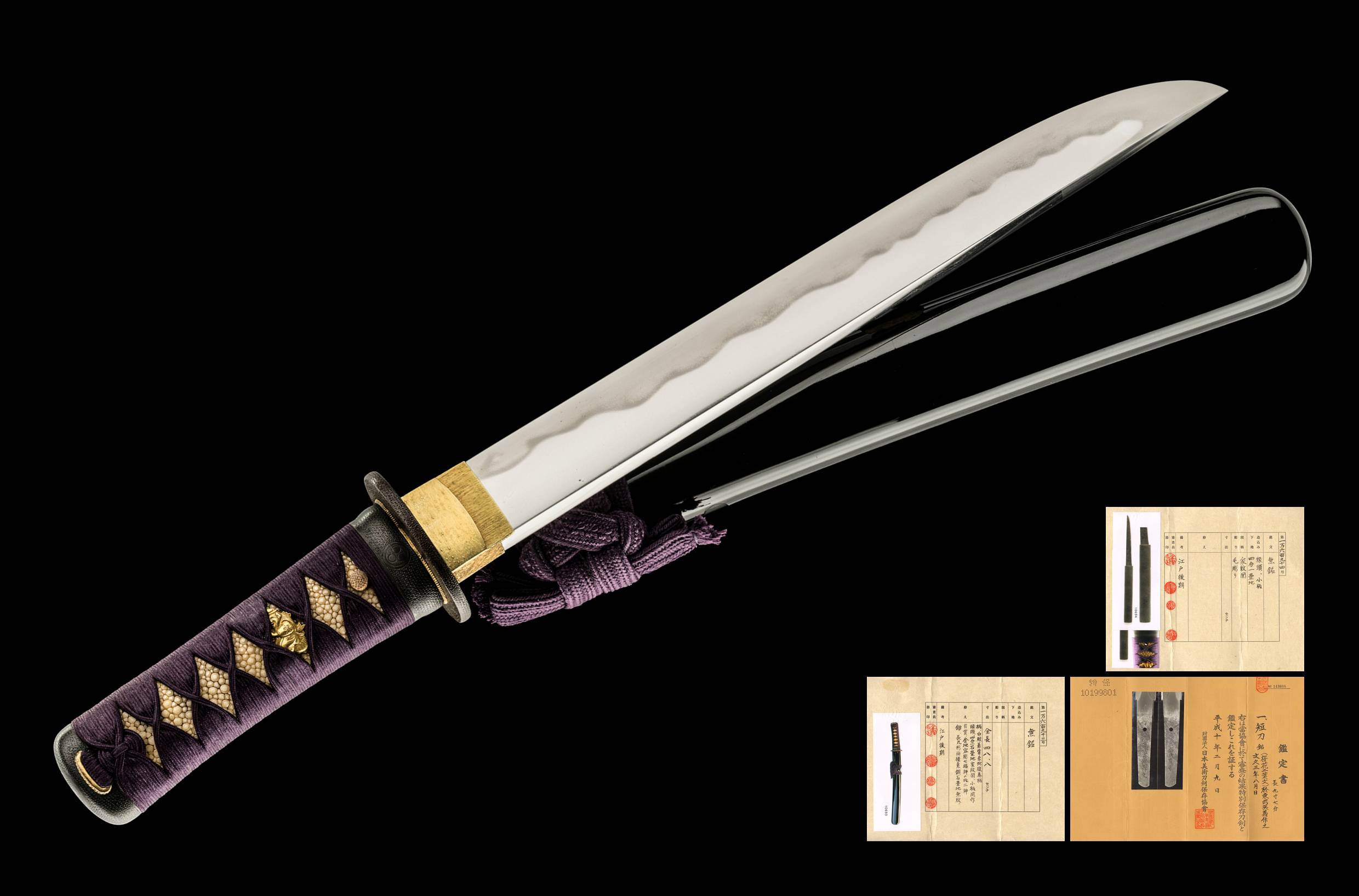
武蔵 · 1861-1864頃
藤代 Jo saku · 刀剣大鑑 上位60%
現在1点販売中
二世紀半の泰平のあいだ、刀は武器である以上に武士の身分の標章であった。江戸の実証と大坂の華やぎのように都市ごとの作風が育ち、時代の末には需要も細っていく。
保存刀剣のうち、出来が一層優れ、保存状態も良好と認められたものです。再刃や、室町・江戸期の多くの無銘作は対象外となり、保存刀剣より高い基準が課されます。
日本美術刀剣保存協会(NBTHK)は、1948年に設立され、文化庁の監督を受ける公益財団法人で、東京・刀剣博物館に本部を置きます。専門の審査員が出品作を直接審査し、美術的・歴史的価値に応じた鑑定書を発行します。NBTHKの鑑定書は、日本刀および刀装具の真正性を示す最も広く認知された基準です。
NBTHK公式サイトAll swords come with a three-day inspection period beginning from the date of delivery. If not satisfied, the sword may be returned within this period for a full refund of the purchase price. Outside of this period, all sales are final. Swords purchased on a layaway payment plan are not eligible for the three-day inspection period.
Skip to content ITEM# UJTA049 – Catalogue 34 – Sold A Teruyoshi Tantô (於東武英義作之) This is a beautifully refined Shinshintô tanto by the first generation Teruyoshi, a swordsmith working in Musashi province – the great hub of late Edo swordsmanship centred on Edo itself. Signed with a cherry blossom device ( ôka futaba mon ) and the full location and name inscription, and dated to a day in the eighth month of Bunkyû 3 (August 1863), this is a precisely documented piece made in the final turbulent years before the Meiji Restoration. The blade is hira-zukuri in form – flat-ground with no ridge, the classical tanto configuration – with zero sori, giving it a composed, purposeful profile at 29.4 cm. The hamon is a gorgeous gunome-chôji-midare that runs the full length of the blade with an energy and clarity that belies the modest dimensions. The boshi is a saki-Jizo form – midare komi rolling into a rounded tip that resembles the profile of Jizo Bosatsu. An eye-catching island of nie crystals is embedded within the hamon, one of those small miracles of the polishing stage that rewards careful examination. The NBTHK awarded Tokubetsu Hozon in 1998, a strong endorsement of the blade’s quality. The shirasaya carries a sayagaki by the late Satô Kanzan, one of the great sword scholars of the 20th century, inscribed in summer of 1974. The late Edo tanto-koshirae – glossy black lacquered saya with purple silk cord and braid – is an elegant complement, fitted with a kozuka, iron tsuba, gold menuki depicting Yebisu (god of fishermen and luck), and a kashira bearing a matching family crest. Gold habaki, gold menuki, purple everywhere: this is a koshirae of considerable refinement. Item Number UJTA049 Sword Type Tantô Swordsmith Teruyoshi (first generation) Swordsmith (JP) 英義 Signature (Ôka futaba mon) Tôbu ni oite Teruyoshi kore o tsukuru Date Bunkyû 3 (1863), 8th month Province Musashi Period Shinshintô – Late Edo period (Bunkyû era: 1861-1864) Nagasa 29.4 cm Sori 0.0 cm Moto-haba 2
NihontoWatch武蔵 · 1861-1864頃
藤代 Jo saku · 刀剣大鑑 上位60%
現在1点販売中
二世紀半の泰平のあいだ、刀は武器である以上に武士の身分の標章であった。江戸の実証と大坂の華やぎのように都市ごとの作風が育ち、時代の末には需要も細っていく。
保存刀剣のうち、出来が一層優れ、保存状態も良好と認められたものです。再刃や、室町・江戸期の多くの無銘作は対象外となり、保存刀剣より高い基準が課されます。
日本美術刀剣保存協会(NBTHK)は、1948年に設立され、文化庁の監督を受ける公益財団法人で、東京・刀剣博物館に本部を置きます。専門の審査員が出品作を直接審査し、美術的・歴史的価値に応じた鑑定書を発行します。NBTHKの鑑定書は、日本刀および刀装具の真正性を示す最も広く認知された基準です。
NBTHK公式サイトAll swords come with a three-day inspection period beginning from the date of delivery. If not satisfied, the sword may be returned within this period for a full refund of the purchase price. Outside of this period, all sales are final. Swords purchased on a layaway payment plan are not eligible for the three-day inspection period.

![Katana - Tokuho - by Hideyoshi - 日本刀 刀 (巴紋)藤枝太郎英義造 (新々刀 上作)慶応二寅年二月日katana (tomoe mon) [fujieda tarou teruyoshi zou KEIO 2] (sinsintou jou-saku)](/_next/image?url=https%3A%2F%2Fitbhfhyptogxcjbjfzwx.supabase.co%2Fstorage%2Fv1%2Fobject%2Fpublic%2Flisting-images%2Fe-sword%2FL96324%2F00.jpg&w=2560&q=90)