説明

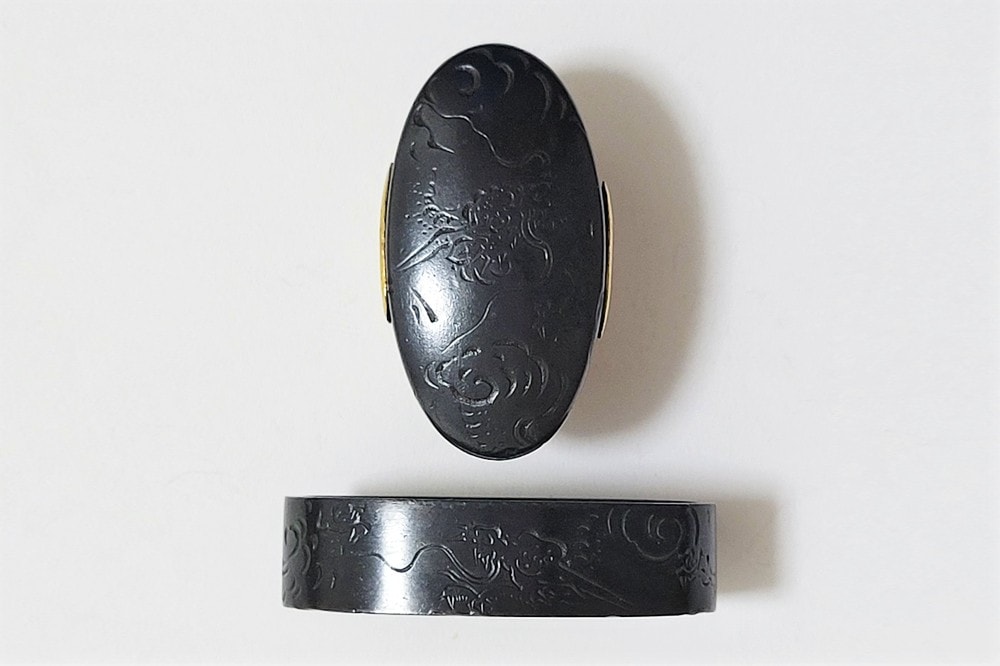
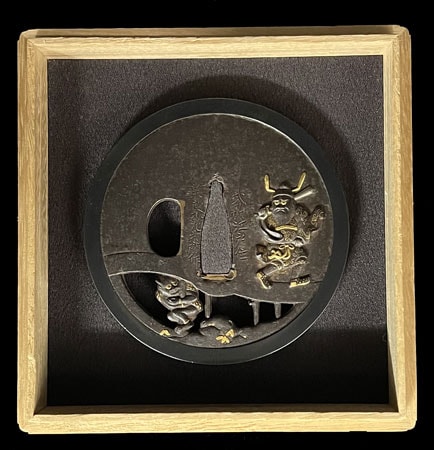
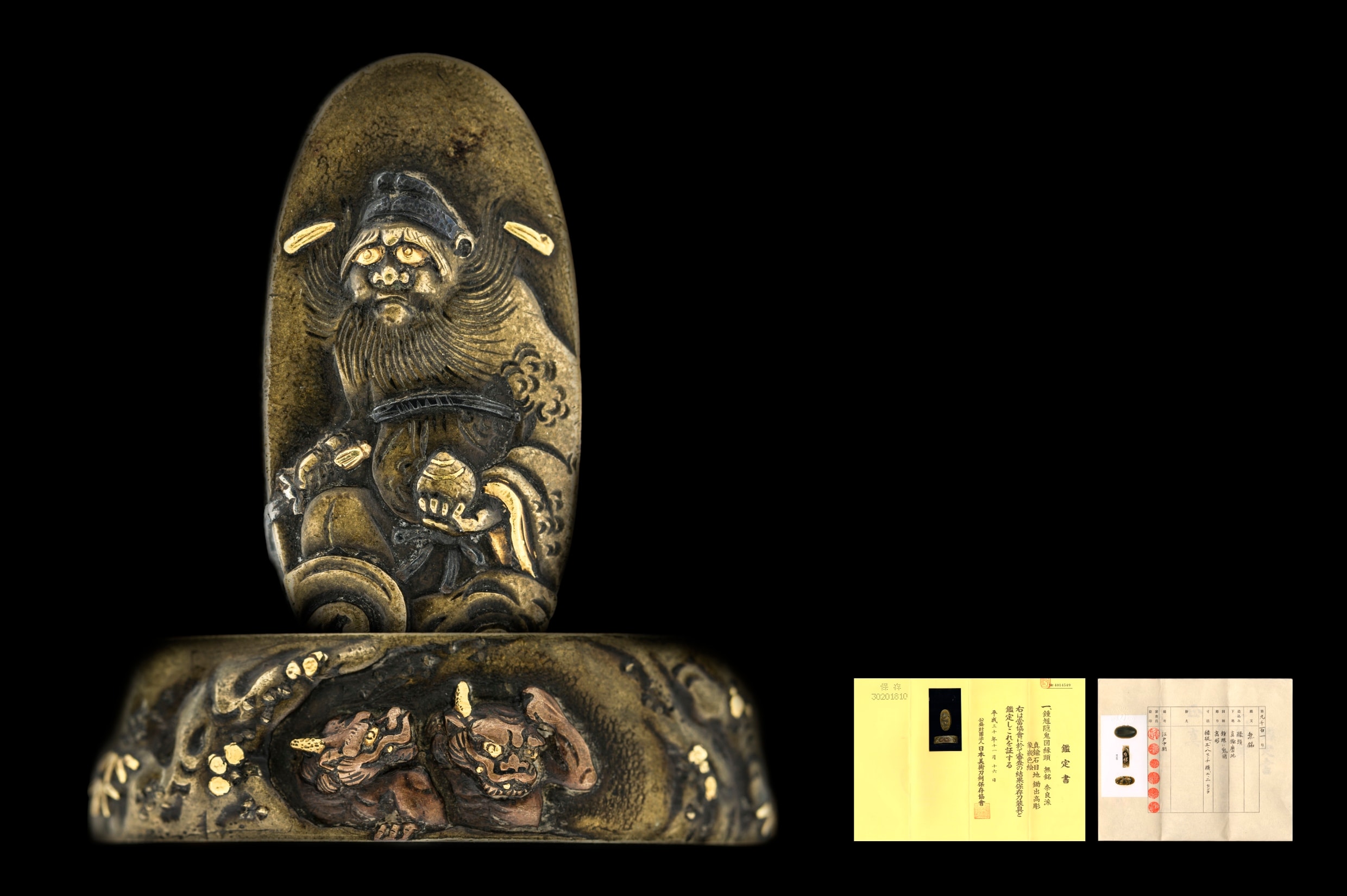
Skip to content ITEM# UJFK087 – Catalogue 31 – Sold A Nara Shôki Fuchi-Kashira (鍾馗隠鬼図縁頭) The Nara school stands apart in the history of Japanese metalwork – a lineage of Edo-period craftsmen working in brass and shakudô with a sculptural ambition rarely matched by their contemporaries. This fuchi-kashira is a superb example of that tradition, attributed by the NTHK-NPO to Tsuchiya Yasuari, one of the school’s most distinguished masters. The brass ground has been worked to a remarkable stone-like surface texture, a hallmark of Nara school technique, against which the figures emerge in bold high relief with inlaid colour accents. The subject is Shôki , the Demon Queller – a figure of enormous popularity in Edo-period Japan. A Tang-era physician who passed the imperial examinations first among all applicants yet was rejected at court for his ugly appearance, Shôki died in shame. The emperor, struck with remorse, had him buried in imperial green robes, and Shôki’s spirit vowed eternal protection against demons of illness and evil. On this fuchi-kashira, the *kashira* shows Shôki in commanding form amid swirling clouds, while the *fuchi* presents a scene of frantic, scrambling demons desperate to evade his gaze. The expressions are extraordinary – each demon an individual character, rendered with a vitality that speaks to a carver working at the height of his powers. The piece carries both an NBTHK Hozon certificate and an NTHK-NPO Kanteisho, the latter providing the specific attribution to Tsuchiya Yasuari of the Nara school. It shares Taoist iconographic origins and the same brass-with-stone-finish material language as the ujtu116 Ryoka Tieguai tsuba, also offered by Unique Japan – collectors wishing to acquire both as a complementary set will be given preference. Item Number UJFK087 Type Fuchi-Kashira Attribution Nara School (Tsuchiya Yasuari, attributed by NTHK-NPO) School Nara School Province Edo (present-day Tokyo) Period Mid-Edo period (circa 1750-1780) Height 3.8

A NARA SHOKI FUCHI KASHIRA (鍾馗隠鬼図縁頭)
売切れ
Hozon売切れ

A NARA SHOKI FUCHI KASHIRA (鍾馗隠鬼図縁頭)

縁頭

売却済

世界81社の刀剣商を横断追跡 · 価格履歴 · 売却アーカイブ

流派について

Nara School奈良派

6 重要刀剣

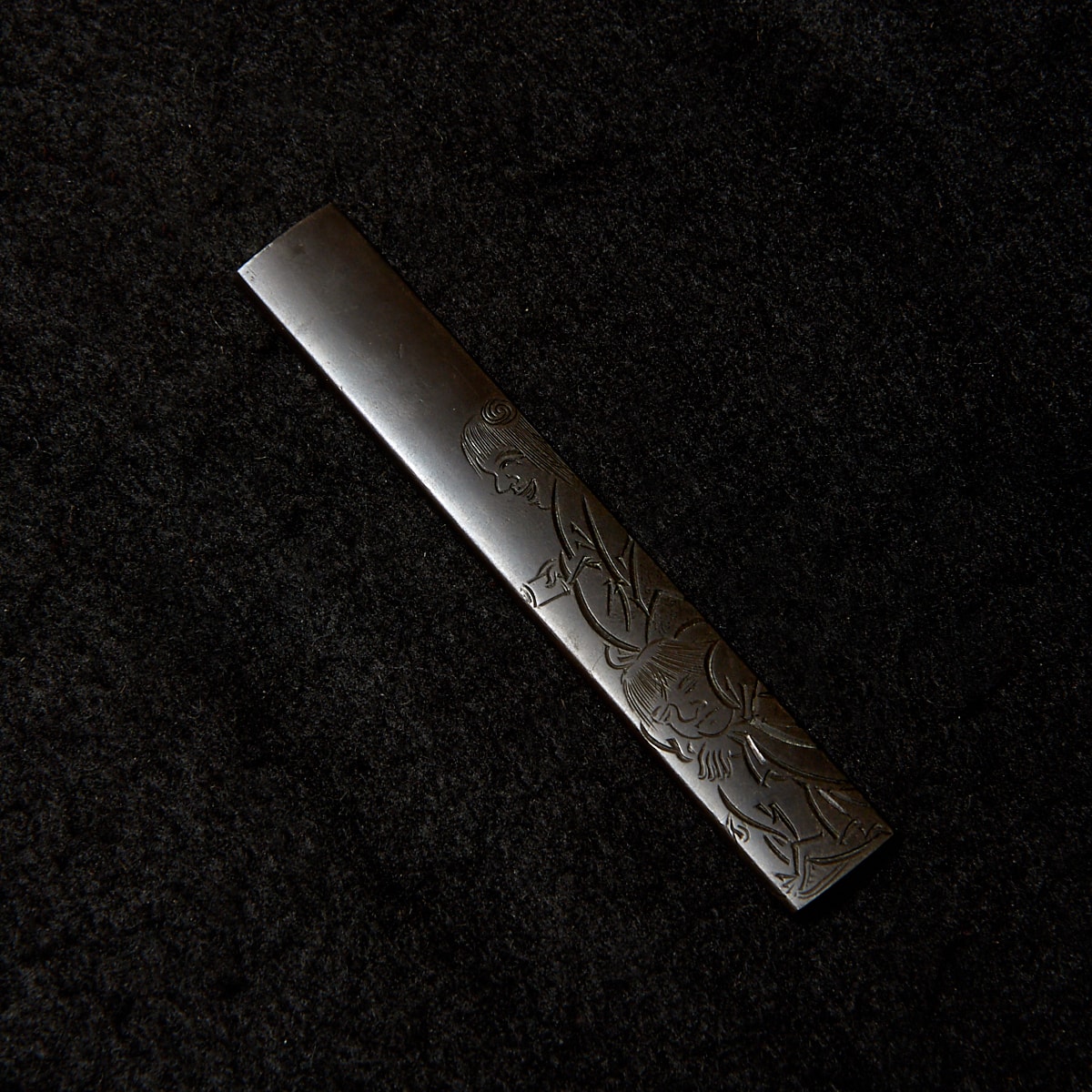
奈良派は、江戸時代中期に隆盛を見た刀装金工の一流派である。後藤家の格式に拠らず、独立した町彫の伝統として発展し、奈良一門の歴代の手を経てその名跡を伝えた。流派の声価を不動のものとしたのは、奈良利寿・土屋安親・杉浦乗意のいわゆる「奈良三作」である。三作の筆頭たる利寿は寛文七年に生まれ、安親はこれに次ぎ、乗意は元禄十四年の生まれにして三人の中では最も若い。安親は出羽国庄内藩士の子として生まれ、若くして正阿弥珍久に学んだ後、元禄十六年江戸へ出て奈良辰政に師事し、天性の才を開花させた。乗意は信州松本の人で、江戸に出て奈良利治門の寿永に学んだと伝えられる。かくして各地より集う才人を糾合し、奈良派は江戸金工の独立した諸流の中にあって最高峰の一角を占めるに至った。 作風においては、流派の標識として彫技と素材の幅広さが挙げられる。地鉄は赤銅・鉄・真鍮・朧銀・四分一・素銅など多様であり、これに石目地・槌目地・磨地などの地荒らしを施す。彫技は鋤出彫・高彫・毛彫・片切彫を基調とし、金・銀・赤銅・四分一・素銅といった色金を象嵌・色絵として的確に配して画題を生かす。三作はこの共通の語彙のうちに各々独自の境地を拓いた。利寿は人物図を得意とし、縁頭の製作に抜群の技を示し、鋤出高彫を基調として隅々にまで力の漲る重厚な彫口を見せる。安親は構図の取り方、色金の配し方、空間の表現において追随を許さぬ均衡を示し、人物・動物・山水・故事と多岐にわたる題材に詩情と物語性を込めた。乗意は朧銀磨地を地金とし、僅かな高低差を活かして対象の表情を豊かに表出する肉合彫の新技を編み出し、象嵌や色絵をあまり用いず鏨の力量のみで意匠を彫り上げた点に独壇場を示す。 評価と伝承においては、奈良派の諸工が刀装具という限られた画面のうちに装飾の域を超えた真の芸術的表現を達成した点が、その名声の根幹を成す。利寿の作は豪壮の気が自然に溢れる品格を備え、僅かな空間を最大限に活用して躍動感を与える技量に特色がある。安親の作には「安親ならでは」「安親の世界」といった文言が繰り返し用いられ、その独創性と芸術性の高さが讃えられ、晩年には古銭を意匠に取り入れた枯淡の作風も見られる。乗意の児落獅子図小柄は、肉合彫を駆使して千尋の谷に我が子を投げ込む獅子を彫り上げた会心の作として重要刀装具に指定され、落下する児獅子の力強さと崖上に見守る親獅子の表情に臨場感が溢れる。これら三作を頂点とする奈良派は、構図の卓抜、全幅にわたる技量の冴え、そして優品を芸術の高みへと昇華させる表現の深さによって、江戸金工の世界に確固たる地位を築き、後世に多大な影響を与えた名門である。
刀剣商

Unique Japan

uniquejapan.com

売切れ