徳川の泰平のもと、大小は法度の定める身分の制服となり、需要は城下町、とりわけ江戸に集まった。工芸は二つに分かれる。目利きのための華やかな鑑賞の作と、截断の結果を金象嵌に刻む実証の刀である。
 NihontoWatchNihontoWatch
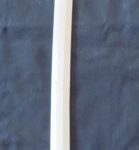
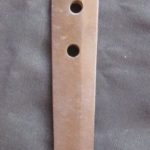
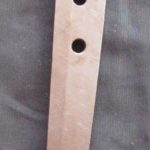
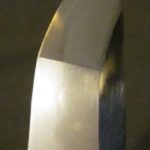
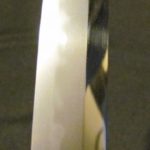
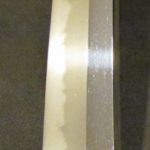
Q412. Suriage, mu-mei katana. Nagasa: 27 9/16″ 70 cm. Sori: 1.5 cm. Moto haba: 3.2 cm. Moto kasane: .75 cm. Saki haba: 2.1 cm. Saki kasane: .45 cm. Nakago nagasa: 7 3/4″ 19.7 cm. Overall in shirasaya: 39″ 100.3 cm. Shinogi zukuri, iore mune, koshi zori, chu kissaki. The hada is a tight itame and is covered in utsuri. The hamon is ko-choji gunome midare with sunagashi, kinsuji, ashi, and other hataraki, all in a consistent nioi-guchi covered in sparkling ko-nie. The boshi is sugu nijuba eding in a swept ko-maru with a short kaeri. This sword is flawless. It is mounted with a gold foil habaki (excellent condition) in competently made shirasaya without defect. There is a Hozon paper from the NBTHK in Tokyo, dated 2014 and giving the blade to Ishido Hata Morihisa. Morihisa (who went by the priest name Toren late in his life) was a smith in the Edo Ishido School; he came out of the group of smiths associated with Mitsuhira. The Ishido School worked in the style of old Bizen; they are known for their choji hamon and utsuri, but with a quieter boshi and tighter hada than those of the earlier Bizen smiths. The working period for Morihisa is about Kanbun (1660); he is rated Chu Jo Saku in Fujishiro and Wazamono for the sharpness of his blades. This is an exceptionally well made blade and I know my photos don’t do it justice. I am often told by my customers that they like a piece much more than they thought they would from my pictures; I’m sure that will be the case here. 2 pounds, 14 ounces.
NihontoWatch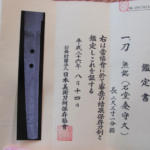
武蔵 · 1648-1652頃
藤代 中上作 · 刀剣大鑑 上位60%
現在1点販売中
江戸時代
徳川の泰平のもと、大小は法度の定める身分の制服となり、需要は城下町、とりわけ江戸に集まった。工芸は二つに分かれる。目利きのための華やかな鑑賞の作と、截断の結果を金象嵌に刻む実証の刀である。
銘が正しい、または無銘でも年代・国・系統を確実に指摘できる、保存に値する真正の作と鑑定されたものです。
日本美術刀剣保存協会(日刀保)は、1948年に設立され、文化庁の監督を受ける公益財団法人で、東京・刀剣博物館に本部を置きます。専門の審査員が出品作を直接審査し、美術的・歴史的価値に応じた鑑定書を発行します。日刀保の鑑定書は、日本刀および刀装具の真正性を示す最も広く認知された基準です。
日刀保公式サイト3-day return window from receipt.