徳川の泰平のもと、大小は法度の定める身分の制服となり、需要は城下町、とりわけ江戸に集まった。工芸は二つに分かれる。目利きのための華やかな鑑賞の作と、截断の結果を金象嵌に刻む実証の刀である。
 NihontoWatchNihontoWatch
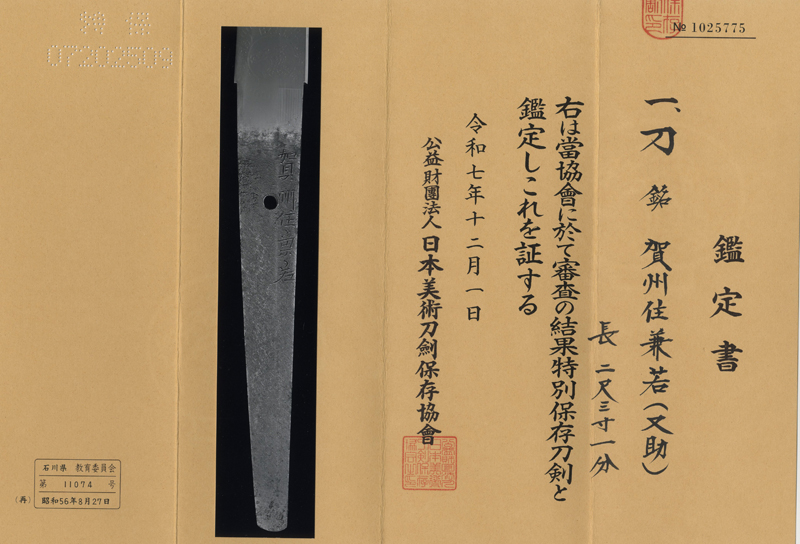
初代兼若は甚六といい、本国が美濃で、後に加賀に移住する。 美濃国志津三郎兼氏の末裔と称し、「加賀正宗」と言われたほどの名匠で越中守を受領し、その後「越中守高平」と改銘。 歴代兼若の中でも特に技量が高く、一番の人気を誇ります。 旧金沢藩では「兼若を持っていれば、禄(給料)が低くても娘を嫁にやる」と言われるほど、武士の間でステータスシンボルとして重宝されました。 二代は又助といい、三代は四郎右衛門という、各代に「兼若」と切る期間が重複したり、先代の代作代銘も多く、裏年記の無い作品は代の見極めが至難といわれていましたが、近年の研究により本作品は二代又助の作品と極められています。 初代(甚六・高平) → 二代(又助) → 三代(四郎右衛門)と続きます。
Certificate reading — 銘 加州住兼若(又助)
NihontoWatch取扱店 イーソード



新刀 · 加賀 · 1624-1644頃
藤代 上作 · 刀剣大鑑 上位37%
現在1点販売中
兼若の位置づけを、日本刀全体および伝法・時代・時期ごとに示します。各区分(随一・屈指・有数・著名)は、NBTHK および文化庁による指定に加え、三作や名物帳などの歴史的栄誉を加味したものです。
各項目を選ぶと評価方法が表示されます。
在銘年紀作が示す、確実に活動していた年代
新刀 · 加賀
現在3点販売中
加州兼若は、加賀国金沢に興った新刀の一門である。その祖は美濃国関の四方助兼若の子と伝え、後に加賀へ移住して鍛刀した工に始まる。初代は辻村甚六と称し、のちに四郎右衛門尉を名乗り、現存する加州打の作刀は慶長十二年ないし十四年紀に始まる。元和五年頃に越中守を受領し、名を高平と改めたとされ、銘も「賀州住兼若造」の六字銘から、受領後は「越中守藤原高平」と切るものが多くなる。二代は又助といい、初代の三男にあたり、「越中守高平三男兼若」[[c:1]]と銘したものや、「加州住兼若 辻村又助年五十三歳造之」[[c:2]]と俗名を入れた作からその出自と年齢が知られる。これに徴すれば慶長十七年の生まれで、寛永から延宝にかけて活躍し、延宝五年に六十六歳で歿している。三代は初代同様に四郎右衛門を名乗り、二代又助の嫡子であって、その刀歴は寛文から正徳に及び、初期には父又助の代作・代銘の仕事も多かったと伝える。 作風は、出身地である美濃の色の濃いものが多い。鍛えは板目に処々柾がかって流れ、肌立ちごころに地沸つき、地景の入るものが見られ、かねが少しく黒みをおびて冴える点に北国物の態がうかがわれる。刃文は湾れ調に互の目、尖り刃、箱がかった刃を交え、足が入り、沸がよくつき、砂流し、金筋がかかり、帽子は乱れ込んで先掃きかけるものが多い。直江志津、美濃志津の風を示す作はことに上手とされる。代の判別には箱刃の現れ方が一つの目安となり、初代の箱がかった刃は沸崩れごころとなって味があるのに対し、二代、三代になるとはっきりとした箱刃を焼く傾向が強まる。地鉄に純然たる柾目を見せる作は三代にまま現れ、刃縁がほつれて砂流し頻りに、帽子も掃きかけて焼詰めごころとなるなど、大和伝に徹したものもある。短刀や剣の作は遺存が少なく、いずれも出来がよい。 鑑定にあたっては、まず美濃色の濃い乱刃と箱がかった刃の質を見、銘振りと俗名・受領銘の有無から代を見分けるのが要点となる。初代の二字銘の作には古調で直江志津ごころを示すものがあり、典型作の一として伝えられる。越中守高平と改名した後の作には、辻村越中守藤原高平と二行に切り、試切の截断銘を金象嵌したものもあり、五度の試し切りを記して切味を示した一口が知られる。三代の柾目鍛えの太刀には葦手絵蒔絵毛抜形太刀が附帯する例もある。加州兼若は前田藩の地に根を張った美濃系の新刀工として数代に及び、その作は加州物の特色をよく示すとともに、銘文に俗名を加えた資料性の高い作も伝わって、新刀加賀鍛冶を考える上で重んじられている。 詳しく見る →
江戸時代
徳川の泰平のもと、大小は法度の定める身分の制服となり、需要は城下町、とりわけ江戸に集まった。工芸は二つに分かれる。目利きのための華やかな鑑賞の作と、截断の結果を金象嵌に刻む実証の刀である。
保存刀剣のうち、出来が一層優れ、保存状態も良好と認められたものです。再刃や、室町・江戸期の多くの無銘作は対象外となり、保存刀剣より高い基準が課されます。
日本美術刀剣保存協会(NBTHK)は、1948年に設立され、文化庁の監督を受ける公益財団法人で、東京・刀剣博物館に本部を置きます。専門の審査員が出品作を直接審査し、美術的・歴史的価値に応じた鑑定書を発行します。NBTHKの鑑定書は、日本刀および刀装具の真正性を示す最も広く認知された基準です。
NBTHK公式サイトクーリングオフ(返品や交換)はお品物が届いてから3日以内であればお受け致します。※返品送料、返金振込手数料はお客様のご負担とさせていただきます。※お品代以外の費用(振込手数料、クレジットカード手数料等)の返金はできません。※お届け先が海外の場合は返品や返金は出来ません。
¥1,300,000