徳川の泰平のもと、大小は法度の定める身分の制服となり、需要は城下町、とりわけ江戸に集まった。工芸は二つに分かれる。目利きのための華やかな鑑賞の作と、截断の結果を金象嵌に刻む実証の刀である。
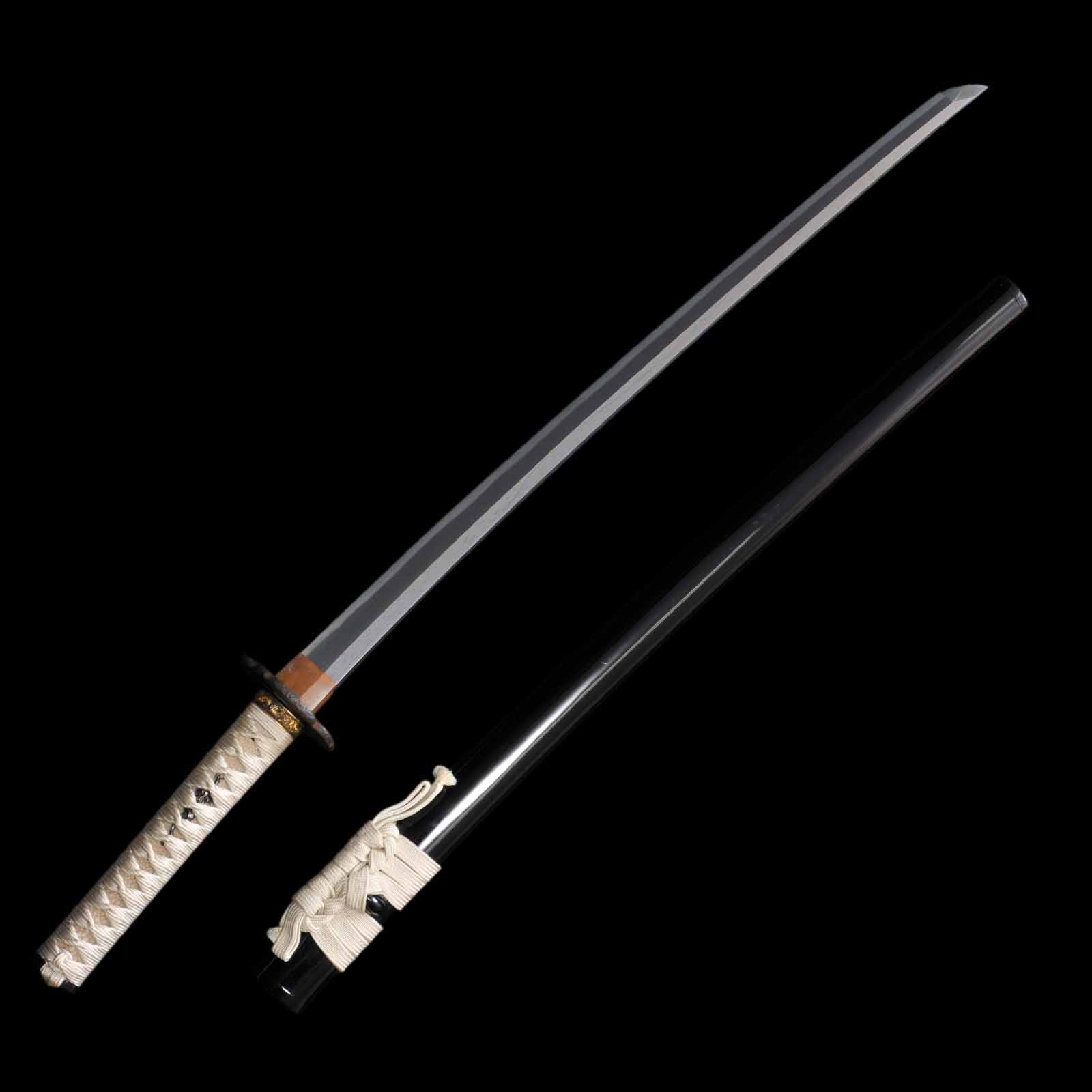
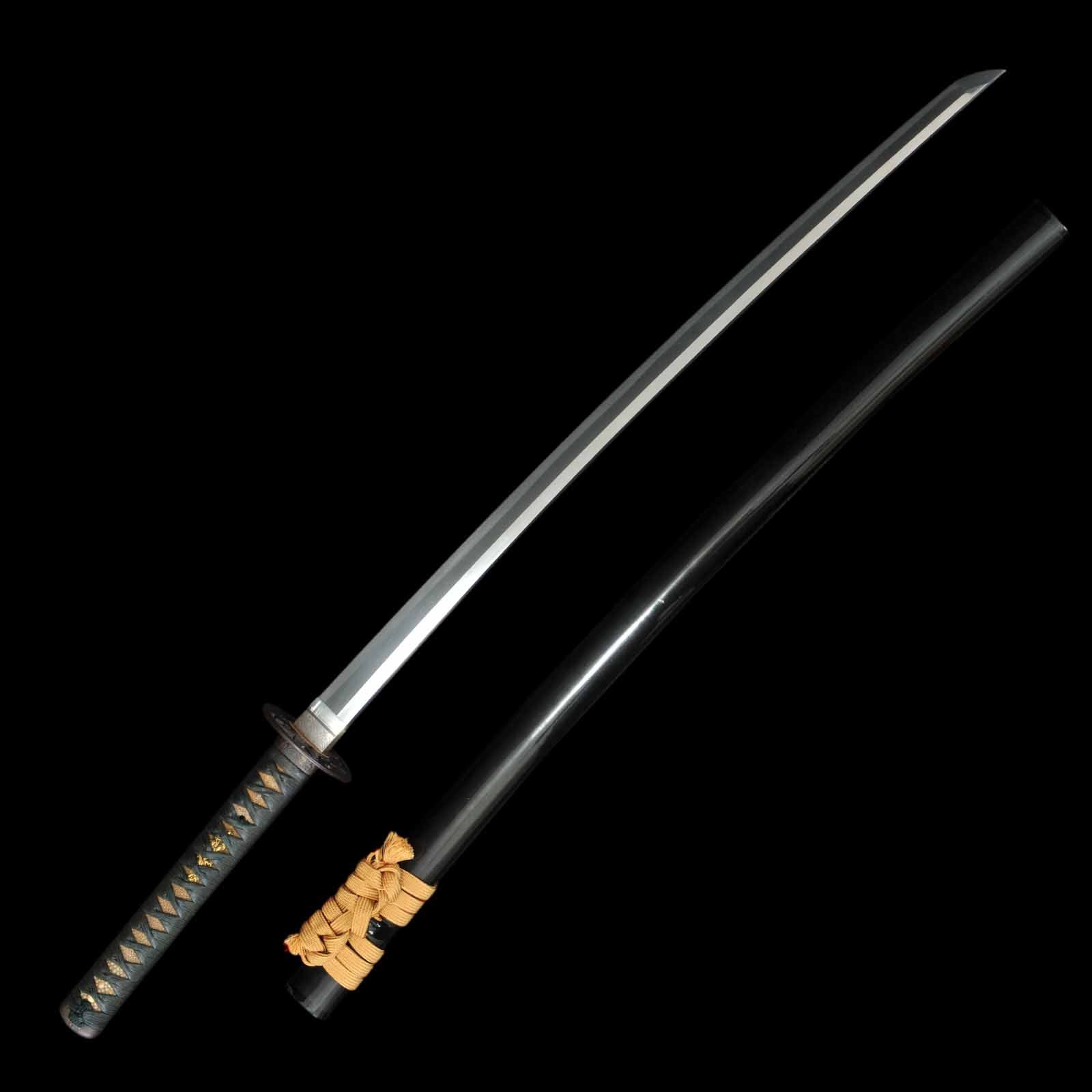
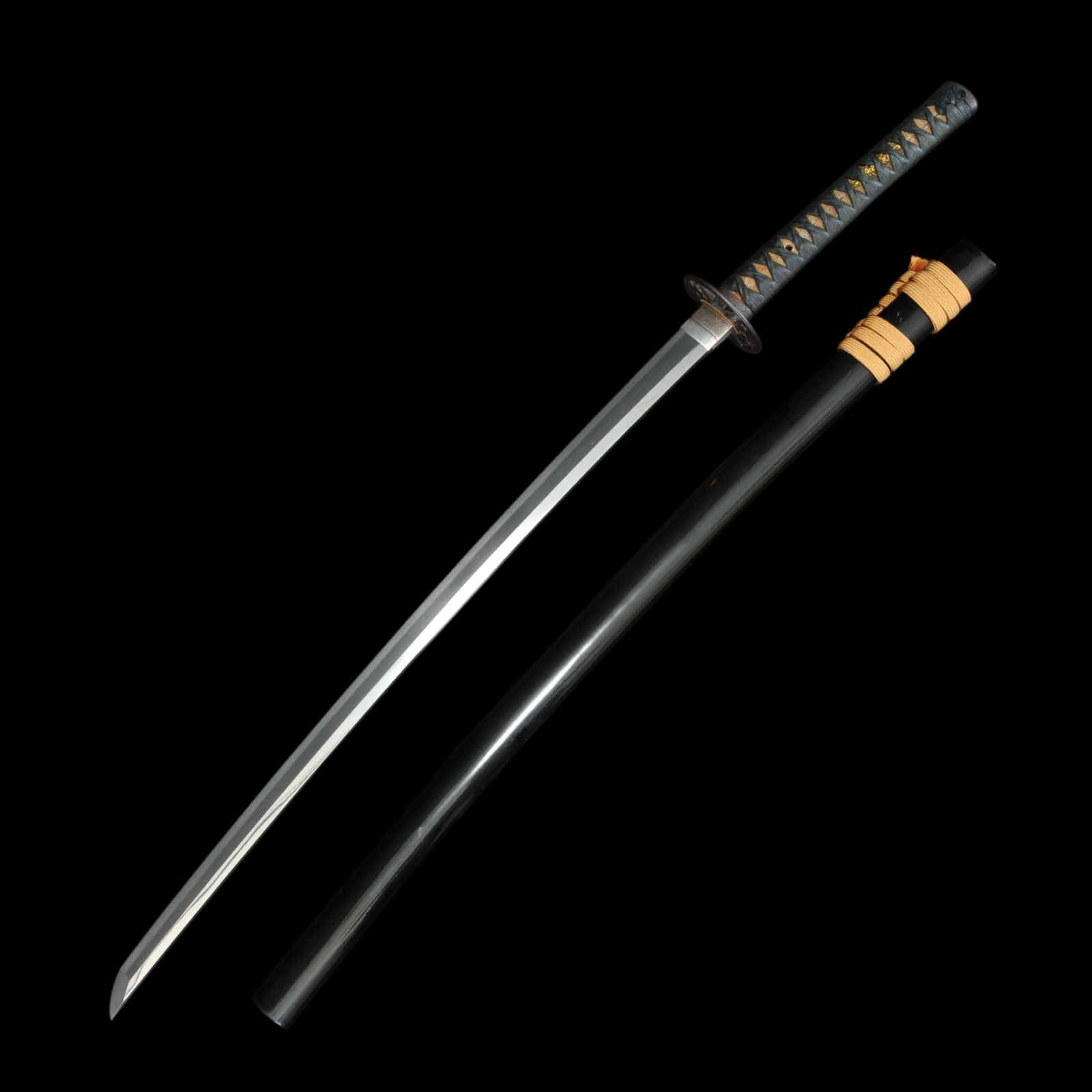
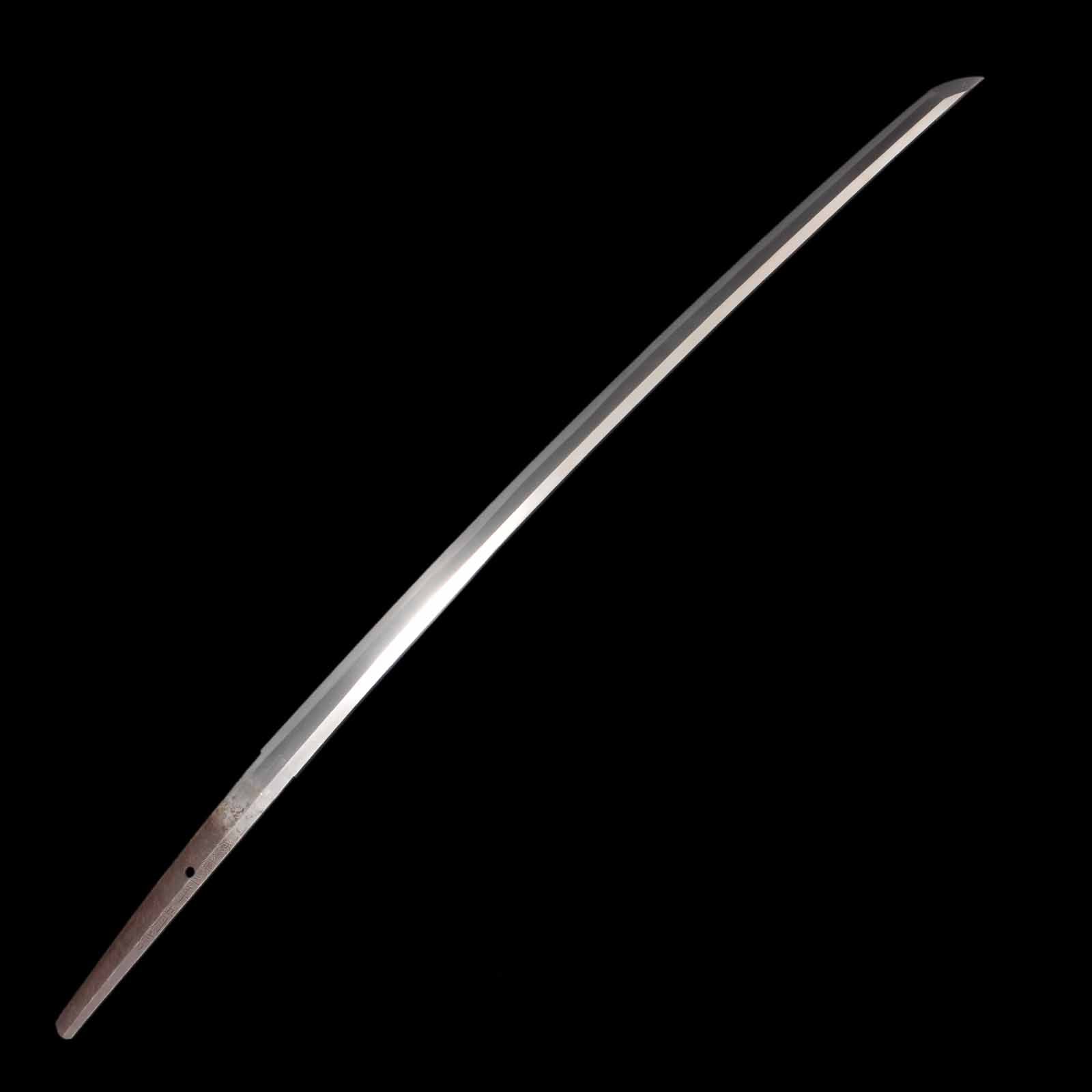
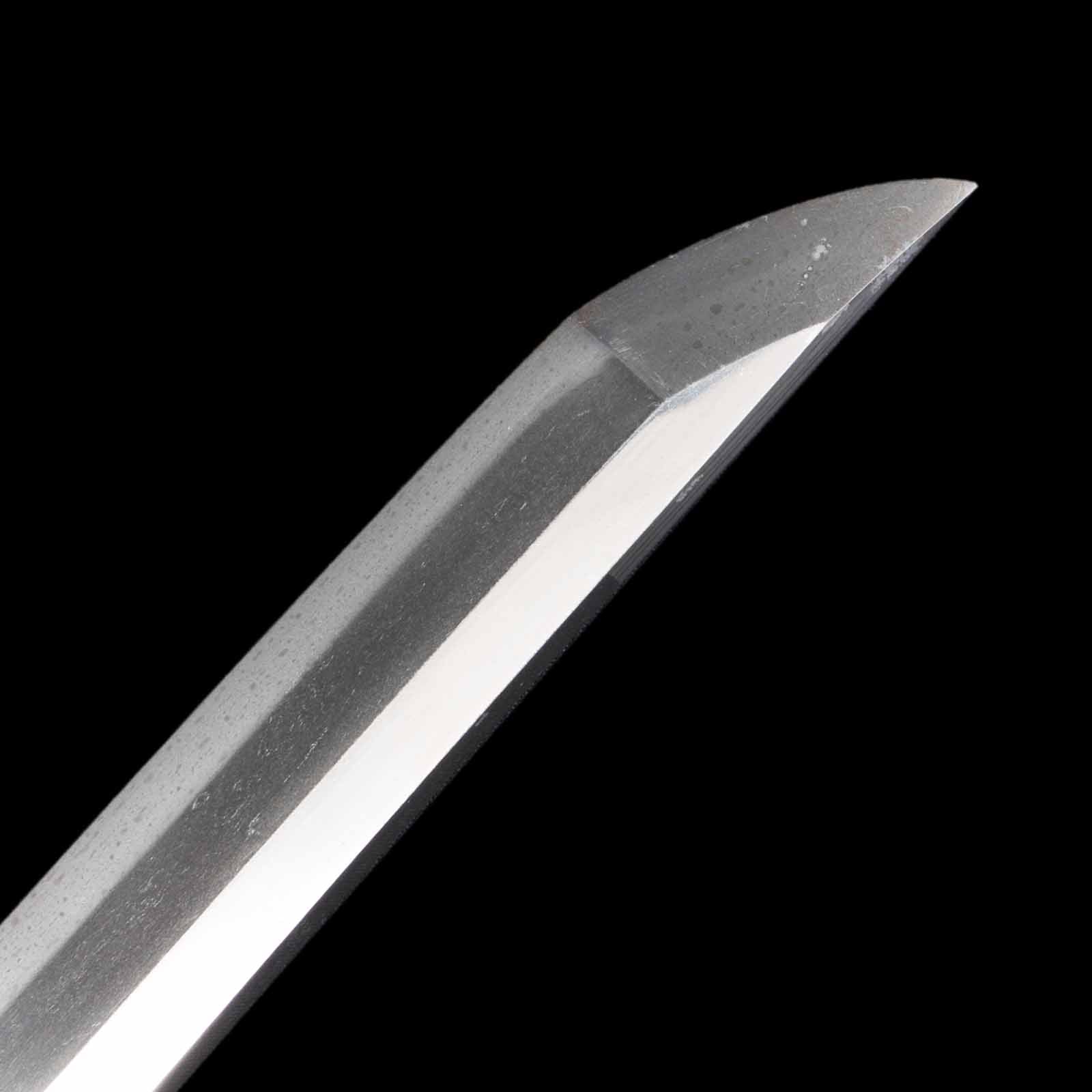
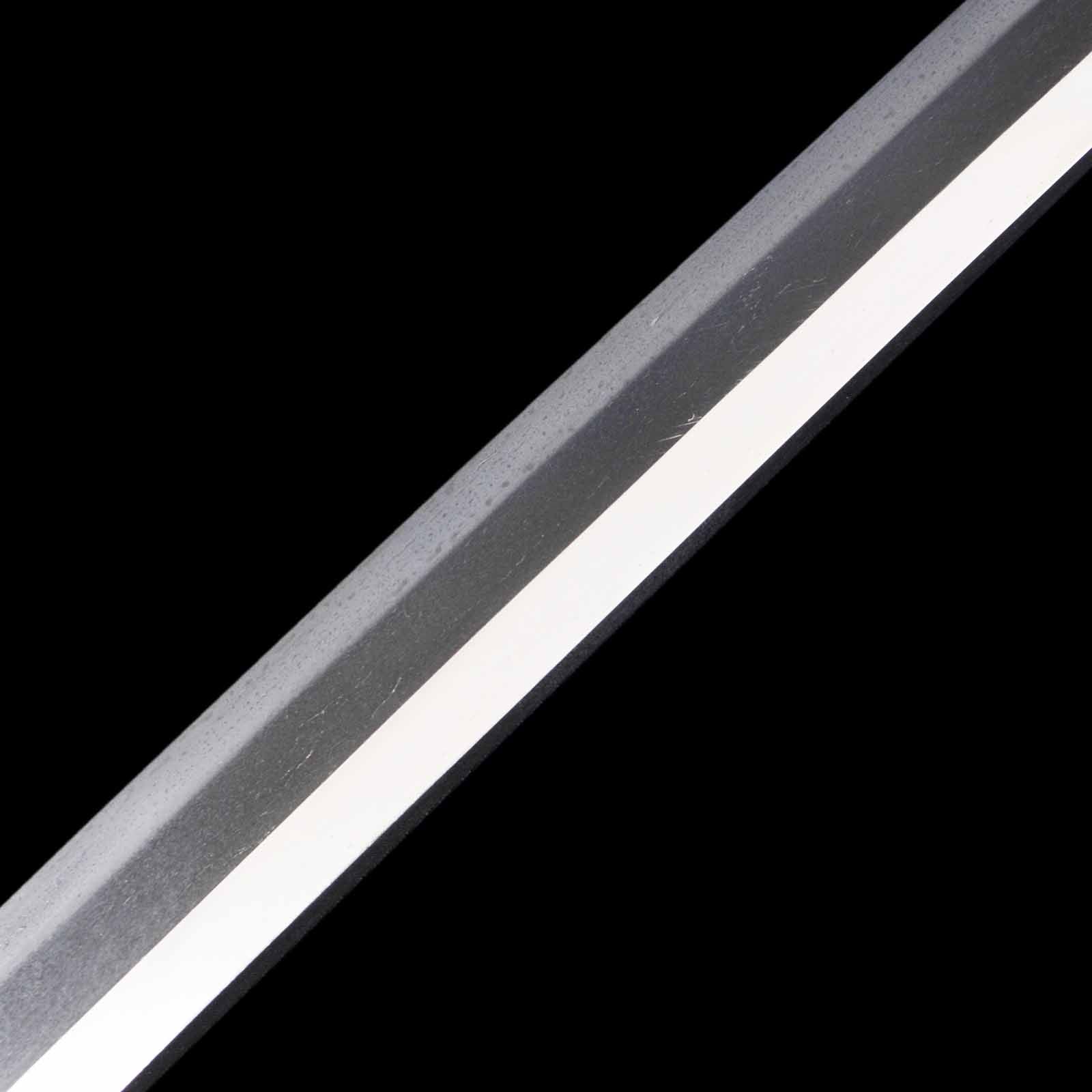
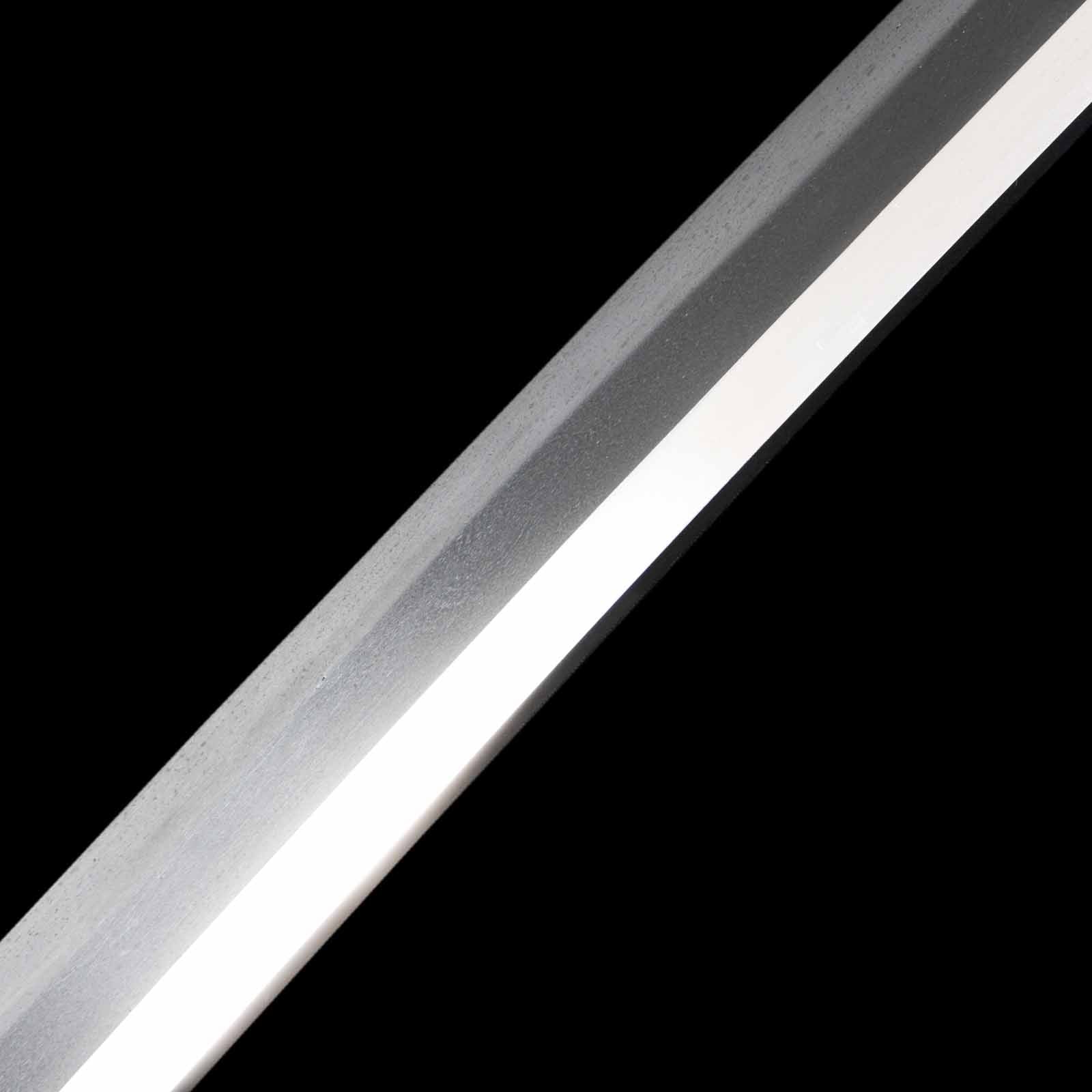
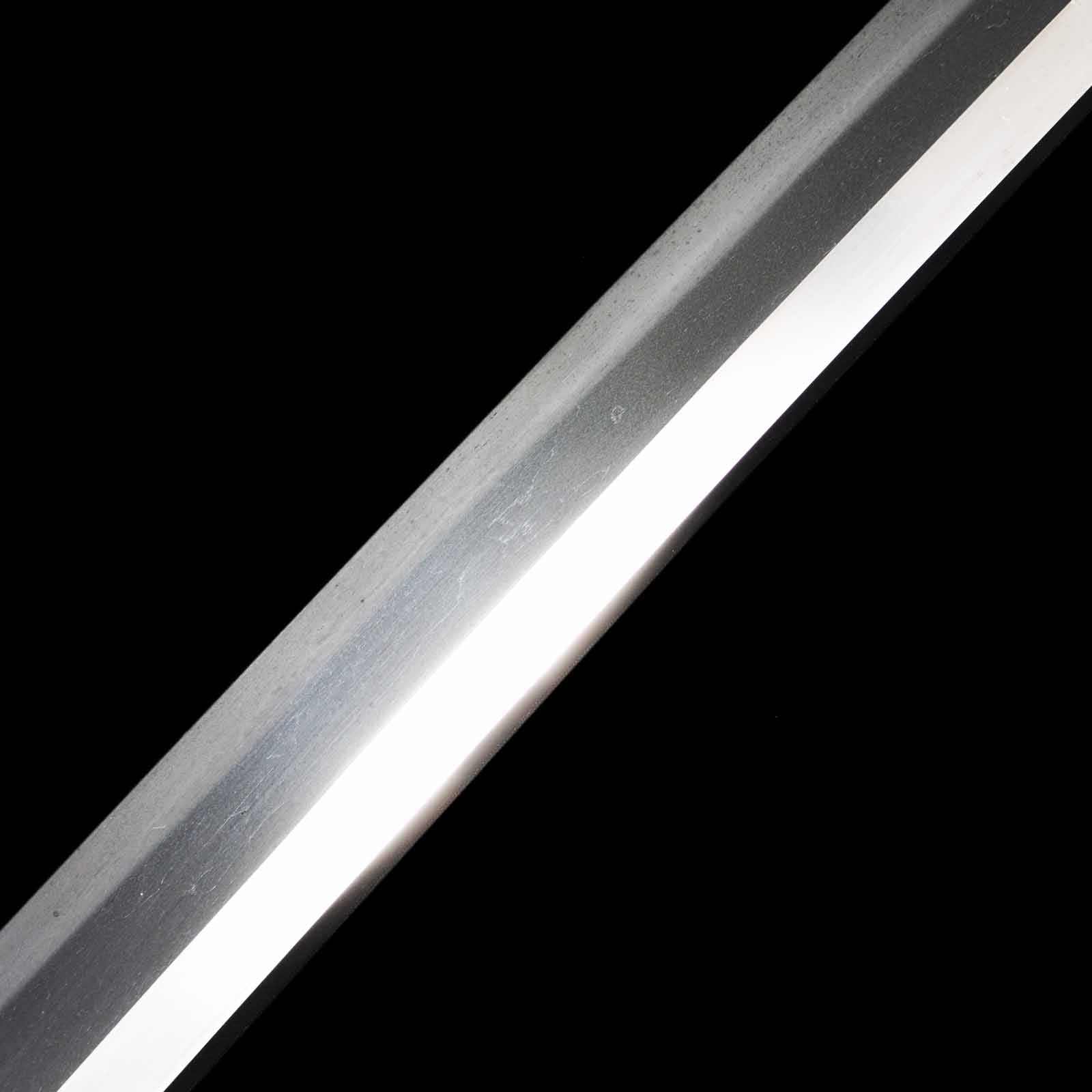
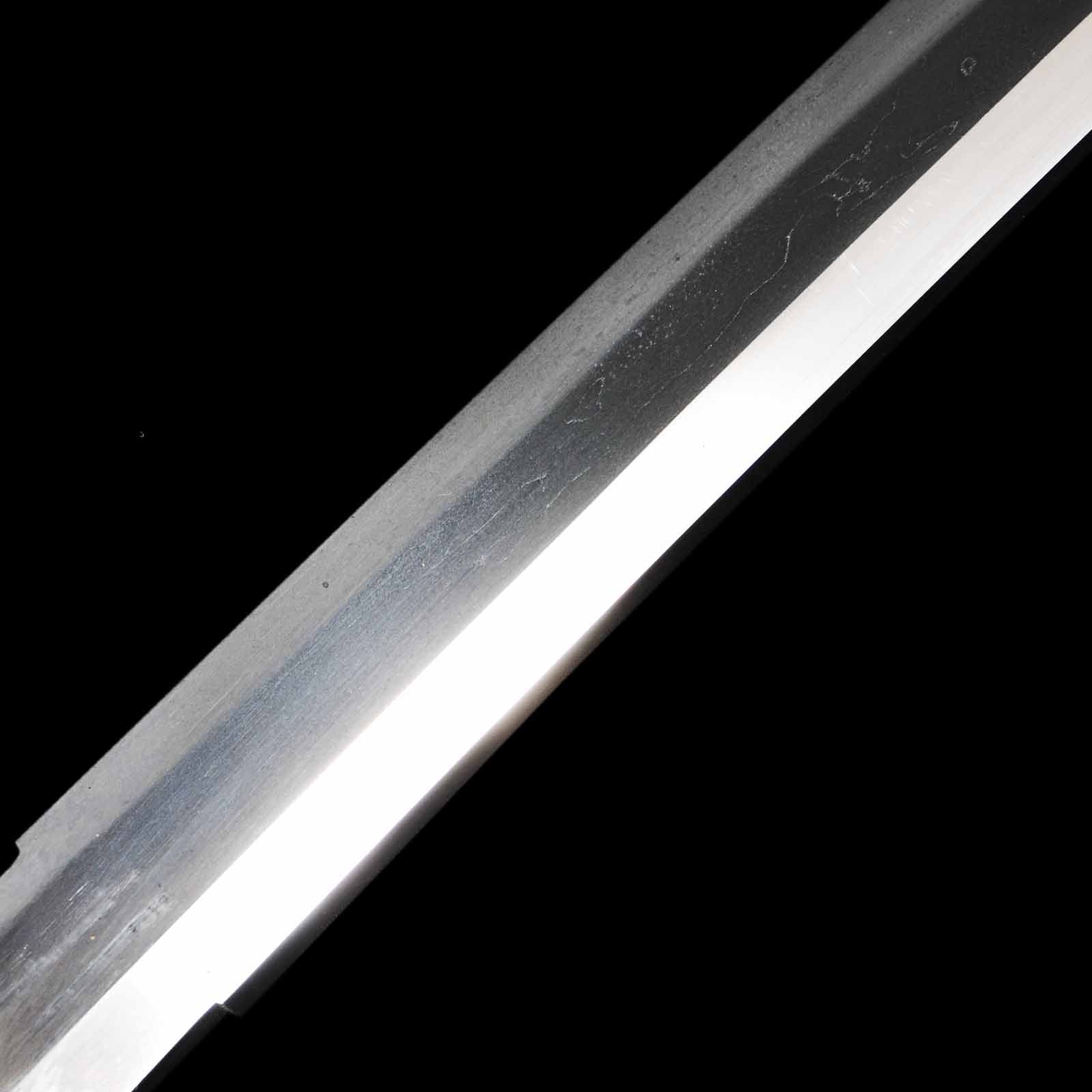
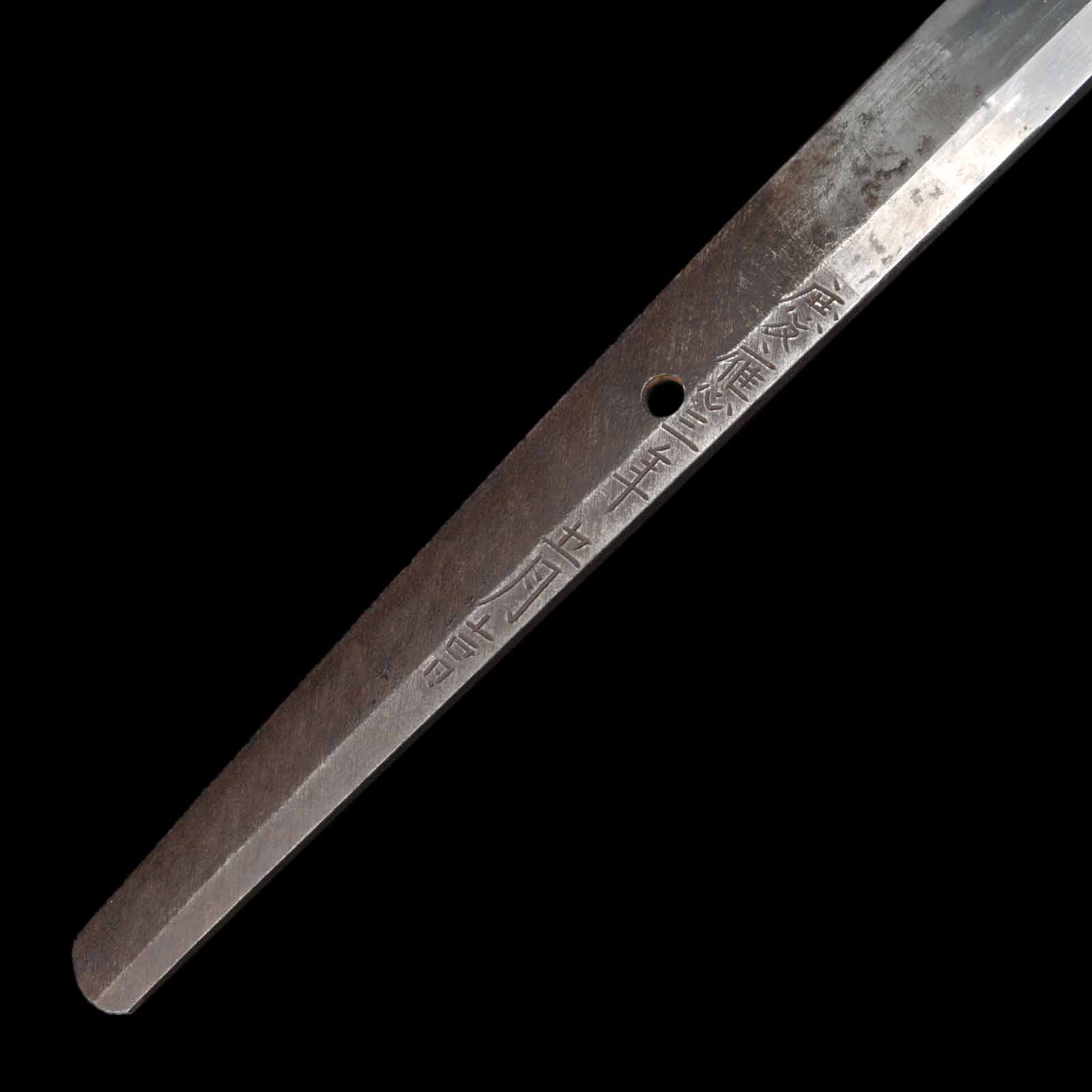
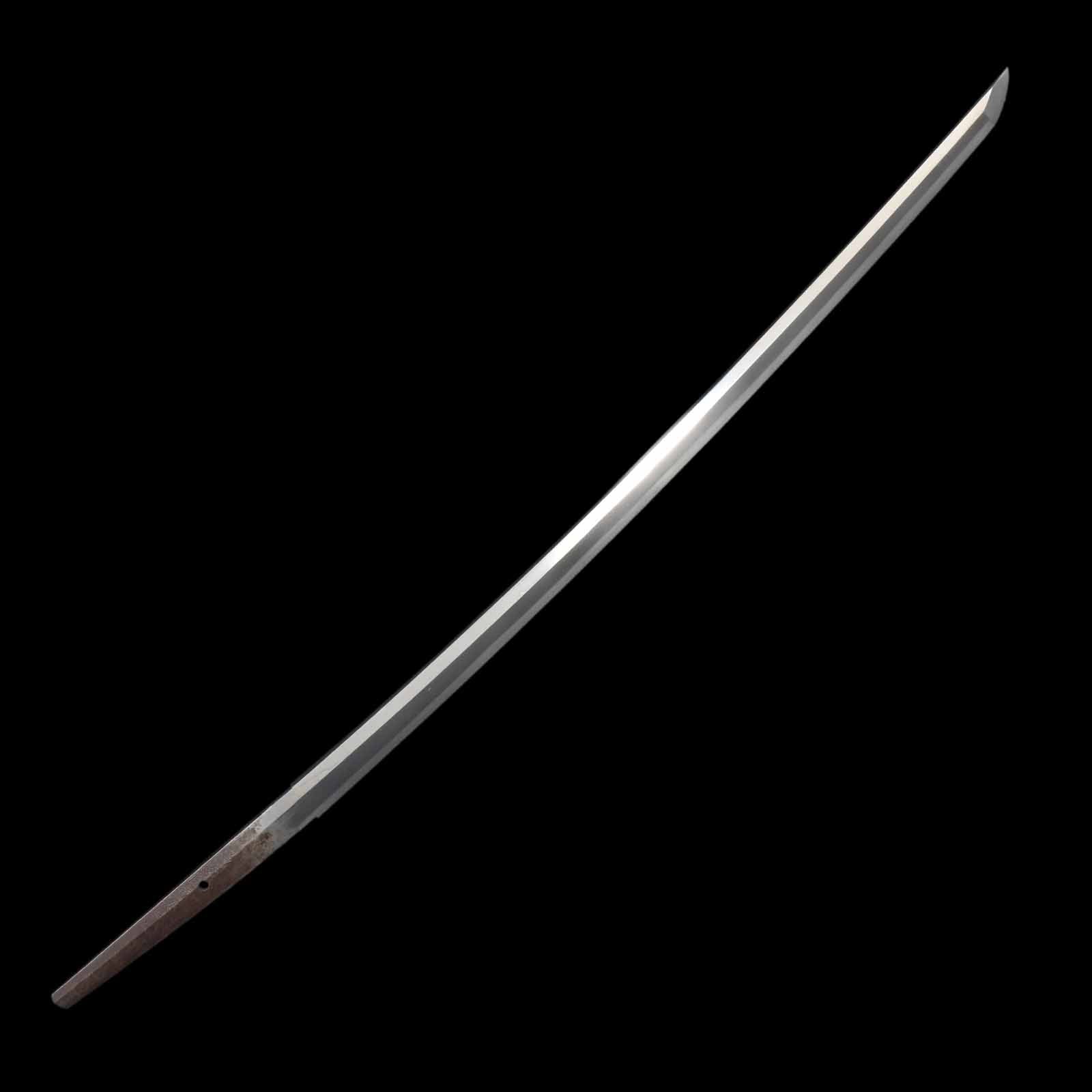
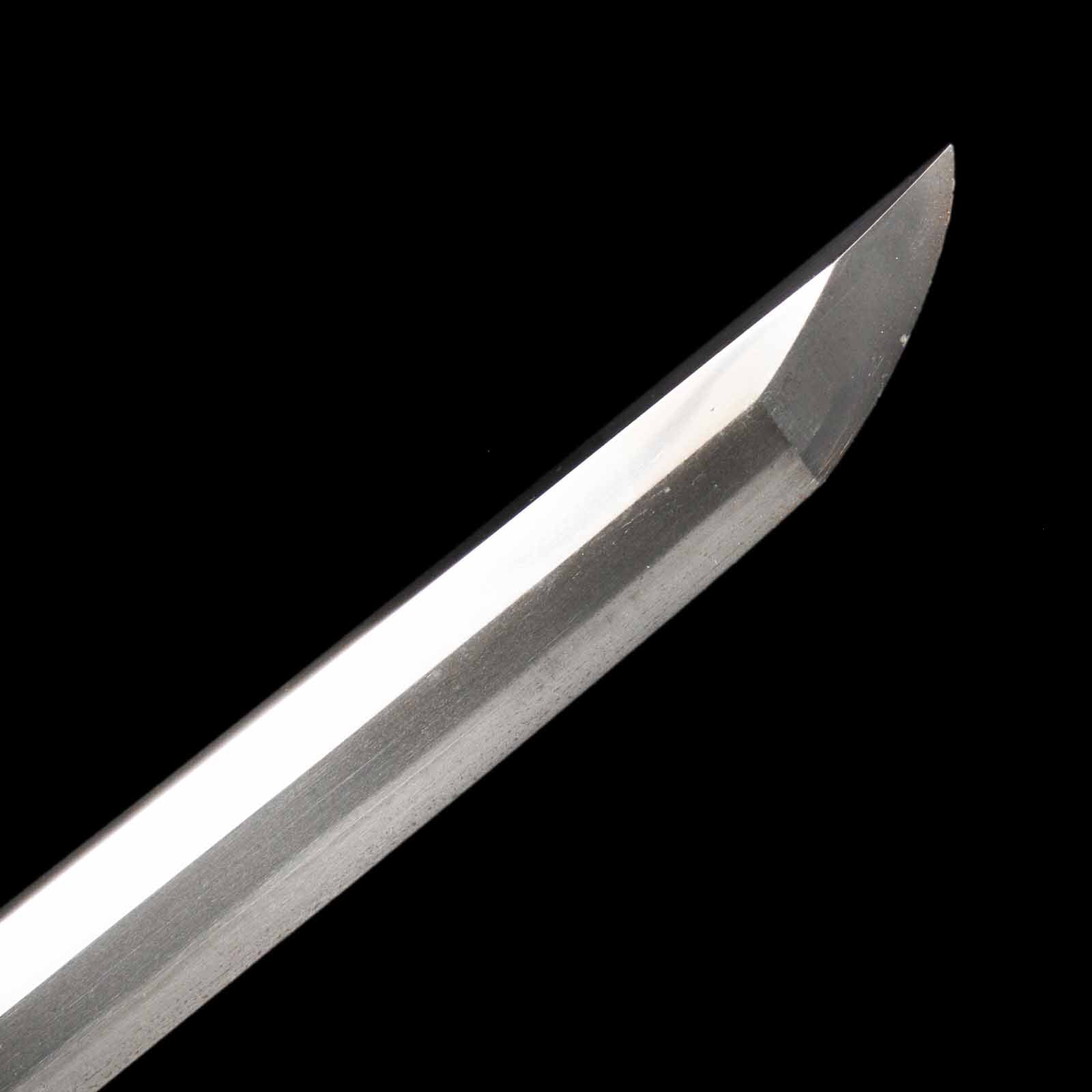
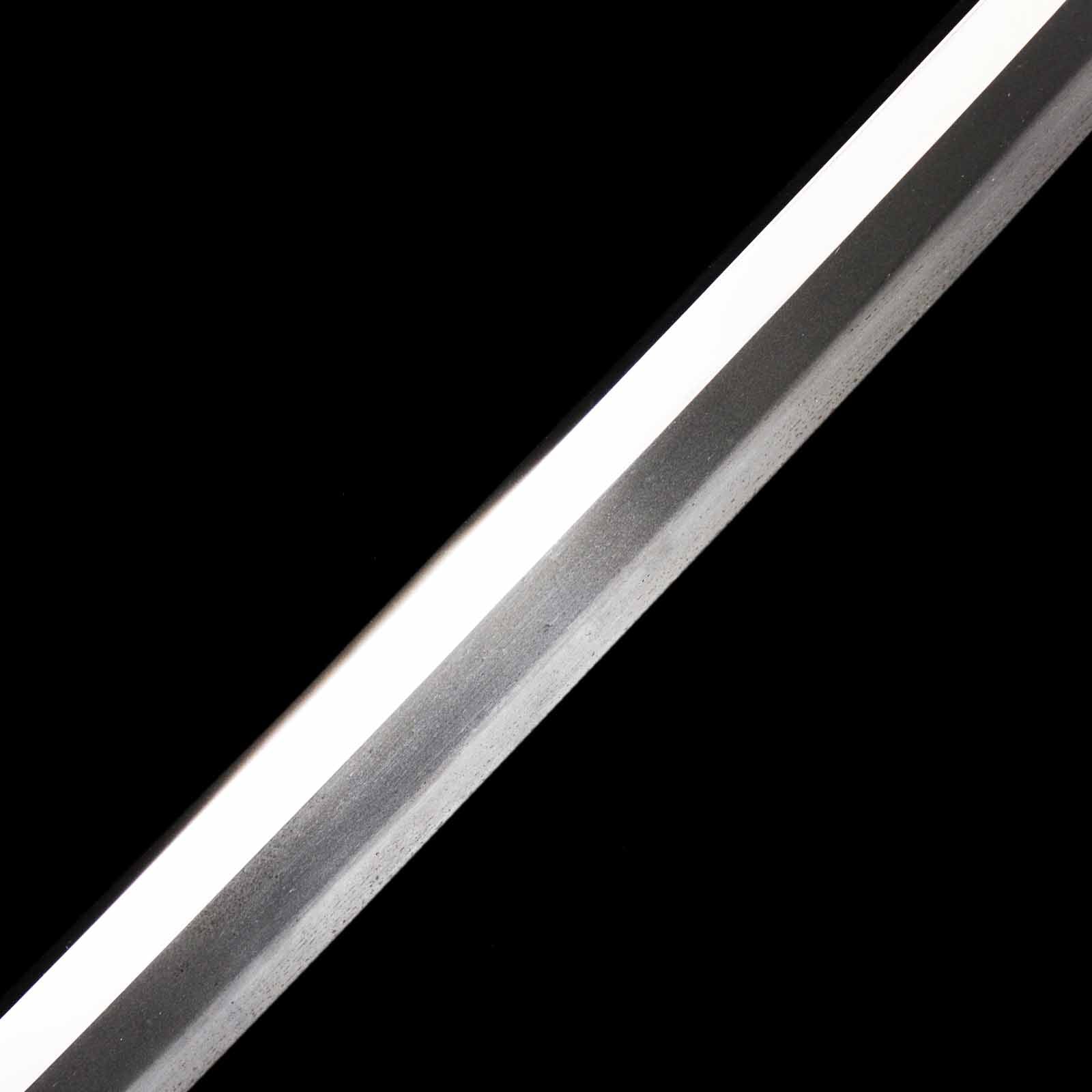
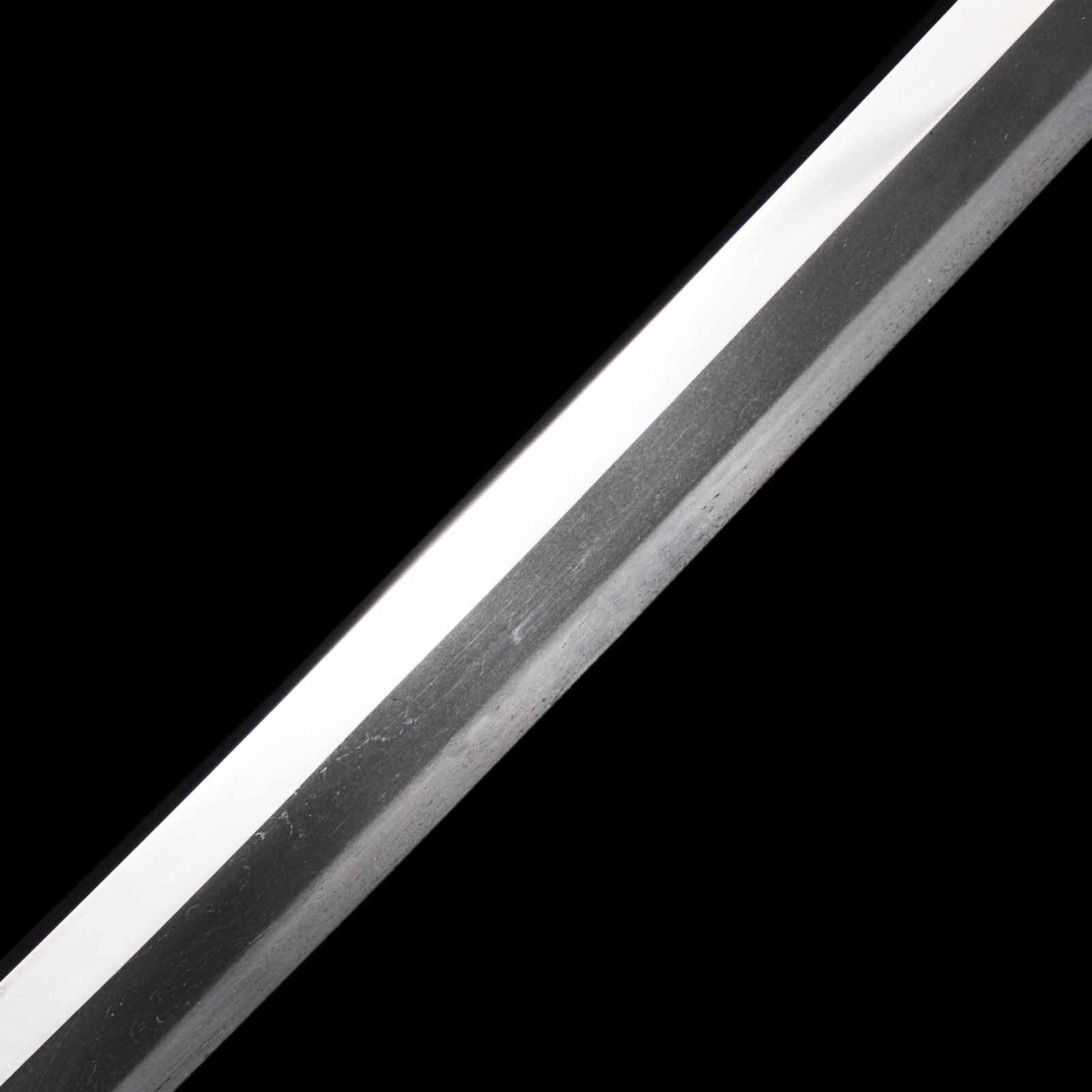
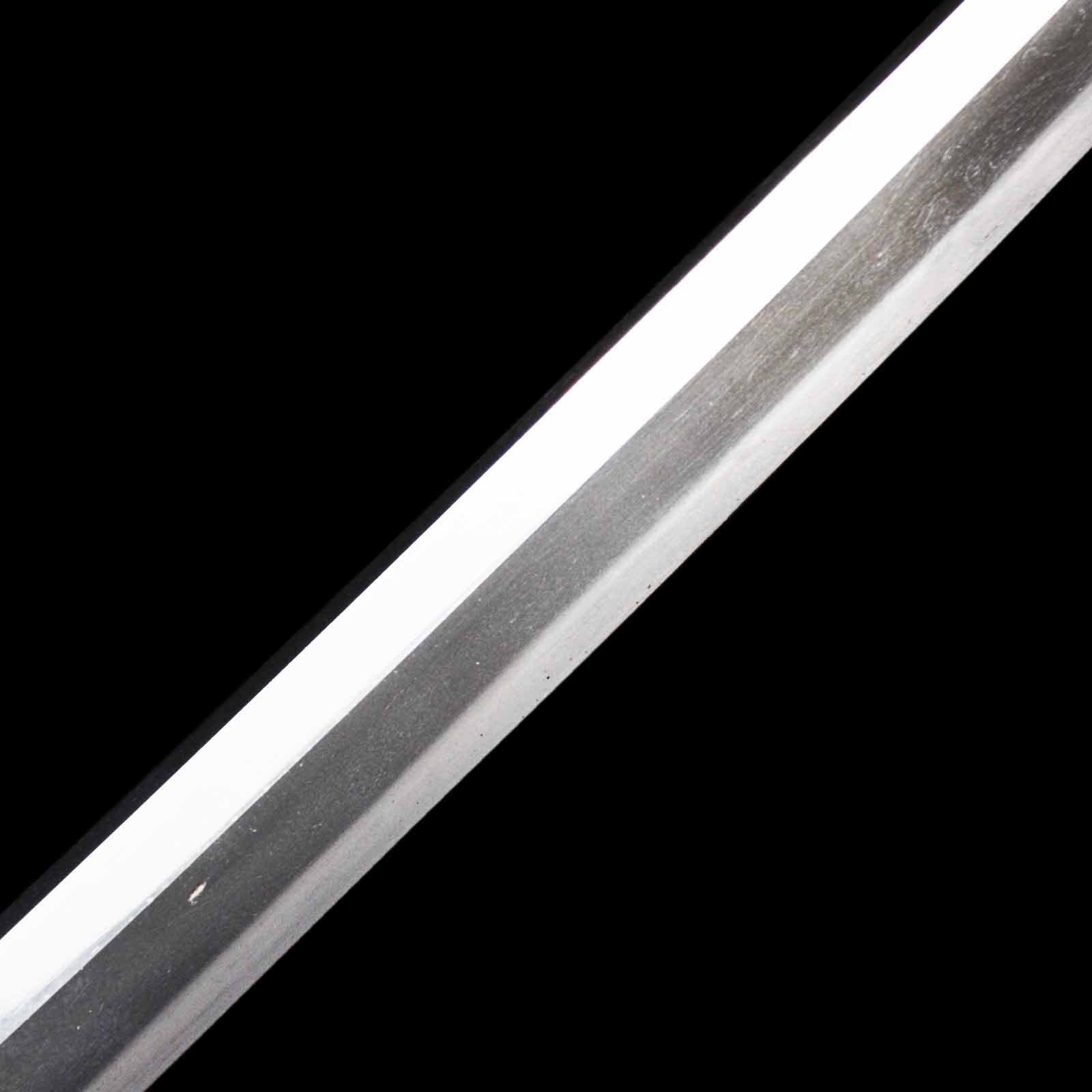
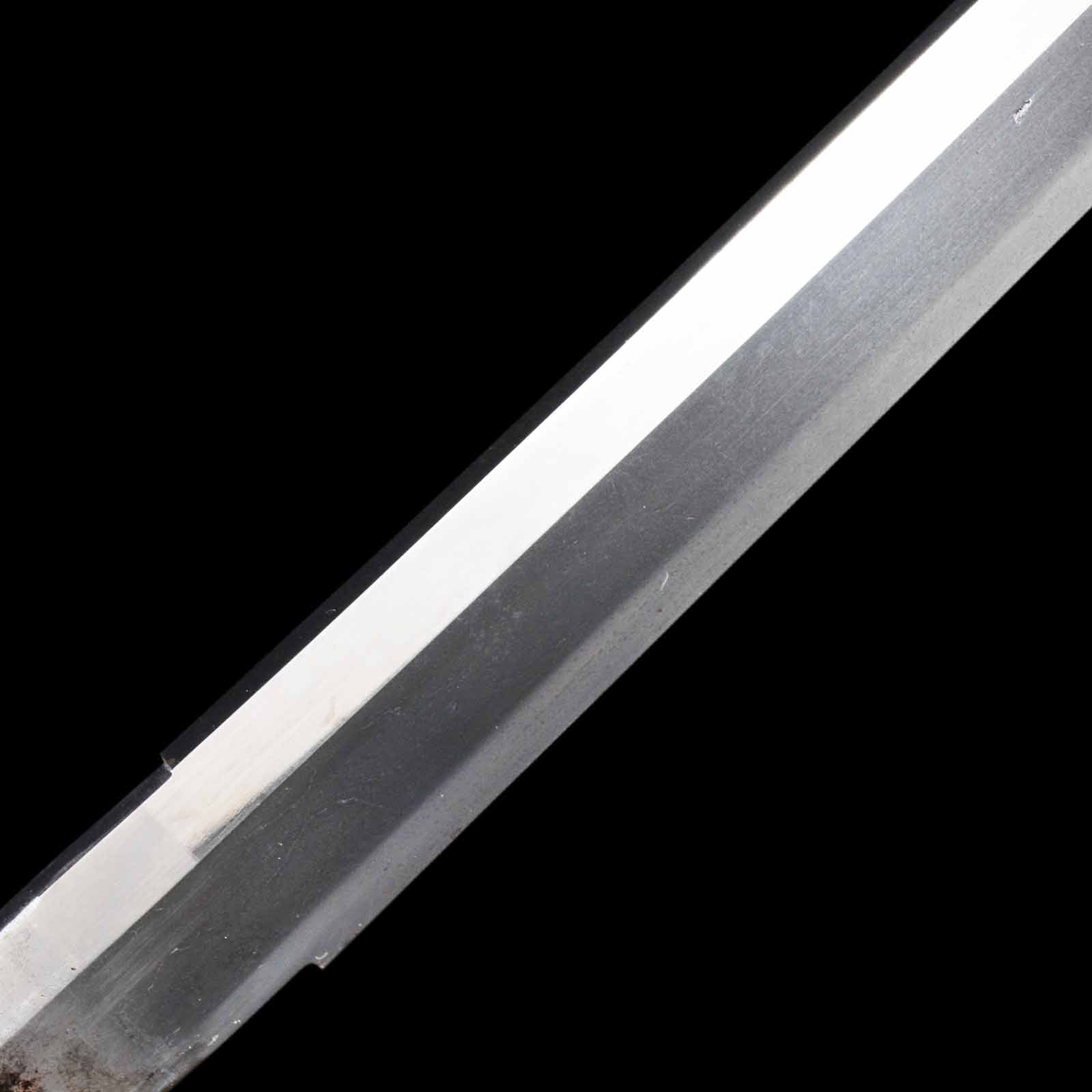
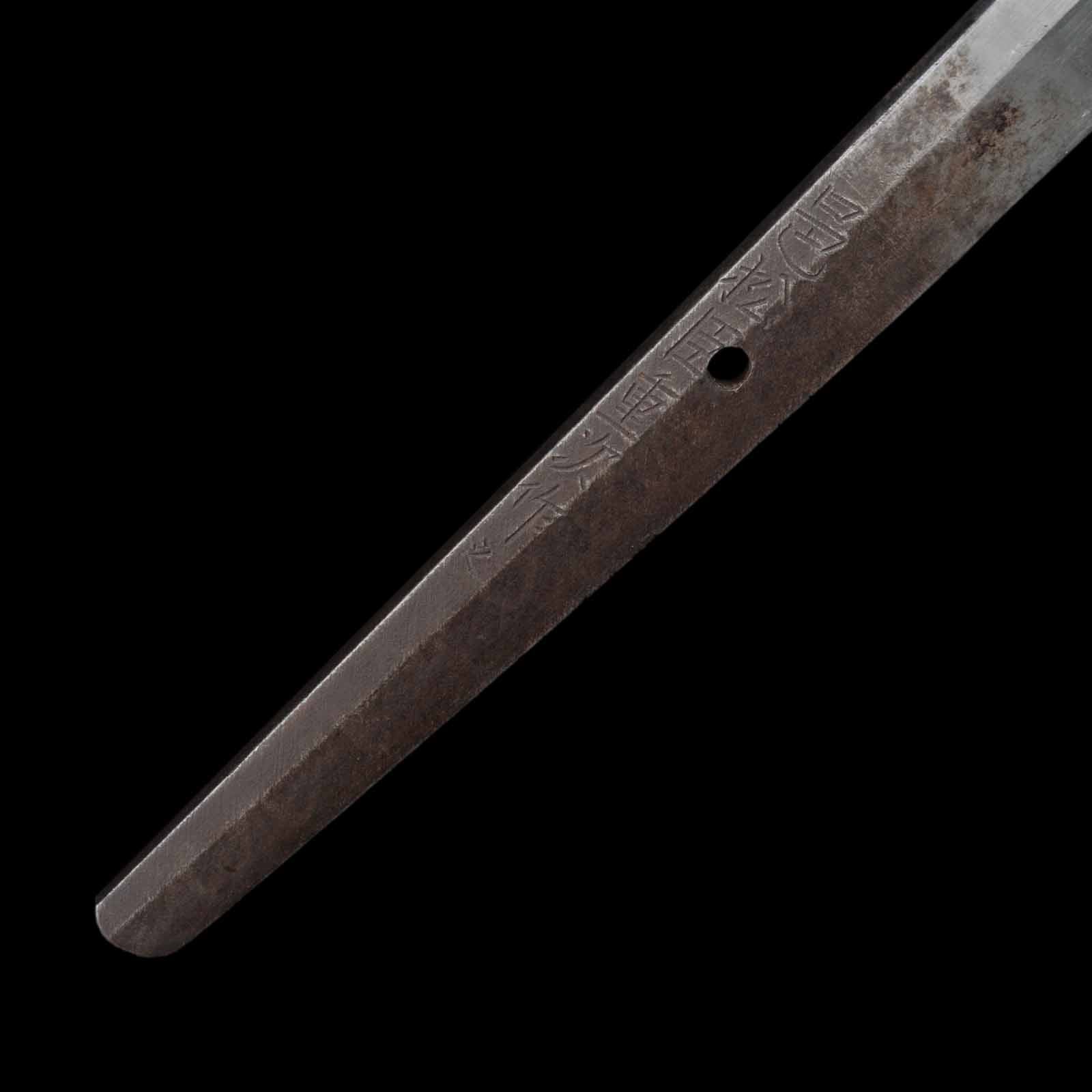
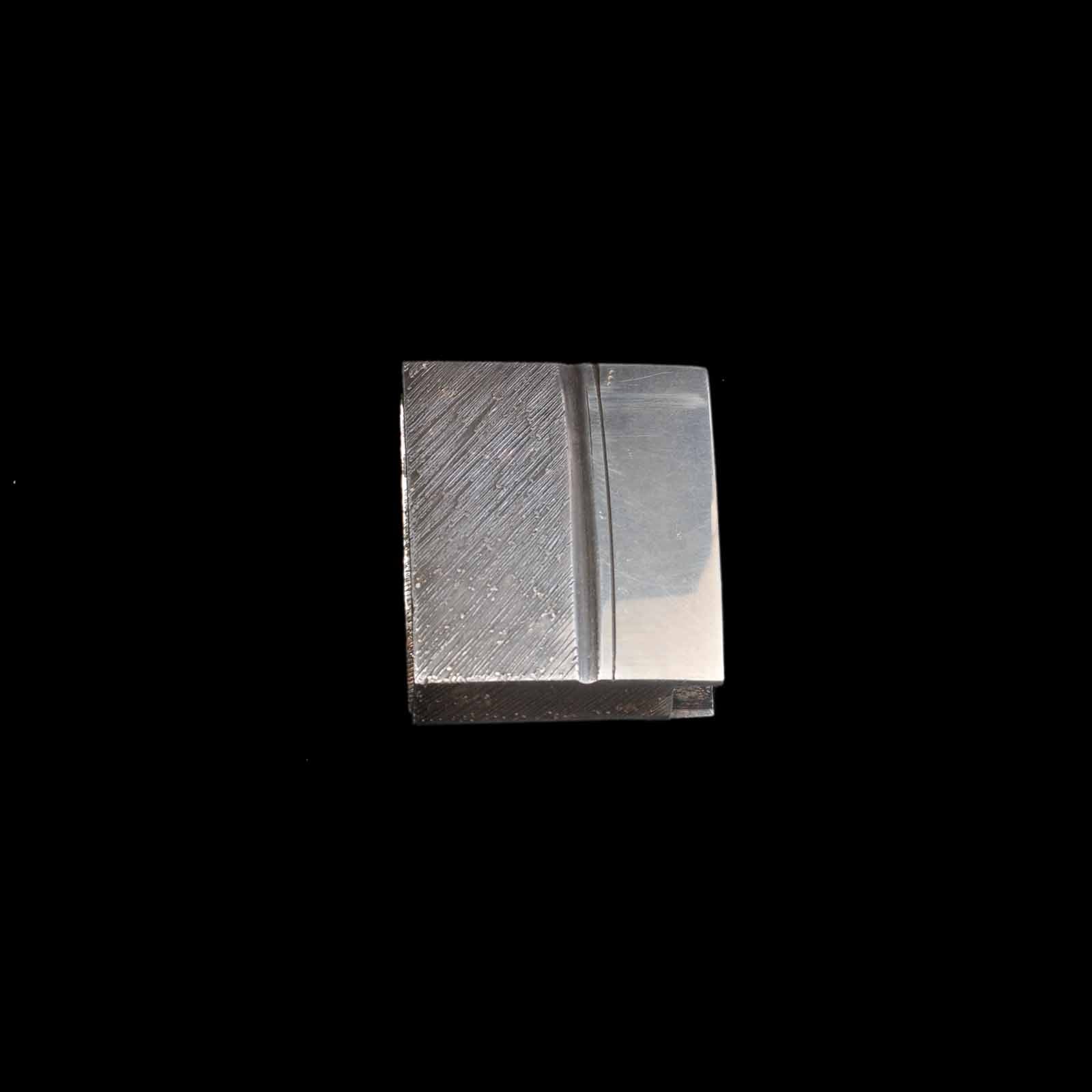
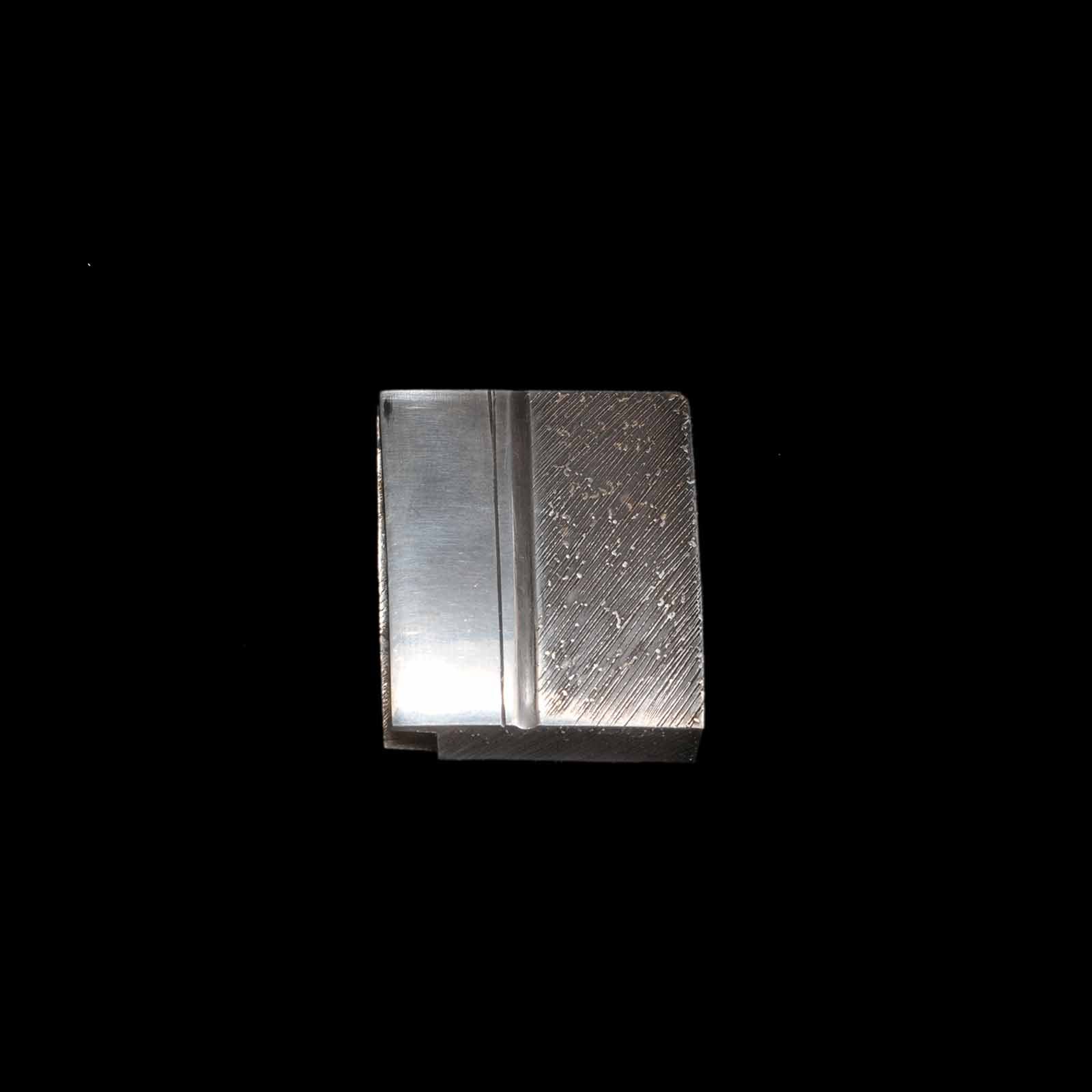
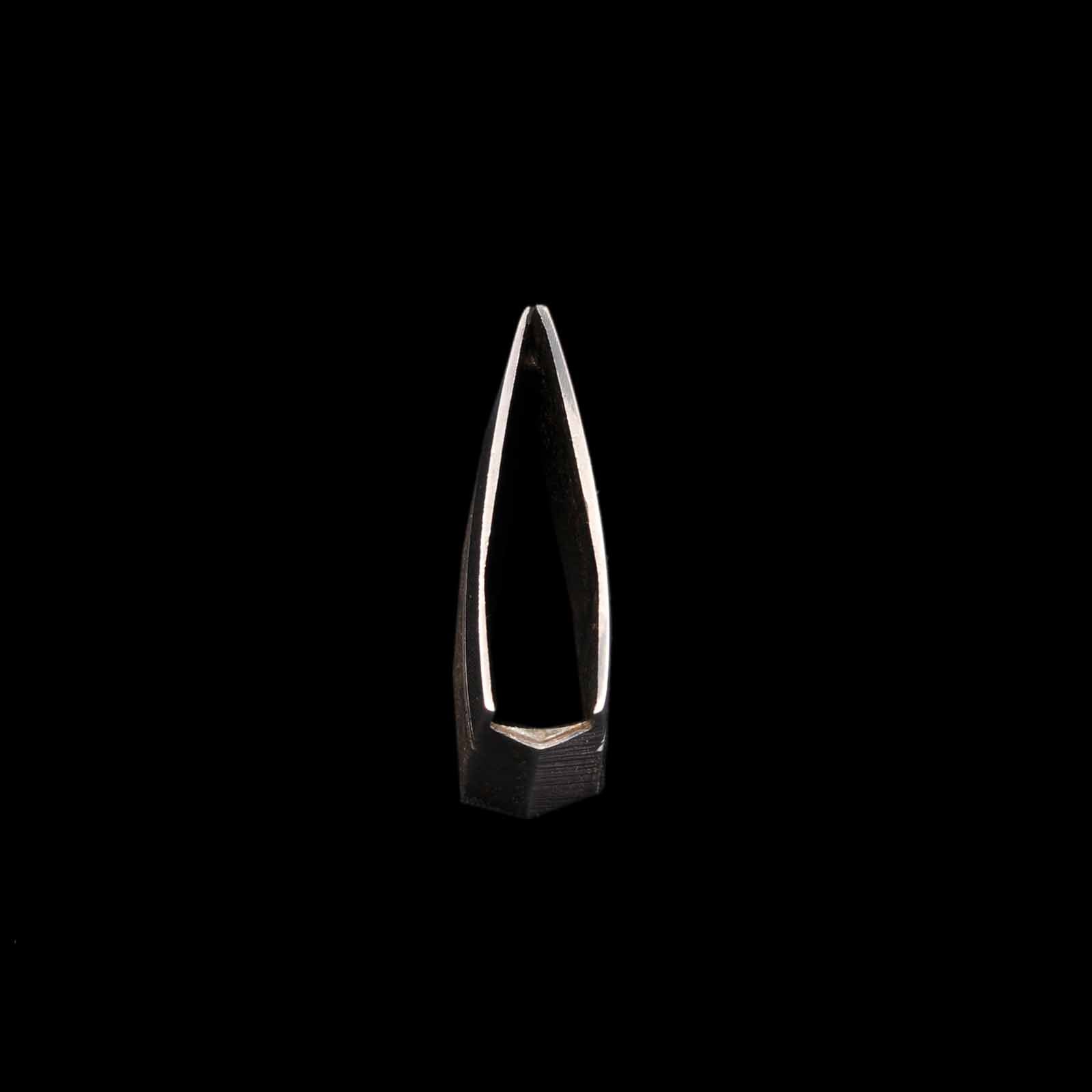
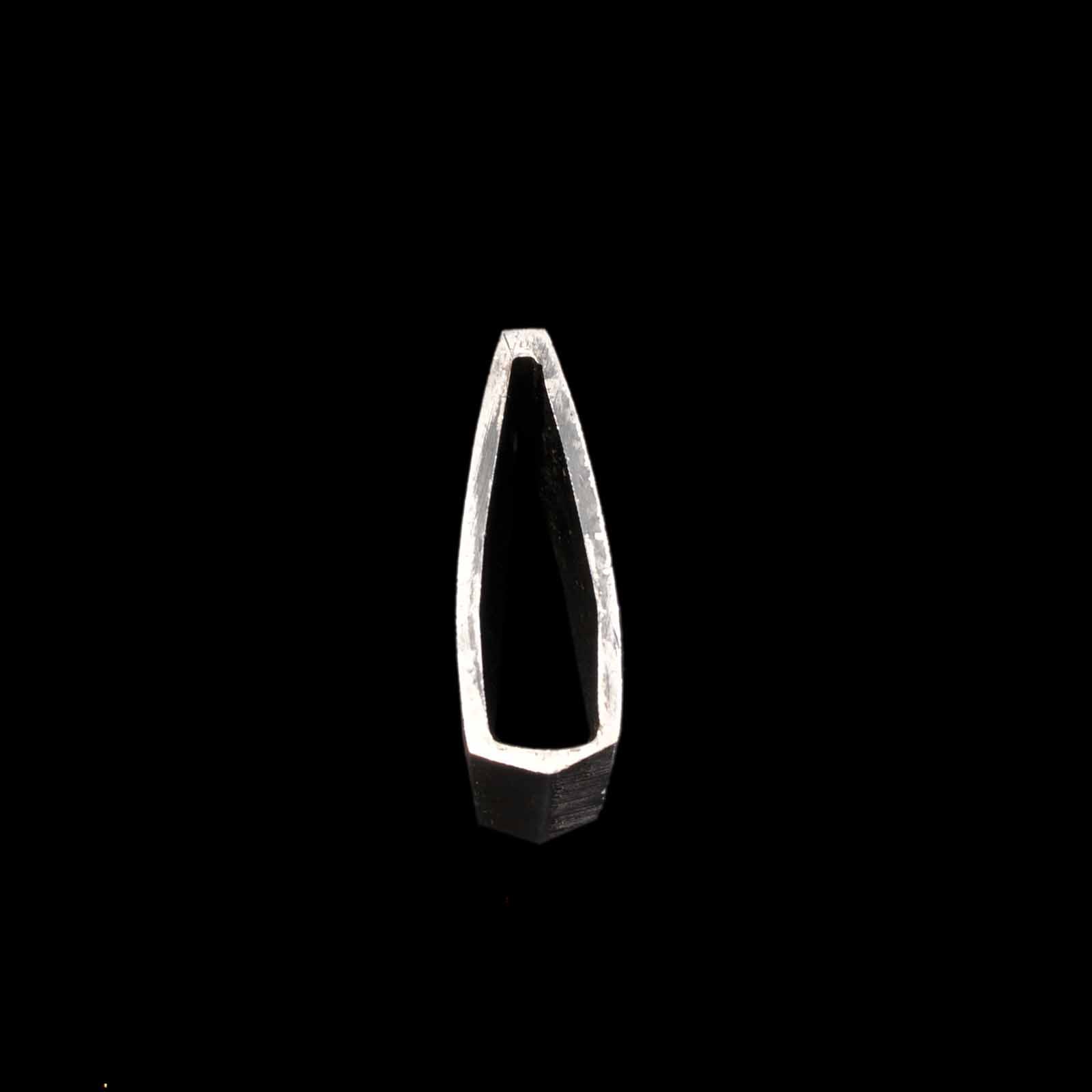
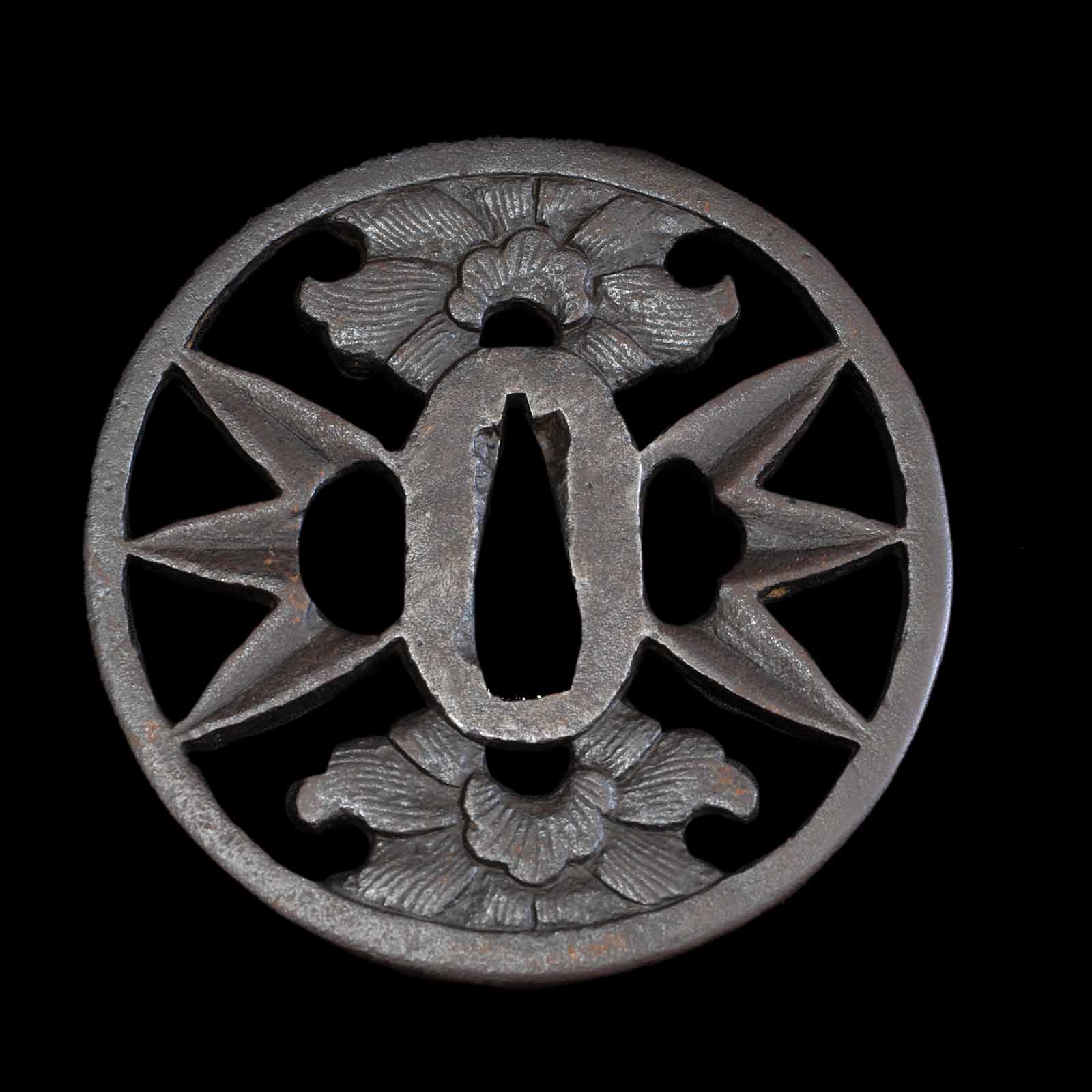
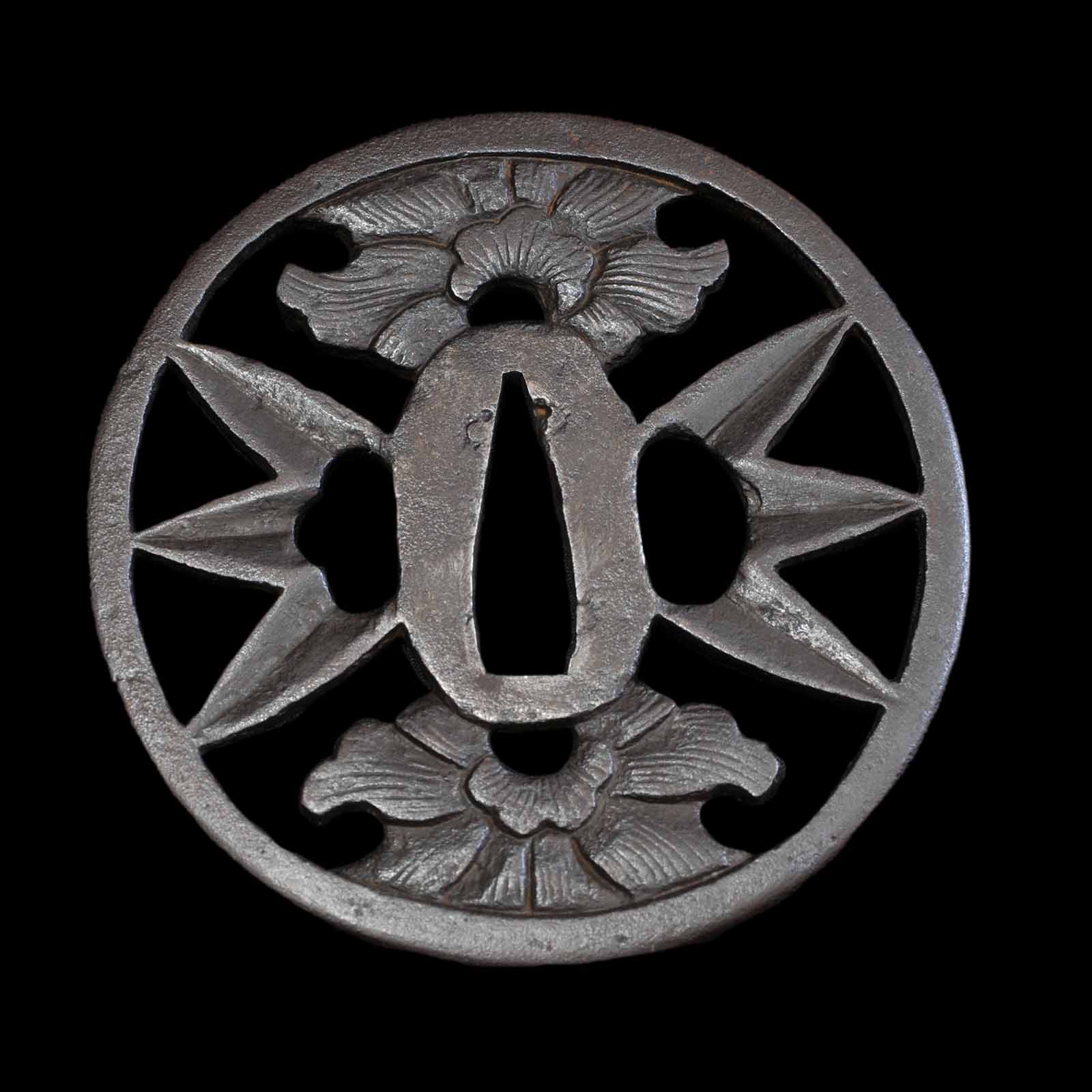
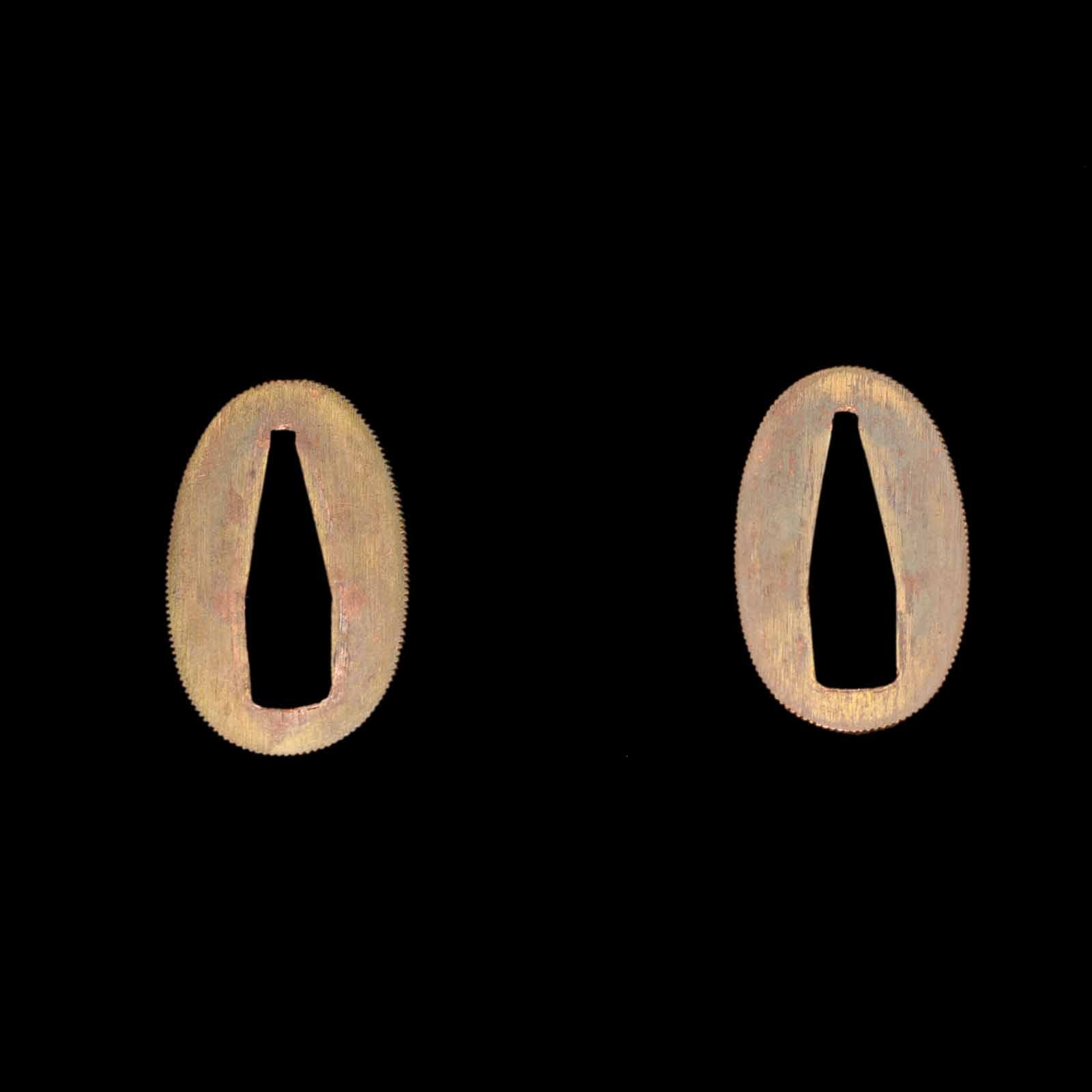
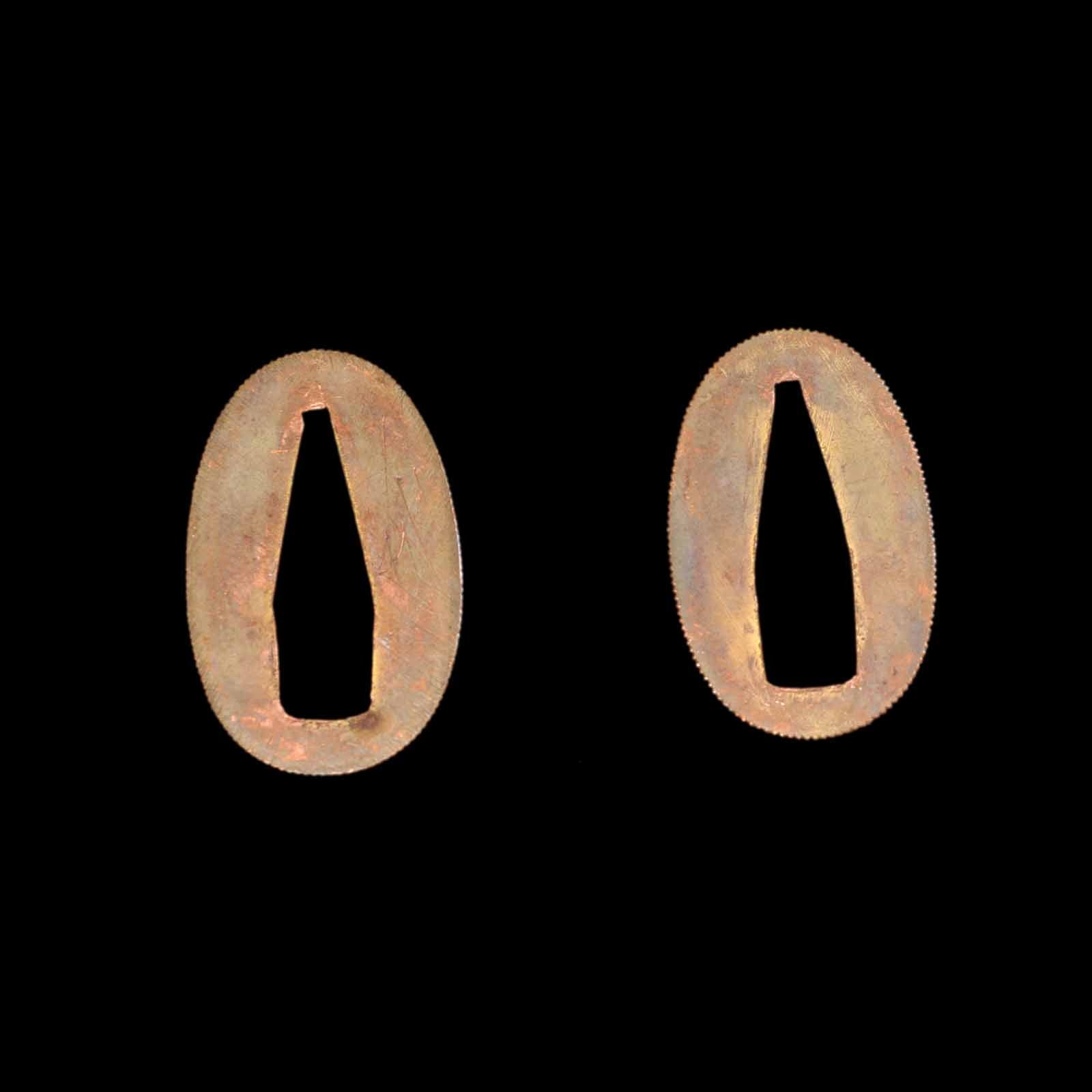
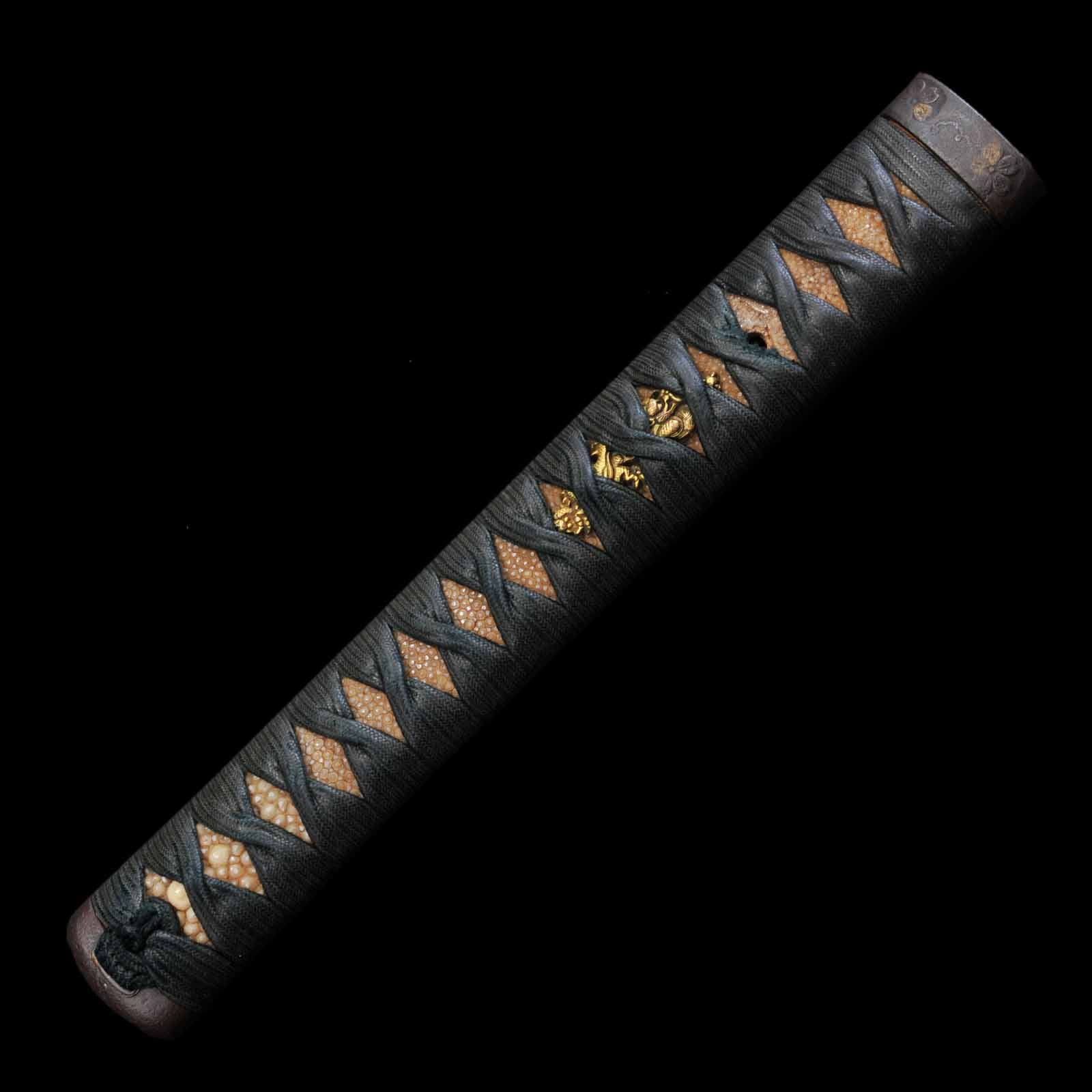
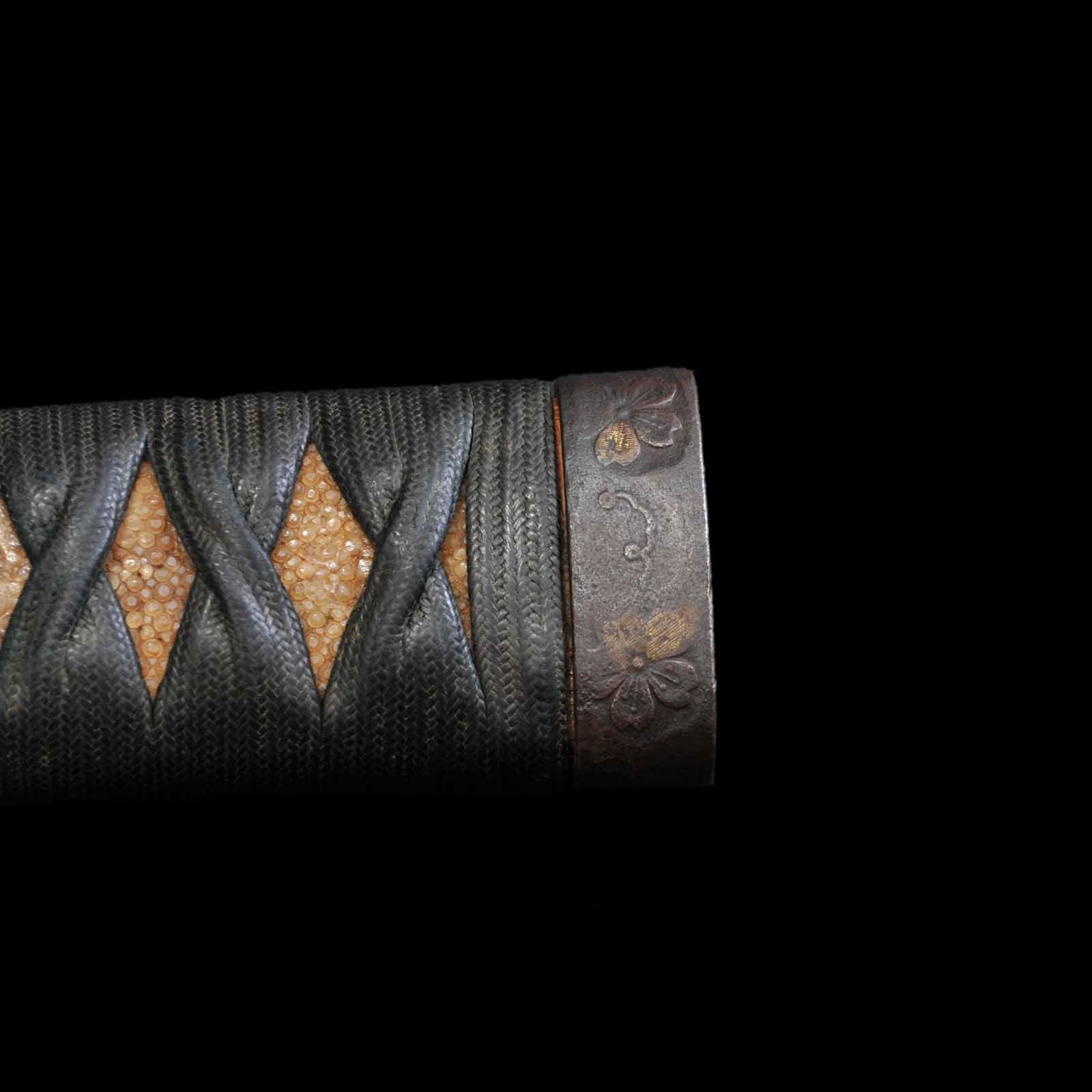
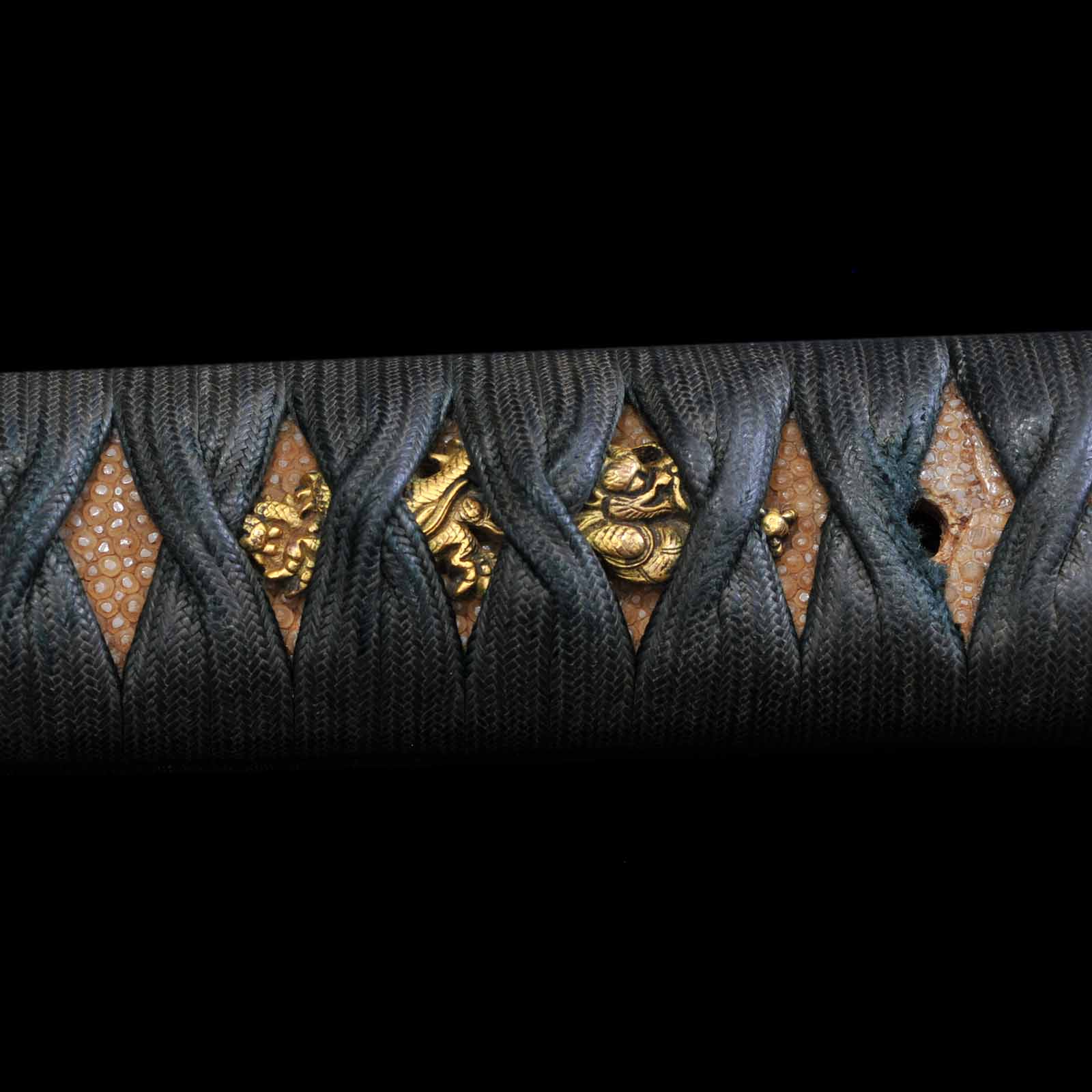
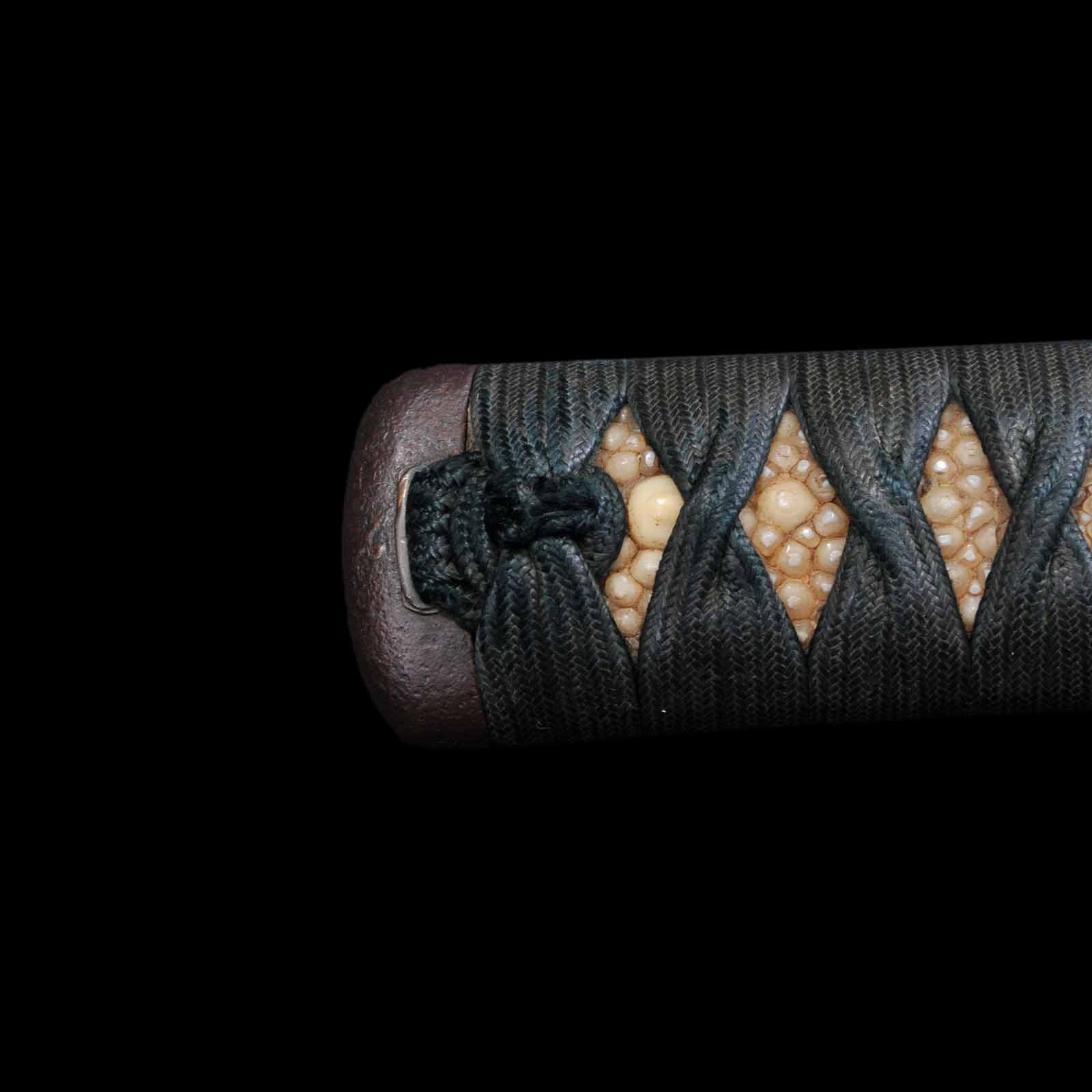
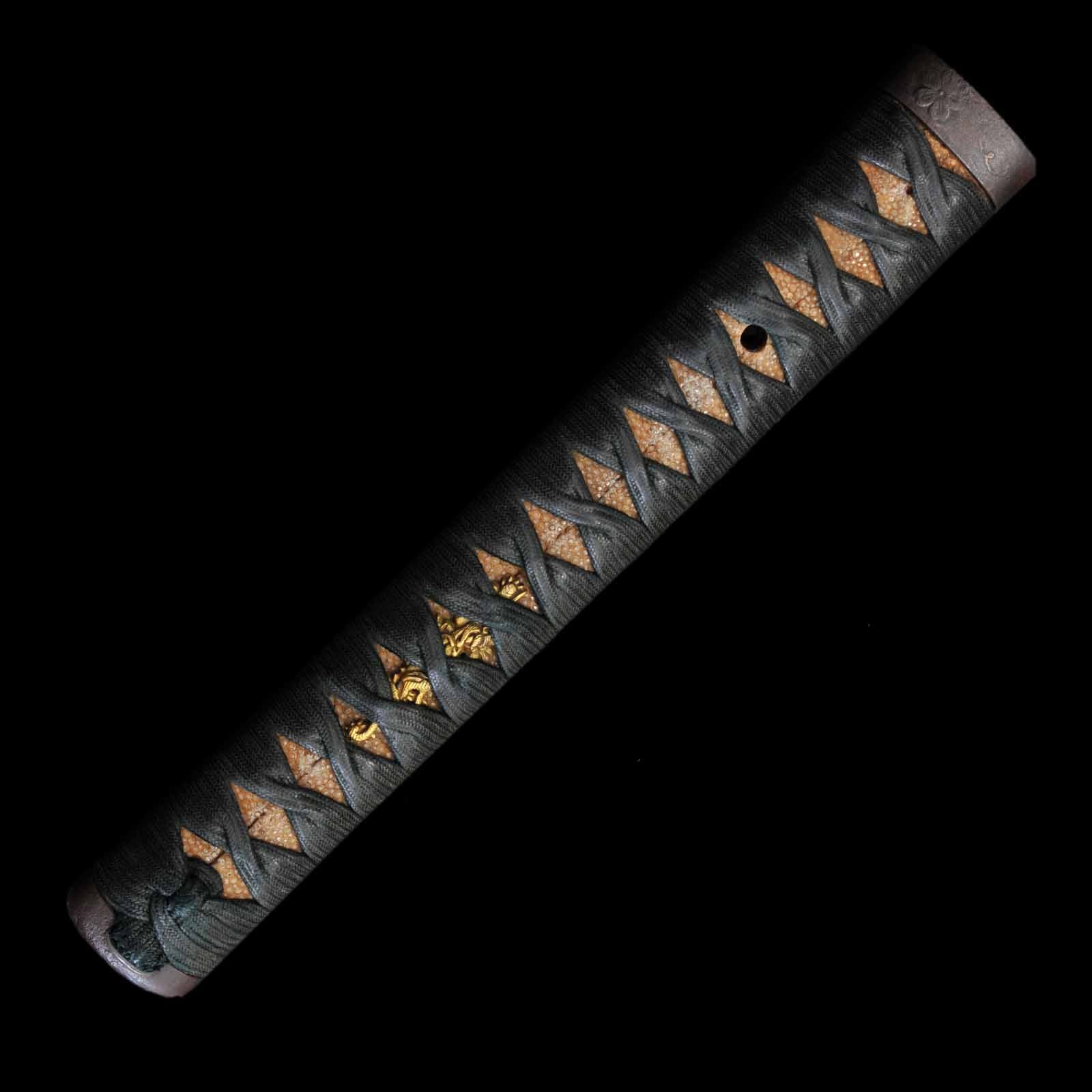
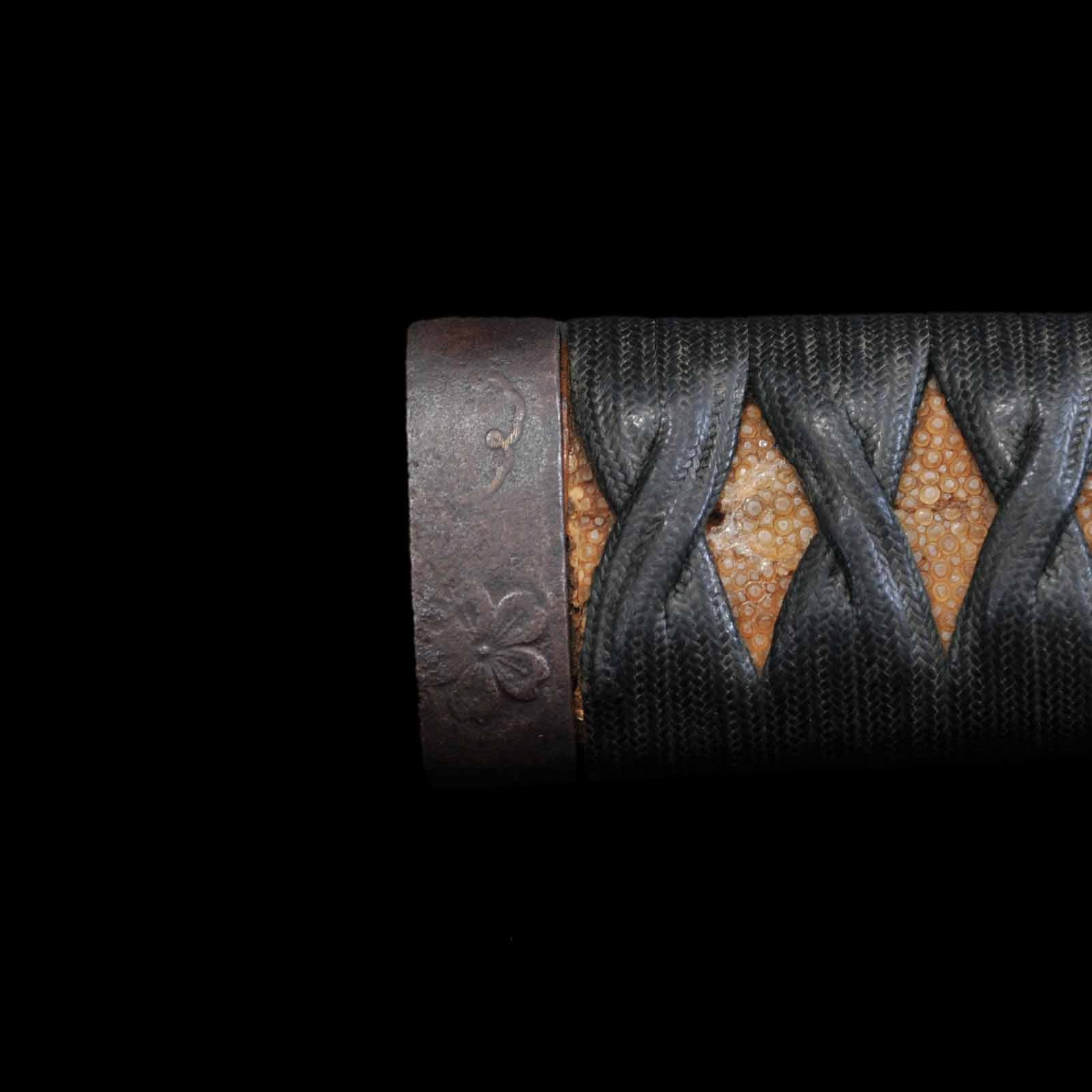
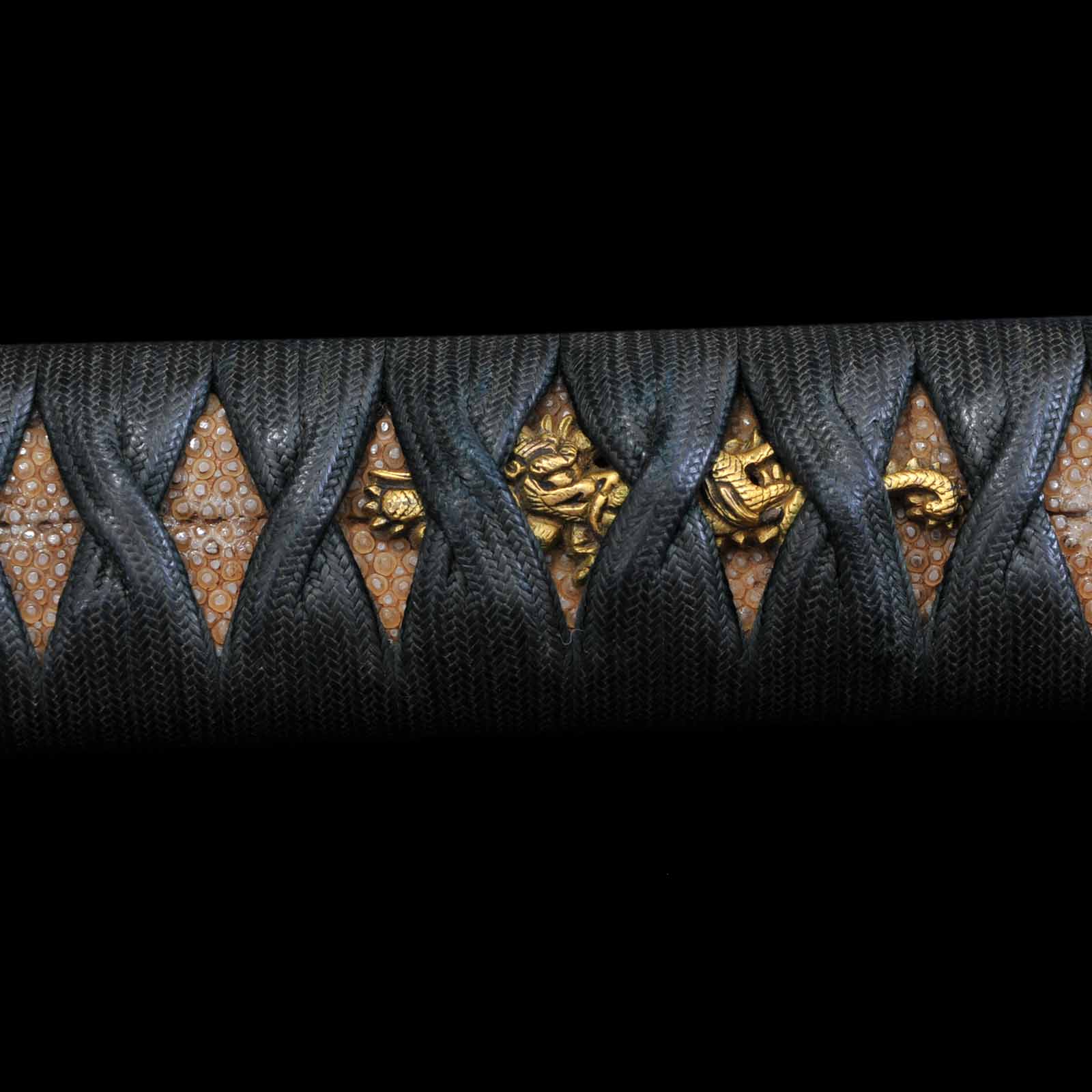
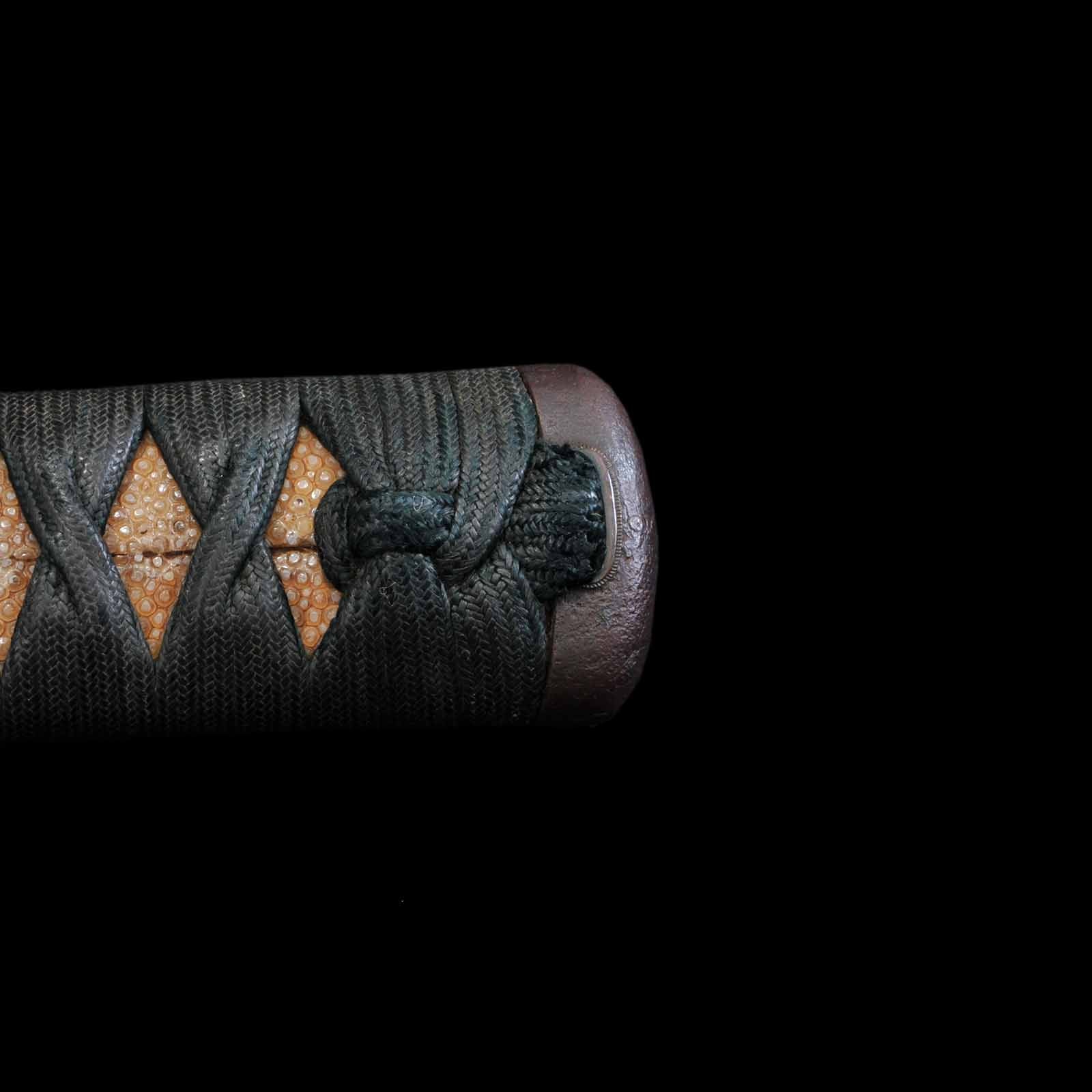
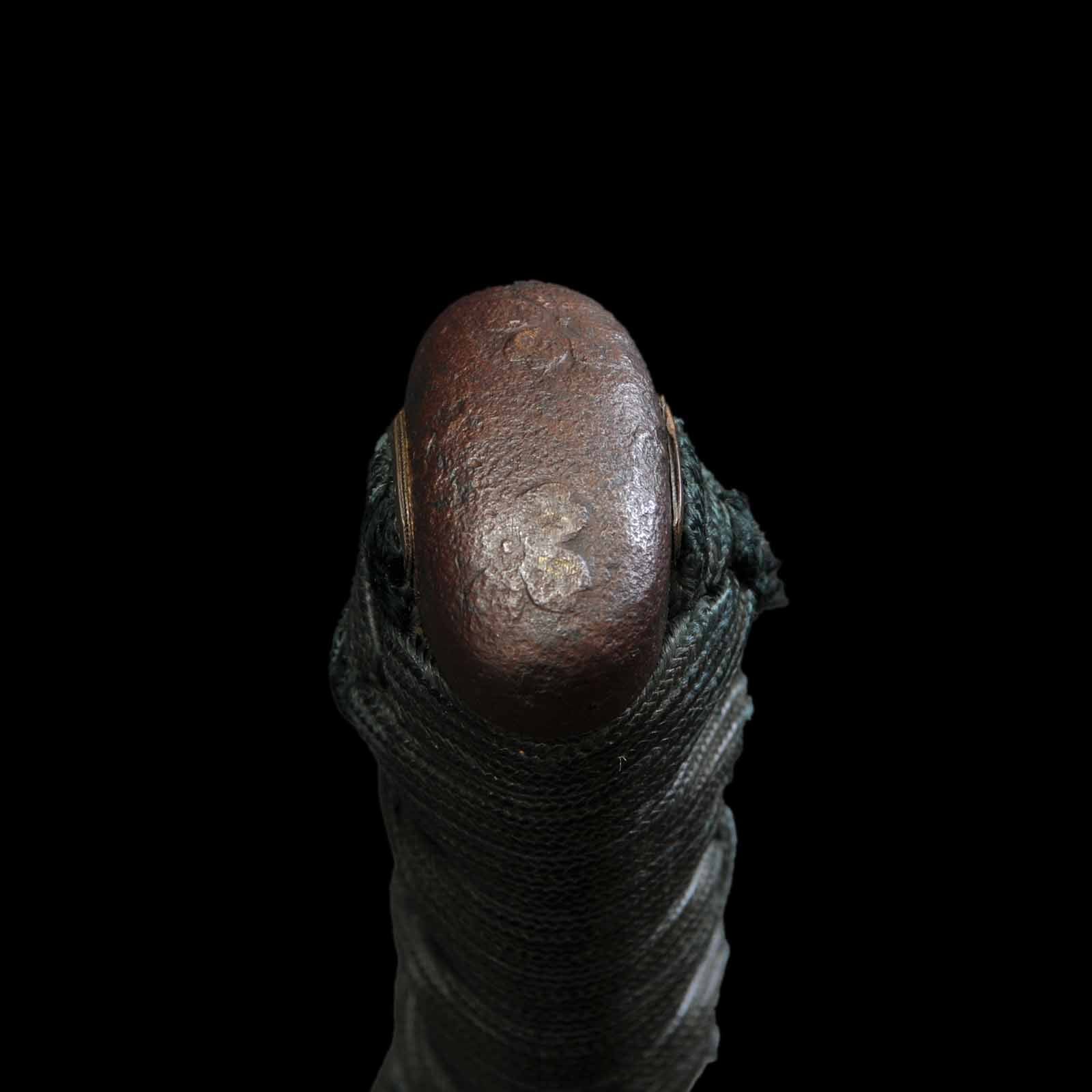
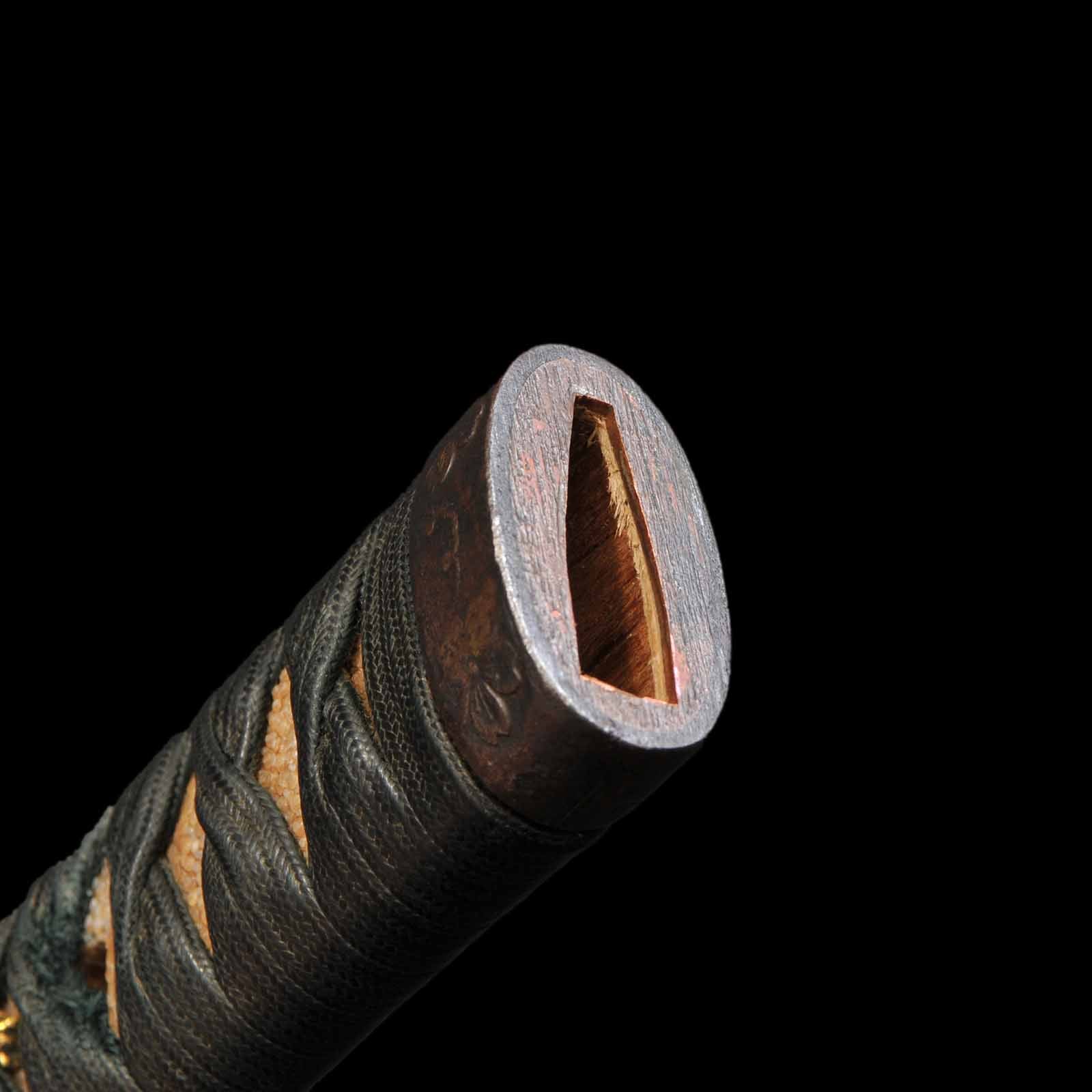
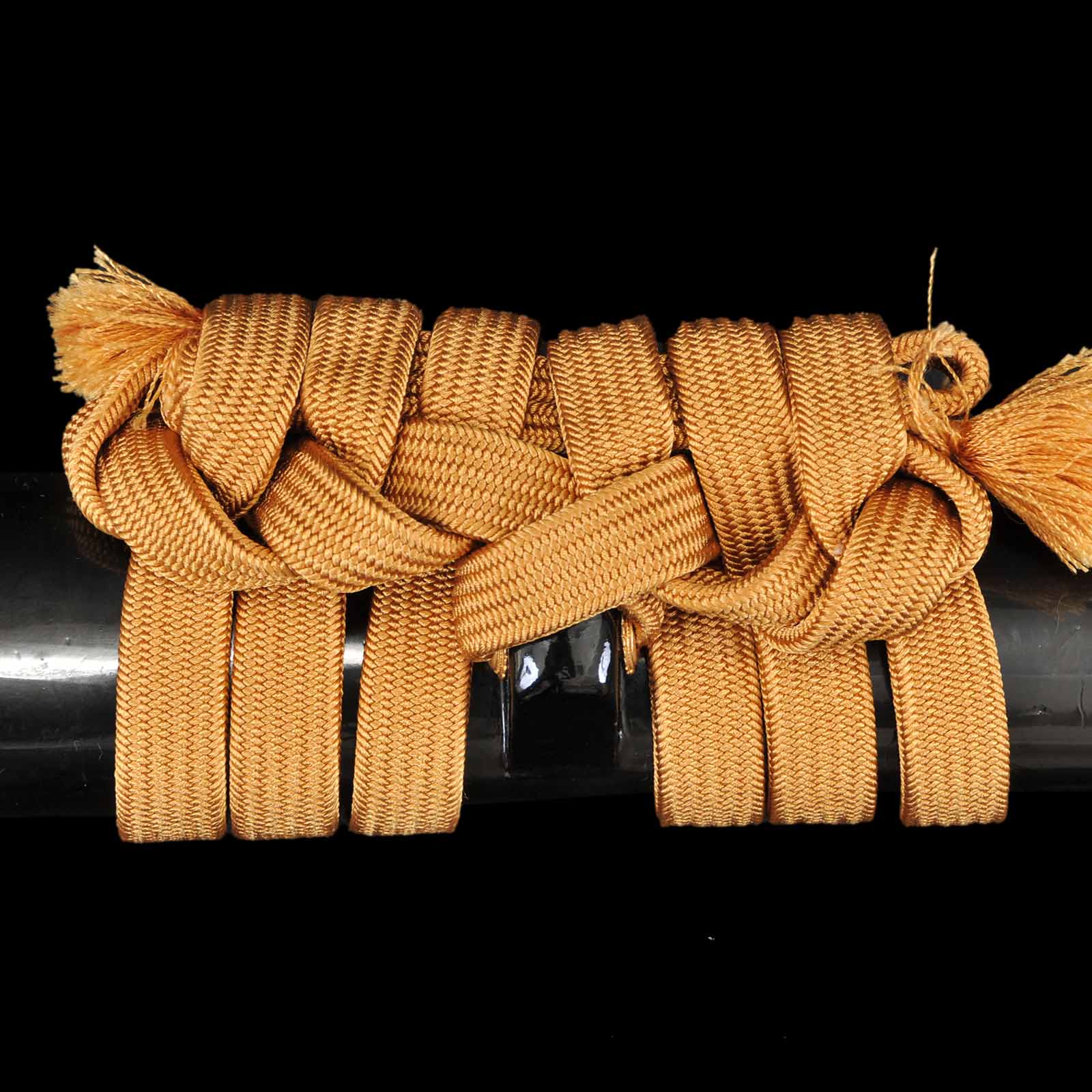
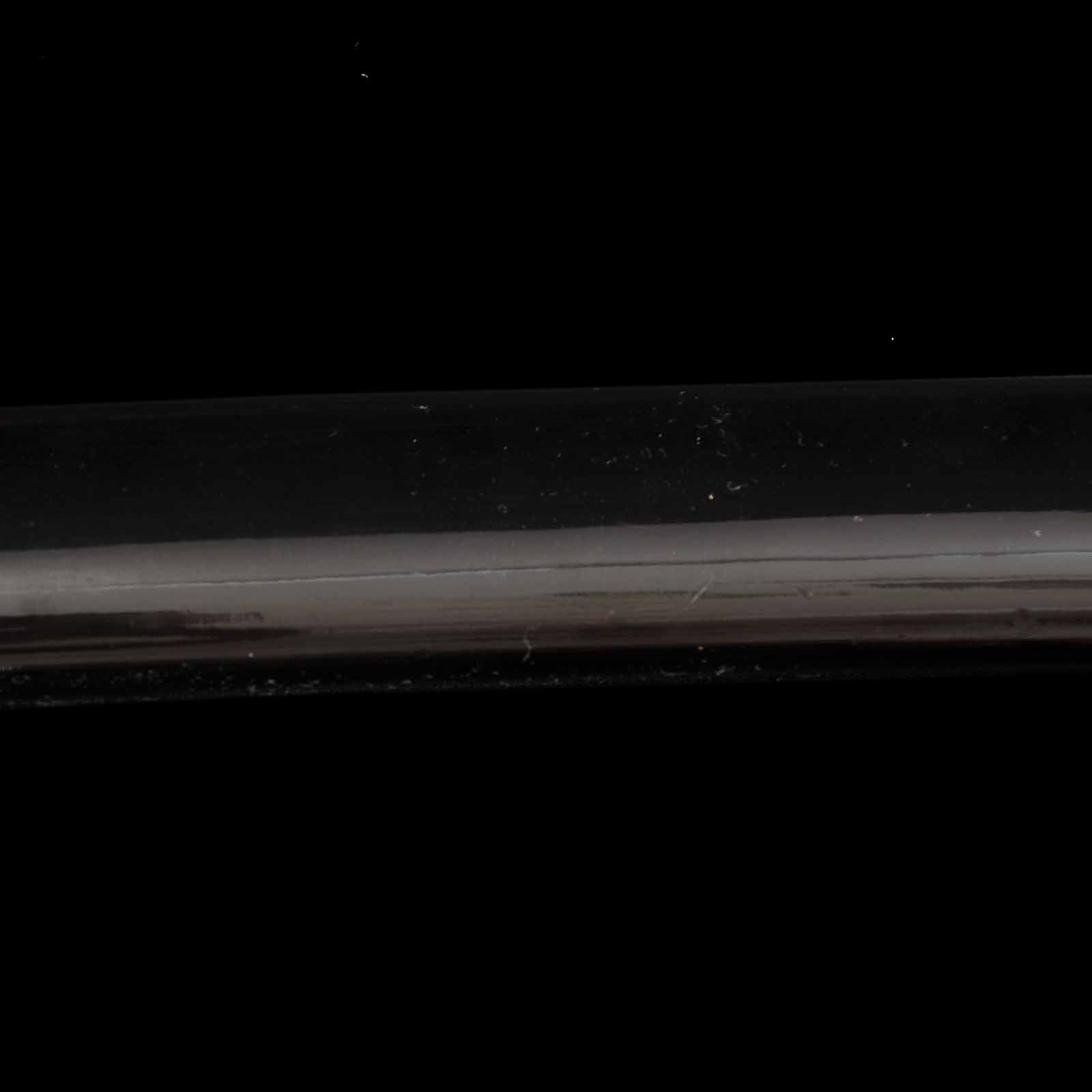
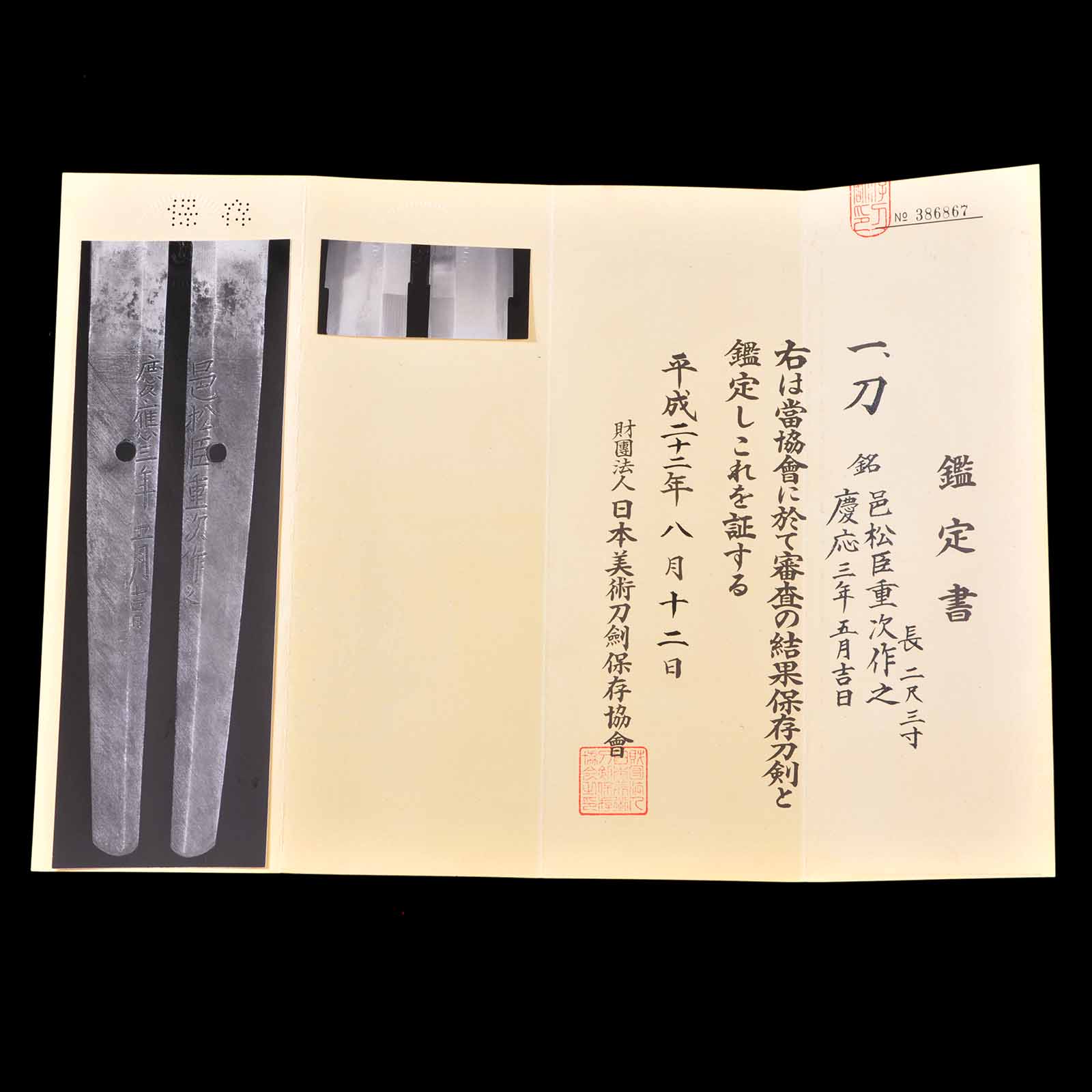
This is a piece by Shigetsugu, said to have been a student of the legendary Suishinshi Masahide, equipped with an uchigatana koshirae. The sword is very well preserved, with no chips or rust, but there is a relatively deep 2mm wide scratch near the shinogisji 12cm from the habakimoto on the sashiura side. The surface is slightly cloudy due to age. The hada is well packed with itame, which is characteristic of works from the Shinshinto period. The hamon is a notare-like suguha, and within the ha you can see kogunome and sakachoji. On the nakago, “This was made by Shigetsugu, a vassal of the Muramatsu family, Eis engraved on the front side, and “May 1867 Eis engraved on the back side. 1867 is a turbulent time in Japanese history, when the last Tokugawa shogun, Yoshinobu, made the Great Restoration and the Boshin War started the following year. Shigetsugu, whose real name was Itagaki Shinnosuke, was a vassal of the Muramatsu clan in the Echigo province and also made swords. The Society for Preservation of Japanese Art Swords recognized this work as the work of Shigetsugu and as highly worthy of preservation for future generations, and issued a certificate of hozon recognition in 2010. All of Koshirae's equipment uses fittings from the period. The black silk tsukaito is wrapped in a tsumamimaki style and lacquered. The scabbard is tame-nuri, coated with layers of lacquer, and shows various expressions when held up to the light. It also has an uchigatana koshirae, and the length of the blade is nearly 70 cm, making it a sword that can be used as a bat or iai sword. Be sure to add this piece to your collection, made by Shigetsugu, a disciple of Suishinshi Masahide during the tumultuous transition period between the Edo and Meiji eras. Blade length: 69.8 cm Curvature: 1.4 cm Number of Mekugi hole: 1 Sakihaba: 20.1 mm Sakikasane: 5.4 mm Motohaba: 31.9 mm Motokasane: 7.1 mm Signature: Muramatsu-shin Shigetsugu Korewo Tsukuru(front), Keio San'nen Gogatsu Kichijitsu Era: Shins
 NihontoWatch
在銘 · 新々刀 · 長さ 69.8cm · 反り 1.4cm
越後 · 1865-1868頃
徳川の泰平のもと、大小は法度の定める身分の制服となり、需要は城下町、とりわけ江戸に集まった。工芸は二つに分かれる。目利きのための華やかな鑑賞の作と、截断の結果を金象嵌に刻む実証の刀である。
銘が正しい、または無銘でも年代・国・系統を確実に指摘できる、保存に値する真正の作と鑑定されたものです。
日本美術刀剣保存協会(NBTHK)は、1948年に設立され、文化庁の監督を受ける公益財団法人で、東京・刀剣博物館に本部を置きます。専門の審査員が出品作を直接審査し、美術的・歴史的価値に応じた鑑定書を発行します。NBTHKの鑑定書は、日本刀および刀装具の真正性を示す最も広く認知された基準です。
NBTHK公式サイトAs a general rule, returns/exchanges are not accepted on Japanese sword orders unless damaged upon delivery. Other items: returns/exchanges accepted within 7 days of delivery. Cancellation for personal reasons incurs a 30% restocking fee (70% refunded). Return shipping must be prepaid and insured by the buyer; shipping/handling fees are non-refundable. Contact katana@tozando.co.jp to initiate a return.
This is a piece by Shigetsugu, said to have been a student of the legendary Suishinshi Masahide, equipped with an uchigatana koshirae. The sword is very well preserved, with no chips or rust, but there is a relatively deep 2mm wide scratch near the shinogisji 12cm from the habakimoto on the sashiura side. The surface is slightly cloudy due to age. The hada is well packed with itame, which is characteristic of works from the Shinshinto period. The hamon is a notare-like suguha, and within the ha you can see kogunome and sakachoji. On the nakago, “This was made by Shigetsugu, a vassal of the Muramatsu family, Eis engraved on the front side, and “May 1867 Eis engraved on the back side. 1867 is a turbulent time in Japanese history, when the last Tokugawa shogun, Yoshinobu, made the Great Restoration and the Boshin War started the following year. Shigetsugu, whose real name was Itagaki Shinnosuke, was a vassal of the Muramatsu clan in the Echigo province and also made swords. The Society for Preservation of Japanese Art Swords recognized this work as the work of Shigetsugu and as highly worthy of preservation for future generations, and issued a certificate of hozon recognition in 2010. All of Koshirae's equipment uses fittings from the period. The black silk tsukaito is wrapped in a tsumamimaki style and lacquered. The scabbard is tame-nuri, coated with layers of lacquer, and shows various expressions when held up to the light. It also has an uchigatana koshirae, and the length of the blade is nearly 70 cm, making it a sword that can be used as a bat or iai sword. Be sure to add this piece to your collection, made by Shigetsugu, a disciple of Suishinshi Masahide during the tumultuous transition period between the Edo and Meiji eras. Blade length: 69.8 cm Curvature: 1.4 cm Number of Mekugi hole: 1 Sakihaba: 20.1 mm Sakikasane: 5.4 mm Motohaba: 31.9 mm Motokasane: 7.1 mm Signature: Muramatsu-shin Shigetsugu Korewo Tsukuru(front), Keio San'nen Gogatsu Kichijitsu Era: Shins
NihontoWatch在銘 · 新々刀 · 長さ 69.8cm · 反り 1.4cm
越後 · 1865-1868頃
徳川の泰平のもと、大小は法度の定める身分の制服となり、需要は城下町、とりわけ江戸に集まった。工芸は二つに分かれる。目利きのための華やかな鑑賞の作と、截断の結果を金象嵌に刻む実証の刀である。
銘が正しい、または無銘でも年代・国・系統を確実に指摘できる、保存に値する真正の作と鑑定されたものです。
日本美術刀剣保存協会(NBTHK)は、1948年に設立され、文化庁の監督を受ける公益財団法人で、東京・刀剣博物館に本部を置きます。専門の審査員が出品作を直接審査し、美術的・歴史的価値に応じた鑑定書を発行します。NBTHKの鑑定書は、日本刀および刀装具の真正性を示す最も広く認知された基準です。
NBTHK公式サイトAs a general rule, returns/exchanges are not accepted on Japanese sword orders unless damaged upon delivery. Other items: returns/exchanges accepted within 7 days of delivery. Cancellation for personal reasons incurs a 30% restocking fee (70% refunded). Return shipping must be prepaid and insured by the buyer; shipping/handling fees are non-refundable. Contact katana@tozando.co.jp to initiate a return.