説明

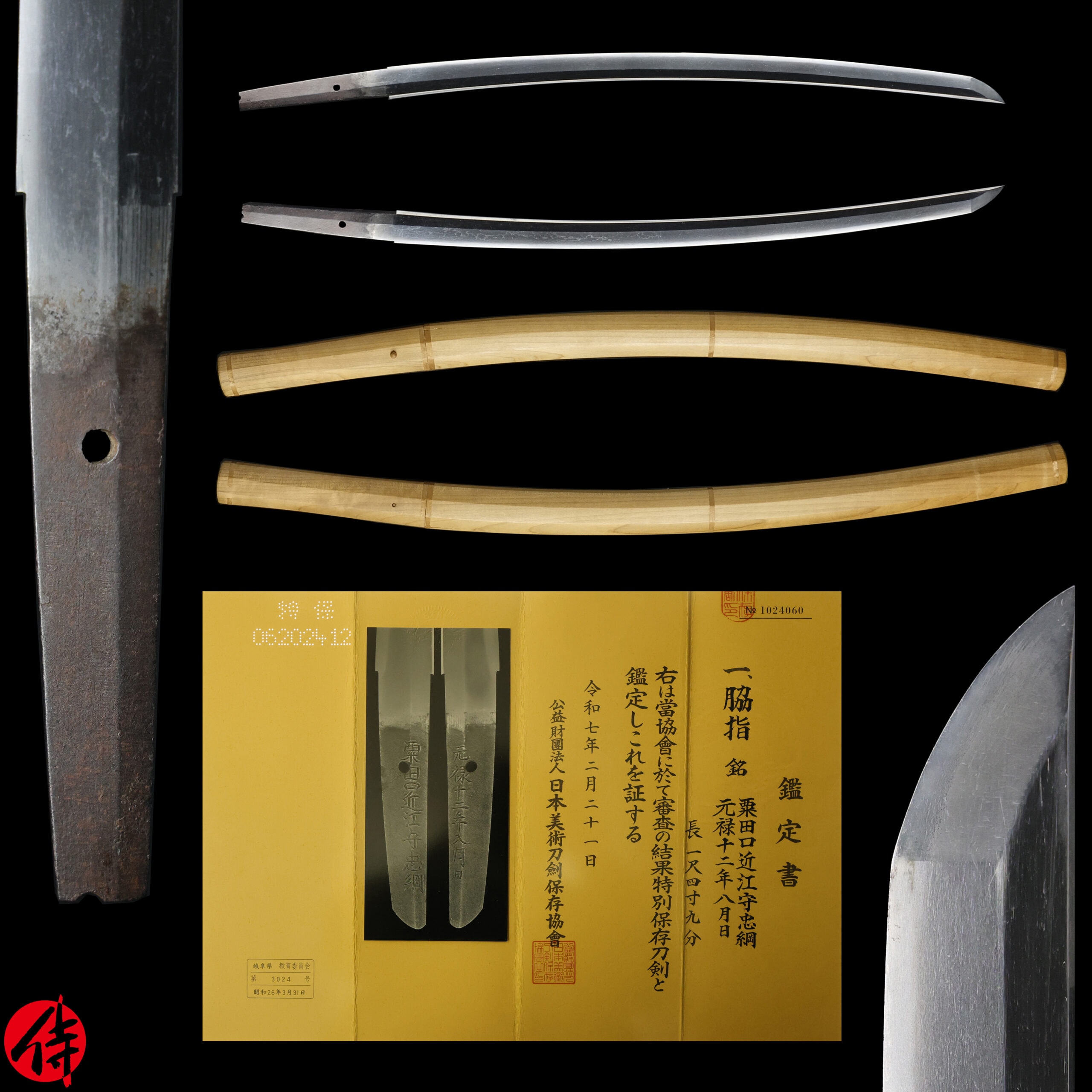
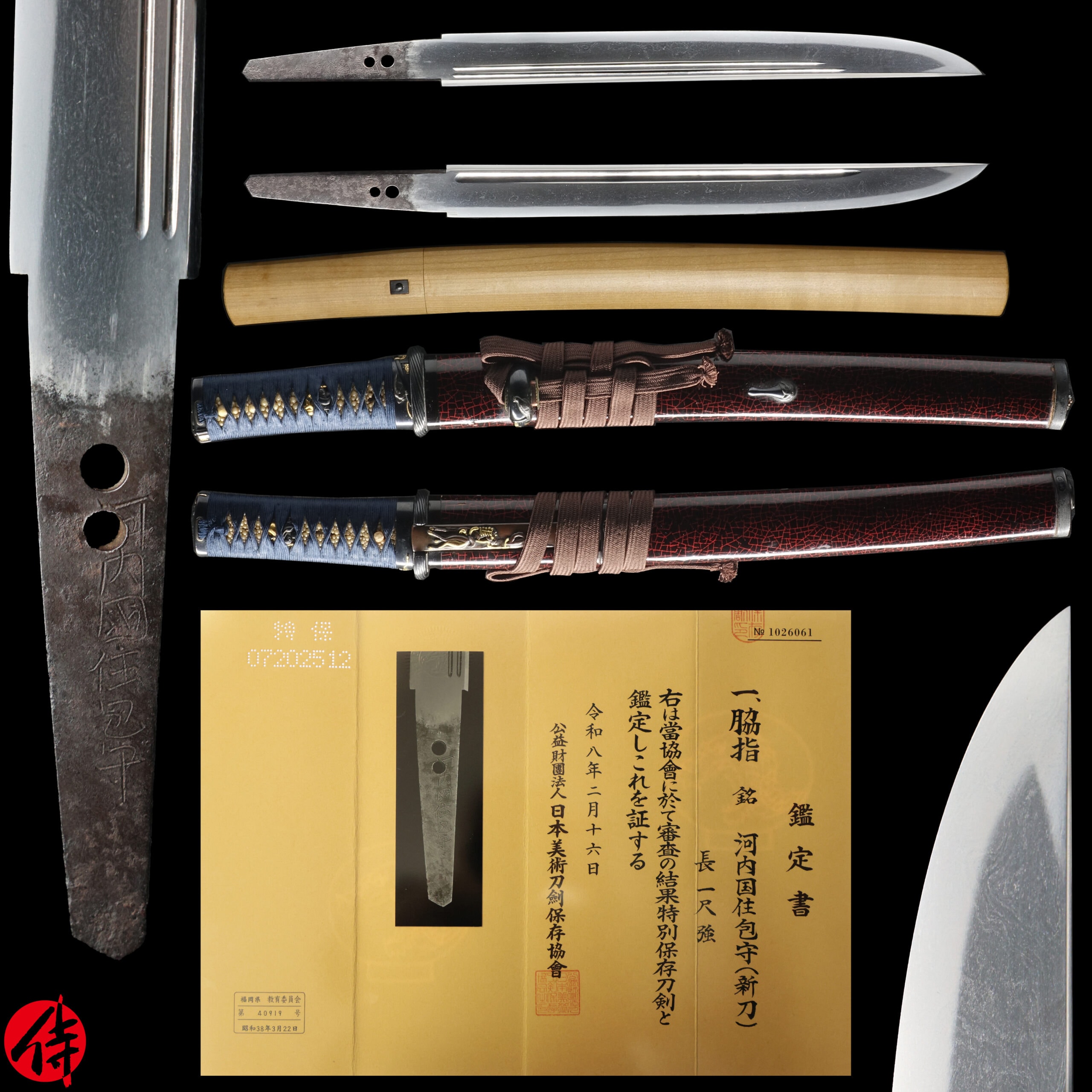
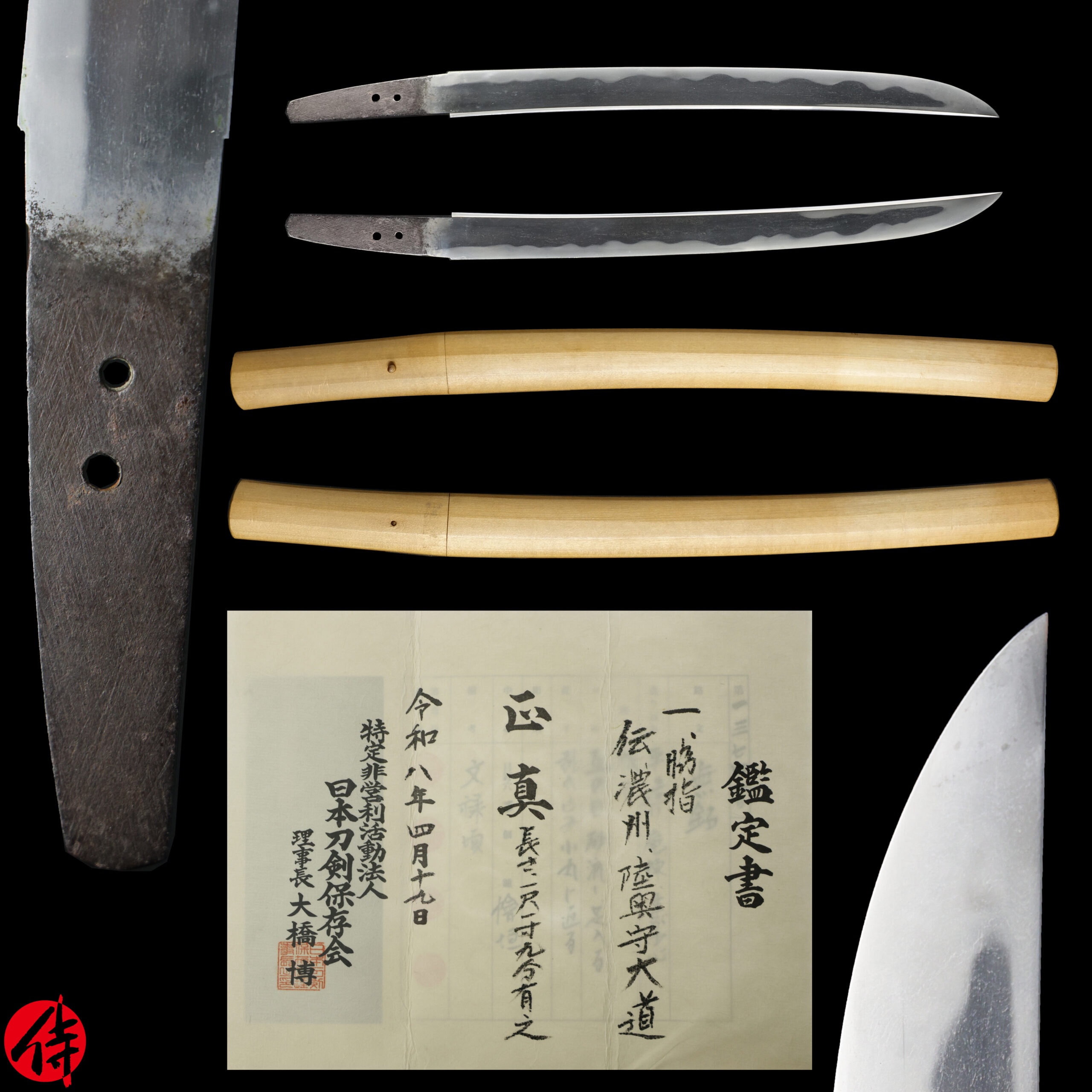
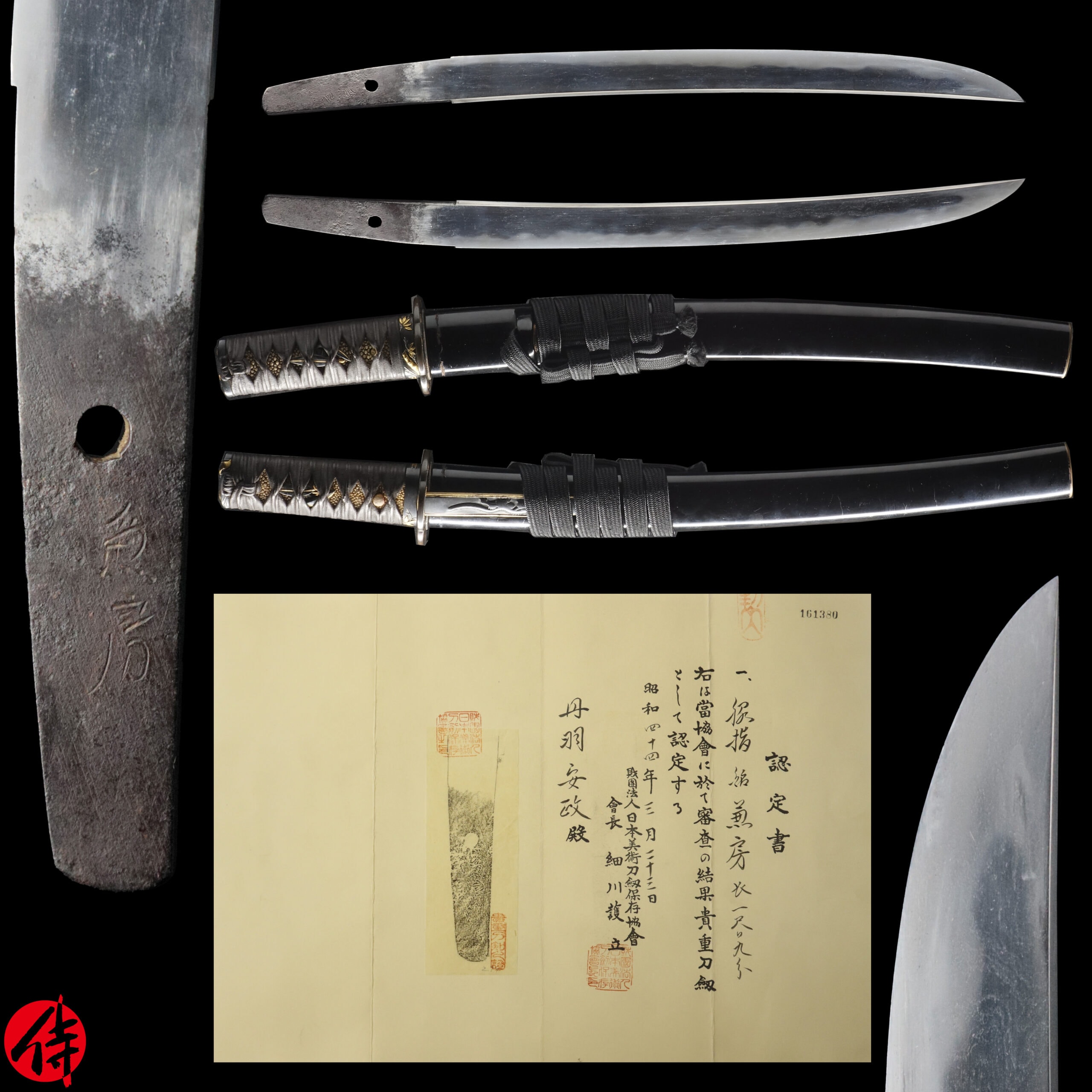
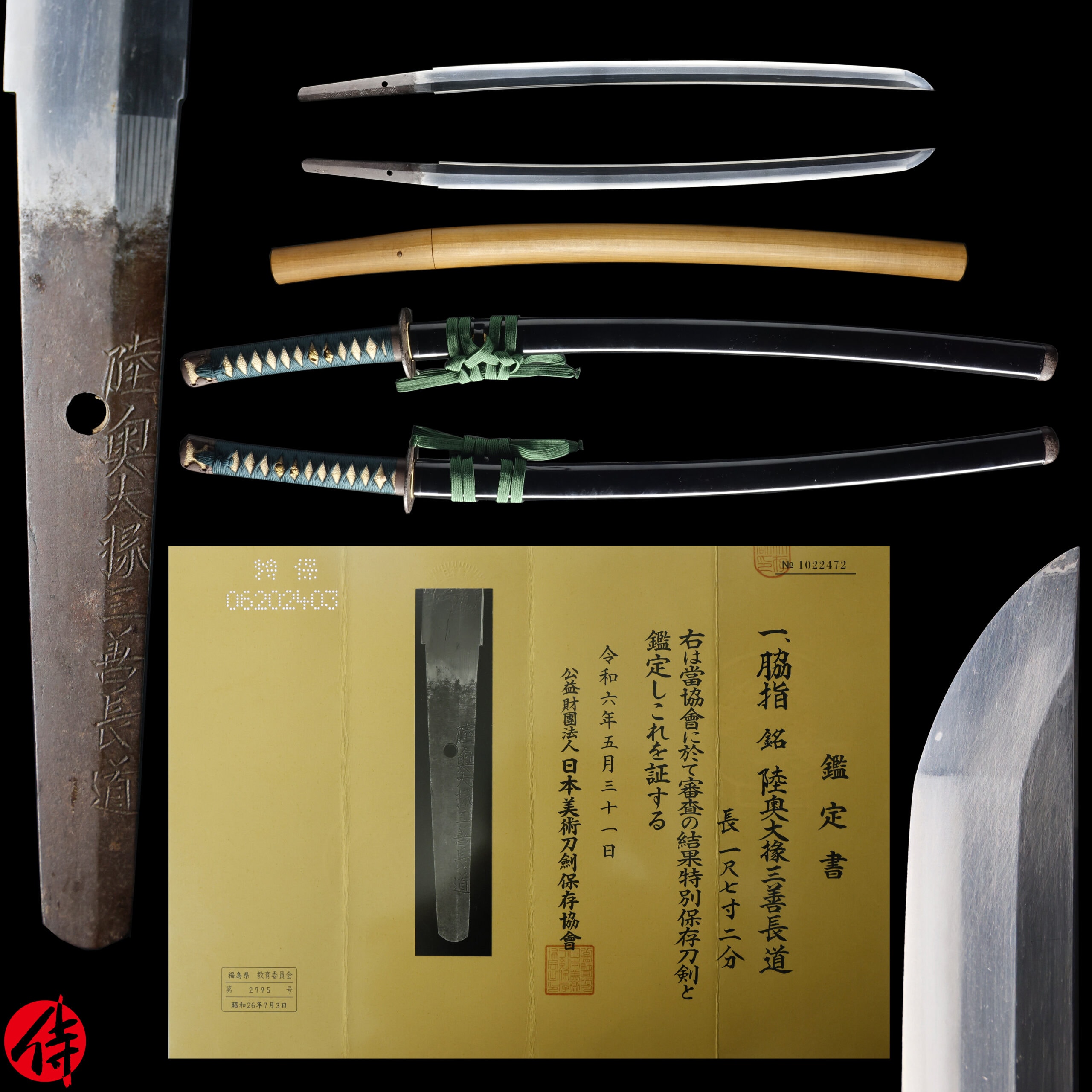
Antique Japanese Sword Wakizashi Signed by Nagamichi with NBTHK Tokubetsu Hozon Certificate 【Description】 This blade was signed by Mutsu Daijyo Miyoshi Nagamichi (陸奥大掾三善長道). Nagamichi served Aizu Matsudaira clan, who ruled Aizu domain (Today’s Fukushima prefecture). He was especially active during the early Edo period (Mid-Late 17th century). The first-gen Miyoshi Nagamichi was considered one of the top-tier swordsmiths during the early Edo period. He belonged to Miyoshi school and is also known as the first-gen Nagamichi because the maker’s name lasted ten generations throughout the Edo period. Nagamichi was born in the 10th year of the Kan-Ei era (1633). His birth name was Miyoshi Toshiro. He learned sword-forging techniques from his uncle Nagatoshi because his father, Masanaga, died when Nagamichi was 16 years old. Nagamichi mainly resided in Aizu province (Today’s Fukushima prefecture). Nagamichi first signed Michinaga, but he changed it to Nagamichi when he received Mutsu Daijyo in the first year of the Manji era (1658). Daijyo was an honorable official title given by the emperor for one’s excellent craftsmanship. He was 17 years old when he got this title. This fact suggests that he must have been excellent at forging blades early in his age. Later, he moved to Edo city and learned how to make a sharper blade from Yamano Kanjyuro Hisahide, the master of Tameshigiri, or test cutting. According to the book (Kaihou Kenjyaku) published by Yamada Asaemon in the late Edo period, a blade forged by Nagamichi was ranked as Saijyo Owazamono, the highest of all the rankings. Asaemon was hired by the Edo government as an expert on Tameshigiri, or testing cutting. And in this book, he judged how sharp Japanese swords forged by prestigious swordsmiths were. Because of the sharpness of the blades forged by Nagamichi, he was often called Aizu Kotesu or Aizu Masamune to appreciate his craftsmanship. Kotetsu and Masamune are also highly renowned swordsmiths. Miyoshi School Nagamichi was the grandson of Nagakuni, a renowned swordsmith in Matsuyama province (Ehime prefecture). Miyoshi Nagakuni initially forged swords in Akino province(Hiroshima prefecture). Nagakuni moved to Iyo province after being hired by Kato Yoshiakira, the head of the Matsuyama clan. Nagakuni and his son Masanaga eventually relocated to Aizu province as the government ordered Kato clan (their employer) to move to this province. They started to forge blades in Aizu province in 1627. Masanaga was the father of Nagamichi. Among other schools in Aizu province, Miyoshi school played an important role and served as the head school during the Edo period. Another famous school in this province is Aizu Kanesada school. It is appraised as a Tokubetsu Hozon Token (特別保存刀剣) issued by NBTHK (Nihon Bijutsu Touken Hozon Kyokai: 日本美術刀剣保存協会). This authentication paper was only given to authentic Japanese swords, especially well preserved and high quality with artistic value. *Please keep in mind that there are a couple of Kitae Kizu on this blade. If you like to know the detailed condition, please feel free to contact us. 【Blade】 Cutting Edge Length (Nagasa) : 52.1 cm (20.5inches) Curvature (Sori) : 0.90 cm (0.35 inches) Hamon : The crystalline structure which forms along the cutting edge of a blade as a result of the hardening process. Jimon(Jihada) : visible steel surface pattern created by folding and hammering during forging process Kissaki : Kissaki is the tip of the Japanese sword. Nakago : Nakago is the tang of the Japanese sword. Japanese swordsmiths left the black rust on the tang because it prevents red rust while the tang is in its handle. And the discoloration of the tang was created over time, and it is a great indicator for a Japanese sword specialist to estimate when the sword was forged. Koshirae : Koshirae is the mounting of the Japanese sword. There are several parts that consist of Koshirae such as Saya (Scabbard), Tsuka (Handle), Tsuba (Handguard). Fuchi-Kashira :

Antique Japanese Sword Wakizashi Signed by Nagamichi NBTHK Tokubetsu Hozon Certificate
売切れ
Tokuho売切れ

Antique Japanese Sword Wakizashi Signed by Nagamichi NBTHK Tokubetsu Hozon Certificate

脇差

売却済

世界76社の刀剣商を横断追跡 · 価格履歴 · 売却アーカイブ

仕様

長さ

52.1 cm

反り

0.9 cm

作者について

Aizu Miyoshi Nagamichi長道

2 御物8 重要刀剣

陸奥大掾三善長道は、説明書が「会津新刀の事実上の祖」と呼ぶ工であり、その一刀は貞享二年(一六八五)紀をもつ。これは彼の歿年にあたり、本刀は最晩年の作と解される。その家は西国から会津に入った。祖父長国は伊予松山に住して加藤嘉明に仕え、寛永四年加藤家が伊予から奥州会津へ移封の際、長国は従って北へ移り、長道の父政長も共に移った。長道は寛永十年に会津で生れ、長国の門に学び、初め道長と銘したが、万治元年に陸奥大掾を受領して名を長道と改め、貞享二年五十三歳で歿した。一説に津田助広門ともいうが、説明書はその作風を長曽祢一派に近いものとし、藤代の極めは上作である。後に負う会津の虎徹という通称は、伝記から借りたものではなく、鉄そのものに負うところである。 その特色は、のたれに互の目を交じえて高低のある乱れ刃をなし、処々互の目が二つずつ連れて瓢箪刃を呈するもので、説明書はこれを彼の得意とし、作ごとに繰り返し挙げる。足は太く長くさかんに入り、沸厚くつき荒めの沸を交え、刃中に砂流し・金筋がかかり、最も働く作では腰元に棟焼がかかる。匂口は明るく冴え、説明書がその佳作の常として注目するところである。説明書は系譜の比較を明示して繰り返す。この刃は「正に虎徹のハネトラ時代の作柄を想わせる」ものとし、浅くのたれて小丸、先掃きかけてやや深く返る帽子も、この期の虎徹の帽子に直に相似するとみる。長道の見どころは、瓢箪に連れた互の目の刃と、その上の掃きかけて深く返る小丸と、その相似の両面に同時に宿る。 地鉄はその働く刃の下の穏やかな地である。鍛えは板目、しばしば杢・大板目を交え、腰元に流れごころを交えて肌立ちごころに、地沸厚くつき地景細かによく入り、最も精緻な晩年の刀では地が小板目につみ地沸が微塵に厚くついて、地がもっとも冴える。その地に焼く刃文は、多くは直ぐ調の短い焼出しに始まり、その上は大互の目・小のたれの本体へと広がり、匂深く沸が厚い。帽子は右に述べた掃きかけの小丸で、表ややのたれ裏直ぐのこともあるが、ともに同じく返る。拵や彫は質素で、彫物は無いことが多く、あっても棒樋を掻き流すにとどまる。刃を担うのは飾りではなく働きであり、なかでも明るい匂口の上に働く砂流し・金筋が、その頑健な互の目を重く見せぬ。 その作は一つの手を二様の高さに取ったものに収まる。第一は虎徹調の典型の手で、小のたれに互の目・小互の目を交え、連れた瓢箪刃と掃きかけの小丸をなし、説明書がその代表的作風とするものである。第二はその白眉の刀の華やかな絶頂で、ある平成指定の作について説明書が記す通り、常にも増して焼幅広く、乱れに高低があって変化に富み、「華やかな作柄を示しており」、足太く長く、沸厚くつき、金筋・砂流しがよく働く。資料の上では、彼は謎ではなく開かれた書物である。指定作はほとんどが在銘で、生ぶ茎の棟寄りに陸奥大掾三善長道の長銘を切り、多くが延宝から貞享へかけて年紀をもつので、その手は受領から歿年まで殆ど連続して辿られる。 彼を分かつものは、最も似る虎徹に対して、他派ではなく立てられる。説明書はその差を一点で明示する。その作は砂流しのかかる点で虎徹に似るが、「沸の荒い点が相違する」というのであり、その荒く力強い沸が、肌立つ板目と連れた瓢箪刃とともに、ハネトラの作域の中に会津の手を見分けさせる。本工自身の肯定の徴は、説明書が名指し続けるものにある。刃中の瓢箪刃、太く長い足、匂深に乗る金筋・砂流し、そして佳作の明るい匂口である。説明書はその限りも率直に記し、反り少く姿の悪い作が多い中で、彼の傑作は姿もよい例外であるとする。会津新刀の事実上の祖として、彼は後の会津一派が継ぐ手、すなわち地沸厚くつく板目の地に頑健な刀を焼く手を定め、その在銘・有年紀・截断銘の作は一門草創の資料的背骨をなす。 長道は藤代の極めで上作、刀工大鑑の評価は六〇〇で、新刀中でも伝来の点で高く位し、その記録作は同項の最も際立つ部類に列なる。指定の記録は重要刀剣八口にとどまり、いずれも重要刀剣の位で、それ以上を数えない。国宝・重要文化財をもたぬため、長道は指定の文化財のように手の届かぬものではないが、なお出会うことの稀な作である。数口の刀は裏に試刀家山野勘十郎久英の金象嵌截断銘をもち胴を截断した記録を伝え、説明書はかかる截断銘そのものが珍しく優れた作にさらに価値を加えると記す。その白眉について説明書は「この刀は彼の最高傑作で」と平らに述べ、地刃の出来が優れるとし、別の作を「地刃共に明るい三善長道出色の一口」と称する。その佳刀の一口に負う伝来は、新刀中でも屈指の物語をもつ。会津藩主松平容保が池田屋事件の功により新撰組の近藤勇に賜ったものと伝え、後に明治の軍人で愛刀家の谷干城将軍に蒐蔵され、さらに土佐山内家に伝来した。なお一刀は道津神社の蔵に伝わる。蒐集の上では、これは初期江戸の開かれた書物たる名工であり、在銘でしばしば年紀をもち往々截断を帯びた刀が時に市にかかるにすぎず、匂口明るく刃に瓢箪を連ねた出来のよい一口は、俟つに値する会津新刀の作である。

刀剣商

サムライミュージアム

samuraimuseum.jp

売切れ