 NihontoWatchNihontoWatch
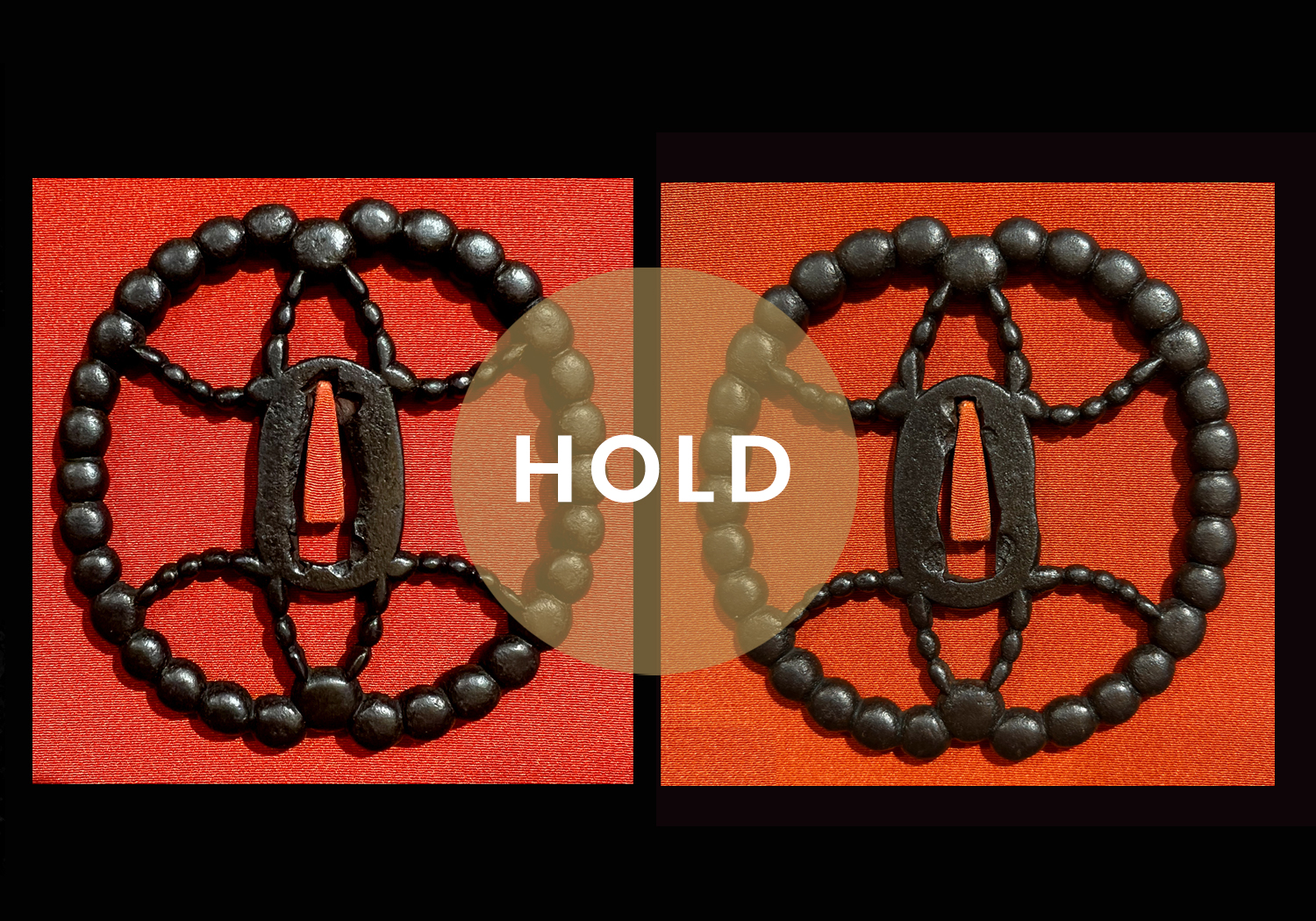
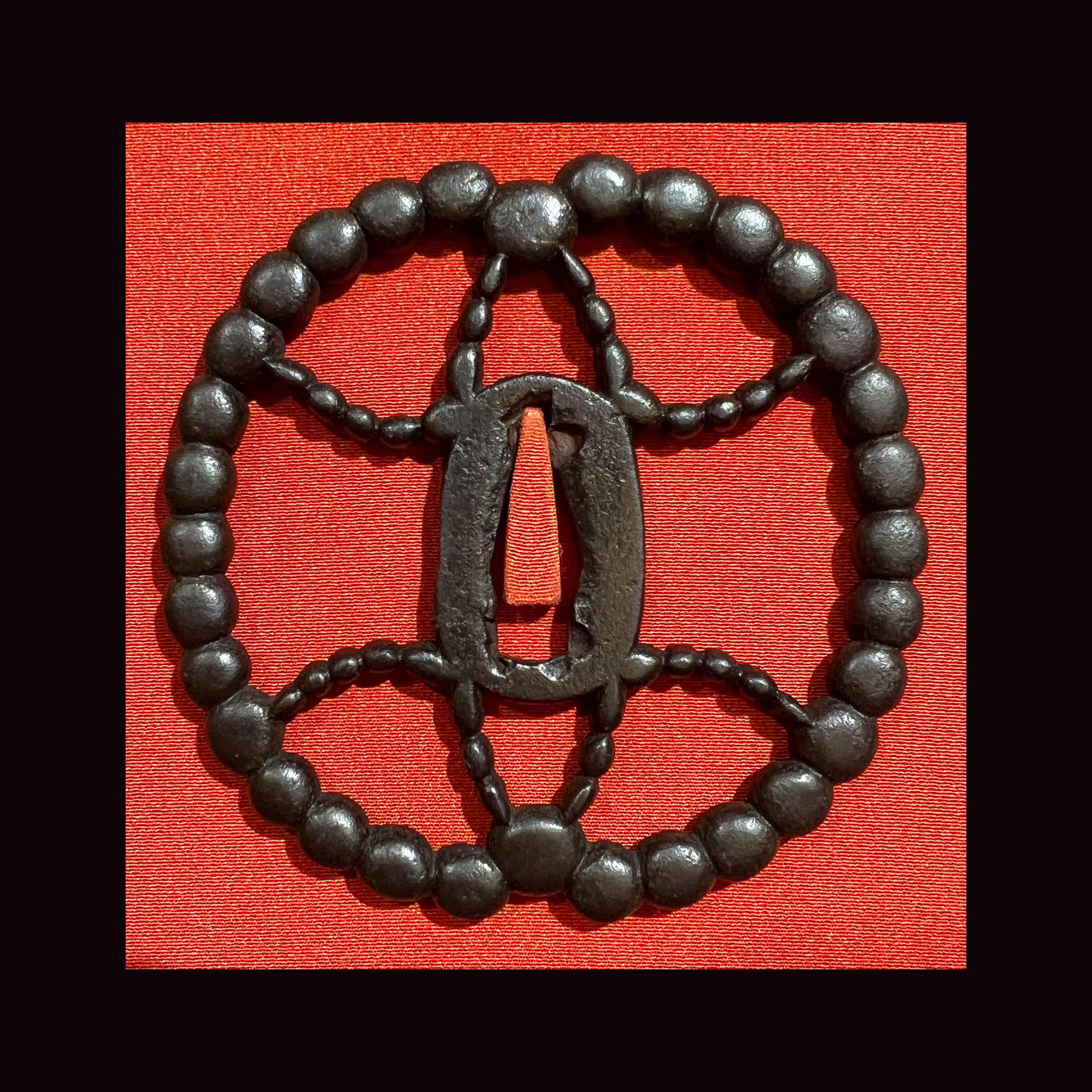
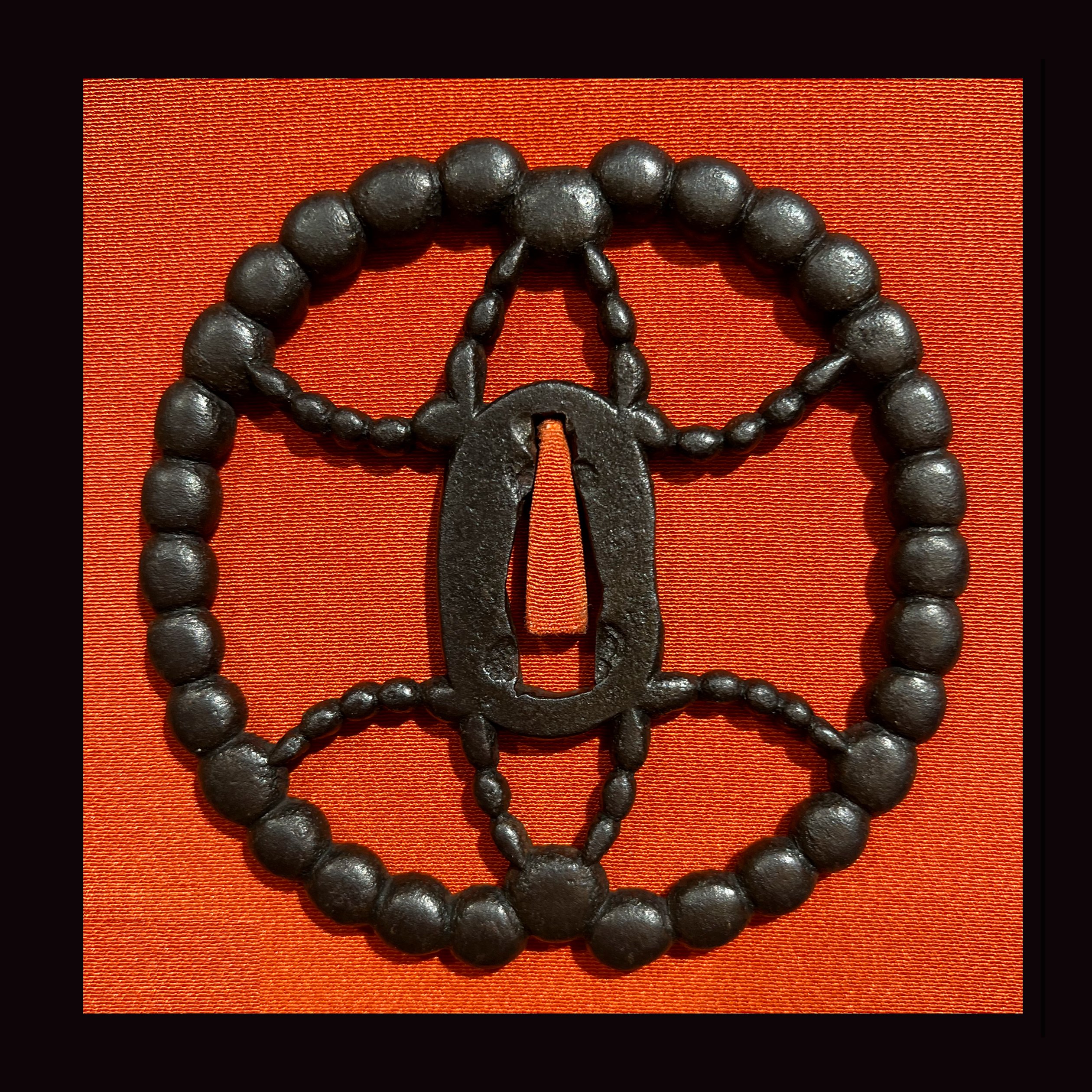
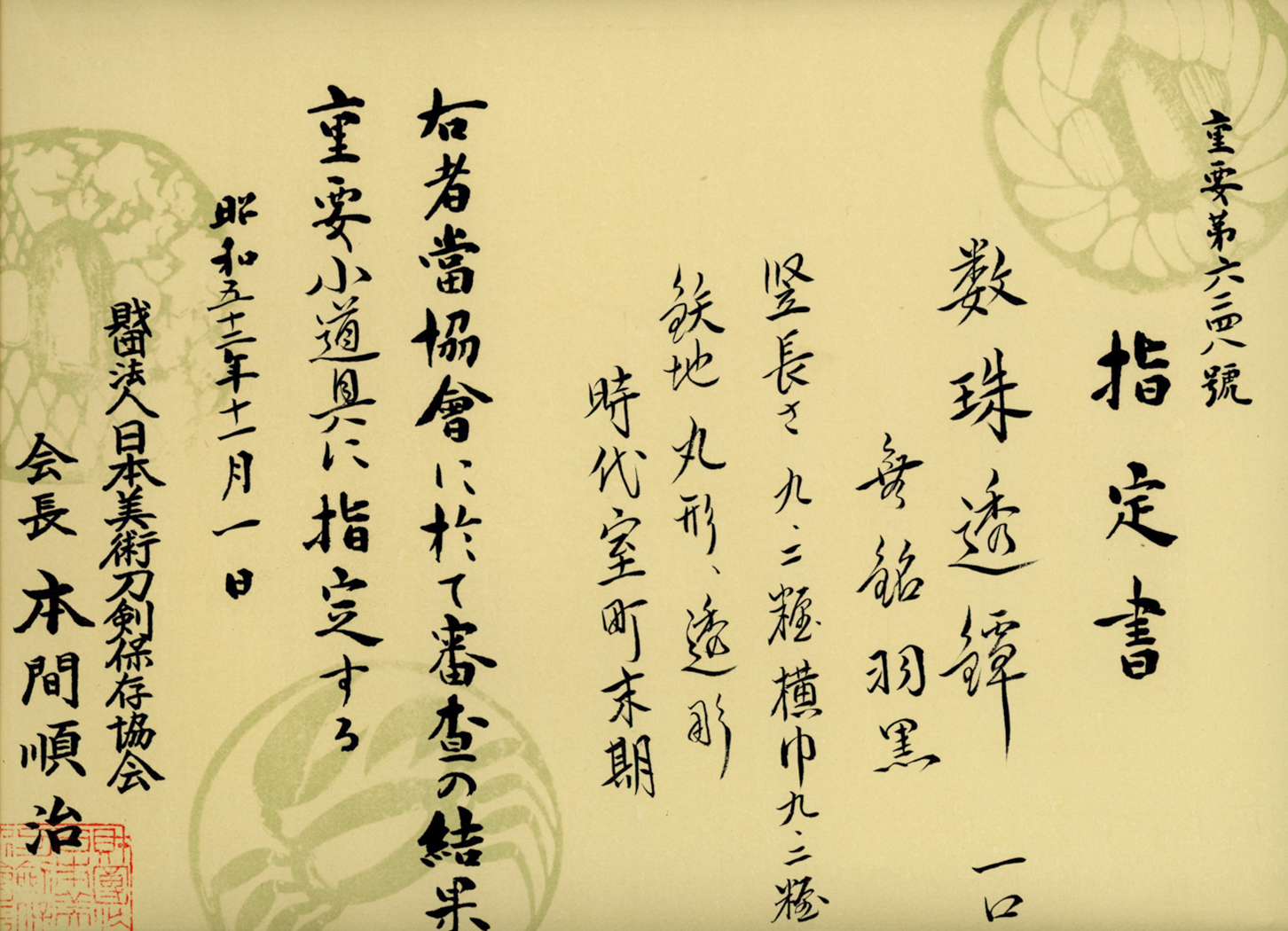
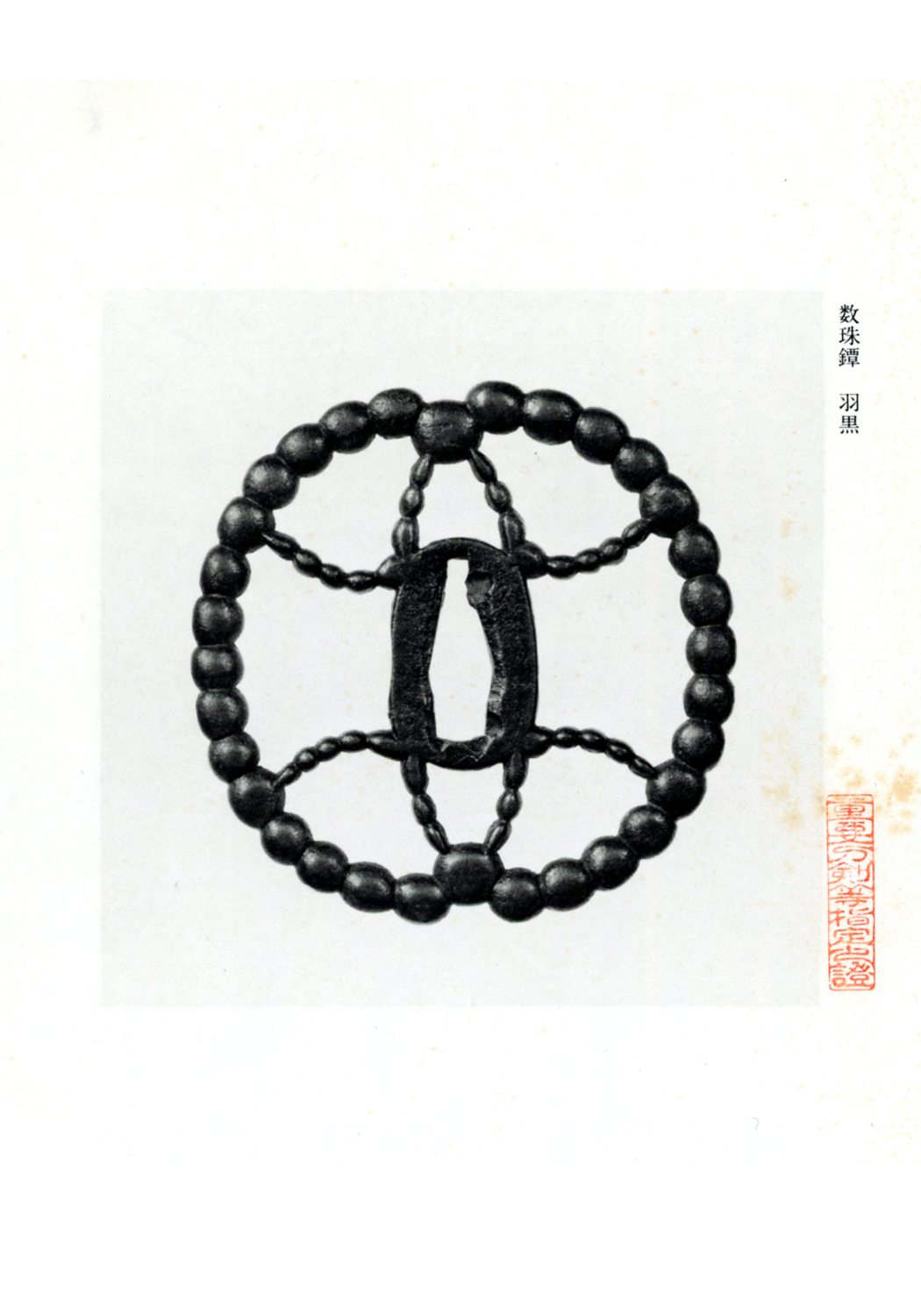
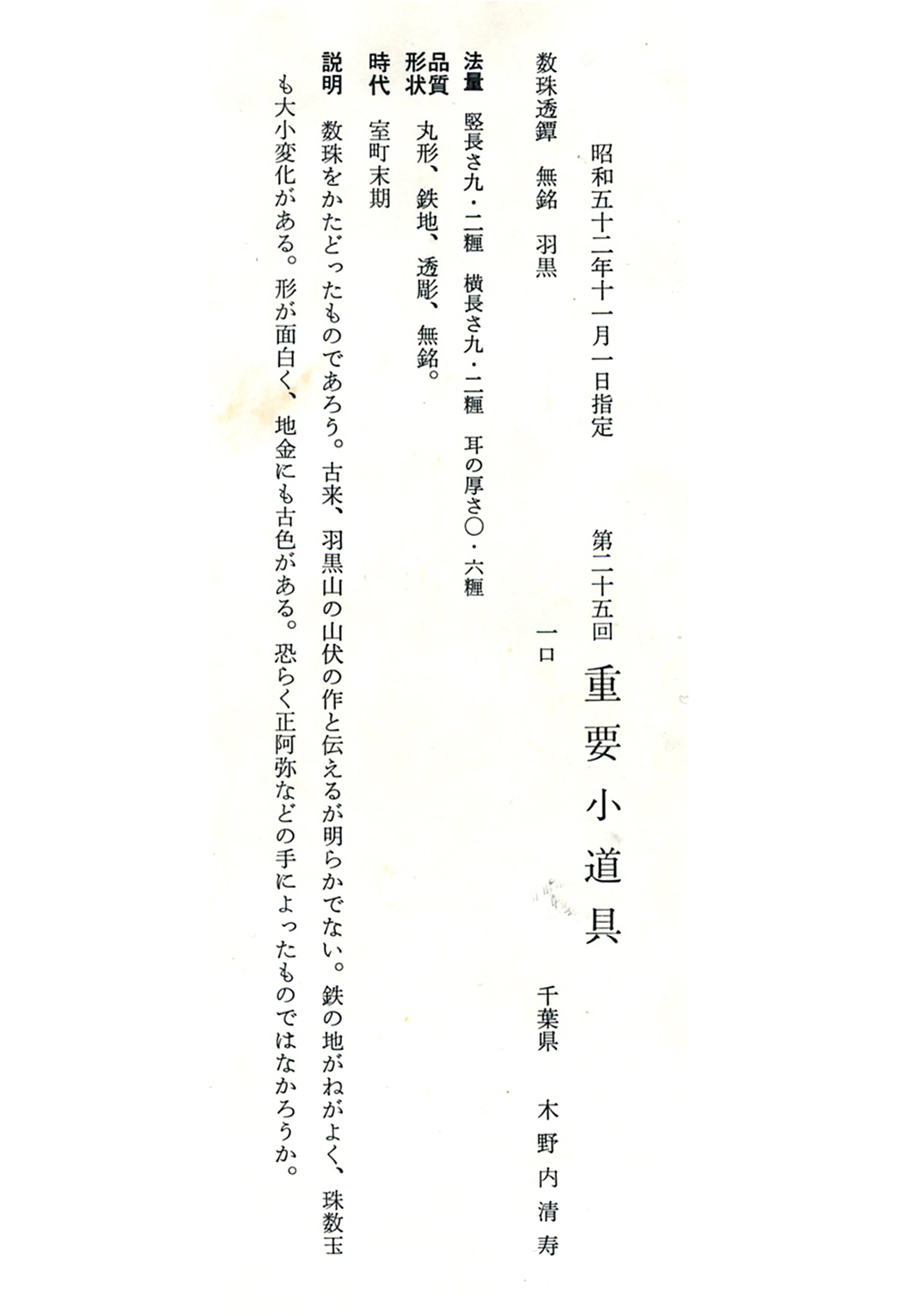
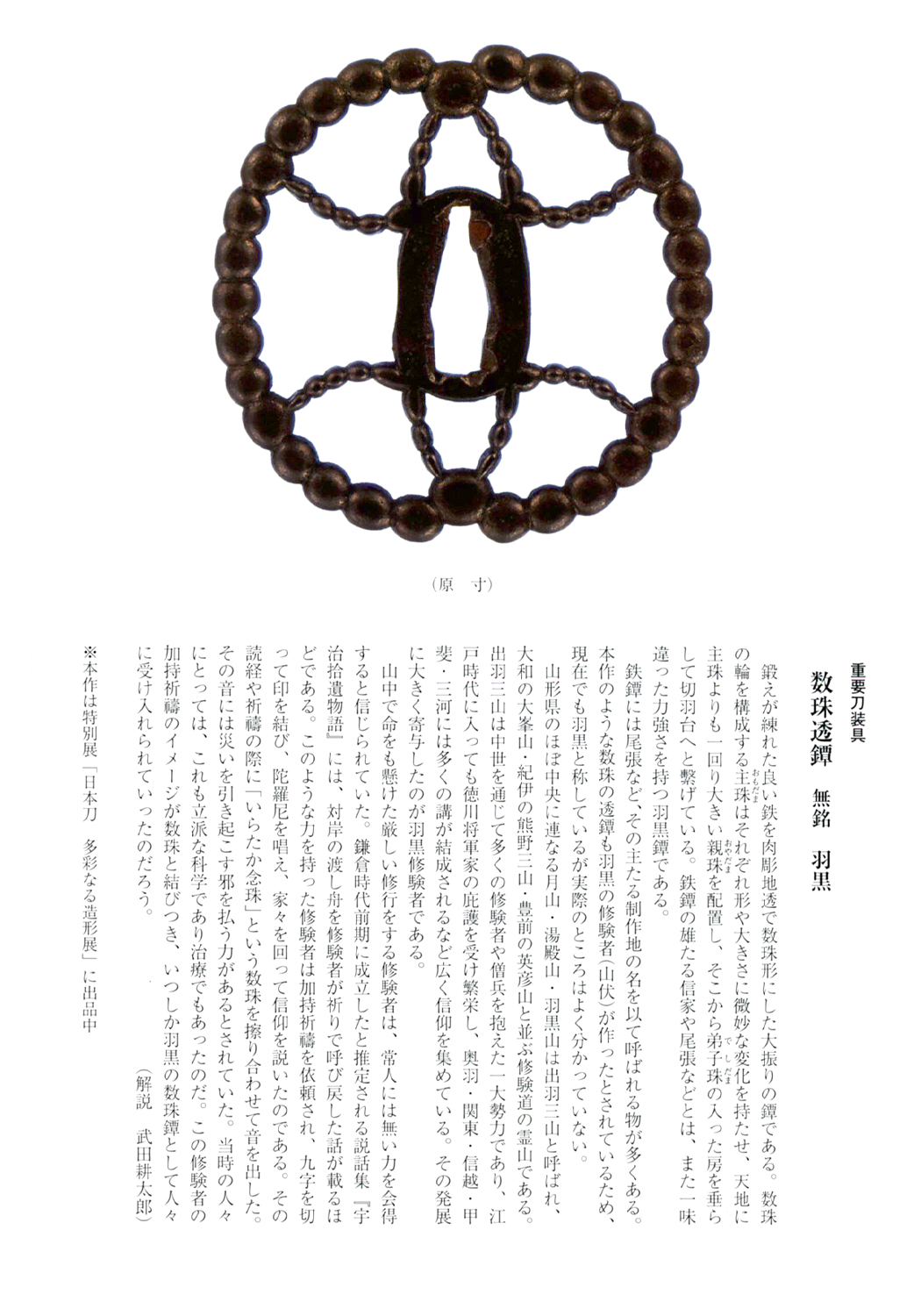
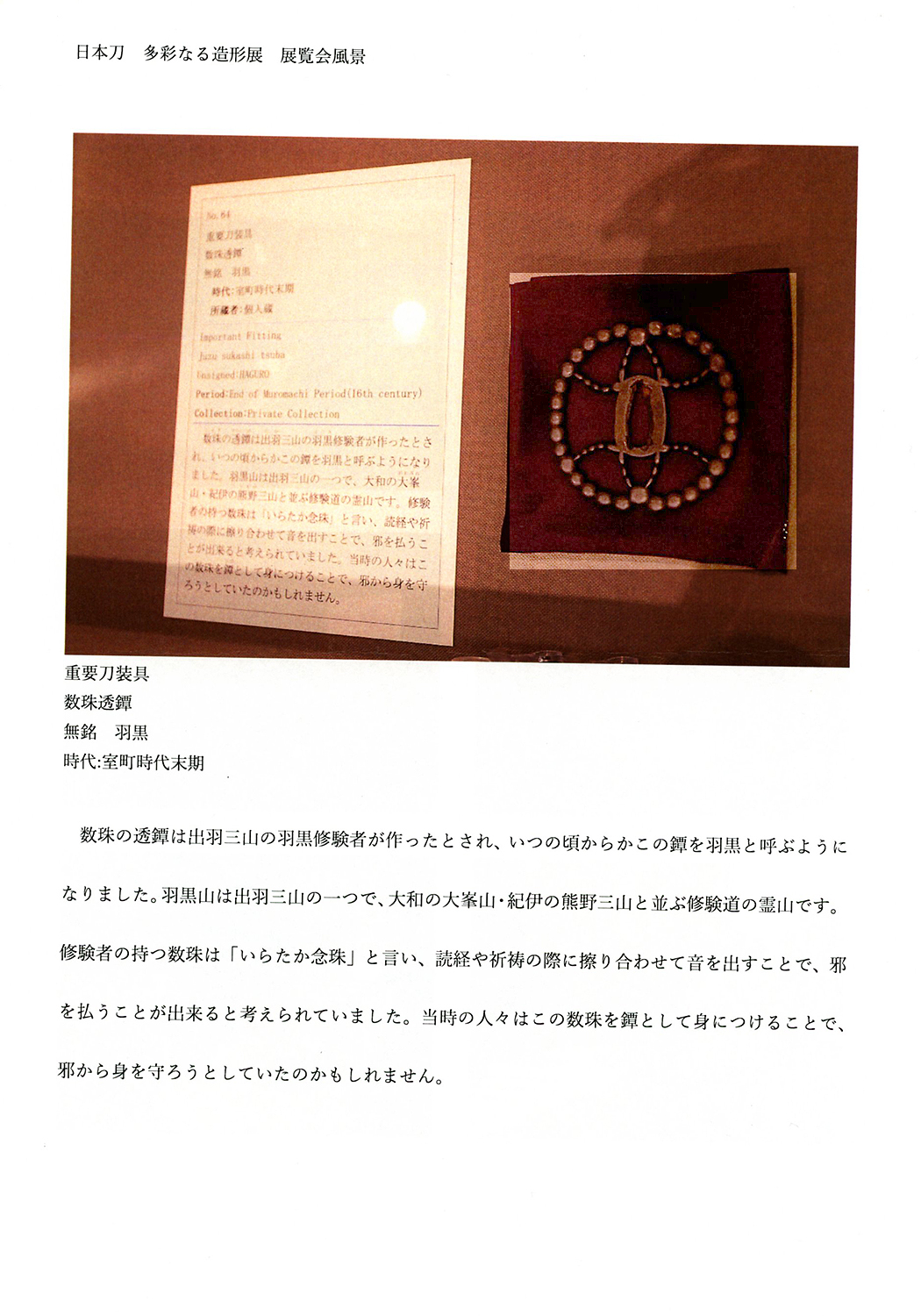
This is a large tsuba of excellently forged iron, which mimics, through three-dimensional openwork (nikubori ji-sukashi), a Buddhist rosary (juzu, 数珠). The rosary consists of individually carved beads (omodama, 主珠), whose different sizes create subtle variety. At the top and bottom, we see one large bead (oyadama, 親珠) each, which are connected to the seppa-dai through extensions that feature smaller beads (deshidama, 弟子珠). The iron of this Haguro-tsuba is powerful, but differs in appearance from the also powerful iron of Nobuie or Owari-tsuba. Usually, iron tsuba were and are named after their (assumed) places of production, for example Owari. The term Haguro-tsuba in use today, however, is rooted in the assumption that such tsuba were made by mountain priests (Yamabushi) from Haguro, who followed the syncretic Shūgendō religion, although details about those makers are unclear. The massif formed by the three mountains Gassan (月山), Yudono (湯殿), and Haguro (羽黒), which is located in the center of Yamagata Prefecture (former Dewa province), is referred to as Dewa-Sanzan (出羽三山), lit. the “Three Dewa Mountains.” Like Mt. Ōmine (大峯山) in Yamato, the Three Kumano Mountains (Kumano-Sanzan, 熊野三山) in Kii, and Mt. Hiko (英彦山) in Buzen, the Three Dewa Mountains are regarded as sacred and were a center of the Shūgendō belief. During medieval times, it attracted a large number of Shūgendō practitioners and Sōhei warrior monks, and the center was then supported by the family of the Tokugawa Shōgun throughout the Edo period. Accordingly, the local belief, which was initiated by the Haguro Shūgendō practitioners, also gained many followers in the more or less adjacent regions of Ōshū, Kantō, Shin’etsu, Kai, and Mikawa. Shūgendō practitioners underwent a rigorous physical training in the mountains, and so people believed that they had supernatural powers. In the Uji Shūi Monogatari (宇治拾遺物語), for example, a collection of stories that is dated to the early Kamakura period, we read of an episode in which a Shūgendō practitioner was able to retrieve a boat from the other side of the lake by mere prayers. Thus, people asked Shūgendō practitioners to perform incantations and prayers, for which they used mantras referred to as kuji (九字), and recited a long Dhāranī prayer. Often, the Shūgendō practitioners rubbed together the beads of their Irataka-nenju (いらたか念珠) rosaries, which generated a unique sound. It is said that this sound alone has the power to ward off calamities and evil. For many people at that time, such rituals were science and also therapy. It is possible, that Haguro juzu-tsuba, like the work introduced here, were once associated with the incantations and prayers of Shūgendō practitioners.[1] [1] This description is taken from the NBTHK Journal from March of 2022 wherein this tsuba was presented in a special article. This tsuba was also on view during April and May of 2022 in the exhibition: Nihontō – Tazai Naru Zōkei. While this motif of a Buddhist rosary (juzu, 数珠) tsuba is not, in itself, exceedingly rare, what makes this tsuba special is the quality of the work and the fact that it is only one of five or six tsuba from this school that have ever been awarded the coveted status of Jûyô Kodôgu. It is also safe to say that this is one of the top one or two tsuba ever reaching this status and certainly one of, if not the, largest ones. Also, it should be noted that I have been informed that there will be no further tsuba from this school awarded Jûyô status in the future. As noted, this tsuba was awarded Jûyô Kodôgu status at the 25th Jûyô Shinsa held in November of 1977. The translation of the setsumei for this tsuba is as follows: Jūyō-Kodōgu at the 25th Jūyō Shinsa held on November 1, 1977 Juzu-sukashi tsuba (数珠透鐔) – Tsuba with openwork design of Buddhist rosary Mumei: Haguro (羽黒) Measurements: Height 9.2 cm, width 9.2 cm, thickness at rim 0.6 cm Description: Hinshitsu-keijō: marugata, iron, sukashibori openwork, mumei Jidai: End of Muromachi period Explanation: This tsuba appears to be modelled after a Buddhist rosary. Tradition has it that such tsuba were made by mountain priests (Yamabushi), but details about that are unclear. This tsuba is made of an excellentjigane and the beads of the rosary vary in size. The shape of the tsuba is appealing, and the jigane has an early patina. Possibly, tsuba like this were actually made by Shōami (正阿弥) or other artists of that time period. This is an outstanding tsuba and one like it will probably not likely be for sale in the foreseeable future.
NihontoWatch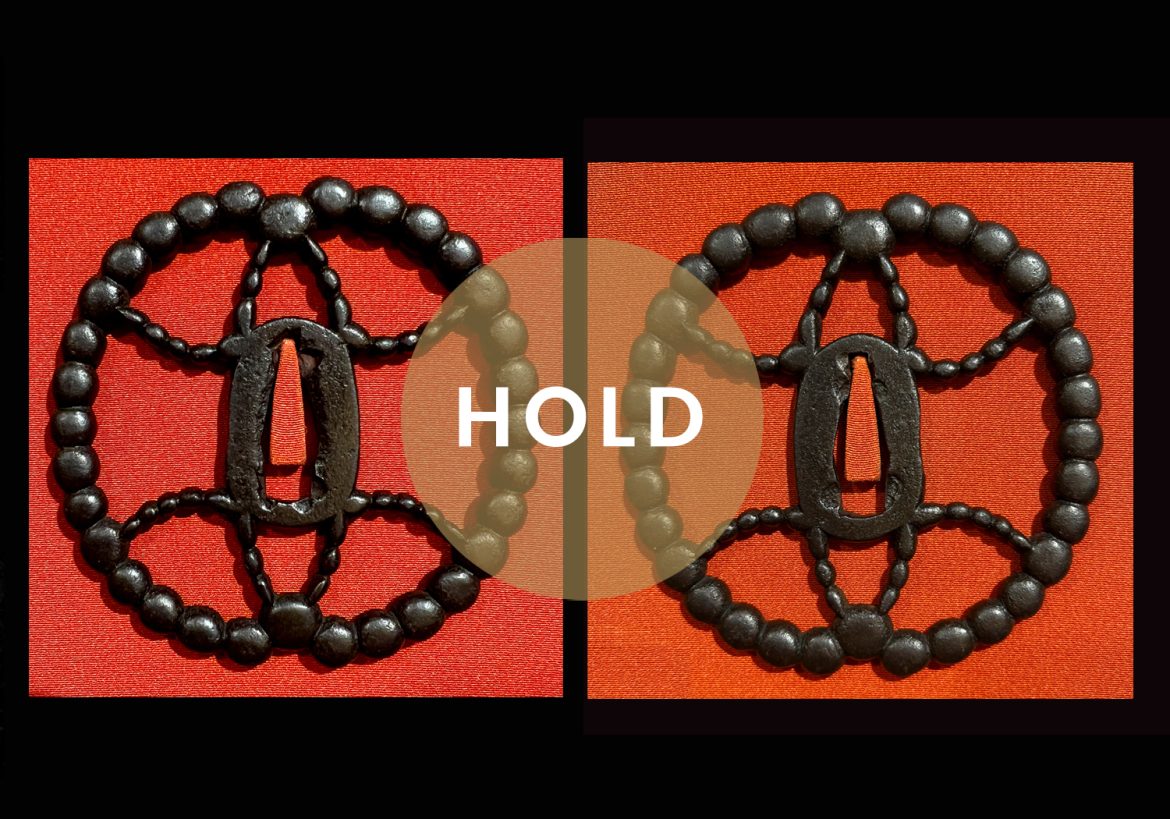
鐔工
羽黒鐔とは、古来、出羽国羽黒山の山伏の作と伝えられる一群の鉄鐔を指す呼称である。説示においては「古来、羽黒山の山伏の作と伝えるものに数珠の形にかたどった肉彫地透の鉄鐔があり、羽黒鐔と称されている」[[c:1]]と一貫して記されるが、同時にその伝承は「明らかでない」とも注記され、「羽黒の山伏が果してこの様な手数をかけて鐔を作ったか否かは頗る疑問である」[[c:2]]との見解も示されている。実際の製作者としては正阿弥などの金工の手が推測されており、系統は必ずしも明確ではない。時代的には室町時代後期の打刀拵に掛けられた作例が最も古く、本伝承の起源はおおよそ十五世紀から十六世紀に遡る。 羽黒鐔の意匠上の特質は、鉄地に数珠を地透で表現する点に集約される。古い時代の作例では肉彫地透の技法により珠数玉が連なり、大小の変化をもって構成される。説示は一貫して「鉄の鍛えが錬れて」「鉄の地がねがよく」[[c:3]]と鍛造の優秀さを指摘し、地金には古色が認められる。形状は丸形・変り丸形・竪丸形を呈し、丸耳を基本とする。江戸時代に入ると専門の鐔工によるデザインに凝った作や、江戸後期の赤坂八代忠時の如く数珠に房を付してより写実的に表現された作品も出現しているが、説示はこれらの後世作とオリジナルの古作とを明確に区別している。 説示が羽黒鐔の古作に認める価値は、伝来の確実性ではなく、その独自の美的性格にある。「簡潔が生む枯淡な雅味と強い精神力の湧出」[[c:4]]が古い時代の数珠鐔に見出され、「オリジナルものは、その迫力に於いて見るべきものがある」[[c:5]]と評される。正阿弥や他の金工一類が模したと思われる作品とは「全く異り」、鉄鍛えの充実と素朴な透の力強さが、宗教的な厳粛さを感じさせる独自の存在感を成している。大振りで貫禄のある味わい深い作として、羽黒鐔の古作は鉄鐔の伝統において特異な位置を占めている。 詳しく見る →
特別保存刀装具の中から、特に出来が優れ、美術工芸的価値が極めて高く、国認定の重要美術品に準ずると判断されたものです。
日本美術刀剣保存協会(NBTHK)は、1948年に設立され、文化庁の監督を受ける公益財団法人で、東京・刀剣博物館に本部を置きます。専門の審査員が出品作を直接審査し、美術的・歴史的価値に応じた鑑定書を発行します。NBTHKの鑑定書は、日本刀および刀装具の真正性を示す最も広く認知された基準です。
NBTHK公式サイトThree-day inspection period and seven-day return period; buyer notifies by email within three days of receipt, no reason needed; full refund once item returned undamaged and unaltered.