NihontoWatch MonNihontoWatchBETA
MarketEncyclopedia
NihontoWatch Mon

NihontoWatchBETA

Market
Encyclopedia
Overview·Kantei·Designations·Provenance·Work Types·Signatures·Lineage·School
OverviewKanteiDesignationsProvenanceWork TypesSignaturesLineageSchool
  1. Schools
  2. Yokoya
  3. Yanagawa
  4. Toryusai
  5. Kiyotoshi

Toryusai Kiyotoshi

清寿

Jūyō
Vol. 34, No. 169 · Tsuba

Toryusai Kiyotoshi

清寿

40 ranked works

ProvinceMusashiEraBunka-Meiji (1804–1876)SchoolYokoya>Yanagawa>ToryusaiTraditionMachiboriTeacherAizu Shoami school; then Kono Haruaki (河野春明); also Goto Sojo (後藤宗丈). Self-trained orientation toward Umetada Myoju, Tsuchiya Yasuchika, Yokoya Somin.Specialtiestsuba, kozuka, fuchi-kashira, menuki, kogai, inlay, iron-forgingTypeTosogu MakerCodeKON012
40Jūyō Tōken

Overview

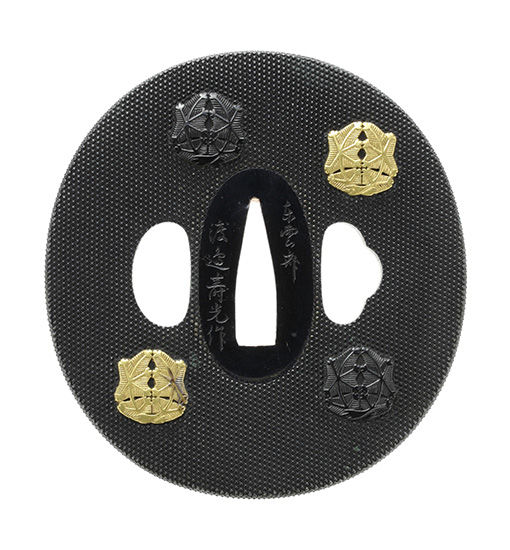
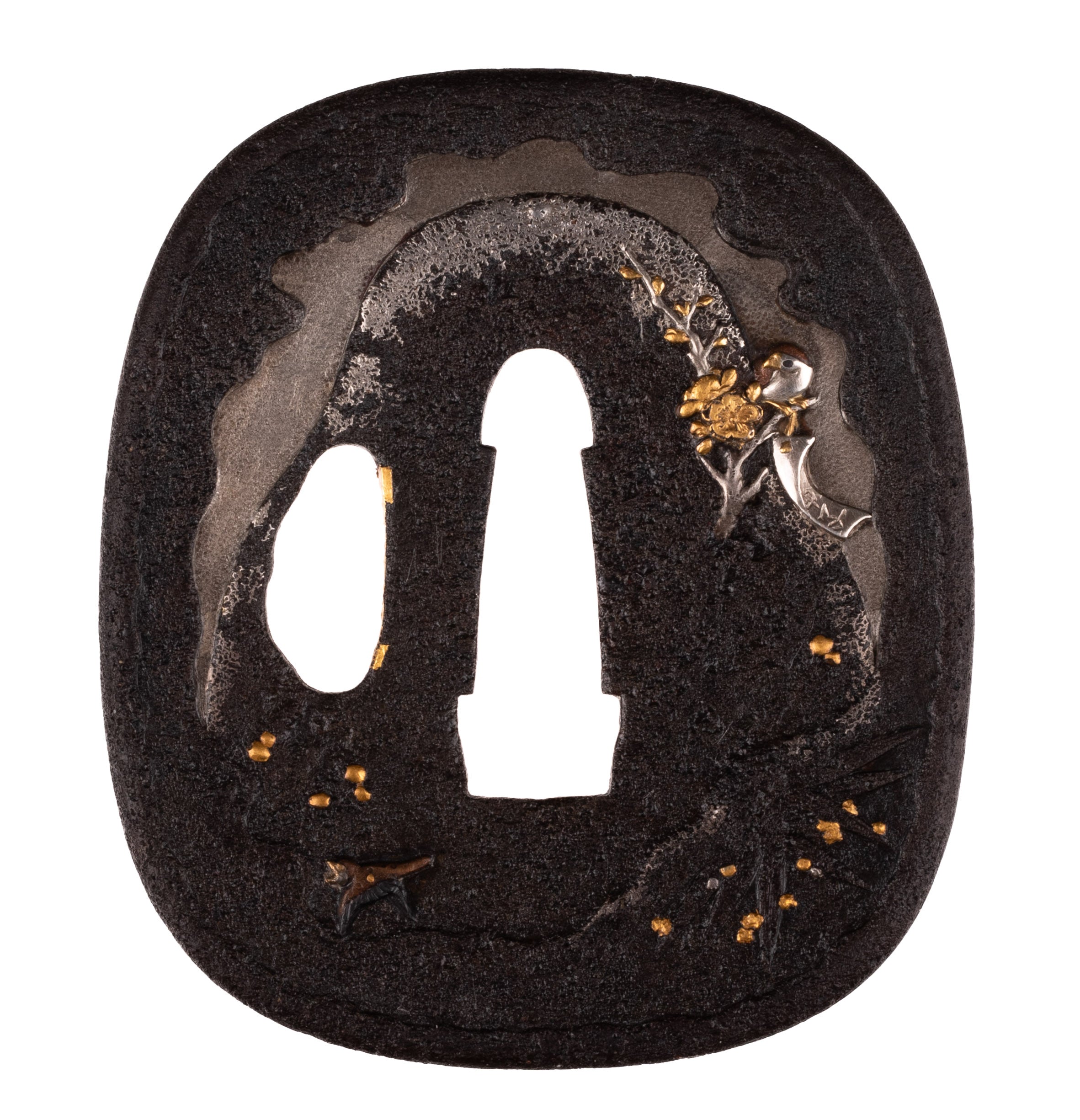
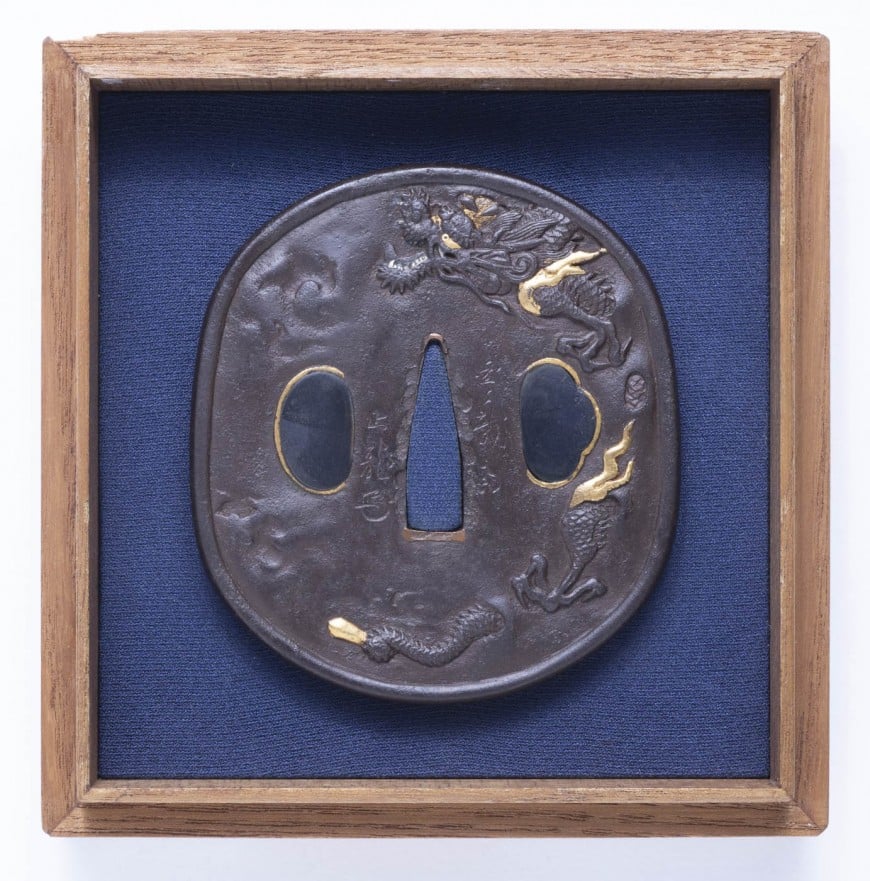
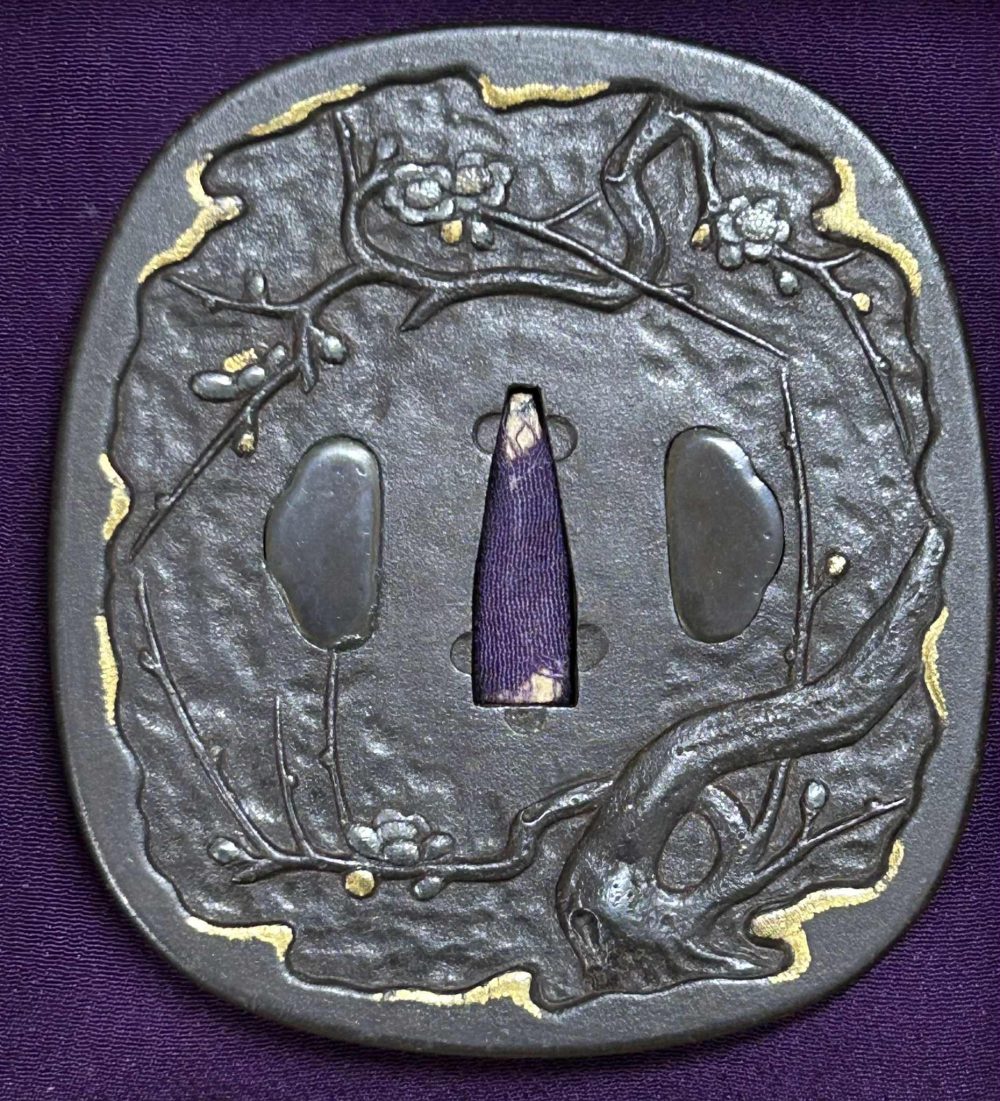
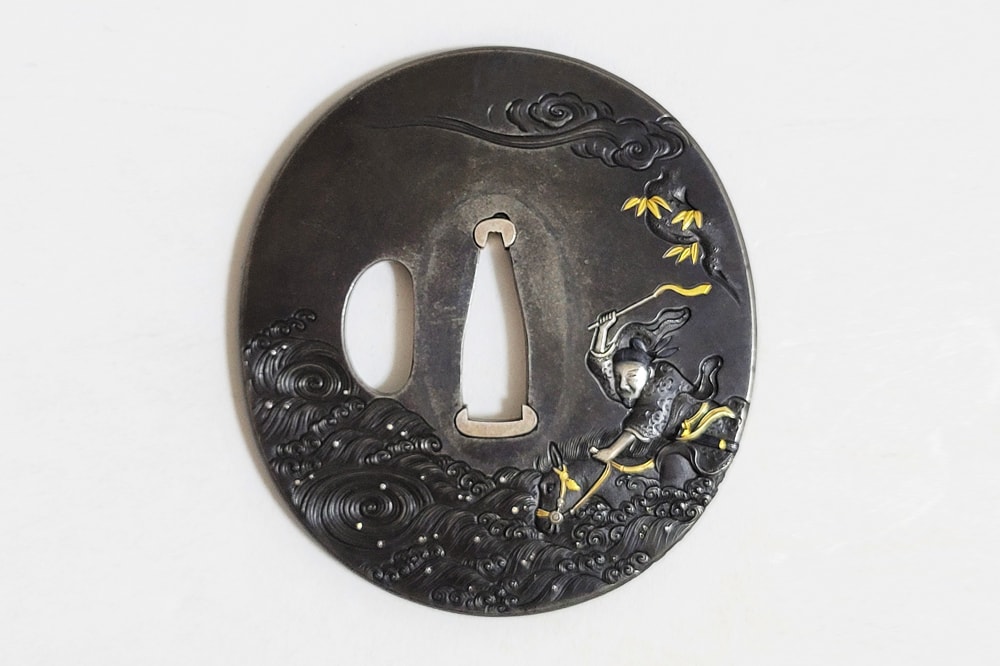
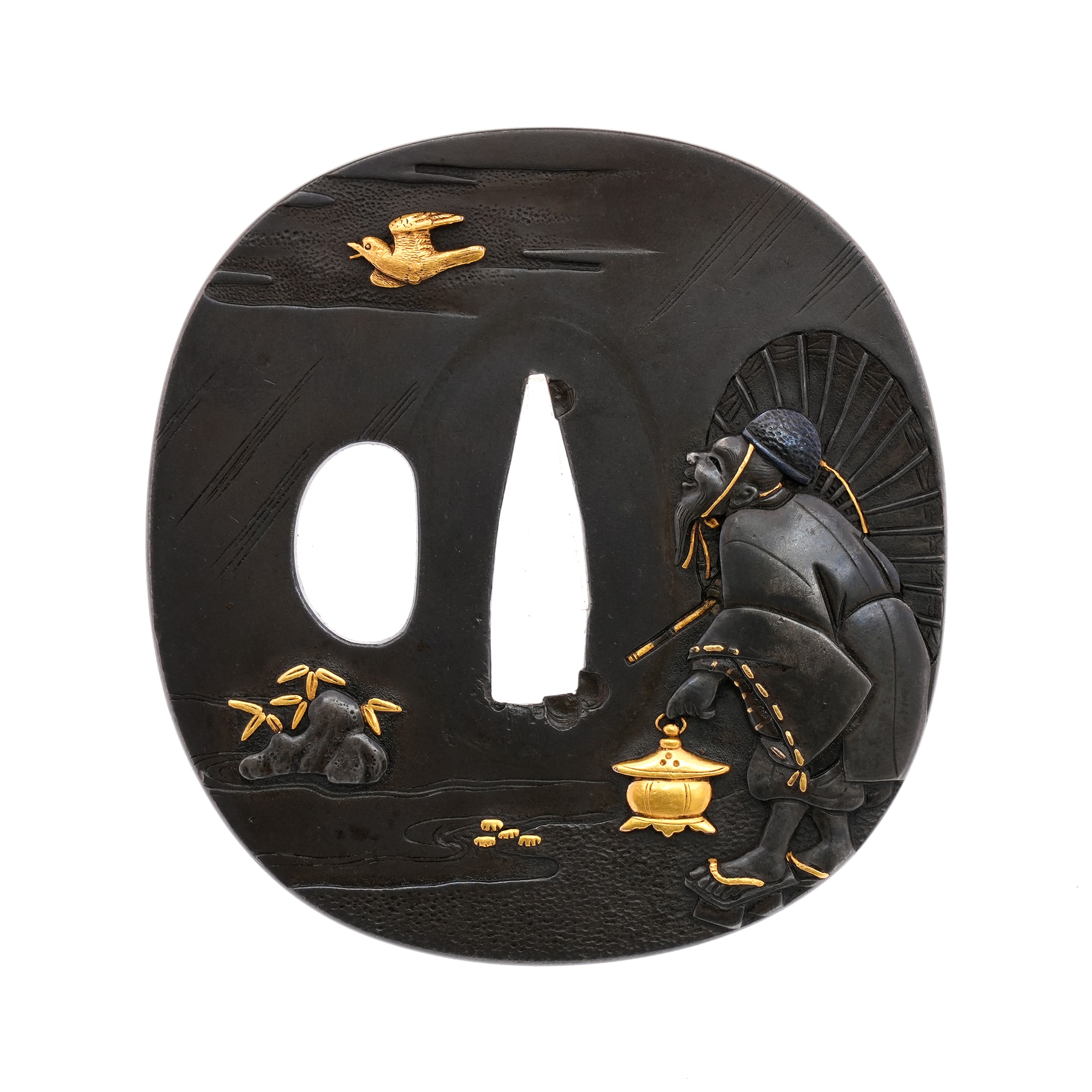
Tanaka Seiju, whose personal name was Tanaka Bunjiro, was born in in Bunka 1 (1804) as the son of the Province maker Tanaka Fusajiro. He lived in Shibai-cho, adjacent to Shiba Shinzenza-cho, and trained as a maker under Goto Sojiro Masanori, who had connections with Goto Seijo. However, Seiju himself favored the broader field of kinko (decorative metalwork) and pursued study largely through self-directed learning. Inheriting his father's art name, he styled himself Toryusai. He also maintained a close association with Goto Ichijo, and in step with contemporary taste he perfected a stylish, distinctive personal manner---the Toryusai style---that was uniquely his own. He is counted as one of the "three great masters of Bakumatsu metalwork" (Bakumatsu san meiko). He rivaled the fame of Goto Ichijo in Kyoto and, like Ichijo, was granted the rank of Hogen. In Koka 2 (1845) he was promoted to Hokyo, and in the following year advanced to Hogen. He cut supplementary inscriptions such as Ryuju, Jiryu, Ga-ikkaku, and ---phrases asserting artistic independence and personal style. While training many disciples, he also left numerous masterworks; he died in Meiji 9 (1876) at the age of seventy-three.

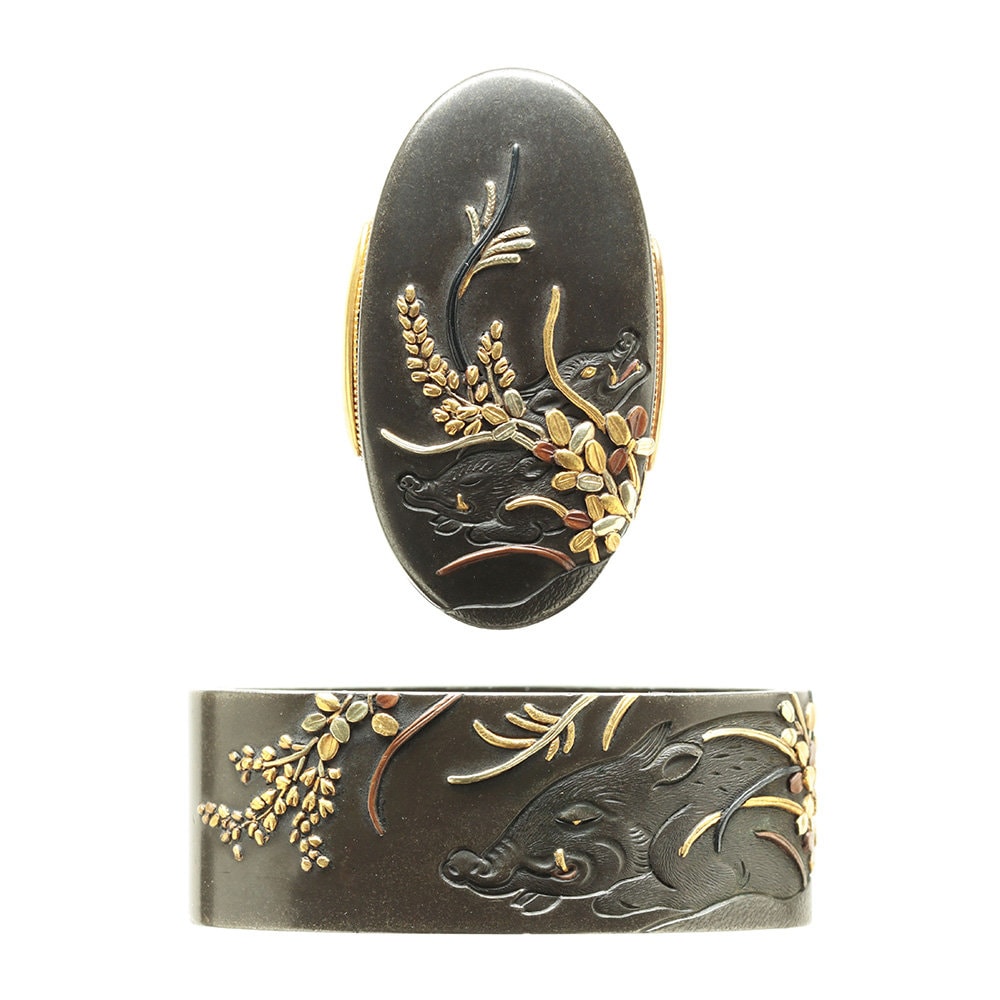
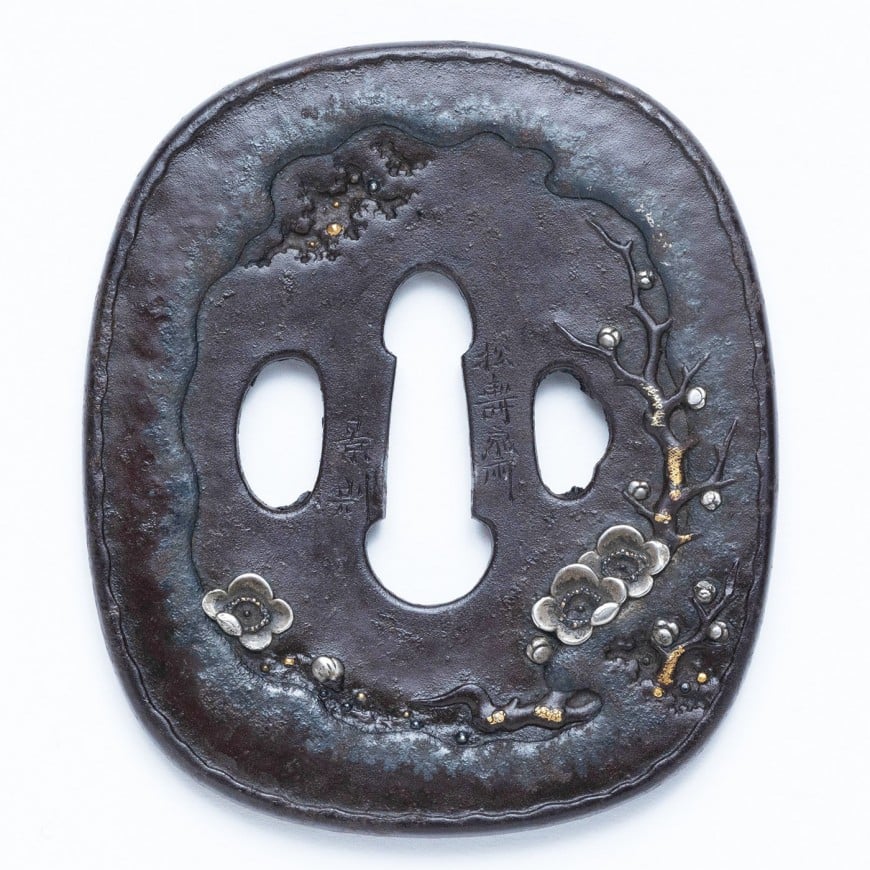
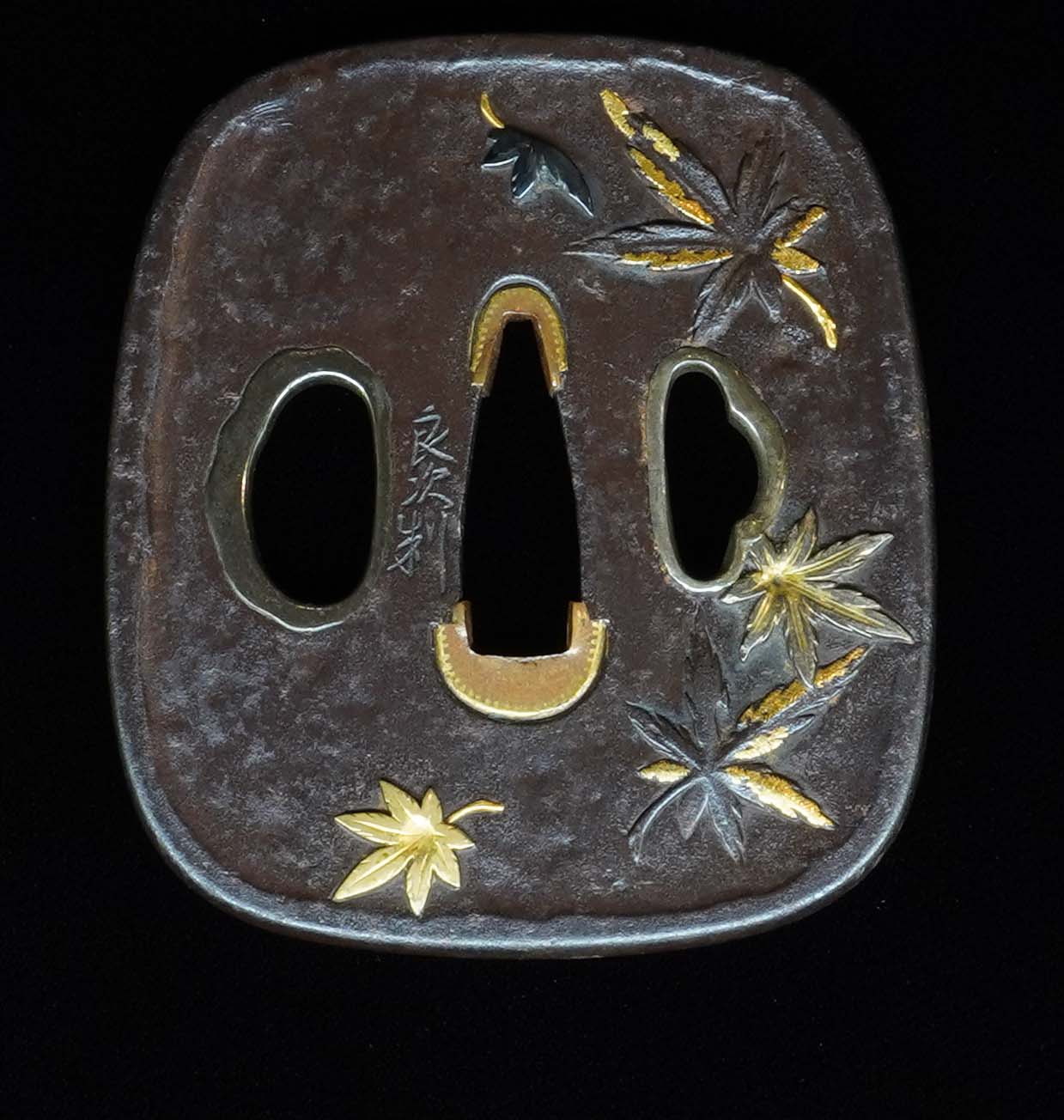
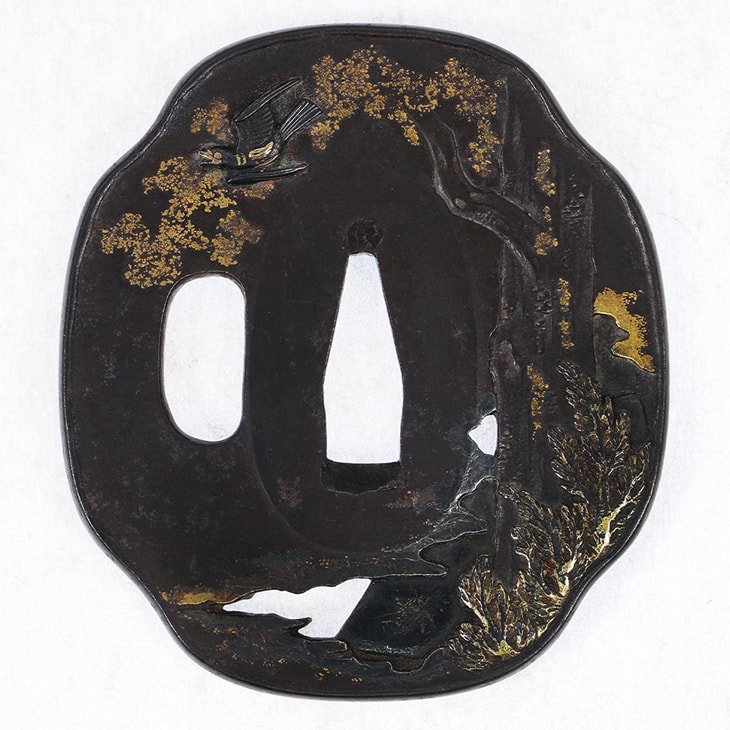
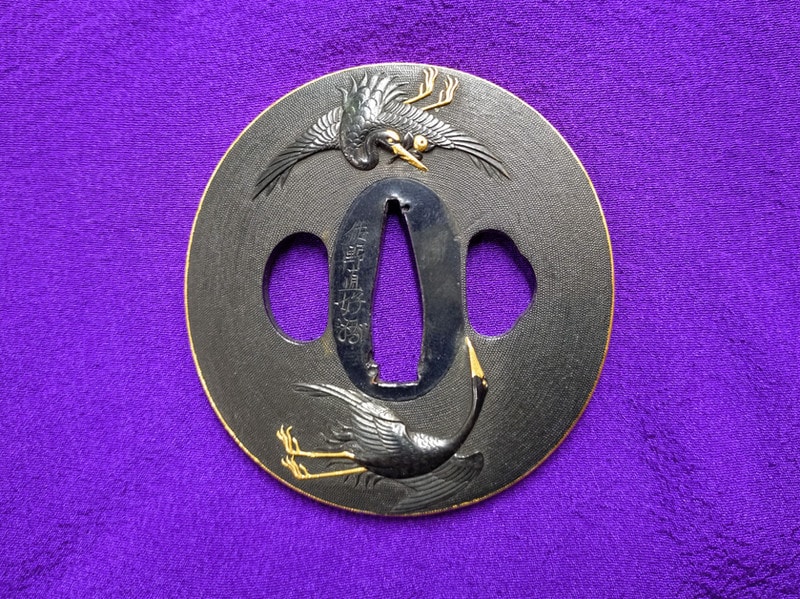
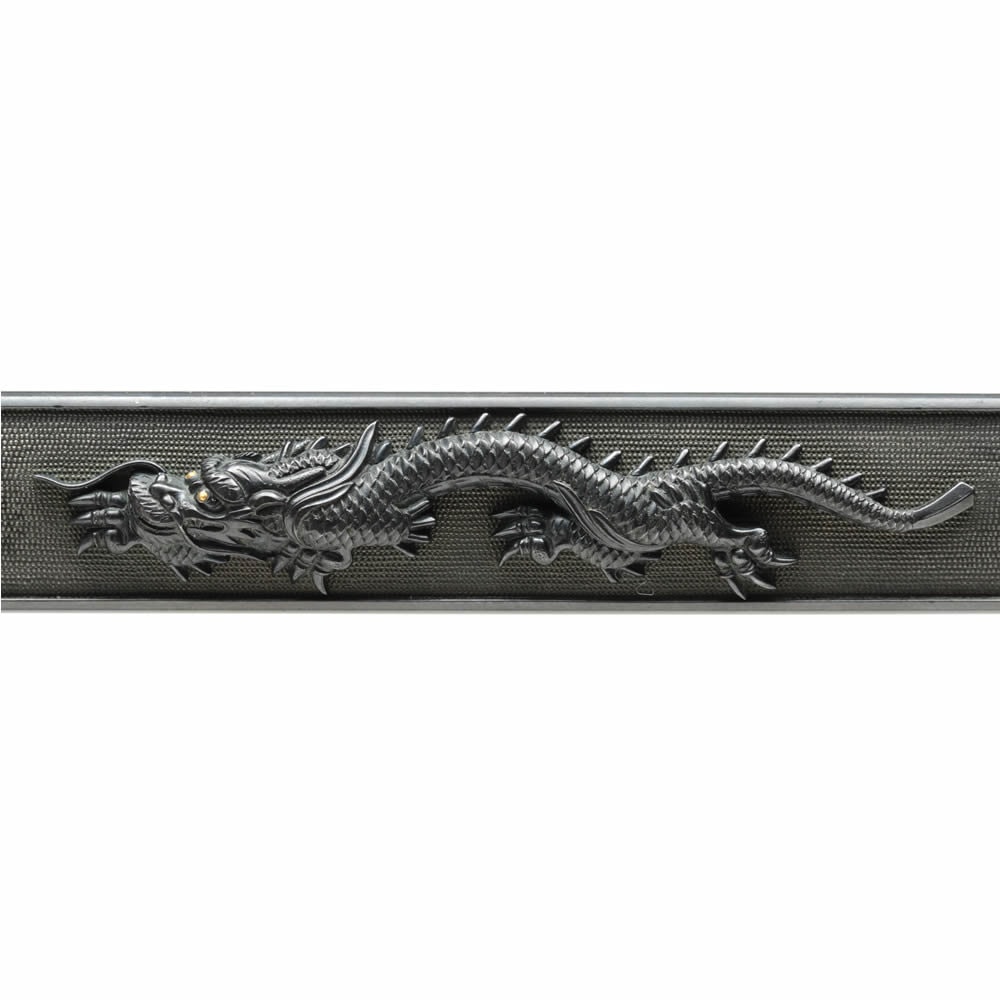
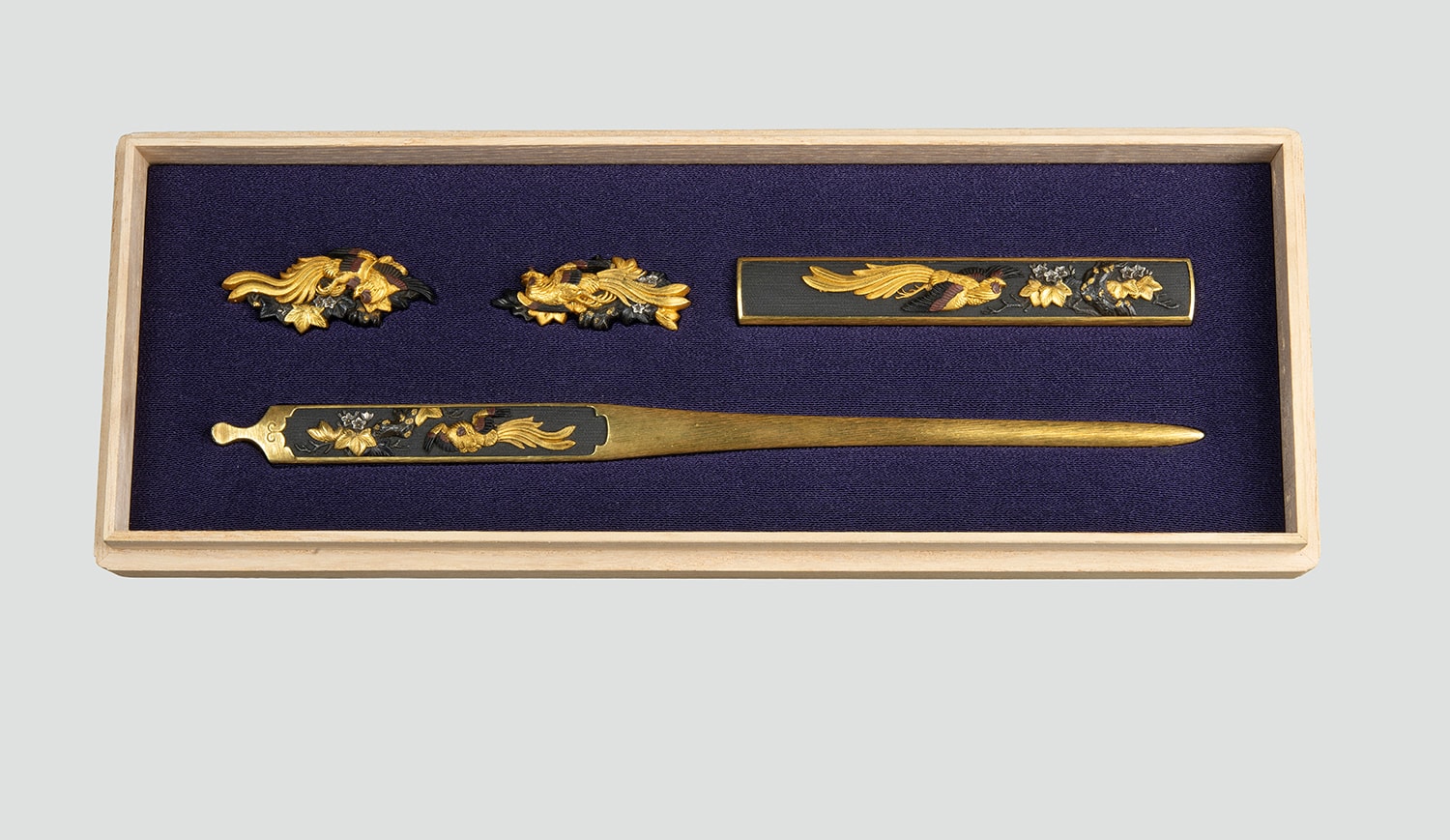
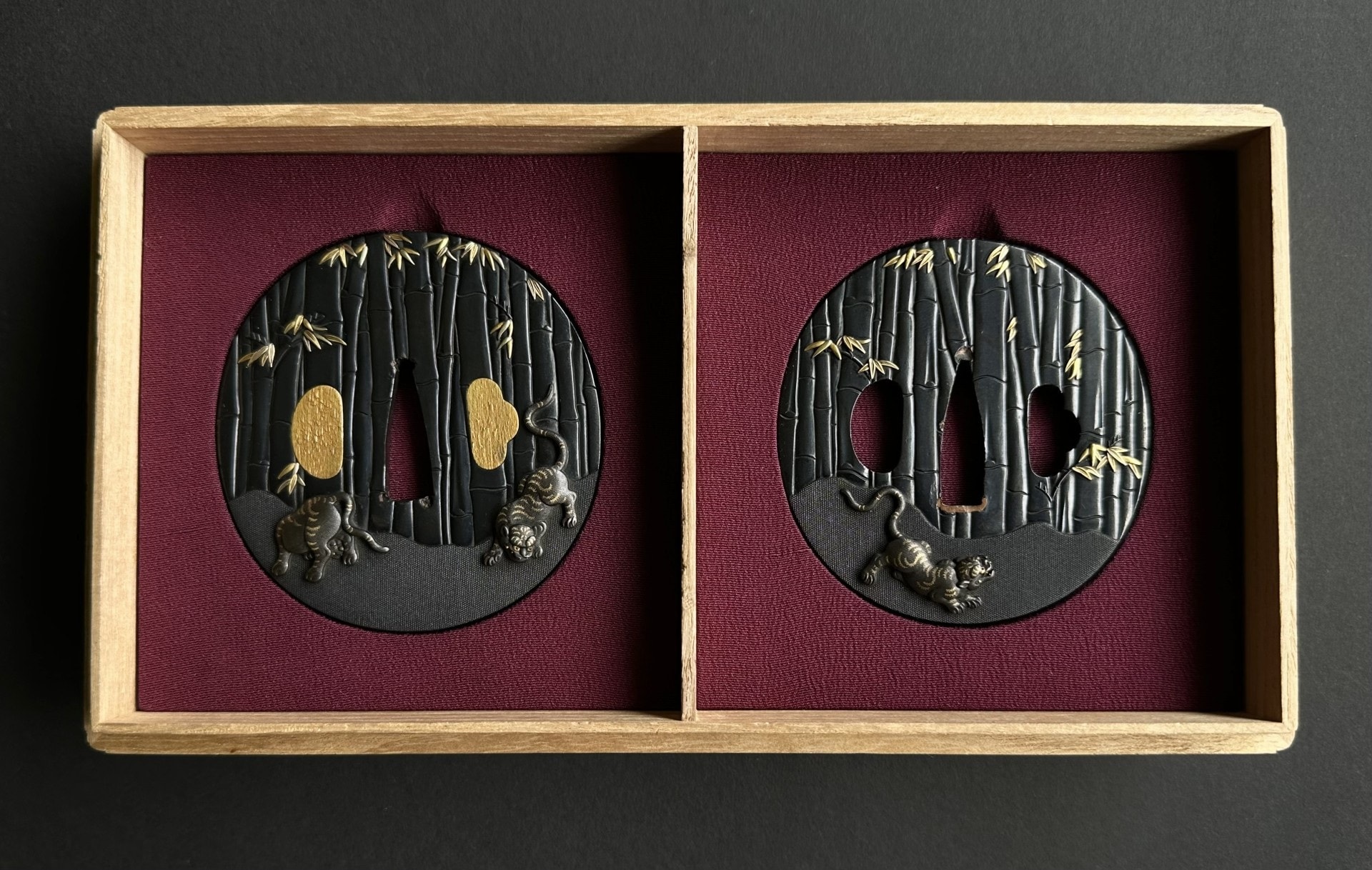
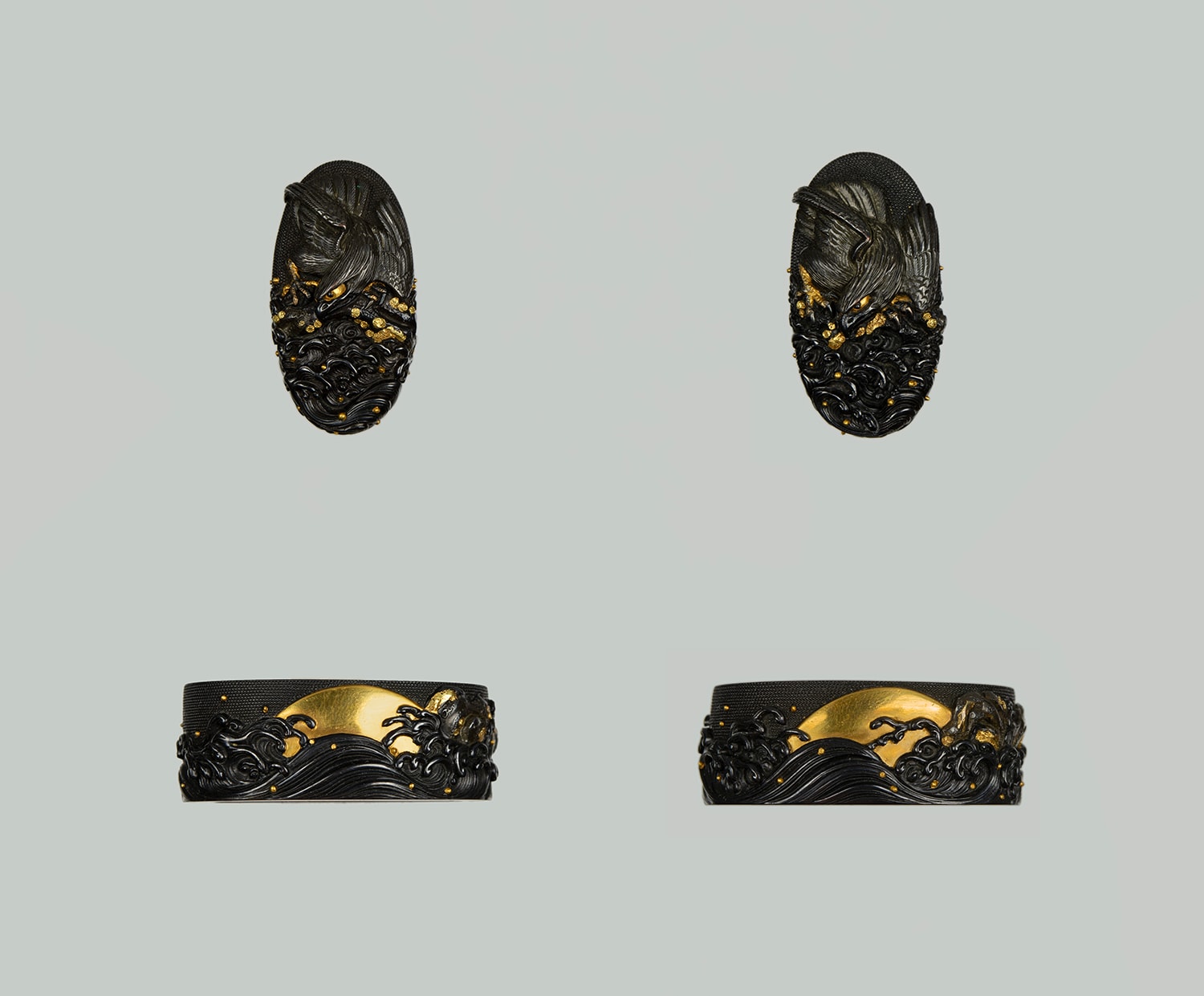
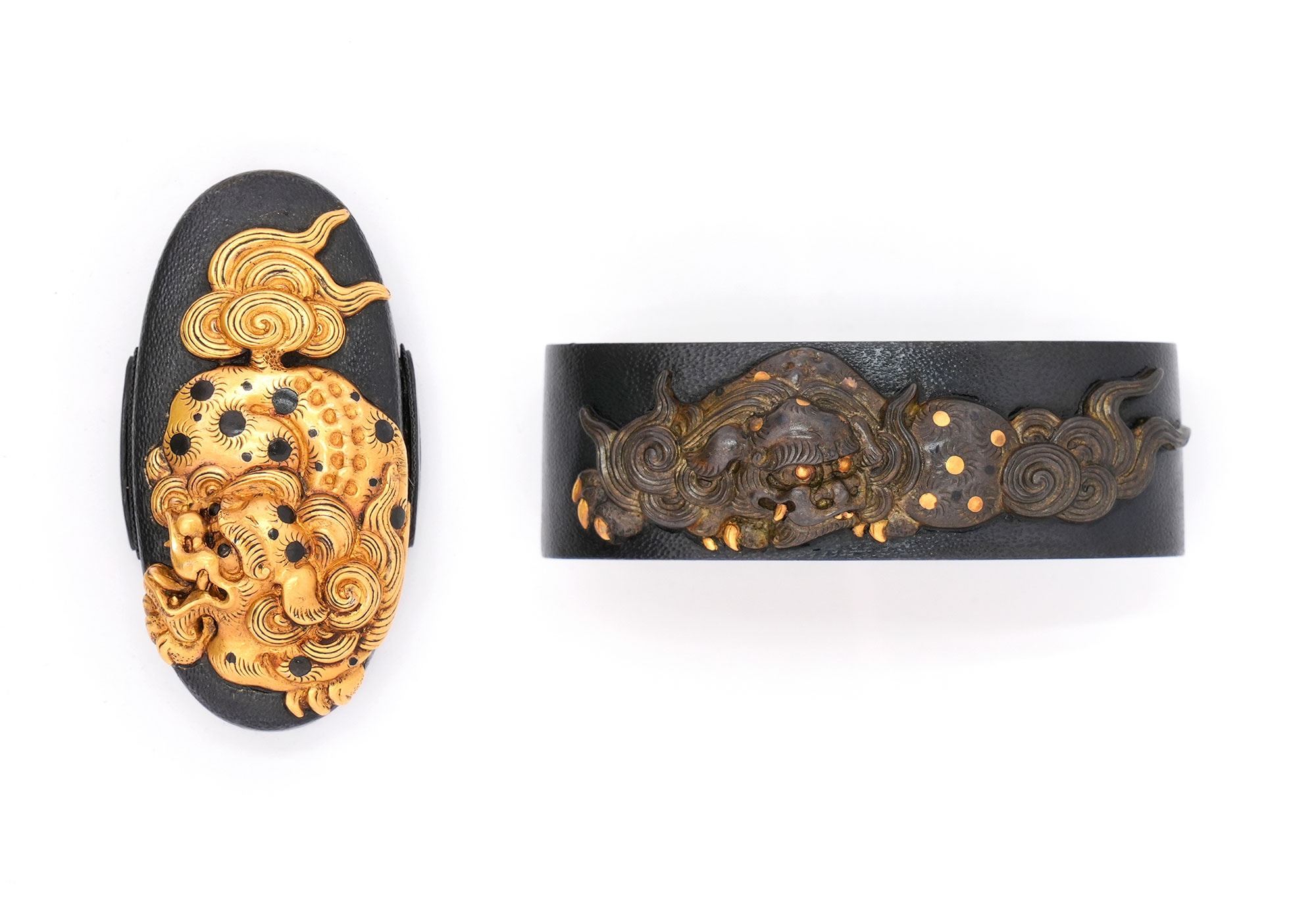
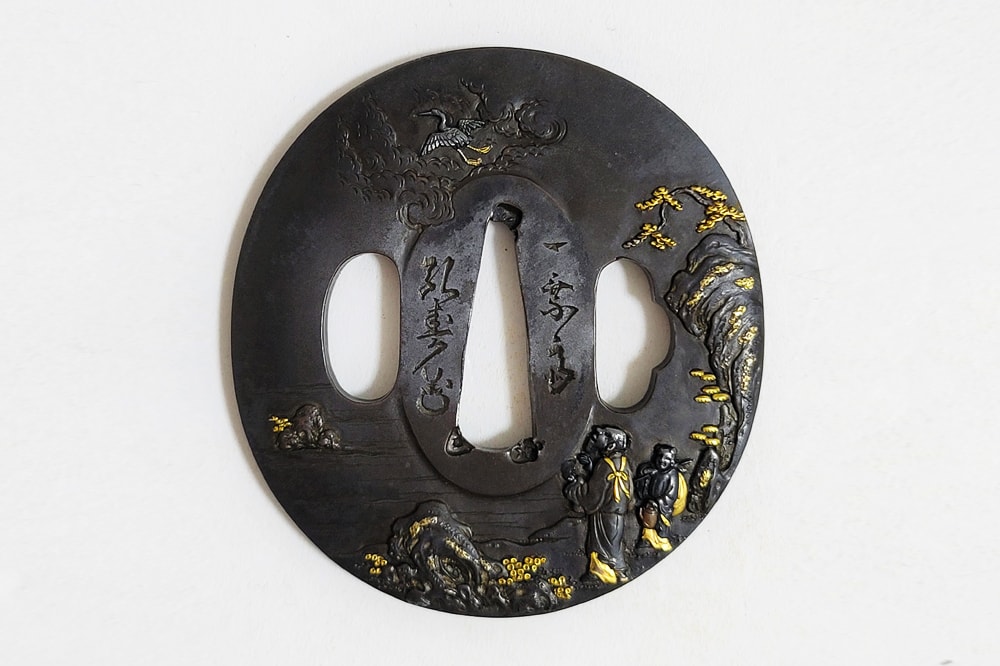
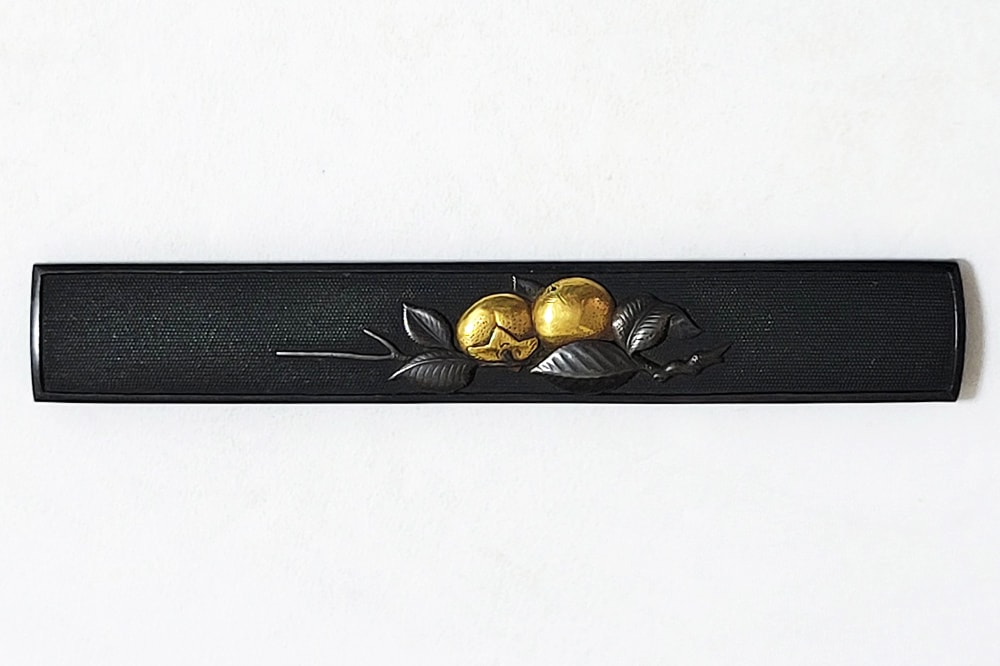
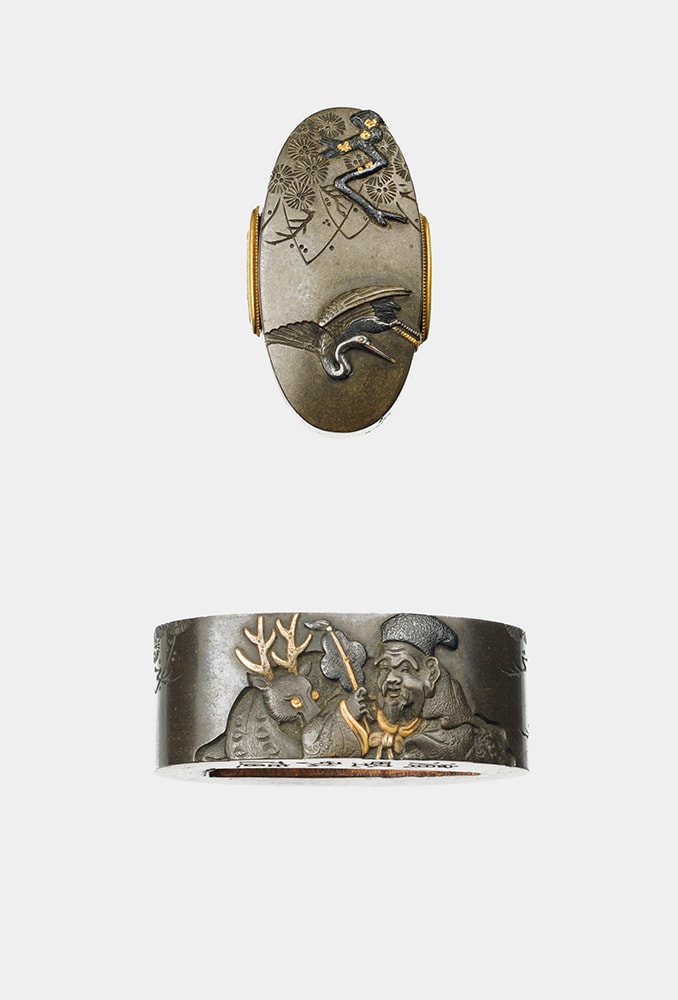
Seiju assimilated with great skill the carving methods of the Goto family and the Yanagawa family, among others, yet forged from these an independent manner marked by notably fresh designs and an ingenious, -flavored sensibility. His technical range encompassed and (high-relief carving), - (flush inlay), - (flat inlay), (polychrome metalwork) deploying gold, silver, , , , and brass, as well as (textile-pattern inlay) and sumi- (ink-painting-effect inlay). He worked fluently in both iron and grounds, and his handling of iron plate---the forging, the polished surface, the turned-back rim construction, and the fitting of at the ---are consistently identified as hallmarks of his hand. Praised as a "magician of colored metals," he displayed minute yet brilliantly decorative inlay and across an extensive range of subjects: figure compositions, birds and animals, literary and narrative themes drawn from the Taketori Monogatari and Tsurezuregusa, folk tales such as "Kachi-kachi Yama" and the Dragon Palace legend, auspicious motifs, and witty conceits including anthropomorphized frogs and the "Daruma-in-absence" design. His workshop flourished widely, and the range of his designs is extensive; figure subjects as well as birds and animals were among his special strengths.

The 's appraisals consistently characterize Seiju's productions as works of notably high dignity and completion that could only have been achieved by an artist of his caliber. His distinctive character is felt throughout each piece, with the evaluative language emphasizing that his sensibility, skill, and conception all operate in full concert. Works are described as possessing a solemn yet unpretentious taste and a calm, tasteful impression even when gold inlay is used abundantly. His compositions are recognized for their urbane wit and stylish playfulness---the okashimi (humorous charm) that strongly conveys his sense of fashionable flair. The assessments trace a coherent arc from early productions, where a reisho-like signature style and high technical accomplishment are already evident, through the mature period, where both design and carving technique achieve an impressive degree of completion, to late works signed and Juso Hogen that display the full vigor of his prime. Throughout, the affirms that his works fully demonstrate the technical capabilities that could be achieved by Seiju---an artist who mastered the world of kinko through independent study and whose proud resolve is legible in every detail of his craft.

Kantei

3 descriptive axes: material (a full kinko palette, but iron his celebrated forte) x technique (high relief, sukidashi-takabori and iro-e inlay, with katakiri and engraved poems) x themes (figural above all). His load-bearing discriminators are the azuki-red iron patina and the Ikkashiki added-mark.

Tanaka Kiyotoshi (1804-1876), who signed Toryusai, was the master who represented bakumatsu metalwork, named in the breath as Goto Ichijo of Kyoto as the East to Ichijo's West, and like Ichijo raised to the rank of Hogen. Originally from a Bushu iron- background, he absorbed the carving methods of the Goto and Yanagawa houses into a fresh, witty, distinctly -taste manner that the records call the Toryusai style. His defining quality is iron: he is praised above all for working iron, for a lustrous patina likened to the red of azuki beans, and his subjects are figural before all else, the Chinese sages and immortals, birds and animals, handled with a drawing-from-life freshness.

Diagnostic discriminators

single-source but verbatim: one setsumei singles out his skill in iron and names the azuki-red lustre of its patina as the most highly rated point, a legacy of his Bushu tsuba origin

an iron-ground tsuba master among soft-metal kinko, reflecting his start as a Bushu tsuba smith

Material (grounds)

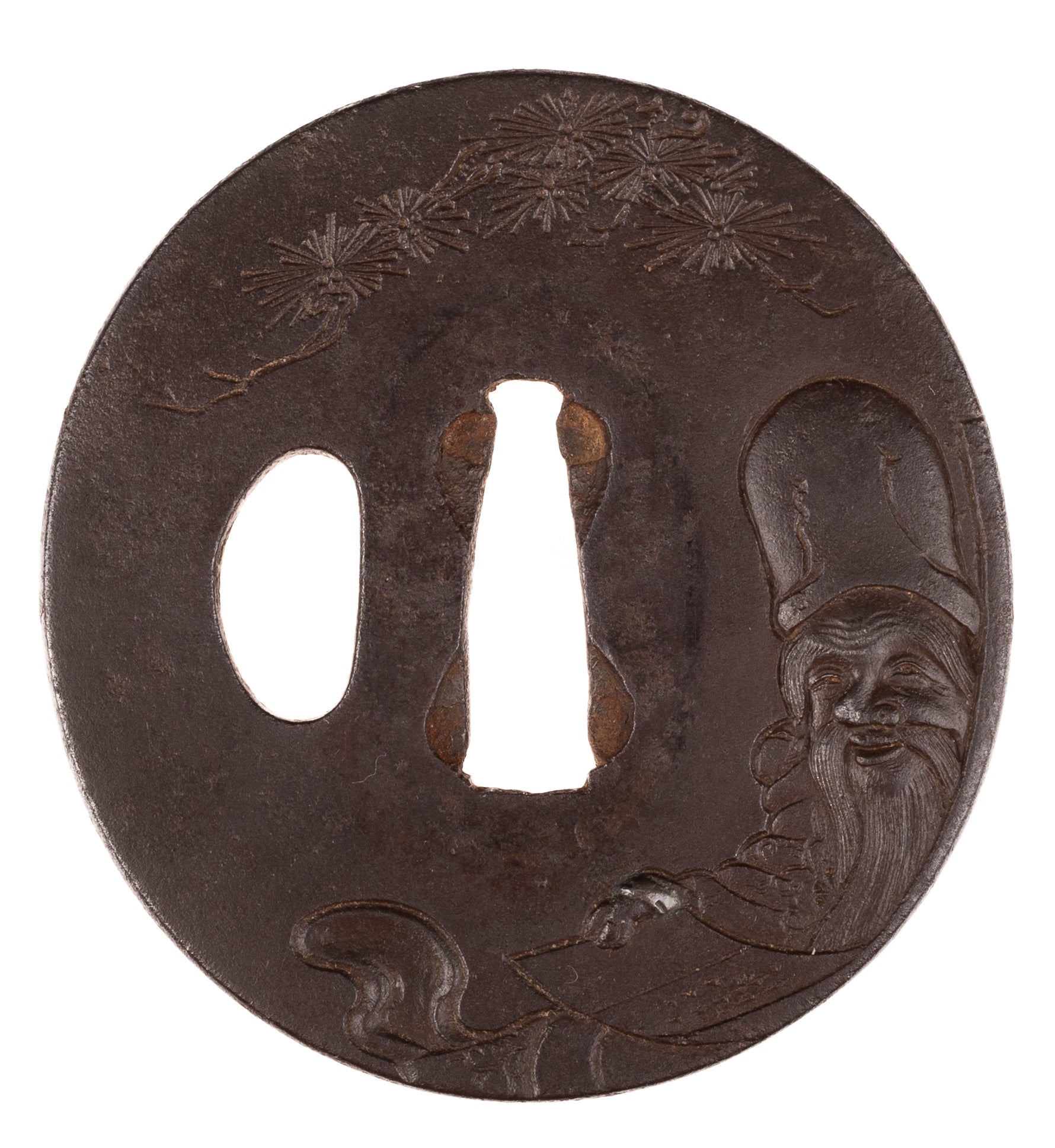
He commands the full soft-metal palette of , , and -grey , often ishime-textured; but it is iron, carved with rare skill and bearing a distinctive azuki-red lustre, for which the single him out, a legacy of his Bushu origin.

Technique

His hand is high relief and enriched with gold, silver, and iro-e and inlay; he also commands katakiri-bori and flat inlay, and engraves poems in fine hairline .

Themes (figural)

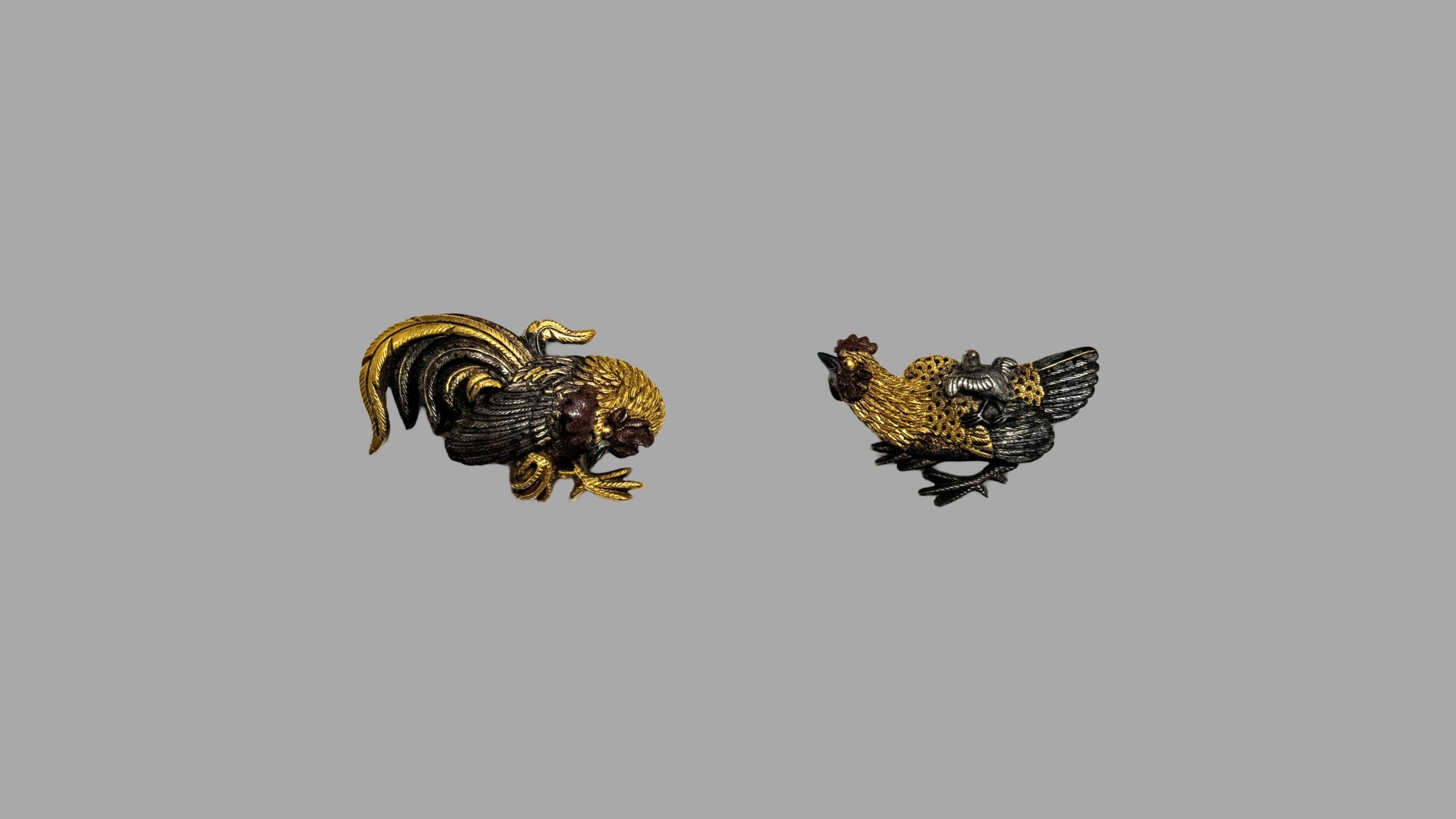
His subjects are figural above all, the Chinese sages and immortals the favoured matter: Gama and Tekkai, Hanshan and Shide, Bukan with his tiger, the eight immortals, Jurojin; birds and animals, treated with a drawing-from-life freshness, are the other named speciality.

Sages, immortals and figures

Chinese immortals and sages above all, the dynamic against the still; Nio guardians, Hanshan-Shide, Bukan-and-tiger, the eight immortals.

Birds and nature, drawn from lifeless firmly established

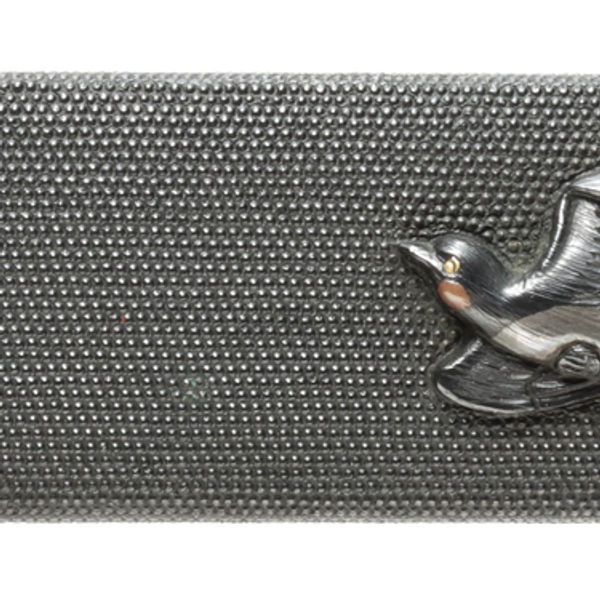
Birds and animals handled with a shasei freshness: cranes, the dawn-flying karasu, gamecocks, deer, with pine, plum and water.

Full iconography

Signature chronology

Placement
Dated signatures
Recorded signatures

Documentary note

Kiyotoshi signs the two characters Kiyotoshi with a , often as Fujiwara Kiyotoshi; raised to Hokyo in 1845 and Hogen in 1846, his mature signatures couple a go to the Hogen rank: Ryu-, Ryuso- and Ryuo-hogen, and in his last years Juso-hogen, under the principal go Toryusai. The mark is frequently added. Distinguish the Goto/Ichijo Hogen rank he shares from the inscription itself; and the collaborators who appear with him (his pupil Hisatsugu, the contemporaries Kiyoshige and Yoshitoshi) are not his hand.

Scholarship

His manner is the fresh, witty Edo-taste Toryusai style, built by skilfully taking in the carving methods of the Goto and Yanagawa houses.

His figures, birds and animals are handled with a drawing-from-life freshness that is a named point of his work.

Designations

Kokuhō—
Jūyō Bunkazai—
Jūyō Bijutsuhin—
Gyobutsu—
Tokubetsu Jūyō—
Jūyō Tōken40

Elite Standing

0.16 across 40 designated works

Top 7% among makers

Provenance

4 documented provenances across certified works by Kiyotoshi

Provenance Standing

2 works held in elite collections across 4 documented provenances

Top 71% among makers

Raw score: 1.90 / 10

Work Types

Distribution across 40 ranked works

Tsuba
2357%
Other
1128%
Menuki
38%
Kozuka
13%
Fuchi-Kashira
13%
Mitokoromono
13%

Signatures

Signature types across 40 ranked works

Currently Available

Lineage

Kiyotoshi
Students (6)
  1. 1.Toshiyoshi寿良15designated
  2. 2.Kiyoshige清重5designated
  3. 3.Toshinori寿矩1 for sale2designated
  4. 4.Toshikage寿景2 for sale
  5. 5.Masakage政景
  6. 6.Yoshikage義景

Toryusai School

Other artisans of the Toryusai school

  1. 1.Toshiyoshi寿良15designated
  2. 2.Kiyoshige清重5designated
  3. 3.Yoshitsugu良次1 for sale4designated
  4. 4.Okada Setsuga岡田雪峨1designated
  5. 5.Toshinori寿矩1 for sale2designated

Kiyotoshi

Kiyotoshi(清寿) was a maker of Japanese sword fittings (tōsōgu) of the Toryusai school in Musashi province, active during the Bunka-Meiji (1804-1876) period.

The work follows the Machibori tradition.

Designated works by Kiyotoshi include 40 Jūyō.