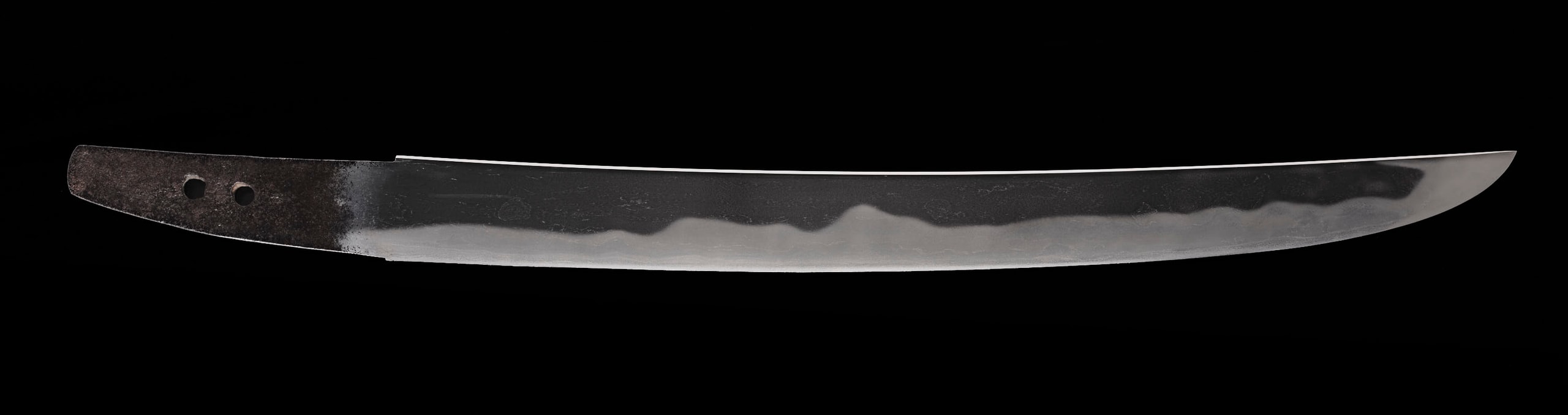
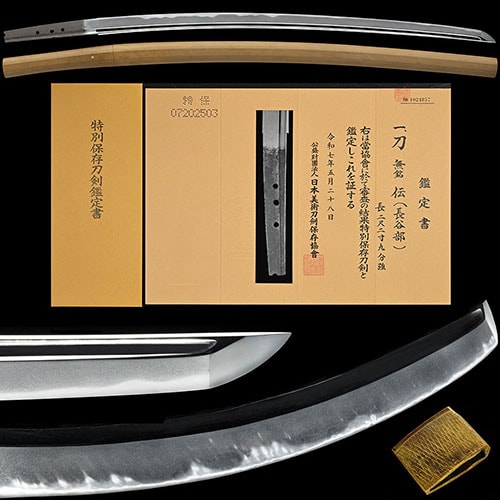
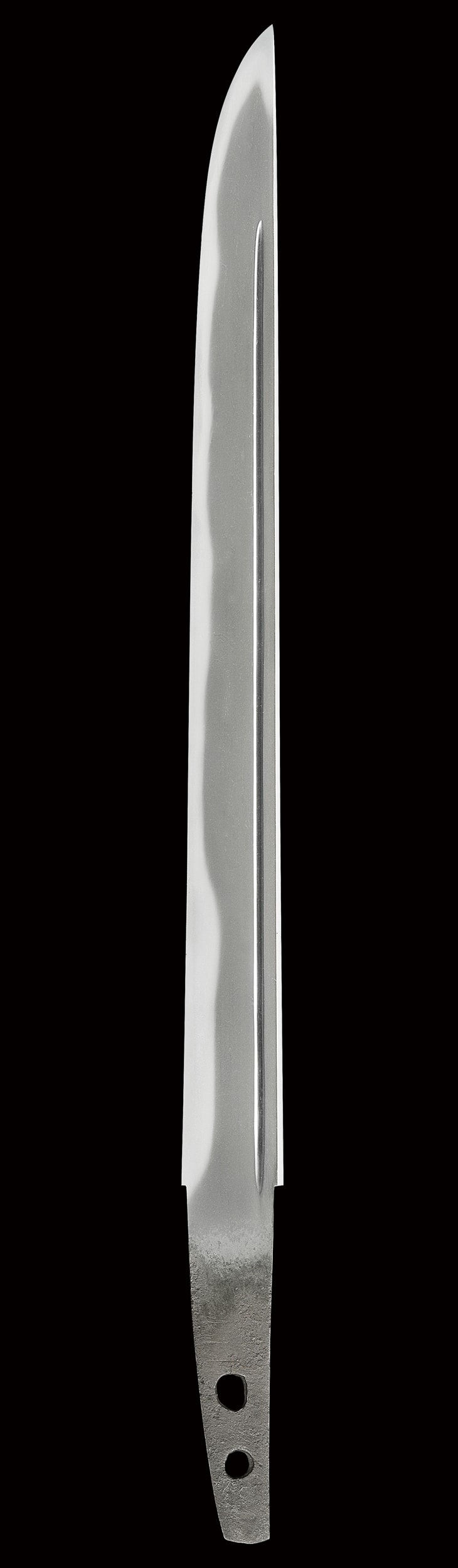
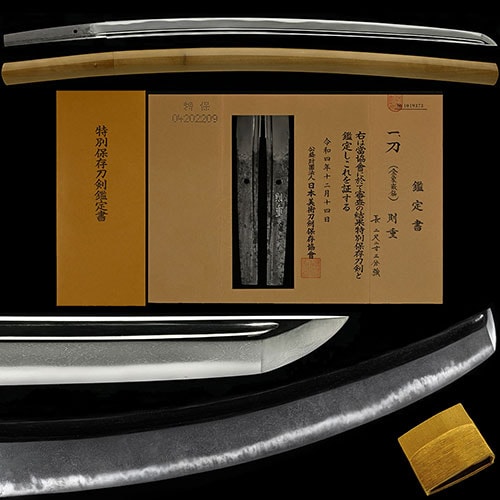
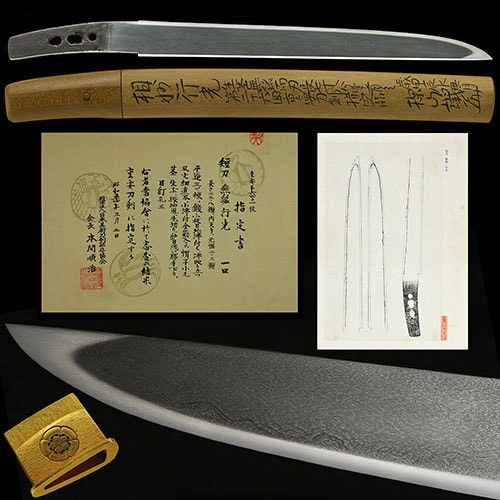
Hasebe Munenobu was a Yamashiro smith of the Nanbokuchō period, traditionally transmitted as the son of Kuninobu of the Hasebe group. The Hasebe school, contemporaneous with the Sōshū smiths Hiromitsu and Akihiro, became particularly known in the mid-Nanbokuchō period for a brilliant style specializing in flamboyant hitatsura. As representative makers of the group, Kunishige and Kuninobu are cited, and Munenobu stands among a small number of smiths in the lineage for whom signed examples survive, alongside Kunihira and Shigenobu.
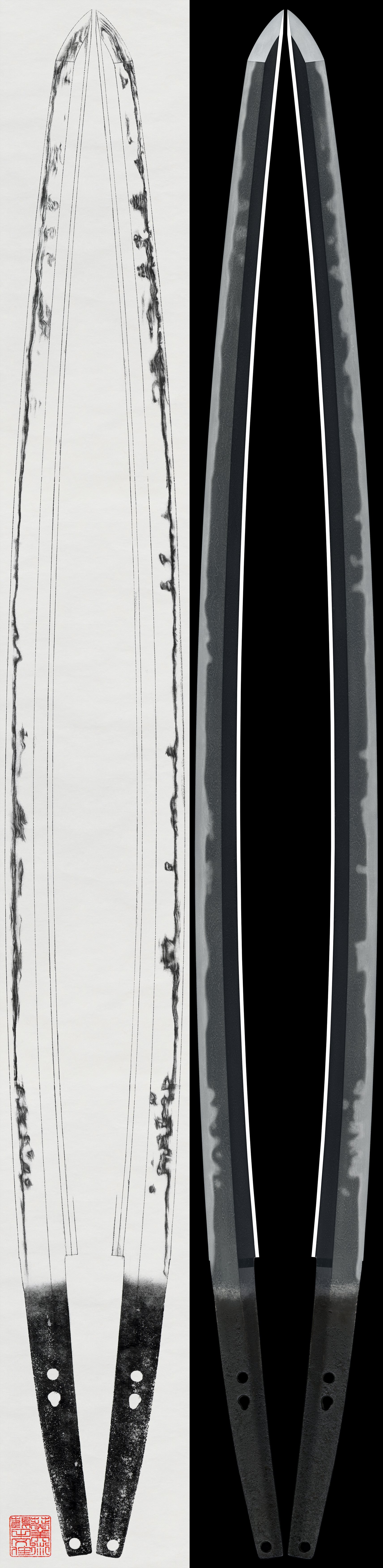
Hasebe work is distinguished from Sōshū hitatsura by several diagnostic features that the NBTHK consistently identifies. Where Sōshū hitatsura typically bases its hamon on chōji and gunome with the bōshi tending toward a pointed return, Hasebe work characteristically hardens a hamon based on notare mixed with gunome, upon which tobiyaki, yubashiri, and muneyaki are superimposed. The bōshi tends toward ko-maru, with the return carried long as yakisage so that it connects into muneyaki. Another distinguishing characteristic is a masame-like tendency standing out near both the edge side and the back side of the forging — something relatively uncommon in Sōshū work. The extremely thin kasane evident in the construction is likewise a notable feature of the period's Hasebe workmanship. Within the hitatsura, further variation such as nijūba, sunagashi, and yahazu-ba imparts a powerful feeling overall.
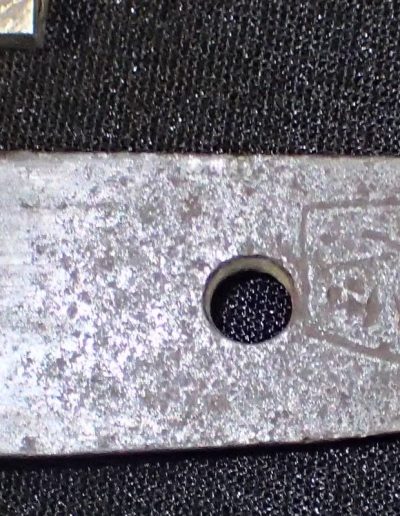
Munenobu's surviving works, principally tantō in hira-zukuri, clearly reflect their Nanbokuchō-period character. The thinly built construction, the shallowly undulating yet fundamentally gentle temper with plentiful nie, and the ko-maru bōshi finishing with hakikake are all customary features of the group that Munenobu faithfully expresses. The NBTHK has noted that the manner of the signature on the tang — its distinctive character spacing and calligraphic style — accords with the traits of this school, and that his works well express the characteristic traits of the Hasebe group.