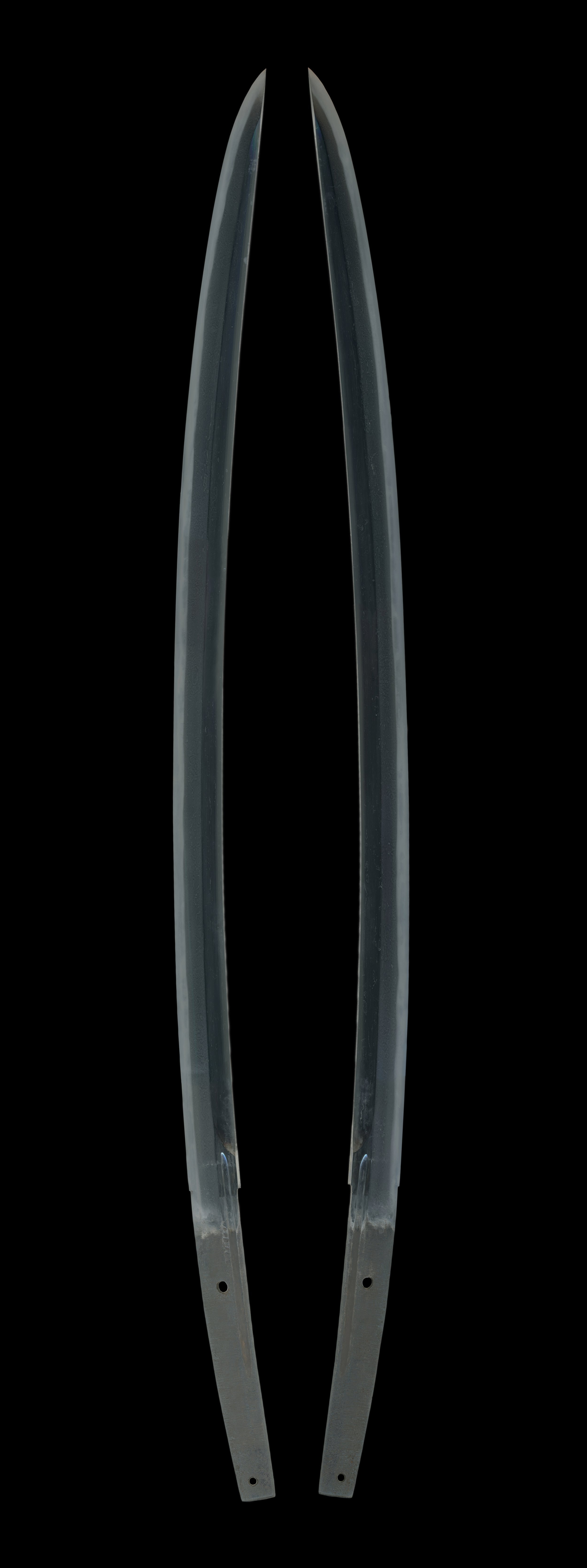
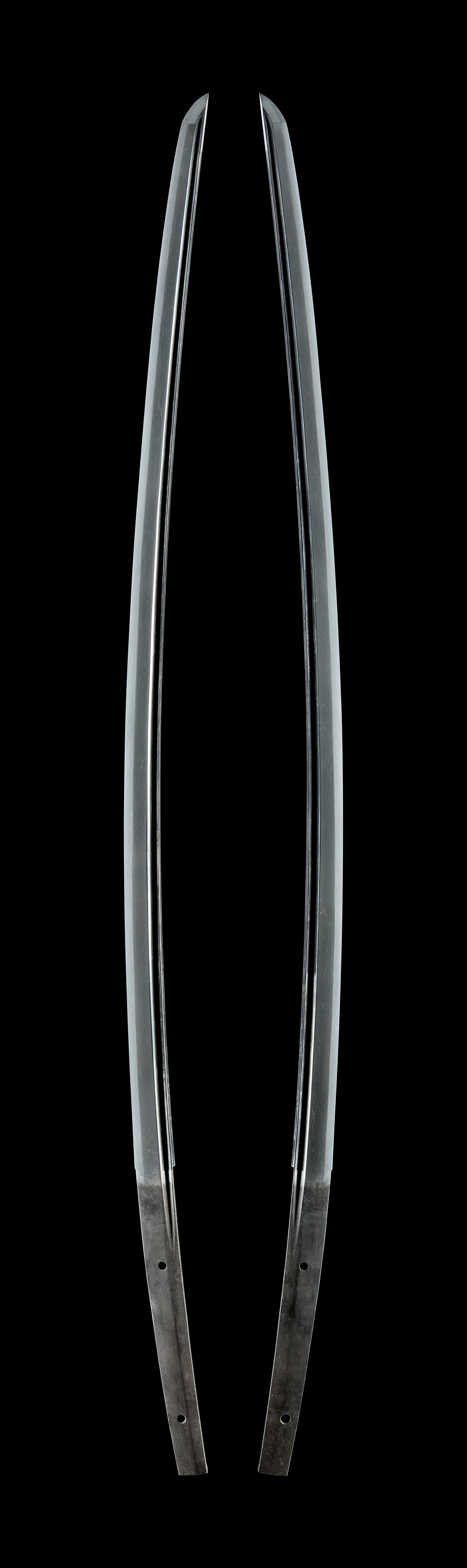
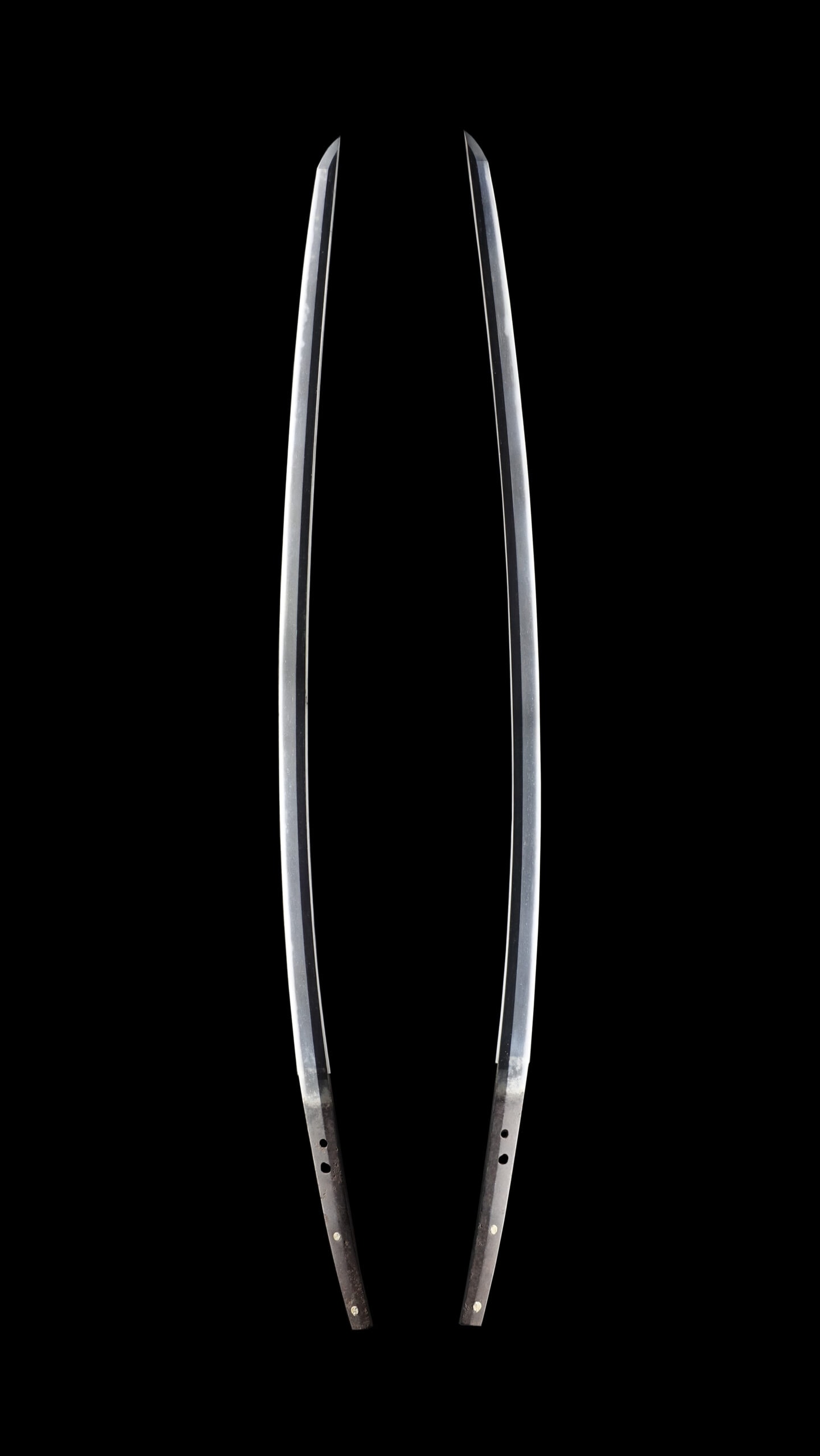
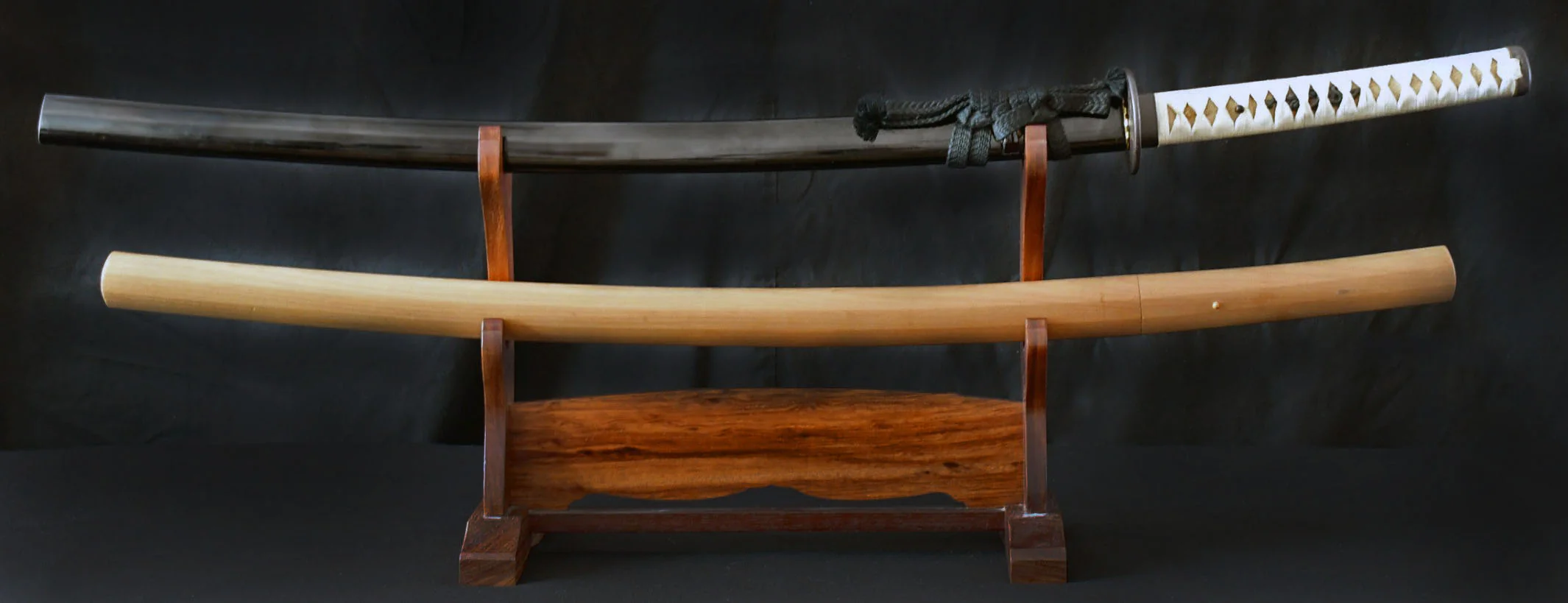
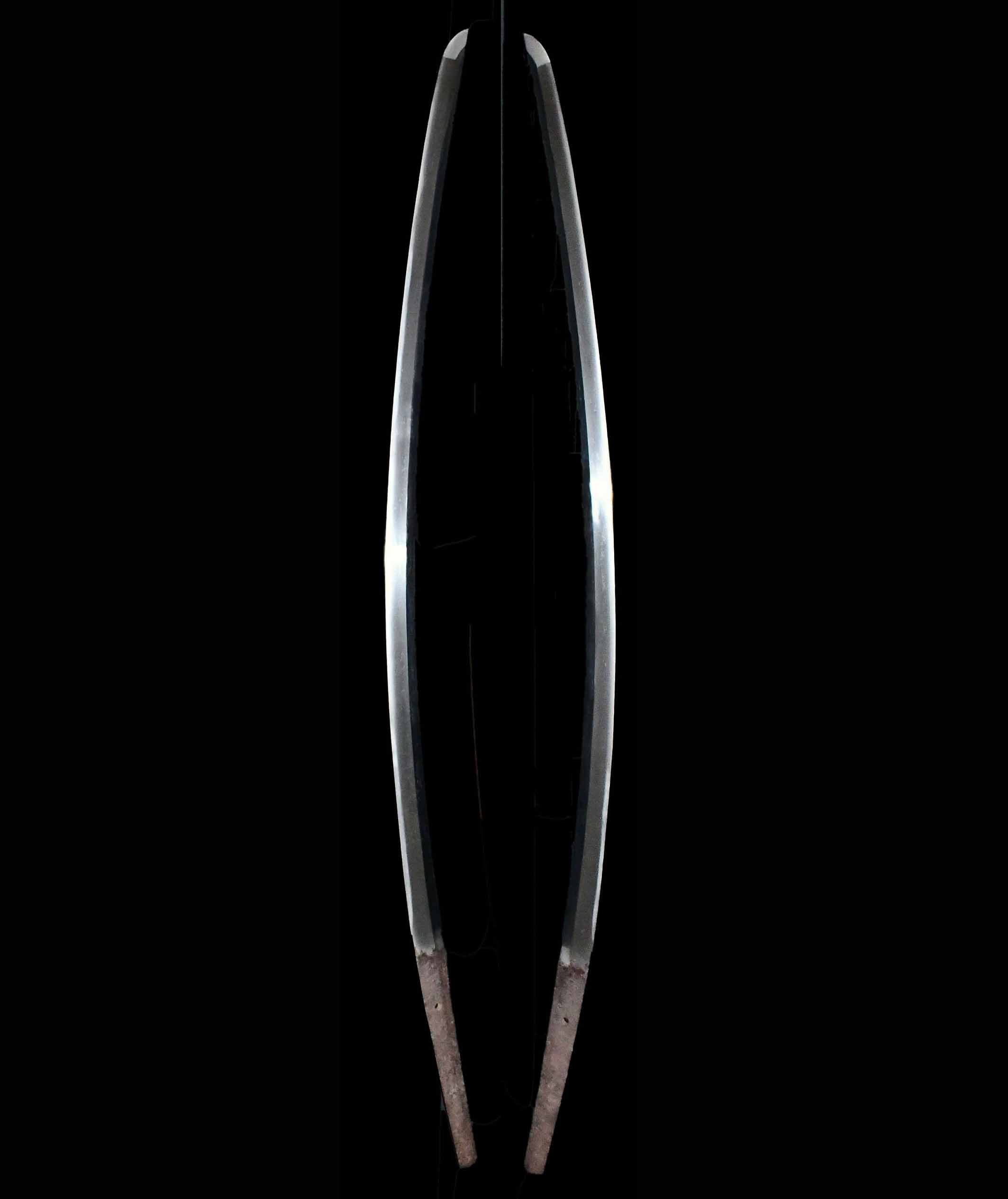
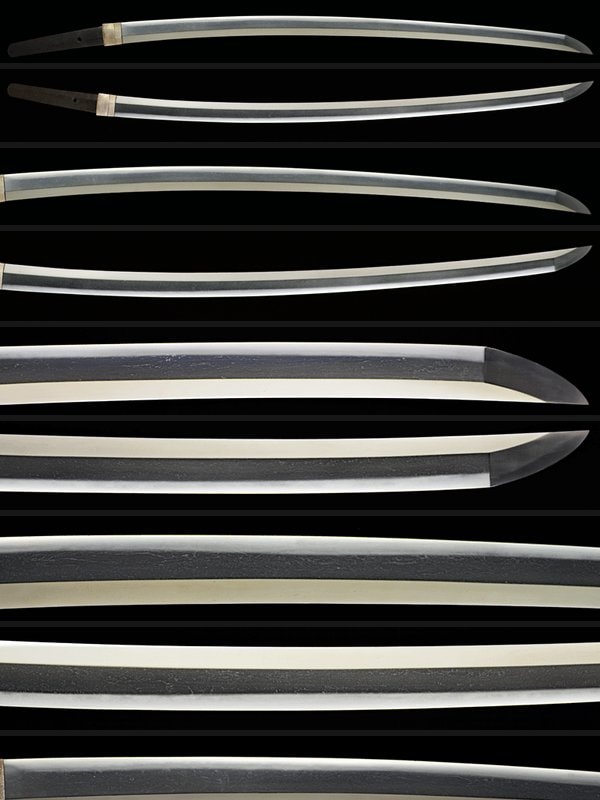
The Uda school traces its origin to the late Kamakura period, when the monk Kunimitsu migrated from Uda District in Yamato Province to Etchu Province. Kunitsugu is a name borne by several generations within this lineage; reference works record the first as a brother of Kunifusa, active around the Enbun era (1356-1361), and the line continued through at least the Tenbun era (1532-1555). The school flourished particularly during the Muromachi period, producing a substantial body of work across long swords, tanto, and yari.
The Kunitsugu setsumei reveal a consistent Uda character: an itame-hada that tends toward standing grain (hada-dachi), sometimes mixed with masame or mokume, often with a slightly blackish tone to the ji. The tempering favors ko-notare mixed with gunome and ko-gunome, laden with clustered nie, frequent sunagashi, and intermingled kinsuji. A Nanbokucho-period tachi (Juyo, 23rd Session) displays "an itame forging with a tendency toward masame" and "a whitish utsuri," with ko-gunome mixed with ko-midare showing "abundant activities -- ashi and yo, well-formed nie, and sunagashi." A tanto of the Oei to Shocho era (Juyo, 15th Session) presents "the typical manner of Uda work from that time," with deep nioiguchi and thick nie.
The school's designated corpus includes a yari dated Bunmei 17 (1485) -- a rare signed spear predating the common Muromachi-period proliferation of such weapons -- which the NBTHK deems "valuable as important material for research into the Uda school." Across blade forms and periods, the Uda Kunitsugu works maintain a robust, nie-laden aesthetic tempered by the provincial vigor of their Etchu origin.