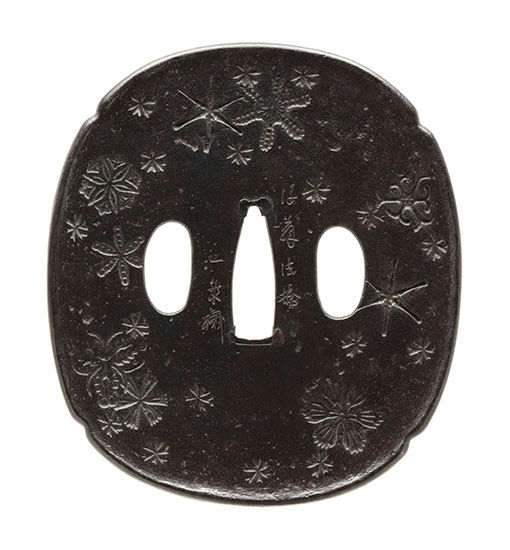
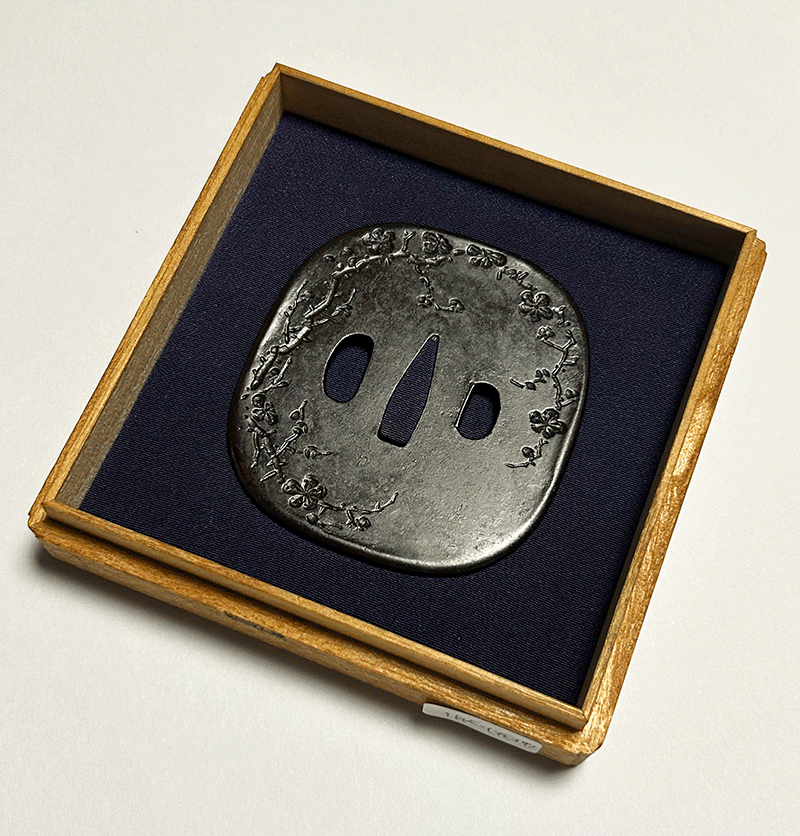
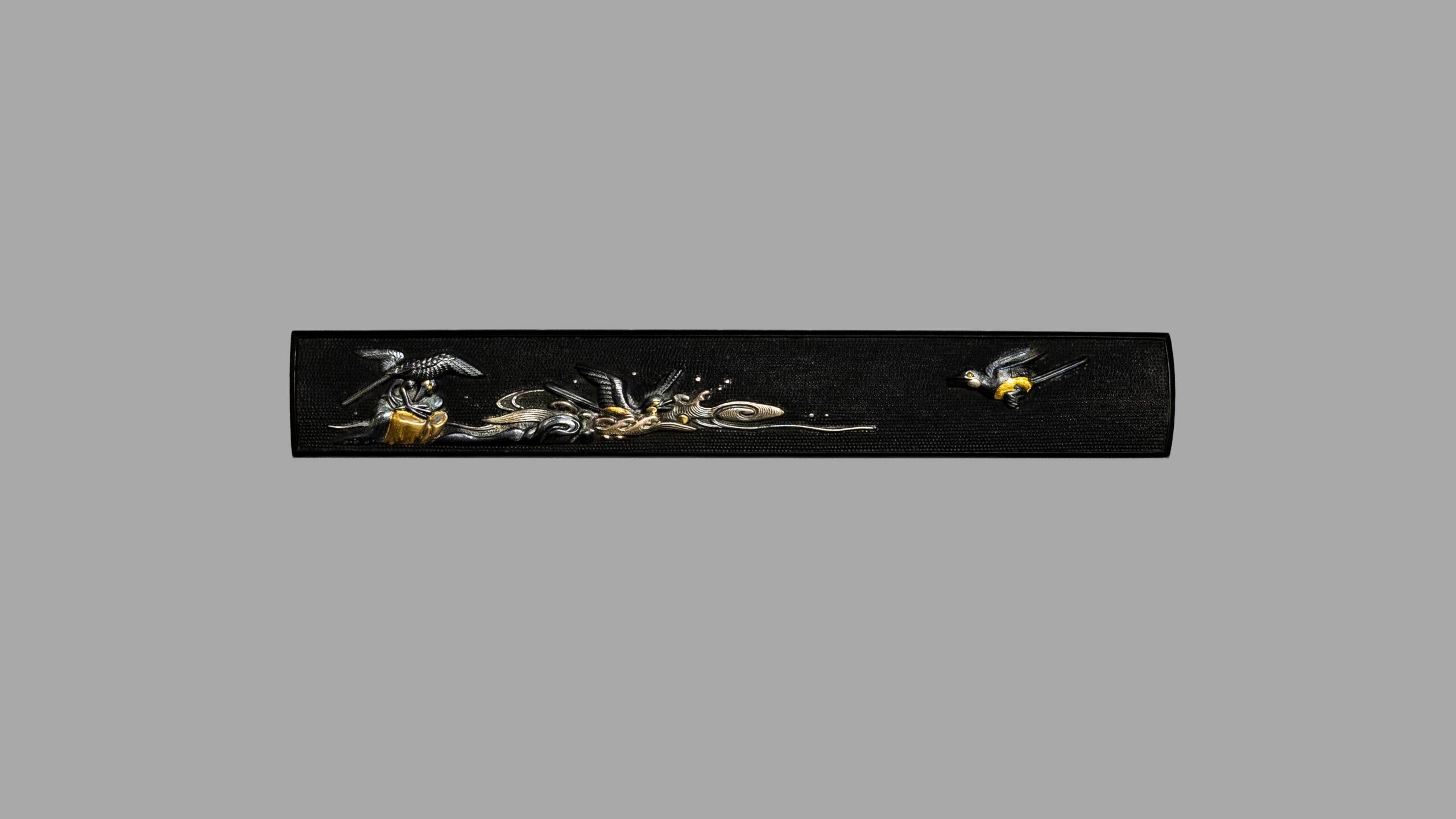
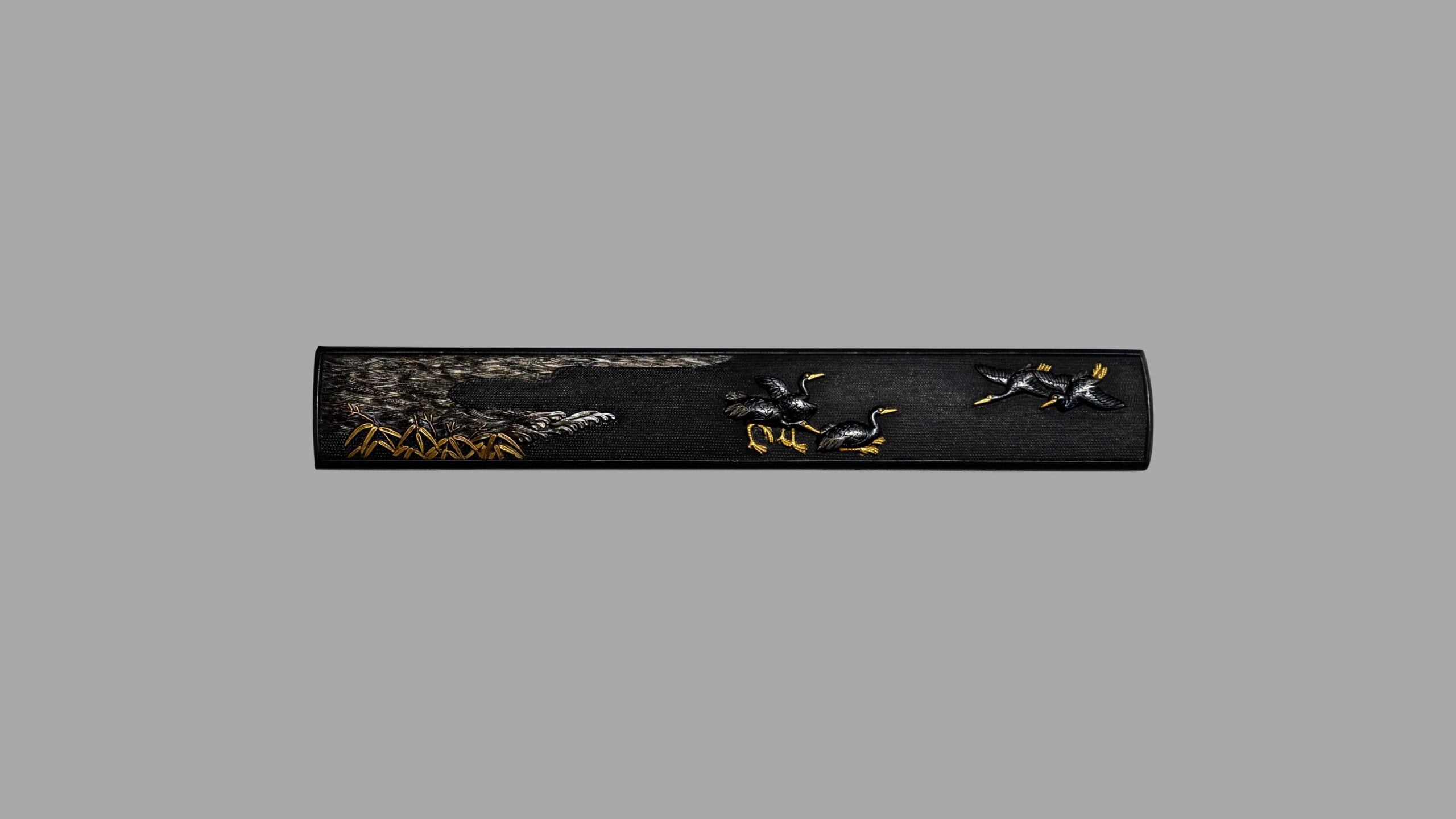
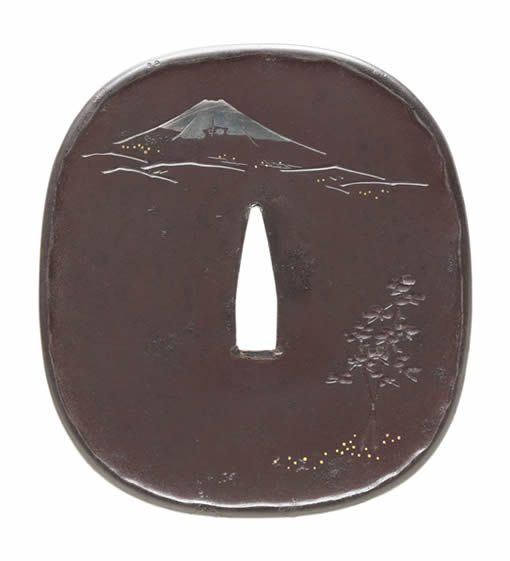
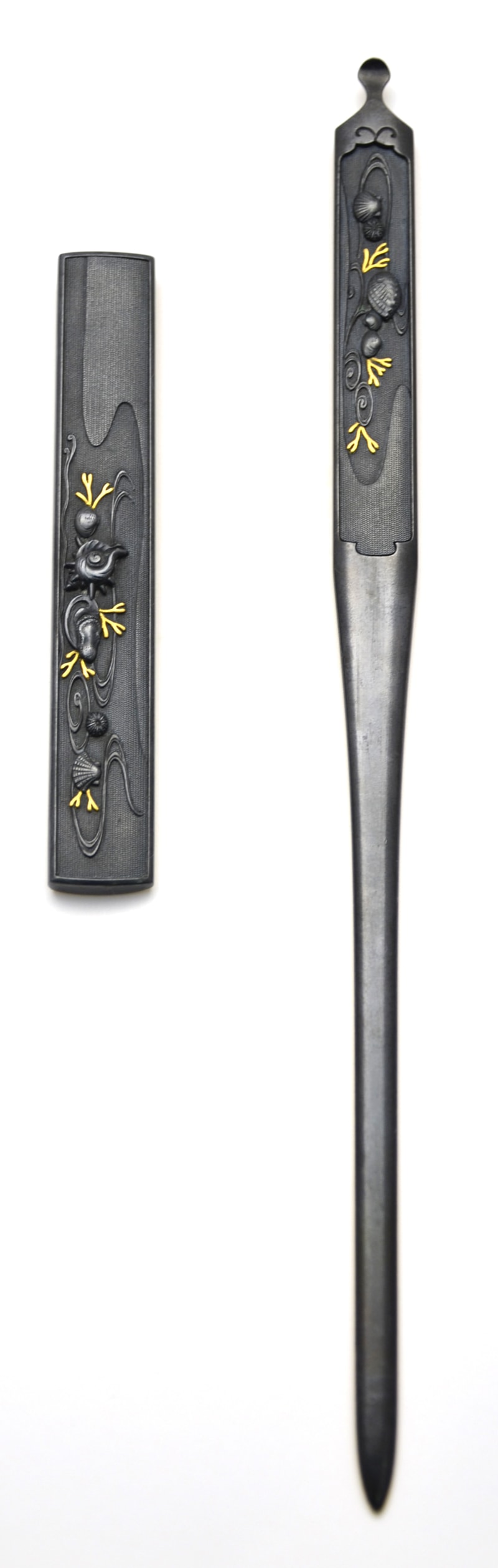
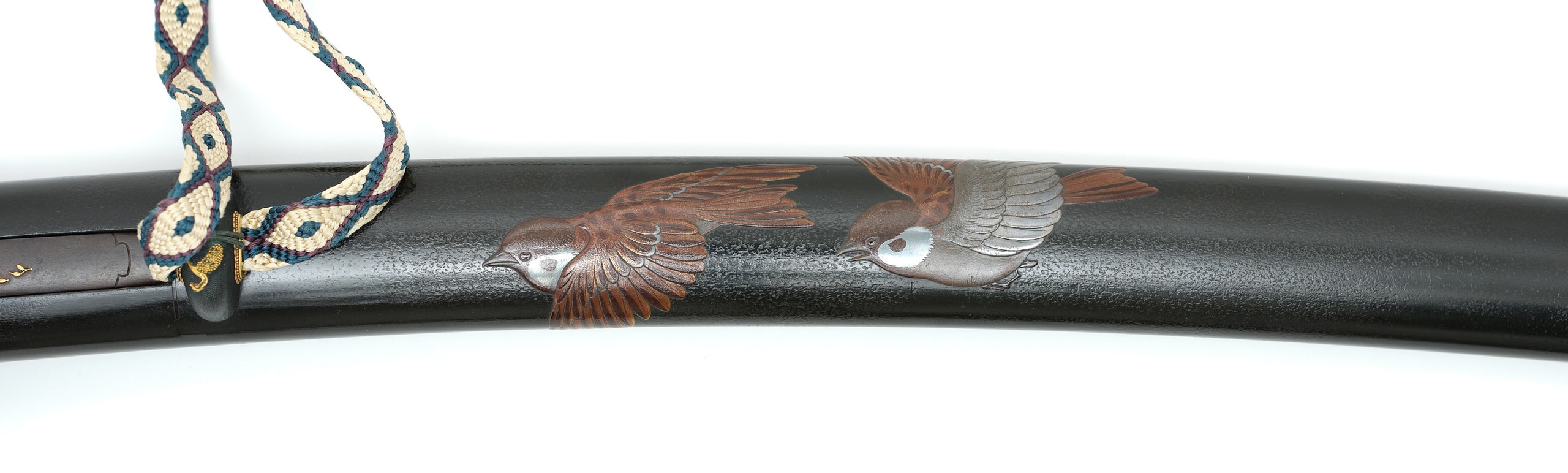
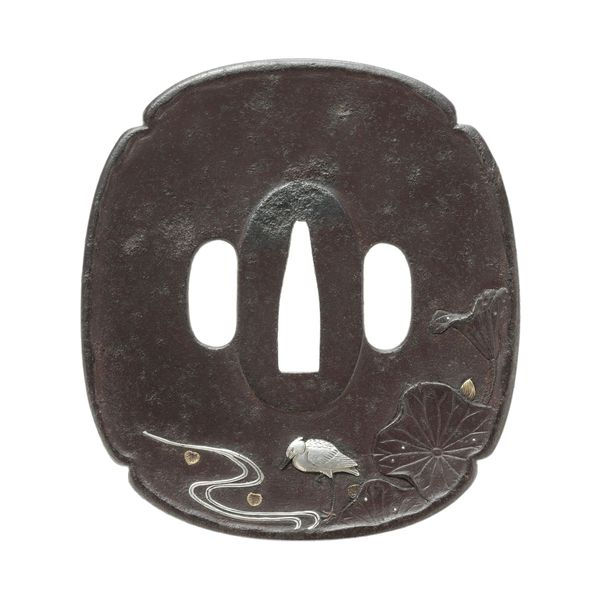
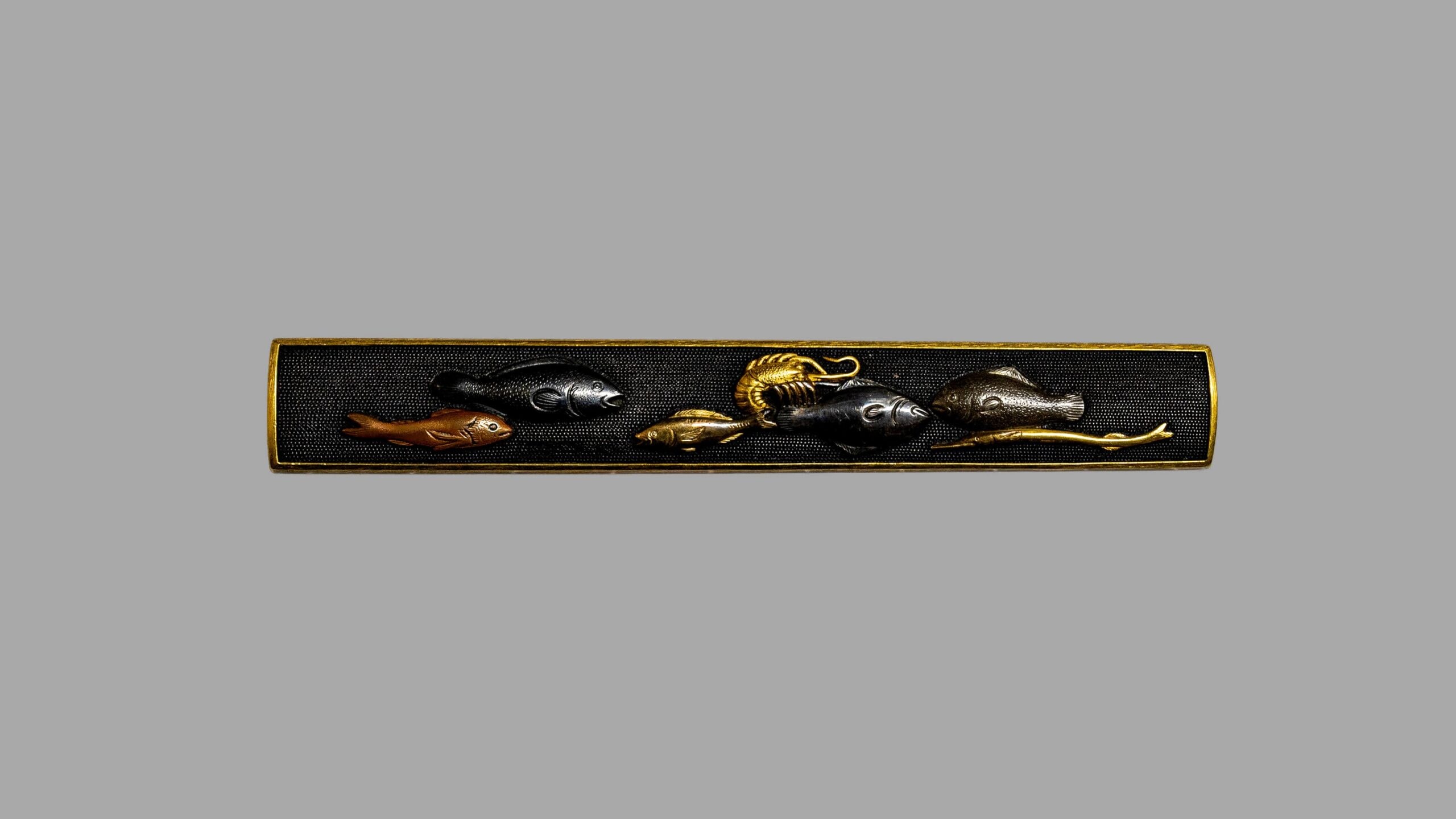
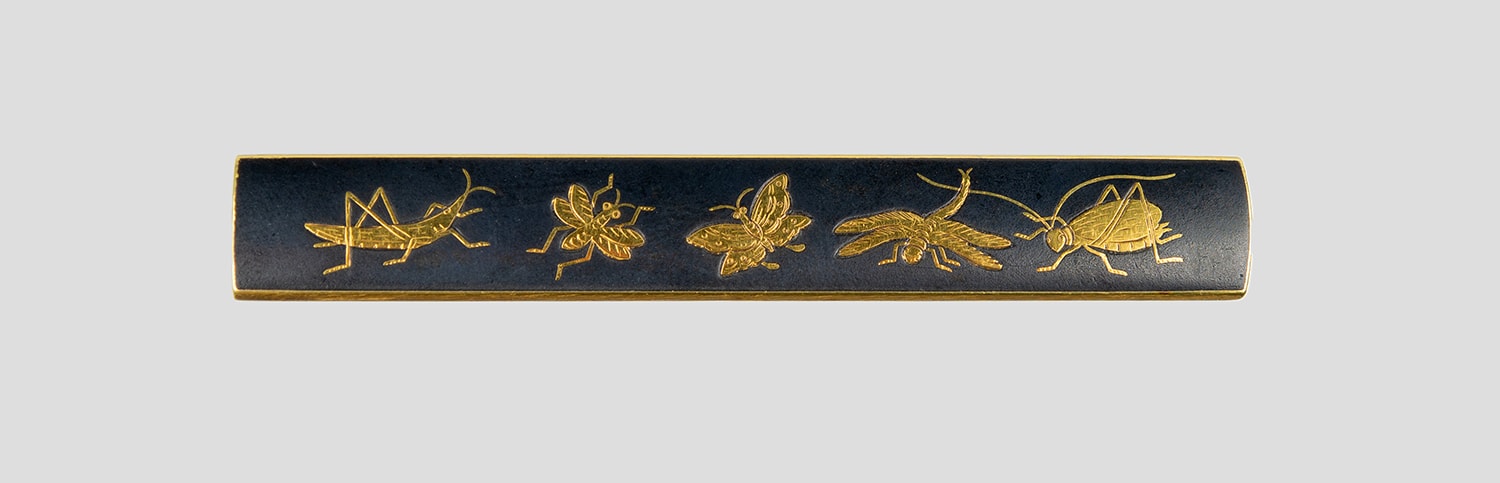
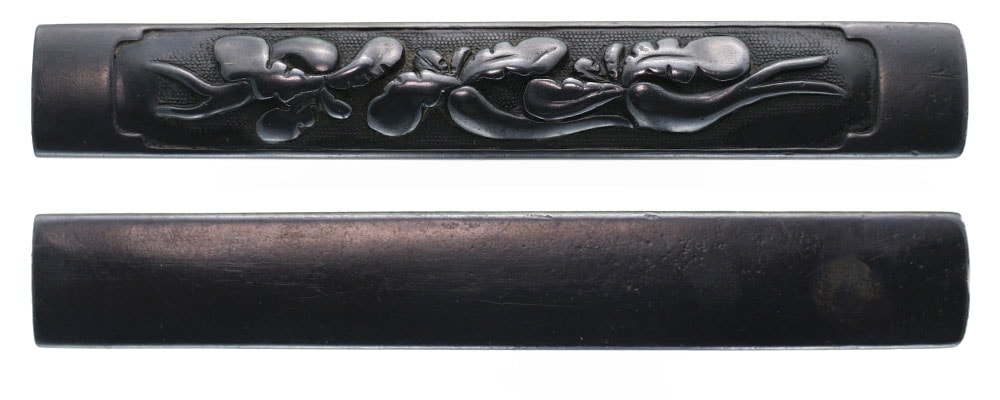
Funada Ikkin was born in Shonai in Dewa Province, the son of Funada Hirotsune, himself a pupil of Iwamoto Kanri. In Bunsei 9 (1826), at the age of fifteen, Ikkin went to and studied under Kumagai Yoshiyuki before entering the school of Goto Ichijo in Bunsei 11 (1828), where he trained for seven years in Kyoto. He then returned to , established himself independently, and became a retained artisan of the Sakai family of Shonai. He died in Bunkyu 3 (1863) at the age of fifty-two. The consistently identifies him as "one of the foremost disciples" within the circle of Goto Ichijo, a position reinforced across multiple designations that place him at the summit of Ichijo's school.
Ikkin was highly proficient in both and , but it is in kosuki-bori that his reputation is singular: in this technique "he admitted no rival," and even his teacher Ichijo is said to have lamented that "kosuki-bori is beyond my own reach." His work on ground -- whether or -- demonstrates precise control of depth and shallowness in the carving, and his application of gold and silver - and is repeatedly described as deft and accomplished. He favored traditional subjects of the Goto house, rendering the (Four Gentlemen) and the crawling dragon -- a canonical okagei motif -- with an inventive, distinctive expression that nonetheless honors the lineage from which it springs.
The 's evaluations return consistently to a vocabulary of power tempered by refinement. His dragon sansho-mono is called "a dignified, forceful work in which Ikkin's vigor and commanding spirit are fully evident," while his sets are praised for "a clear, refined elegance." Of his depicting the Wago-, the assessment is direct: "a painstaking work demonstrating the highest level of skill among the disciples of Goto Ichijo." The recurring judgment that his ability "comes very close to rivalling his master" places Funada Ikkin at the foremost rank of late tosogu artists working within the Ichijo tradition.
Kantei
3 descriptive axes: material (the Goto-derived grounds and metals) x technique (takabori, the deep kozuki-bori scoop, iro-e, applied suemon and inlay) x themes (the Goto okite-mono dragons and lions, his favoured Four-Gentlemen literati set, and a few figure and genre subjects). No temporal phases: his bakumatsu output is stylistically unified around the inherited Ichijo-workshop hand, with his strength in the kozuki-bori chisel as the recurring personal note.
Funada Ikkin is a metalwork artist of the late period and a leading pupil of the Goto house's last great master Goto Ichijo. His family name is Funada, his art-name Ikkin, his real name Yoshinaga, and he signs Funada Ikkin Yoshinaga. Born in 1802 at Tsuruoka in Dewa-Shonai, he was the son of Funada Kantsune, a pupil of Iwamoto Kanri; losing his father young, he was raised through his mother's remarriage by Kumagai Yoshinobu, went to to study under Kumagai Yoshiyuki, and in 1828, at seventeen, entered the school of Goto Ichijo. Within that school the records count him with Imai Nagatake, Hashimoto Isshi, Nakagawa Issho and Wada Isshin as the Five Tigers, and they report that Kano Natsuo named him first among them and the most skilled at high-relief carving. In 1834 he opened his own workshop and became the retained craftsman of the Sakai house of Shonai. He works the orthodox soft-metal grounds of his Goto-derived training, with and iro-e, and the records repeatedly say his attainment approaches his teacher's. His one genuine separator from his own school is his strength in the deep, scooping kozuki-bori chisel, at which the say no rival can follow him and which Ichijo himself is said to have called beyond his own reach. Almost everything else in his ground and hand is inherited Goto and Ichijo foundation.
Diagnostic discriminators
the setsumei single out the deep, free kozuki-bori scoop as his strength within the Ichijo school: they say in it he allows no rival to follow him, and that his teacher Ichijo himself lamented that kozuki-bori was beyond his own reach. The chisel is part of the inherited Ichijo repertoire (Ichijo and the school use it too), so this is a relative mastery, not a technique he alone owns; but the corpus explicitly rates him above his own school and teacher at it, which makes it his one genuine personal separator. His grounds and the rest of his hand are pure Goto/Ichijo foundation
the records report that Kano Natsuo, ranking the Five Tigers of the Ichijo school (Ikkin, Nagatake, Isshi, Issho, Isshin), named Ikkin first among them and the most skilled at high-relief carving. This is a documentary ranking among his named peers, not a per-piece stylistic tell, so the rate is its corpus fraction; it separates him from his own school-mates by attested reputation rather than by a feature absent from their work
Material
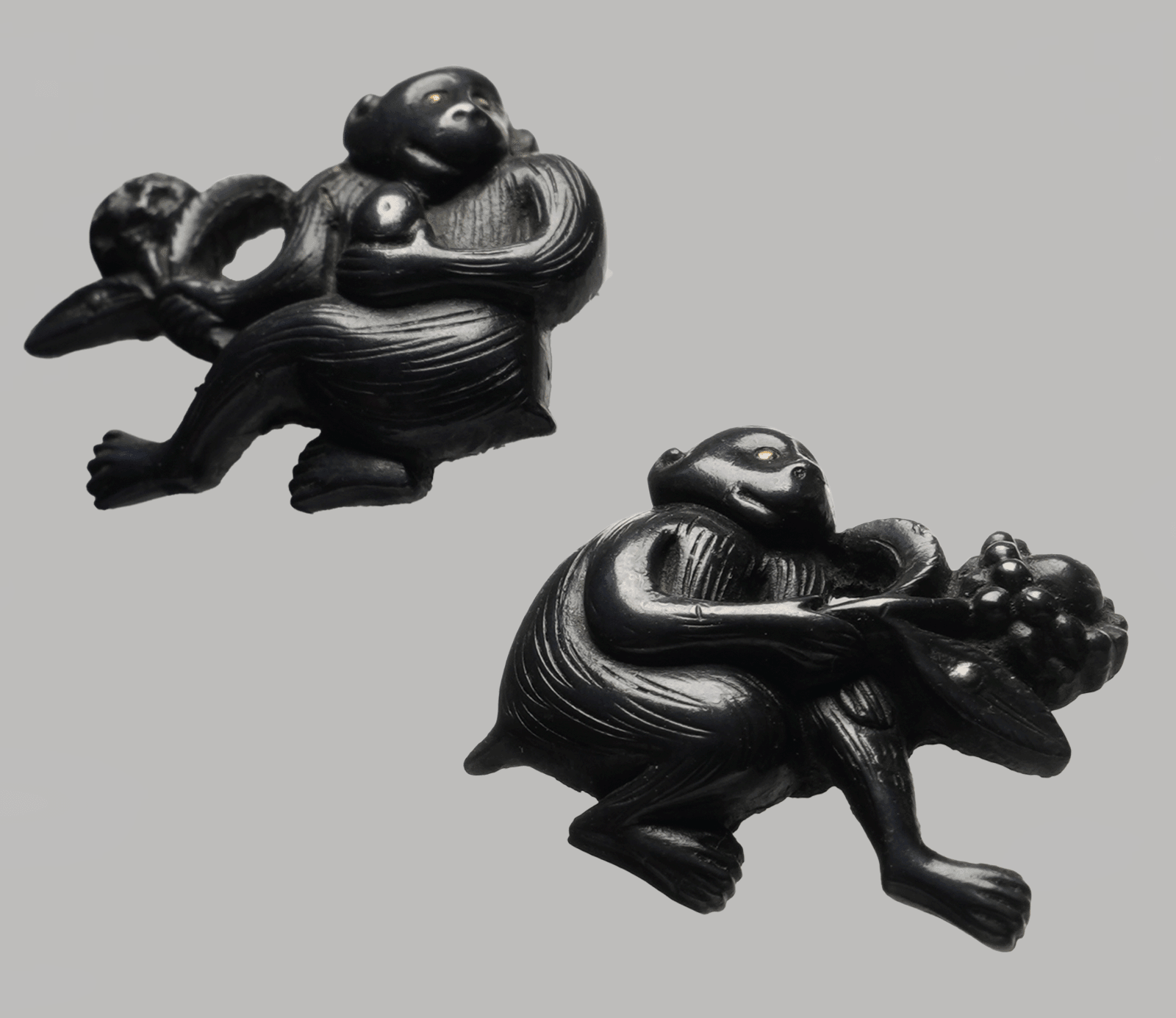
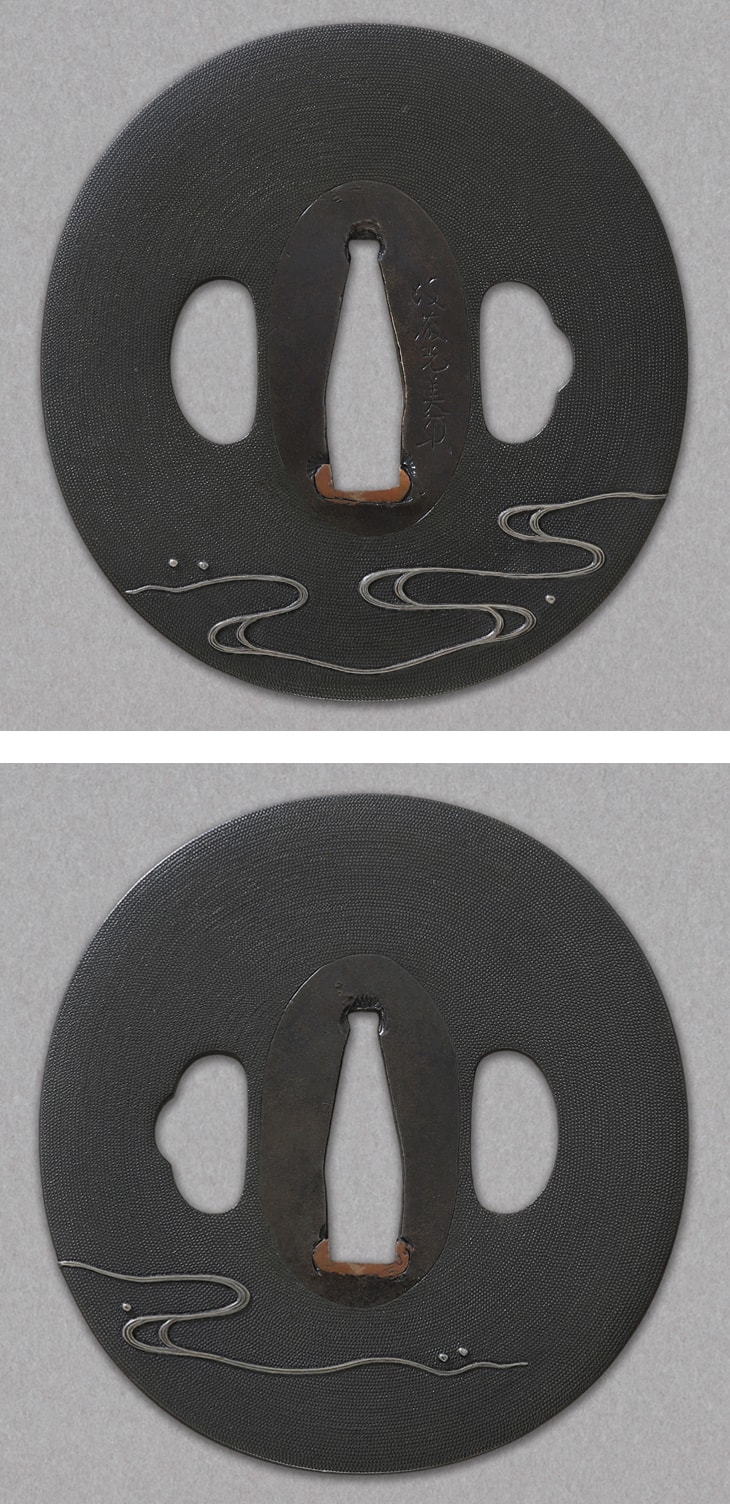
His constant ground is worked in fine , the orthodox soft-metal field of his Goto-derived training, with the and frequently given a filled or applied back plate (-fukumegane / -itagane); are often solid gold () or gold ground. On his bolder paired he works plain , hammered () and with a stone-grain skin (ishihada / ishime), and one small is set on a polished (-) ground. The metal choice serves the orthodox subject and the depth of the chisel.
Technique
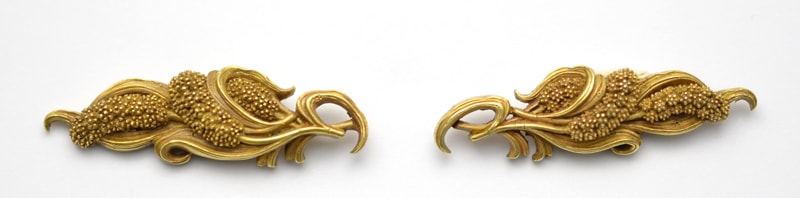
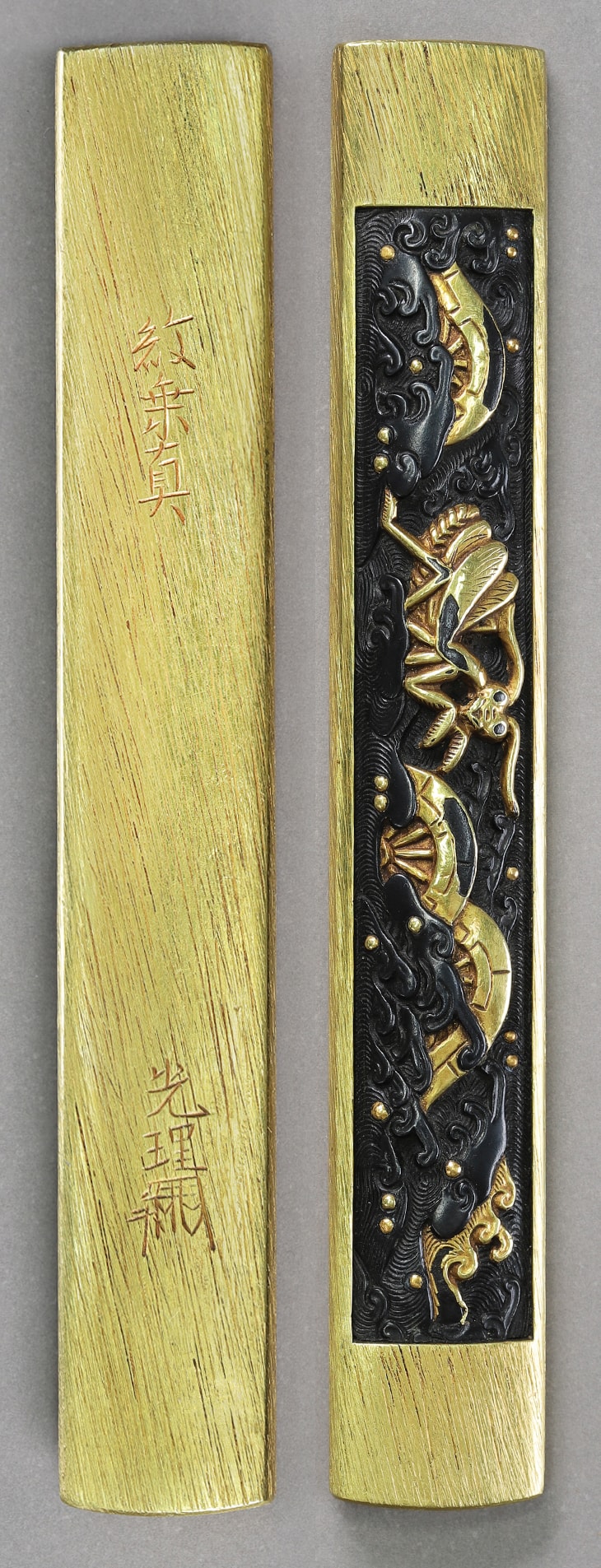
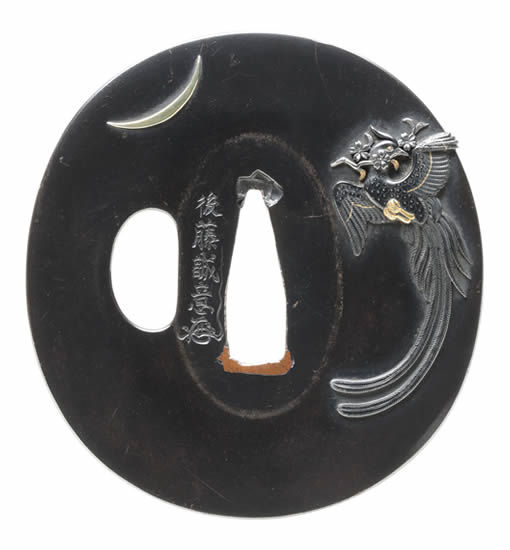
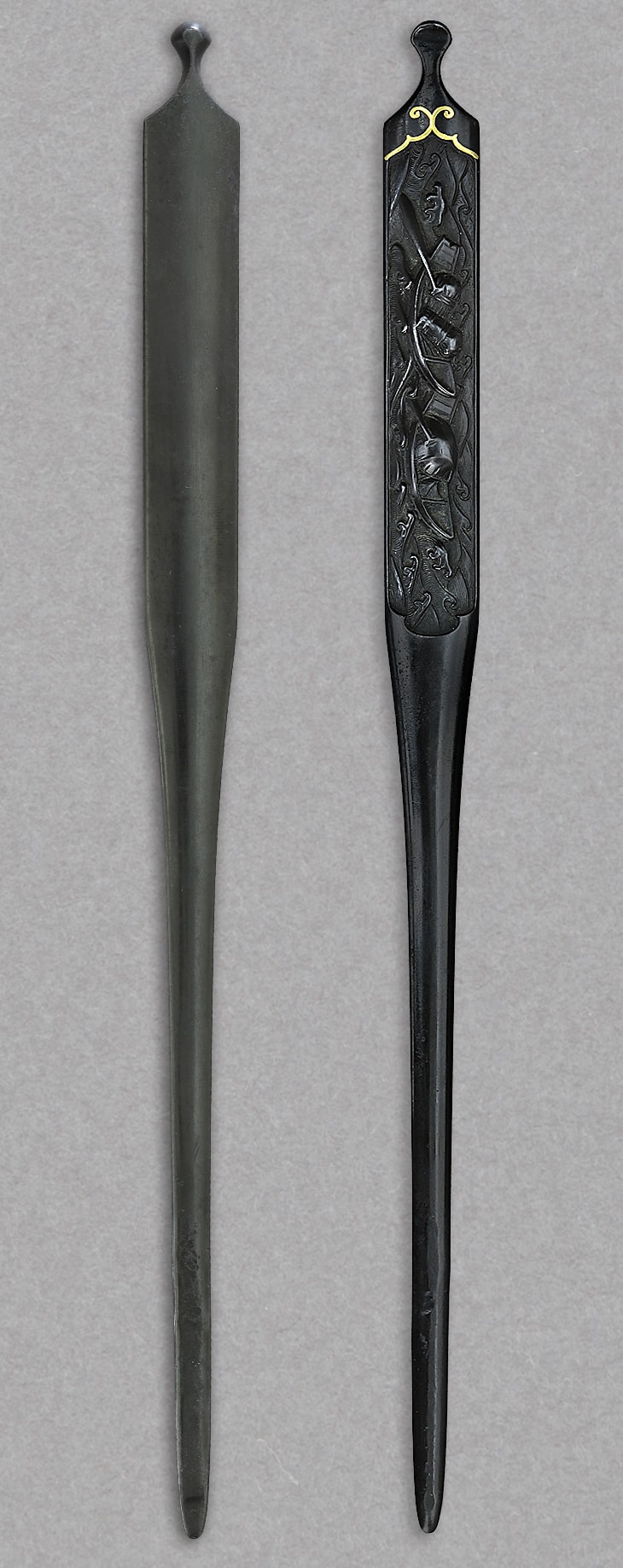
His hand is relief with polychrome iro-e in gold, silver, and copper, animated with applied (, - ) and flush inlay (, -, -); are solid-gold or gold-ground , and fine details the reverse plates, sometimes carrying engraved verse. He also uses the painterly katakiri-bori line of the Ichijo school. The recognised personal note is his command of the deep, scooping kozuki-bori chisel, used to carve the relief boldly and with free depth, and on one set a shigure (drizzle) rasp finishes the reverse.
Themes
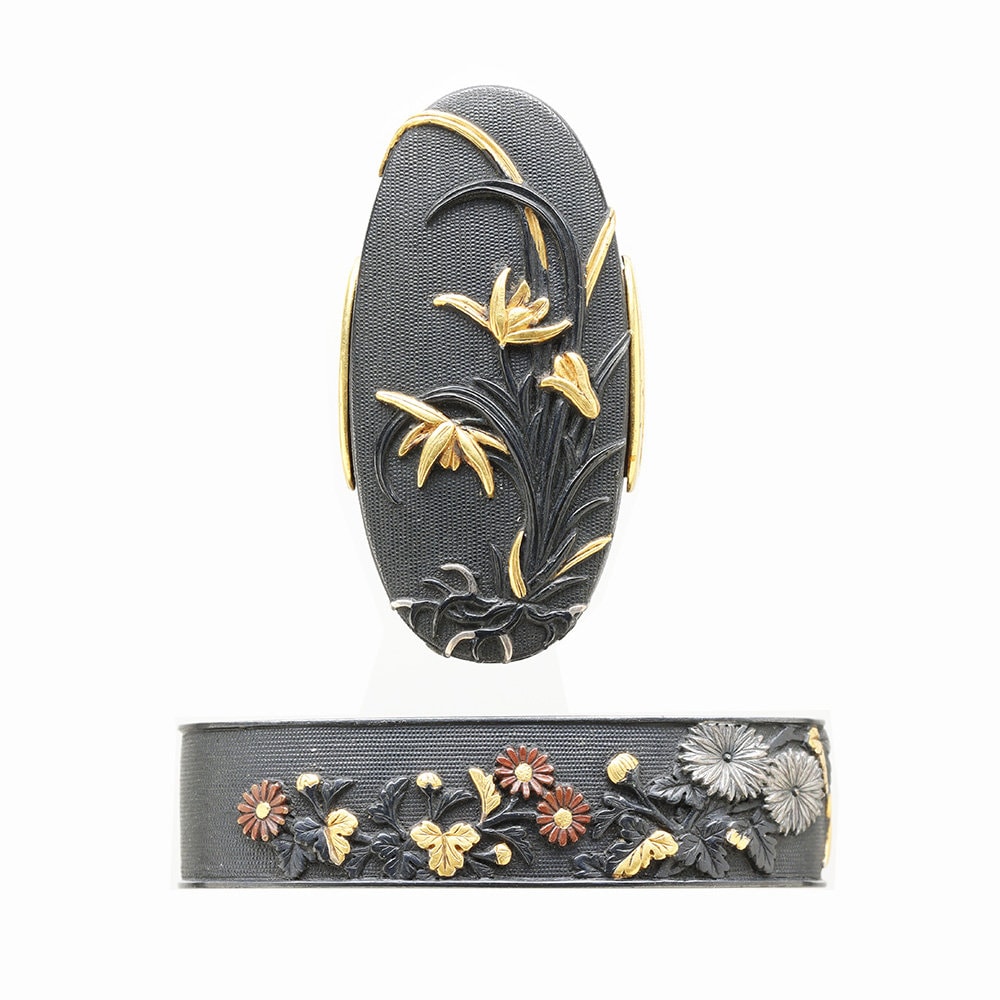
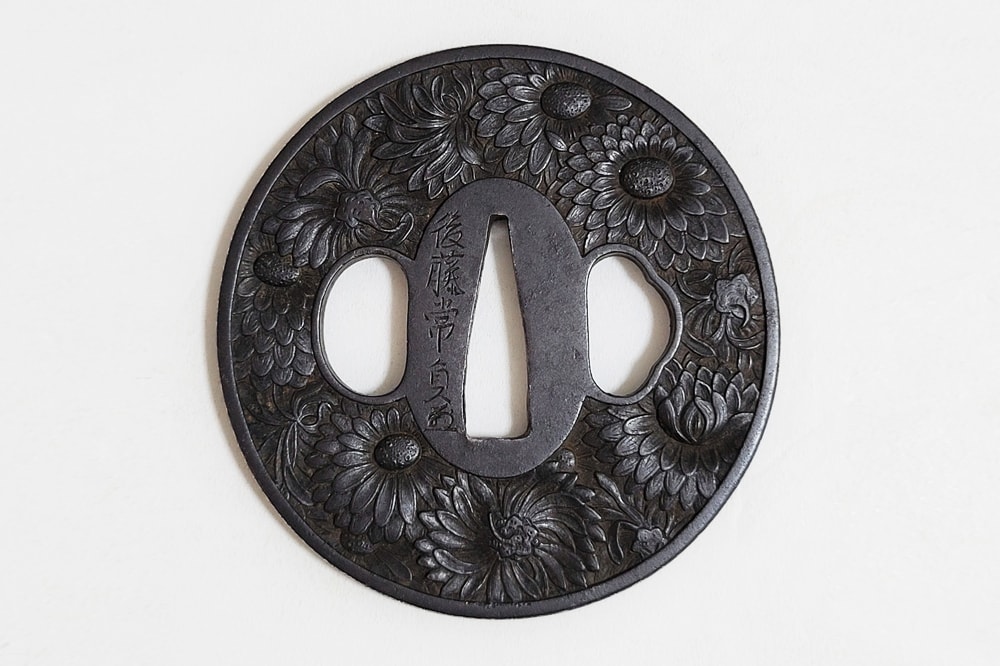
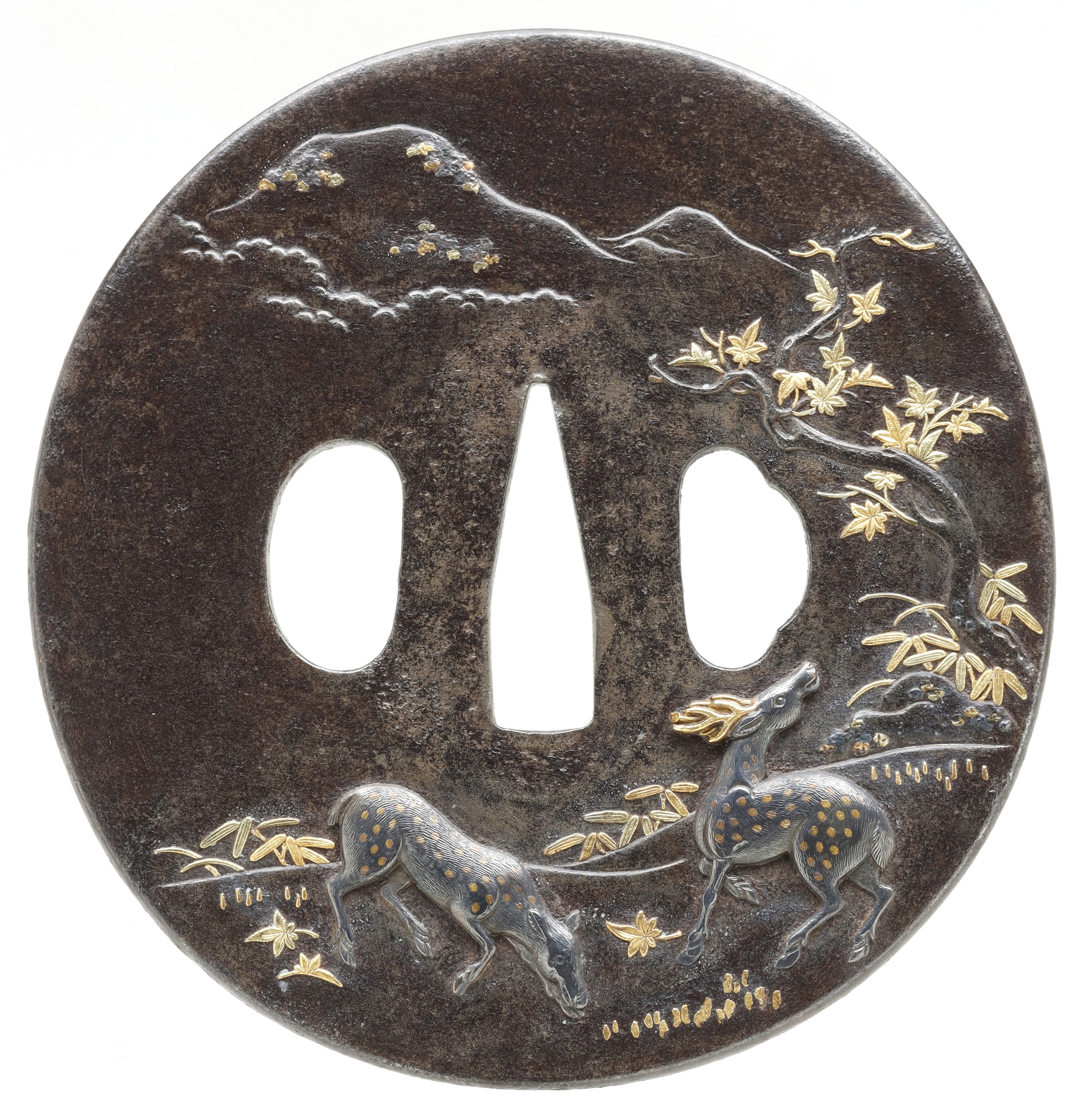
Two main registers organize his work, both inside the Ichijo school's repertoire rather than subjects he alone owns. The first is the orthodox Goto okite-mono of dragons and lions: the records note that the dragon three-piece set is a Goto house subject seen also in his teacher Ichijo's work, and a dragon-over- with a shakkyo lion-dance reaches the house ground. The second is the Four Gentlemen (plum, orchid, bamboo, chrysanthemum), the literati set the records call the thing the Ichijo school most excels at and his own favoured subject, worked on dai-sho and full fitting sets. A few pieces leave these for figure and genre subjects, the auspicious deity of harmony, the Noh dance of Okina, and a group of tigers and leopards on one .
Goto okite-mono: dragons and lions (the house subject)
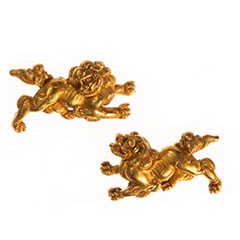
Dragons and lions in over , the orthodox Goto okite-mono the records say is a house subject seen also in Ichijo's own work. He carves dragon three-piece sets, a four-numinous-beasts set, a dragon leaping over Mt and the shakkyo lion-dance, with a thick, forceful relief that the say approaches his teacher.
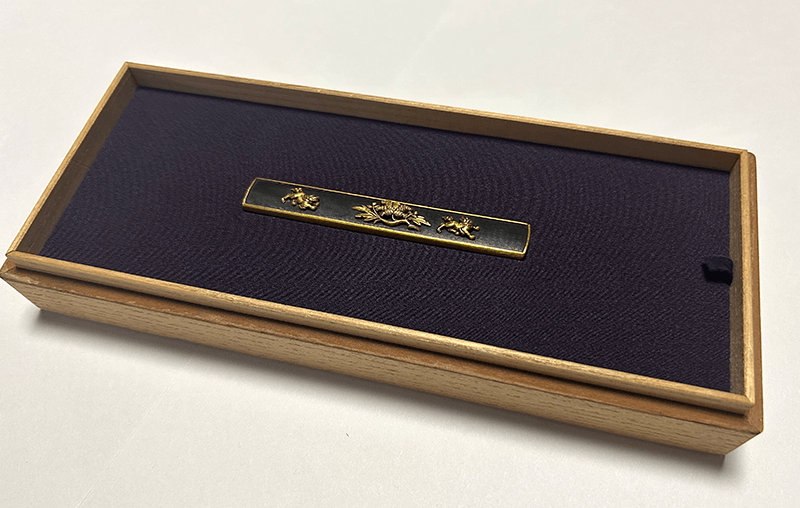
獅子shishi麒麟kirin
The Four Gentlemen (his favoured literati set)
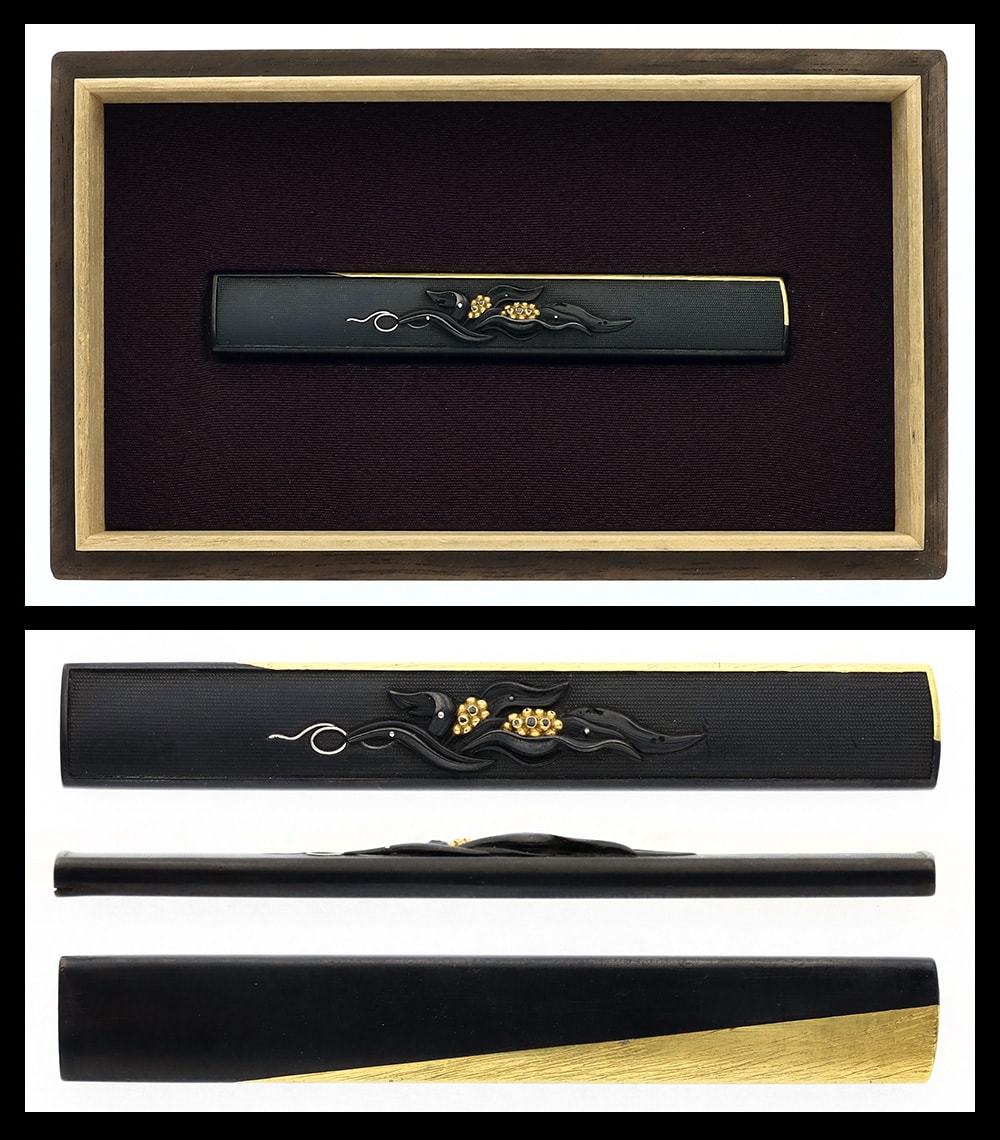
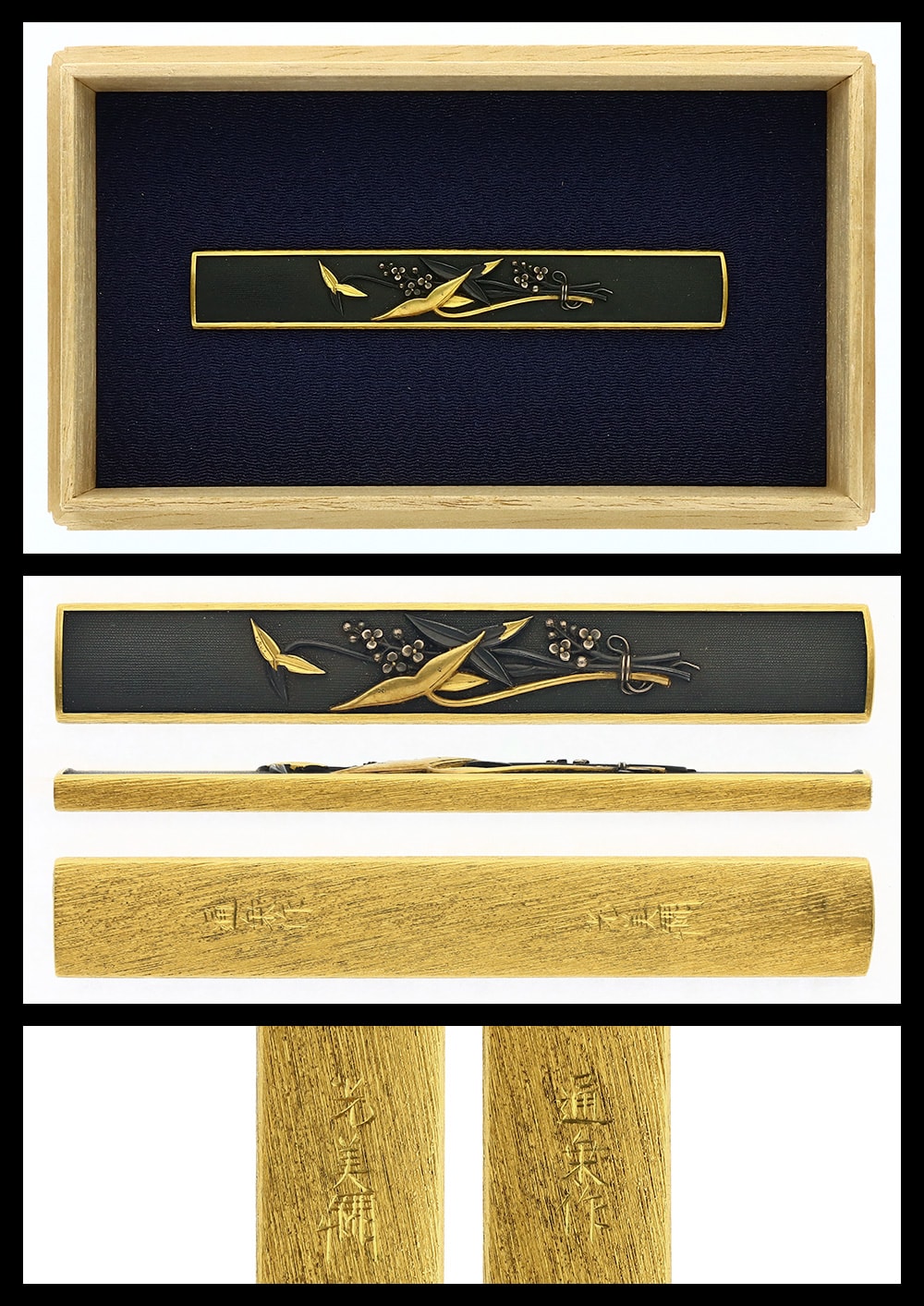
Plum, orchid, bamboo and chrysanthemum, the Four-Gentlemen literati set the records call the subject the Ichijo school most excels at and his own favourite, on dai-sho and full fitting sets in with , iro-e and gold-and-silver flush inlay. These are the pieces on which his deep kozuki-bori chisel is most praised.
蘭ran菊kiku
Figure and genre subjects (the exception)less firmly established
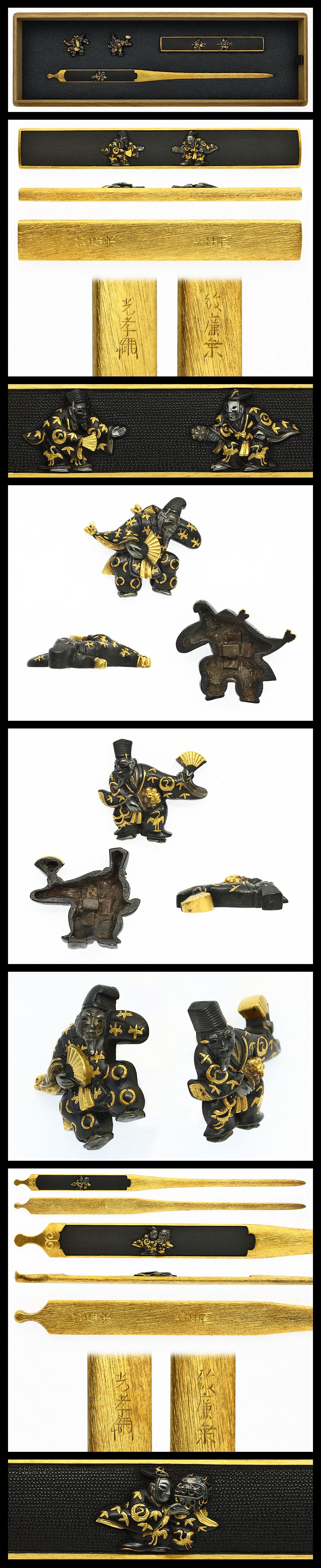
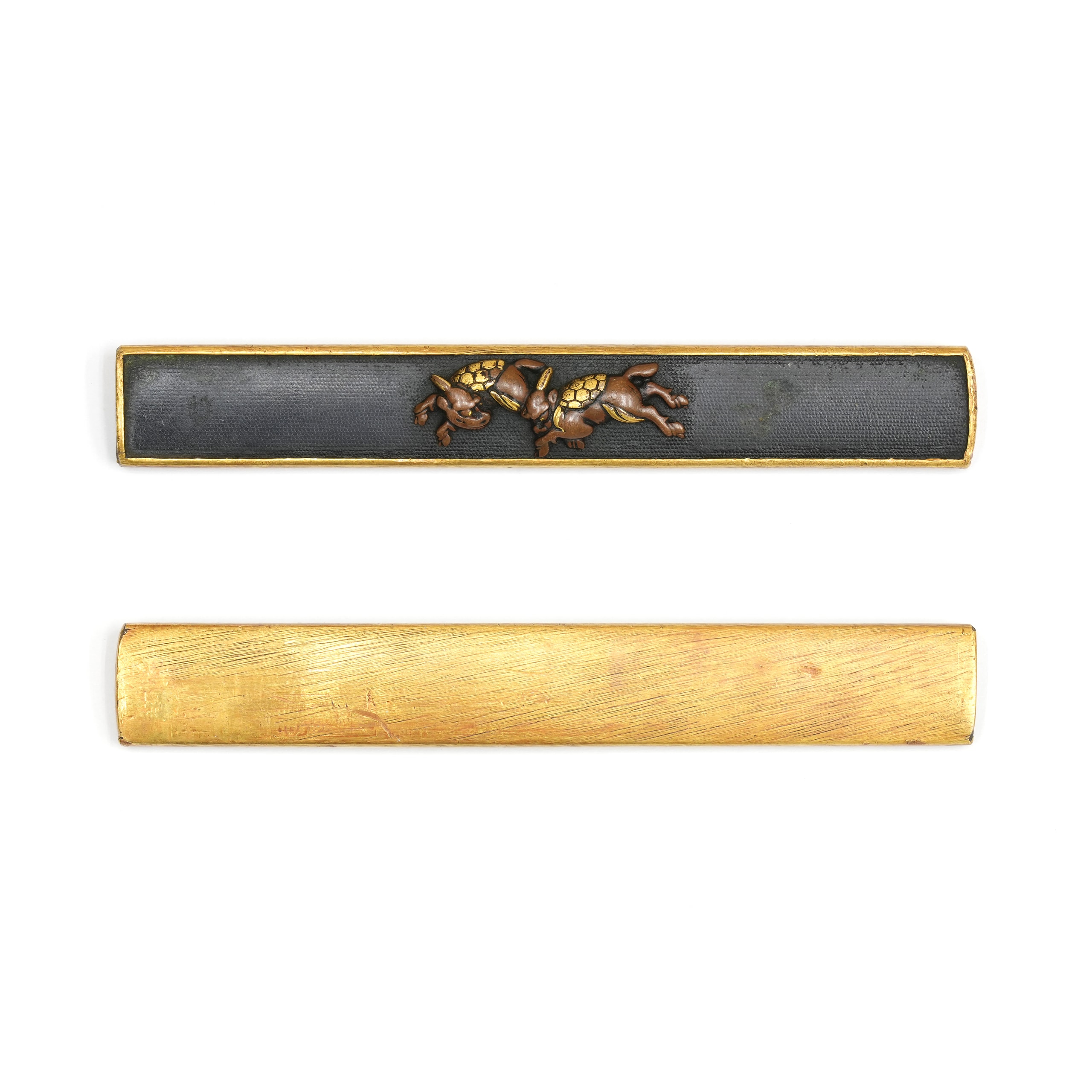
A few pieces leave the house subjects for figure and genre work: the auspicious deity of harmony (a man bearing a woman amid emblems of fortune, with engraved felicitous text on the reverse), the Noh dance of Okina with the auspicious verse cut in on the back plate, and a group of tigers and leopards unifying one small-sword mounting. The praise the figural expression and the engraving on these as the work of a foremost Ichijo disciple.
群虎豹gun-kohyo
Full iconography
Signature chronology
Placement
Dated signatures
Recorded signatures
Documentary note
His pieces are signed Funada Ikkin Yoshinaga with a (family name Funada, art-name Ikkin, real name Yoshinaga), or the shorter Funada Ikkin, and the bare art-name Ikkin appears on the smaller of a paired and as Ikkin-made on a component. Signatures often carry a residence or workshop prefix, the Dewa-Shonai home (Ushu-Shonai-ju) or his workshop locale (Buyo, at Imuke-no-sato), and one dated dragon set adds the poetic Shohei (the reign of peace). Several pieces are dated by year-mark, running from Koka 2 (1845) through the Kaei era to Bunkyu 2 (1862). On a few sets a school-mate supplies a component, with Nakagawa Issho named on the lesser of one set and Hashimoto Isshi co-signing a dai-sho carved from an Ichijo under-drawing, a record the value as evidence that signed Ichijo works could include pupil substitute-work.
Scholarship
The records report that his teacher Ichijo himself acknowledged Ikkin's strength, lamenting that the kozuki-bori chisel was beyond his own reach, and that no rival could follow Ikkin in it.
On one dai-sho tsuba the records note that a signed Ichijo design was carved by his pupils, the large by Ikkin and the small by Hashimoto Isshi, valuing it as evidence that signed Ichijo works could include pupil substitute-work.
Designations
Kokuhō—
Jūyō Bunkazai—
Jūyō Bijutsuhin—
Gyobutsu—
Tokubetsu Jūyō2
Jūyō Tōken9
Elite Standing
0.08 across 11 designated works
Top 17% among makers
Provenance
2 documented provenances across certified works by Ikkin
Provenance Standing
0 works held in elite collections across 2 documented provenances
Ikkin(一琴) was a maker of Japanese sword fittings (tōsōgu) of the Ichijo school in Dewa / Edo / Yamashiro province, active during the late Edo (1812–1863) period.
The work follows the Iebori tradition.
Designated works by Ikkin include 2 Tokubetsu Jūyō, 9 Jūyō.