NihontoWatch MonNihontoWatchBETA
MarketEncyclopedia
NihontoWatch Mon

NihontoWatchBETA

Market
Encyclopedia
Overview·Kantei·Designations·Provenance·Blade Forms·Signatures·Lineage·School
OverviewKanteiDesignationsProvenanceBlade FormsSignaturesLineageSchool
  1. Schools
  2. Rai
  3. Nakajima Rai
  4. Kuninaga

Nakajima Rai Kuninaga

國長

Tokujū
Vol. 17, No. 14 · Wakizashi

Nakajima Rai Kuninaga

國長

58 ranked works

ProvinceYamashiroEraGentoku (1329–1331)PeriodKamakuraSchoolRai>Nakajima RaiTraditionYamashiro-denGeneration1stTypeSwordsmithCodeKUN777
2Jūyō Bunkazai
2Tokubetsu Jūyō54Jūyō Tōken

Overview

Kuninaga is the smith the published sources call Nakajima , a pupil of Kunitoshi who left Yamashiro and settled at Nakajima in Settsu, carrying the manner forward into the period. The records two generations of the name, placing the first about the Gentoku era at the close of and the second about the Shohei and eras; only the three-character signature Kuninaga (来国長) is known, and not a single dated work survives. From this scarcity grows the central scholarly fact about him: the published commentary holds that he resembles Kunimitsu while falling slightly short of him, and it makes the Nakajima attribution itself a standing question of connoisseurship rather than a settled record. His , his quiet temper, and a signature that comes in one form alone are what the judges read him by.

The constant of his work is the . Over a well-forged he mixes and a flowing , the grain tending to stand a little, -tatsu, with thick and frequent bold . His is a faint or a quiet standing on this open, standing grain, the steel a step away from the closely packed of the Yamashiro mainstream. That standing is the feature the judges mean when they place him just below Kunimitsu; it is also, by their own account, the basis of the attribution problem. Examining his , one of them writes that the Nakajima has from old times been directed to works of somewhat lesser technical level than Kunimitsu, and asks whether the convention is sound: 「やや技術が劣る直刃出来の作をそれに当てている事が、果して妥当なりや否やという問題に始まる」 (the matter begins with the question of whether it is right that works of somewhat inferior technique have been assigned to him). For the present, the commentary follows tradition.

Over that his temper stays calm. The characteristic line is a -toned or medium into which , and a shallow enter, with and , well adhered, and and running through, the now tight, now bright. The runs straight to a small , or sweeps with to a slightly pointed turnback. This restrained register, not the flamboyant of a hand, is the inheritance he carries; and the published sources note that the first generation in particular was proficient in , 「初代は直刃を得意」とした. It is the steel and this quiet edge, taken together, that the judges weigh against Kunimitsu, finding the resemblance plain and the refinement a degree less.

The record divides cleanly along the line of signature and form. The body of it is the , attributed to Nakajima , wide in body with a over the standing , the temper a broad or medium , often carved with a plain . The signed pieces, encountered only from time to time, are the work of the second generation in with , wide and slightly elongated with a thin , the three-character signature cut large below the . The published sources draw a distinction within his own work: the first generation was the hand, while in the second 「二代にはむしろ直刃の作は少なく」, more irregular tempering becoming common. The signed and keep a consistent carving habit, a on the and on the , each with a beneath, a devotional program that sets them apart from the grooved blades.

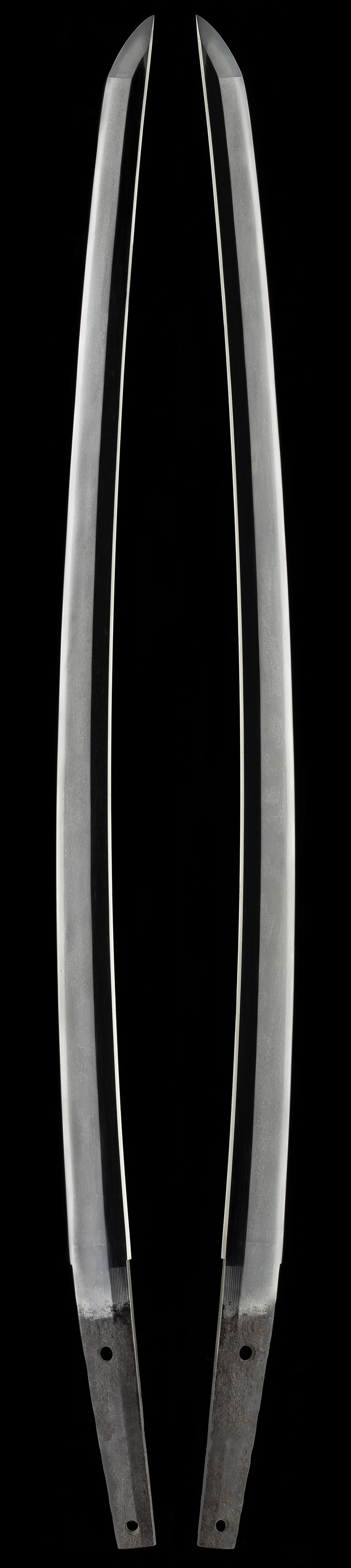
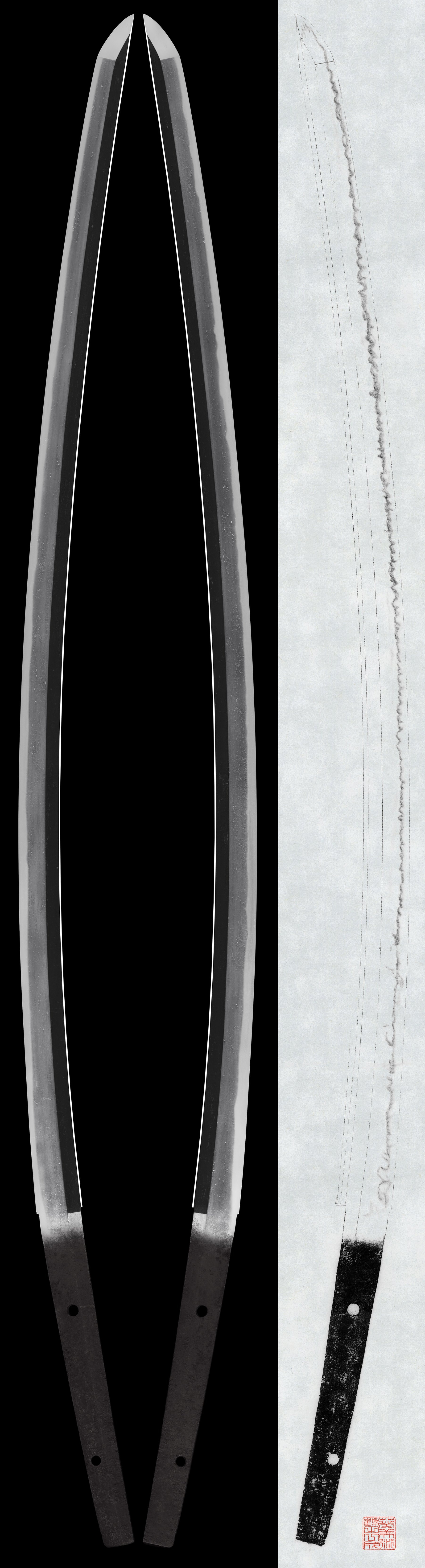
One piece stands outside every part of this account. A , signed by , breaks the calm: over an with flowing , , and a standing strongly on the , he sets a mixed with and , and in the upper half with a -like feeling intermingle until the whole becomes a that undulates flamboyantly. The published commentary calls it 「来派の作としては異色な出来口」 (an idiom unusual for a work), the activity within the temper abundant and the strongly expressed, an outstanding example among this smith's work and 「資料的にも頗る貴重」 (extremely valuable as documentary material) for the breadth of expression possible within the tradition. What separates Kuninaga from his Yamashiro source is exactly this: his is the manner carried a step away from its origin, the standing where Kunimitsu's is packed, the turned to , and the school's reserve held even where, once, it gives way to .

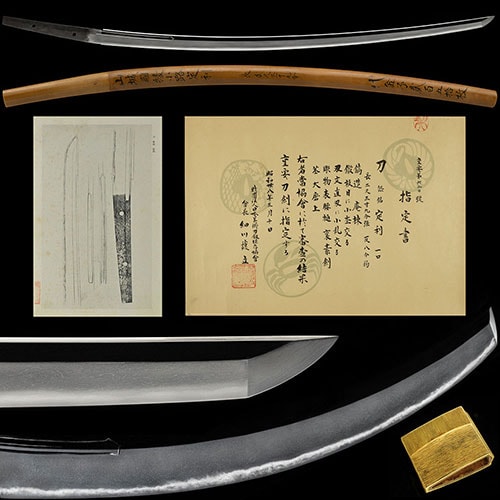
For the collector Kuninaga is a scarce name whose extant work, signed and attributed together, is exceedingly few. He has no National Treasures. His record runs instead through the Important Cultural Properties, a signed first-generation in preserved at Eirin- in Yamashiro and an attributed held at Sakurayama Shrine, with two blades and a long run of pieces carrying the rest. The roll is a one, the Hisamatsu Matsudaira house, former lords of Matsuyama in Iyo, the Owari Tokugawa, and other Matsudaira lines among recorded owners. The published sources call one signed example 「同作中のみならず同名中の白眉」 (the finest not only among surviving works but among all smiths bearing this name). Most of his blades are held rather than traded, and a signed Nakajima comes to light only seldom, so a privately held example is a notable thing for a collector to encounter, and a document of how the line continued once it had left Kyoto.

Kantei

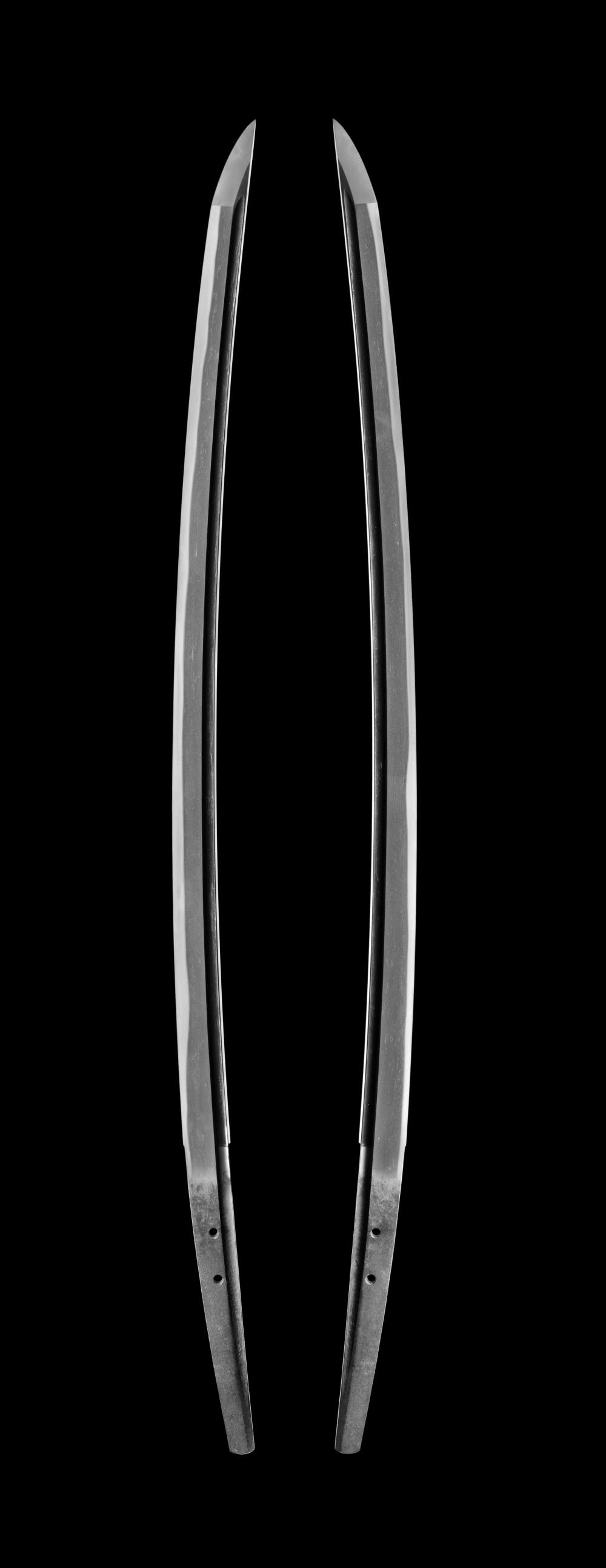
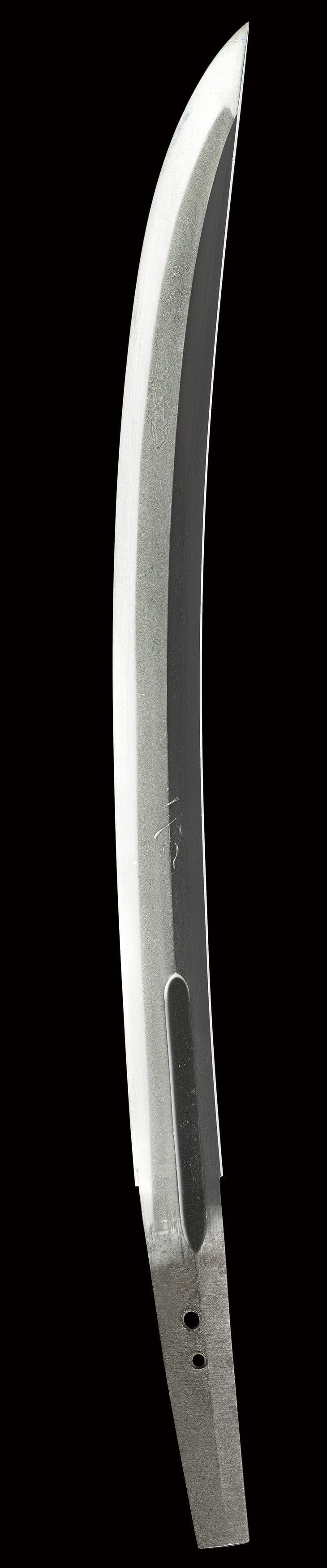
one Rai offshoot read across its registers: the mainstream Nakajima Rai mumei katana in a standing-itame suguha that the sources weigh against Rai Kunimitsu, the signed second-generation wakizashi and tanto in a more irregular notare, and a single Tokubetsu Juyo wakizashi that breaks into flamboyant hitatsura

Kuninaga is the smith the published sources call Nakajima : a pupil of Kunitoshi who left Yamashiro and settled at Nakajima in Settsu, carrying the manner into the period. The records two generations of the name, the first about the Gentoku era at the close of and the second about the Shohei and eras; only the three-character signature Kuninaga is known and no dated work survives. His ground is a well-forged , often mixing in flowing and a tendency to stand a little, with , frequent and a quiet rather than the bright of pure . Over it he sets a -toned line into which , and a shallow enter, with and , , and , the turning straight to a small round or sweeping with to a pointed turnback. The published sources hold that he resembles Kunimitsu yet yields slightly in refinement, and they make the Nakajima attribution itself a standing question, since from old times works of somewhat lesser technical level were directed to him. The signed second-generation and temper more irregular than ; one flares into a flamboyant unusual for the school.

Diagnostic discriminators

unique vs pure Rai (Kunimitsu/Kunitoshi, jifu/bo-utsuri Yamashiro ji)

unique vs Rai Kunimitsu (the closely-packed, finely refined Rai ji-gane)

the o-suriage mumei katana most often carry a plain bo-hi carved kaki-nagashi, whereas his signed hira-zukuri wakizashi and tanto bear the devotional suken-and-gomabashi program, each with a tsume below, a carving habit that holds across the signed register

Observation by phase

The mainstream Nakajima Rai attribution (o-suriage mumei katana)

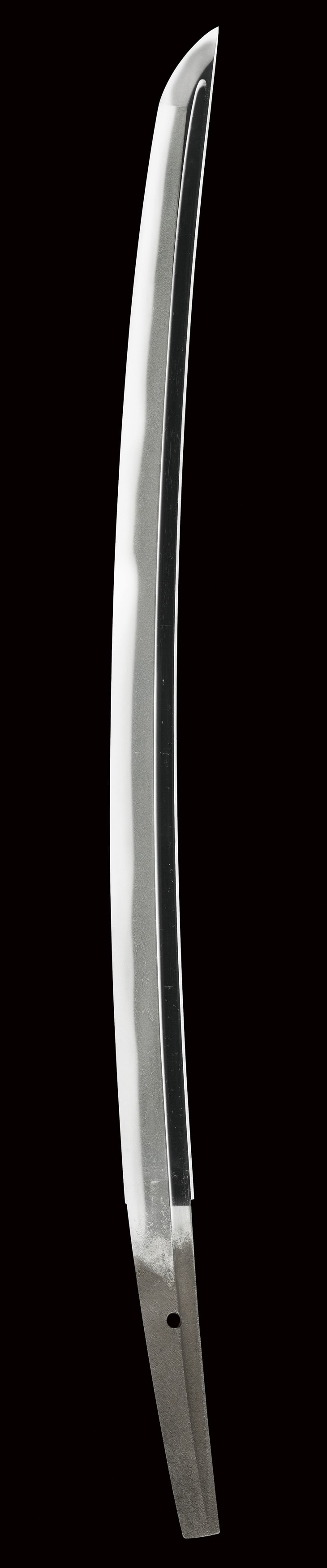
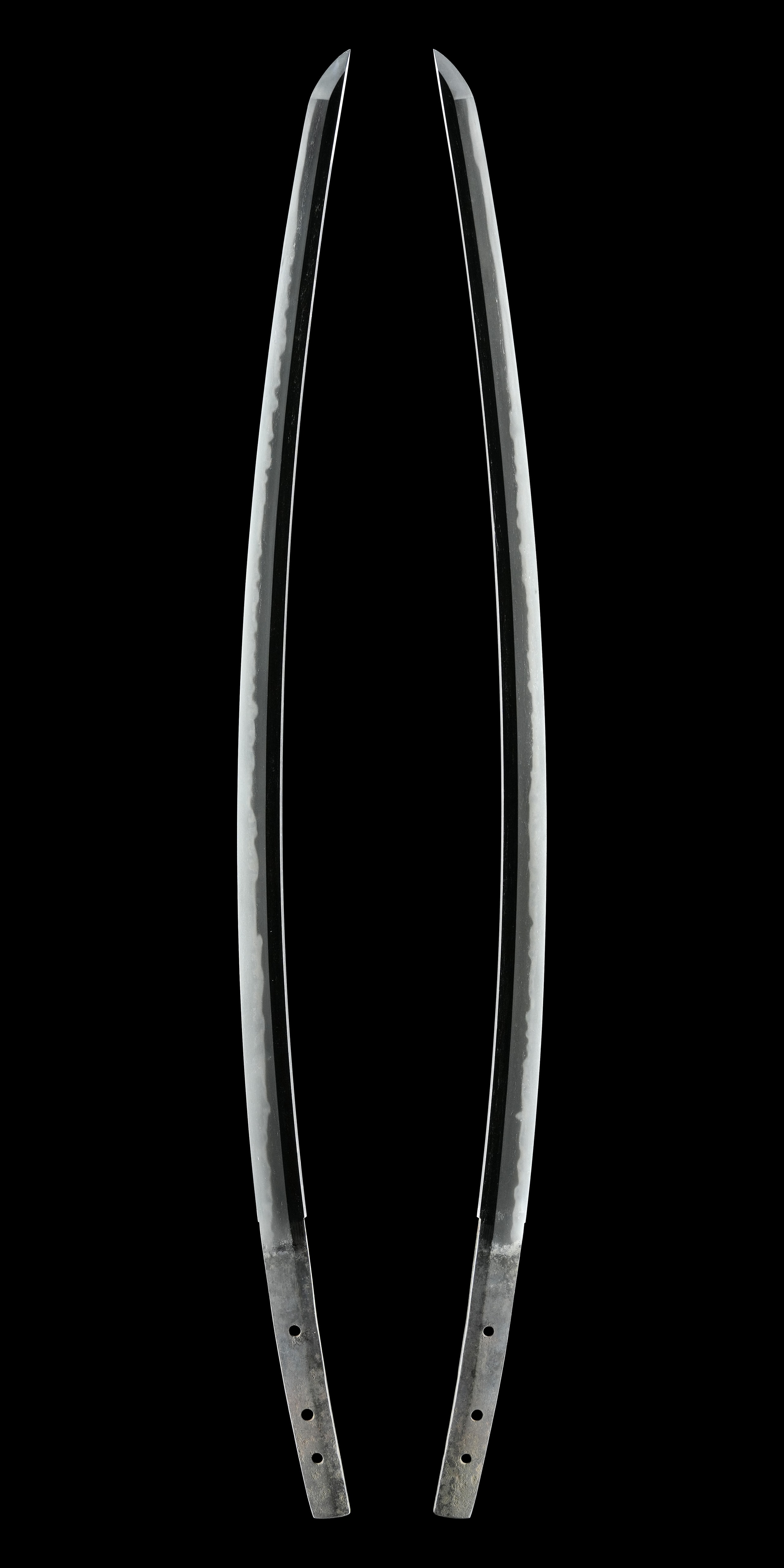
The body of his record is the attributed to Nakajima . These are wide in body with a , over a well-forged that mixes in and flowing and tends to stand a little, with thick , frequent bold , and a faint or quiet standing on the . The temper is a broad or medium into which and enter, in places a shallow , with and , well adhered, and running through, the tight or bright. The runs straight to a small round, or sweeps with to a pointed turnback. The published sources affirm these as -school work resembling Kunimitsu, while making the attribution itself a standing problem: from old times the Nakajima was applied to works of somewhat lesser technical level than Kunimitsu, and the judges note there is room for study as to whether that convention is right.

Sugata 姿
Jigane 地鉄
Hamon 刃文
Bōshi 帽子

The signed second-generation wakizashi and tanto (notare register)

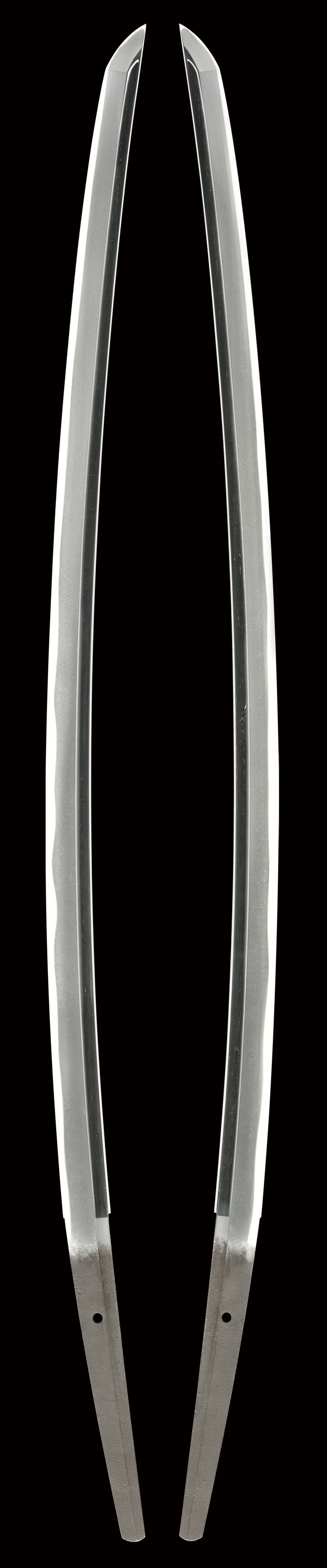
The signed pieces encountered from time to time are the work of the second generation, in with , wide and slightly elongated with a thin and a slight , the three-character signature cut large below the . The first generation, the published sources say, was especially proficient in , while in the second generation works are comparatively few and pieces with more irregular tempering are common. The ground is with flowing and an standing on the ; the temper is a -toned line breaking into a shallow with , and , and , the entering and sweeping pointed with . The carving is consistent across them, a on the and on the , each with a below.

Sugata 姿
Jigane 地鉄
Hamon 刃文
Bōshi 帽子

The flamboyant outlier (the Tokubetsu Juyo hitatsura wakizashi)

One , signed by , stands apart from the rest of his record. Over an with flowing , , and a standing out, he sets a temper mixed with and , and , the somewhat deep and well adhered, and running, and in the upper half with a -like feeling intermingle until the whole becomes a that undulates flamboyantly. The carving is rich, a kaki-nagashi with a below on the and with a on the . The published sources call this an idiom unusual for the school, the activity within the temper abundant and the strongly expressed, an outstanding example among this smith's work and valuable as material for the breadth of expression possible within the school.

Jigane 地鉄
Hamon 刃文
Bōshi 帽子
Scholarship

The published sources record that the Meikan lists two generations of Kuninaga, the first about Gentoku and the second about Shohei and Oan, that the second generation is the better hand and the source of the signed wakizashi and tanto, and that the first generation was especially proficient in suguha while the second tempers more irregular work.

On the o-suriage mumei katana the published sources affirm Rai-school work resembling Rai Kunimitsu, but make the Nakajima Rai attribution a standing kantei question: from old times the kiwame was directed to suguha works of somewhat lesser technical level than Kunimitsu, and the judges note there is room for study as to whether that convention is appropriate, following the traditional attribution for the present.

Designations

Kokuhō—
Jūyō Bunkazai2
Jūyō Bijutsuhin—
Gyobutsu—
Tokubetsu Jūyō2
Jūyō Tōken54

Elite Standing

0.22 across 58 designated works

Top 11% among smiths

Provenance

7 documented provenances across certified works by Kuninaga

Provenance Standing

3 works held in elite collections across 7 documented provenances

Top 20% among smiths

Raw score: 2.09 / 10

Blade Forms

Distribution across 58 ranked works

Signatures

Signature types across 58 ranked works

Currently Available

Lineage

Kuninaga
Students (2)
  1. 1.Kuninaga國長11designated
  2. 2.Munenaga宗長1 for sale

Nakajima Rai School

Other artisans of the Nakajima Rai school

  1. 1.Kuninaga國長11designated
  2. 2.Kuniyasu國安1 for sale1designated
  3. 3.Naga長1designated
  4. 4.Kuninaga國長2designated
  5. 5.Kuniyasu國安1 for sale1designated