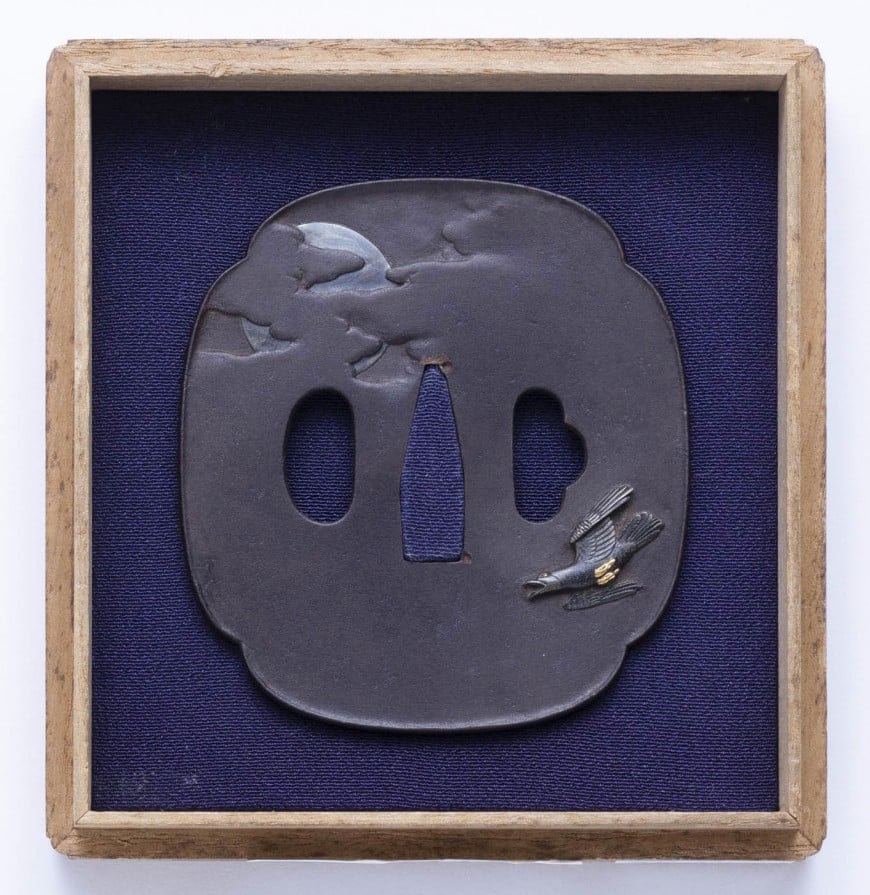
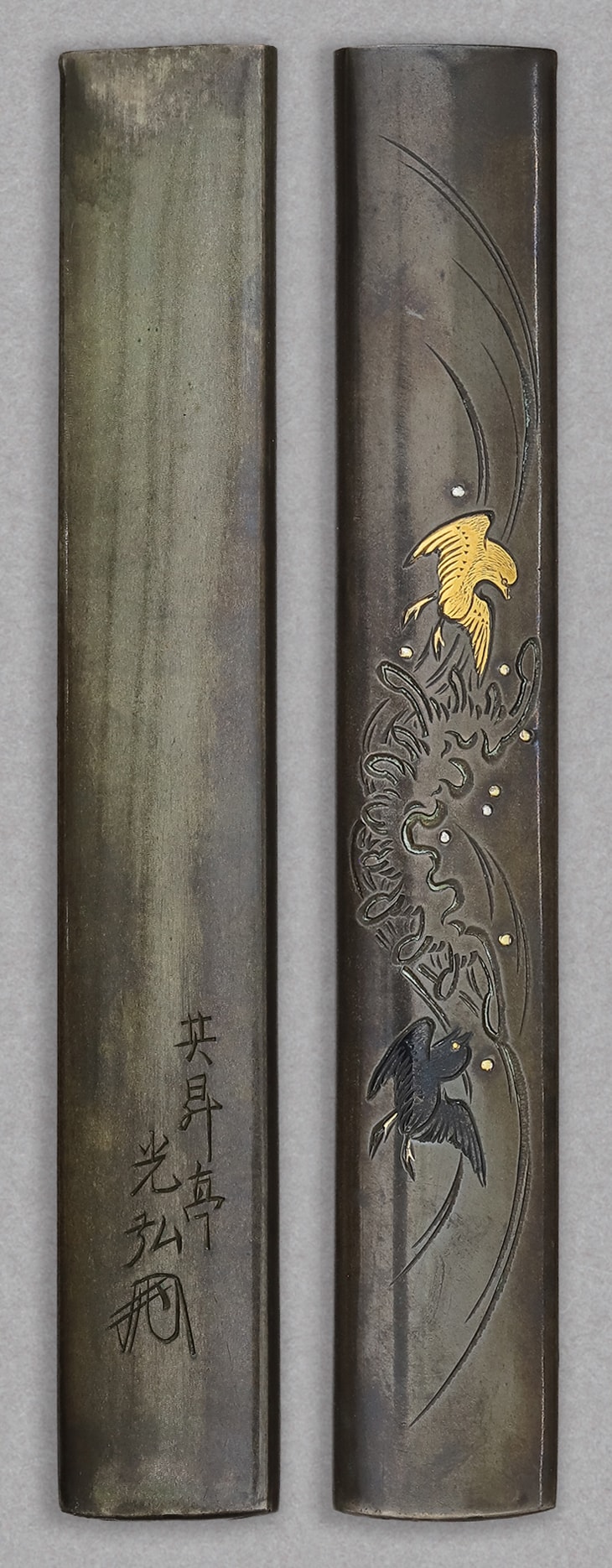
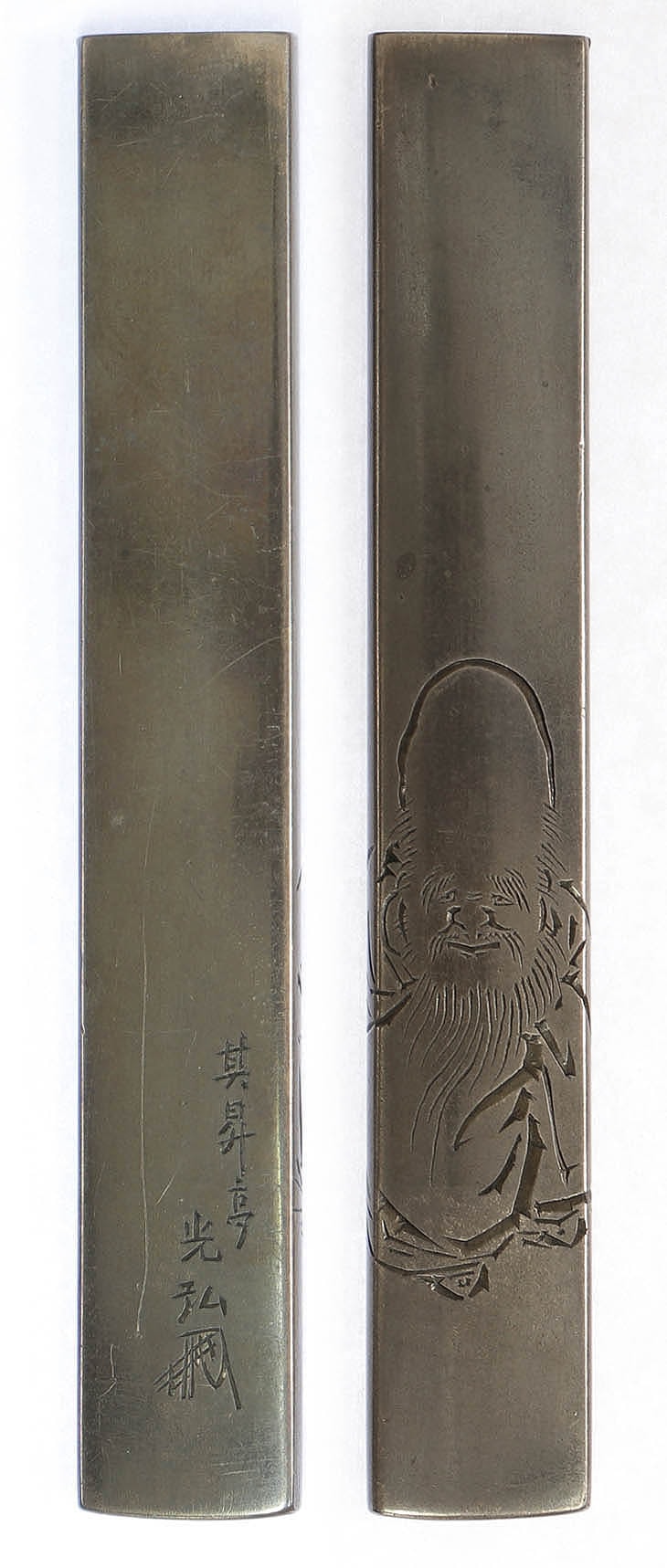
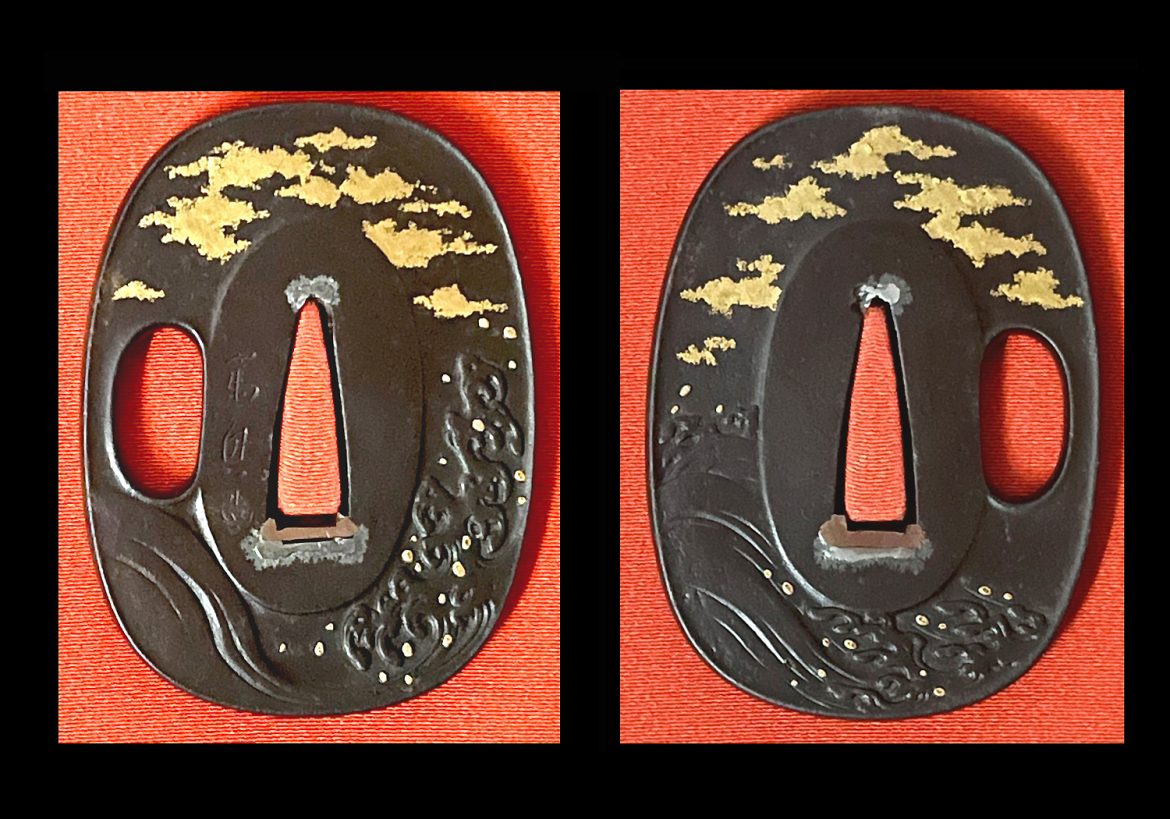
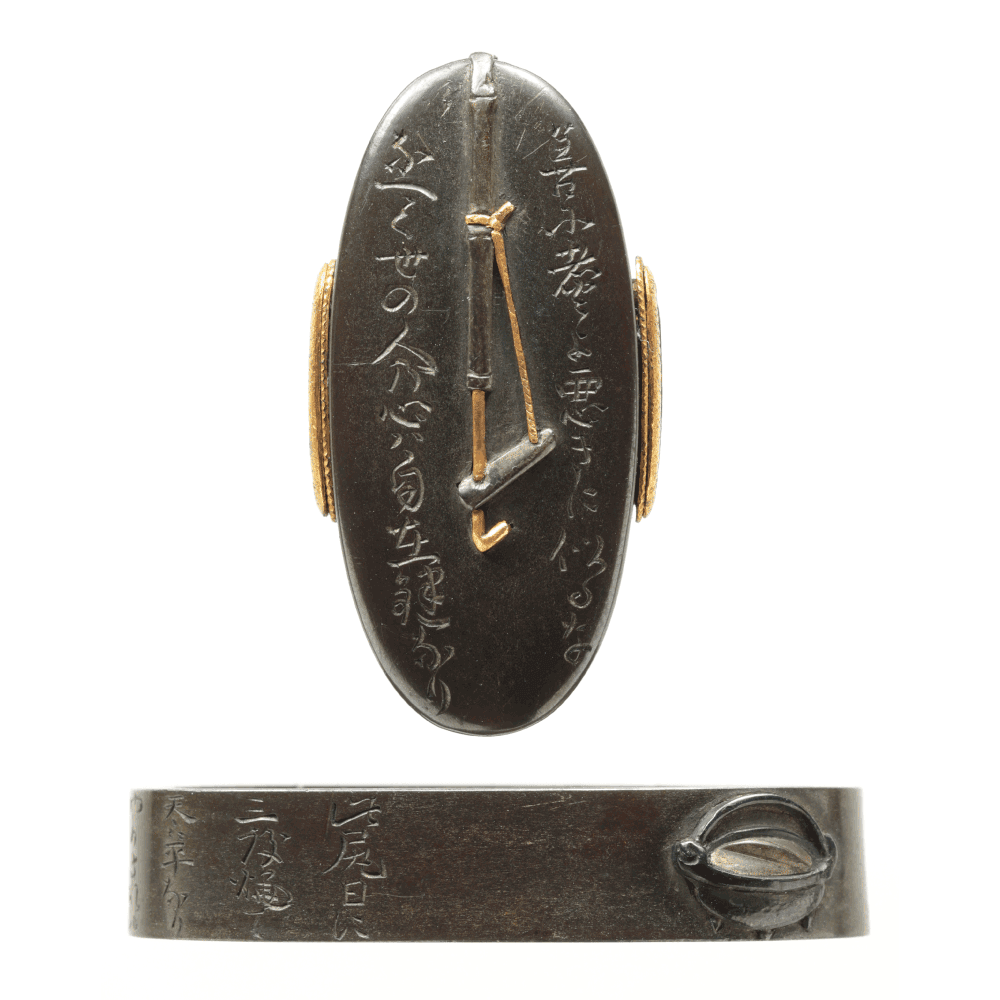
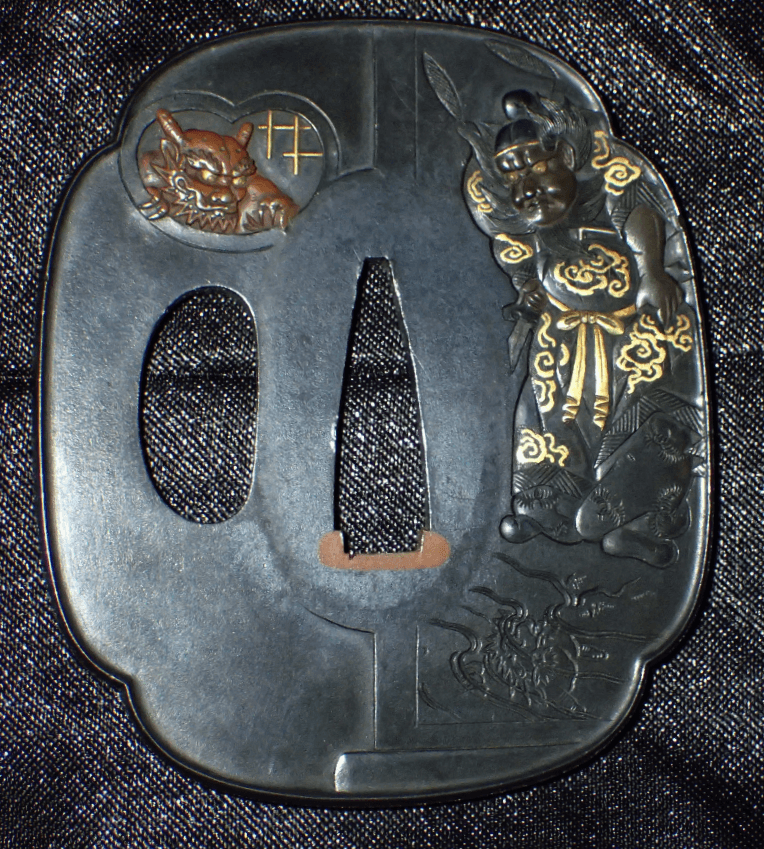
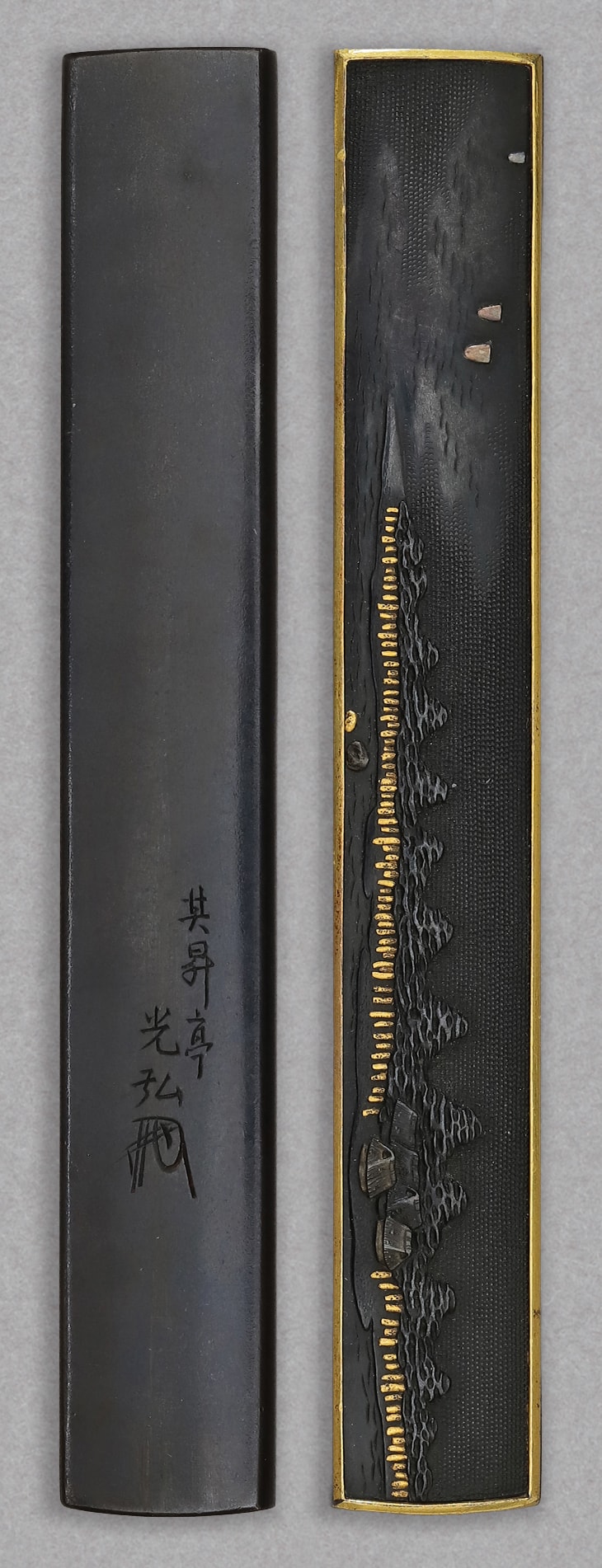
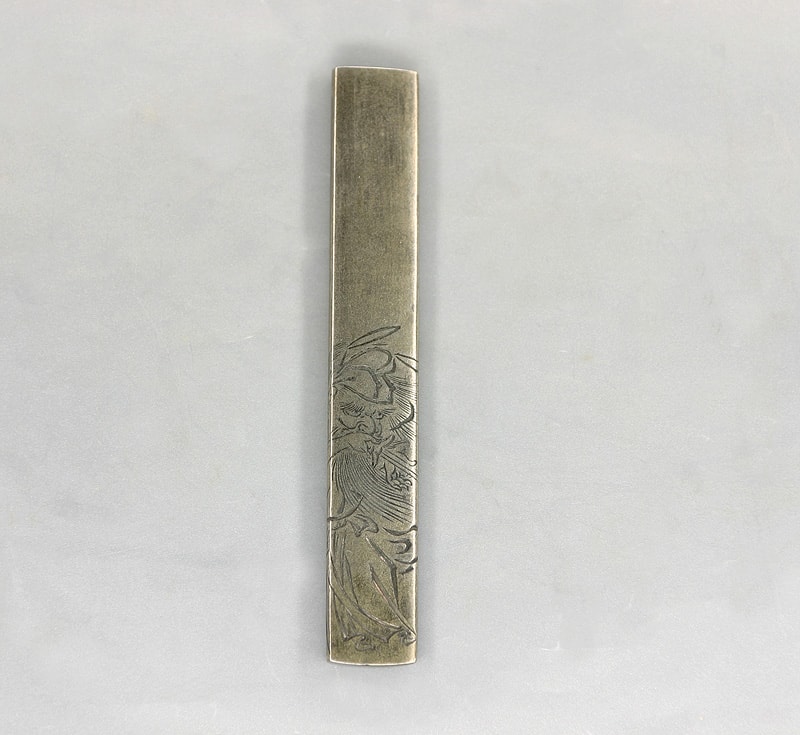
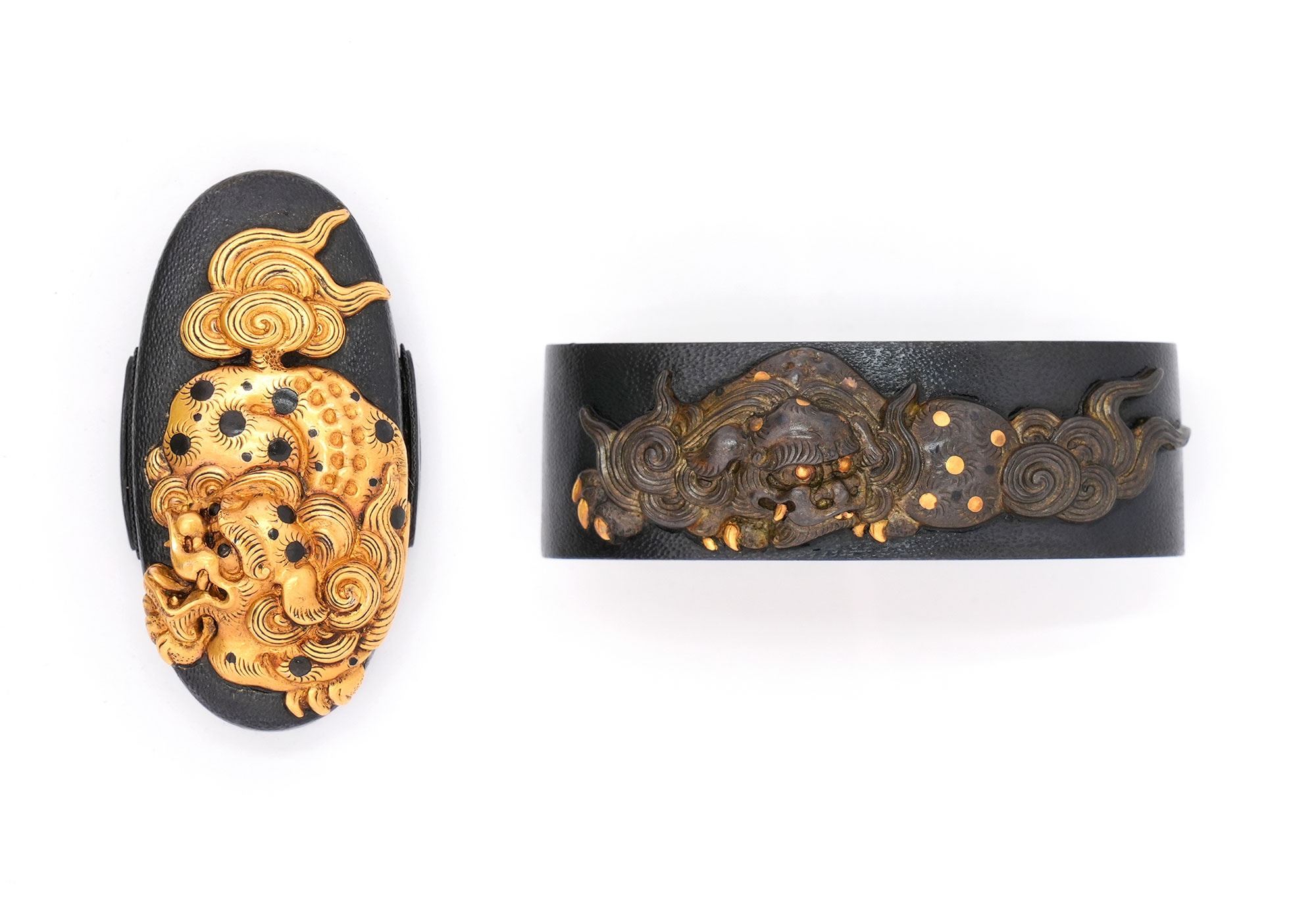
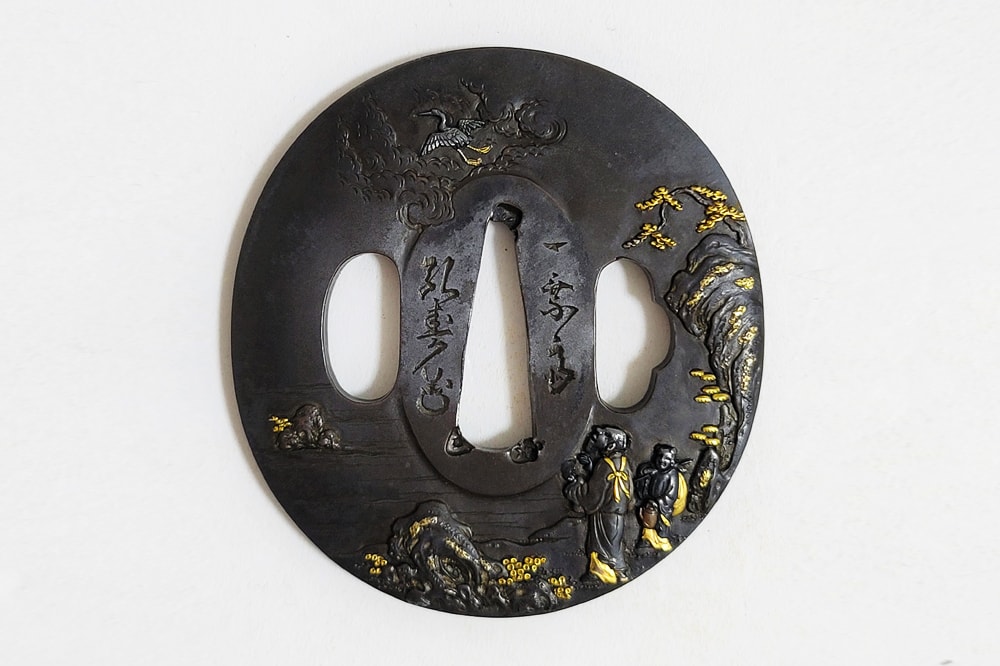
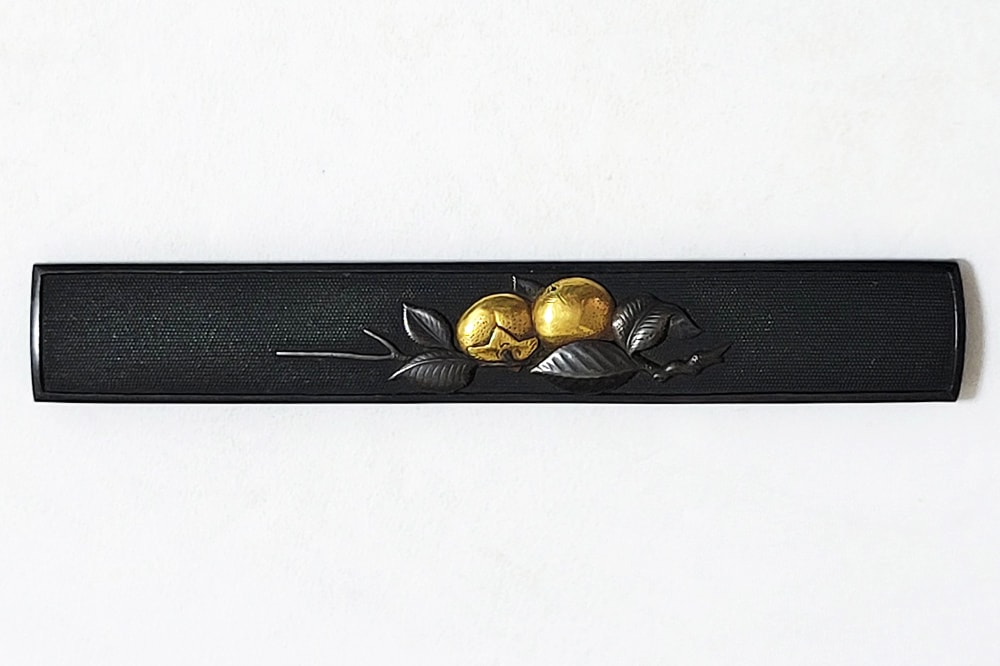
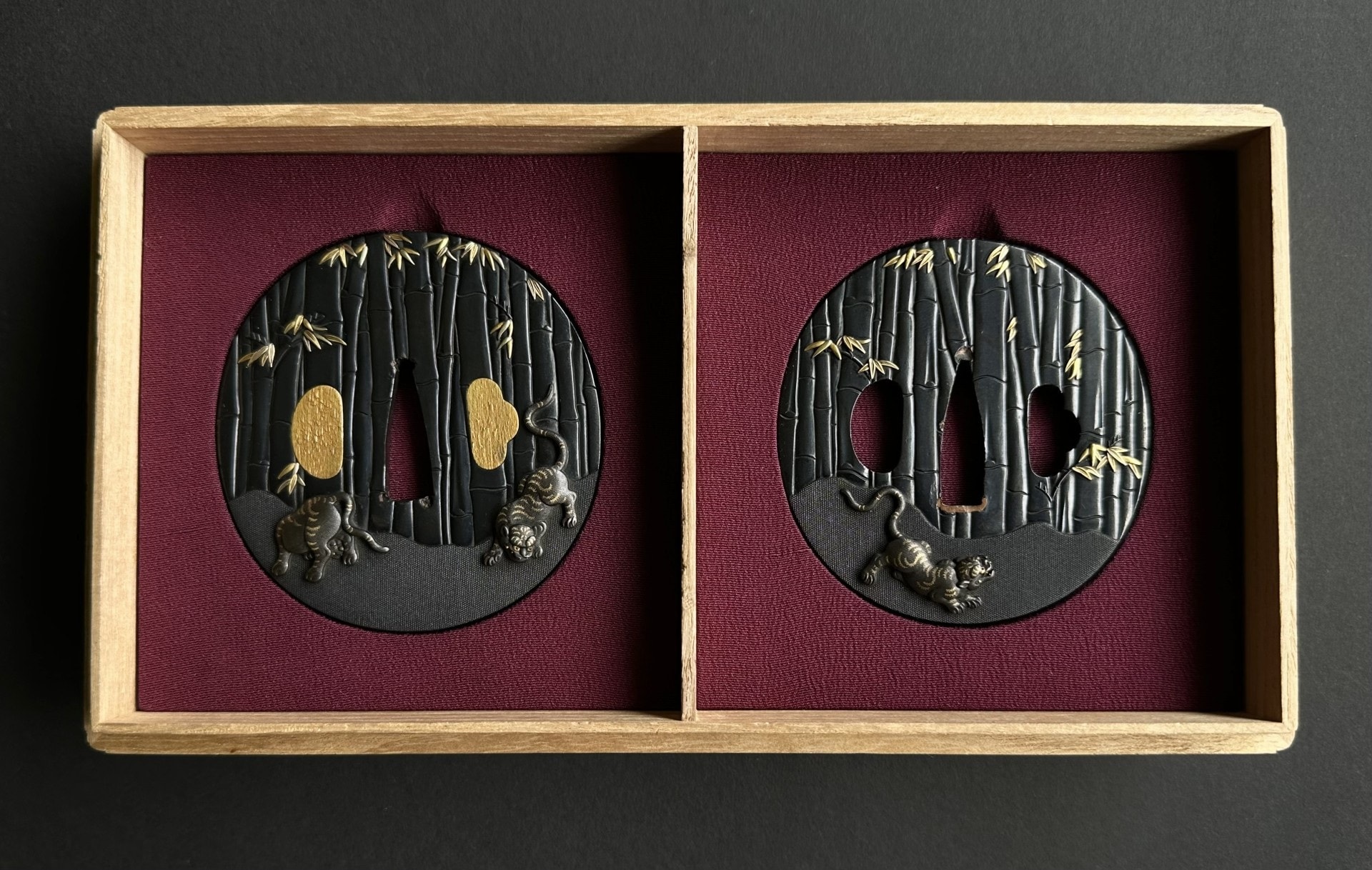
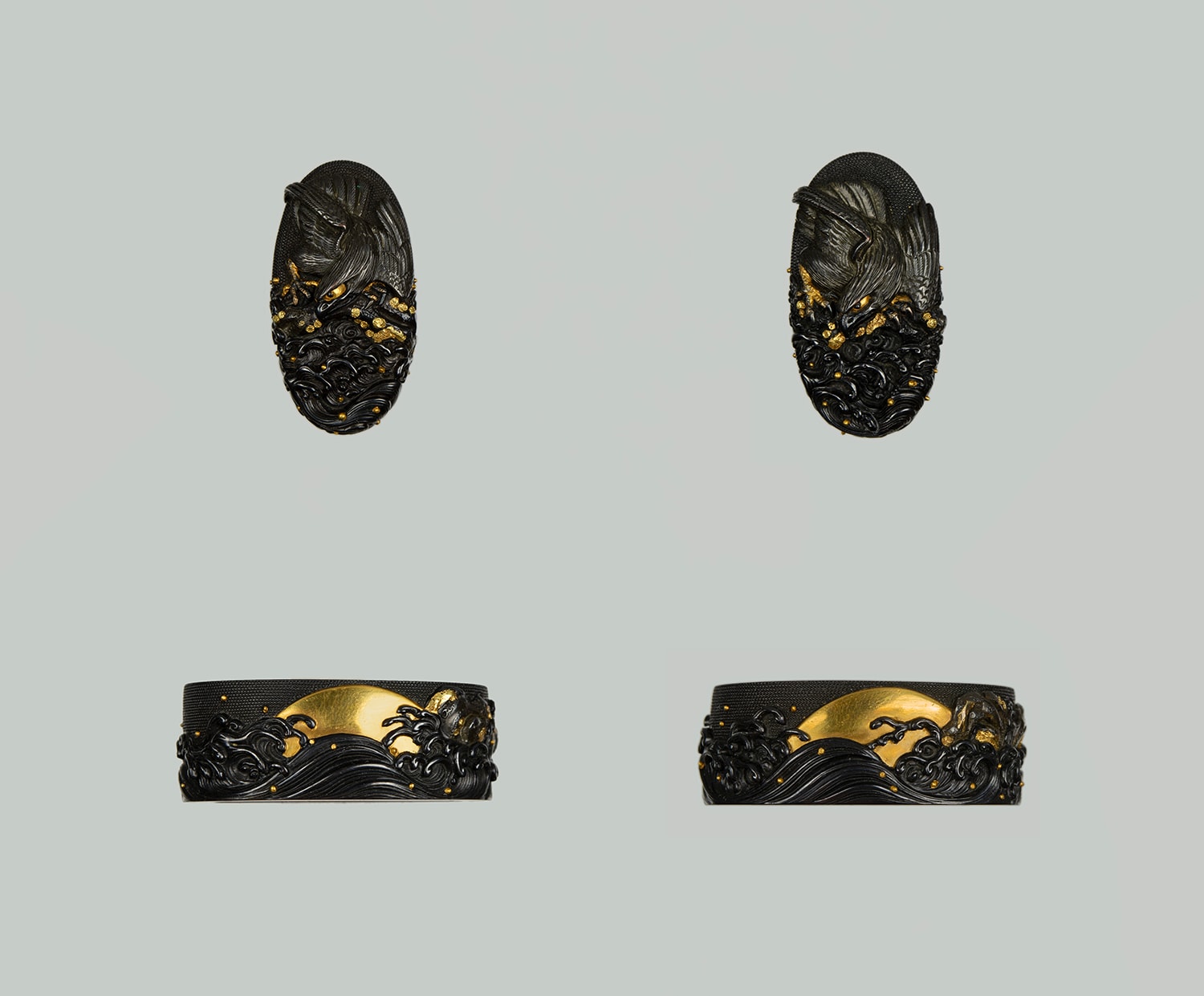
Matsushitatei Motohiro, family name Nakagami, common name Shinpei, was a highly skilled Kyoto metalworker of the Otsuki lineage active in the late period. He first studied under Otsuki Mitsuyoshi before becoming a pupil of Mitsuoki, training that placed him squarely within the mainline transmission of this distinguished school. His house name was Harimaya, and it is recorded that in his later years he took tonsure and adopted the name Motohiro. He signed as "Matsushitatei Motohiro" with , frequently arranging the signature across two lines. A dated inscription on one records that in Bunka 3 (1806) he was fifty-three years of age, placing his birth around 1753 and situating his mature career in the Kansei through Bunka eras.
Motohiro characteristically worked on polished grounds () and , employing (high-relief carving) enriched with (polychrome metal inlay) in gold, silver, , and as his favored mode of expression. His subjects encompass ambitious narrative programs --- the Fifty-three Stations of the Tokaido distributed across fully unified suites of fittings ( ), and the Six Poetic Immortals rendered with minute attention to expression and costume --- as well as naturalistic agricultural landscapes executed in a sketch-from-life manner. He studied the Goto tradition yet tempered it with what the describes as "the gentle, commoner-oriented warmth that the Otsuki school excelled in, expressed with elegance."
Among Kyoto metalworkers of his generation, Motohiro is distinguished from contemporaries such as Hosono Sozaemon Masamori, who favored - and , and Yamazaki Ichiga, whose appeal lay in a more pronounced Goto-flavored manner. Motohiro's particular strength resided in fusing Goto discipline with the accessible, refined sensibility native to the Otsuki school. His works are praised for careful handling of the chisels, fine-grained coloration, and an engaging charm; his large-scale coordinated productions, in which every major fitting bears a signature, are recognized as possessing high documentary value and few parallels among works of their kind.