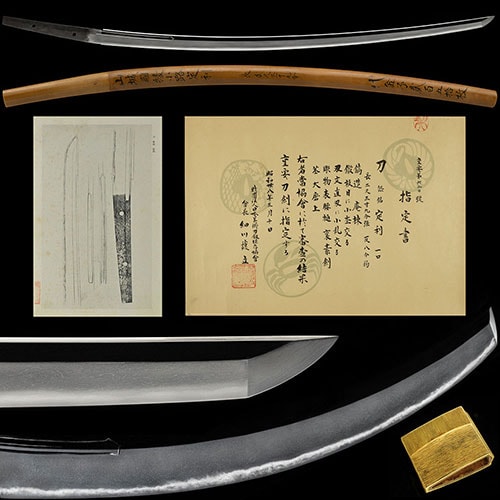
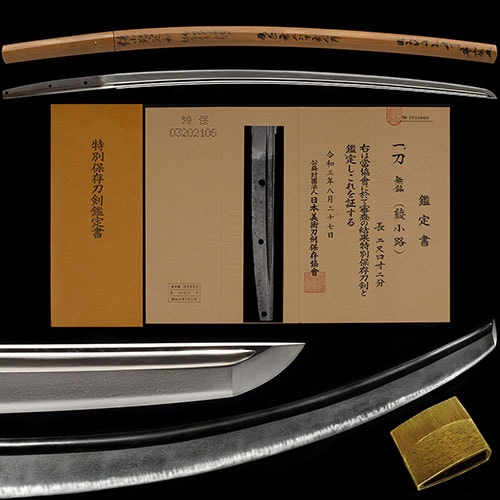
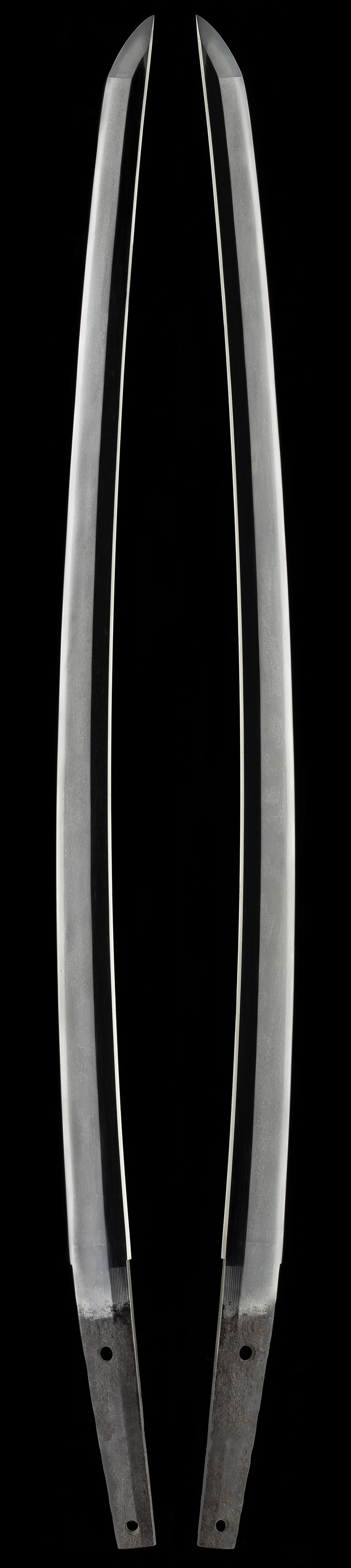
Ayanokoji Sadayoshi is recorded in the sword registers as the son of Ayanokoji Sadatoshi, a smith of the Kyoto Ayanokoji district whose working period is conventionally placed around the Koan era (1278-1288). The Ayanokoji smiths, including Sadatoshi and Sadayoshi, resided in a quarter near Kuniyuki, and one tradition relates that Sadatoshi and Kuniyuki even produced substitute works for one another. However, the styles observed in extant works by both Sadatoshi and Sadayoshi carry an archaic flavor suggesting a continuation of the working range of the older Kyo-mono and Gojo groups, indicating that these smiths should be appraised as earlier than the conventional chronology. Extant signed works by Sadayoshi are exceedingly rare, and both his workmanship and the manner of his signature closely resemble Sadatoshi's — in particular, the character "" is cut large while the following character "" is comparatively smaller, an arrangement characteristic of this school.
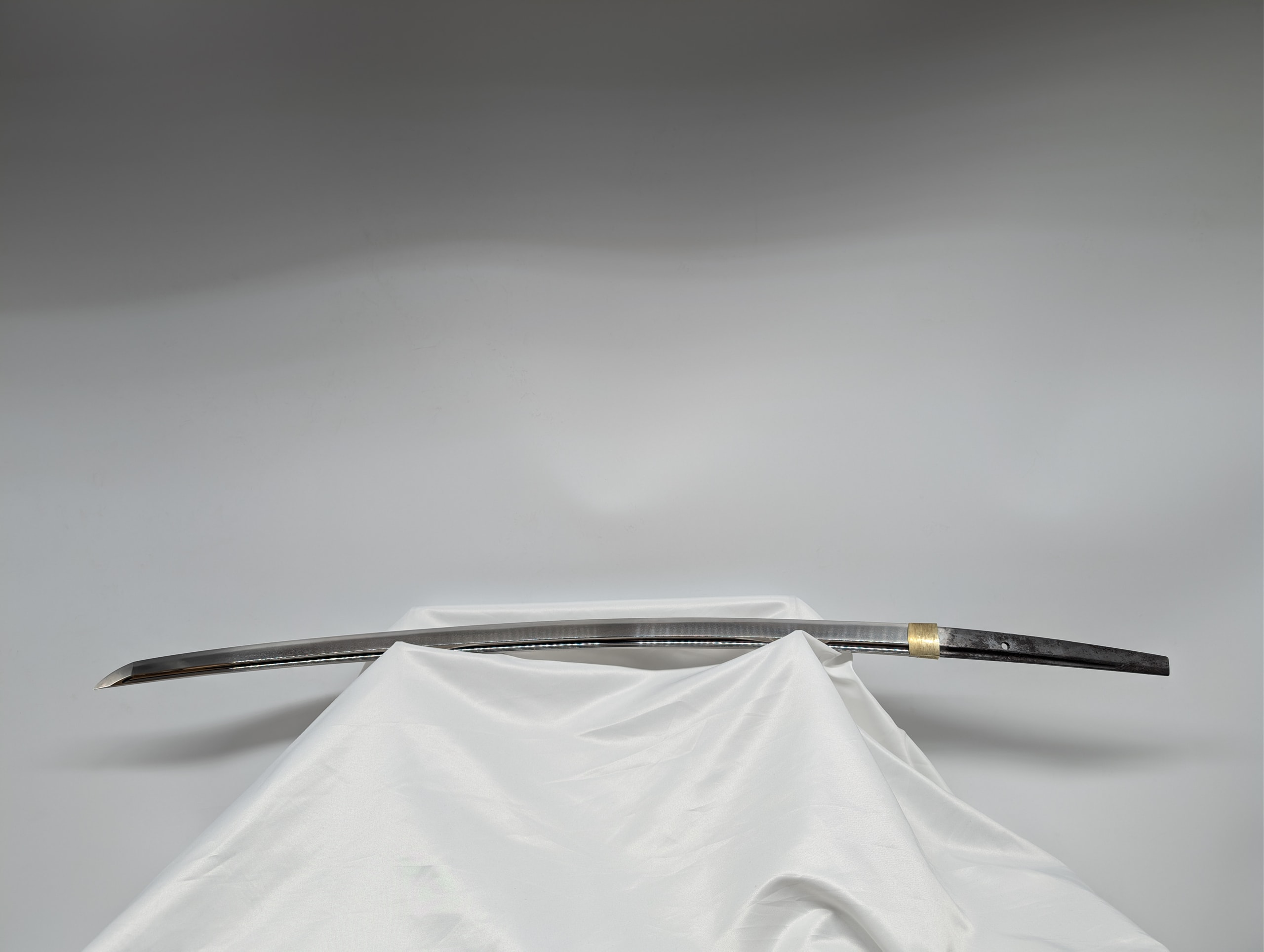
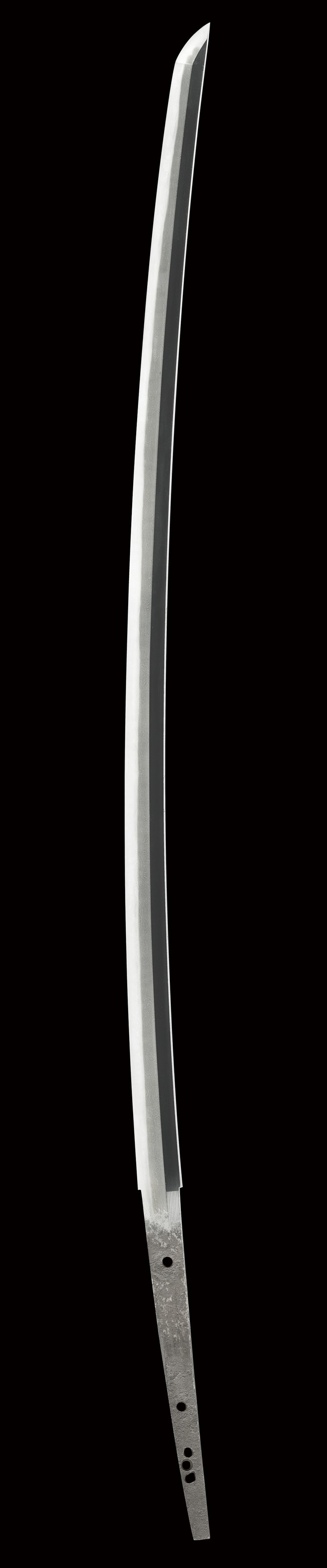
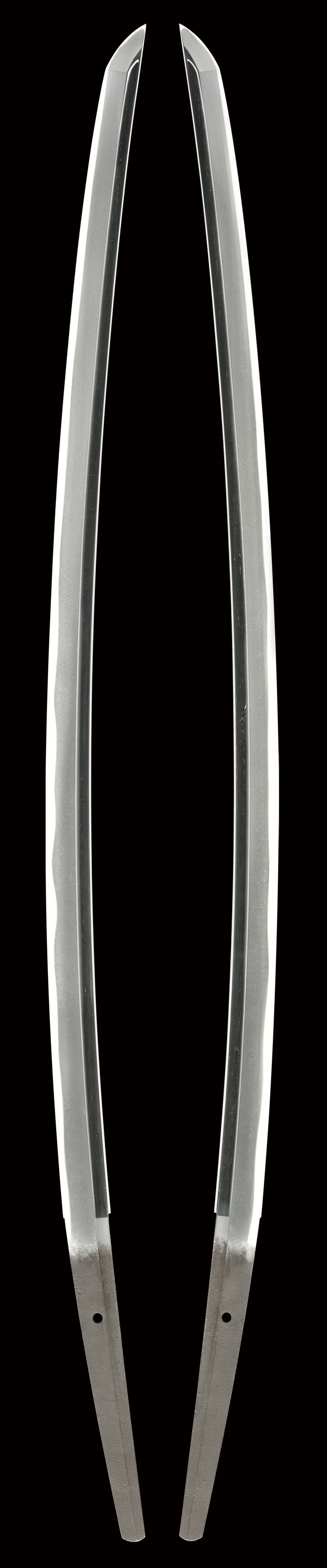
The hallmarks of Sadayoshi's work lie in the forging and temper. The presents a tightly forged , at times with a flowing tendency, bearing thickly adhering fine and delicate , which together impart a dense, slightly tenacious texture conveying an impression of softness. A distinctive stands out in the ground. The , based on a wide , is well mixed with , , , and angular elements; , Kyo-style , and enter in abundance. Most characteristic is the appearance of , uchi-noke, and small intermittently along the crests of the temper, creating an effect reminiscent of a double temper — the -like scenery that the identifies as a defining trait of the Ayanokoji group. The tends toward an quality, a softened, slightly blurred character regarded as intrinsic to this school.
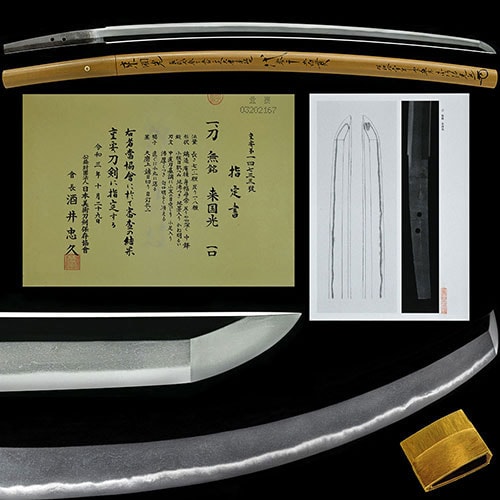
The consistently describes Sadayoshi's works as possessing nuanced changes along the that convey an antique tone, with the internal activities of the temper and its boundary overflowing with variations and offering many points of appreciation. In both and , his blades clearly manifest the characteristic features of the Ayanokoji group while demonstrating a deeply flavorsome quality. The signed preserved in the Imperial Household collection — with its showing amid fine and — confirms the range of his artistry and stands as an invaluable reference for this exceedingly rare smith. Sadayoshi's position within the Ayanokoji lineage, inheriting and faithfully transmitting the archaic Kyo-mono aesthetic, secures his place as a smith of considerable scholarly importance.