NihontoWatch MonNihontoWatch
MarketEncyclopediaKantei
NihontoWatch MonNihontoWatch
Market
Encyclopedia
Kantei
Overview·Historical importance·Designations·Provenance·Lineage·School
OverviewHistorical importanceDesignationsProvenanceLineageSchool
  1. Schools
  2. Hosho
  3. Sadamitsu

Hosho Sadamitsu

貞光

Jūyō
Vol. 53, No. 33 · Katana

Hosho Sadamitsu

貞光

3 ranked works

Notable smith
ProvinceYamatoEraShohei (1346–1370)PeriodNanbokuchōSchoolHoshoTraditionYamato-denGeneration1stTeacherSadayoshiFujishiroJo-jo sakuToko Taikan650(top 18%)TypeSwordsmithCodeSAD507
3Jūyō Tōken

Overview

Sadamitsu of the Hosho school was a smith of Yamato Province based in Takaichi District, transmitted as a son of Hosho Sadayoshi. He is traditionally regarded as having been active around the Bunna era (1352-1356) of the period, though reference works such as the Kokon Meizukushi Taizen and Kosei vary in identifying his parentage -- some naming Sadayoshi, others Sadakiyo. A smith of the name is also recorded around the Eiwa era. Like all Hosho smiths, Sadamitsu shares the character "" as the common tsuji element in his name, alongside such able contemporaries as Sadamune, Sadayoshi, Sadakiyo, and Sadaoki.

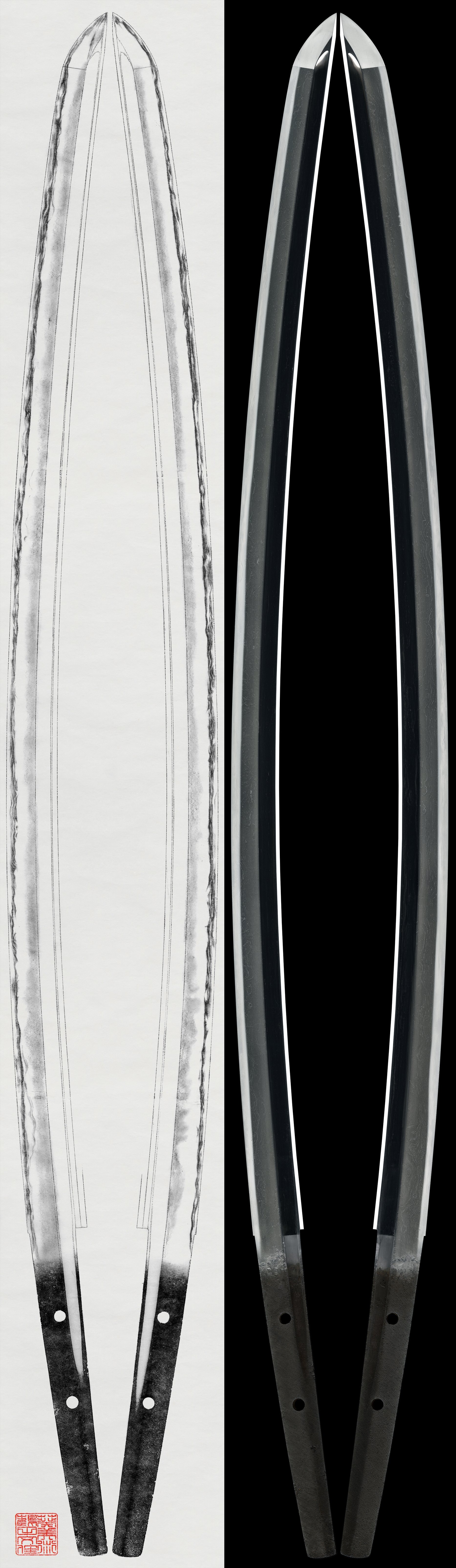
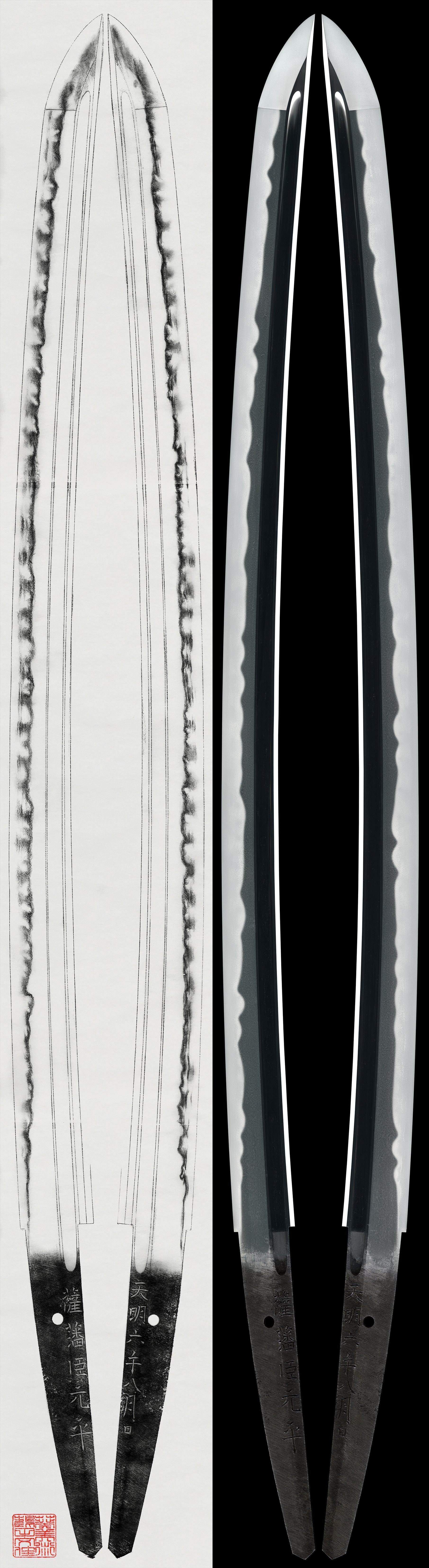
The Hosho school is recognized as displaying the most conspicuous stylistic identity among the five Yamato traditions. Sadamitsu's workmanship faithfully embodies this character: the reveals an overall with a -tendency, with fine thickly adhering and entering frequently. Along the grain appear long stretches of . The is -based, sometimes with an extremely shallow flavor, mixed with and ; along the appear , , and , while adheres and fine and are seen. The characteristically shows with vigorous . The is finished with the hallmark file marks of the Hosho group, and signatures frequently record the place of residence as "Yamato Province."

Signed works by Sadamitsu are rare and therefore precious. The consistently observes that both and in his pieces "inherit and clearly display the distinctive tradition of the Hosho group," while also recognizing his individual technical skill as readily appreciable from the quality of his workmanship. One in with construction, bearing of hata-, , and , is singled out as extremely valuable reference material. His work is further distinguished by the exceptional preservation that certain pieces retain, with both and described as being in especially good condition.


Historical importance

Where Sadamitsu stands among comparable artisans: across all of nihontō, and within tradition, era, and period. The tiers (Foremost · Leading · Major · Notable) weigh official designations from the NBTHK and Japan's Agency for Cultural Affairs, together with historical honors of lasting repute such as the Sansaku and Meibutsu-chō.

随一
Foremost
屈指
Leading
有数
Major
著名
Notable

Select a lens to see how it's measured.

Designations

Kokuhō—
Jūyō Bunkazai—
Jūyō Bijutsuhin—
Gyobutsu—
Tokubetsu Jūyō—
Jūyō Tōken3

Elite Standing

Provenance

Currently Available

Lineage

TeacherSadayoshi
Sadamitsu
Student
  1. 1.Sadamitsu貞光

Hosho School

Other artisans of the Hosho school

  1. 1.Sadayoshi貞吉10designated
  2. 2.Sadakiyo貞清9designated
  3. 3.Sadaoki貞興7designated
  4. 4.Sadamune貞宗1designated
  5. 5.Sadatsugu貞繼2designated

More from the Hosho school

View all →
Eirakudo
Tokuho
Katana - Tokuho - by Hosho School - Hosho - Tokubetsu Hozon TokenKatana - Tokuho - by Hosho School - Hosho - Tokubetsu Hozon Token

Katana

ByHosho School
¥4,200,000
Nihonto Australia
Tanto - by Hosho School - Hosho Sadamitsu Tanto with NTHK CertificateTanto - by Hosho School - Hosho Sadamitsu Tanto with NTHK Certificate

Tantō

ByHosho School
¥7,500
Seikeido
Tokuho
Tachi - Tokuho - by Hosho School - Mumei HoshoTachi - Tokuho - by Hosho School - Mumei Hosho

Tachi

ByHosho School
Ask
Aoi Art
Tokuho
Katana - Tokuho - by Hosho School - Mumei (attributed to Den Hosho).Katana - Tokuho - by Hosho School - Mumei (attributed to Den Hosho).

Katana

ByHosho School
Starting Bid¥3,500,000
Nipponto
Tokubetsu Kichō
Tanto - Tokubetsu Kichō - by Hosho School - Tanto by Sadasue of Yamato Hosho School with Tokubetsu Kicho CertificateTanto - Tokubetsu Kichō - by Hosho School - Tanto by Sadasue of Yamato Hosho School with Tokubetsu Kicho Certificate

Tantō

ByHosho School
¥1,050,000

More from the Yamato tradition

View all →
Aoi Art
Jūyō
Katana - Jūyō - by Taima School - Mumei (Taima)Katana - Jūyō - by Taima School - Mumei (Taima)

Katana

ByTaima School
¥4,500,000
Goushuya
Tokujū
Katana - Tokuju - by Satsuma Yasuyo - Tokubetsu Juyo Token (One-Leaf Aoi Mon) Shume no Kami Ichihei Fujiwara Ason Yasuyo, Made in Satsushu Kirei-gun on an Auspicious Day in March, Kyoho 12Katana - Tokuju - by Satsuma Yasuyo - Tokubetsu Juyo Token (One-Leaf Aoi Mon) Shume no Kami Ichihei Fujiwara Ason Yasuyo, Made in Satsushu Kirei-gun on an Auspicious Day in March, Kyoho 12

Katana

BySatsuma Yasuyo
Ask
Aoi Art
Jūyō
Katana - Jūyō - by Satsuma Motohira - Sappan Shin Motohira (1786)Katana - Jūyō - by Satsuma Motohira - Sappan Shin Motohira (1786)

Katana

BySatsuma Motohira
¥5,000,000
Sanmei
Tokuho
Tachi - Tokuho - by Senjuin School - Unsigned SenjuinTachi - Tokuho - by Senjuin School - Unsigned Senjuin

Tachi

BySenjuin School
¥1,250,000
Choshuya
Tokuho
Katana - Tokuho - by Tegai School - Unsigned (O-suriage) TegaiKatana - Tokuho - by Tegai School - Unsigned (O-suriage) Tegai

Katana

ByTegai School
¥1,250,000
Touken Komachi
Tokuho
Katana - Tokuho - by Senjuin School - Senjuin - ShirasayaKatana - Tokuho - by Senjuin School - Senjuin - Shirasaya

Katana

BySenjuin School
¥880,000
Touken Komachi
Tokuho
Katana - Tokuho - by Senjuin School - Mumei (attributed to Senju-in) with Shirasaya and KoshiraeKatana - Tokuho - by Senjuin School - Mumei (attributed to Senju-in) with Shirasaya and Koshirae

Katana

BySenjuin School
¥1,250,000
Touken Matsumoto
Hozon
Katana - Hozon - by Tegai Kanenori - Yamato Daijo Fujiwara KanenoriKatana - Hozon - by Tegai Kanenori - Yamato Daijo Fujiwara Kanenori

Katana

ByTegai Kanenori
¥400,000

Sadamitsu

Sadamitsu(貞光) was a Japanese swordsmith of the Hosho school in Yamato province, active during the Shohei (1346-1370) period.

The work follows the Yamato-den tradition.

Designated works by Sadamitsu include 3 Jūyō.