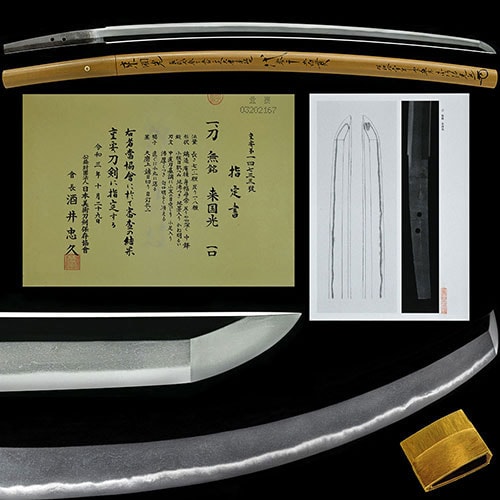
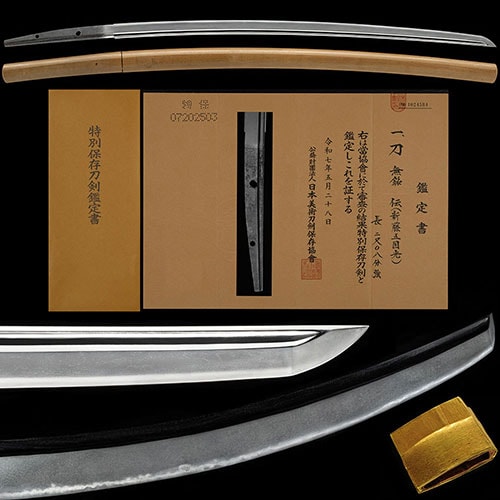
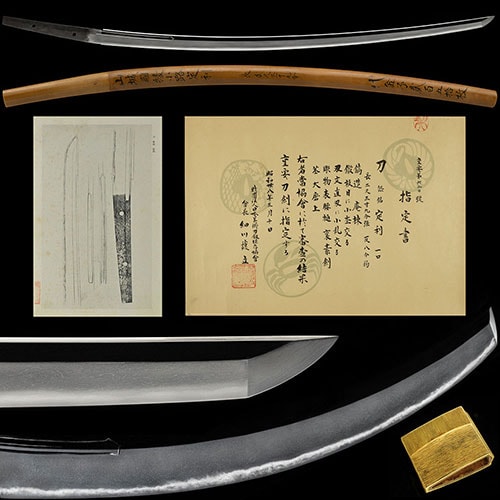
Ryokai was a smith of the lineage in Yamashiro Province whose common name (zokumyo) was Kurozaemon no Jo, as attested by a dated Kagen 3 (1305) inscribed "Yamashiro no junin Kurozaemon no Jo ... ." Tradition holds that the first-generation Ryokai studied under Kunitoshi, and one account further relates that he became Kunitoshi's adopted son. However, since dated works by Ryokai are known bearing era names spanning Shoo (1288-1293), Kagen (1303-1306), Enkyo (1308-1311), and Ocho (1311), the considers it more reasonable to regard him as a contemporary of Kunitoshi -- a swordsmith who established a different line and formed an independent lineage -- rather than necessarily Kunitoshi's direct pupil. Several generations bore the Ryokai name; in later times some are thought to have moved to Kyushu, and smiths signing "Ryokai" are found extending into the period.
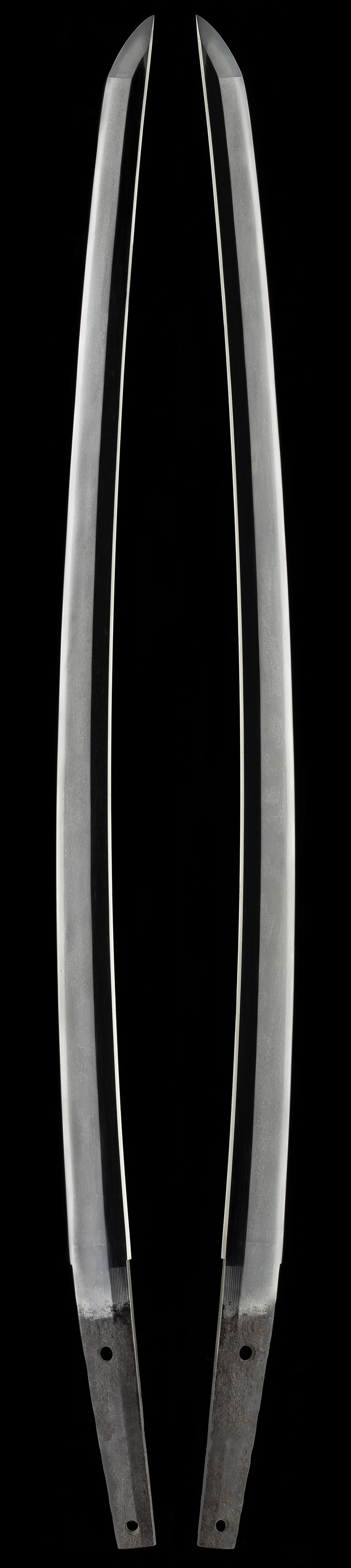
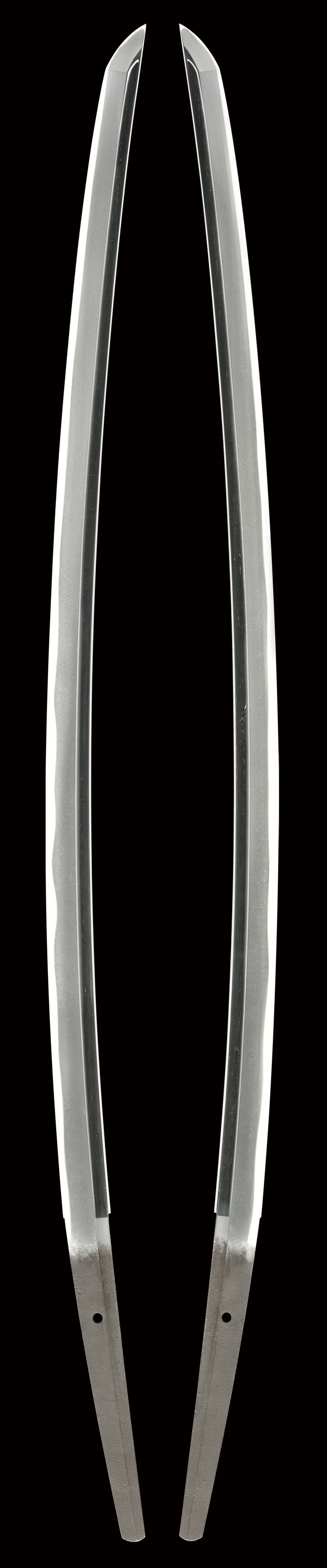
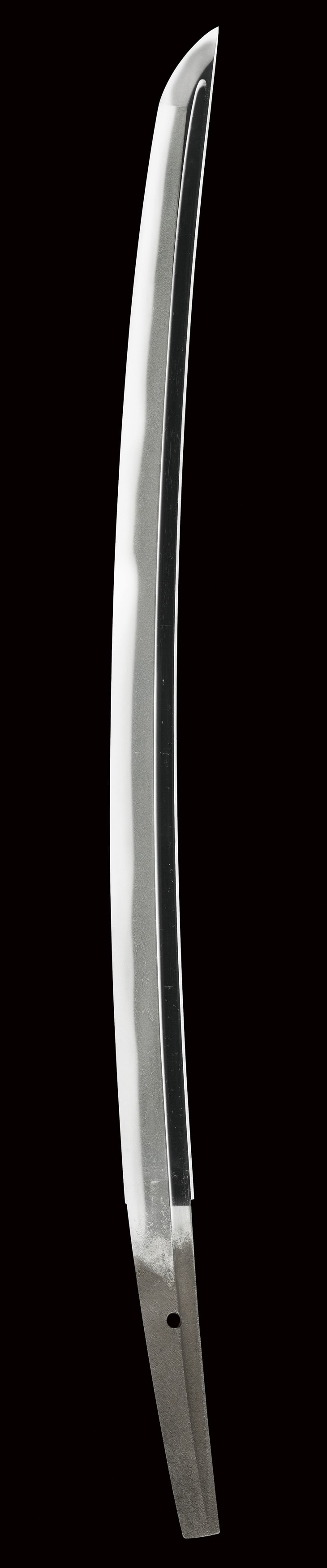
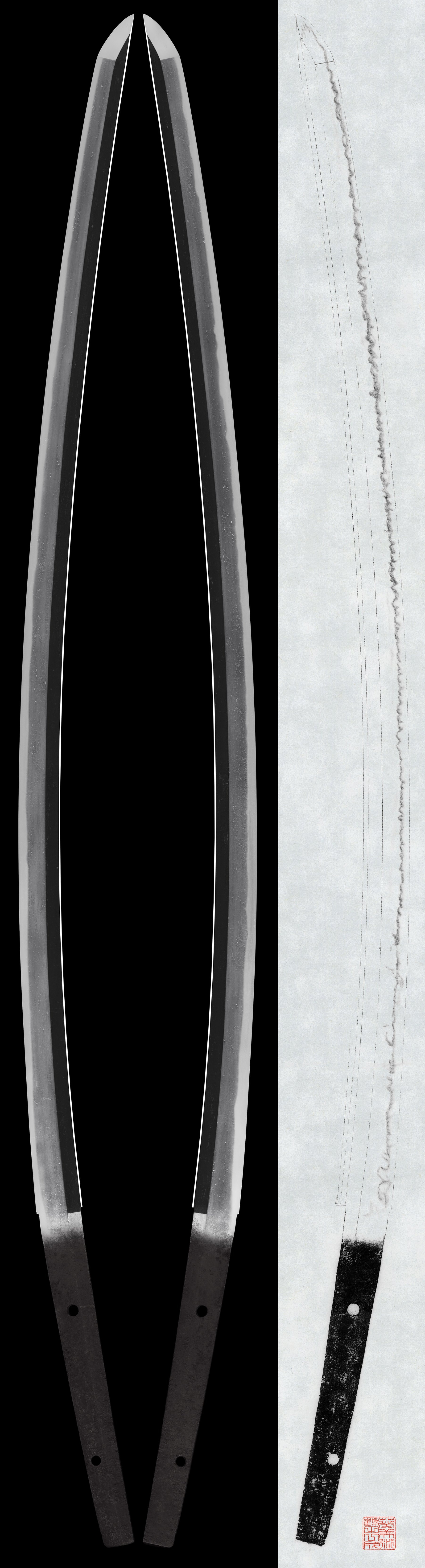
Ryokai's workmanship shares a clear line of continuity with that of Kunitoshi, yet it possesses distinguishing traits the identifies as key points of appreciation. The forging shows a -- a tendency toward straight grain -- in which a whitish cast stands out conspicuously. The temper is a rather quiet, restrained whose is tight, with adhering, and which further displays a tendency toward , a moist, soft quality that produces a particularly distinctive character. In some works is mixed into the , with fine entering continuously; in others, and impart a Yamato-like feeling. The tends to be slightly higher than in other works. Among his , which are relatively numerous, some employ construction -- a feature shared with Kunitsugi and considered one of the distinctive characteristics of the school.
The has emphasized that Ryokai's characteristic traits are "well manifested in both and " in his finest works, and that by this maker are "exceedingly precious." His blades occupy a distinctive position within the tradition: close enough to Kunitoshi's manner to affirm the lineage, yet sufficiently individual in the whitish cast of the and the tight, -tinged to constitute a recognizable personal idiom. His dated works, spanning more than two decades of the late period, furnish indispensable reference material for the chronology of the school, while the tradition attributing him to Kunitoshi's circle is consistently affirmed through the style of both and as well as the calligraphic form of his inscriptions.