Munenori is recorded as a maker working within the broader Myochin tradition of metalwork, though the surviving designated pieces under this attribution reveal a complex intersection of lineages. The Kishō identifies one Munenori as originally of Kyoto, who later settled in Hikone in Ōmi Province and entered the service of the Kawakita family, retainers of the Hikone domain. He is credited as the founder of the Hikone-bori carving tradition. Historical sources suggest that two generations may have borne the name, with the first generation's activity spanning from the early into the mid- period. Certain works also bear collaborative attributions alongside Gotō school masters, attested by period documentation.
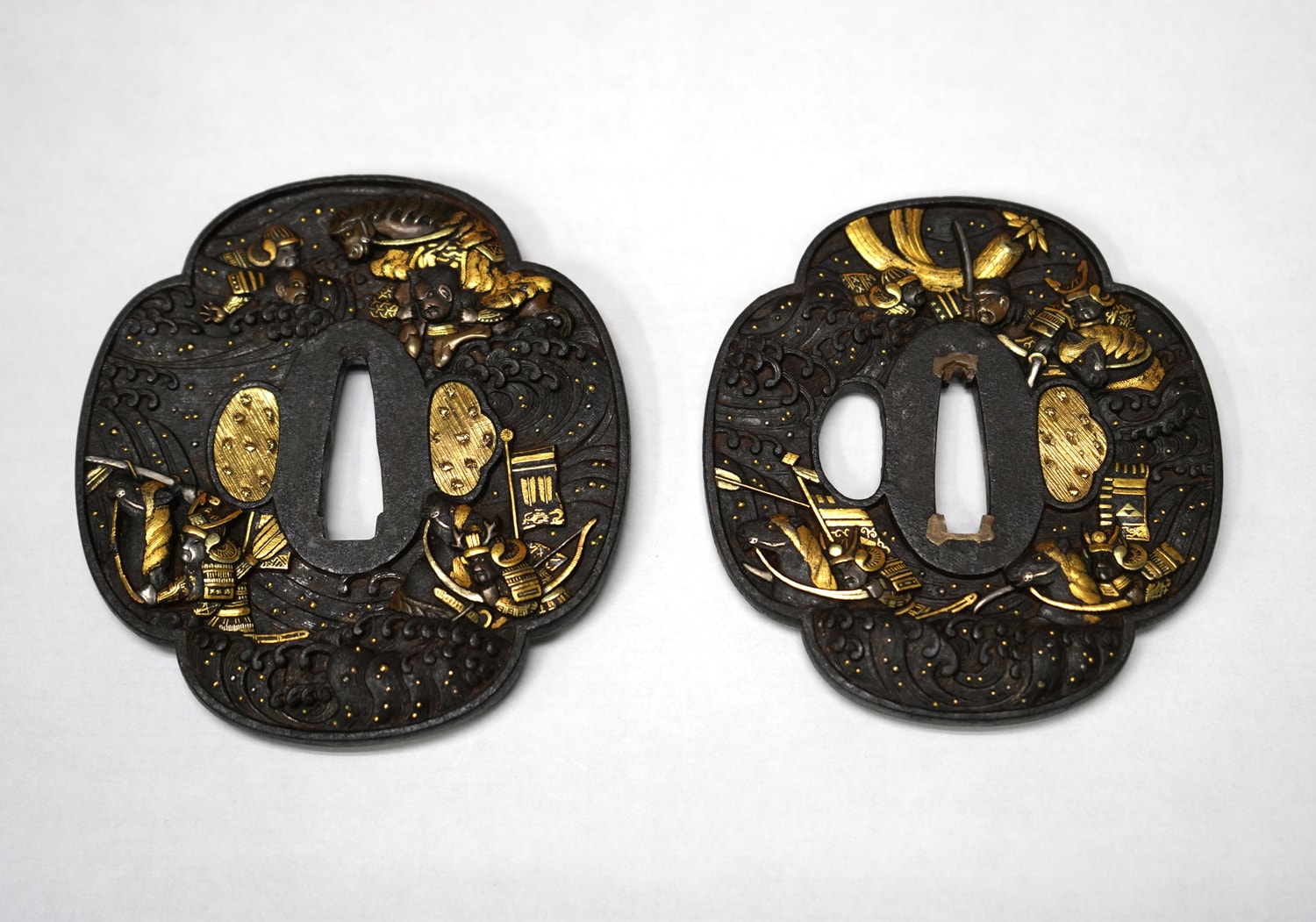
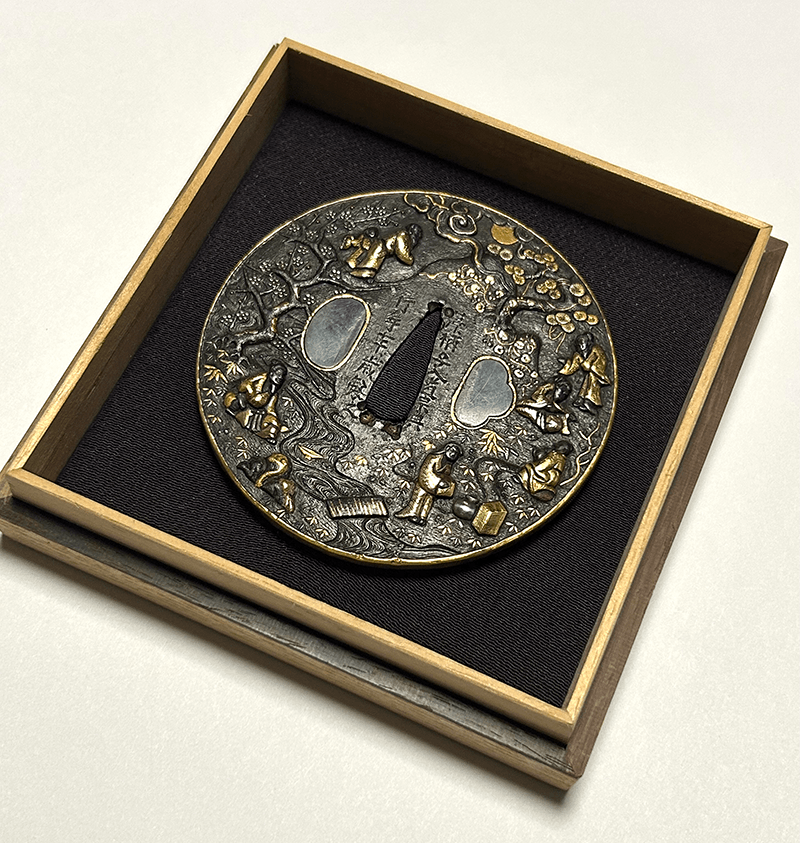
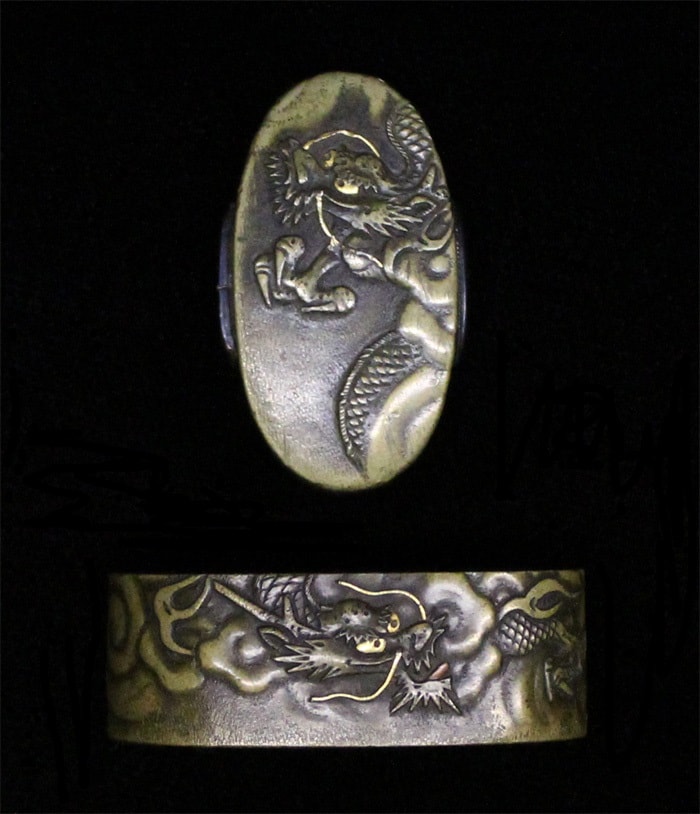
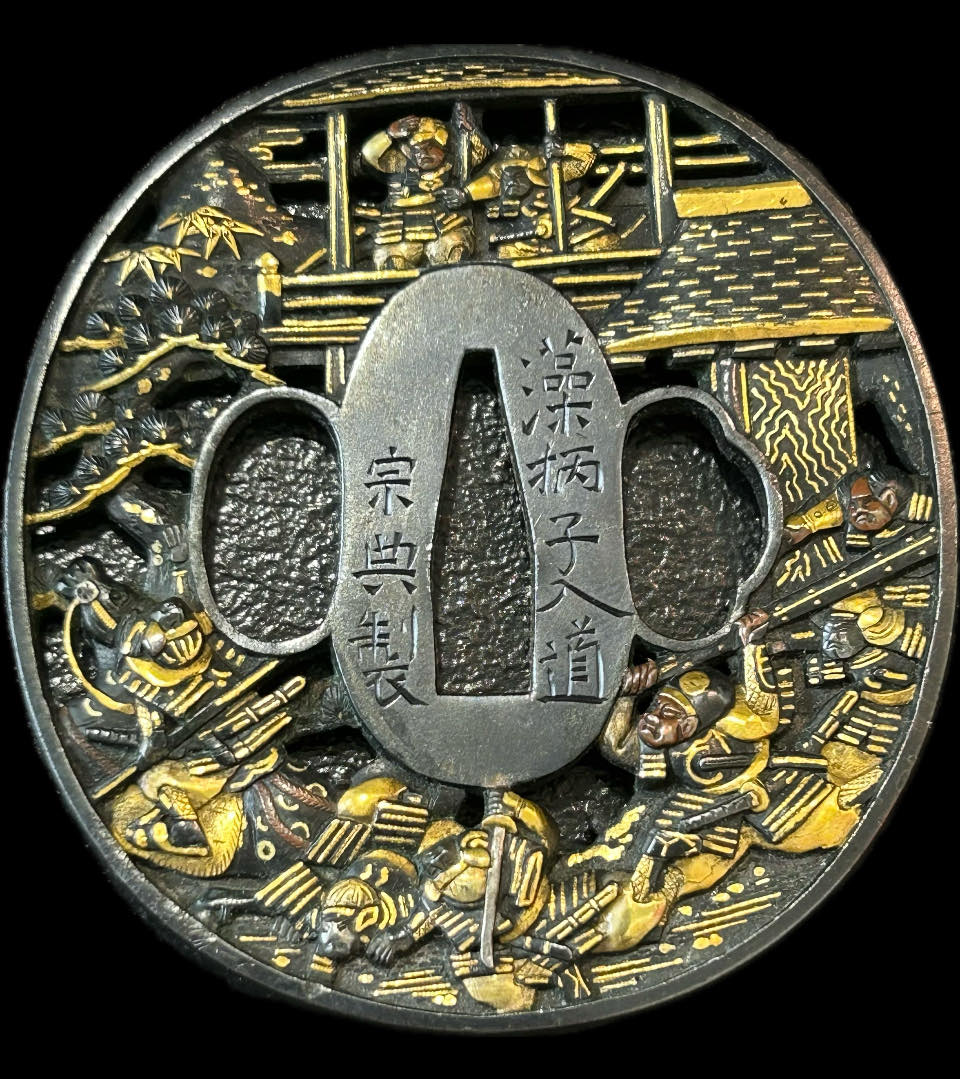
The designated works display an assured command of ground preparation and boldly modeled relief carving, enriched with polychrome metalwork employing gold, silver, , and refined copper (). A representative renders the twelve zodiac animals across both faces in high relief with multiple varieties of gold, producing a sumptuous, animated effect characteristic of Munenori's mature style. Fittings attributed to this lineage also include sets and mountings unified by heraldic crest motifs, demonstrating facility across the full range of sword-furniture forms — , , , and . The use of gilt reverse surfaces ( fukkin) and gold rim wraps further attests to the high-status patronage these works commanded.
Munenori's significance rests on the synthesis of vigorous pictorial composition with refined polychrome technique, producing fittings of considerable decorative ambition. The surviving — including one dated 5 (1665) from Gotō Mitsutomo — provide valuable documentary evidence for workshop practices and collaborative production in the early to mid- period. The quality of preservation across the designated works, together with the richness of their metalwork vocabulary, confirms Munenori as an artist of the first rank within the Hikone-bori and broader -period fitting-making traditions.