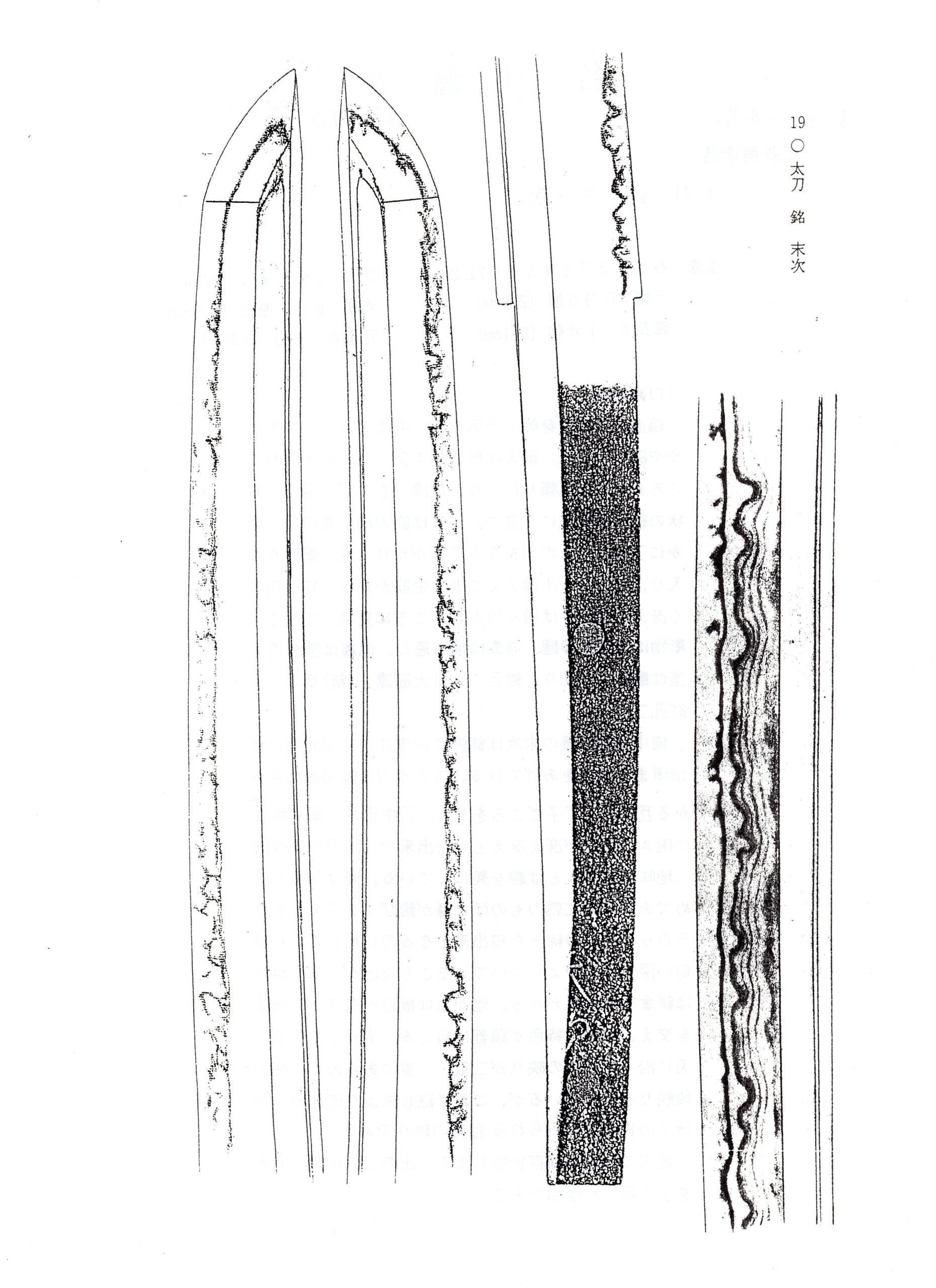
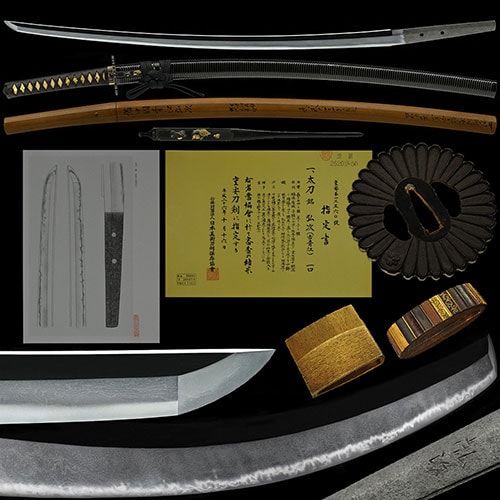
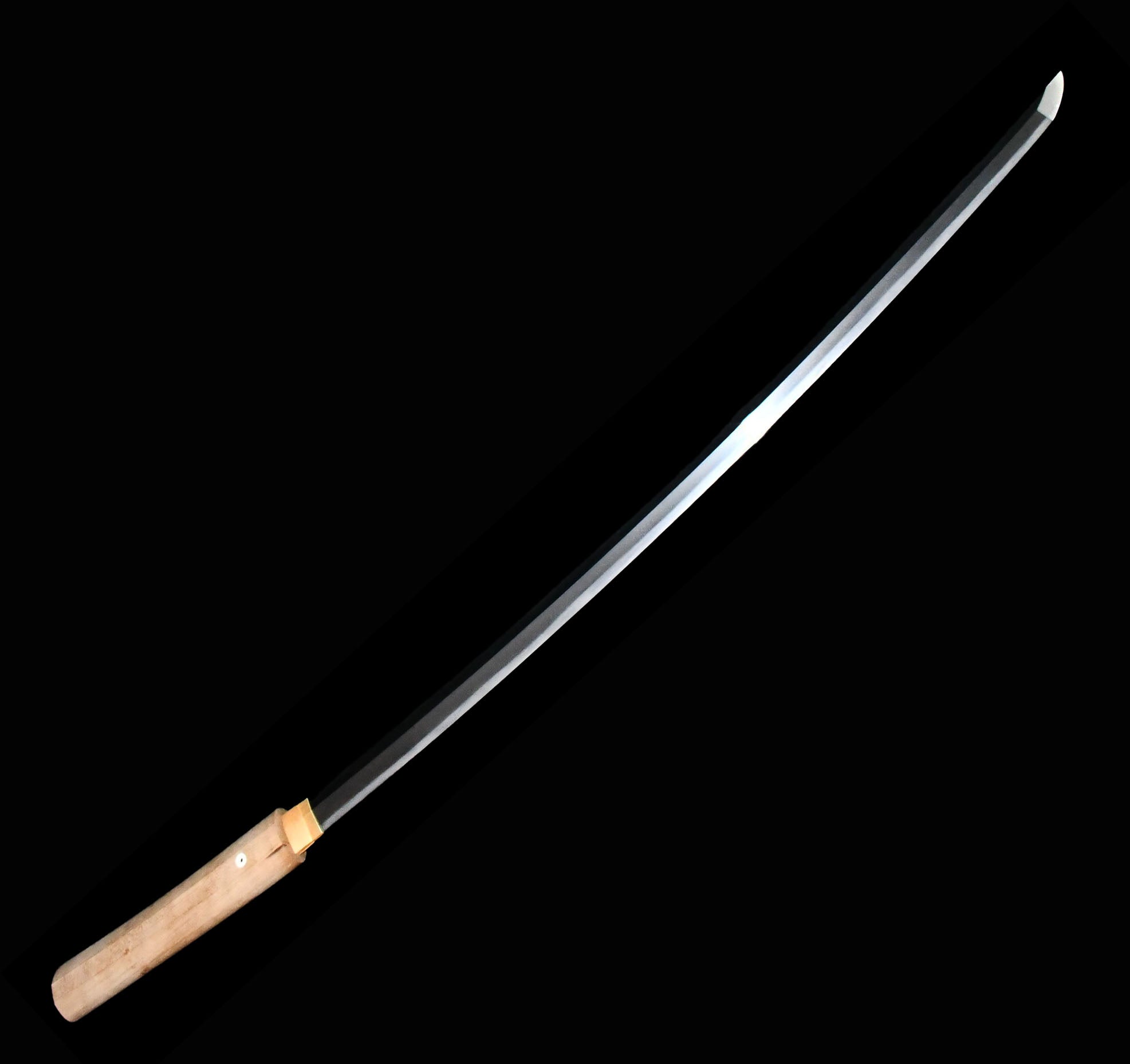
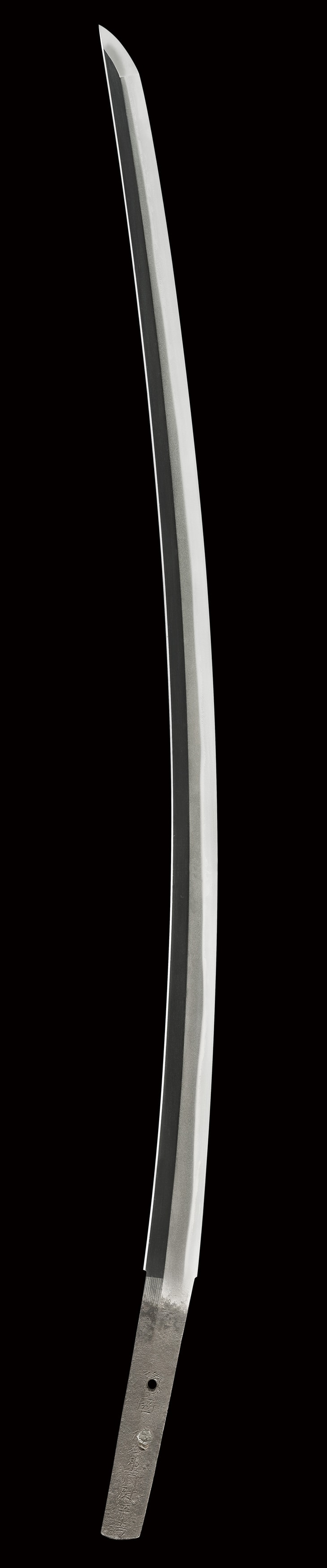
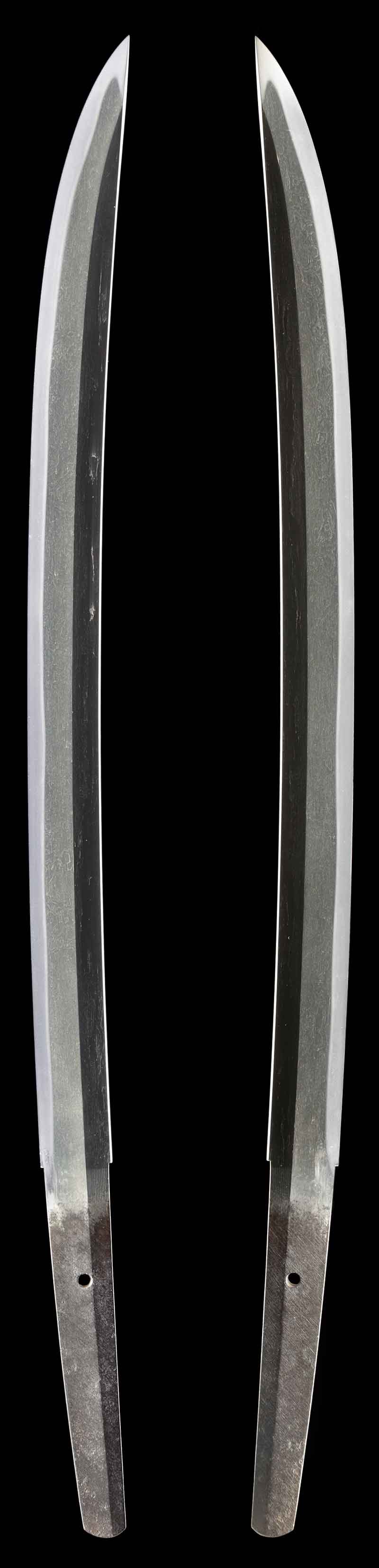
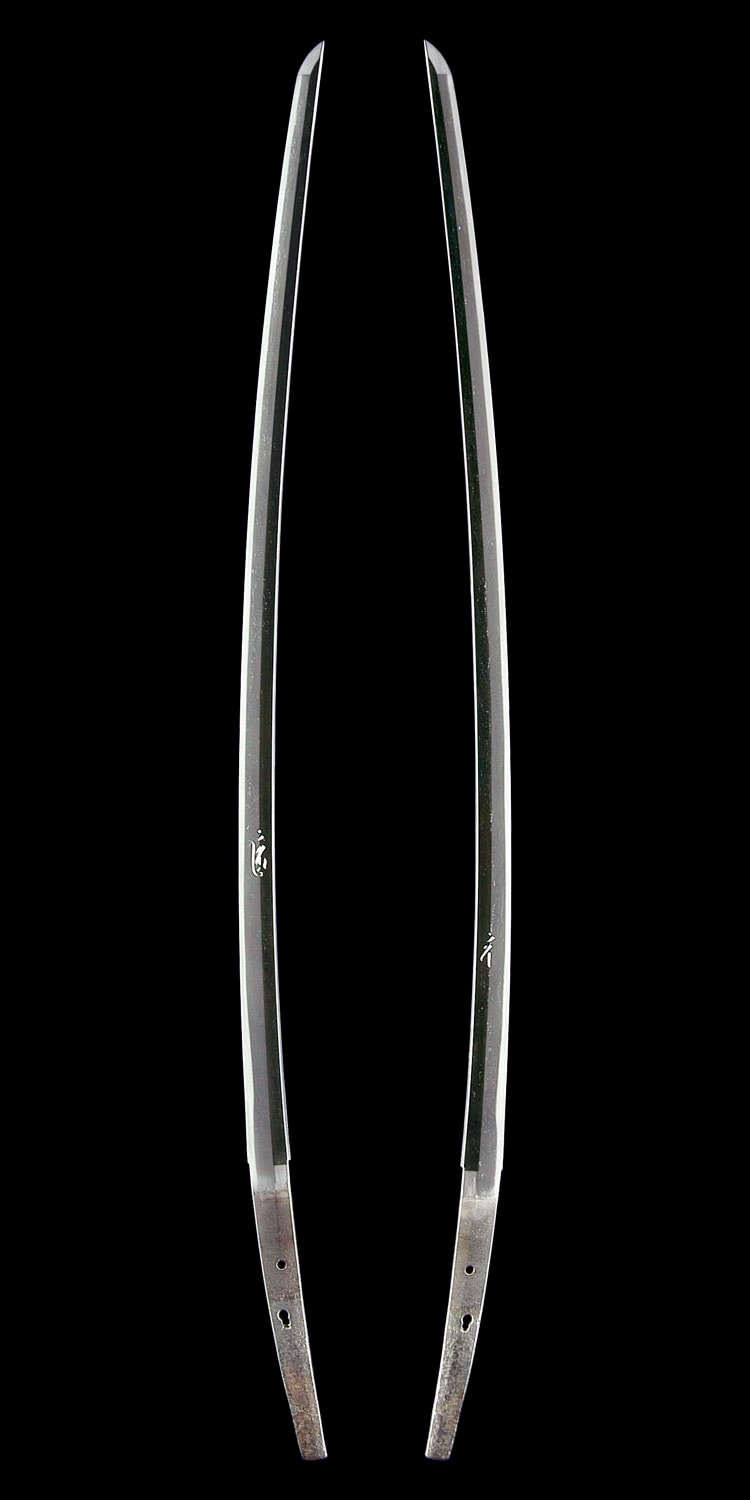
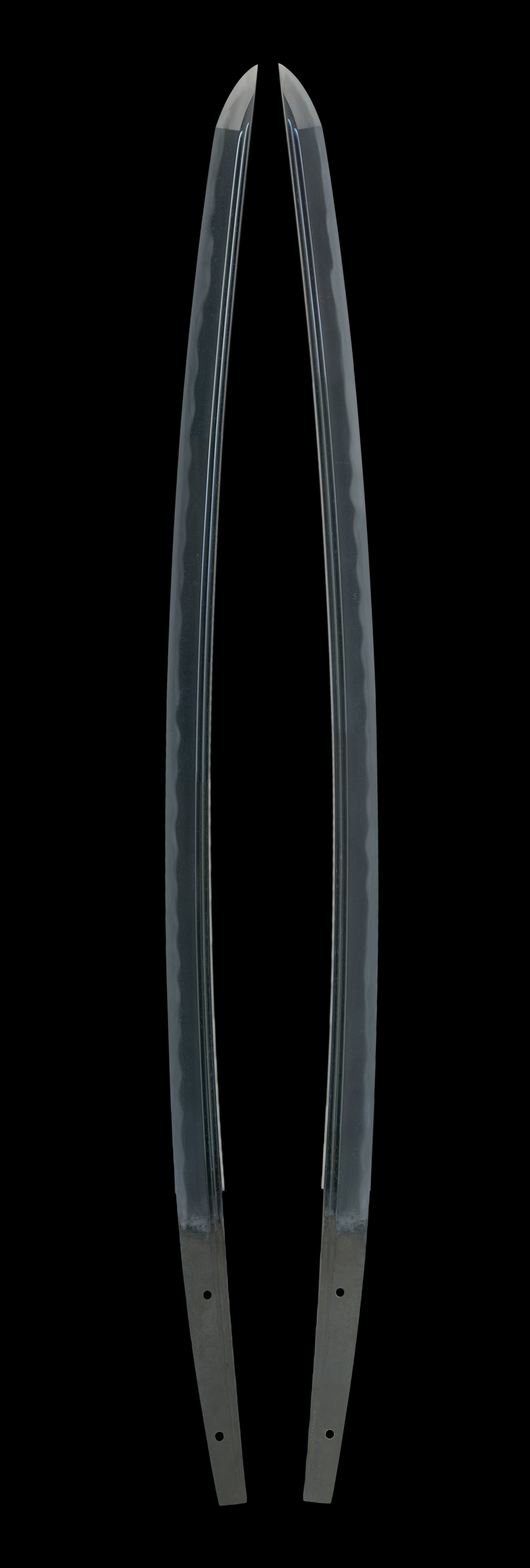
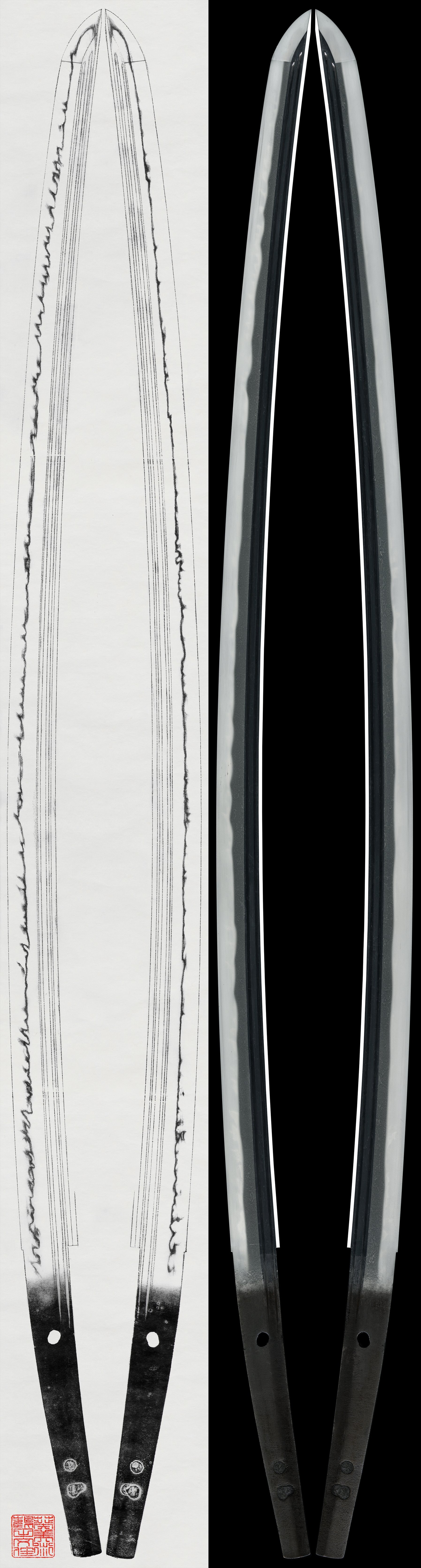
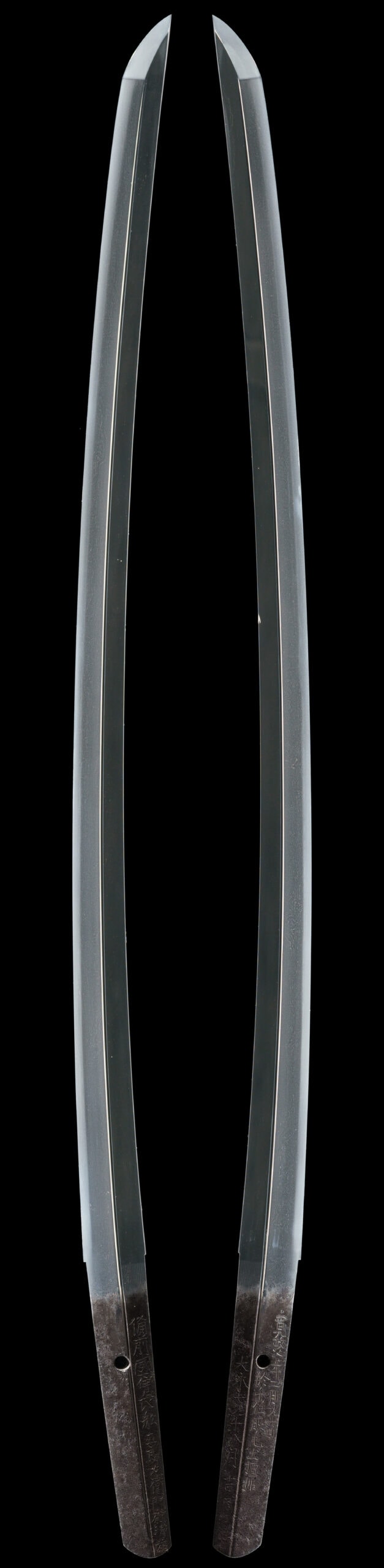
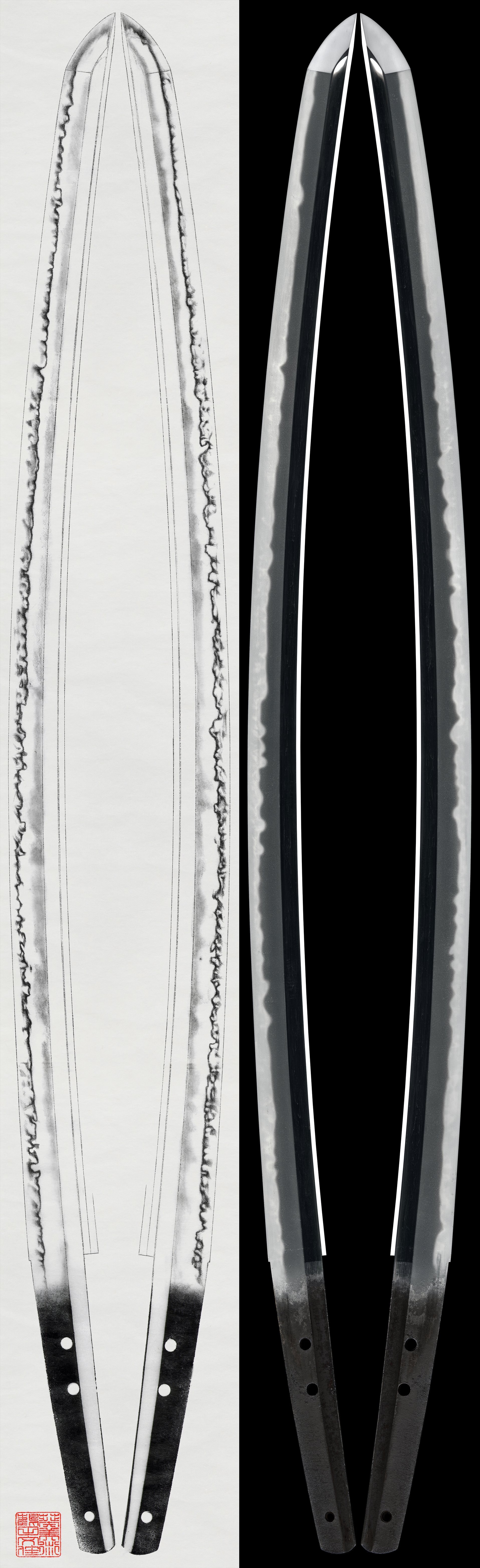
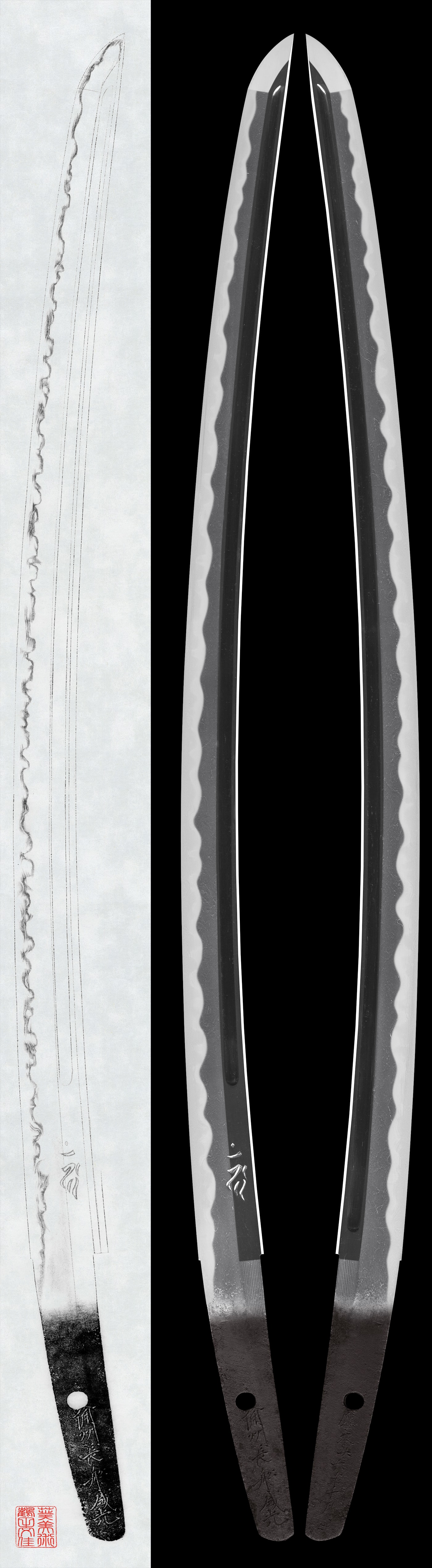
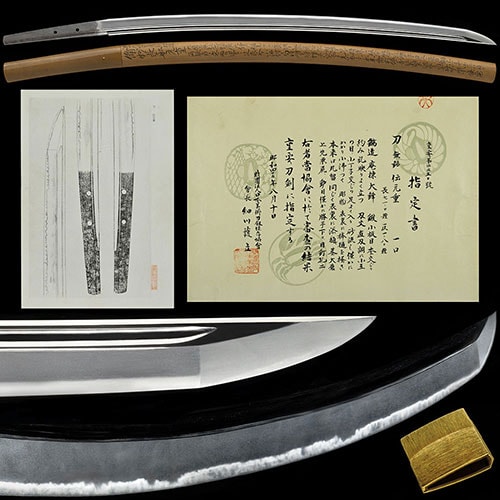
Takatsuna is a smith of the Ko-Aoe school in Bitchu Province, active from the late Heian period into the early Kamakura period. Although swordsmith reference works (meikan) list three smiths of Ko-Bizen named Takatsuna -- assigned respectively to around the Genkyū, Kangen, and Kōchō eras -- and further indicate the existence of several additional makers of the same name, the NBTHK has distinguished this Takatsuna as a separate figure within the Ko-Aoe lineage on the basis of forging characteristics, file marks, and the archaic character of the signature. Works attributed to him also appear in the Imperial Collection under the broader Yamashiro tradition, reflecting the overlapping classificatory frameworks applied to smiths of this early period.
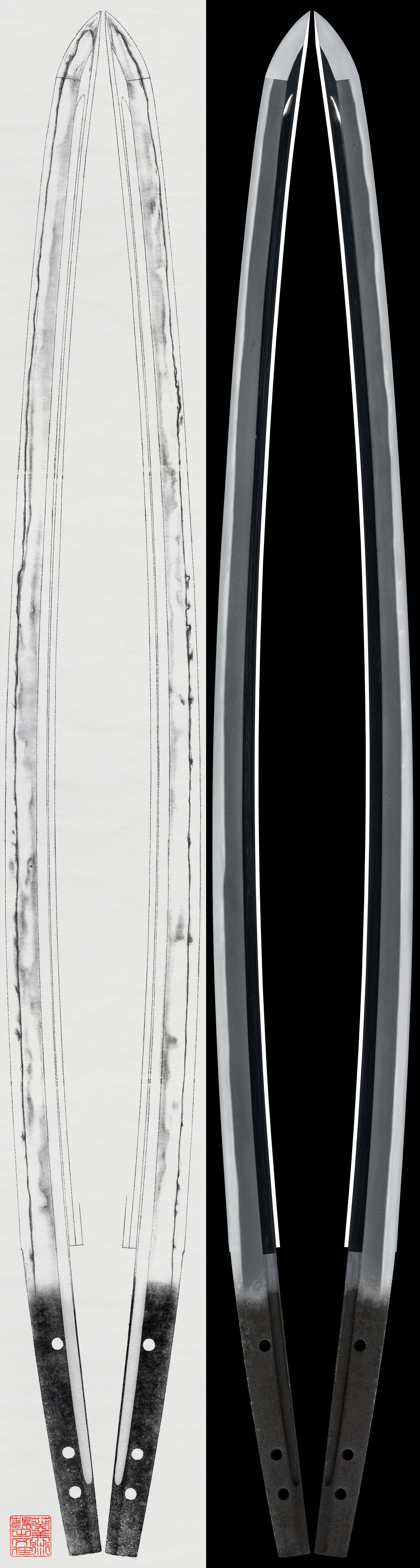
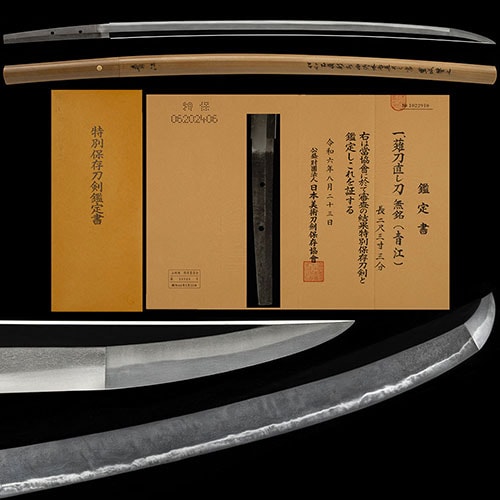
Takatsuna's work is defined by an itame-hada forging mixed with ko-mokume that shows "a tendency toward hada-dachi" (standing grain), accompanied by thick ji-nie, fine chikei, and a prominent mottled jifu-utsuri. His hamon is fundamentally suguha-based, mixed with ko-midare, ko-chōji, and ko-gunome; ashi and yō enter frequently, with thick nie that in places becomes especially strong, producing hotsure, yubashiri, and a nijūba-like appearance. Kinsuji and sunagashi are described as "applied vigorously." In both ji and ha, "the characteristic features of Ko-Aoe are strongly expressed." The presence of old ō-sujikai file marks and the archaic manner of the signature characters further support the attribution.
The NBTHK describes Takatsuna's surviving work as revealing "the high technical level" and "high technical ability" of the smith, presenting "an excellent workmanship" and "an excellent dekiba." His blades are praised for their kenzen (sound and well-preserved) construction and for a "refined, well-worked forging with finely interwoven chikei." Beyond their artistic merit, they are regarded as "extremely valuable as documentary material" -- pieces that "help compensate for gaps in the meikan record," filling lacunae in the historical understanding of the Ko-Aoe school.