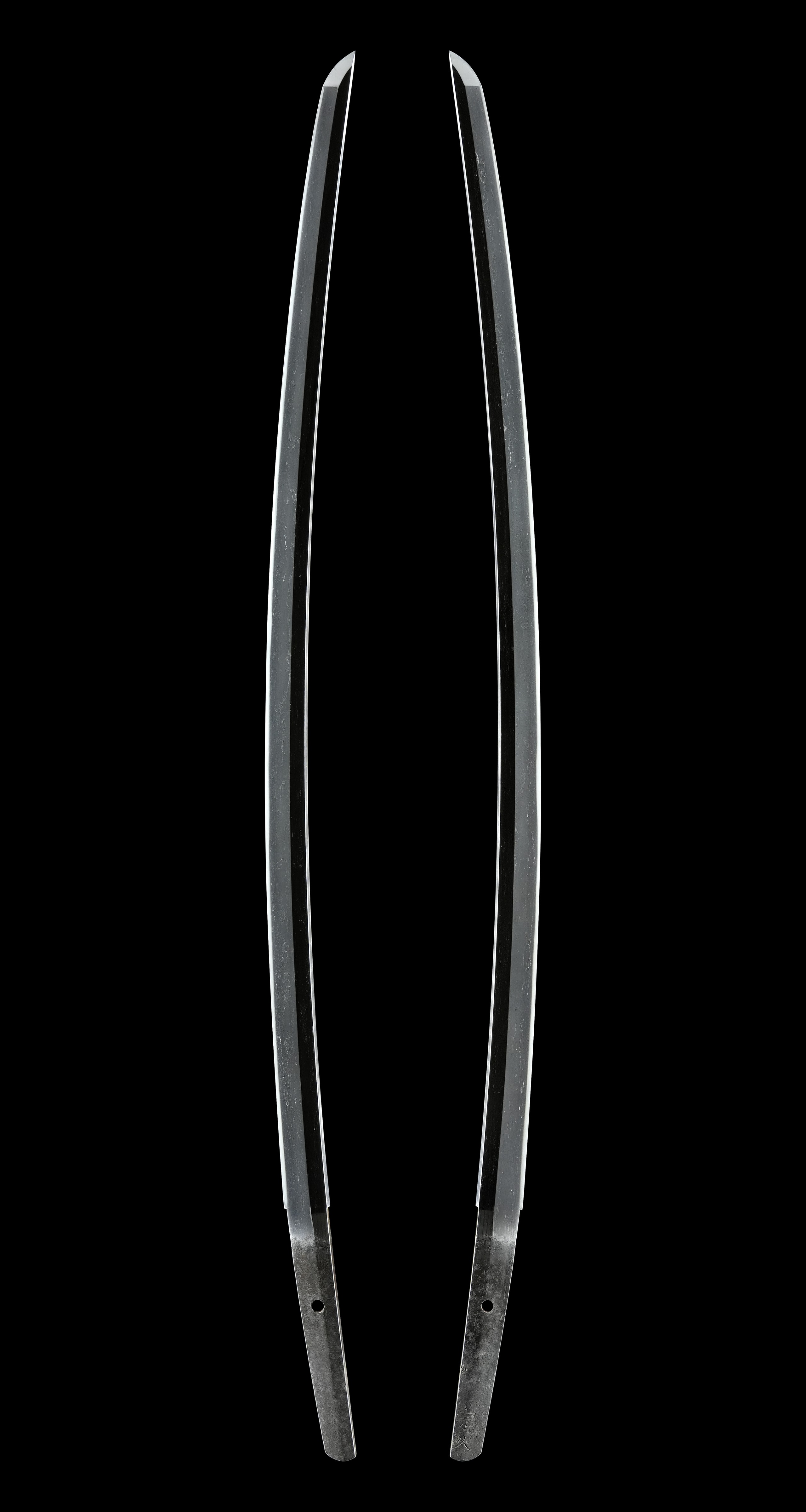
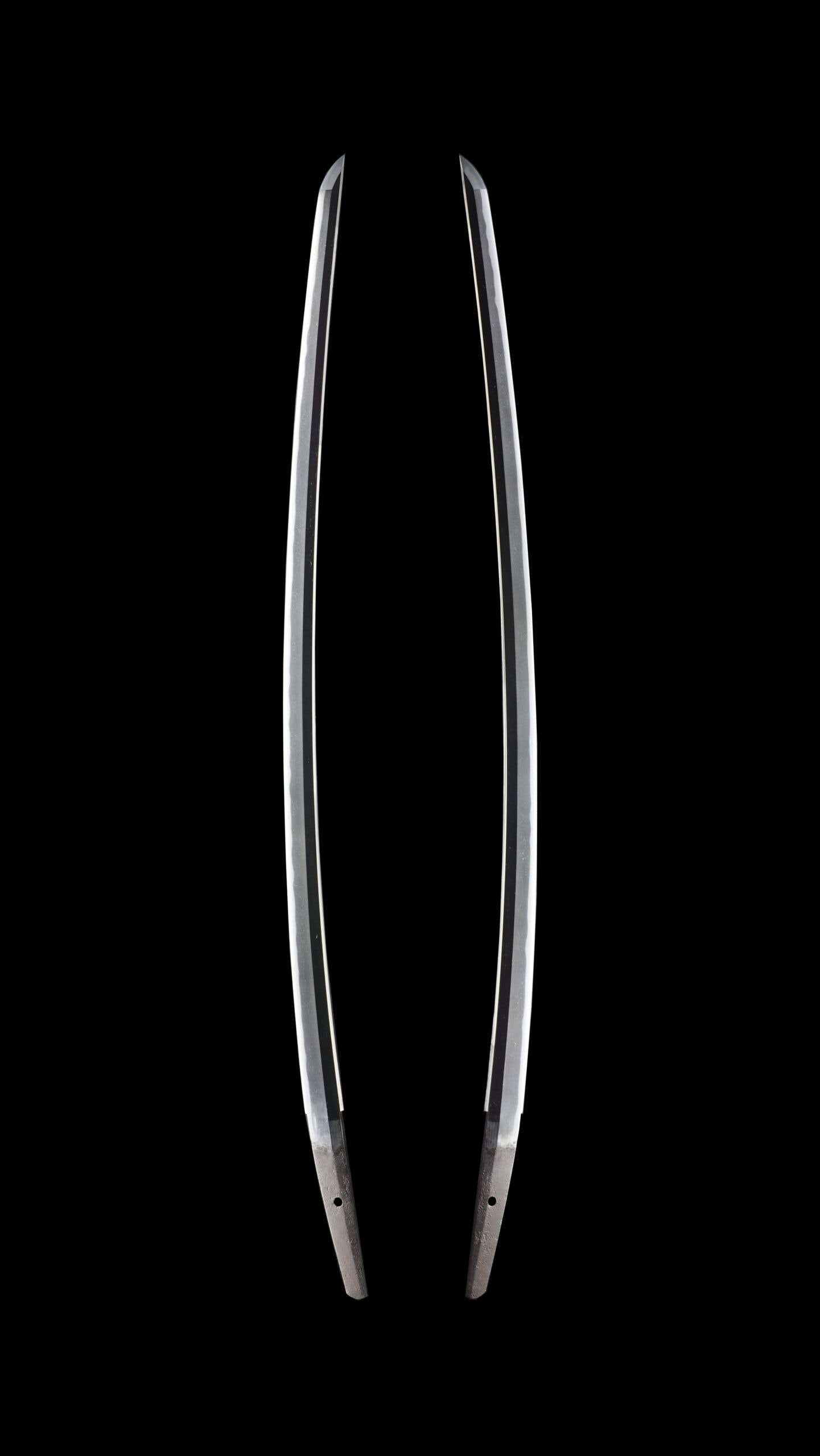
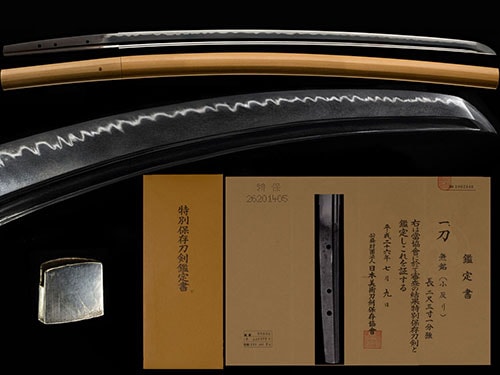
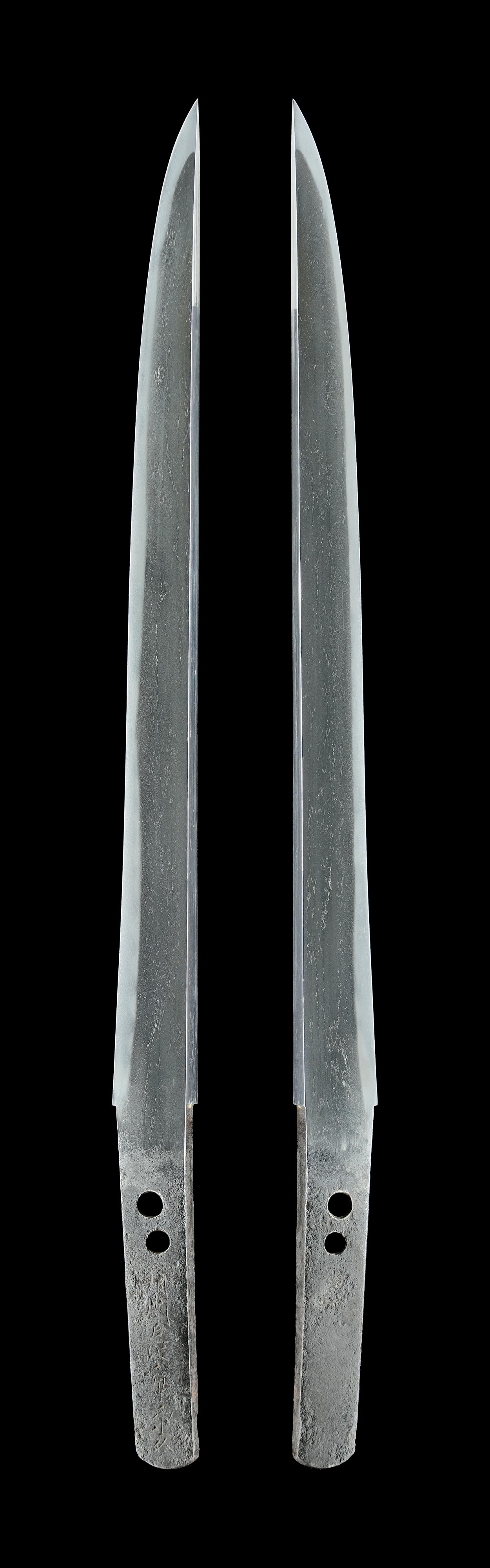
Yoshitsugu is a smith of the period whose line of transmission is not clearly established. Sword compendia record smiths signing this name at in Province as well as in Province, where the name is associated with the tradition. A dated bearing the 5 (1372) inscription identifies a Yoshitsugu residing at , while a Yoshitsugu recorded around the Oei era produced a blade dated Koryaku 2 (1380) in the typical style of late work. A further blade bearing the long signature " no ju Yoshitsugu" — notably lacking the toponym "" — has prompted the suggestion that this particular smith may not have belonged to the line and may instead be related to the Unrui group, though the form of the character for in the inscription diverges from Unrui convention.
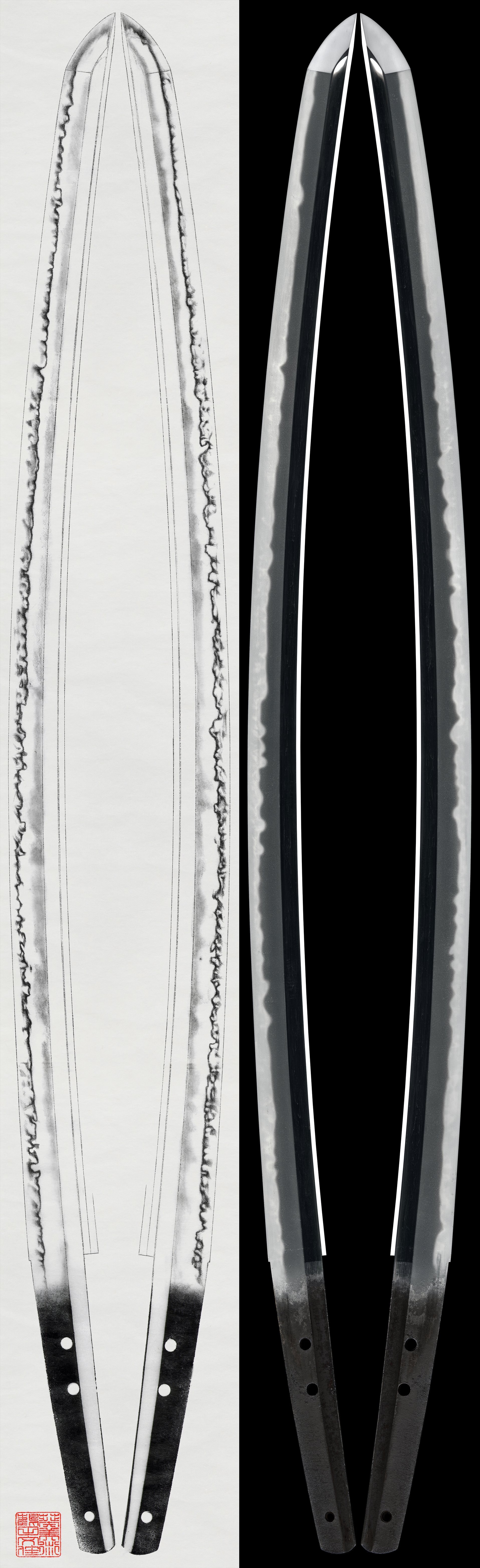
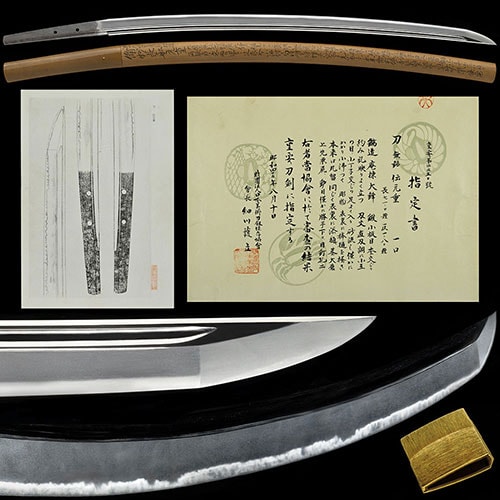
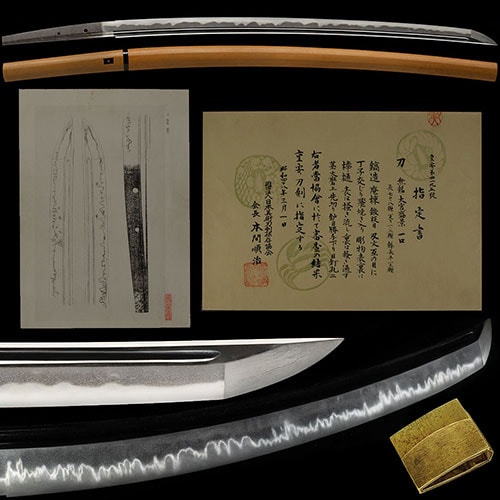
The workmanship across the surviving examples reflects the characteristic tendencies of -period and production. Forging ranges from tightly worked with faint to in which the grain stands with and present. The encompasses both mixed with and — where the is deep and adheres — and quieter compositions with , , , , and . In the broader-bodied examples the is imposing and boldly martial, with wide and an elongated , while other pieces retain a more restrained classical form with high curvature.
Extant signed works by Yoshitsugu are extremely few, and the has affirmed that judging from surviving pieces he was quite a capable craftsman whose work clearly reflects the characteristic style of its period. Each signed example possesses high documentary value as source material for the study of both the and traditions during the late era. The celebrated "Nanzan-to," bearing a silver inlay inscription commemorating the slaying of a tiger in Korea, further attests to the historical regard in which blades by this maker have been held.