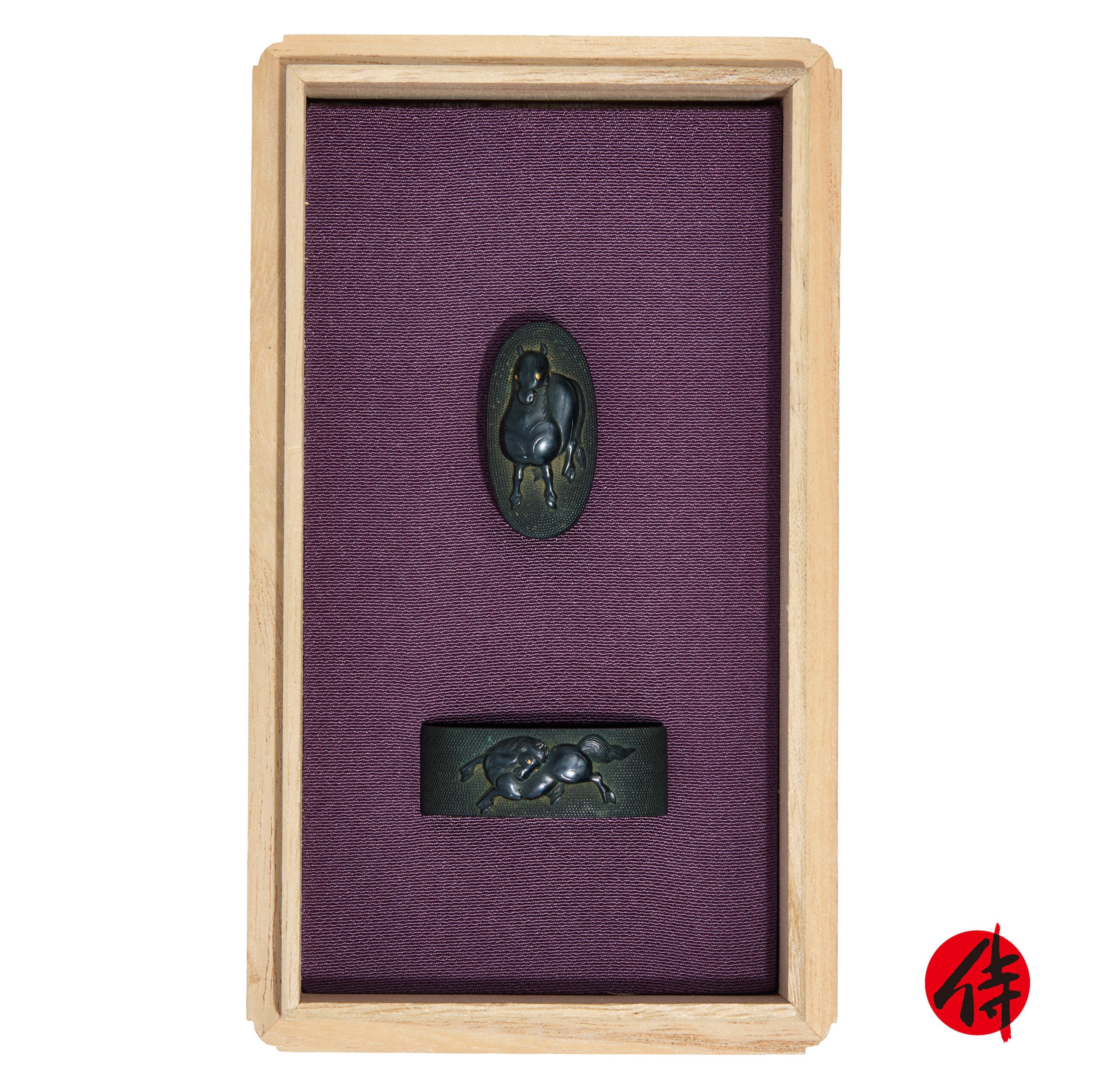
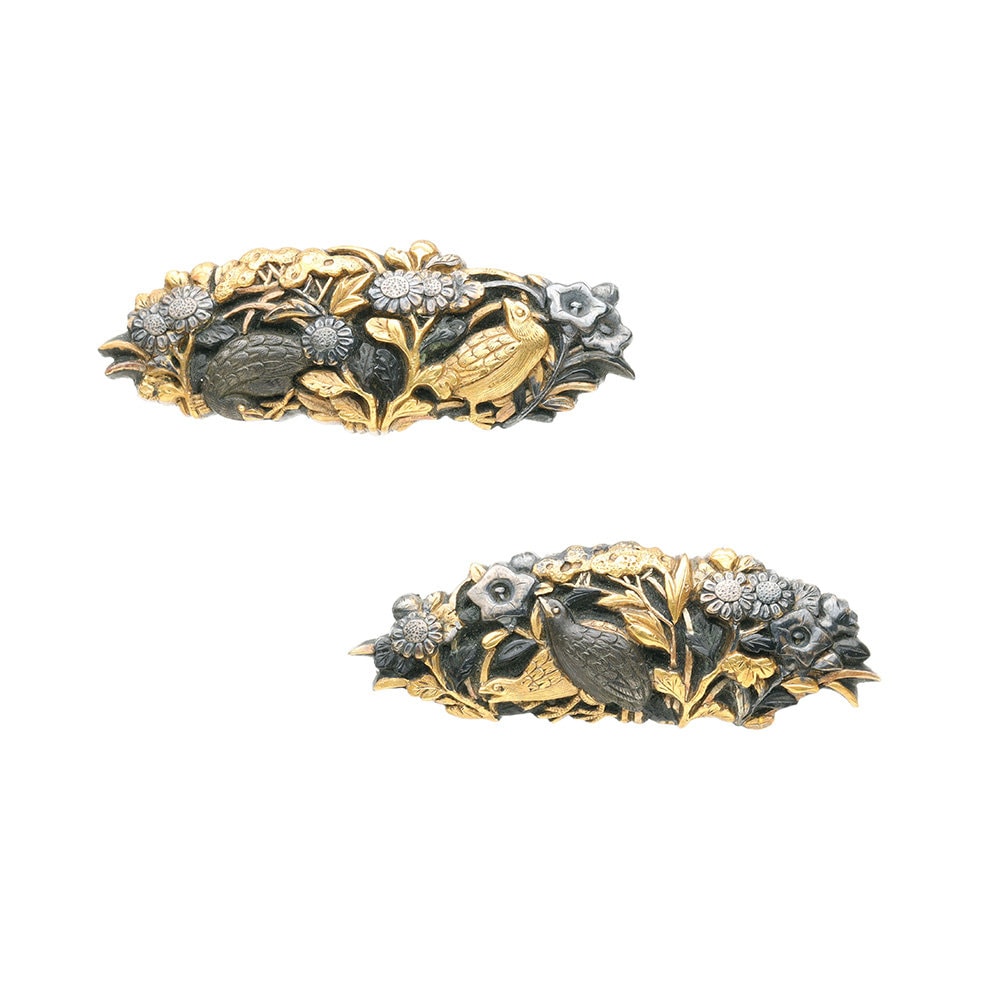
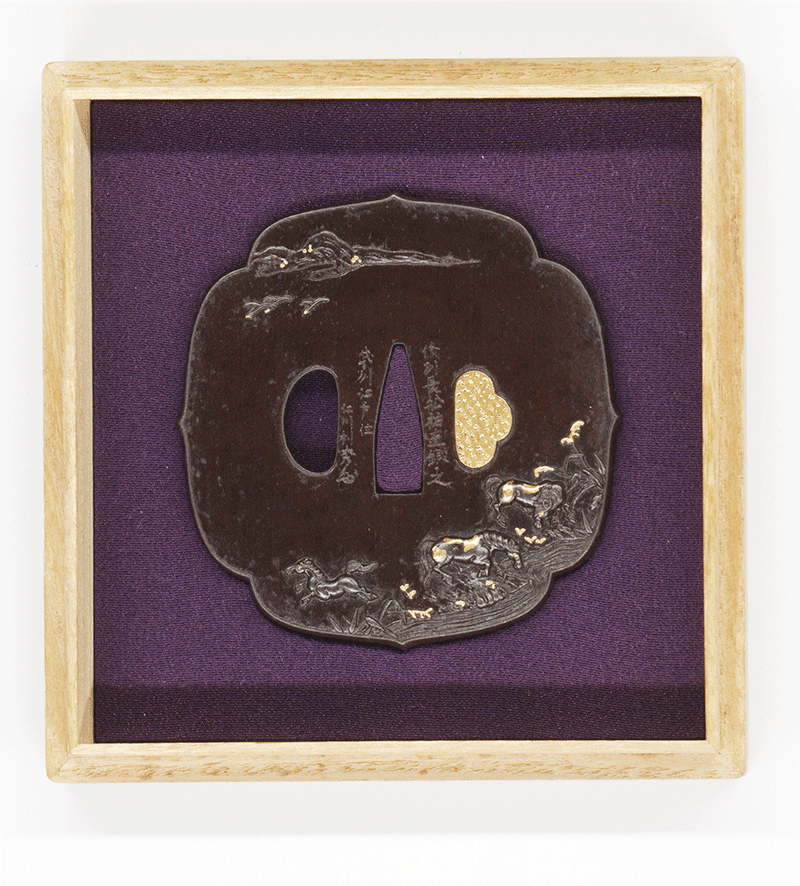
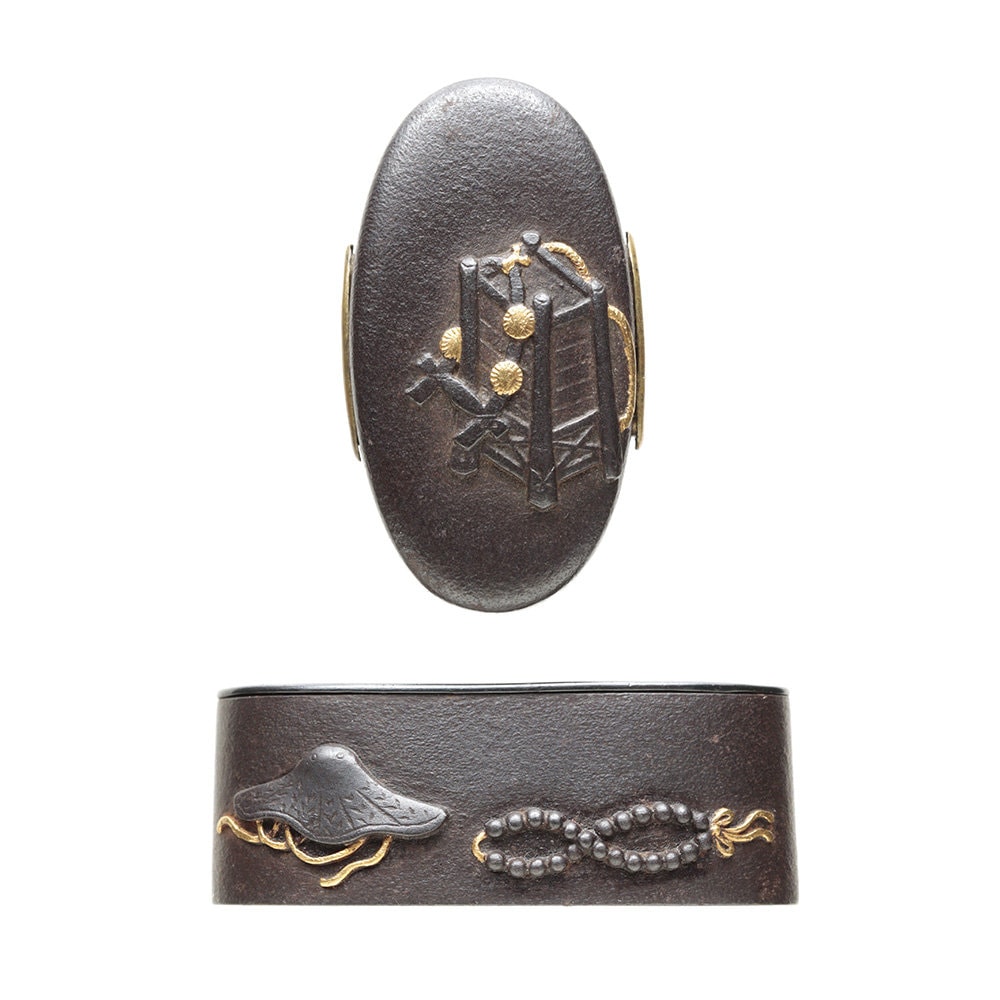
Katsura Sorin, commonly known as Seikichi, was born in Mito in An'ei 2 (1773) under the original surname ; he is the individual as the first-generation Toshimasa. He went to and studied under Yokoya Eisei, where he was recognized for his promise by Katsura Eiju, a senior fellow disciple. At Eiju's earnest request, Sorin was adopted into the Katsura house, succeeded to that family, inherited Eiju's common name Saichiro, and -- continuing in the footsteps of his adoptive father -- became a retained craftsman (kakae-ko) to the Arima family, of Kurume Domain. He was a remarkably long-lived artist: dated signatures are known from when he was seventy-five, eighty-two (Ansei 2, 1855), and even eighty-eight. He used both the and Katsura surnames and signed variously as "Katsura Sorin," " Sorin," and "Egawasai Katsura Sorin," always appending his .
Sorin's work is characterized by (high-relief carving) of abundant volume and richly modeled weight, executed on finely finished grounds of , silver, or gold. His polychrome employing gold, silver, and is minute and careful, superbly depicting both powerful motion and stillness. In his , he conceived compositions in which obverse and reverse are expressed straightforwardly as the near and far aspects of a landscape, skillfully exploiting openwork to heighten narrative quality. Firm nikubori modeling, delicate carving of iron grounds for water ripples and drifting haze, and fluent gold inlay on complementary fittings demonstrate mastery across materials. His ensembles are notable for the sophisticated contrast between iron and soft-metal kodugu, each technique brought to full effect within a unified artistic vision.
Sorin drew extensively upon literary and courtly subjects -- the Rokkasen (Six Immortal Poets), episodes from Monogatari such as Narihira's , and celebrated landscapes including Noji no Tamagawa and Noda no Tamagawa. His works overflow with an elegant, courtly sensibility, and his compositions, though sumptuous in effect, avoid any sense of disorder through the skillful placement of mist and the deliberate orchestration of space. The regards his finest productions as works in which his "true merits are fully realized," with individual pieces singled out as the (finest) among his oeuvre. Even works inscribed at advanced ages display exceptionally fresh workmanship, clearly manifesting Sorin's sustained level of technique and artistic sensibility across a career of extraordinary length.