NihontoWatch MonNihontoWatch
MarketEncyclopediaKantei
NihontoWatch MonNihontoWatch
Market
Encyclopedia
Kantei
Overview·Historical importance·Designations·Kantei·Work Types·Signatures·Lineage·School
OverviewHistorical importanceDesignationsKanteiWork TypesSignaturesLineageSchool
  1. Schools
  2. Tetsugendo
  3. Shoraku

Tetsugendo Shoraku

正楽

Jūyō
Vol. 54, No. 119 · Tsuba

Tetsugendo Shoraku

正楽

13 ranked works

Major artist
ProvinceYamashiroEraAn'ei-Tenmei (c.1750–1780)SchoolTetsugendoTraditionMachiboriGeneration1st (founder)TeacherTetsuya Denbei Kuniharu (鉄屋伝兵衛国治)TypeTosogu MakerCodeOKA001
13Jūyō Tōken

Overview

Tetsugendo Shoraku, whose personal name was Okamoto Genbei Toshiyuki, was a celebrated metalworker of Kyoto active during the mid to late period. He trained under Tetsuya Denbei Kuniharu and initially signed his works with the craft name Naoshige; "Shoraku" is the go he adopted in later years after taking the tonsure and becoming a lay priest (nyudo). He died in An'ei 9 (1780). Together with Ichinomiya Nagatsune and Otsuki Mitsuoki, he is counted among the "Three Outstanding Masters of Kyoto Metalwork" (Kyoto kinko no sanketsu), a distinction reflecting his position at the very highest rank of the city's metalworking tradition. There remain differing scholarly views as to whether "Shoraku" represents a single individual or whether first and second generations should be distinguished, and dated works such as those bearing Tenmei 2 (1782) inscriptions are considered of high documentary value for resolving this question.

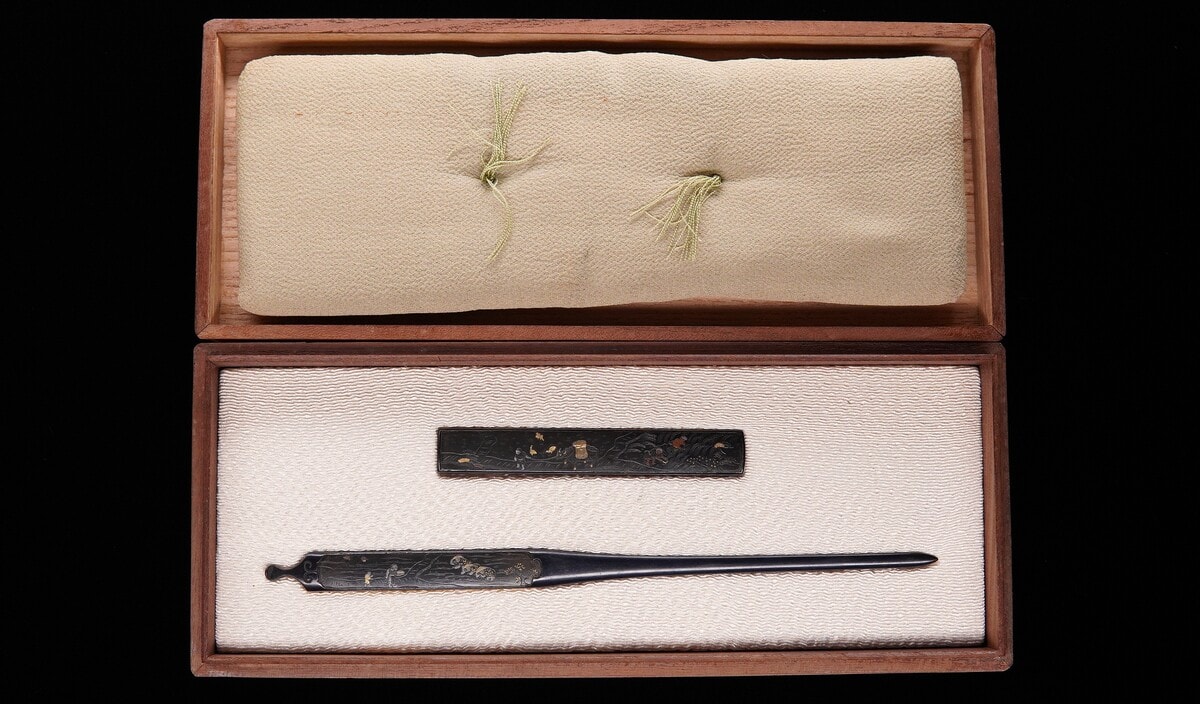
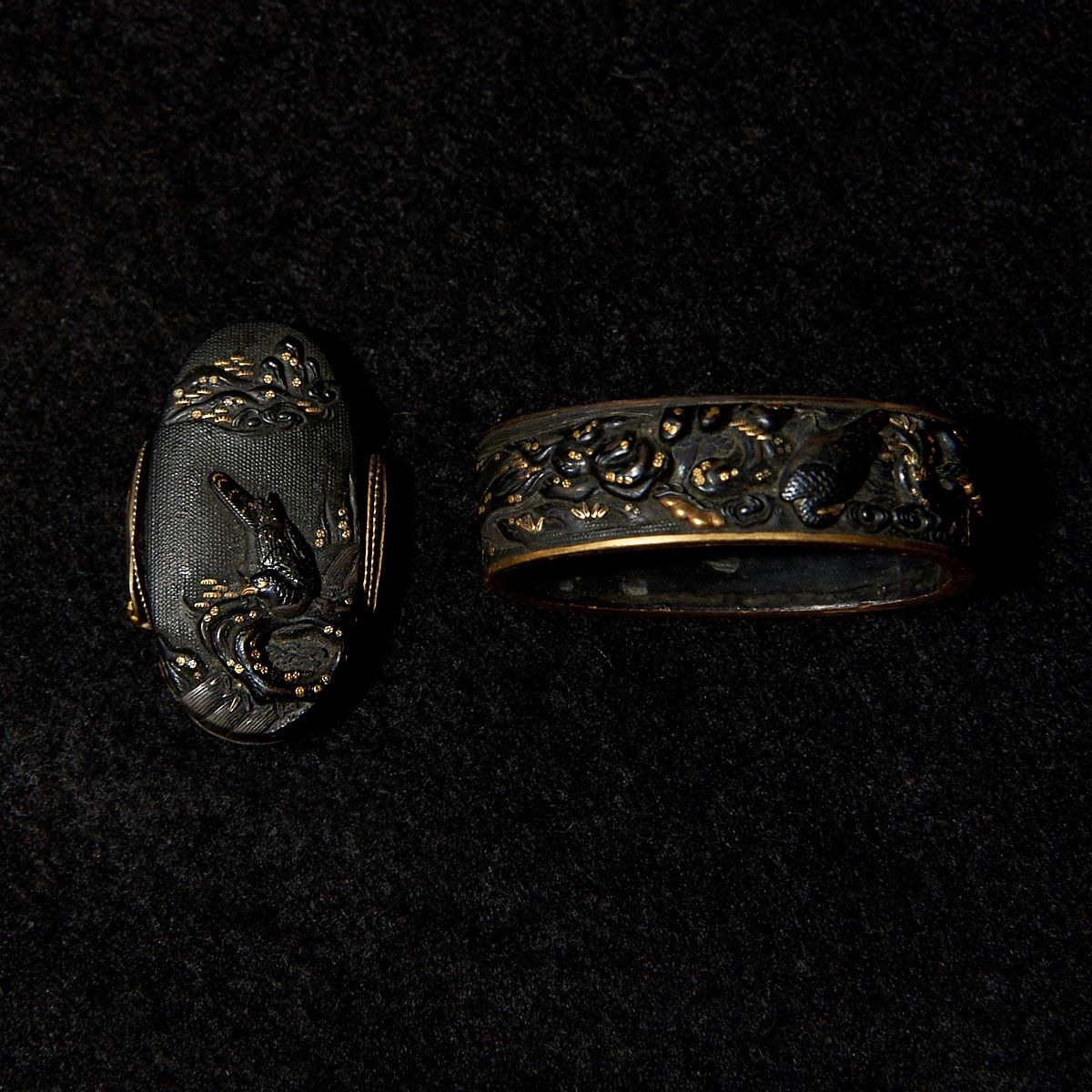
Shoraku worked chiefly in iron and was long esteemed as an artist able to handle that material with exceptional freedom and control. His characteristic method built compositions through dense, meticulous that transitions seamlessly into fully developed , imparting remarkable depth and a heightened sense of volume to his designs. Over these iron grounds he applied vivid polychrome inlay and in gold, silver, , , , and brass -- an undertaking widely regarded as exceedingly difficult on iron, yet one in which Shoraku's execution was consistently exemplary down to the finest details. He employed varied surface treatments with equal skill: some works display polished grounds, while others feature carefully struck ishime texturing, at times introducing chidori- to create differentiated spatial effects within a single composition. Small kage- openwork and on the rim further extended his decorative vocabulary. His subjects were grounded in careful observation from life, and the exceedingly delicate polychrome work upon iron displays a level of accomplishment that, as the has observed, "seems possible only from Tetsugendo."

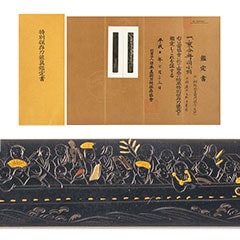
Shoraku's oeuvre is distinguished by a repertoire of figure subjects rendered with outstanding powers of realistic depiction. Scenes of yudachi -- sudden evening downpours with figures caught in mounting commotion as thunder roars overhead -- were among his greatest specialties, and many examples of this theme are known with subtly varied compositions. He returned with equal conviction to depictions of Dattan-jin (Tatar figures), exotic subjects treated with his uniquely forceful manner, as well as Kisho (the returning woodcutter) compositions suffused with gentle poetic mood. Works such as "Fujin and the Great Buddha," which sets dynamic motion against meditative repose, and "Genjoraku," drawn from the repertoire of gagaku court dance, demonstrate his range across both narrative vigor and refined cultural allusion. In each case, the bold sculptural carving, the richness of naturalistic observation, and the commanding mastery of iron as an expressive medium combine to produce works of sustained visual power. As the designation records consistently affirm, his was a level of finish achievable only by Tetsugendo -- an artist who, when it came to working iron, tolerated no rival.

Historical importance

Where Shoraku stands among comparable artisans: across all of nihontō, and within tradition, era, and period. The tiers (Foremost · Leading · Major · Notable) weigh official designations from the NBTHK and Japan's Agency for Cultural Affairs, together with historical honors of lasting repute such as the Sansaku and Meibutsu-chō.

随一
Foremost
屈指
Leading
有数
Major
著名
Notable

Select a lens to see how it's measured.

Designations

Kokuhō—
Jūyō Bunkazai—
Jūyō Bijutsuhin—
Gyobutsu—
Tokubetsu Jūyō—
Jūyō Tōken13

Elite Standing

Kantei

Work Types

Distribution across 13 ranked works

Signatures

Signature types across 13 ranked works

Currently Available

Lineage

Shoraku
Students (7)
  1. 1.Naofusa尚房3 for sale2designated
  2. 2.Naokata尚方
  3. 3.Naofusa直房
  4. 4.Bokusen牧川1 for sale
  5. 5.Shigekuni重国
  6. 6.Buzen武禅
  7. 7.Yoshioki佳興

Tetsugendo School

Other artisans of the Tetsugendo school

  1. 1.Yamazaki Ichiga山﨑一賀3designated
  2. 2.Naofusa尚房3 for sale2designated
  3. 3.Hosono Masamori細野政守2 for sale2designated

More from the Tetsugendo school

View all →
Toushin
Tokuho
Fuchi-Kashira - Tokuho - by Tetsugendo School - Daisho Fuchi-Kashira: Lions, Mumei (Tetsugendo School)Fuchi-Kashira - Tokuho - by Tetsugendo School - Daisho Fuchi-Kashira: Lions, Mumei (Tetsugendo School)

Fuchi-Kashira

ByTetsugendo School
¥880,000
Toushin
Tokuho
Fuchi-Kashira - Tokuho - by Tetsugendo Eiju - Fuchi-Kashira: Dragon Design by Seiryuken EijuFuchi-Kashira - Tokuho - by Tetsugendo Eiju - Fuchi-Kashira: Dragon Design by Seiryuken Eiju

Fuchi-Kashira

ByTetsugendo Eiju
¥396,000
Sugie Art
Tokuho
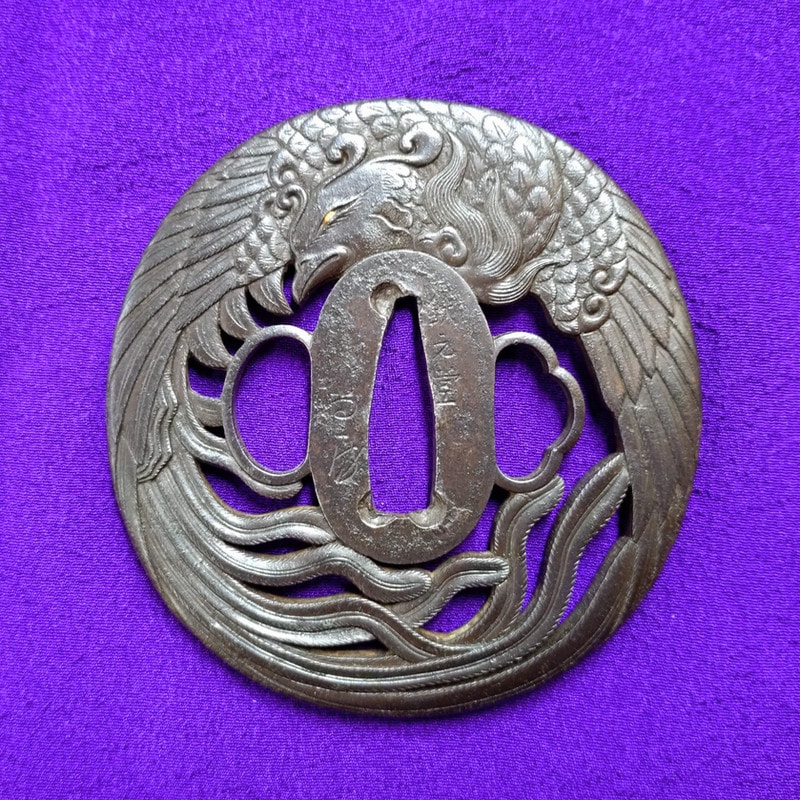
Tsuba - Tokuho - by Tetsugendo Naofusa - Phoenix Openwork Tsuba by Tetsugen-do Naofusa, Tokubetsu HozonTsuba - Tokuho - by Tetsugendo Naofusa - Phoenix Openwork Tsuba by Tetsugen-do Naofusa, Tokubetsu Hozon

Tsuba

ByTetsugendo Naofusa
¥890,000
Toushin
Hozon
Tsuba - Hozon - by Tetsugendo Eiju - Dragon Design Tsuba: Seiryuken Eiju (Signed)Tsuba - Hozon - by Tetsugendo Eiju - Dragon Design Tsuba: Seiryuken Eiju (Signed)

Tsuba

ByTetsugendo Eiju
¥385,000
Katana Yamadaiya
Kozuka - by Tetsugendo Hosono Masamori - Tokubetsu Kicho Kodogu: Rice Planting Design FutatokoroKozuka - by Tetsugendo Hosono Masamori - Tokubetsu Kicho Kodogu: Rice Planting Design Futatokoro

Kozuka

ByTetsugendo Hosono Masamori
¥195,000
Eirakudo
Tokuho
Kozuka - Tokuho - by Tetsugendo Hosono Masamori - Masamori Noriaifunezu Kozuka, Tokubetsu Hozon TosoguKozuka - Tokuho - by Tetsugendo Hosono Masamori - Masamori Noriaifunezu Kozuka, Tokubetsu Hozon Tosogu

Kozuka

ByTetsugendo Hosono Masamori
¥380,000
Yushindou
Tokuho
Fuchi-Kashira - Tokuho - by Tetsugendo Ayanokoji Nagamine - Ayanokoji NagamineFuchi-Kashira - Tokuho - by Tetsugendo Ayanokoji Nagamine - Ayanokoji Nagamine

Fuchi-Kashira

ByTetsugendo Ayanokoji Nagamine
¥200,000
Soryu
Tsuba - by Tetsugendo Eiju - Iron tsuba signed "Seiryuken Eiju" decorated with Shippo patternTsuba - by Tetsugendo Eiju - Iron tsuba signed "Seiryuken Eiju" decorated with Shippo pattern

Tsuba

ByTetsugendo Eiju
¥300

Shoraku

Shoraku(正楽) was a maker of Japanese sword fittings (tōsōgu) of the Tetsugendo school in Yamashiro province, active during the An'ei-Tenmei (c.1750-1780) period.

The work follows the Machibori tradition.

Designated works by Shoraku include 13 Jūyō.