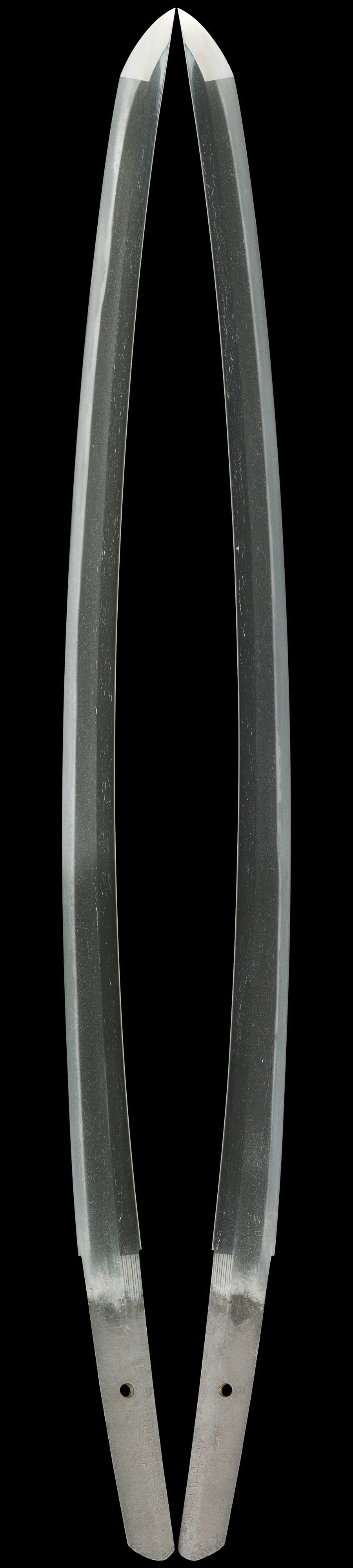
Sukezane was a swordsmith of the Senoo school of Province during the period. The Senoo district, opened by Senoo Tarō Kaneyasu, a retainer of the Taira clan, lay along the lower reaches of the Takahashi River to the east of , closer to , and the old appraisal texts Genki Mekiki-sho and Kokon -zukushi divide the smiths of into the and Senoo forges. The genealogies list two smiths of this name: one a pupil of Noritaka working around the Jōei era (1232–1233), the other a pupil of Tsunetō placed around Bun'ei (1264–1275). Surviving examples are very few, and blades bearing his signature are accordingly treasured.
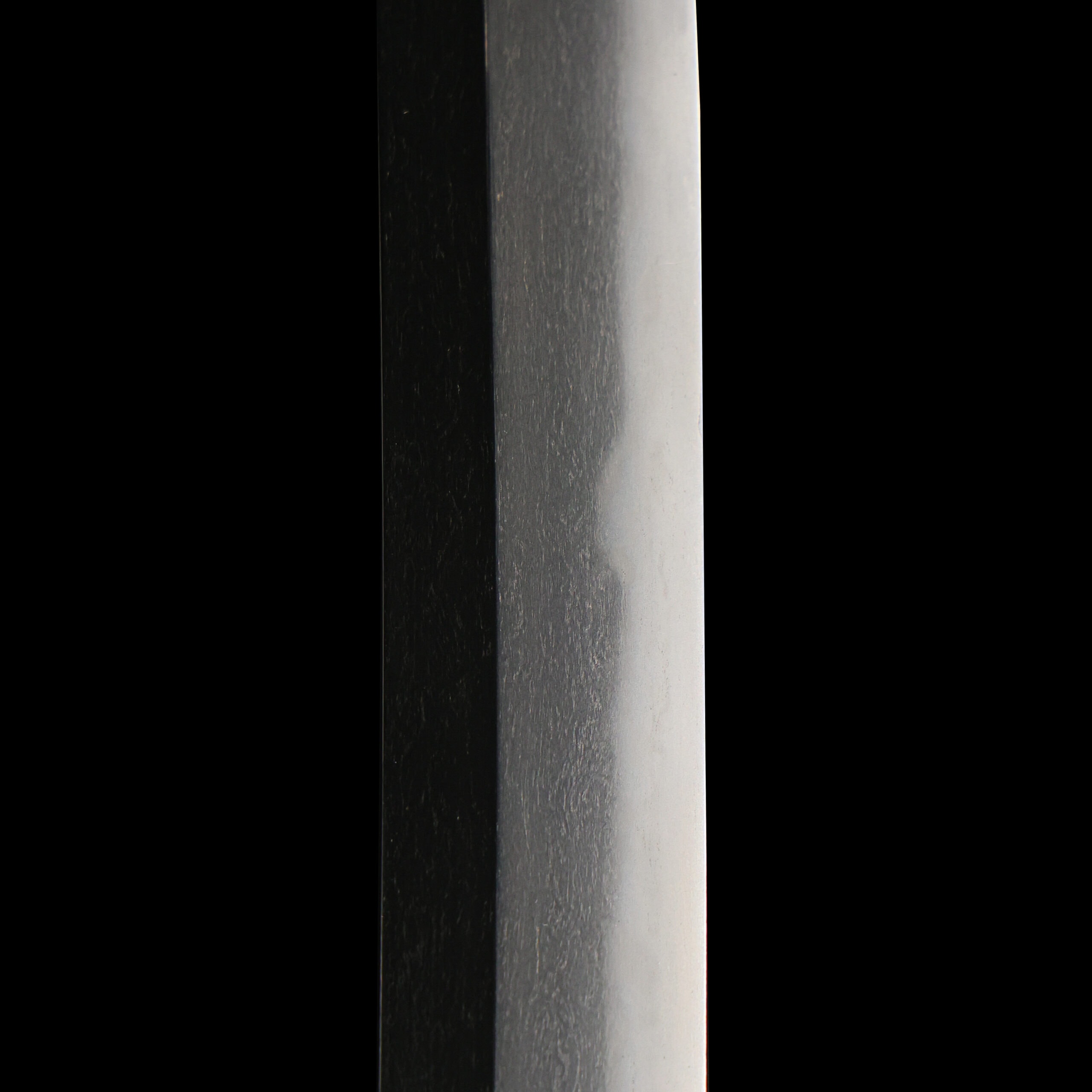
The Senoo smiths — Noritaka, Masatsune, Tsunetō, Koreshige, Yasuie, Hirotsune, Tsunezane, Moritsune, Sukezane, Tokizane, and Yukizane among them — seldom used the character (次) that was customary in signatures, and unlike the smiths of the era they generally signed in . Sukezane's extant preserve , deeply -zori shapes of dignified form. The is or mixed with , tending toward a crêpe-like with thick , fine , and standing out — the hallmarks of the smiths. The is a wide base mixed with , , or , with abundant and , with , at times slanting () in the lower half, and accompanied by , , and . As the old texts note, the workmanship "resembles work," carrying a flavor while at first glance approaching ; the in is a further mark of the province.
Sukezane's importance rests on the rarity of signed Senoo work surviving today. A signed of 76.3 cm passed at the 64th session and rose to at the 26th session; another, descended in the Ikeda family and accompanied by a -period -no- with bear-fur scabbard cover, holds rank from the 16th session; a third, an from the Kishū family collection, is . The descriptions repeatedly note that the Senoo forge still awaits fuller study, making each of these signed blades primary research material for the school.