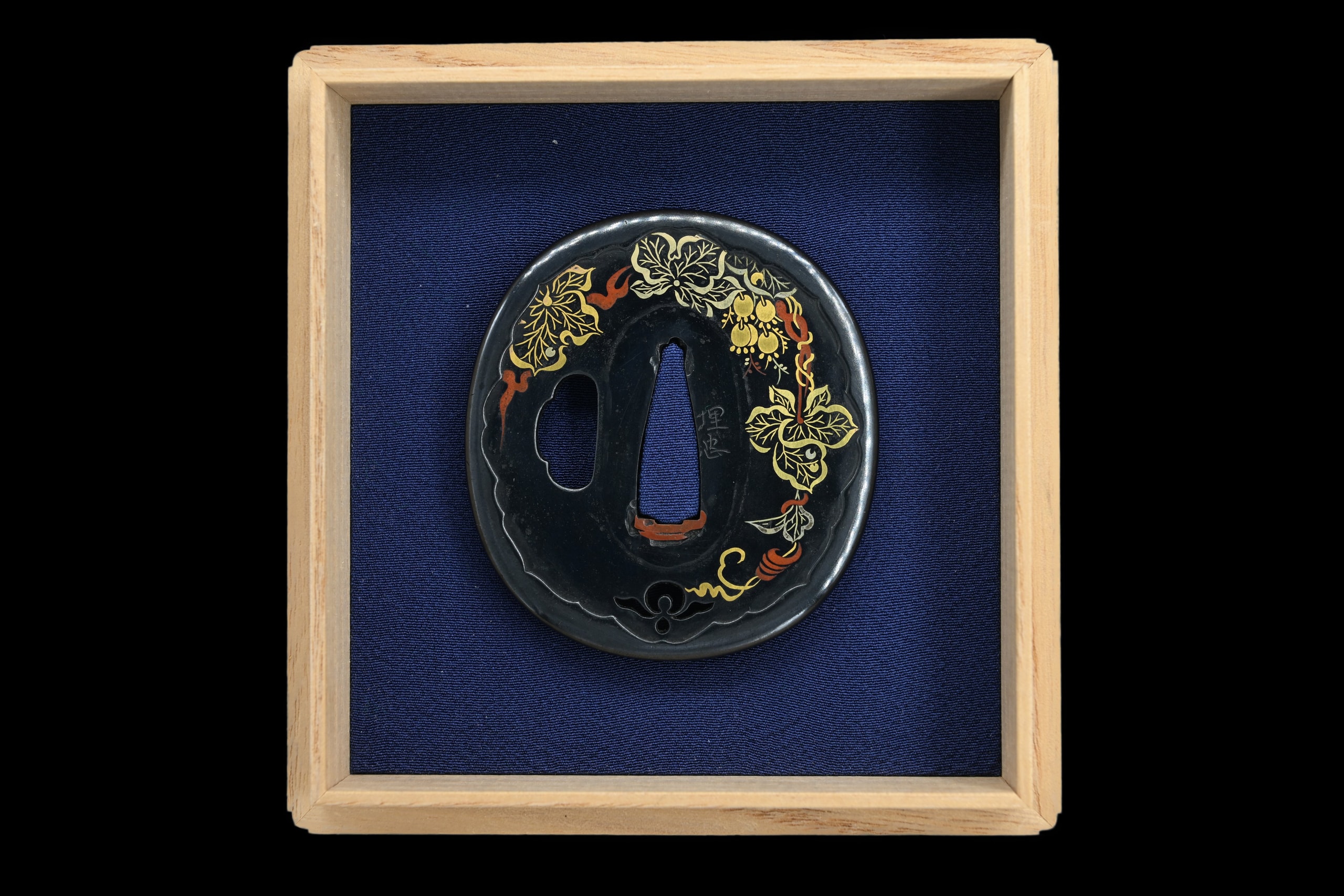
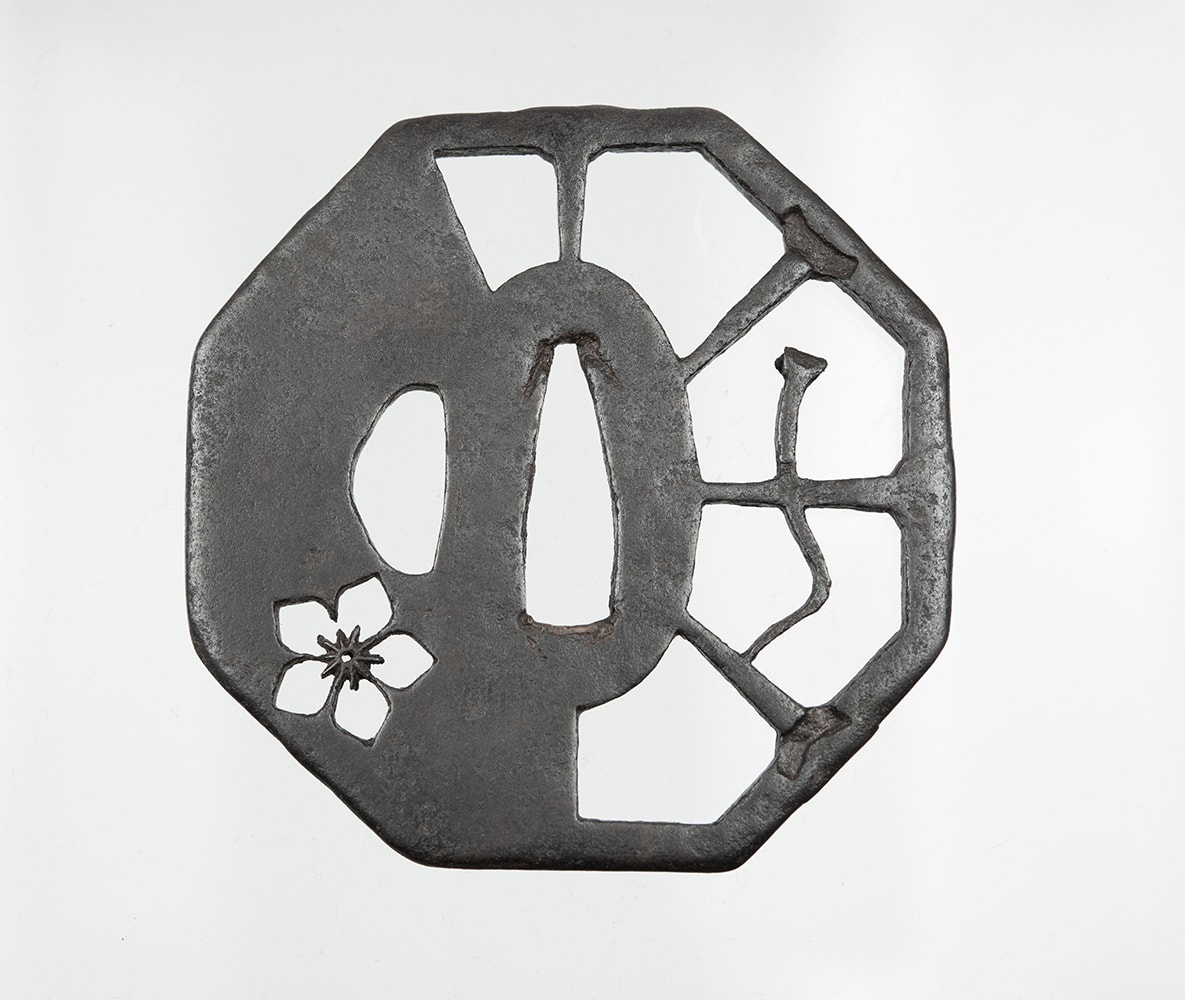
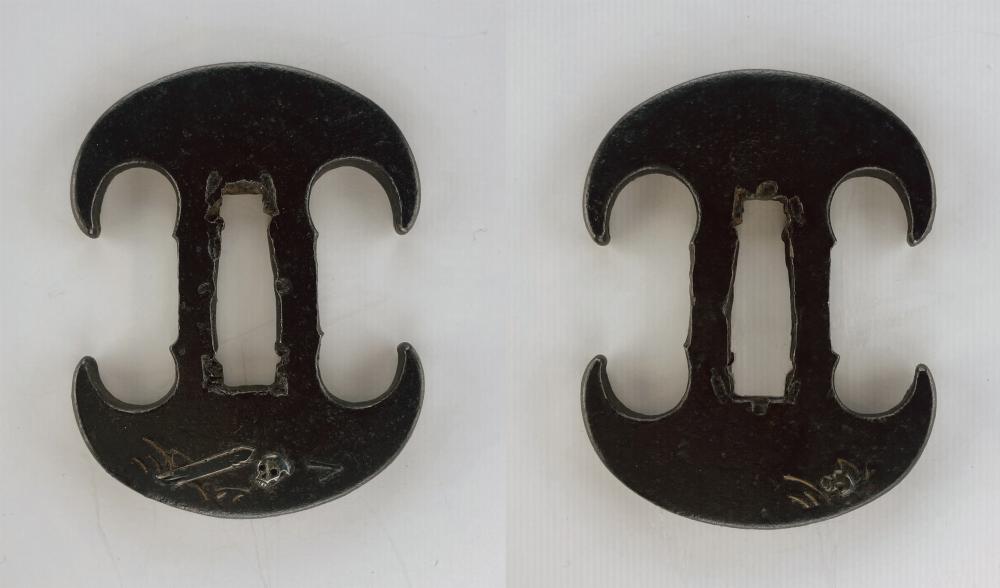
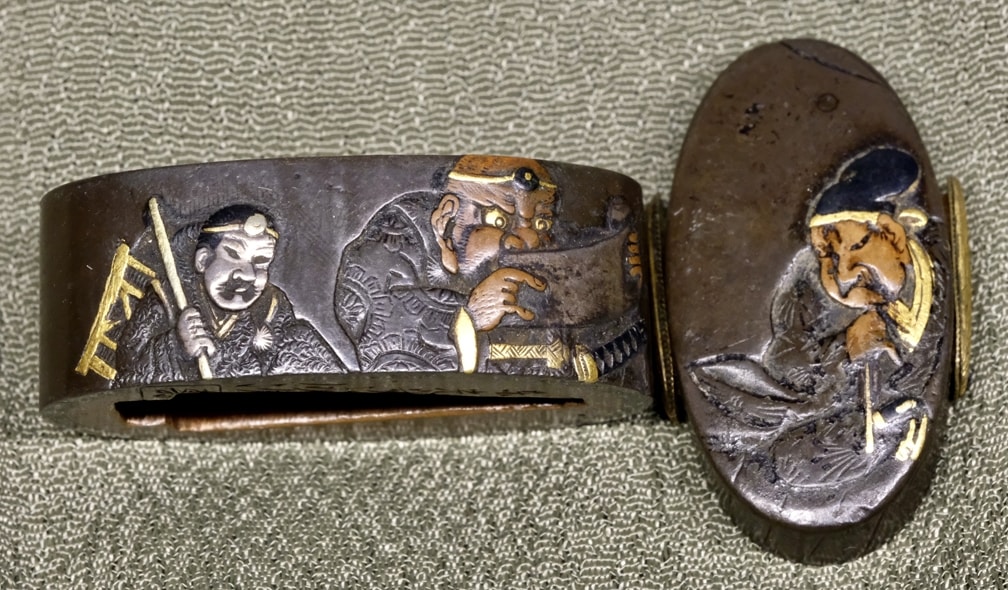
Shigeyoshi was a metalsmith of the school active from the 'ei through Genroku eras, residing in Nishijin, Yamashiro Province. He signed his works as Shichizaemon Tachibana Shigeyoshi, with the family name alternatively rendered as Umechū. Inheriting the carving methods of the school founder Myoju, Shigeyoshi carried forward and refined the distinctive pictorial idiom of the lineage. Multiple craftsmen appear to have worked under the name Shigeyoshi across Kyoto, , and Akashi, and their precise identities and interrelationships remain incompletely resolved, though the core figure is firmly associated with the Nishijin workshop and high-ranking patronage.
Shigeyoshi commanded a formidable range of metalworking techniques. His employ grounds finished in both polished () and stone-textured () surfaces, ornamented through - (applied inlay), - (flat inlay), (undercut relief), and (gold color application). He worked fluently in multiple metals including gold, silver, , and brass, often combining them within a single composition to achieve the chuya (day-and-night) two-tone effect characteristic of his output. His complete demonstrate mastery of the full suite of fitting types, from and to , , and , unified by consistent ground treatment and decorative vocabulary.
Shigeyoshi's surviving works reveal an artist of refined sensibility who synthesized the tradition of sophisticated inlay with an elegant decorative vision suited to the tastes of powerful warrior houses. His textile-derived designs of linked shippo, arabesque, and patterns reflect his Nishijin milieu, the heart of Kyoto's silk-weaving district, while his heraldic compositions bearing the kuyo- and other family crests served the Hosokawa and Asano clans. His output represents a high point of the urbane, pictorial manner within the school and constitutes important material for the study of early-to-mid period accoutrements.