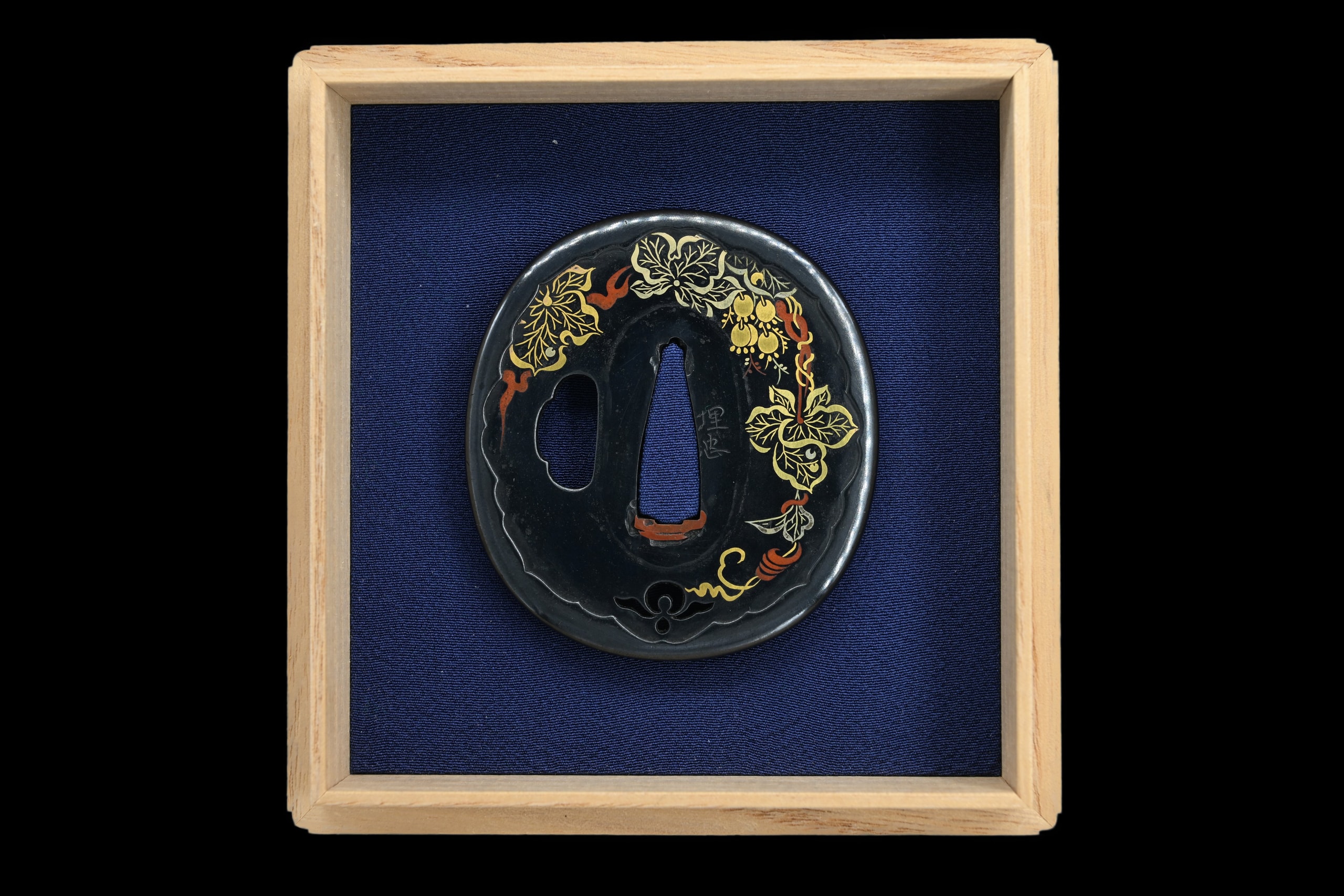
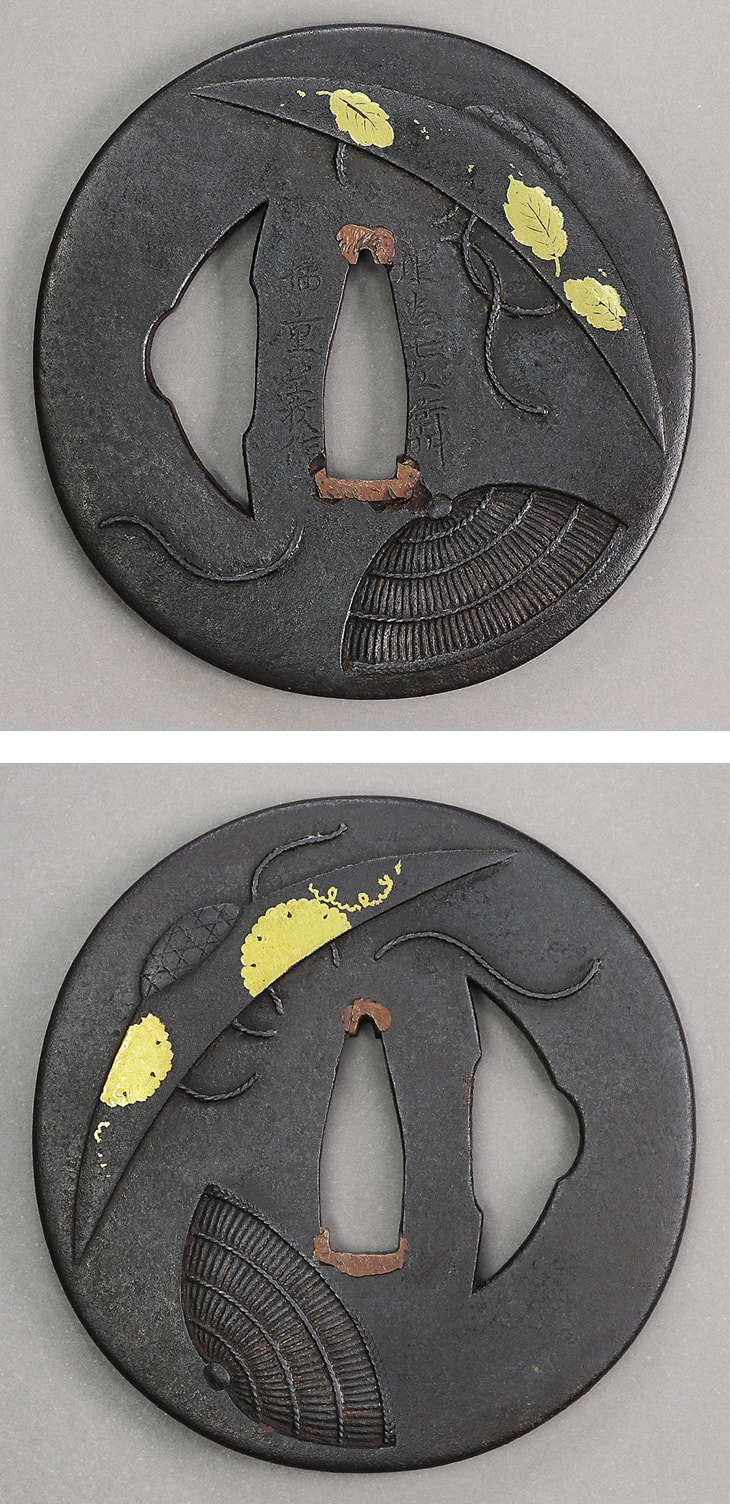
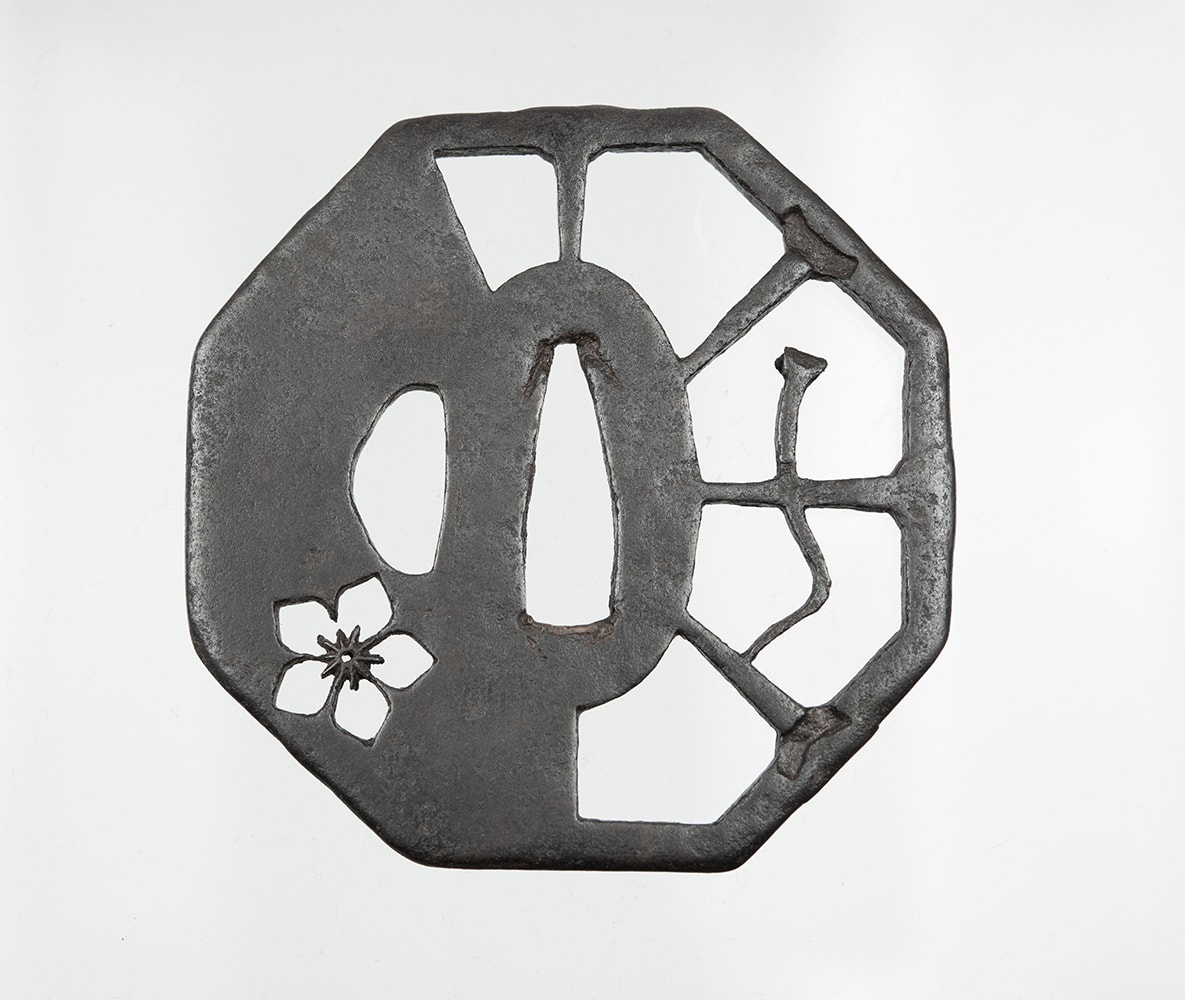
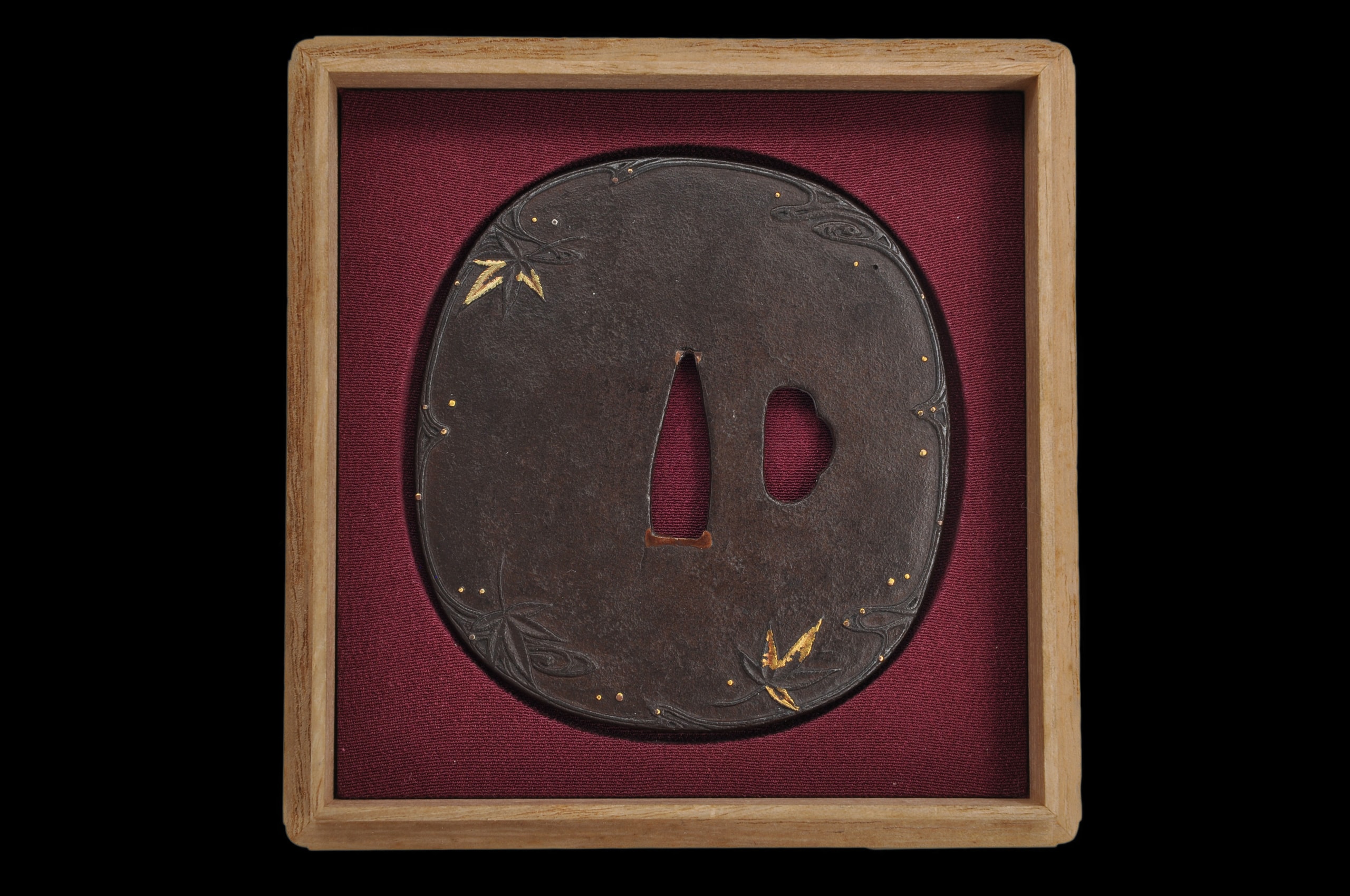
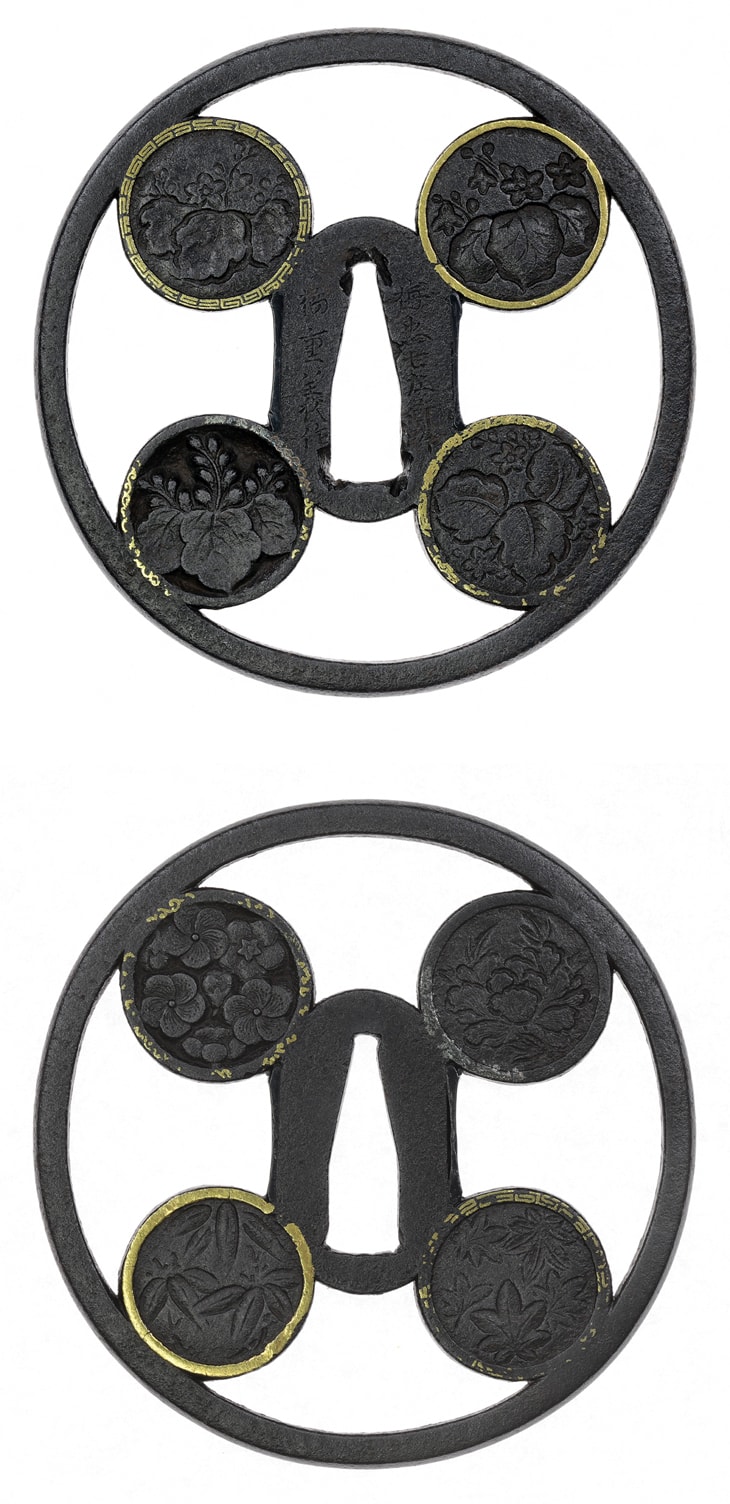
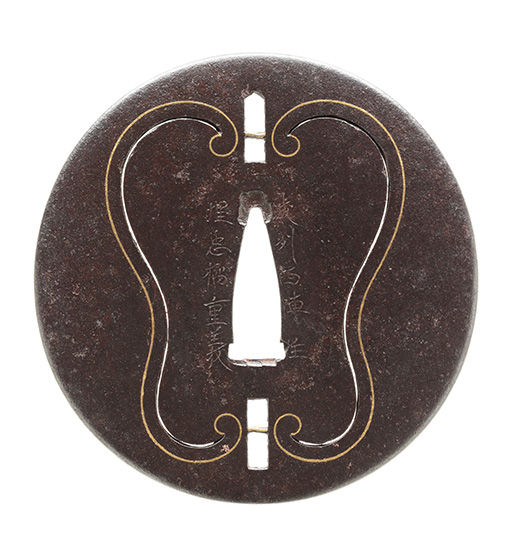
Mitsutada is a Kyoto metalworker of the period, regarded as belonging to the group ( ichimon). Although his name does not appear in the genealogies of the lineage, examination of the range and character of his extant works indicates that he should be placed within that circle. His period of activity is thought to have been almost contemporaneous with Myoju, and he is conjectured to have been of senior standing among the metalworkers of the group. His precise biography and genealogy remain unclear, and because none of his works bear dates, his exact working period cannot be established with certainty.
Mitsutada's works are consistently executed in brass (shinchu), employing an uneven, raised-and-recessed ground (dekoboko-) that imparts an archaic atmosphere. His rims characteristically receive a turned-back treatment (), often with deliberate variation. Many pieces are further embellished with gold and silver and ground texturing, while subjects range from scattered family crests and decorative paper slips (jigami) to landscapes, flowers, and Daoist and Buddhist figures. Compared with Myoju, his work "may be somewhat less polished in refinement; however, many examples display an even more classically archaic elegance." Certain pieces, such as a Daruma-design , give a "somewhat unusual impression," revealing a distinctive and individual flavor. His brass grounds are notably rich in character, and the slightly raised texture of his projects what the describes as "a richly fragrant sense of refined elegance."
Signed works by Mitsutada are extremely few — only three bearing his two-character signature are known, with merely several more attributed to him. This rarity makes each authenticated example precious reference material. His compositions overflow with -period feeling, and his best works convey a subdued emotional tone unique to this craftsman, distinct from Myoju yet resonant with the tradition of refined beauty.