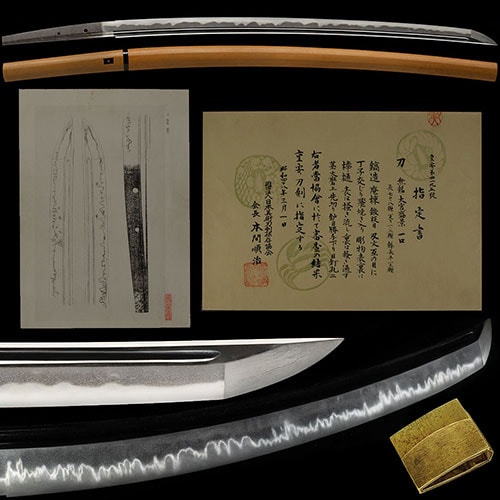
Morishige belongs to the group, a lineage founded by the smith Kunimori, who is said to have originally resided at Inokuma in Yamashiro Province before migrating to around the Bun'o era (1260--1261) during the period. The group flourished most notably after the beginning of the period, and among its members Morikage and Morishige are particularly well known. The name Morishige was carried by successive generations: the first appeared in the late period, and smiths bearing the name continued into the period. Among examples on which the smith cut his place of residence, the inscription "" is seen, firmly establishing the group's association with the tradition. One later generation bore the common name Shinkuro, and his extant works are considered extremely few.
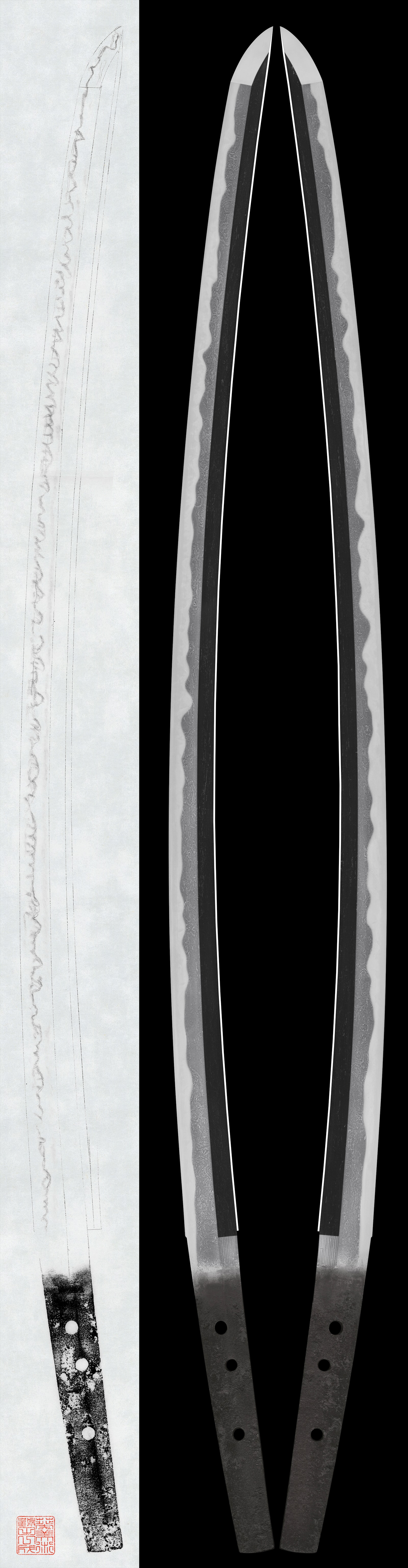
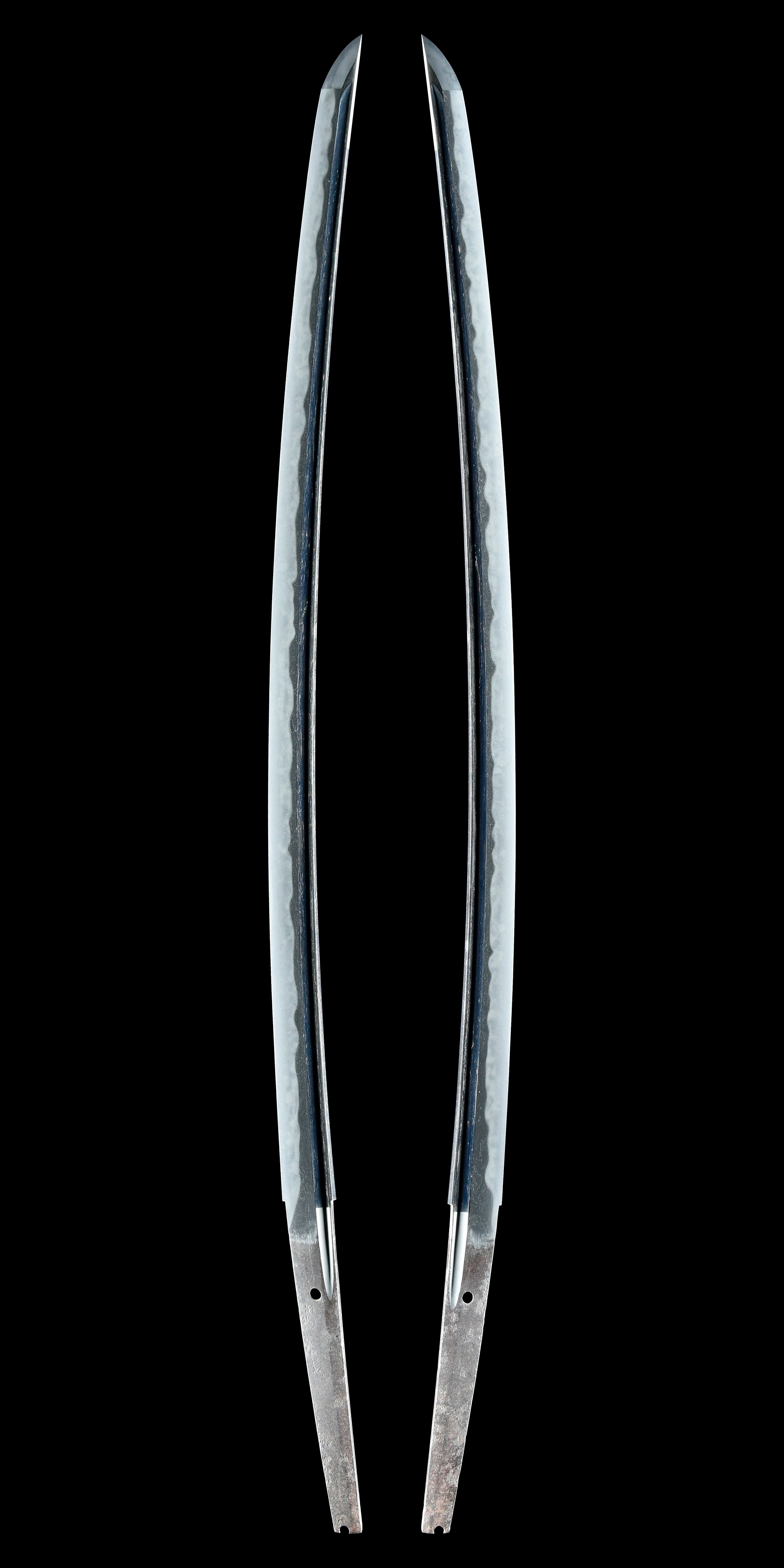
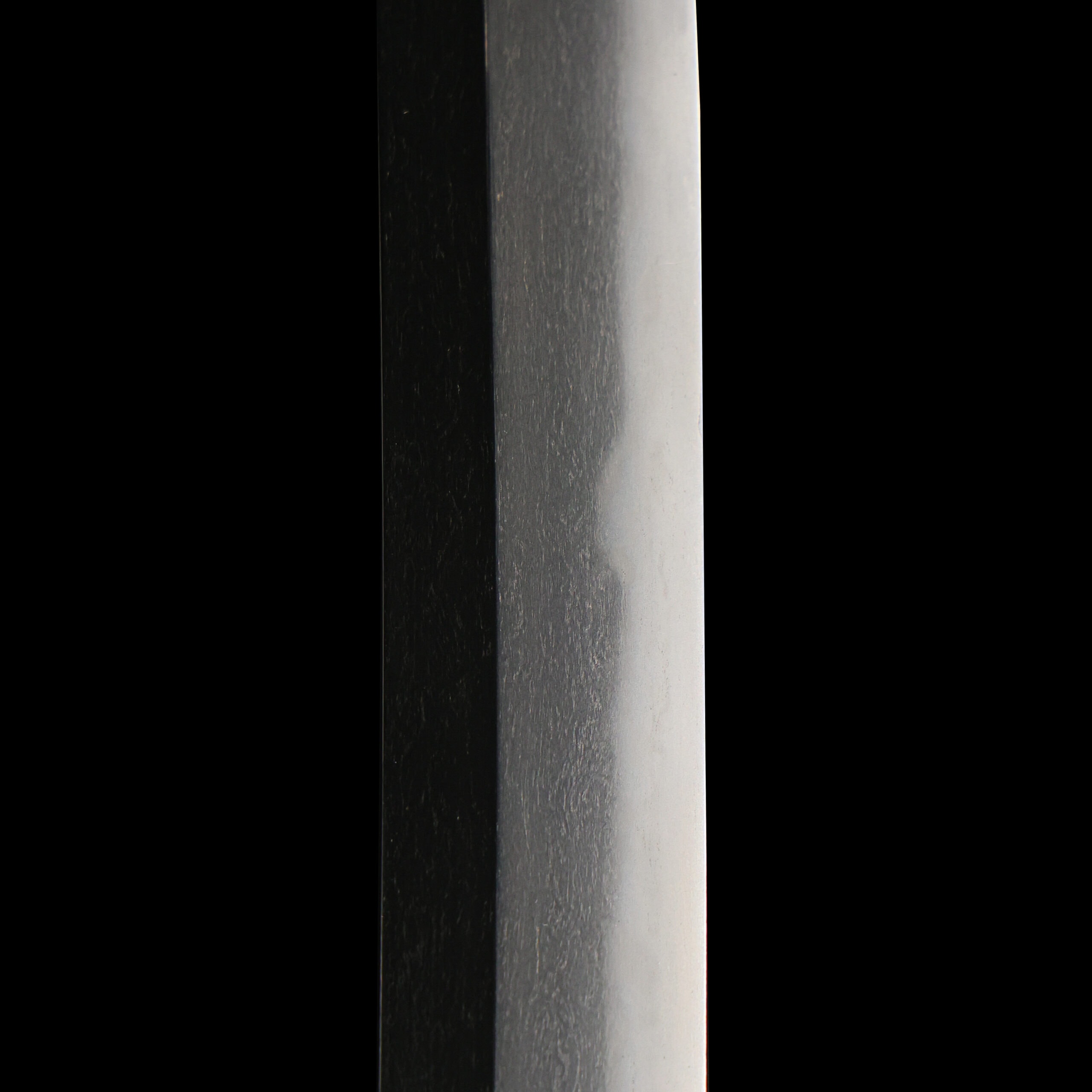
Morishige's forge work is characterized by , sometimes with tending toward the edge, upon which a faint appears -- a hallmark of the lineage. The takes as its principal motif a large, complex described as koshi-hiraki -- an opened-waist pattern -- mixed with , producing bold and flamboyant undulations with and entering throughout. The is deep, adheres well, and activities of , , and occasional are present. The tends toward being tight with adhering, and the is consistently , turning back in or with a pointed tip. Later-period works by the Shinkuro generation display none of the characteristic traits, showing instead no difference from the general type termed , evidence that the group had by then been fully absorbed into the school.
The consistently praises Morishige's works for their (sound and well-preserved) condition of and , and characterizes the workmanship as flamboyant and attractive. His blades clearly demonstrate the characteristic style of the lineage, and they are recognized as excellent examples of that tradition. The trajectory of the group as reflected in Morishige's work -- from the distinctive opened-waist of the period to the eventual convergence with mainstream production in the era -- provides valuable material for understanding the absorption of subsidiary lineages into the dominant school. Works bearing the Shinkuro name and dated inscriptions such as the Kyoroku era (1528--1532) are regarded as precious reference material for the study of this progression.