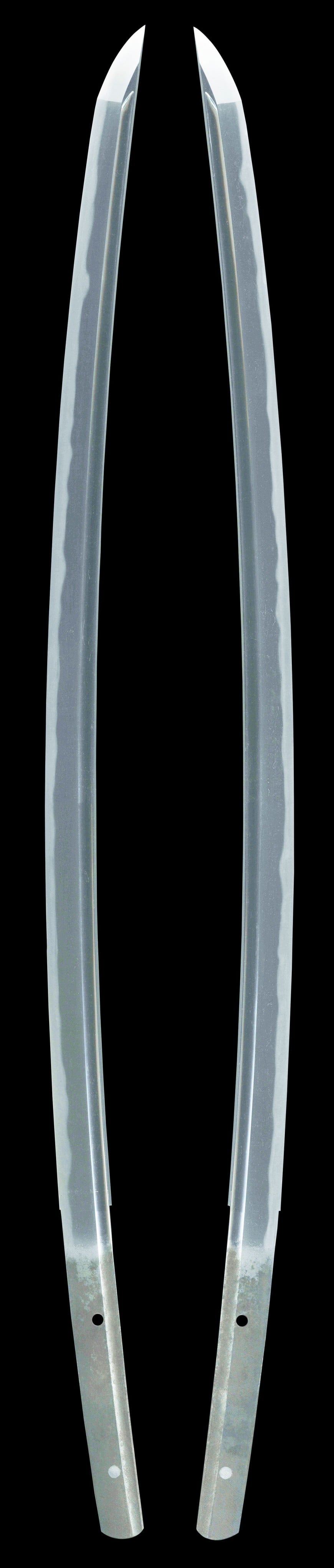
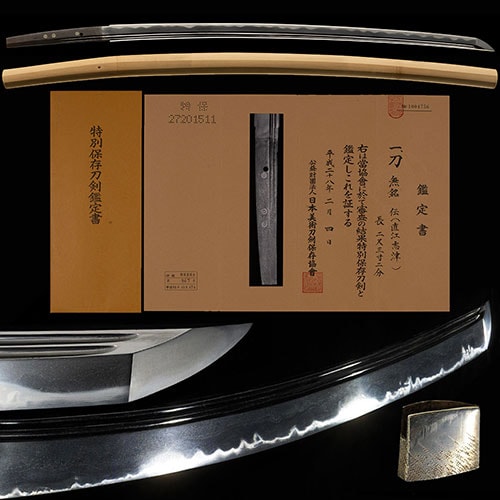
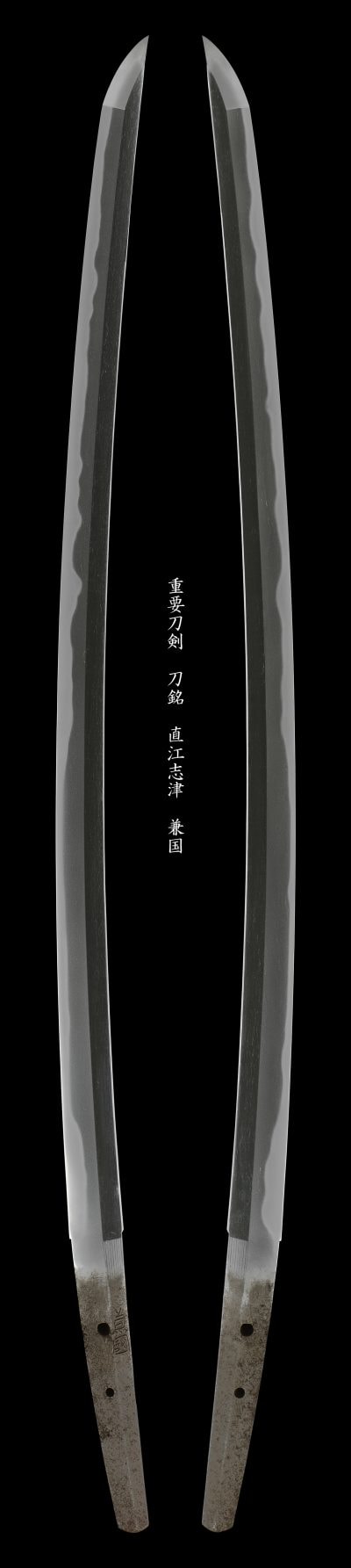
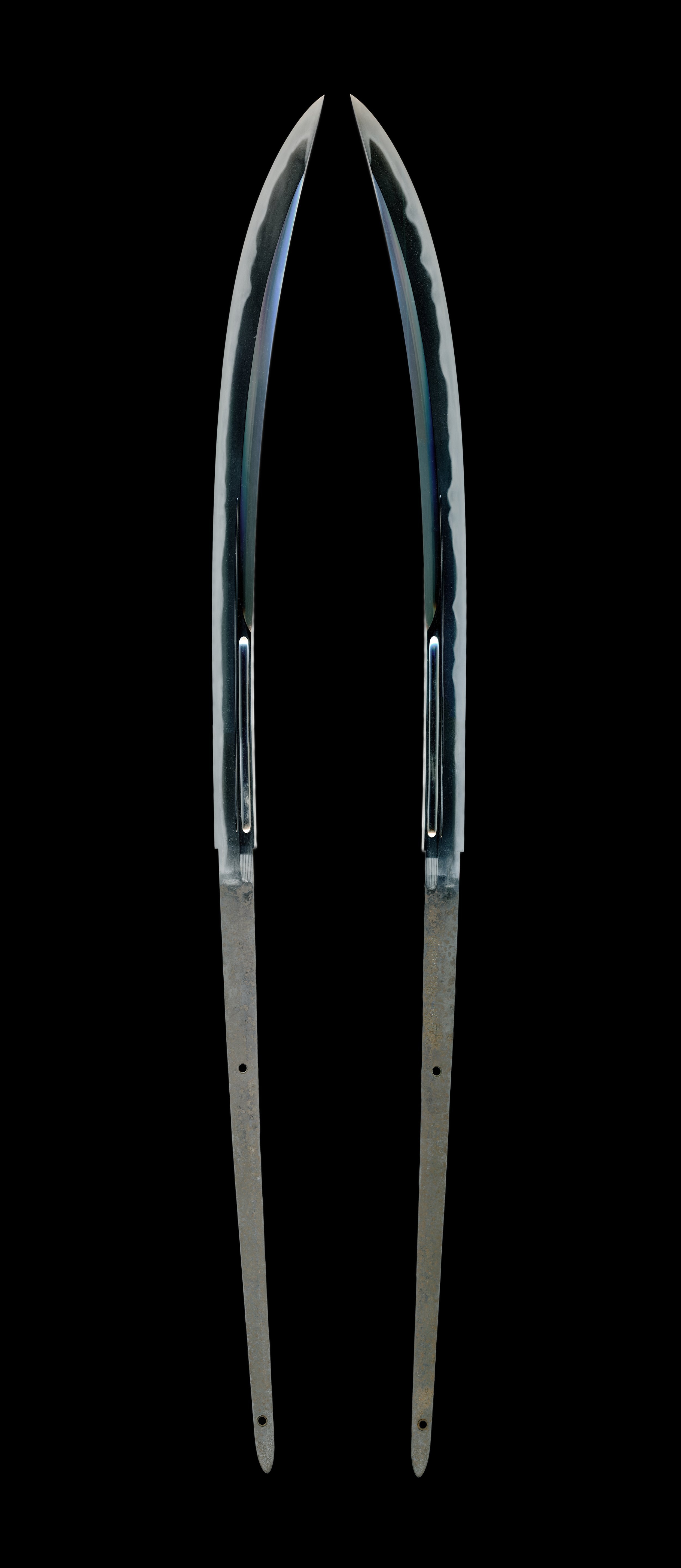
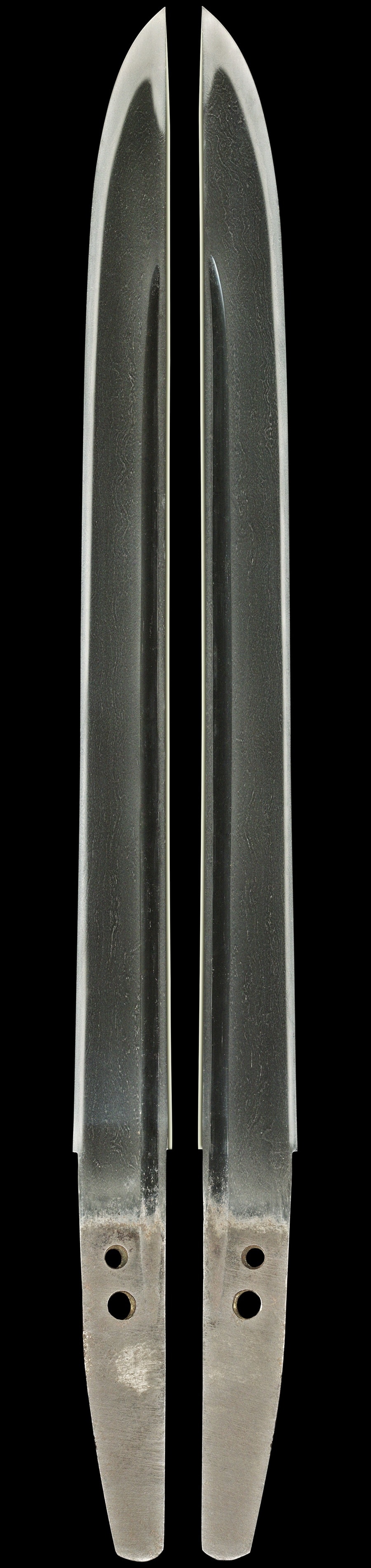
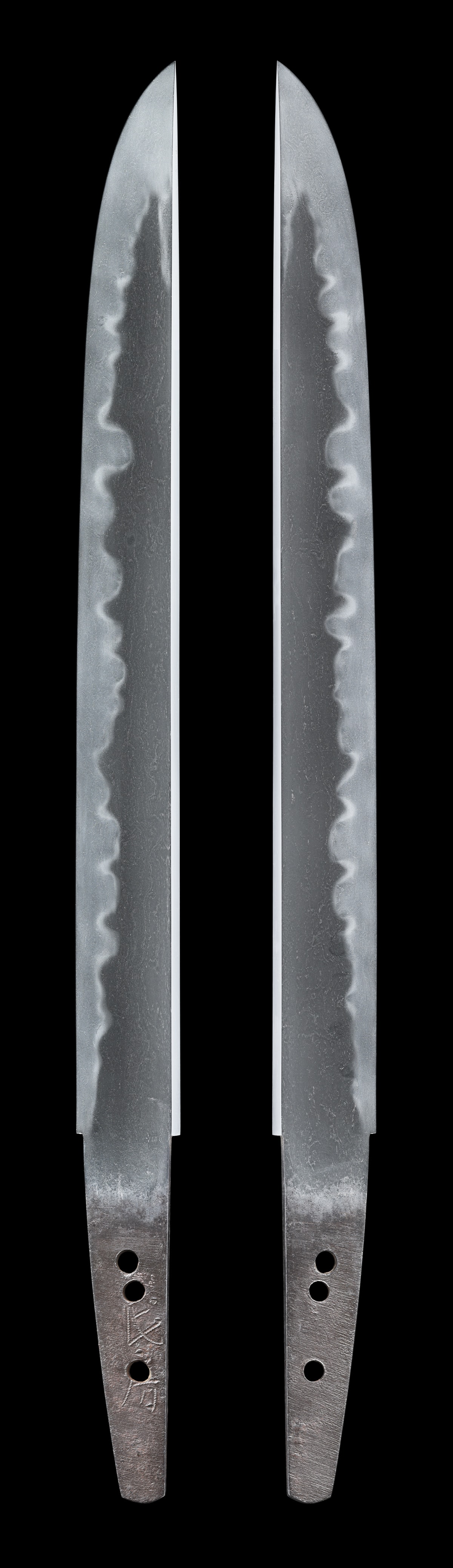
Saburō Kaneuji is one of the most celebrated swordsmiths of the late to periods, universally counted among the Ten Great Disciples of Masamune (Masamune jittetsu). Originally a member of the Yamato group, Kaneuji studied under Masamune of and subsequently took up residence at in Province, from which locality he derived his appellation — accordingly, when one speaks simply of "," it signifies Kaneuji. Among the Ten Disciples, he is consistently regarded by the as one of the smiths whose manner most closely approaches that of Masamune himself. His earliest works, produced before his period of study under Masamune and signed with the name Kanetsugu, are distinguished as "Yamato " and retain a pronounced Yamato flavor in both forging and temper. It is characteristic that, throughout his mature production, one can discern Yamato-style and -style elements alongside his command of the tradition.
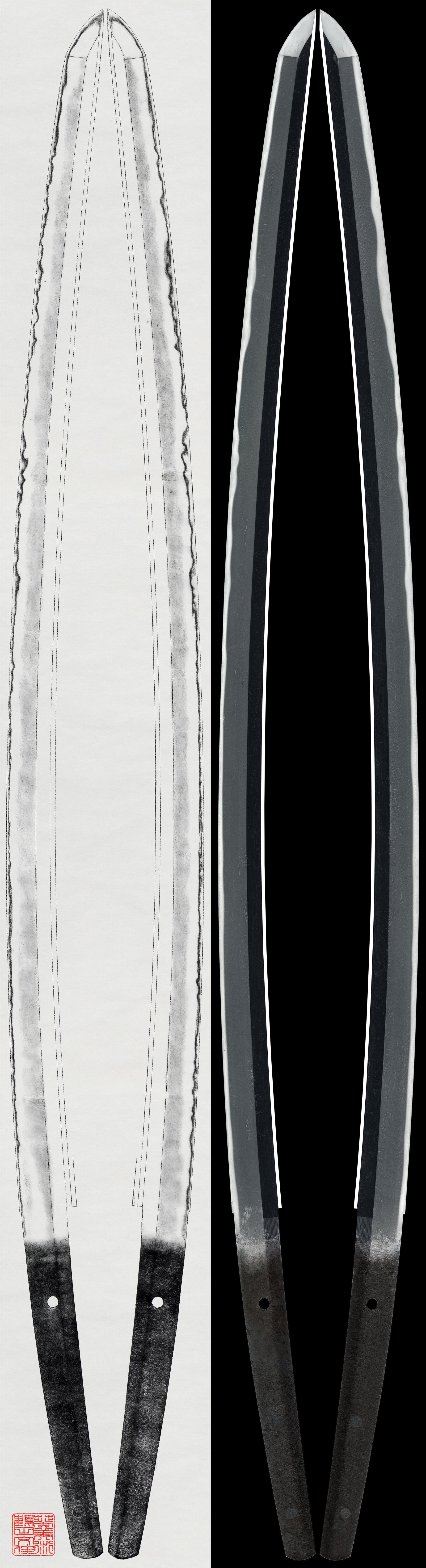
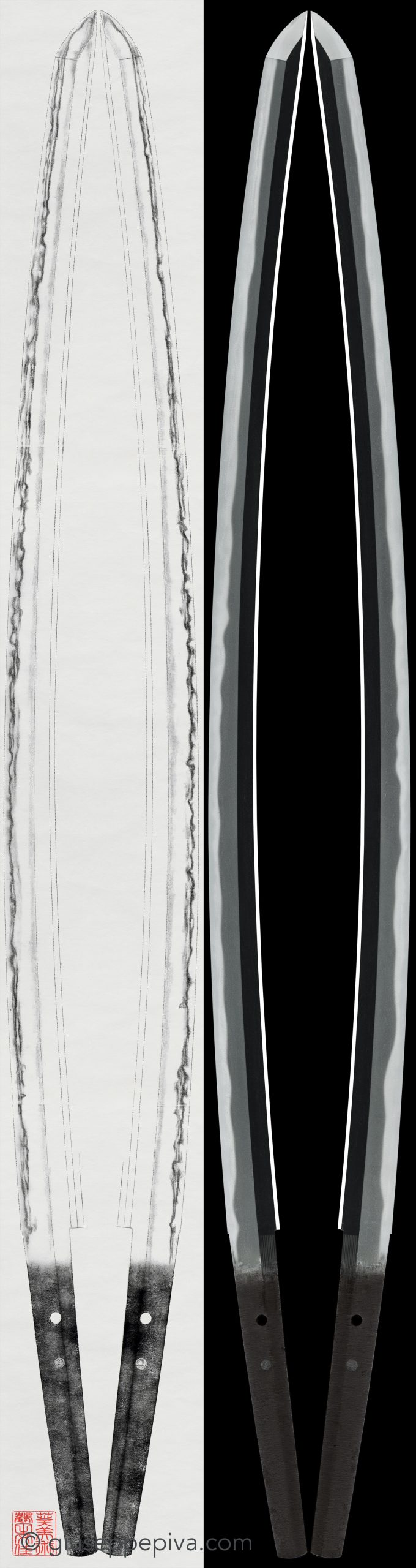
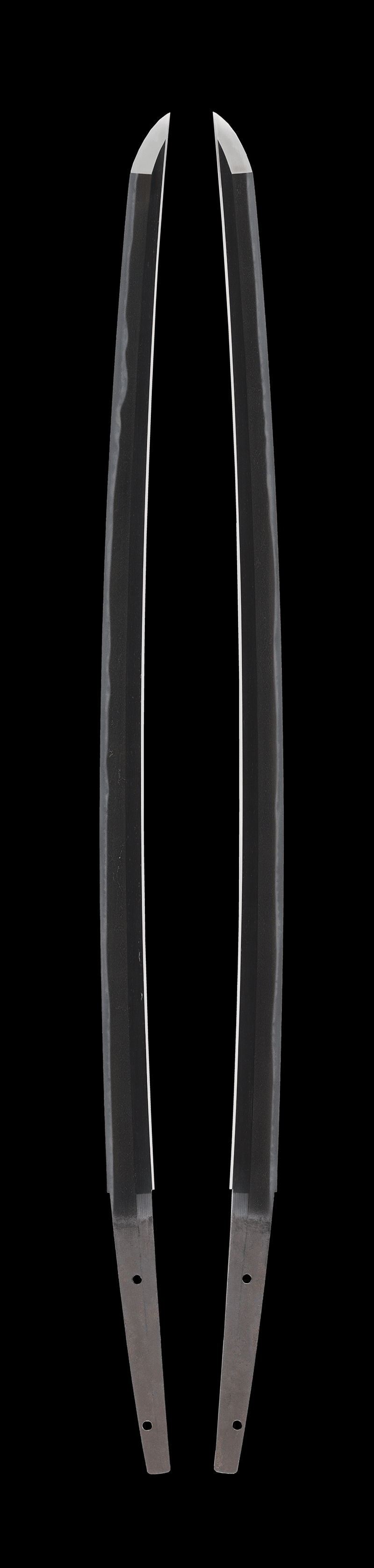
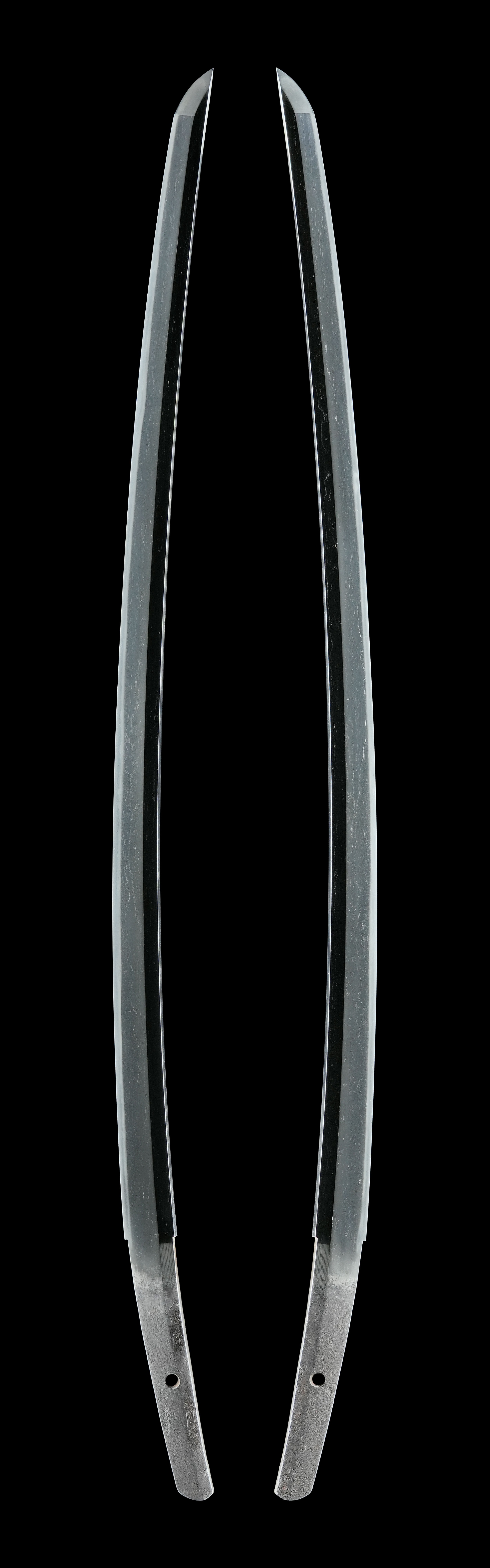
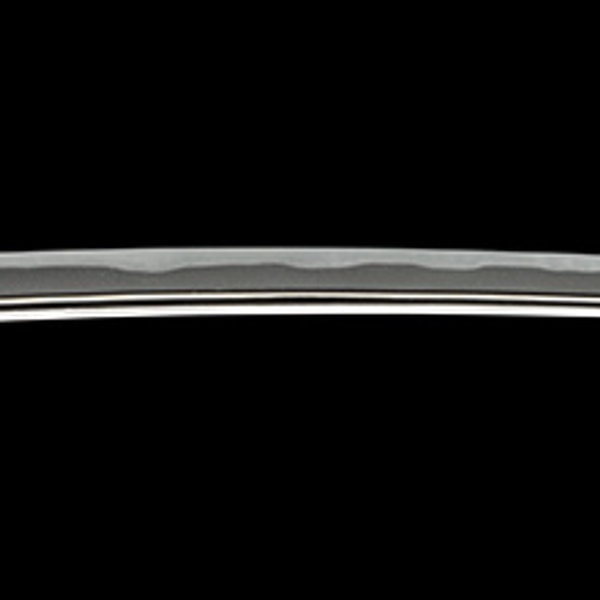
The of is typically an mixed with and , frequently showing a tendency toward — a flowing, standing grain that is one of the principal diagnostic features by which his work is distinguished from that of pure masters. Fine adheres thickly and pervasively, with abundant entering throughout, producing a steel that is characteristically clear and bright (). In the finest examples, the forging displays a distinctive — a moist, luminous softness in the iron. The is fundamentally -based, mixing , , -like elements, and the pointed forms that are especially diagnostic. Along the appear , uchi-noke, and , with -like effects emerging where these activities converge. The is vigorous and thickly applied; and run profusely, displaying the subtle fascination of characteristic of the highest rank of the tradition. A further hallmark is the tendency for the to run in a linked sequence. In the upper half, the temper often becomes boldly , showing pronounced rises and falls that lend abundant variation. The characteristically tends toward or turns back in with vigorous and — features that strongly bring out the distinctive character of this smith's work.
At a glance, a blade by displays a realm of workmanship that calls to mind the upper ranks of masters, yet the presence of in the forging, the -inclined tendency of the , and the linked and within the are the essential characteristics by which his work is distinguished and affirmed. The consistently praises the bright and clear , the beautifully thick characteristic of superior -tradition workmanship, and the overall vigor and presence of both and . His finest pieces are described as works of graceful excellence — powerful blades replete with points of appreciation, overflowing with brilliant flamboyance, and conveying a sense of commanding spirit. It is frequently noted as an additional virtue when both and remain — sound and well-preserved. Among the Ten Disciples, Saburō Kaneuji occupies a singular position: a smith who absorbed the full measure of his teacher's genius while retaining the indelible imprint of his Yamato origins and residence, producing blades that are at once unmistakably of the tradition and distinctly, definitively his own.