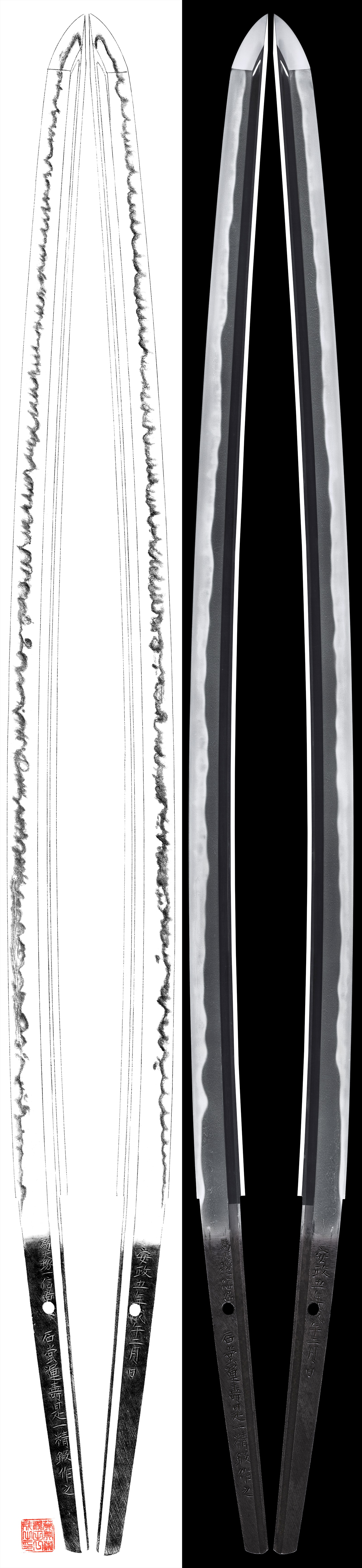
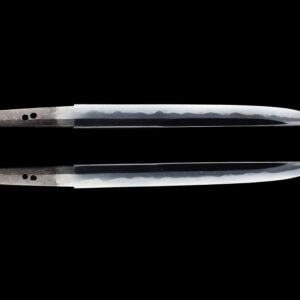
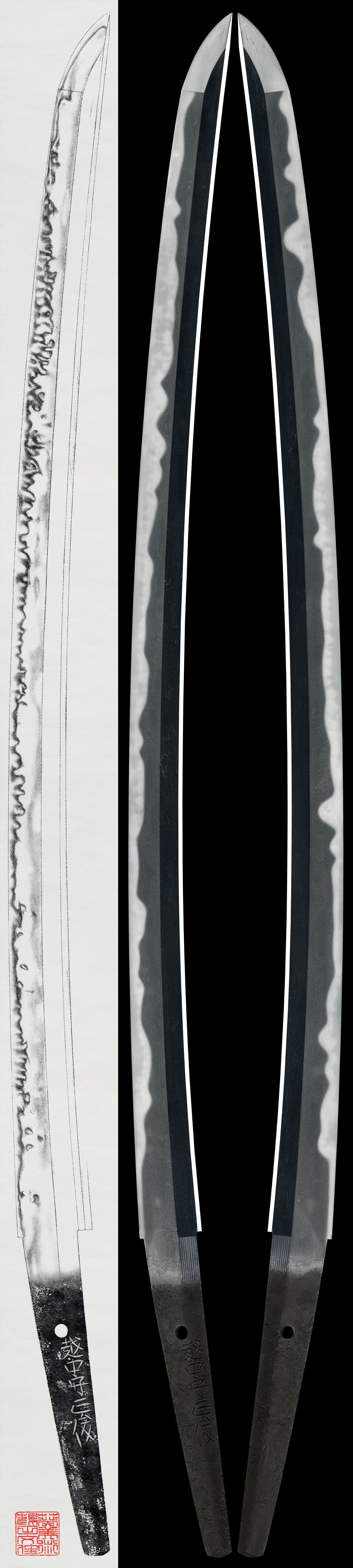
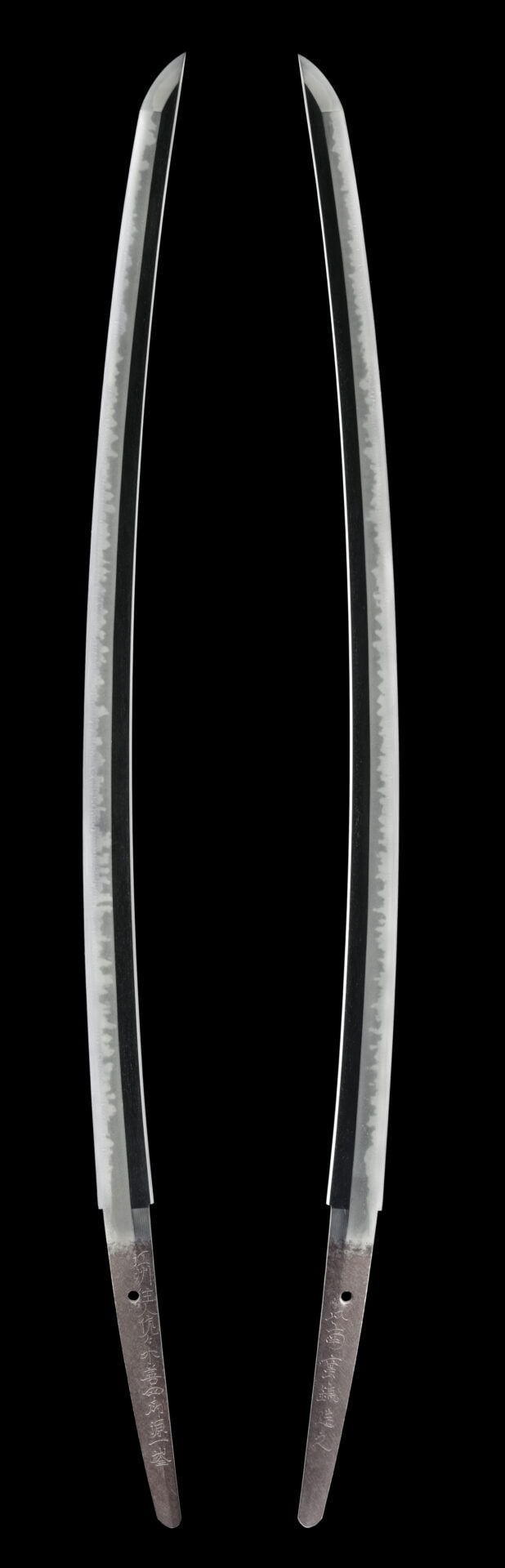
On the reverse of a now in Kochi is cut a gold-inlaid inscription recording a two-body cutting test performed at in Bushu in Manji 2 by Yamano Kaemon-no-jo Nagahisa, and the hand signed the Yamato-no-kami Yasusada in a bold five-character . That pairing of a robust signed blade with a Yamano test-cut runs through almost the whole of Yasusada's surviving work and is the readiest mark of him. He was born in Genna 4 (1618) under the surname Tomita, read Tonda, and the published sources, following the Bengi, now place his origin not in , as was long believed, but in the Kishu Ishido group, from which he came up to by Keian 1 to become one of the representative makers of the - era. The older account that made him a pupil of the first-generation Yasutsugu the published sources reject on chronological reasoning, since a blade inscribed made at age fifty-three and dated 10 fixes his birth in Genna 4, three years before that master's death; the strongest reading instead makes him a pupil of Izumi-no-kami Kaneshige, on the evidence of shared workmanship, tang construction, and the common presence of the Yamano cutting inscriptions.
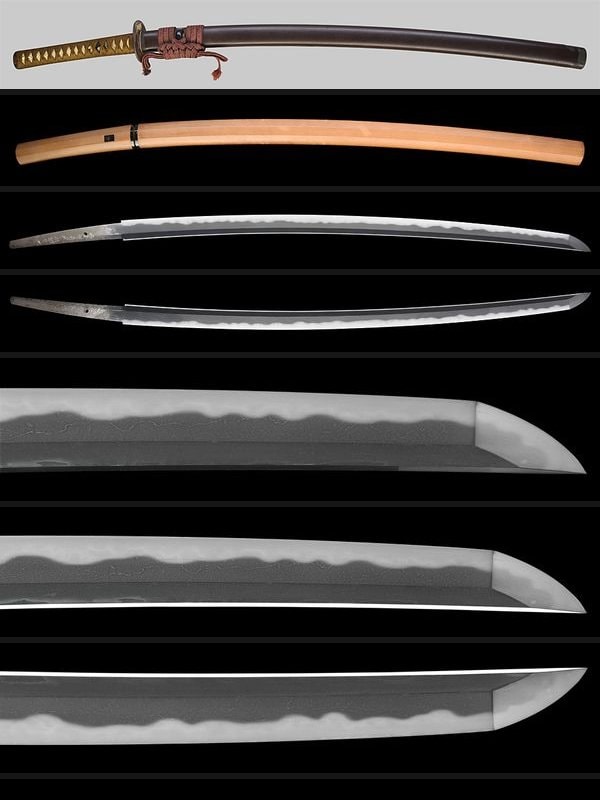
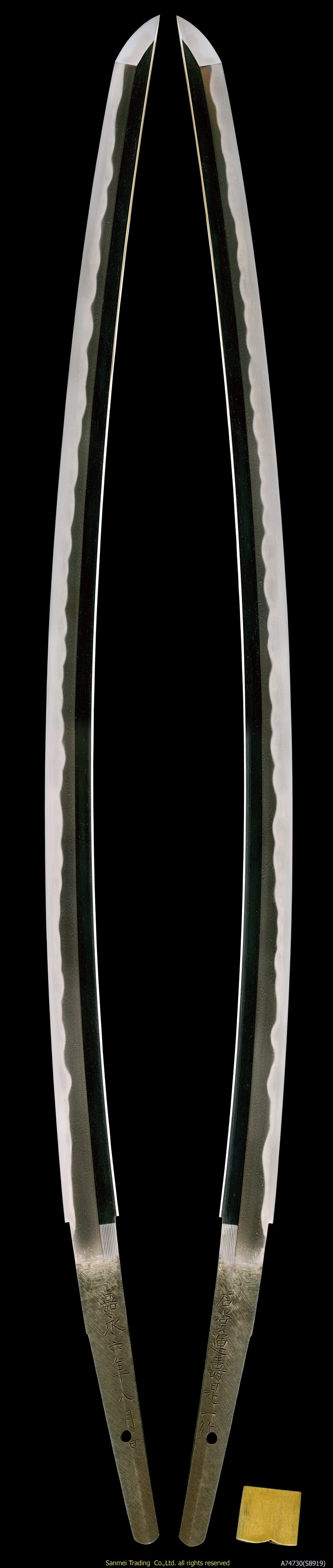
His is the heavy of the mid-seventeenth century, with , the shallow, the shinogi high and the broad relative to the blade width, with a sense of at the base and a compact , the often thick and the build frankly robust. Over this he forges a tightly packed , mixed in and at times conspicuous on the , the steel taking on a somewhat blackish tone where the grain stands a little; into it dust-fine settles thickly and fine enter well, so that the reads as close and bright in his best work. The temper that most distinguishes him is a carrying whose heads and valleys turn angular, mixed with and somewhat pointed elements, the deep and adhering well, with coarse intermixed here and there until the line grows uneven, fine and running through, and the inclining to a subdued, tone. The published sources name that angularity of the , together with the and the steep drop of the , as the points by which his hand is told.
The answers the temper below it, running or shallowly and turning back in , sometimes with a slightly deep return, the tip frequently brushed into ; on one Manji the is straight while the carries a faint nuance, the kind of small asymmetry that recurs across his work. Activity outside the is part of the picture as well: small -like drift through the on some blades, and the , and finished with and steep file marks, is itself a Yamano-consistent feature that the published sources count among the evidence for the Kaneshige attribution. is uncommon, though one early carries on both faces, short on the and long on the .
The published record divides his work into two manners, in a sentence that recurs almost verbatim across his designations: 「安定の作風は、大別すると二様があり、一つはのたれに互の目を交え、のたれが角ばる傾向のものと、他は互の目を主調とした乱れ刃であり、同作中では、前者の作例が多い」. The first and more numerous is the angular mixed with described above; the second is a led by , rising at times into a large, high-tempered pattern of with abundant , and , a more florid result that the sources count the rarer of the two. The angular read within the second manner ties it back to the first and lets his individuality be seen even where the pattern is least typical. His dated works run from Keian through Enpo, but the published sources regard the Manji era as his time of full maturity, noting that 「万治頃が大成期とみられ、最も覇気のある作品が多い」.
In standing he is read against the smiths nearest his own hand rather than against his nominal teacher: the published sources find his manner closest to Izumi-no-kami Kaneshige, with whom he shares the clarity of and , the tang construction and the Yamano inscriptions, and at times close to Izumi-no-kami Kanesada, while in style his blades are said to share elements with Kotetsu, the celebrated contemporary whose robust katana his own most resemble. His bond with the test-cutter is the firmest thread of all: among smiths only Kotetsu carries the Yamano family's gold-inlaid cutting inscriptions in comparable density, and the published sources record that on Yasusada the count of Nagahisa's test-cuts is reckoned 「馬徹とほぼ同数かそれを上回ると思われる数」, roughly equal to or exceeding that on Kotetsu. A second generation also signed Yamato-no-kami Yasusada, but its output is extremely scarce, so that the name in practice belongs to the first.
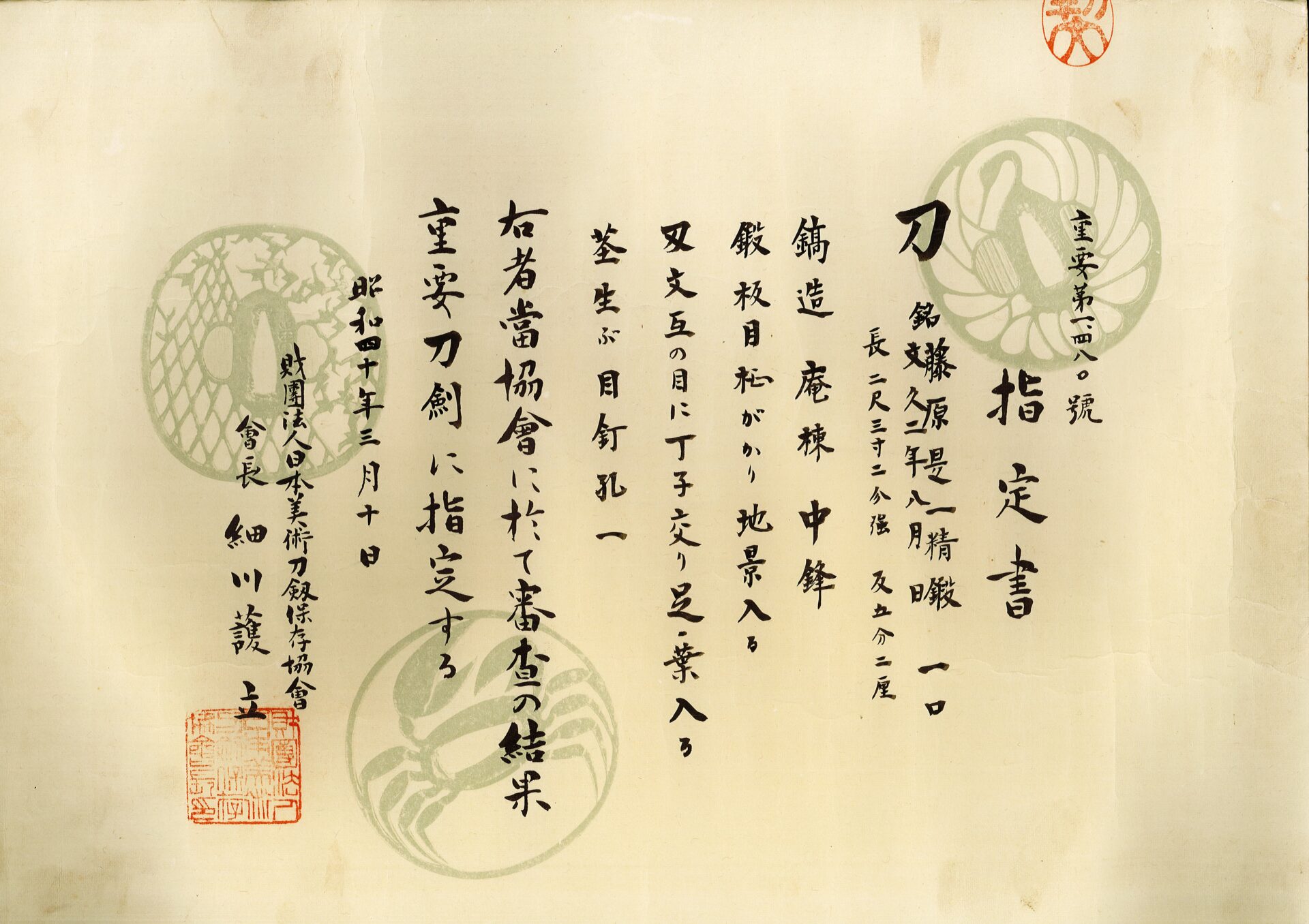
Yasusada's blades survive in the tier, his record carrying no higher designation; the eight blades on official record here are all , seven of them signed and most bearing the Yamano cutting test. Provenance attaches to the test-cutter himself, the gold-inlaid inscriptions of Yamano Kaemon-no-jo Nagahisa, called Eikyu, standing on the reverse of his finest work, with one sword also naming a holder, Ichiha Sanshiro, whom the published sources leave to further research. The eighth-session masterpiece in Akita the calls 「同作中の傑作の一本である」, and of the broad, robust Manji in Kochi it writes 「豪壮な造込みに相応しい出来映えを示した本作は同工の入念且つ会心の一口と言えよう」. A signed Yasusada with its Yamano test-cut intact is not beyond the reach of a serious collector in the way the highest-designated blades are, since most of his record sits in the tradeable and tiers; even so such blades are held more than traded, and a fully documented example, robust in build and carrying Nagahisa's inscription, comes to market only from time to time and stands among the more sought pieces of the - when it does.