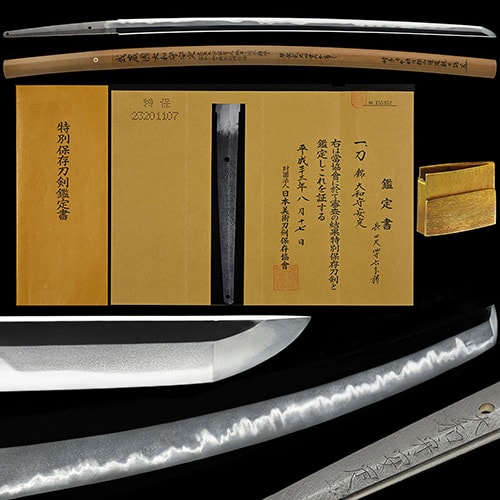
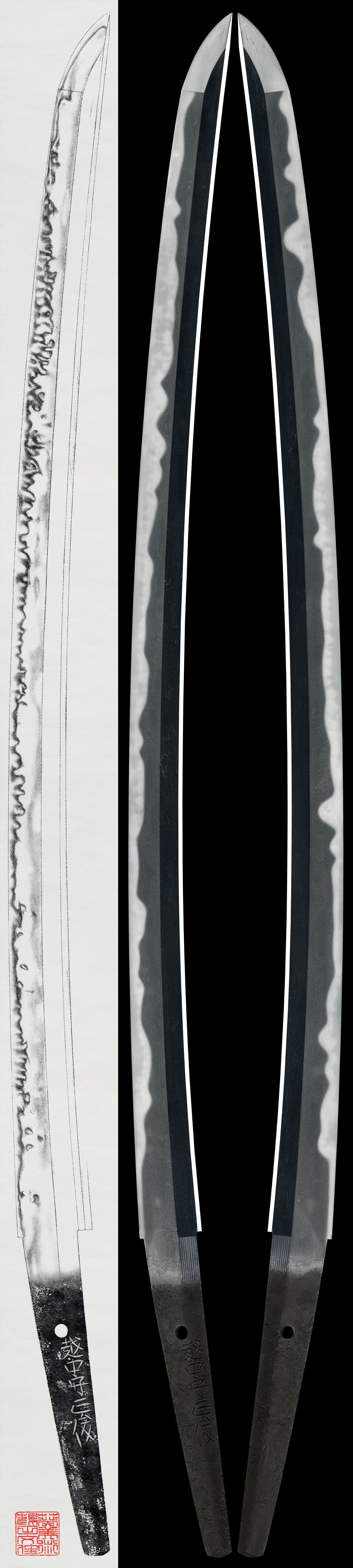
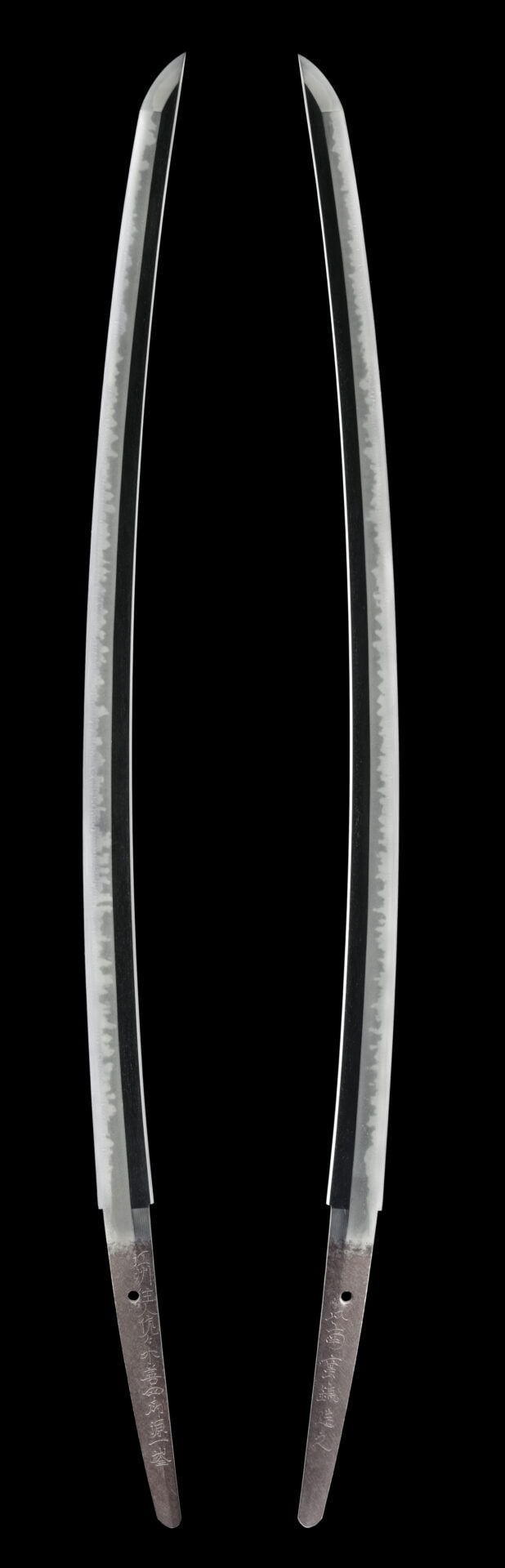
On the of a dated Shoho 3 (1646), eighth month, cut on the in a large, bold five-character hand and joined on the reverse by a gold-inlaid cutting test, stands the earliest dated work that survives from Heki Mitsuhira, the blade the published sources call the most retrograde of his dated pieces and a resource of exceptional value for the study of him. Mitsuhira signed Minamoto Mitsuhira, and sometimes Heki Dewa-no-kami Minamoto Mitsuhira beneath a chrysanthemum crest; he was born in Gamo district of Omi, eldest son of Yamashiro-no-kami Ippo of the Kyo-Ishido line, and first styled himself Heki Shichirobei. He stands, the states plainly, as one of the most outstandingly skilled smiths who represent the Ishido, the equal and senior of Tsushima-no-kami Tsunemitsu and one of the two pillars of that school. His program was a revival: to forge again, in the bright of the early- workshops, the gorgeous of the old Fukuoka- that the medieval makers had carried over a .
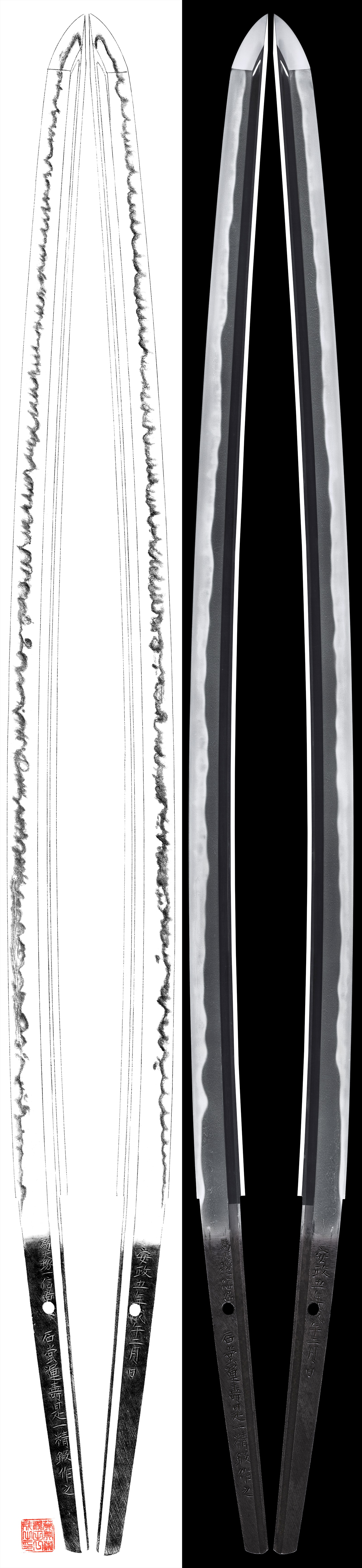
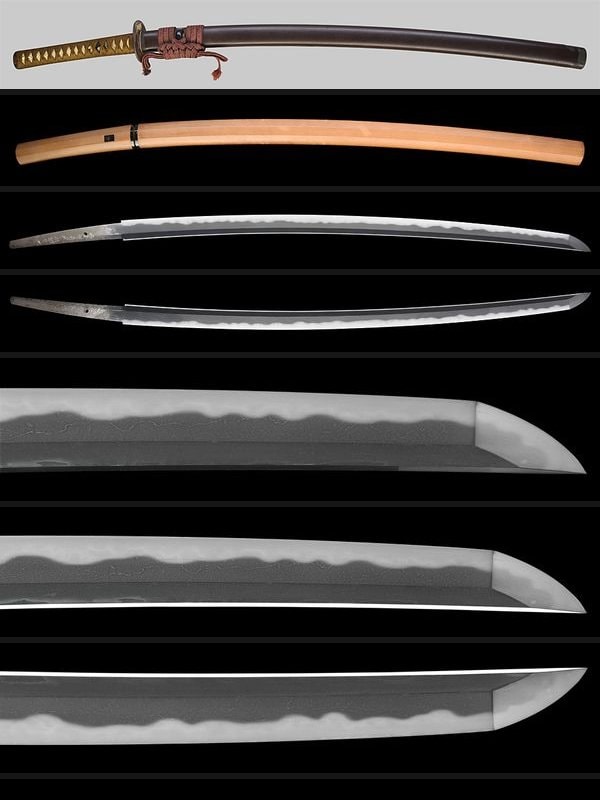
The feature that names his work is the itself, and the published sources read it as his forte. He tempers it chiefly in , mixing many kinds of teeth into one lively, crowded line: and , round-topped and small , angular elements and others tending to a point. The rises and falls in marked height, and enter vigorously, and the runs bright and clear. The result is what the institution calls a splendid that recalls the old , and across his blades the names the achievement the way each time, a piece in which he privately emulated the old and succeeded. On his most florid small gather at the heads of the temper and fine is drawn through it, touches the sources read as lending an antique flavor to the otherwise new-sword brightness.
The beneath that temper is what carries the comparison the rest of the way. He forges a or an mixed with and flowing , tightly worked, with the gathered dust-fine, and over it stands a clear , the - reflection that almost no other hand reaches with such conviction. It is the single feature of the that most marks his revival, the old reflection raised again on a blade, and the published sources note it as prominent on piece after piece. The answers the flamboyance of the quietly, running straight or in a small into a , turning back shallowly, often with a touch of at the point. and alike are described as sound, the steel bright rather than dark, the whole reading as seen through the cleaner light of the forges.
Mitsuhira is best understood not through dated periods, since his dated blades are few, but as one perfected manner read at two intensities and set on the build of his age. The constant is the over its ; the variation is the . On his finest pieces the published sources mark a tightening and a further brightening, writing of the that, in comparison with his usual works, the is somewhat tighter and shines with a particularly bright clarity, and that even among his oeuvre it shows an exceptional sharpness of effect. His blades carry the broad body, the thick and the contracted of the era, yet the sources read the silhouette carefully as a transitional one: at a glance it recalls the - shape, but the stands somewhat more and a touch of remains at the base, a transitional shape in the shift from Keicho- toward - common to the smiths of the 'ei and Shoho years. He signs a long of distinctive script in bold, thick chisel strokes on the , sometimes under the chrysanthemum crest with his titles Dewa-no-kami and Dewa-nyudo Taishin hokkyo.
What sets him apart within his own school is finally a matter of the signature, and the published sources make the point through the very biography they repeat. By the common account Mitsuhira moved from Omi to alongside Tsunemitsu, -no-kami Munehiro and the first Ishido Korekazu, but the corrects both the route and the kinship from surviving inscriptions. The Akasaka-signed blades show that the Ishido smiths went first from Omi to Kyoto and only afterward on to rather than directly; and the old tradition that Mitsuhira was Tsunemitsu's younger brother is set aside, since dated pieces worked back show that he was in fact six years the elder. He used the Minamoto surname while Tsunemitsu used Tachibana, and for that reason, though their workmanship is granted to share much, the brotherhood is doubted. The two are thus the twin masters of the Ishido whose hands run close and whose names part only at the , and it is in Mitsuhira's that the revival is reckoned to have succeeded most fully.
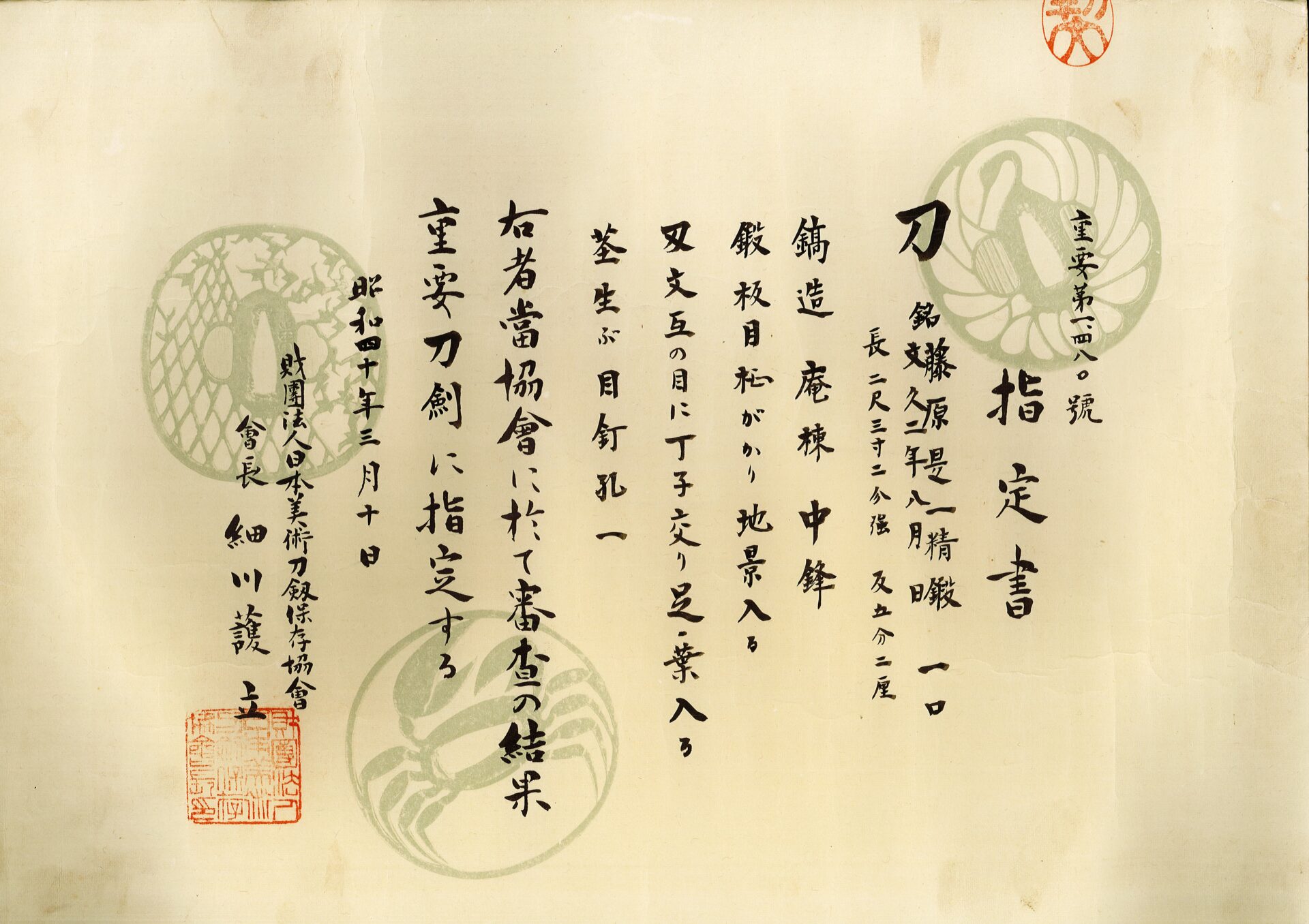
Mitsuhira's record on the official rolls is concentrated and high in quality rather than large: of his designated works ten stand in the and tiers, the single being the Shoho 3 with its gold-inlaid three-body cutting test, the rest . His designations rise no higher than these, and his blades enter the records signed, every one of them, so that his oeuvre is an open book read off the long rather than a body of attributions. Fujishiro rates him Jo-jo , the upper-superior grade. The provenance recorded on these blades is thin, with no house or museum named in their own data, and what survives of him is held quietly in private and public hands. For the collector this is a smith encountered from time to time rather than freely: a designated Ishido of his comes to market only now and again, a landmark when one does, prized as the high point of the school's revival and recognized at sight by the bright standing over its old- .