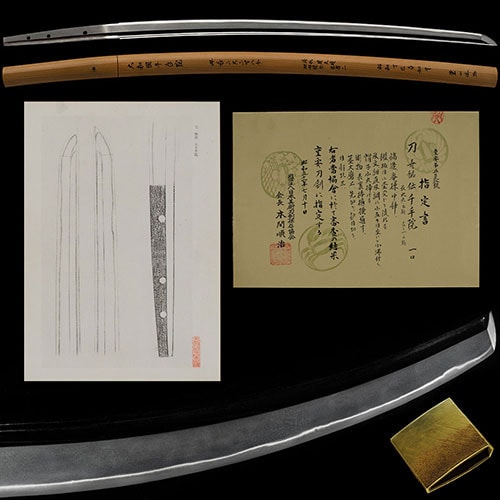
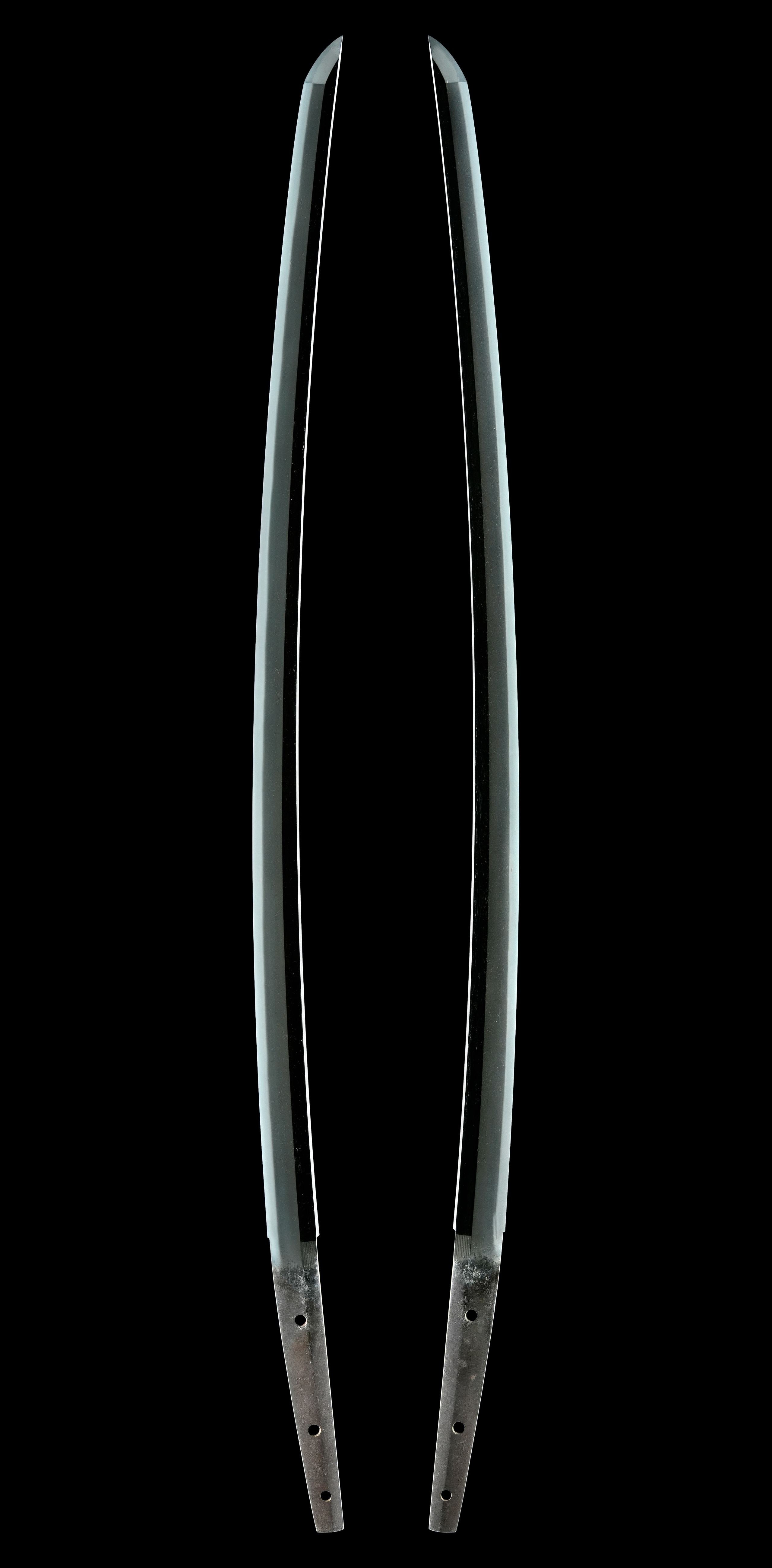
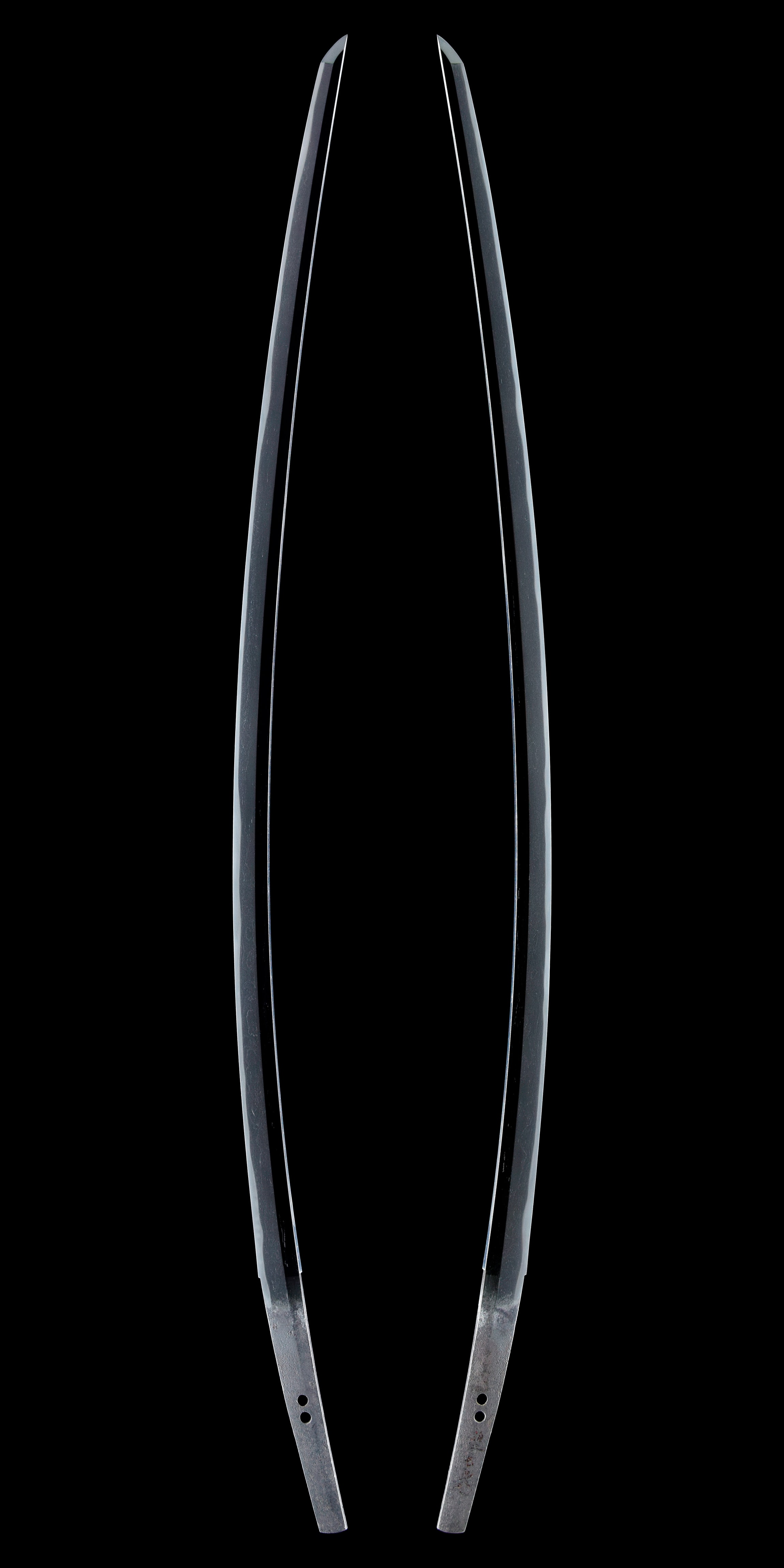
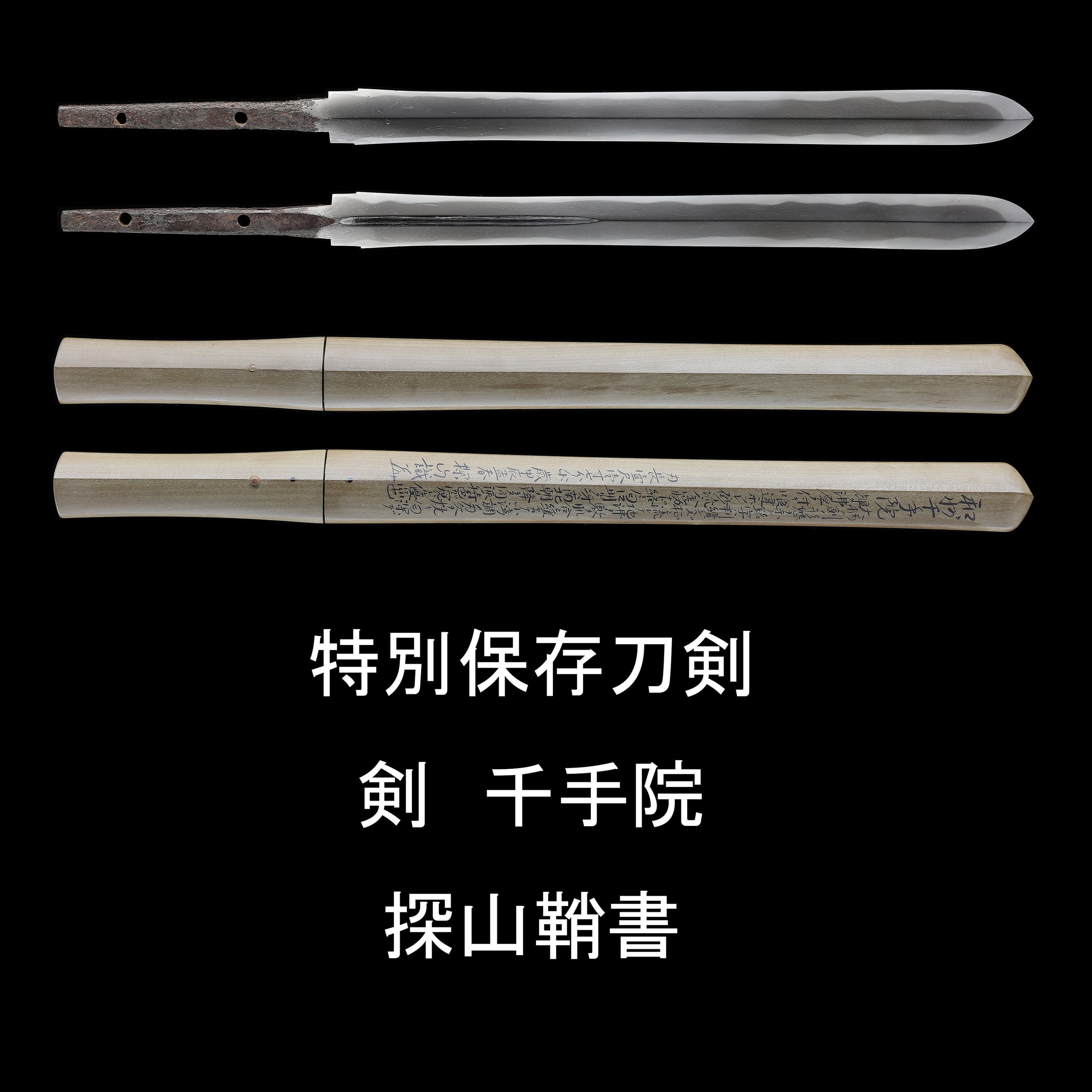
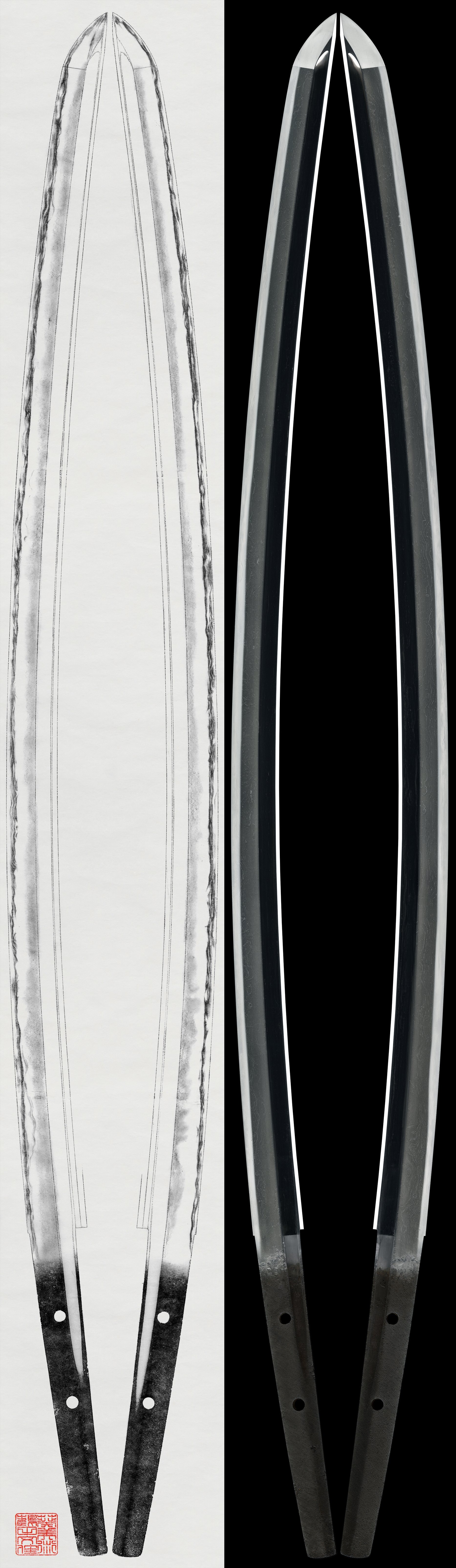
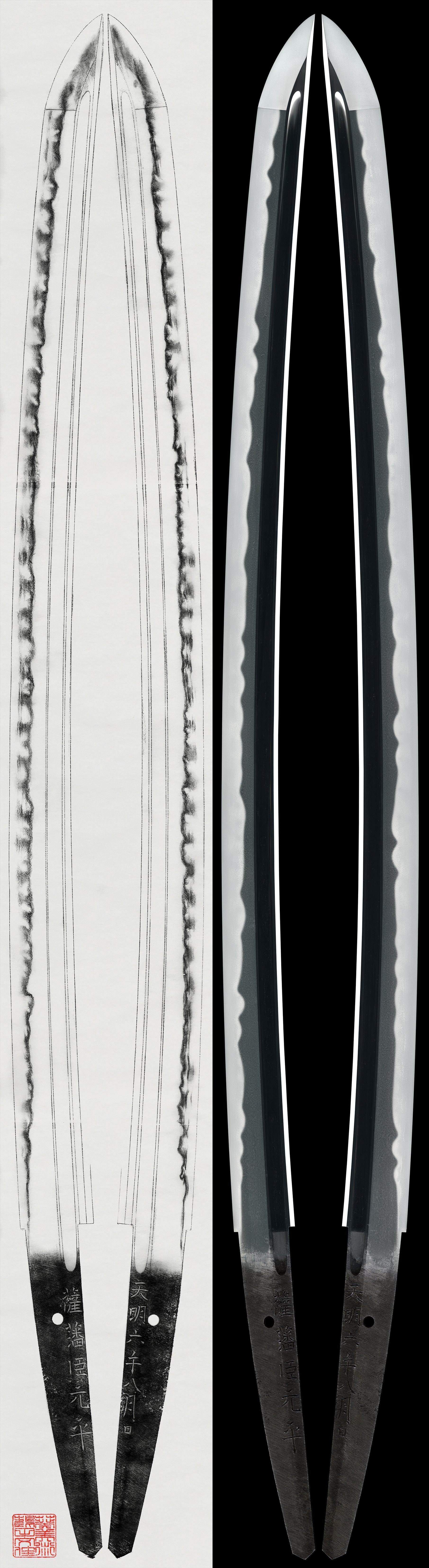
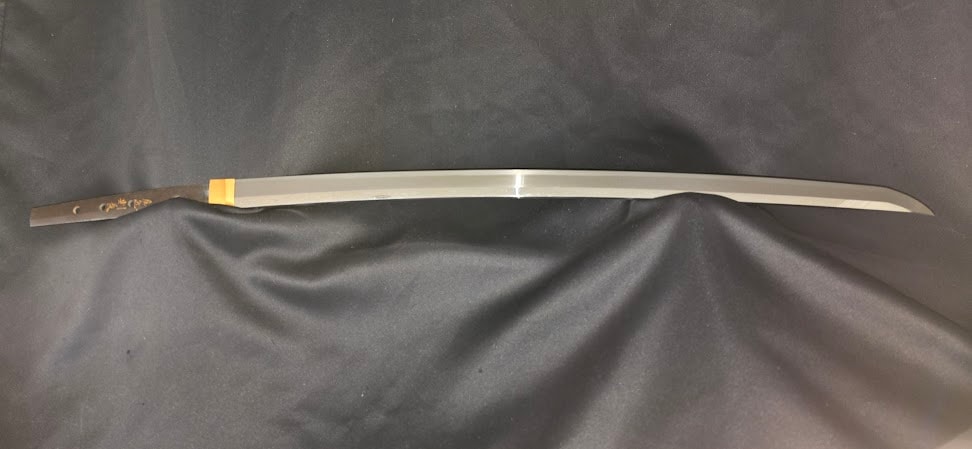
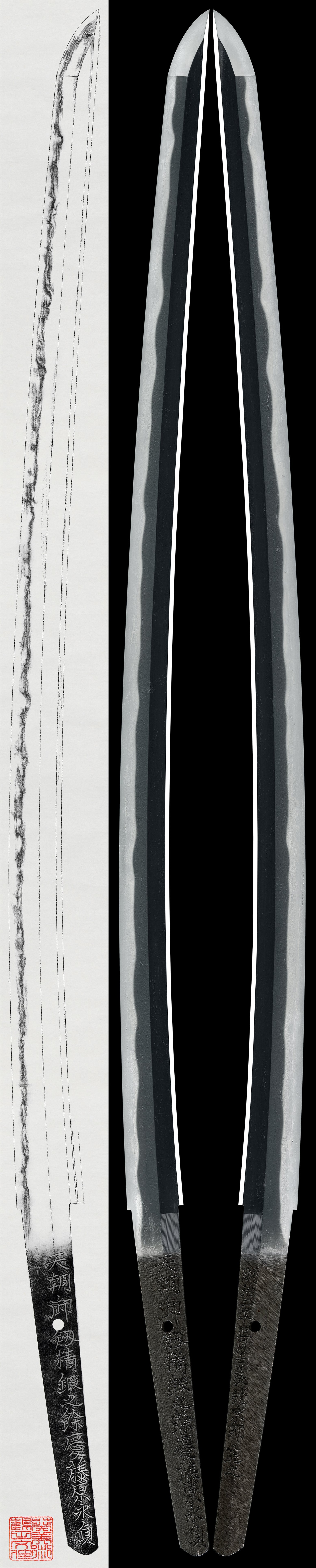
Aritoshi was a swordsmith of the lineage within the Yamato tradition, active during the late period. Sword reference works traditionally place him around the Bun'ei era (1264--1275); however, no works bearing a Bun'ei date have yet been confirmed. A surviving dated Einin 6 (1298) establishes his period of activity with certainty. The relationship between the two-character signature "Aritoshi" and the three-character signature "Naga-Aritoshi," conventionally distinguished as first and second generations respectively, remains a subject requiring further research. Within the broader Yamato schools, Aritoshi occupies a distinctive position in the line, and extant signed works are notably rare.
Aritoshi's workmanship is characteristically built upon a forging pattern that flows conspicuously and becomes -inclined, with fine adhering thickly in minute particles and fine entering throughout. His temper is , or -based with mixed in, displaying , , , and along the edge, while fine and run through the interior of the . The boshiboshi typically shows slight returning in , often with present and, in some examples, . This tendency toward and within a fundamentally framework can appear somewhat unusual when viewed within the range of work, and constitutes one of Aritoshi's most distinguishing characteristics.
The consistently recognizes Aritoshi's blades as powerful in form, noting their wide , substantial weight, and robust construction. The forging is praised as well-ordered with no structural breakdown, while the in both and is described as beautiful, producing a bright and clear impression. The is characteristically -- bright and sharply clear -- and the distinctive features of his Einin-period workmanship appear unmistakably in both and . Because signed works of the school are so few, each authenticated example carries particular value as reference material, and Aritoshi's oeuvre is recognized as representing praiseworthy fine workmanship of the highest order within the Yamato tradition.