NihontoWatch MonNihontoWatchBETA
MarketEncyclopedia
NihontoWatch Mon

NihontoWatchBETA

Market
Encyclopedia
Overview·Kantei·Designations·Provenance·Work Types·Signatures·Lineage·School
OverviewKanteiDesignationsProvenanceWork TypesSignaturesLineageSchool
  1. Schools
  2. Yokoya
  3. Yanagawa
  4. Kikuoka
  5. Mitsuyuki

Kikuoka Mitsuyuki

光行

Jūyō
Vol. 14, No. 393 · Tsuba

Kikuoka Mitsuyuki

光行

14 ranked works

EraKan'en–Kansei (1750–1800)PeriodEdoSchoolYokoya>Yanagawa>KikuokaTraditionMachiboriGeneration1st generationTypeTosogu MakerCodeKIO001
1Jūyō Bijutsuhin
13Jūyō Tōken

Overview

Kikuoka Mitsuyuki was born in 'en 3 (1750) in Kandakajichō, , and trained under Yanagawa Naomitsu of the Yokoya lineage. Having matured through the guidance of the Yanagawa house, he attained full accomplishment as an artist and went on to establish the Kikuoka school as its founder, creating an independent line characterized by what the describes as a "careful and solidly executed" manner of working. His son was Mitsutomo, and his younger brother Mitsumasa; the brothers were influential metalworkers in and were also well known as bunjin — men of letters active as haikai poets. Both adopted the inherited artistic sobriquet "Senryō," passed down from their forebears, and Mitsuyuki styled himself "third-generation Senryō." He employed several art names throughout his career, including Doppōsai, Saika-an, Katsukenji, and Suiminsha. Dated works bear inscriptions from Tenmei 1 (1781) and Kansei 9, and he died in Kansei 12 (1800) at the age of fifty-one.

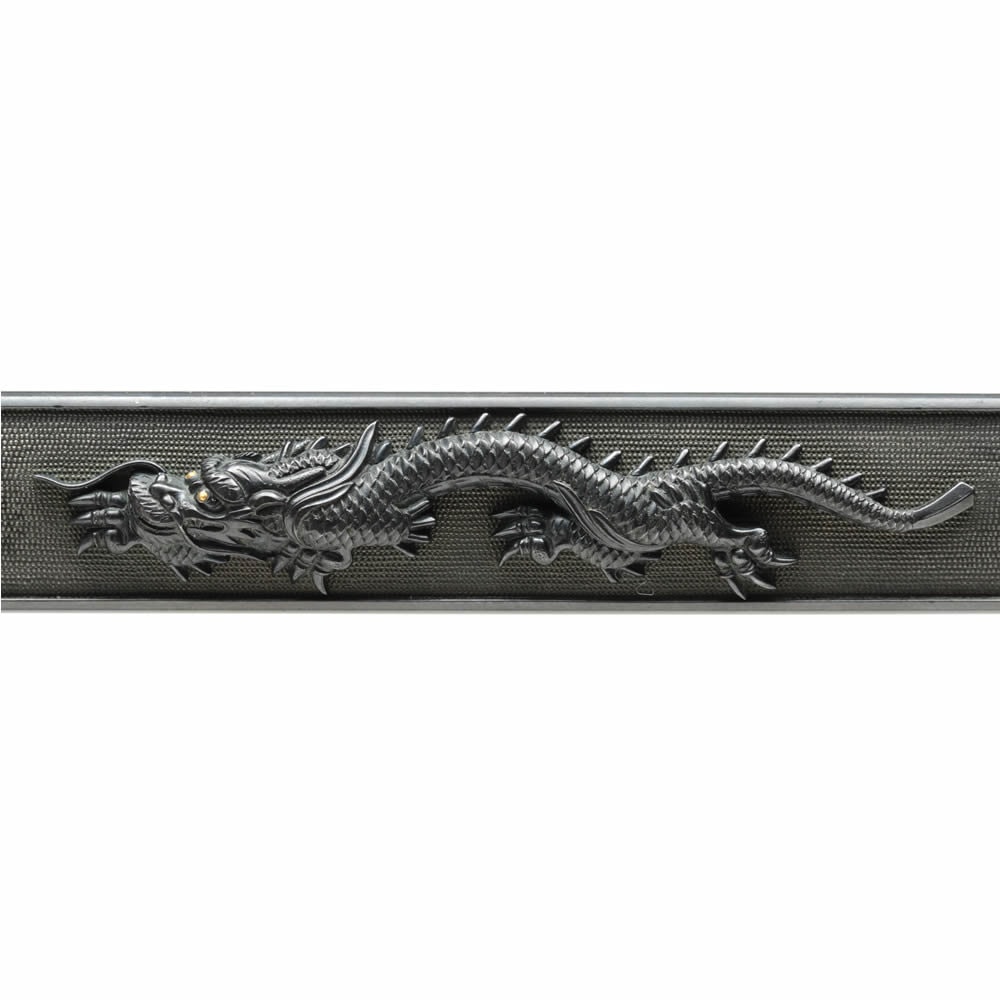
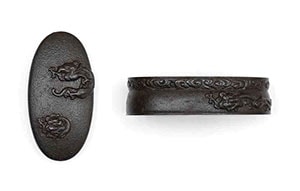
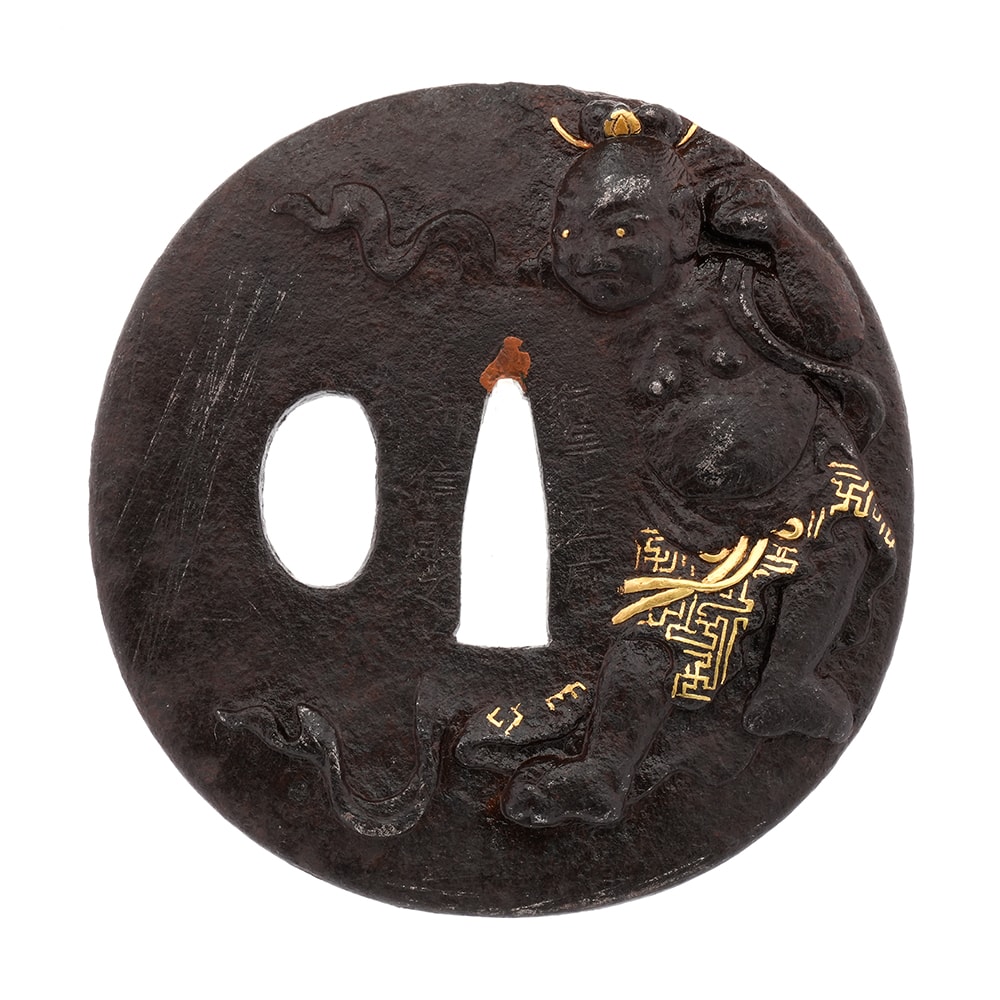
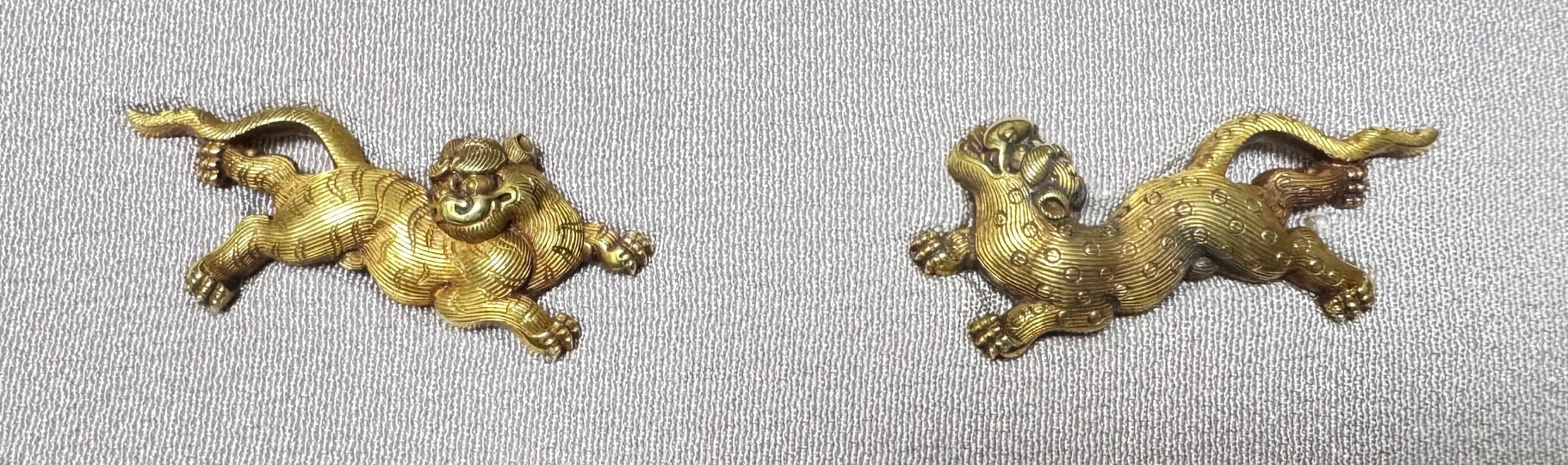
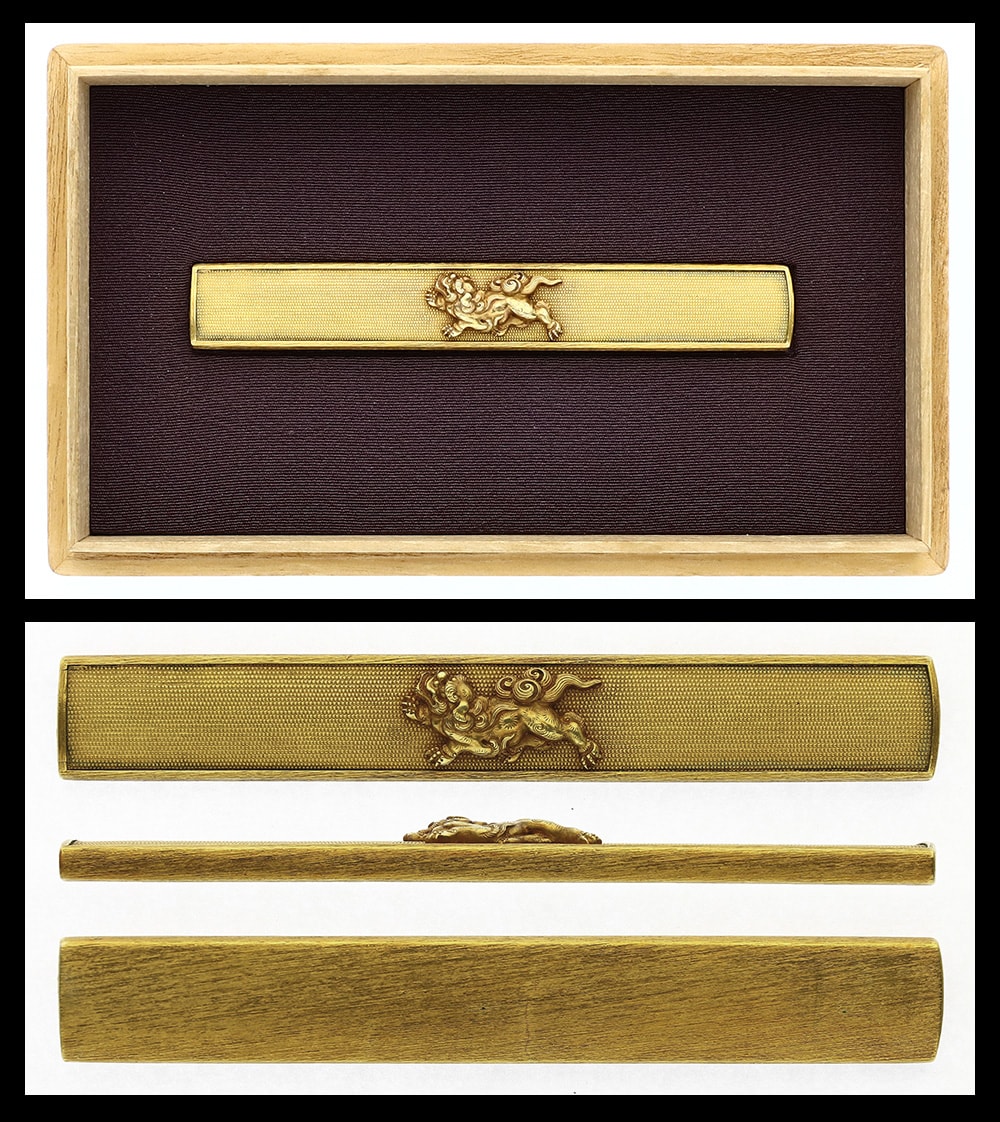
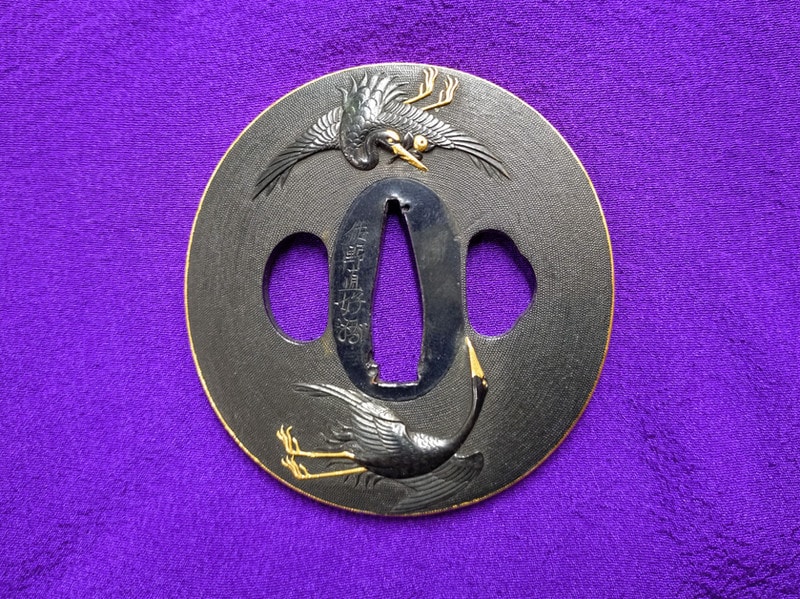
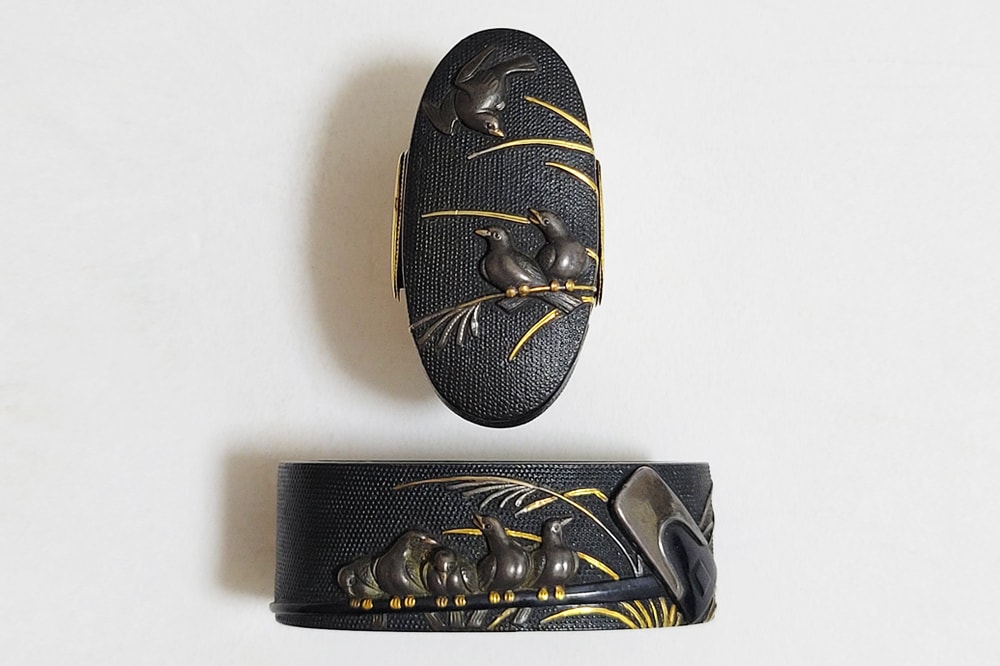
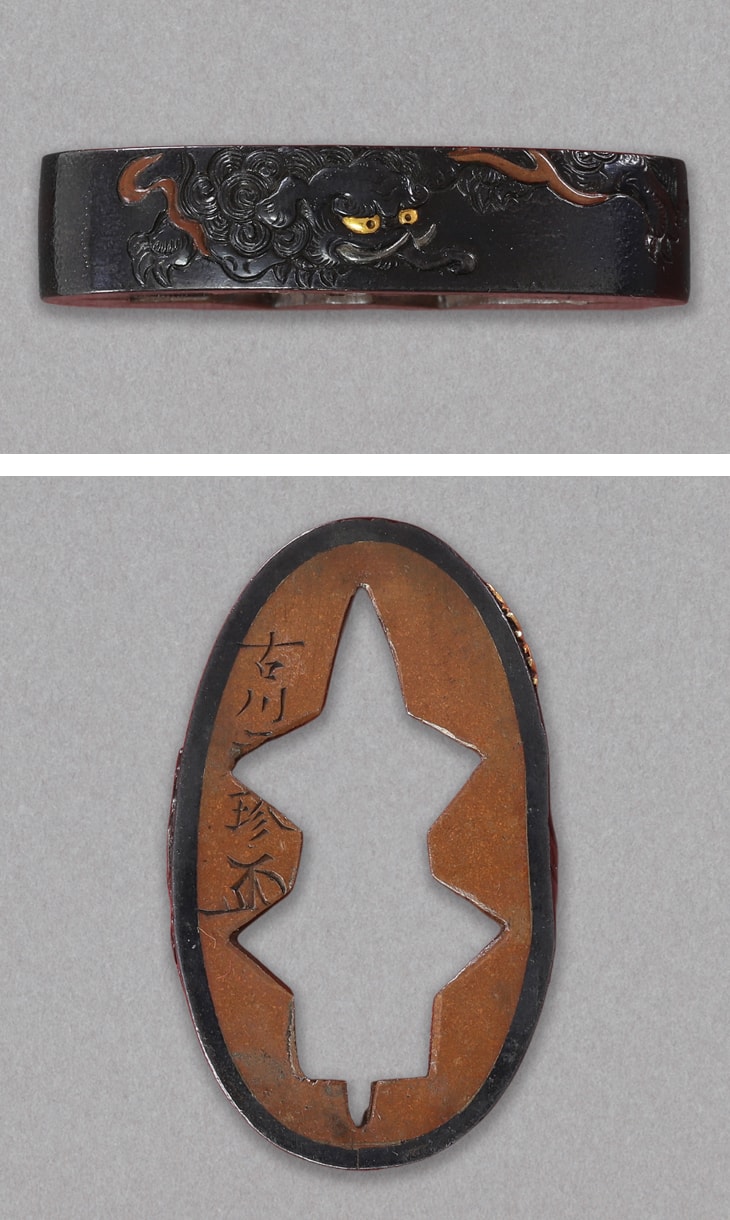
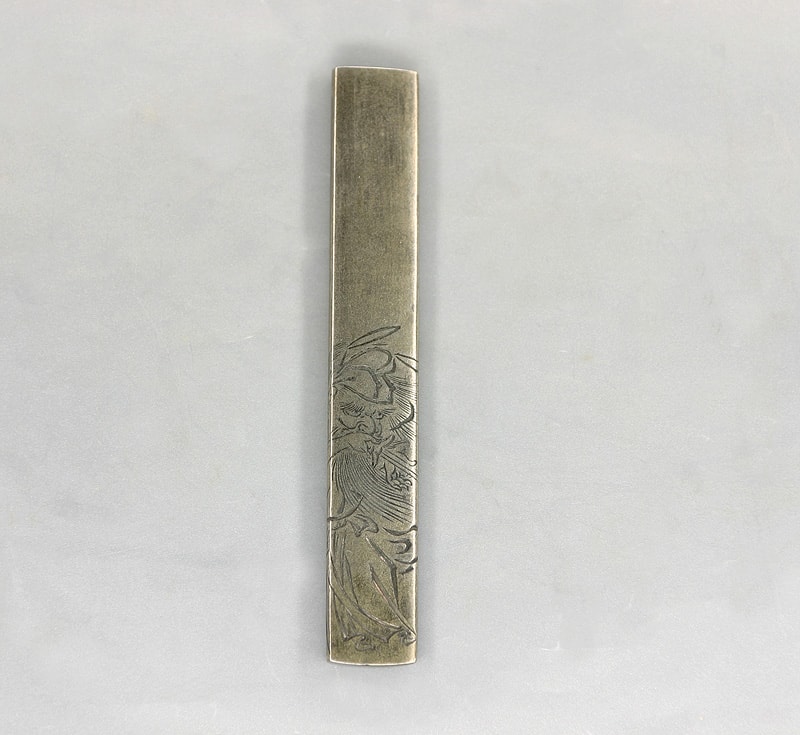
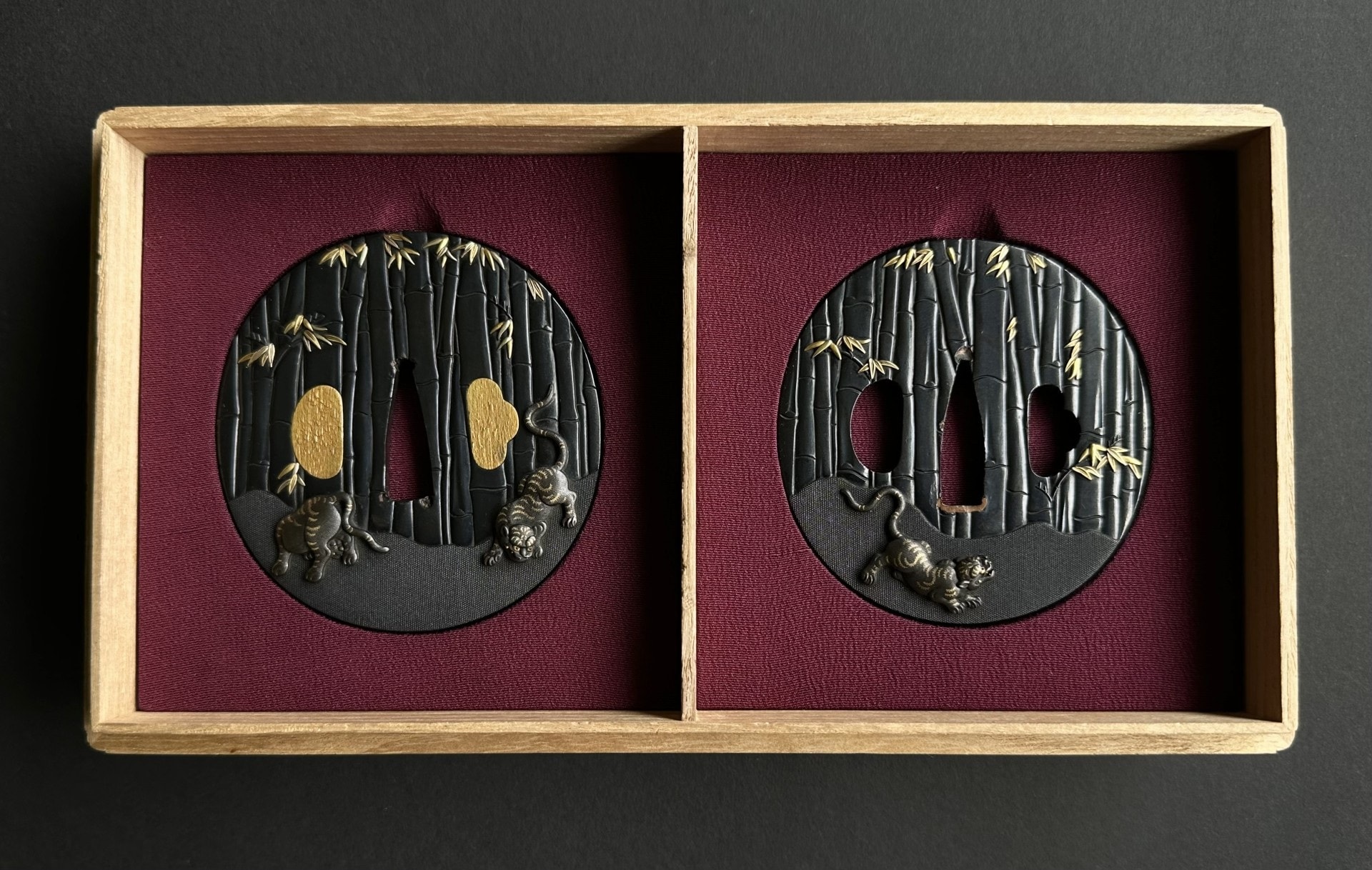
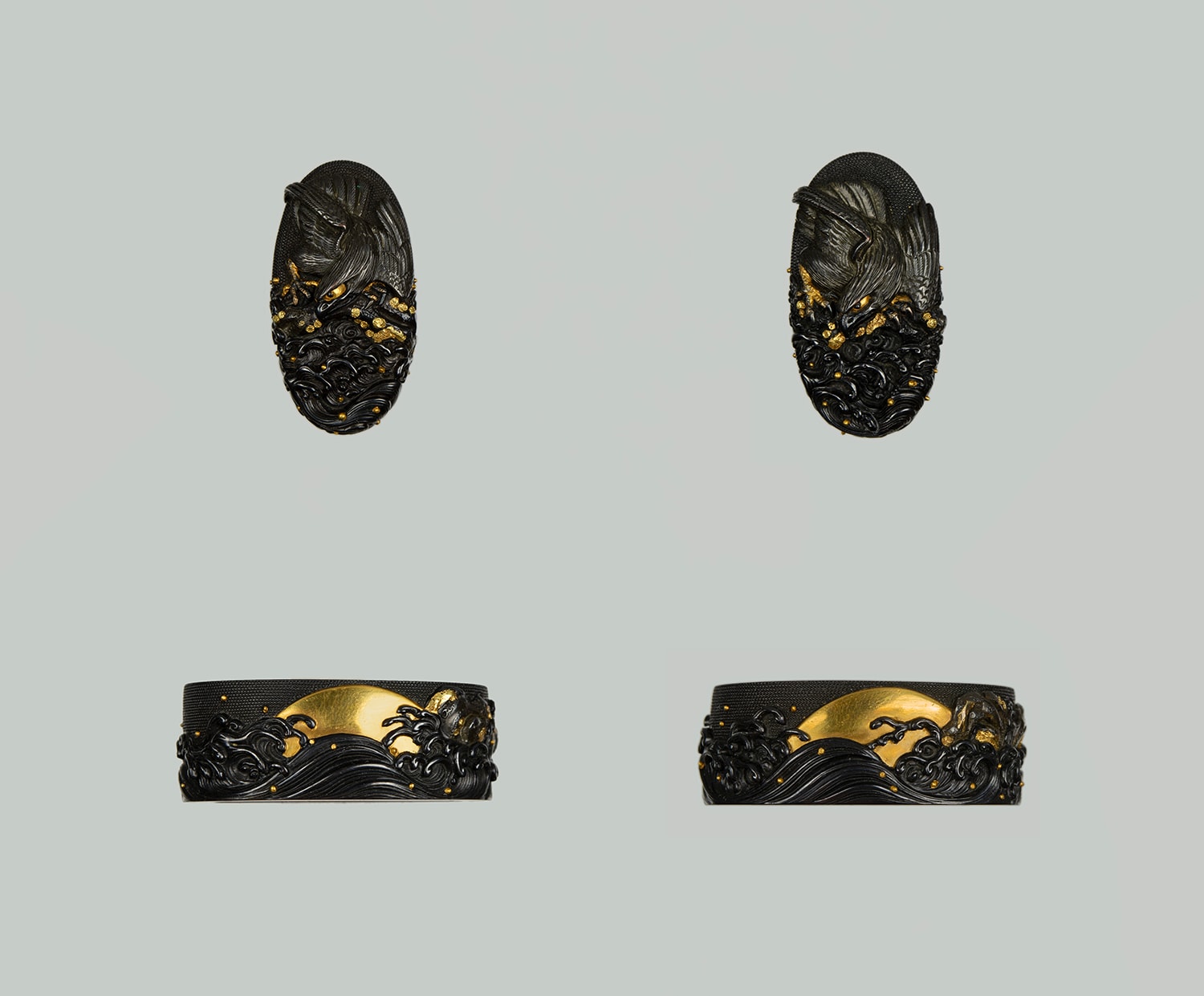
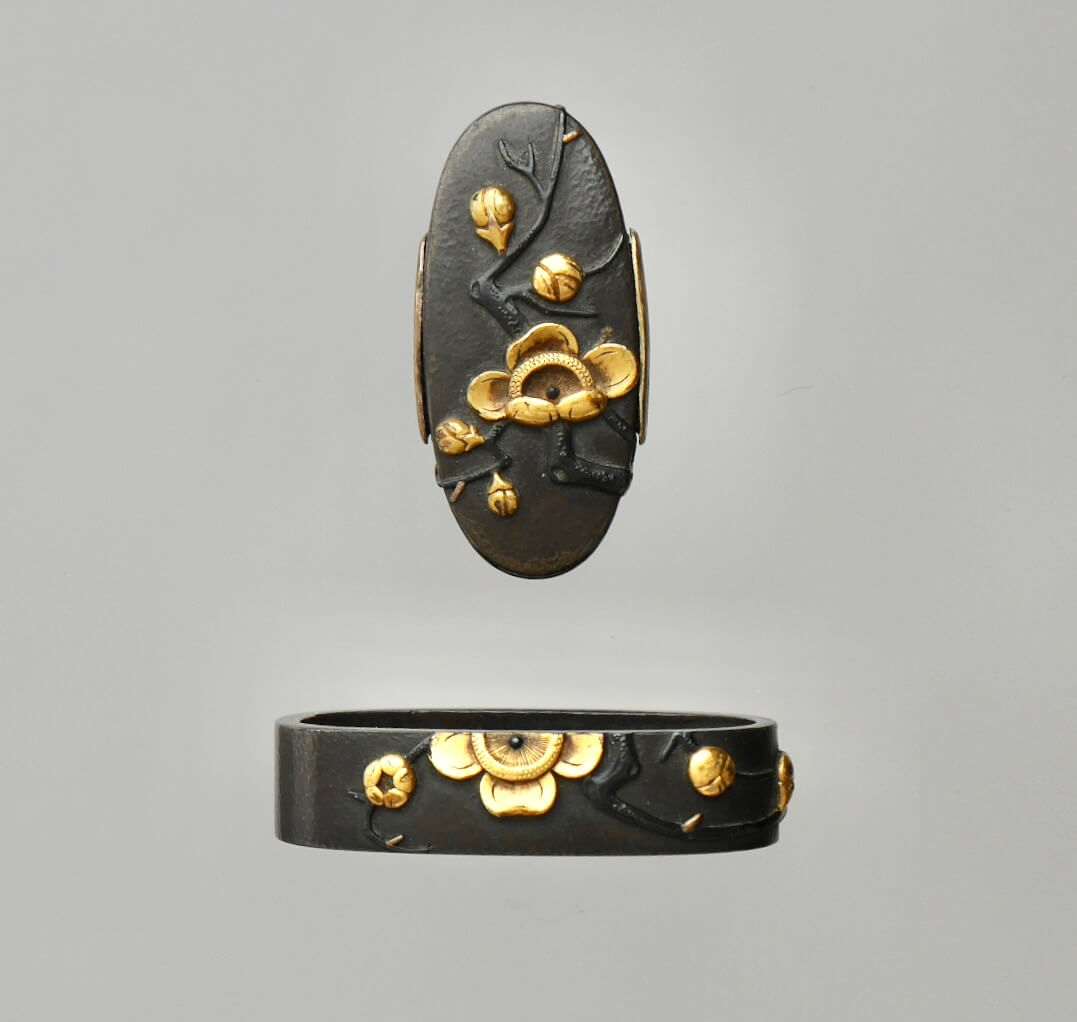
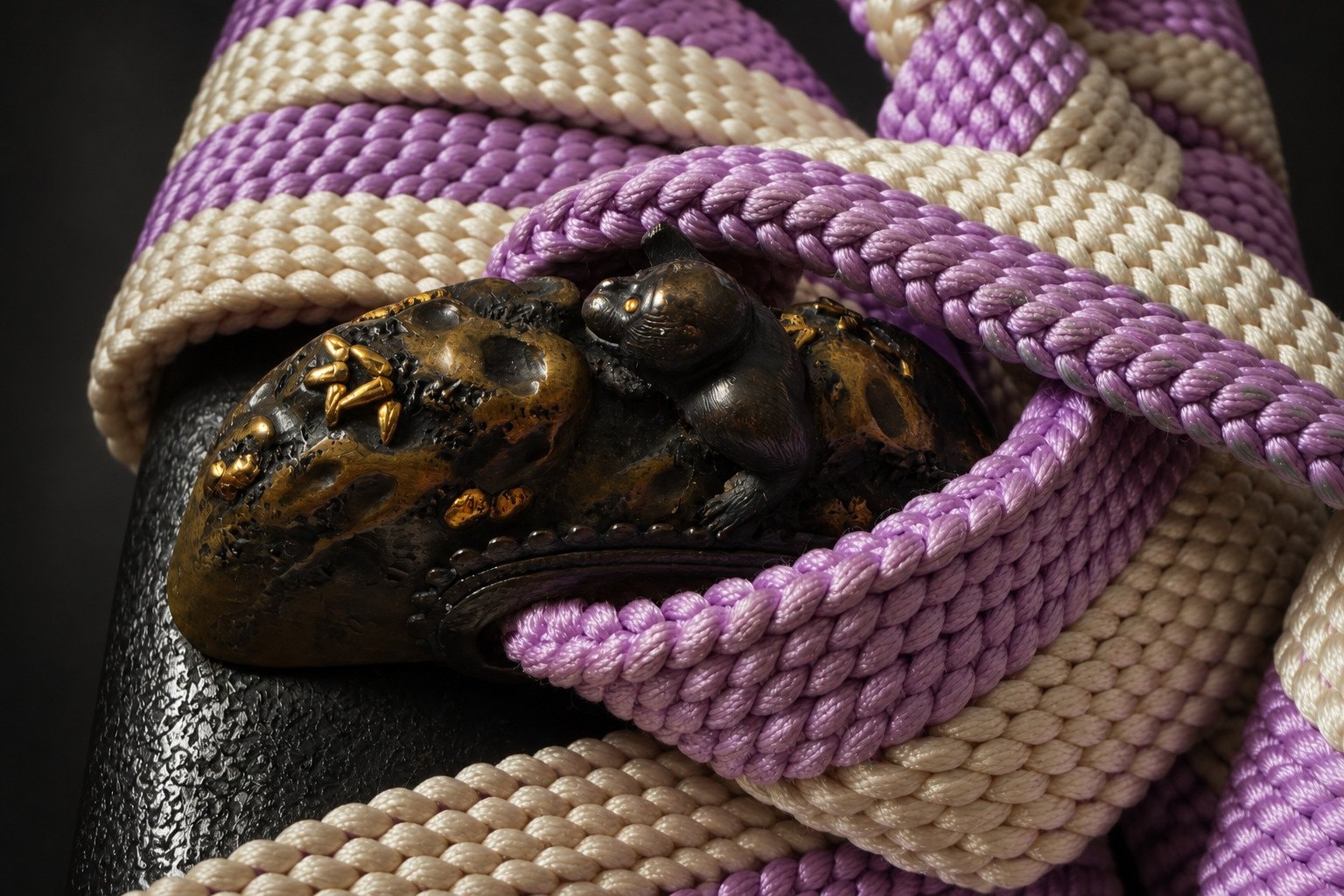
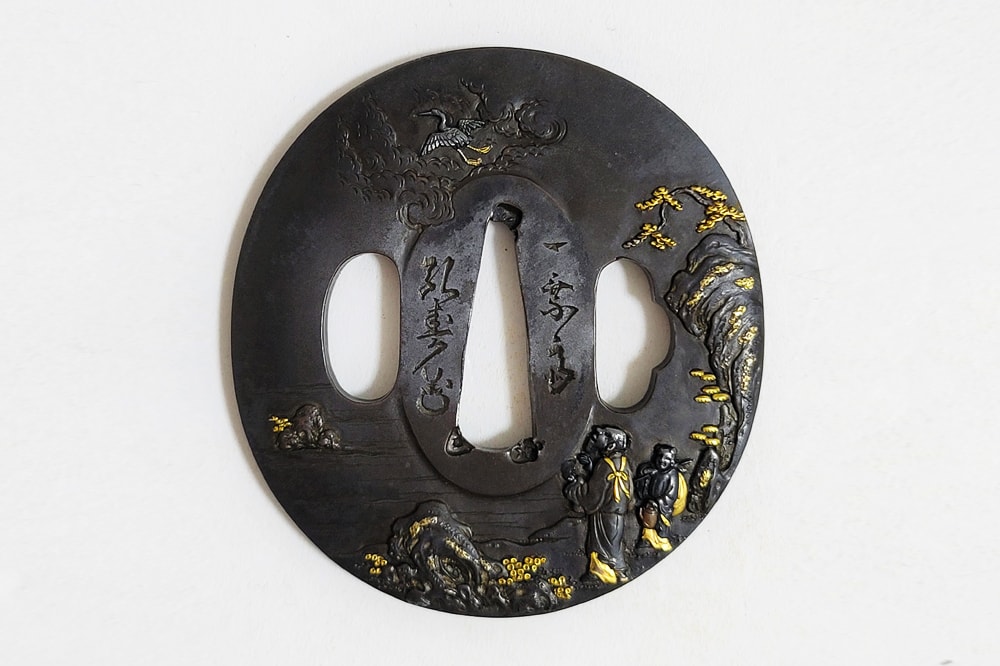
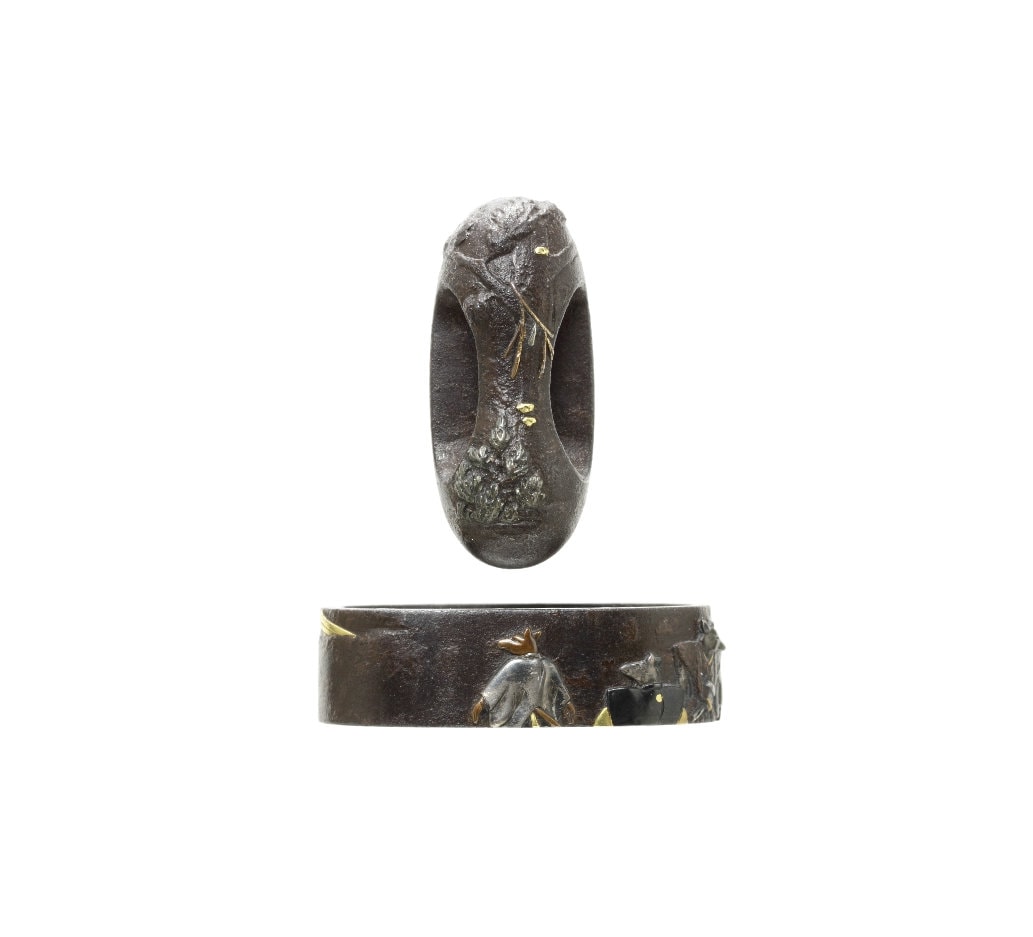
Mitsuyuki's characteristic method employs grounds with gold crests (), gold backing ('), and Yokoya-style high-relief carving () enhanced with applied ornament () and polychrome metal coloring (). His are typically executed in solid gold () using rounded, sculptural carving (yōbori). Within this idiom, shishi were his greatest specialty — the observes that his lion subjects "closely resemble what are termed 'Yokoya shishi' and 'Yanagawa shishi,'" and his level of technique is "recognized as comparable to that of Sōmin and Naomasa," with some works displaying "a level of skill approaching that of Sōmin." His shishi are singled out as "not only in the manner of Sōmin but even more imposing than typical Yanagawa shishi, projecting a particularly bold and valiant presence." Beyond lions, he produced subjects including animals, birds, human figures, and Niō guardian deities, and he was adept at composing and sets in which each element receives individualized treatment — varying postures and compositions to avoid repetition and achieve what the examiners call "variation and motion."

Across the , Mitsuyuki's work is consistently praised for its "precise and steadfast carving skill" displayed "to its fullest extent," and for compositions executed with "dignity" and a "robust and forceful quality." The examiners describe his workmanship as "careful and thorough throughout," noting that his finest pieces "fully demonstrate the high level of Mitsuyuki's technique." His position within the tradition is that of an artist who, having fully absorbed the training of the Yanagawa house, established a lineage that preserved the Yokoya–Yanagawa heritage while achieving independent artistic identity — producing works "composed with a notably dignified, elevated tone" that are deemed "worthy of admiration" and recognized as excellent representatives of the late tradition.

Kantei

3 descriptive axes: material (shakudo nanako, with solid-gold menuki) x technique (Yokoya-style high relief with applied crest-work, katachibori menuki and colour-metal iro-e) x themes (the Yokoya animal-and-figure repertoire, lion foremost). His hand sits squarely within the Yokoya-Yanagawa current he trained in, so his load-bearing distinguishers are few: as founder, the careful, solid Kikuoka manner the records credit to him, and his liking for the Nio-Asahina power-contest figure subject.

Kikuoka Mitsuyuki is the founder of the Kikuoka school of , a Yokoya-derived metalwork artist who studied under Yanagawa Naomitsu of the Yanagawa branch of the Yokoya line and then established his own line. His common name was Ritoji; he was also a celebrated haikai master, holding the inherited go Senryo as the third generation, and he favoured the studio name Katsukenshi. The records give his birth in 1750 at Kanda in and his death in 1800 at fifty-one; his younger brother Mitsumasa and his son Mitsutomo carried the name. His art is the Yokoya manner steeped in by Yanagawa training: worked in high relief and inlaid crests, with lions, animals, birds and figures, the lion above all. What the single out as his own is the founding of the careful, solid Kikuoka style and his liking for the Nio-and-Asahina power-contest figure subject; otherwise his hand stays close to the Yokoya and Yanagawa current he came from.

Diagnostic discriminators

unique vs the Kikuoka school he founded (inheritors, not the originator)

the Nio-and-Asahina power-contest is a figural subject outside the lion-centred Yokoya repertoire his lions otherwise resemble; the setsumei single it out as a subject he favoured and worked at full stretch (好画題 / 存分に腕をふるった力作 / 同作中の傑作), on 3 of 14 pieces. A personal-subject tell, not a hand that separates him from the house, of which there are few

Material

worked in , the inherited Yokoya ground, with solid gold for the and an occasional plain copper () on a figure piece. The and are backed in plate (-habagane); the ground is the house foundation, the freedom is in the carving above it.

Technique

The Yokoya carving hand: high relief and applied with gold crest-work (), in solid gold, and colour-metal iro-e, the whole praised as thorough and solid. The call the carving thorough and dependable, exacting in its chisel-work.

Themes

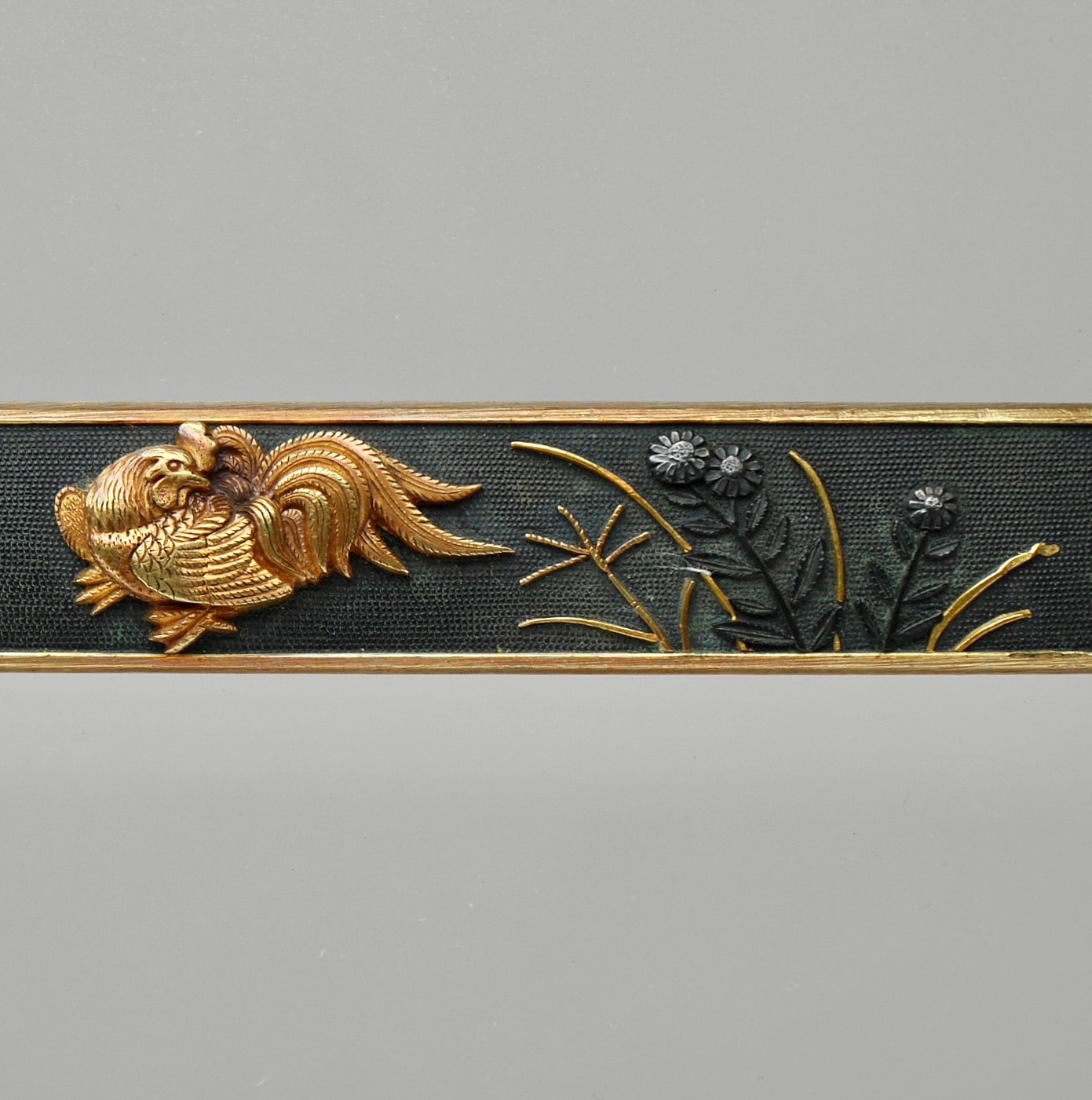
The Yokoya animal-and-figure repertoire: the lion above all, in the Yokoya/Yanagawa manner his say his lions resemble, with auspicious beasts and birds (the kirin, the phoenix, the parent-and-chick chicken, the crane) and the figural power-contest of the Nio with the strongman Asahina that he particularly favoured.

The Yokoya animal repertoire (lion foremost)

The lion is his particular forte, his saying his lions come close to the and Yanagawa-jishi of Somin and Naomasa; with the kirin, phoenix, chicken and crane as the auspicious-beast-and-bird repertoire of the house.

The Nio-Asahina power-contest figure subject

A figural subject he repeatedly chose and worked at full stretch: the power-contest (chikara-kurabe) of the Nio guardian king with the strongman Wada Yoshihide of Asahina, called a force-work and a masterpiece among his output, in high relief with polychrome iro-e.

Full iconography

Signature chronology

Placement
Recorded signatures

Documentary note

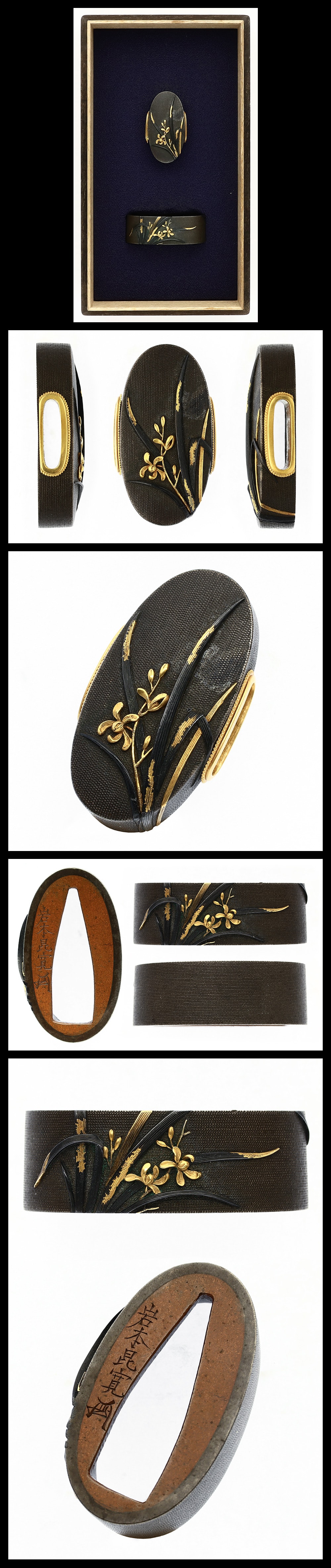
He signs Kikuoka Mitsuyuki with a throughout, with no rank progression; the variation is in the go that prefixes the name. His favoured go is Katsukenshi, cut in four orthographic variants of the character (活剣子 / 活劔子 / 活釼子 / 活剱子), and one dated (Tenmei 1, 1781) is prefixed Doppo-sai; the records also give the literati go Saika-an and Suiminsha. The of his sets are cut as a split Kikuoka and Mitsuyuki. One groups his (signed Kikuoka Mitsuyuki) with a - signed by the independent Iwamoto Konkan and a signed by the Kikuoka-school Sano Naoyoshi, that noting Naoyoshi's signature wants further study; these added signatures are co-mounting partners on one , not co-makers of his pieces.

Scholarship

The records say he studied under Yanagawa Naomitsu and matured in the Yokoya manner, his lions resembling the Yokoya-jishi and Yanagawa-jishi of Somin and Naomasa and his skill approaching theirs.

Designations

Kokuhō—
Jūyō Bunkazai—
Jūyō Bijutsuhin1
Gyobutsu—
Tokubetsu Jūyō—
Jūyō Tōken13

Elite Standing

0.06 across 14 designated works

Top 20% among makers

Provenance

1 documented provenance across certified works by Mitsuyuki

Provenance Standing

0 works held in elite collections across 1 documented provenances

Top 50% among makers

Raw score: 2.00 / 10

Work Types

Distribution across 14 ranked works

Other
538%
Mitokoromono
431%
Tsuba
215%
Kozuka
18%
Fuchi-Kashira
18%

Signatures

Signature types across 14 ranked works

Currently Available

Lineage

Mitsuyuki
Students (2)
  1. 1.Mitsutomo光朝
  2. 2.Mitsushige光重1designated

Kikuoka School

Other artisans of the Kikuoka school

  1. 1.Mitsushige光重1designated
  2. 2.Shigeyoshi茂義1designated
  3. 3.Toshinobu利信3 for sale1designated
  4. 4.Mitsumasa光政2 for sale2designated
  5. 5.Mitsutoshi光利2 for sale2designated

Mitsuyuki

Mitsuyuki(光行) was a maker of Japanese sword fittings (tōsōgu) of the Kikuoka school, active during the Kan'en–Kansei (1750-1800) period.

The work follows the Machibori tradition.

Designated works by Mitsuyuki include 13 Jūyō.