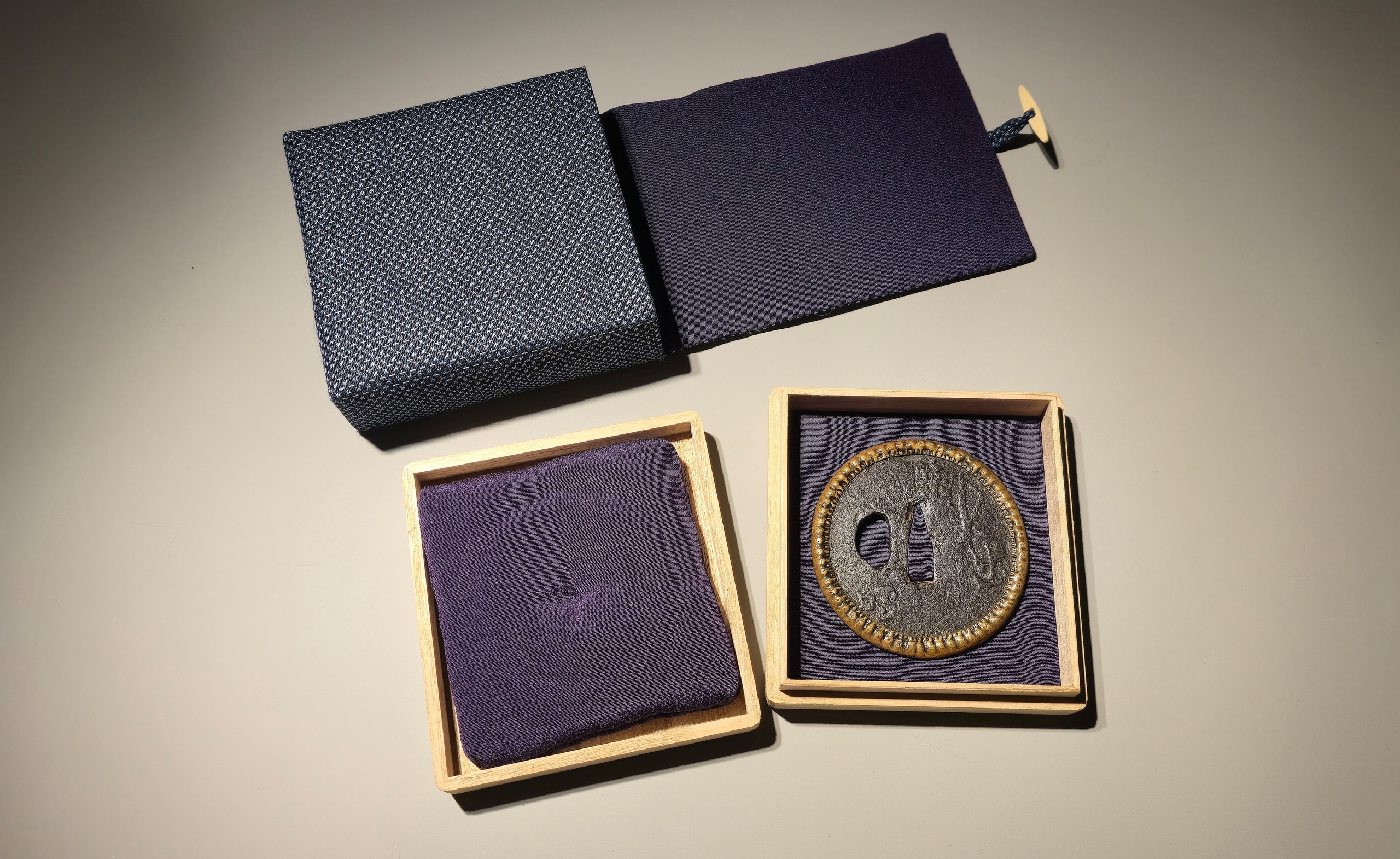
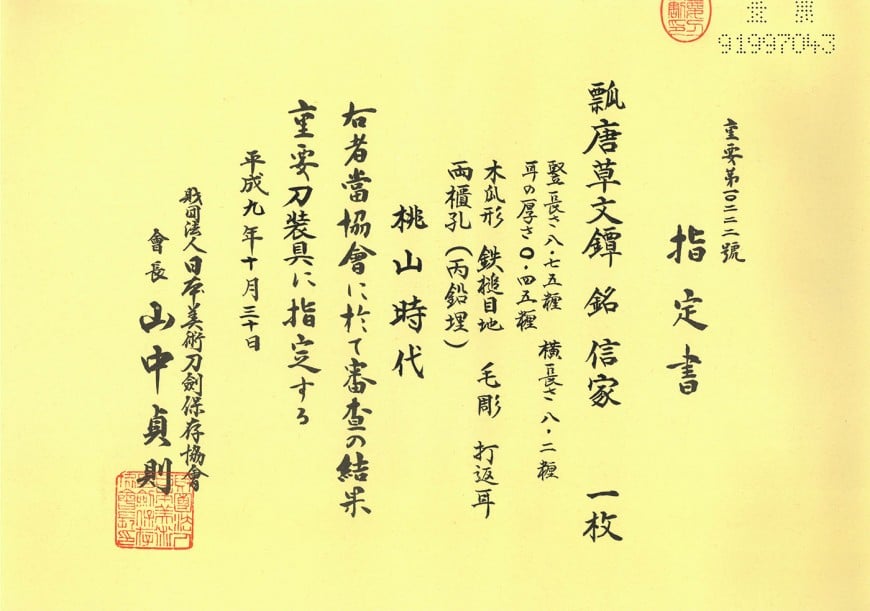
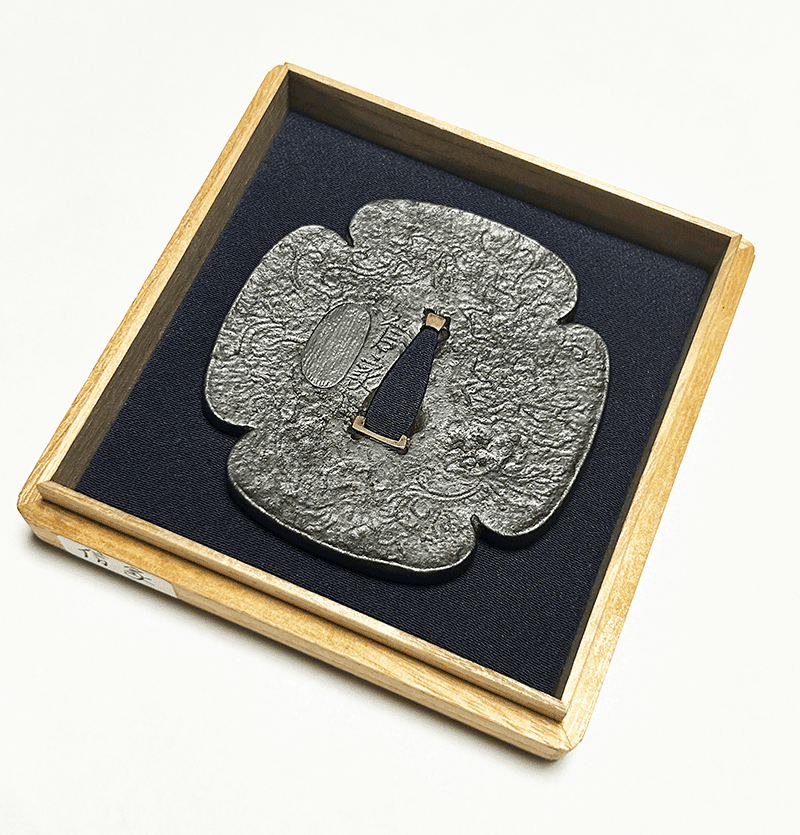
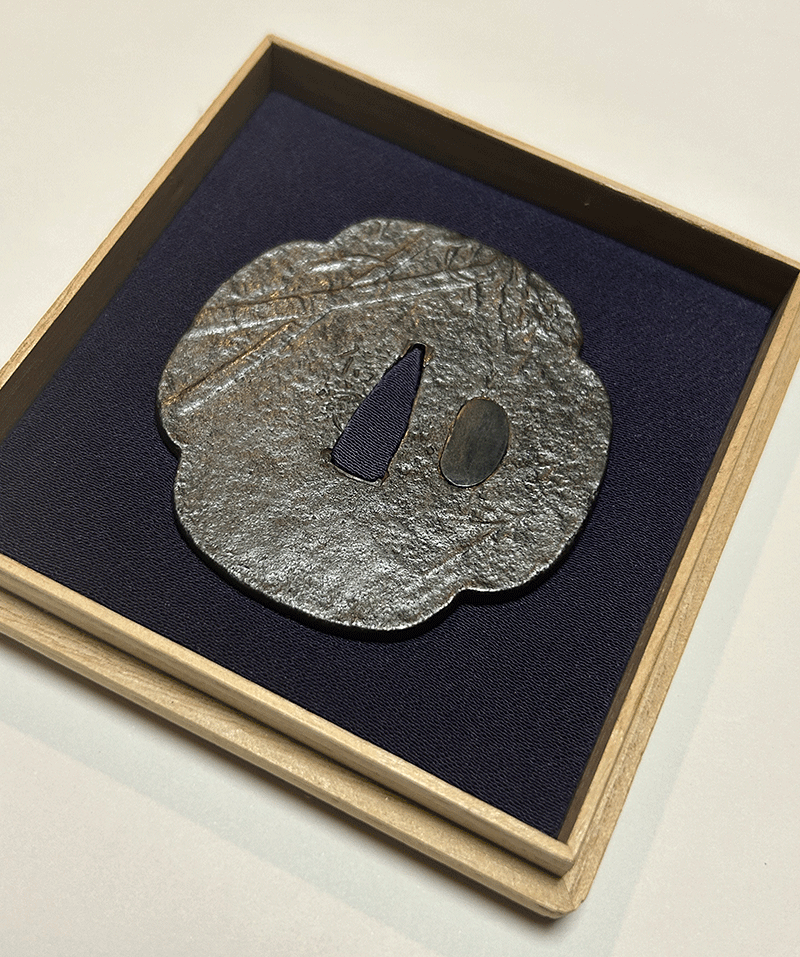
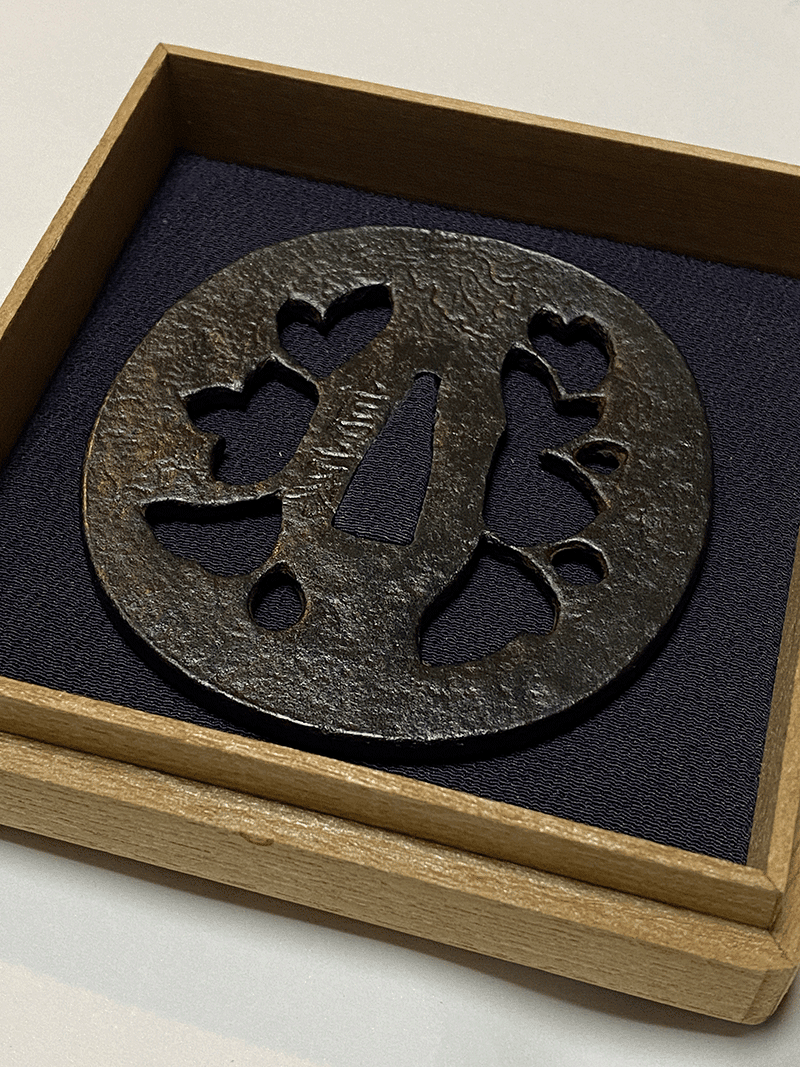
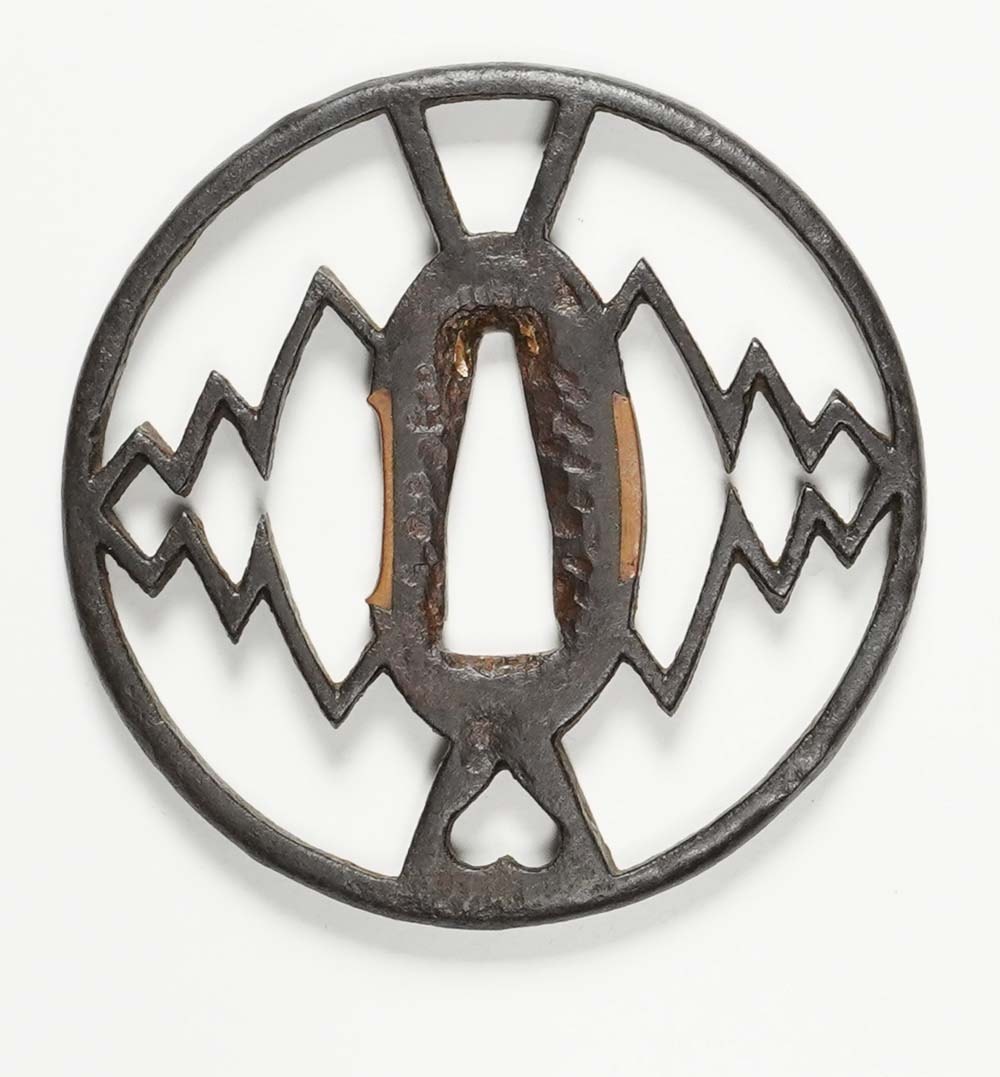
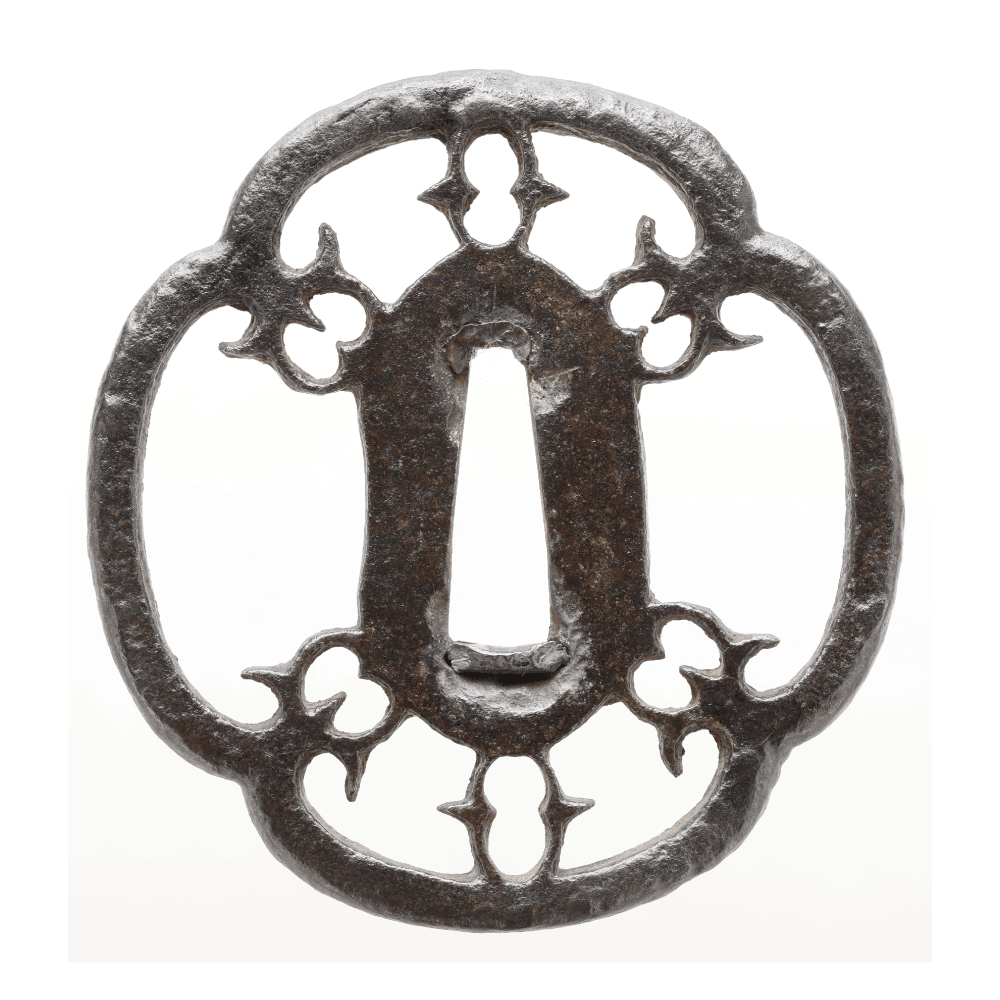
Yamakichibei — also recorded as Yamasaka Kichibee — is regarded, together with Hōan, as one of the representative tsubakō of Owari. He worked in the period, and while it has long been circulated that the first generation was a disciple of Nobuie, the notes that "there are no documents or firsthand examined works that substantiate a master–pupil relationship." Points held in common with Nobuie are in fact scarce; rather, there are many similarities with Hōan, giving a stronger sense of connection to that line. The name was inherited over several generations, distinguished by the calligraphic style of the chisel-cut signature: those signed in full as "Yamasaka Kichibee" are considered stylistically the earliest, while the third generation further adds a cherry-blossom seal alongside the provincial designation Bishū.
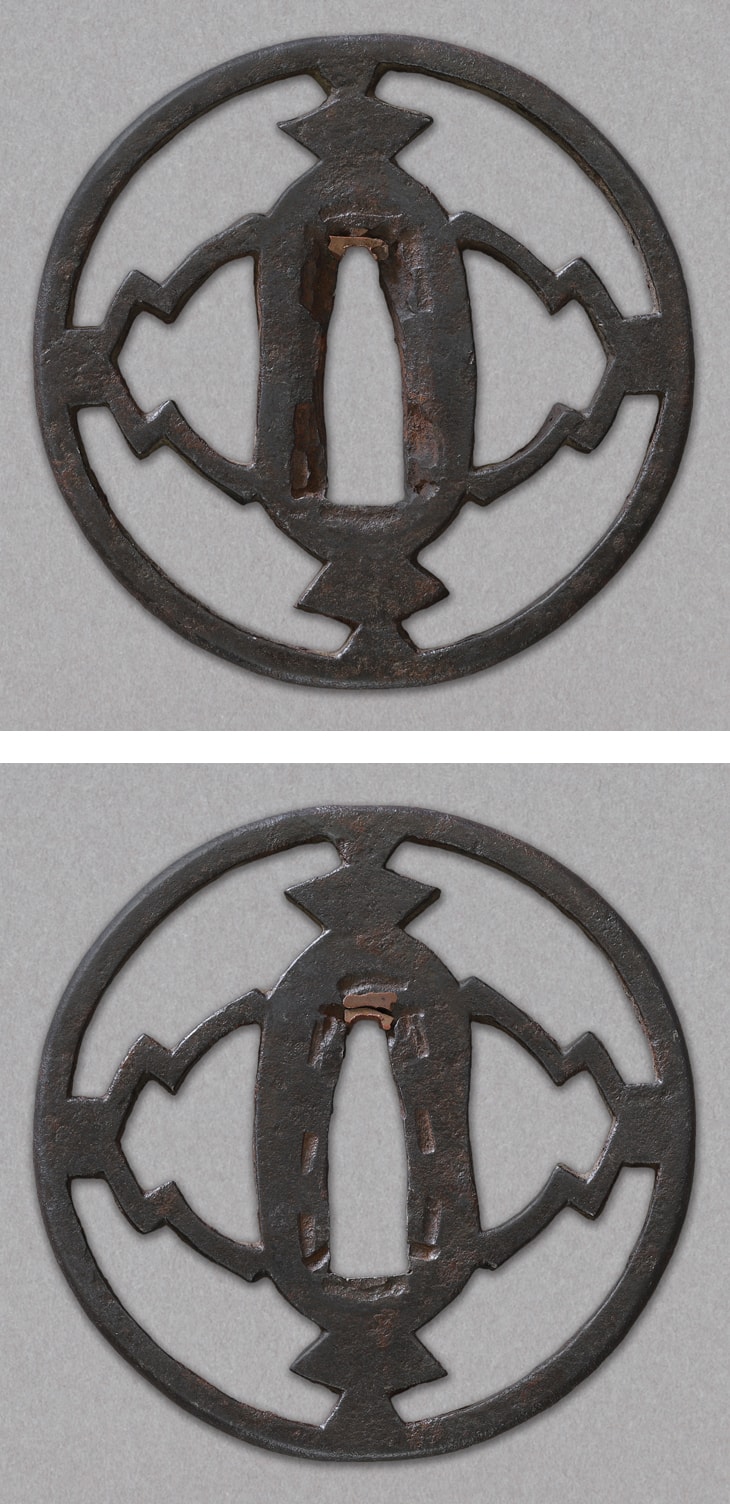
Yamakichibei's iron guards are characterized by commanding presence, excellent forging, and the prominent emergence of (iron bones) through -namashi (annealing), which imparts what the describes as an elegant taste while also evoking a sense of strength. The Amida-yasuri (radiating file marks) for which the school is celebrated represent "the very essence" of the second generation's art; it is said that "whether among earlier or later works, no one equals Yamakichibei in Amida-yasuri." The file marks appear as though cut in double lines, integrating with (hammered ground) and fire-finished surfaces to produce grounds whose appearance "changes with remarkable freedom and variety." Representative openwork designs include geese-and-sickle (gankama ), wheels, chrysanthemums, and fence motifs — all rendered with an unpretentious, rustic treatment. The robust (turned-back rim) further tightens the silhouette, and the densely set within it proclaim the beauty of iron .
The repeatedly identifies Yamakichibei's works as guards that "appear all the more striking when mounted on the - that were in vogue at the time," affirming their essential unity with -period martial culture. Across designated examples, evaluative language converges on a distinctive rustic charm and deep, subdued elegance — a beauty described as "solitary and aloof," residing within formidable workmanship, that "resonates with the spirit of bushidō." The interplay of powerful , richly nuanced hammering, and restrained openwork constitutes an aesthetic inherited from the earliest armorer's and swordsmith's guards, elevated to a level "fully worthy of demonstrating Yamakichibei's true value" within the Owari iron-plate tradition.