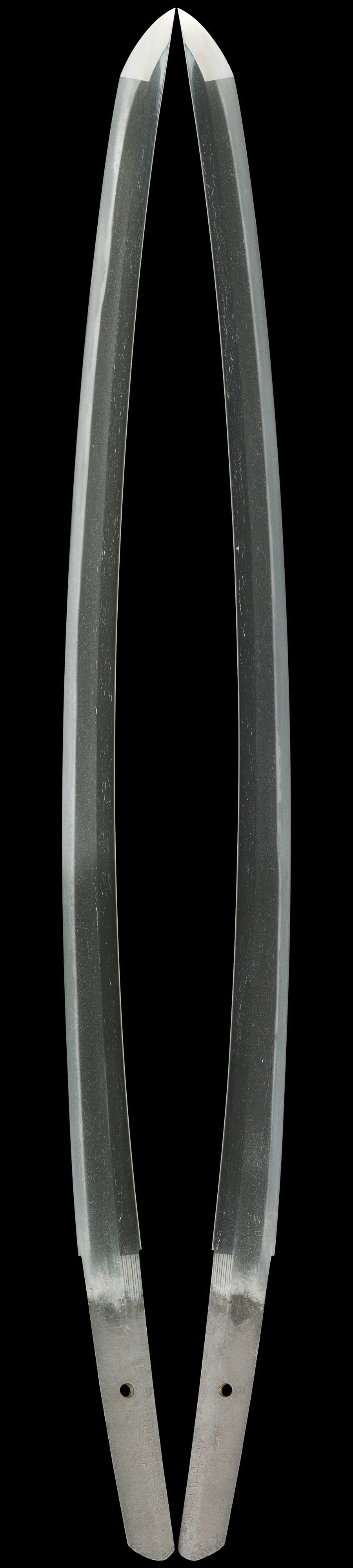
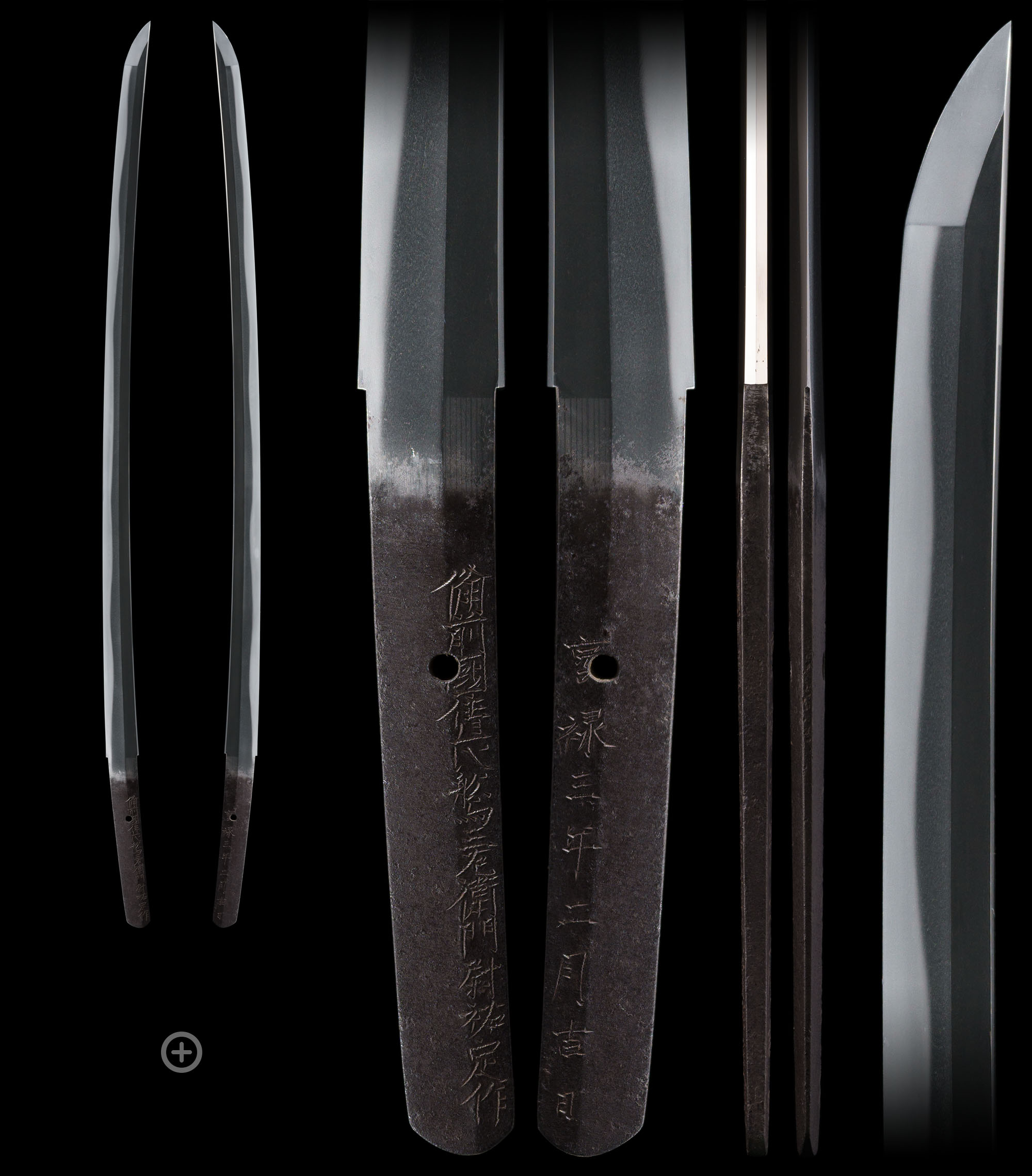
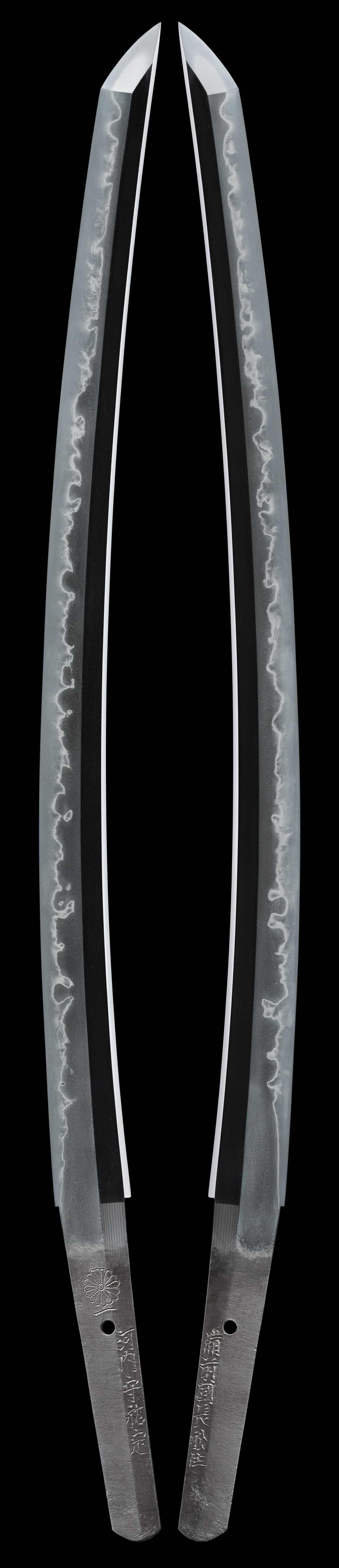
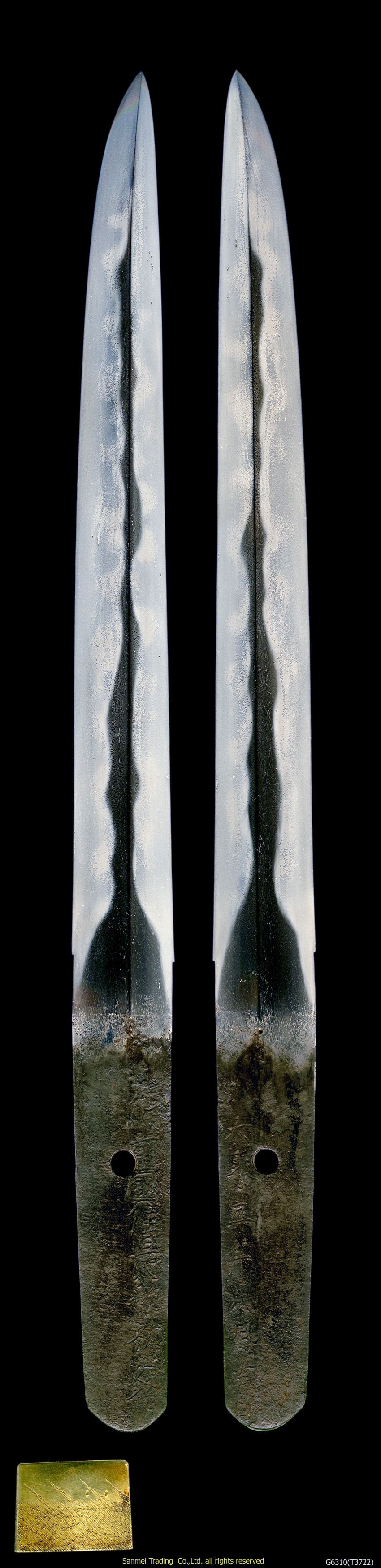
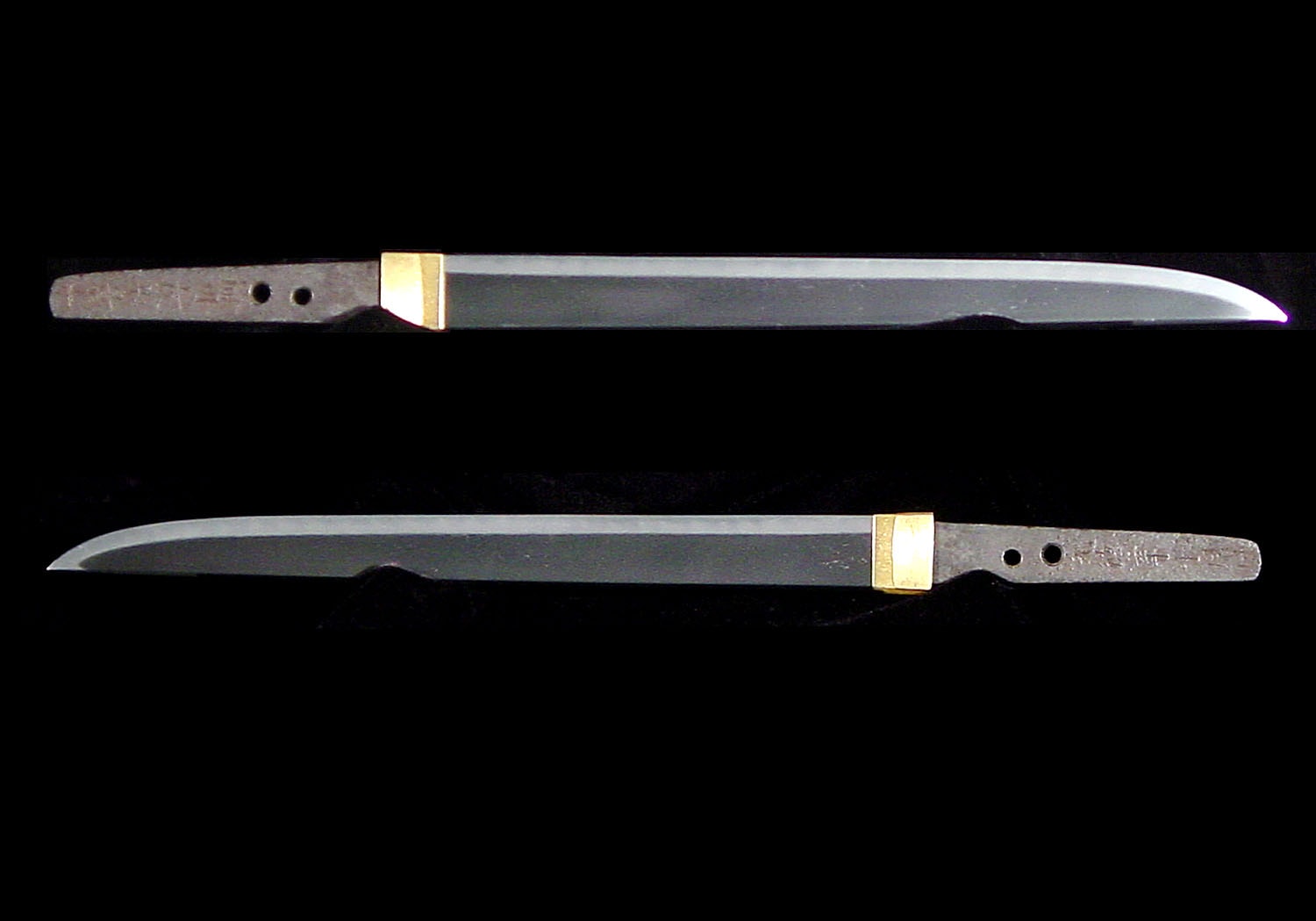
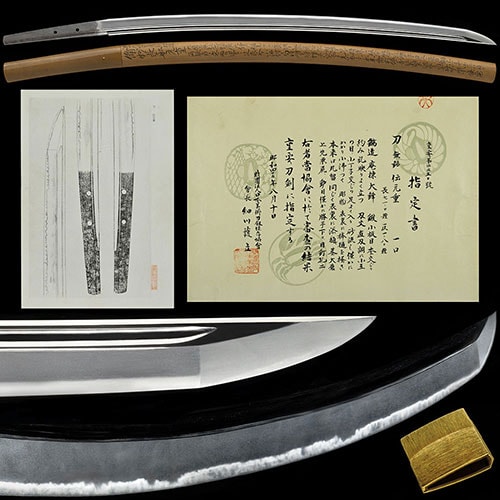
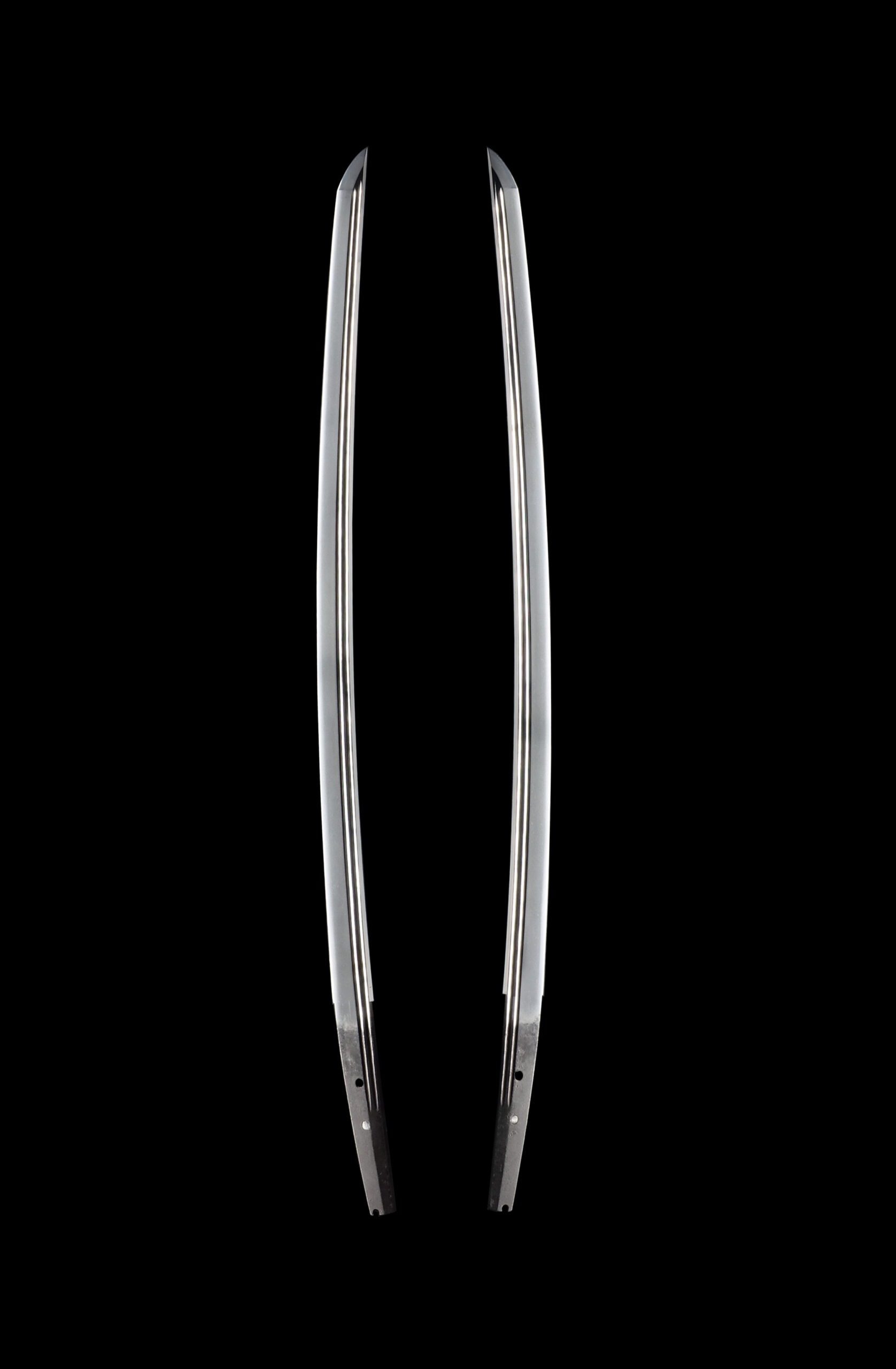
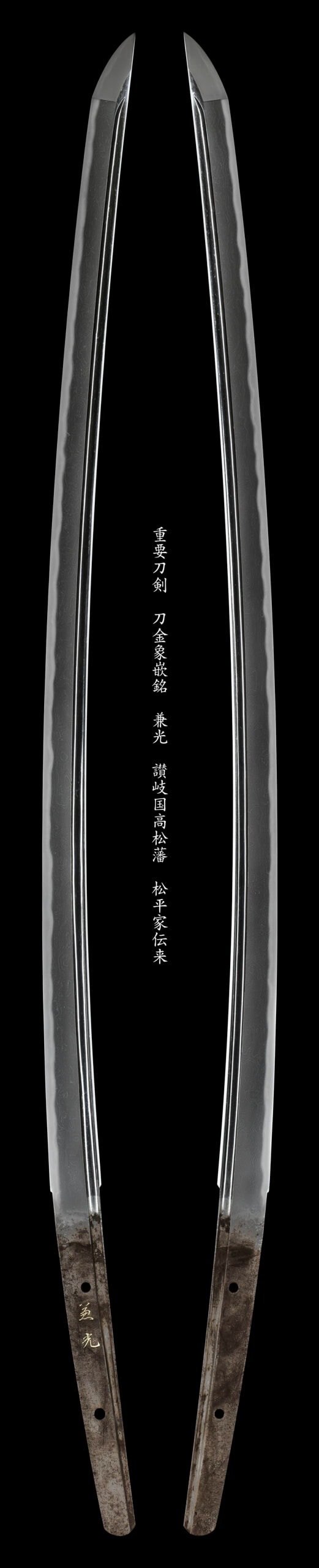
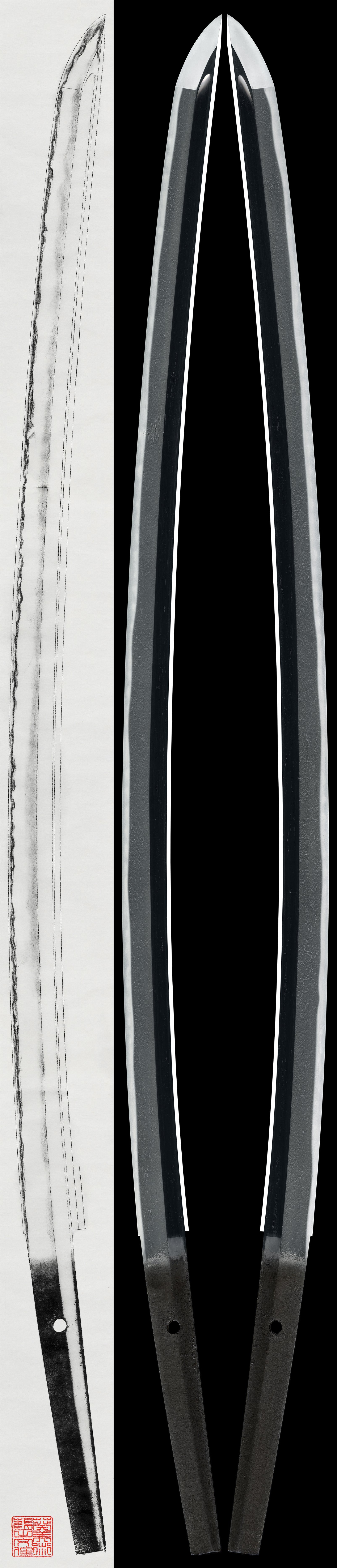
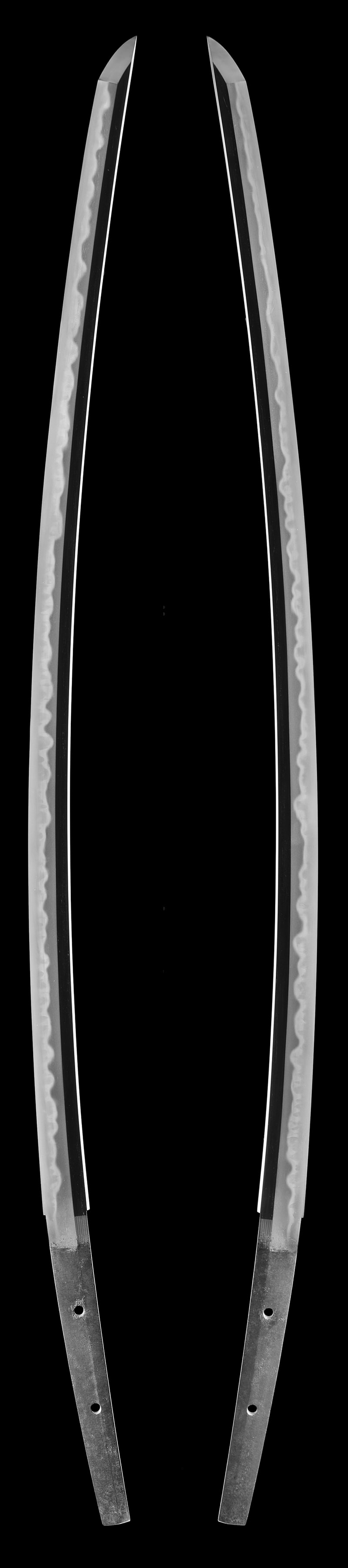
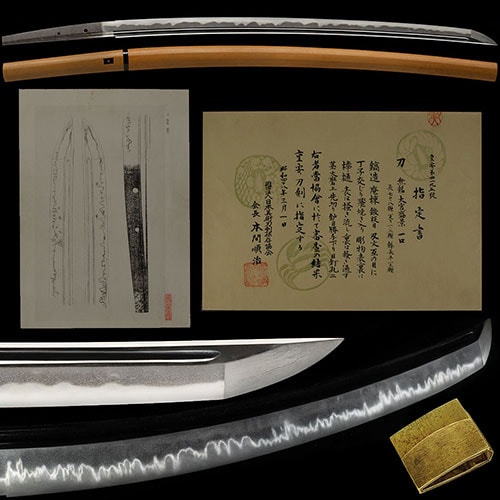
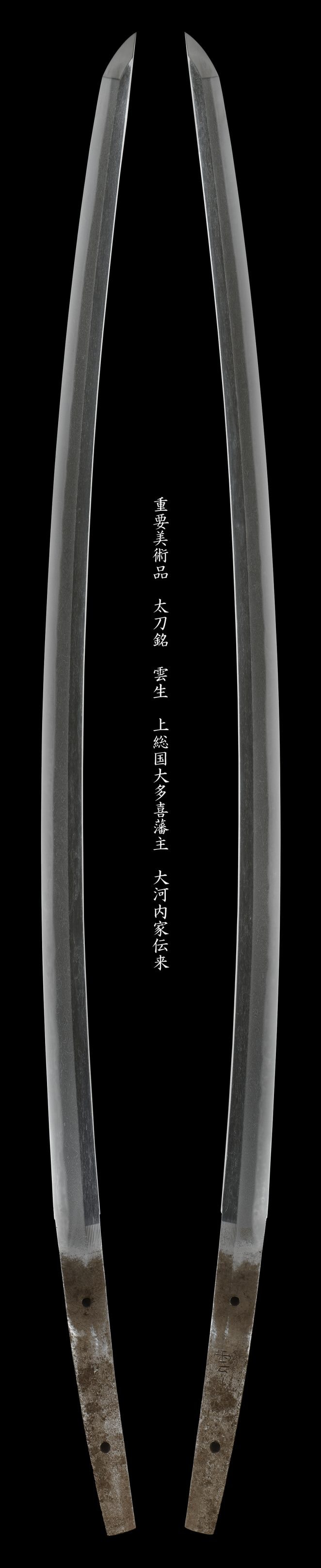
Tadamitsu is a smith of the school in Province, active during the late period. Swordsmiths signing "Tadamitsu" are found in the reference works from the late period onward, though extant works are only rarely encountered. Several smiths used the name concurrently in the Meio and Bunki eras, among whom those bearing the titles Hikobei no Jo and Shuri no are especially well known. The identifies Hikobei-jo Tadamitsu as the most accomplished and celebrated of these, and alongside Katsumitsu and Munemitsu, he is counted as one of the representative smiths of . His active period spans from Entoku 1 (1489) through Bunki 2 (1502), placing him squarely within the mature phase of the tradition.
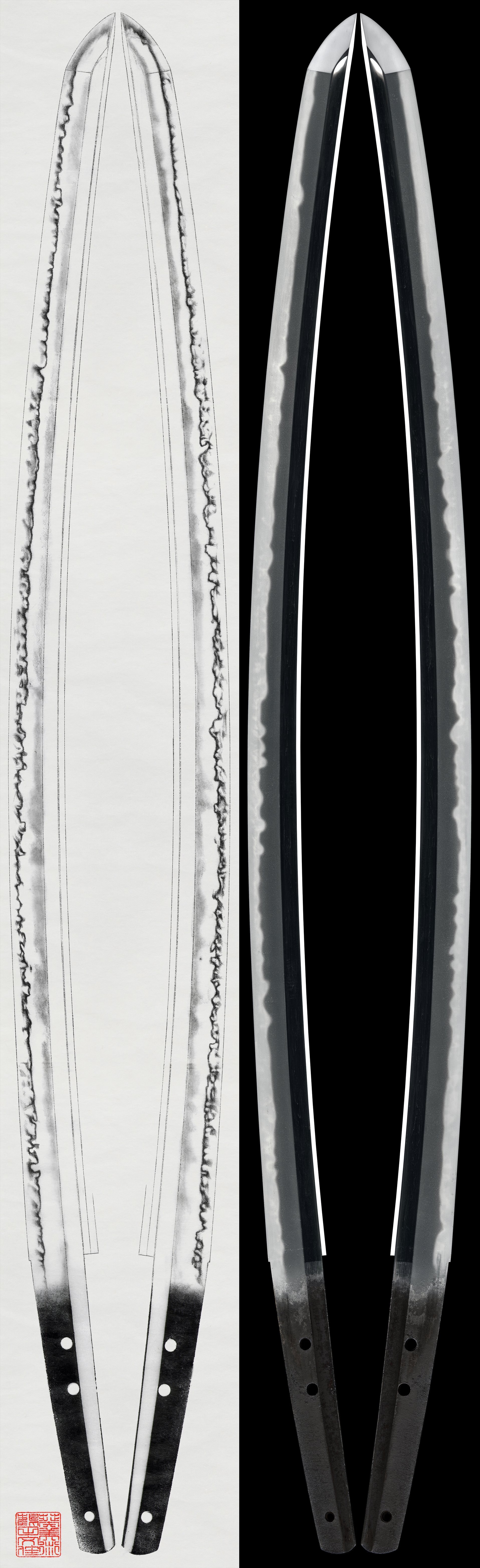
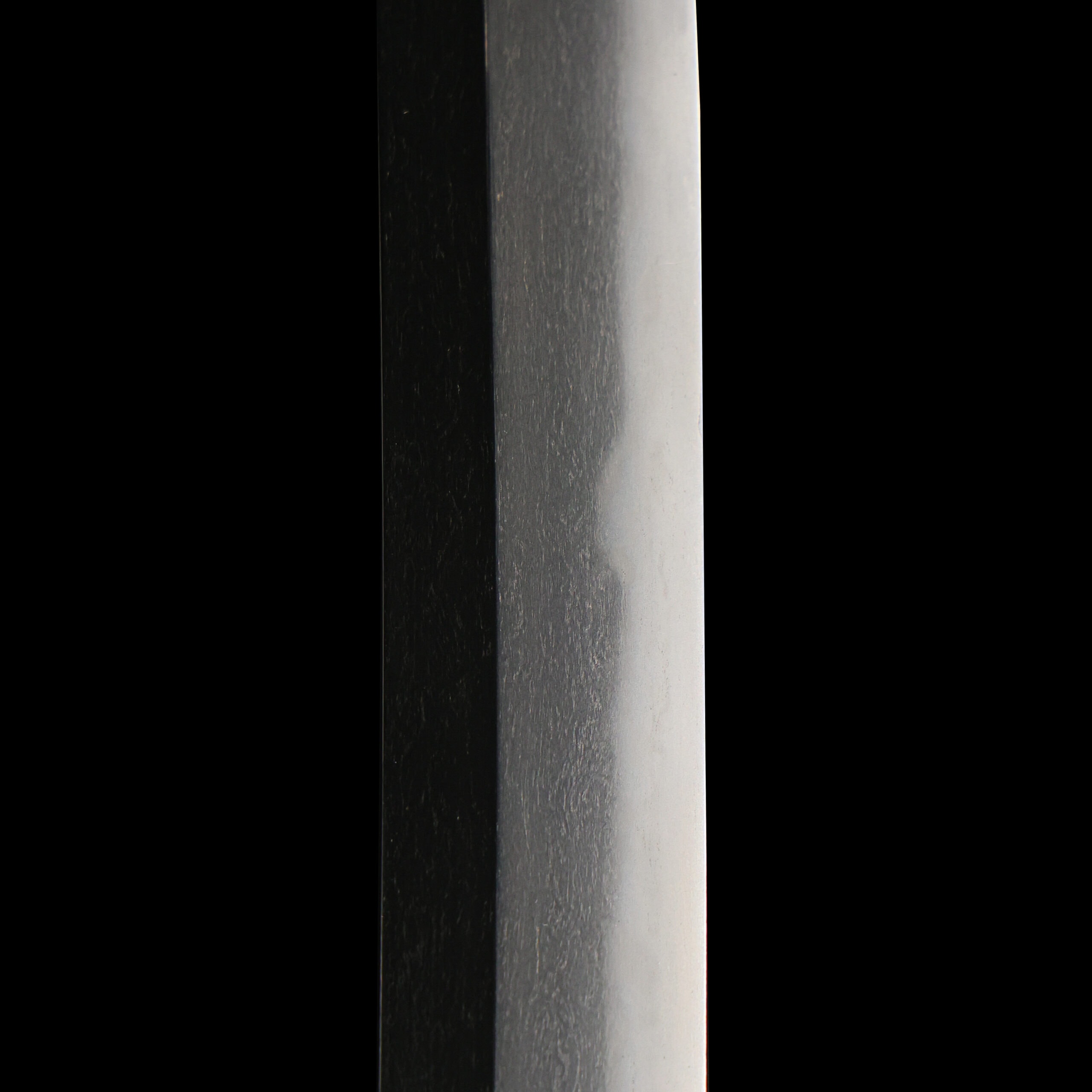
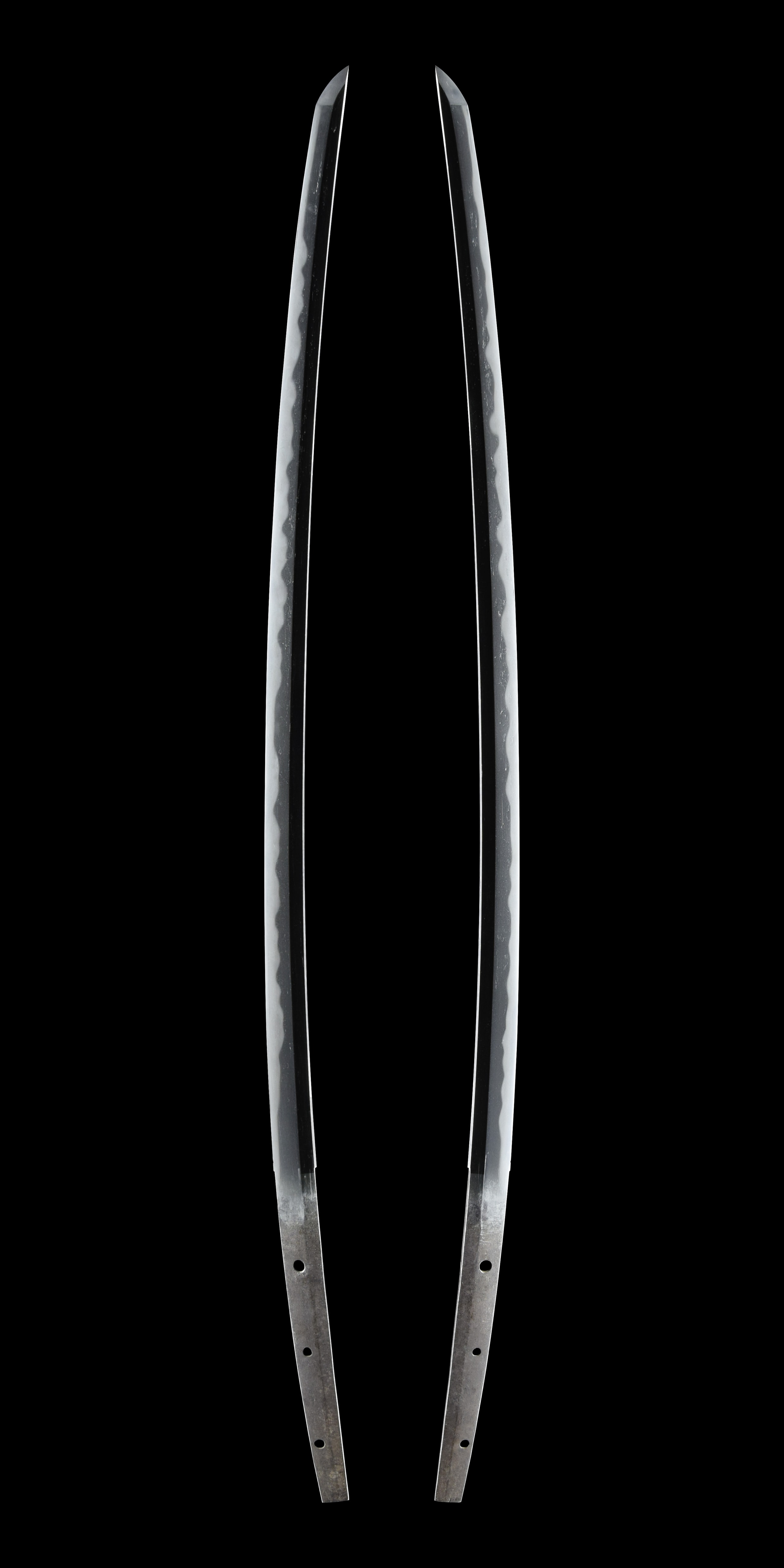
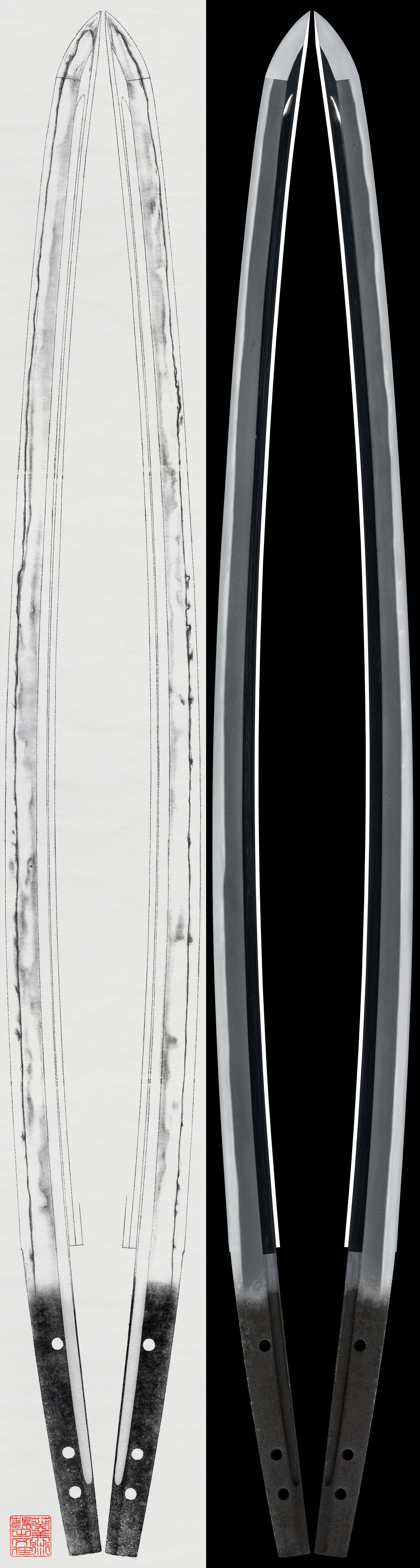
Tadamitsu's work is founded upon a tightly forged that yields an exceptionally beautiful , with fine adhering densely and the steel appearing clear. His signature technique is the broad temper, characterized by a of markedly tight tendency — a quality the describes as — into which small and are worked with controlled precision. When he departed from to forge -ba, he employed with an opened , mixed with complex compound and enriched by , , and , demonstrating what the Board acknowledges as "a level of ability that does not fall behind Katsumitsu and Munemitsu." The bosshi is typically , occasionally with a long and deep return. His blades often bear including , , and , which were likely executed by specialist carvers attached to the group.
The 's evaluations consistently emphasize Tadamitsu's excellence in both forging and tempering, characterizing his productions as demonstrating "exceptionally fine" and "excellent" workmanship. The Board describes him as "particularly noted for his ability in forging and tempering " and as "a specialist of " within the school, while acknowledging that his works are "equally accomplished." The recurring assessment that his blades are — sound and well-preserved — speaks to the fundamental quality of his steel. His output, encompassing both the restrained beauty of his and the accomplished complexity of his -ba, secures his standing among the foremost smiths of the late tradition.