NihontoWatch MonNihontoWatchBETA
MarketEncyclopedia
NihontoWatch Mon

NihontoWatchBETA

Market
Encyclopedia
Overview·Kantei·Designations·Provenance·Blade Forms·Signatures·Lineage·School
OverviewKanteiDesignationsProvenanceBlade FormsSignaturesLineageSchool
  1. Schools
  2. Sendai Kunikane
  3. Kunikane

Sendai Kunikane

國包

Jūyō
Vol. 17, No. 293 · Katana

Sendai Kunikane

國包

33 ranked works

ProvinceRikuzenEraKanei (1624–1644)PeriodEdoSchoolSendai KunikaneTraditionYamato-denGeneration1stToko Taikan800(top 14%)TypeSwordsmithCodeKUN305
1Jūyō Bunkazai
2Jūyō Bijutsuhin
1Gyobutsu
1Tokubetsu Jūyō28Jūyō Tōken

Overview

The Kunikane was born Hongō Genzō in Bunroku 1 (1592) at Kokubun-Wakabayashi in Sendai, Mutsu, and entered the service of Date Masamune as a retained smith. By his lord's command he went up to Kyoto and studied under no Kami Masatoshi; in 'ei 3 (1626) he received the court title Yamashiro Daijō, and he styled himself a descendant of the later line of Yamato Hōshō Gorō. That self-styling is the key to him. In the opening decades of the period, when the manner in and was the fashion of the day, Kunikane set himself against the current and gave his whole working life to reviving the -forging, -tempering Hōshō- of old Yamato. The published sources describe a hand that never wavered from that purpose, and the modern designation record bears it out: of the blades on record every signed example is in his own name, with not a single unsigned attribution among them.

His characteristic hand is constant to the point of being unmistakable. The forging is a tightly packed , at times running into , carrying fine thickly applied and frequent , the steel notably clear. A often rises from below the , and the published sources name this rising water-shadow a personal habit of the smith, calling it on one a feature that 「初代国包の手くせといえる」, the kind of small confirming detail that settles an attribution. Over that he tempers a or , frequently broad, shallow in , the deep and bright. The activity is the Yamato kind rather than the : along the runs general , with and set freely into the line, , and uchi-noke mixed in, and entering.

The is where he is read first and where he is most himself. Fine and the abundant over a clear, well-packed recur on nearly every blade, the forging only growing more refined as it tightens. The is the Yamato finish, running straight into a -like point with vigorous ; the published sources find an archaic fragrance in it even where the rest of a blade is plain. On this last point they are candid in a way that is unusual for designation commentary: measuring him against the early Hōshō, they name where he falls short, citing 「物打上の変化に乏しいことと、帽子が平凡な点にある」, a relative want of variation in the and a commonplace . The entry holds that the quality of both and on his representative dated is nonetheless excellent.

One consistent hand divides into two registers by the shape it takes. The standard work is the , and long-signed, very often dated, with a high , shallow and an elongated , over which the broad bright sits on the tight ; his dated and from 'ei 4 and 'ei 9 are the touchstones for studying his oeuvre. The rarer register is the , of which the published sources note that very few survive, prizing them as reference pieces. On these the temper opens out: the upper half takes a somewhat broader , the thickens and coarsens in places, resembling appear, the tends toward , and the carvings, a plain and a with , are cut with deep channels that reproduce a feature of old Yamato work. Of the Onikiri the commentary says it is a piece in which 「初代国包の本領が遺憾なく発揮された」, the smith's true strengths brought forth without reserve.

What sets Kunikane apart in his own period is exactly this fidelity to an older province. The published sources record that 「作風は一貫して大和保昌伝に終始し」, his manner kept to the Yamato Hōshō tradition from first to last, forging and tempering with uchi-noke, and , the well adhered and the tending to . His bright and Yamato finish set him against the -fashion smiths around him, and his disciplined over a clear distinguishes him from the Hōshō he revered, whose and he could not quite equal. He retired in Shōhō 2 (1645) and handed the headship to his eldest son Kichiemon, the second-generation Yamashiro no Kami Kunikane, founding a Sendai Kunikane line that carried the Hōshō- to the end of the period; the remains the standard against which the later generations are judged.

For the collector he is a name of real standing. The published record runs through one Important Cultural Property, two prewar Jūyō Bijutsuhin and twenty-nine blades in the and tiers, thirty-three designated works on record in all, every one of them signed. There are no National Treasures. His finest, an , signed and dated preserved in its original form and held in the Uwajima Date family, the published sources call equal to or surpassing the old Hōshō, 「古保昌に優るとも劣らぬ作域」, and a masterpiece of imposing presence. His provenance is grounded in the houses he served and a few long-private hands: the Date and the Uwajima Date families above all, with recorded blades reaching the Imperial collection and the keeping of named collectors such as Kimura Sadazō. A signed Kunikane is not beyond a serious collector's reach in the way a great master is, yet the blades are mostly held rather than traded, the rarest of all, and a dated example in good state comes to market only from time to time. When one does, it is a clear and self-contained document of how, in an age that had turned to , one Sendai smith chose instead to forge his way back to old Yamato.
Kantei

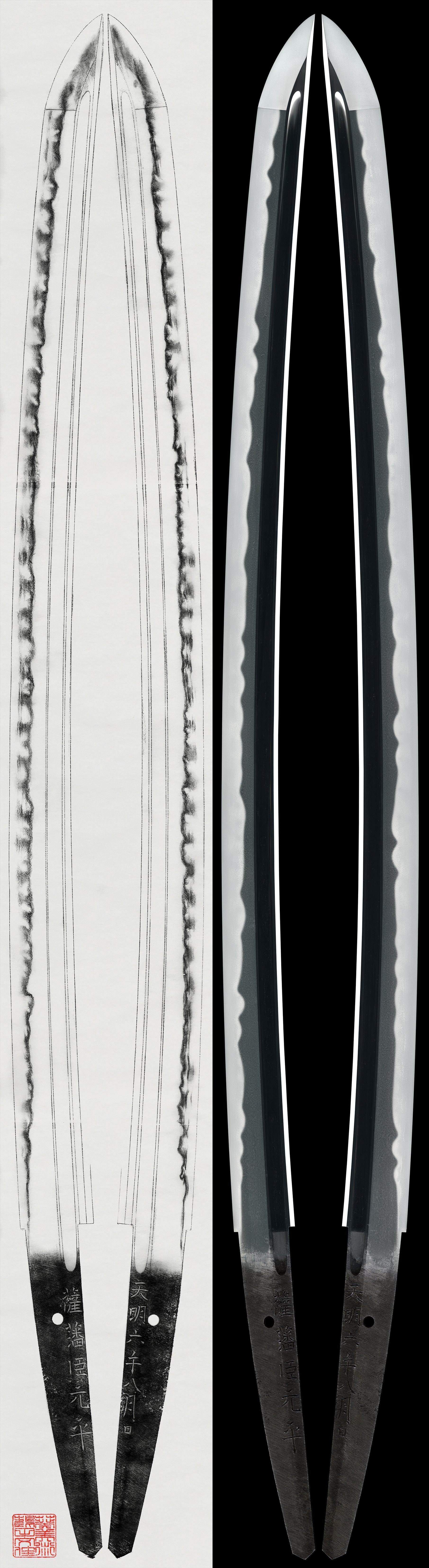
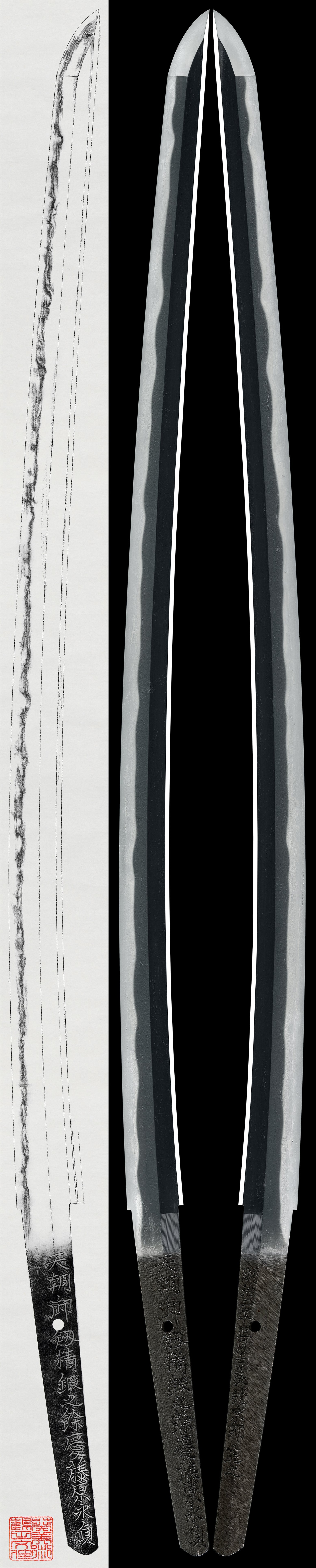
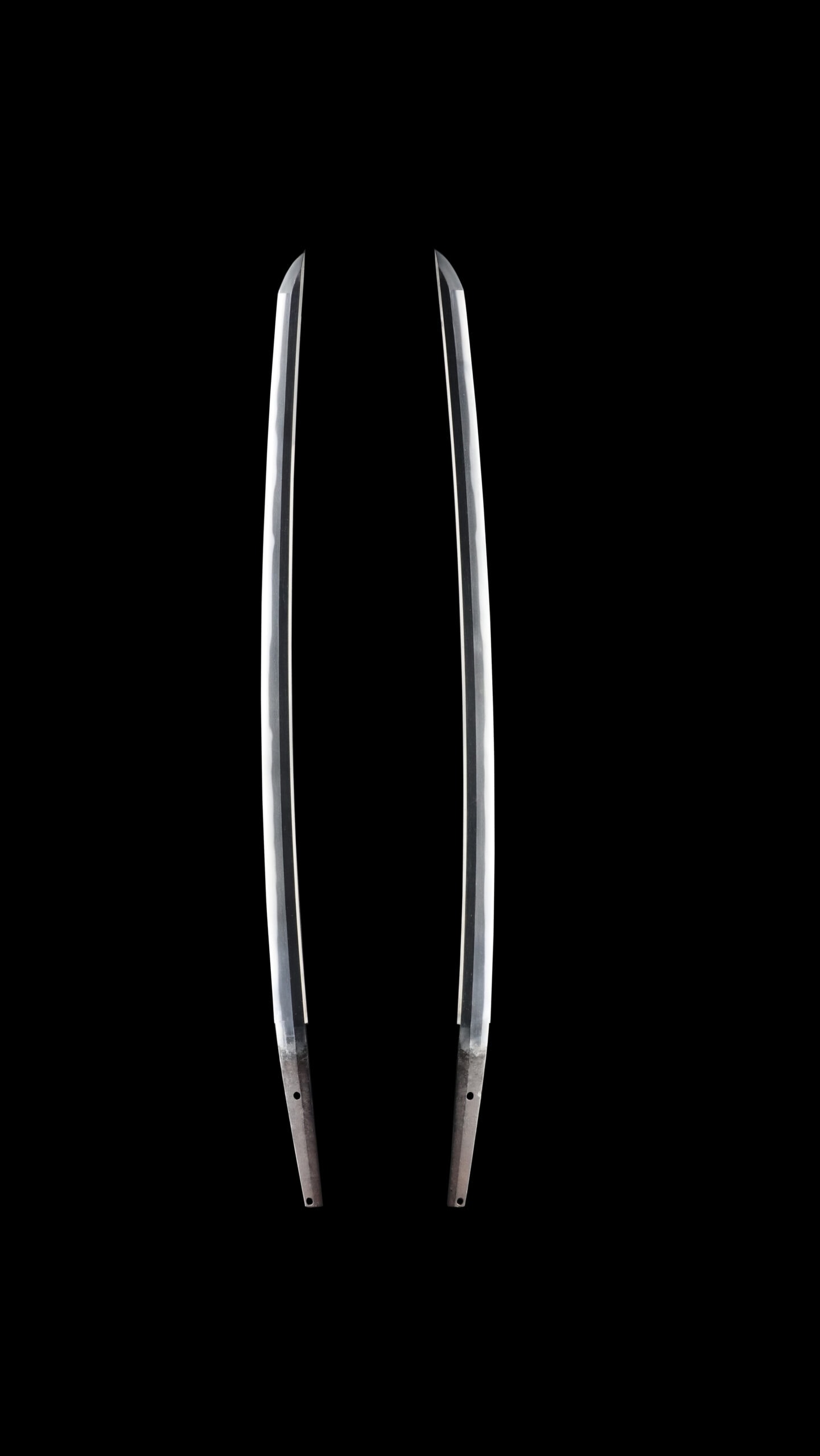
one consistent Yamato Hosho-den hand decomposed by register: the standard signed-and-dated shinogi-zukuri katana in tight masame and broad bright suguha, against the rarer hira-zukuri wakizashi in which the same temper opens into a nie-laden, activity-rich edge with deeper carving

The shodai Kunikane is the Date-domain smith who, in the opening decades of the Shinto period when the Soshu manner was the fashion, set himself instead to revive the masame-forging, suguha-tempering Yamato Hosho-den of the old province. Born Hongo Genzo in Bunroku 1 (1592) at Kokubun-Wakabayashi below Sendai Castle, retained by Date Masamune and sent by his lord to Kyoto to study under Etchu no Kami Masatoshi, he received the title Yamashiro Daijo in Kan'ei 3 (1626) and styled himself a descendant of the later line of Yamato Hosho Goro. His recognized hand is constant and unmistakable: a tightly forged masame-hada with fine ji-nie and frequent chikei, often with a mizukage rising from below the machi, carrying a suguha-based temper into which hotsure, kuichigai-ba, nijuba and uchi-noke, sunagashi and kinsuji are set, the boshi running straight into a yakizume-like sweep with hakikake. The published sources call this the working range of Yamato Hosho-den that he idealized, and judge his finest blades equal to or surpassing the old Hosho. They are honest about where he falls short of the kotO master, naming a relative paucity of variation in the monouchi and a commonplace boshi, yet they hold his best signed and dated tachi to be masterpieces of imposing presence.

Diagnostic discriminators

unique vs Shinto-period Soshu-fashion baseline (itame/mokume)

a suguha or suguha-cho base, often broad, deep in nioi and bright, carries hotsure, kinsuji and sunagashi rather than clusters; it is the Hosho-den partner to the masame ground, distinct from the showy midare of the contemporary Soshu fashion

the boshi runs straight to a yakizume-like point with vigorous hakikake, the Yamato finish; the published sources find an archaic fragrance in it even while calling his boshi the least varied part of his work

unique vs blades without a recorded mizukage

Observation by phase

The signed-and-dated katana (his typical hand)

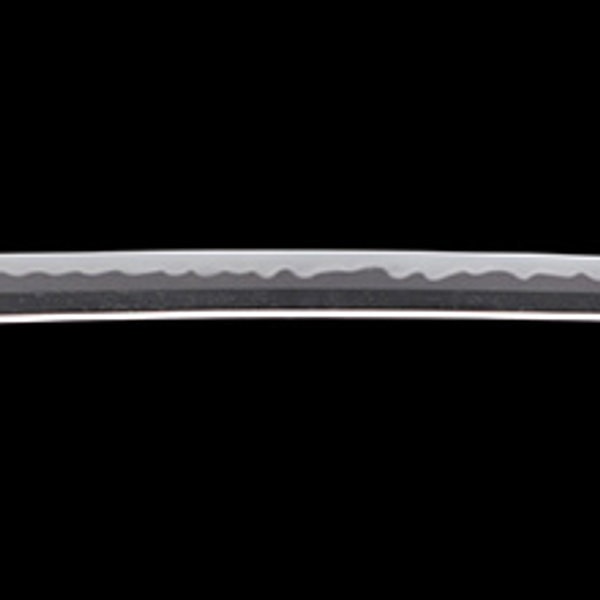
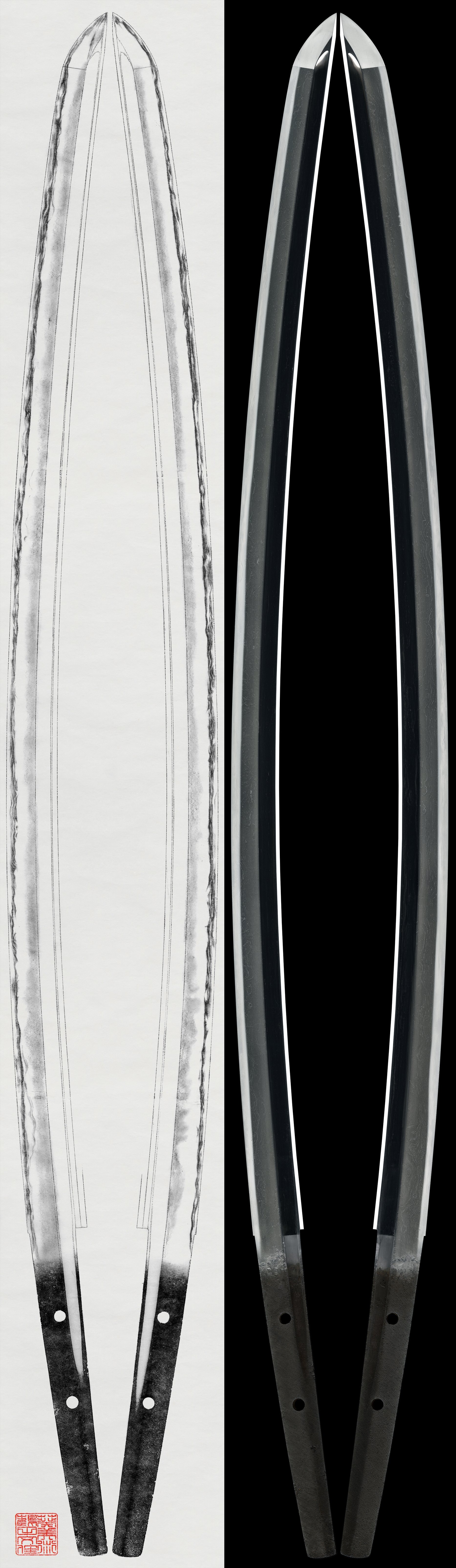
His representative work is the shinogi-zukuri, iori-mune katana, ubu and long-signed, very often dated, a high shinogi and shallow sori with an elongated chu-kissaki. The ground is the tell: a well-packed masame-hada, at times running into nagare, with fine ji-nie thickly applied and chikei entering frequently, the steel clear, and a mizukage often rising from below the machi that the published sources call a habit of his hand. Over it lies a suguha or suguha-cho temper, frequently broad, with a shallow notare, the nioiguchi deep and bright, ko-ashi entering, ko-nie well adhered; along the habuchi hotsure is general, with sunagashi and kinsuji running freely and kuichigai-ba and nijuba mixed in. The boshi runs straight to a yakizume-like point with vigorous hakikake. The published sources rate the masame forging and the bright suguha as the realization of the Yamato Hosho manner, the equal of kotO at its best, while naming honestly where he does not reach the early Hosho.

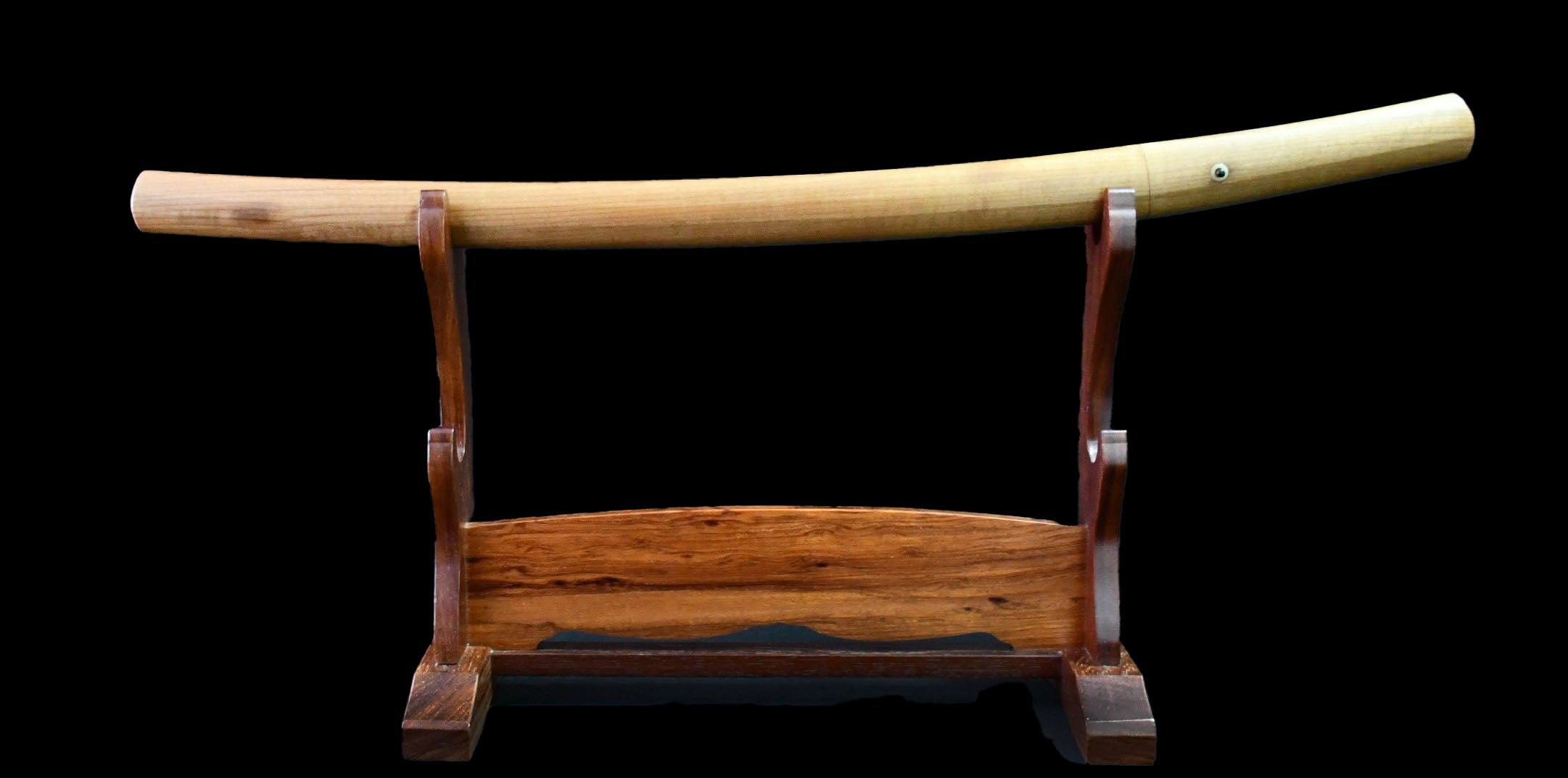
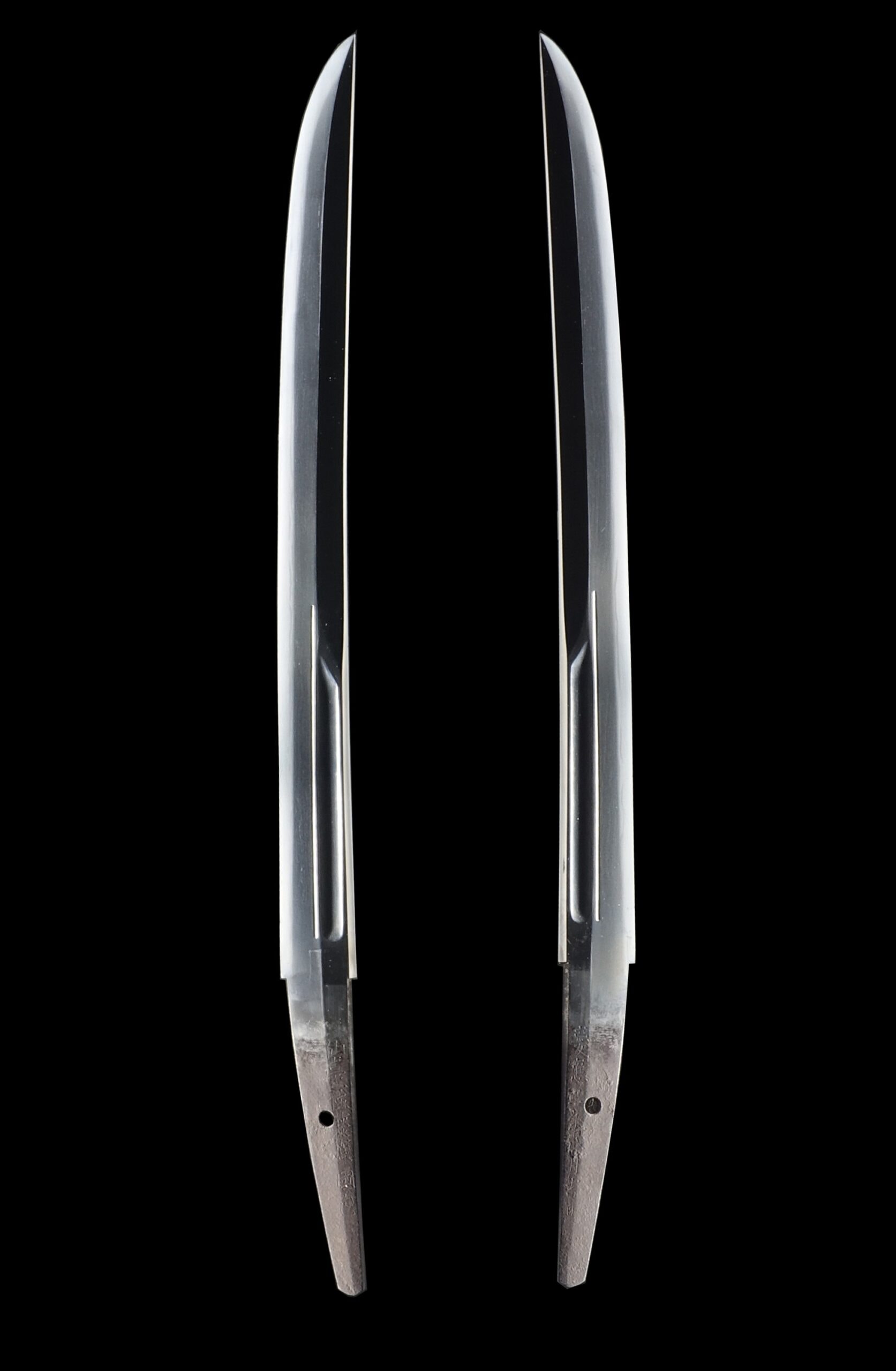
Sugata 姿
Jigane 地鉄
Hamon 刃文
Bōshi 帽子

The hira-zukuri wakizashi (the rarer, more active register)

Within the same Hosho-den hand the published sources mark off a rarer register: the hira-zukuri wakizashi, which they note are very few among his works and so prized as reference pieces. The forging here is more refined still, a tightly packed masame with very fine ji-nie thickly adhering and fine chikei entering abundantly, a mizukage rising from below the machi. The suguha base opens in the upper half into a somewhat broader yakiba; ko-ashi and yO appear, the nioi deep and the nie thick with coarser nie intermingled, hotsure, kuichigai-ba and nijuba-like effects mixed in, sunagashi running throughout with kinsuji and small tobiyaki resembling yubashiri, the nioiguchi tending toward shizumi. The boshi turns in a ko-maru with vigorous hakikake. On the Onikiri wakizashi a plain suken and a katana-hi with soe-hi are carved kaki-nagashi with deep channels, reproducing a feature of old Yamato work. The published sources call such a piece one in which the shodai's true strengths are brought forth without reserve.

Sugata 姿
Jigane 地鉄
Hamon 刃文
Bōshi 帽子
Scholarship

The published sources are consistent that Kunikane's manner remained within Yamato Hosho-den from first to last, forging masame and tempering a suguha-based edge with uchi-noke, hotsure and sunagashi, the nie well adhered and the boshi tending to yakizume, and they single out a mizukage rising from below the machi as a personal habit of the shodai.

On where he falls short of the kotO master, the published sources are candid: judging him against the early Hosho they name a relative paucity of variation in the workmanship of the monouchi and a commonplace boshi, while granting that the quality of both ji and ha on his representative dated katana is excellent.

Designations

Kokuhō—
Jūyō Bunkazai1
Jūyō Bijutsuhin2
Gyobutsu1
Tokubetsu Jūyō1
Jūyō Tōken28

Elite Standing

0.22 across 33 designated works

Top 11% among smiths

Provenance

6 documented provenances across certified works by Kunikane

Provenance Standing

4 works held in elite collections across 6 documented provenances

Top 14% among smiths

Raw score: 2.24 / 10

Blade Forms

Distribution across 33 ranked works

Signatures

Signature types across 33 ranked works

Currently Available

Lineage

Kunikane
Students (4)
  1. 1.Kunikane國包2 for sale12designated
  2. 2.Iesada家定
  3. 3.Kaneshige包重2 for sale1designated
  4. 4.Kaneyoshi包吉1 for sale

Sendai Kunikane School

Other artisans of the Sendai Kunikane school

  1. 1.Kunikane國包2 for sale12designated
  2. 2.Kaneshige包重2 for sale1designated
  3. 3.Tomosuke倫助1designated