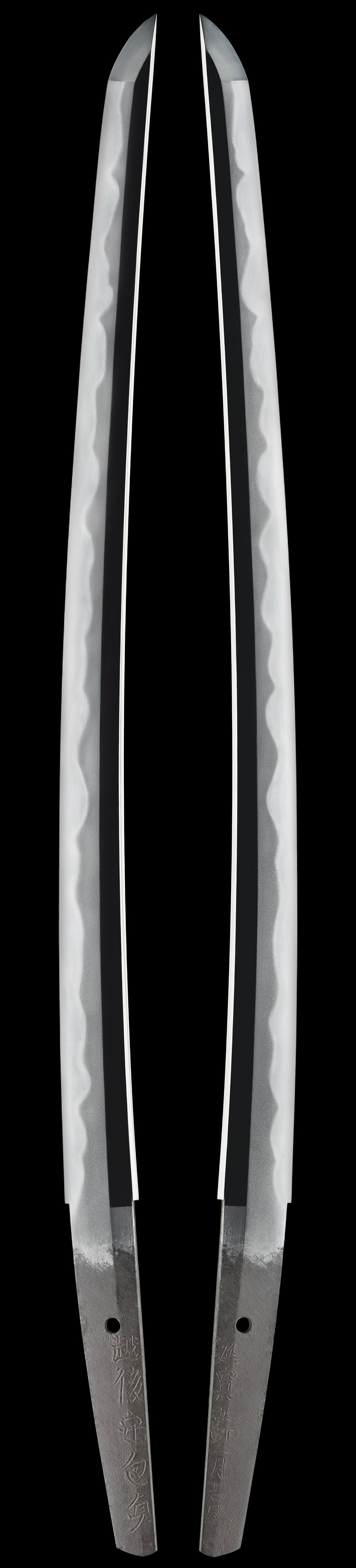
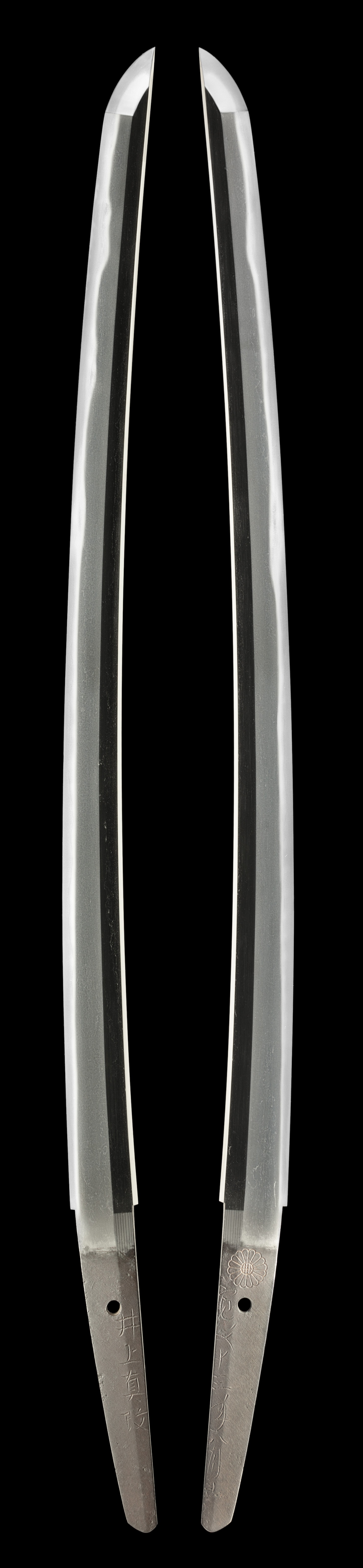
Suzuki no Kami Sadanori was a native of Kikuchi in Province whose common name was Saemon (also given as Sayuemon). He traveled to Osaka and studied under Inoue Shinkai, one of the foremost Osaka- masters. Thereafter he entered the service of the Naito family, and when the Naito were enfeoffed at Taira in Iwaki in Oshu, Sadanori accompanied them and relocated there. His signatures also confirm that he resided at in Rakuyo (Kyoto), lending his inscriptions considerable documentary value for tracing the geographic movements of Shinkai's disciples.
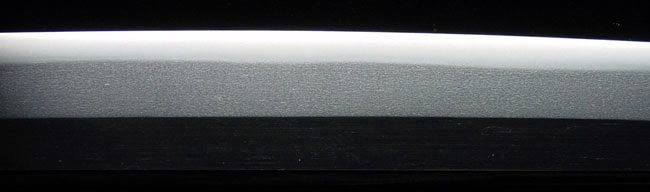
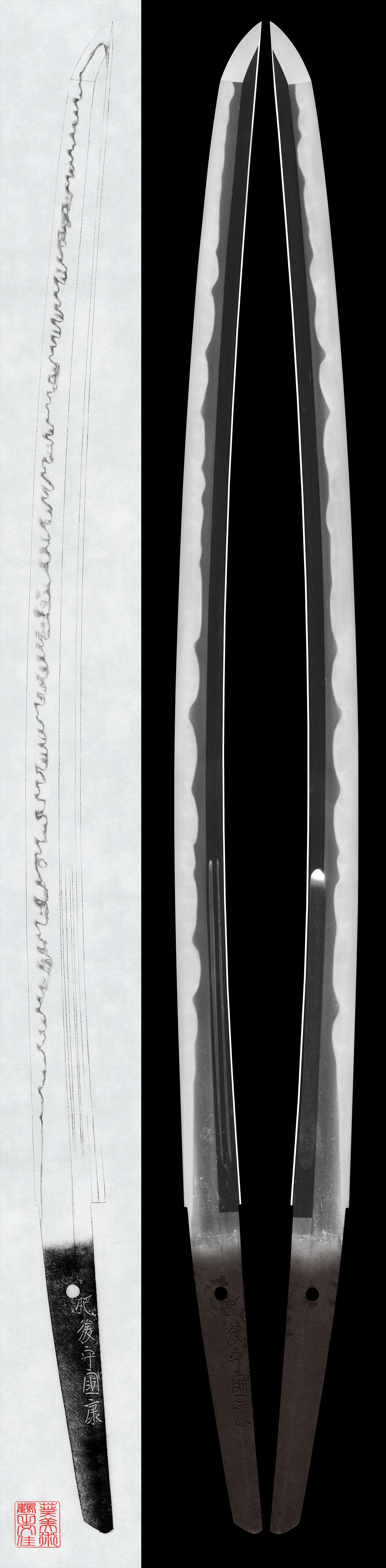
His manner of work encompasses , with , and patterns. The characteristically shows dense with thickly formed , and the is bright and clear. In his finest works, the deep and thickly adhering call to mind the style of his master Shinkai. One particularly notable -- tempered in a mixed with large , with deep , well applied, and a clear with slight -- demonstrates how closely he absorbed his teacher's approach. His tang work is also distinctive, with and bold, thick-chiseled long signatures, sometimes accompanied by .
Relatively few of Sadanori's works survive today; however, inheriting his teacher's style, he was recognized as a highly capable smith. The consistently note the connection to Shinkai in both and , characterizing one blade as "so accomplished that it calls to mind his master Shinkai" and proclaiming it "the finest masterpiece among Sadanori's works." His dated inscriptions -- ranging from Enpo 3 (1675) through Enpo 7 (1679) -- provide valuable chronological markers for the study of the Osaka- tradition and its reach into the Tohoku region through domain patronage.