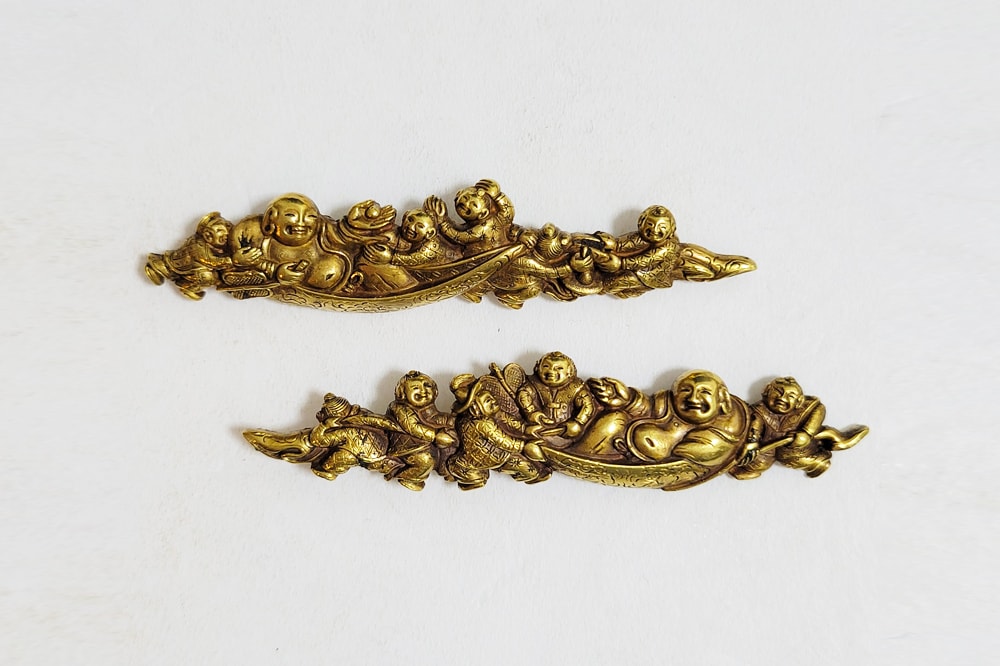
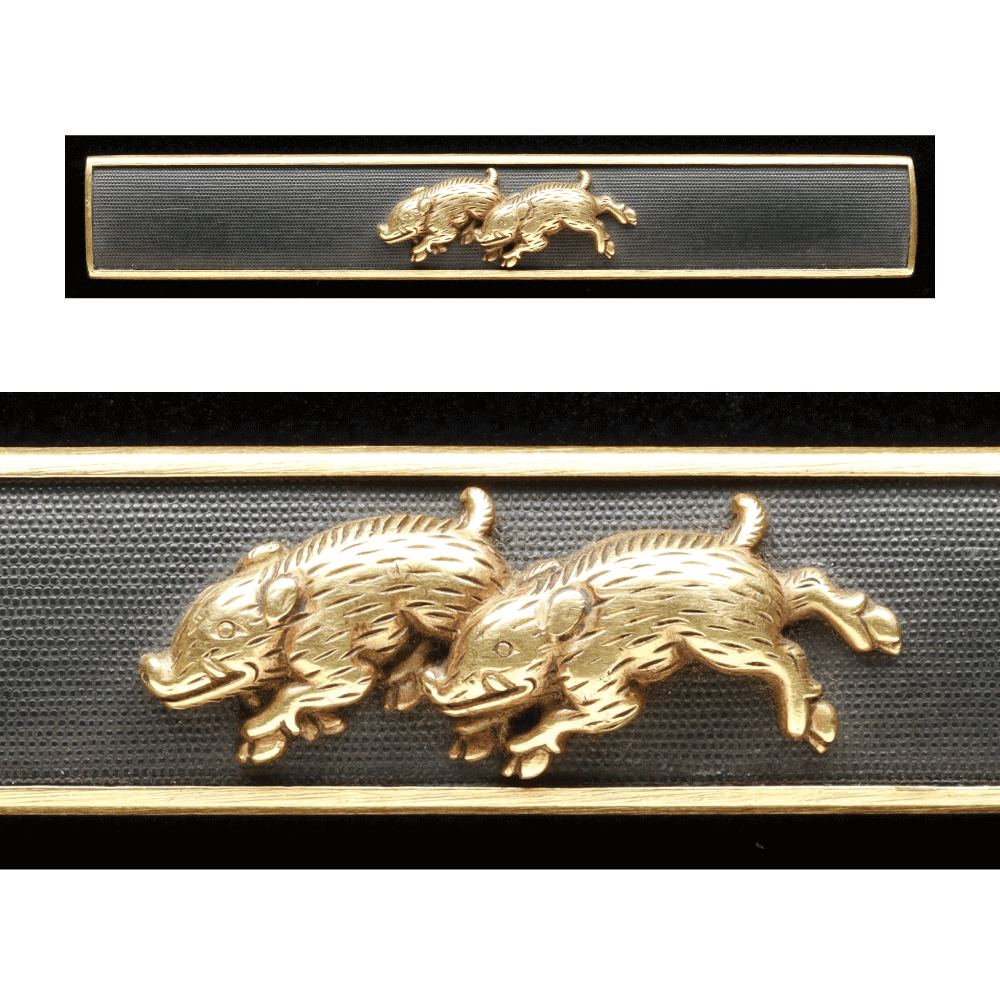
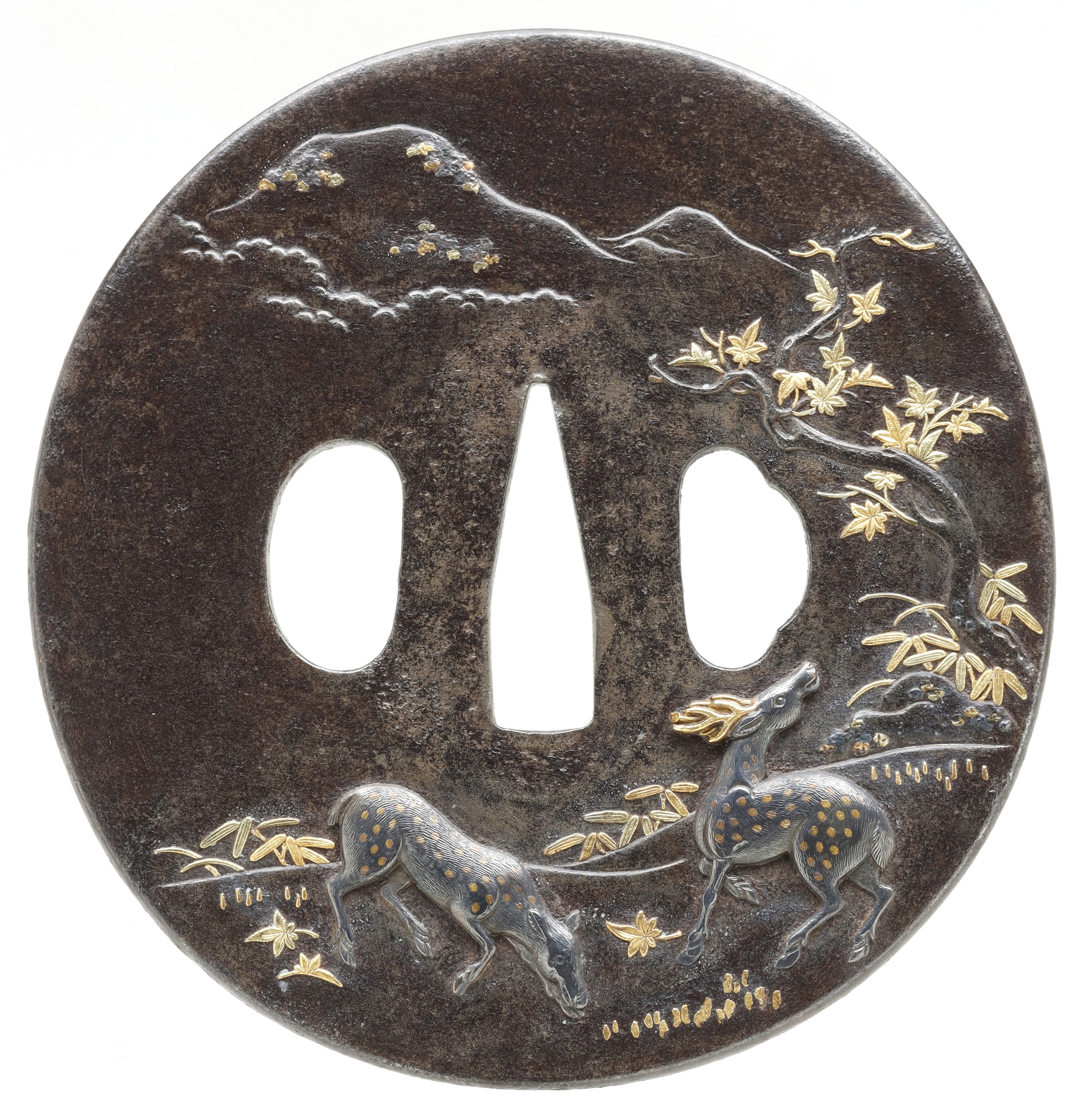
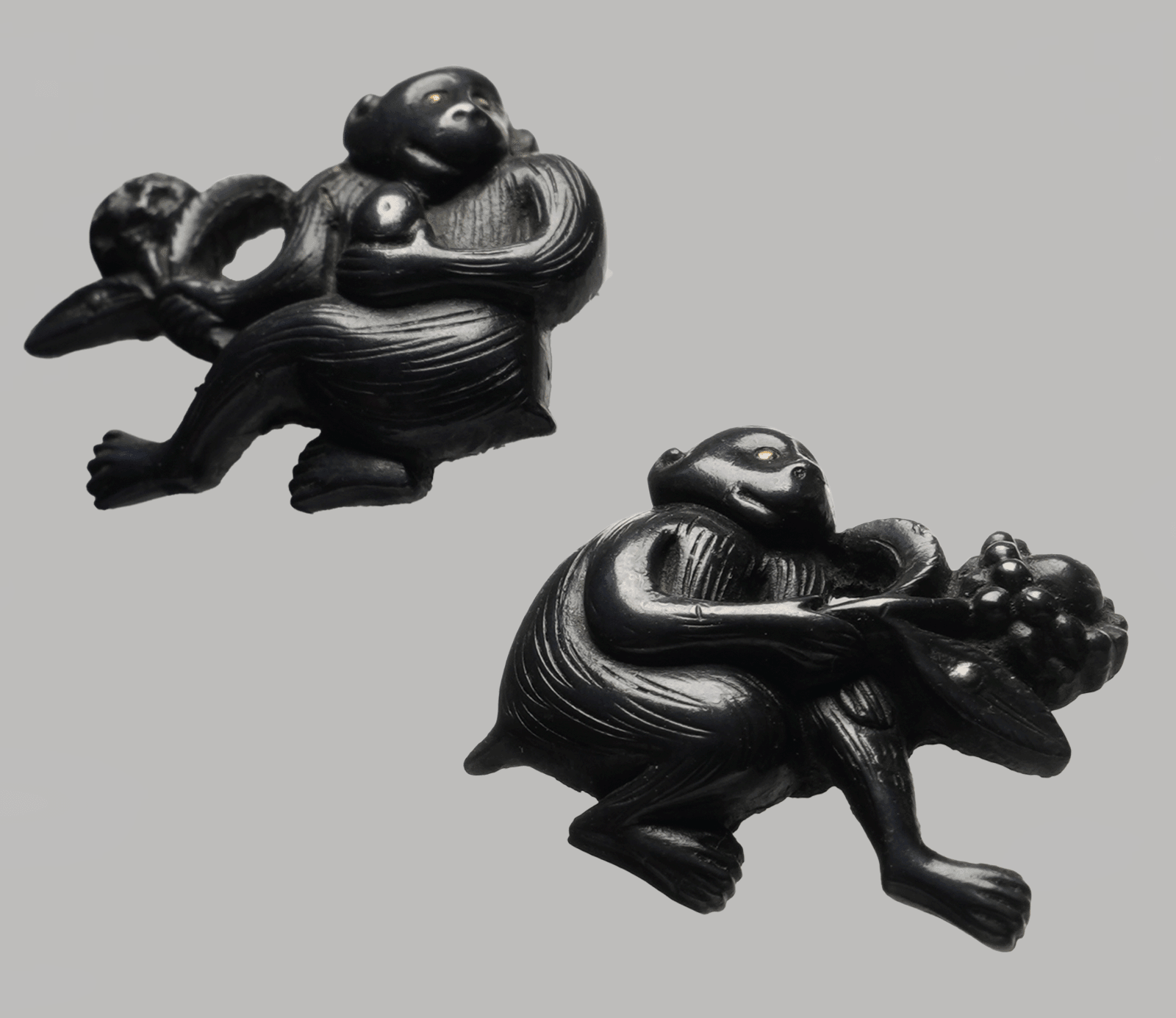
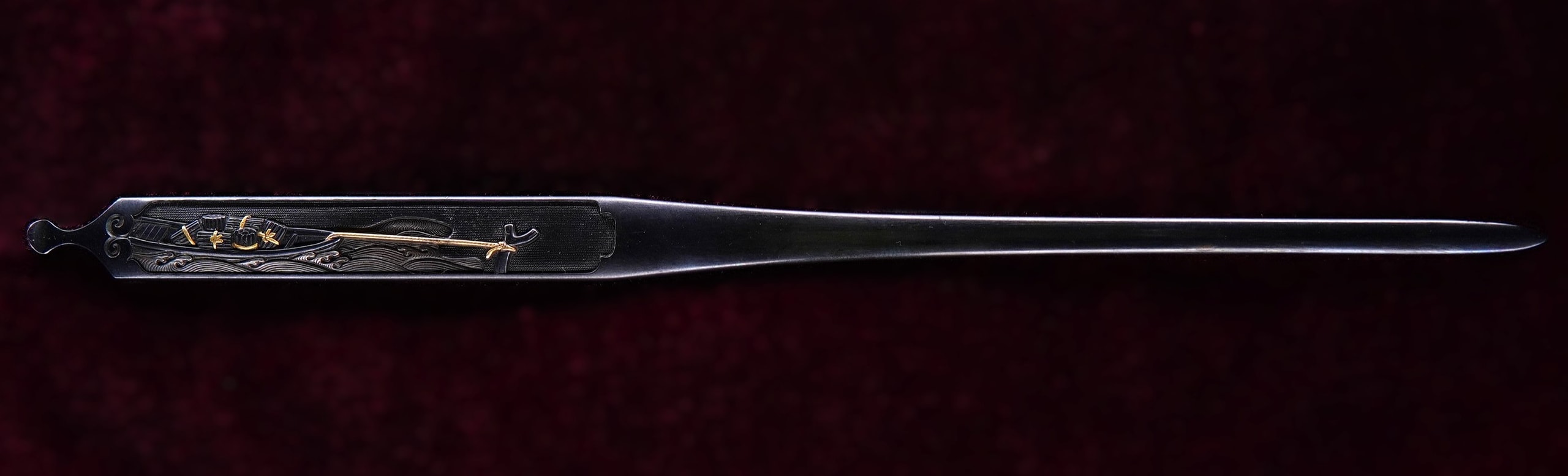
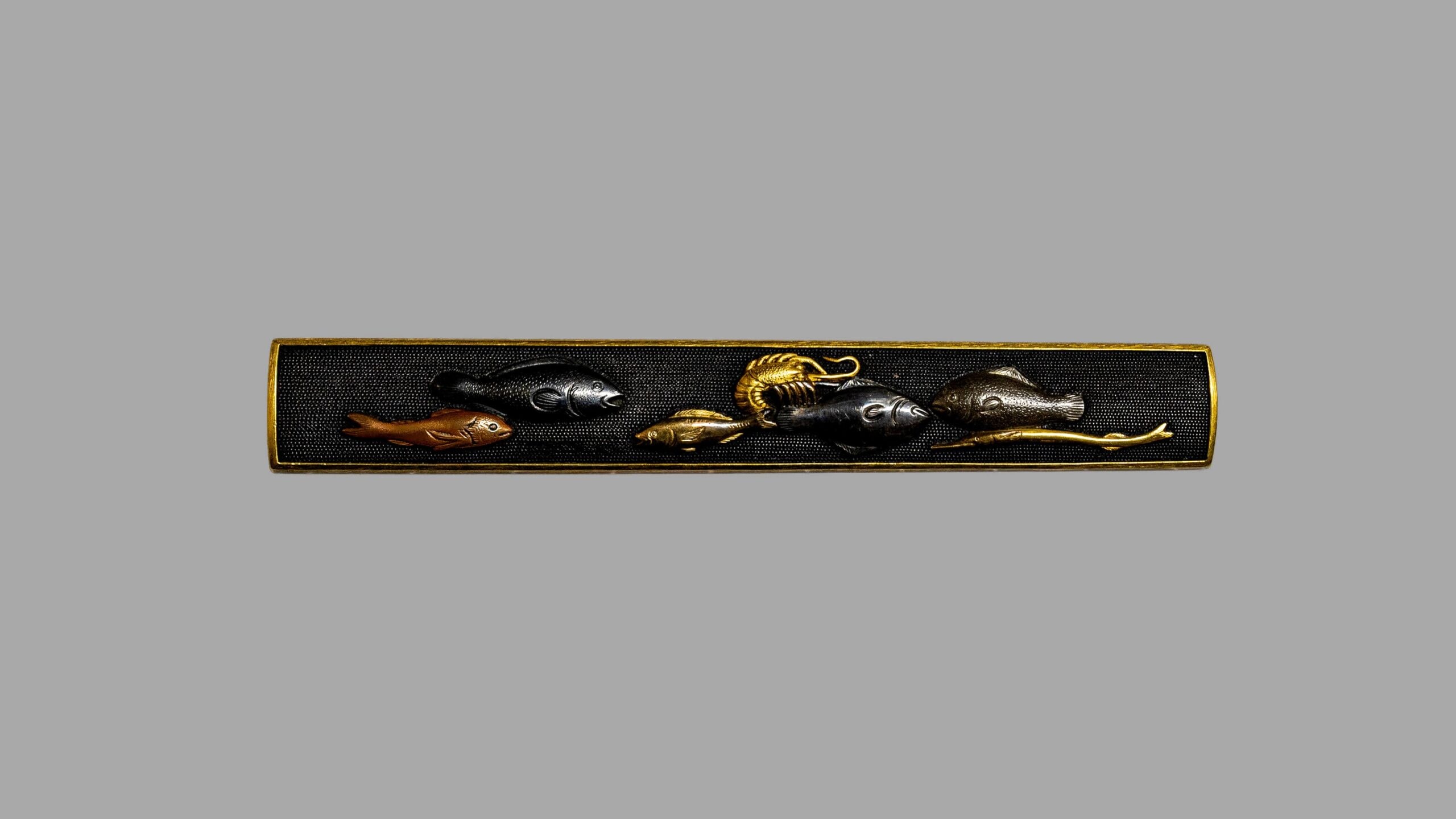
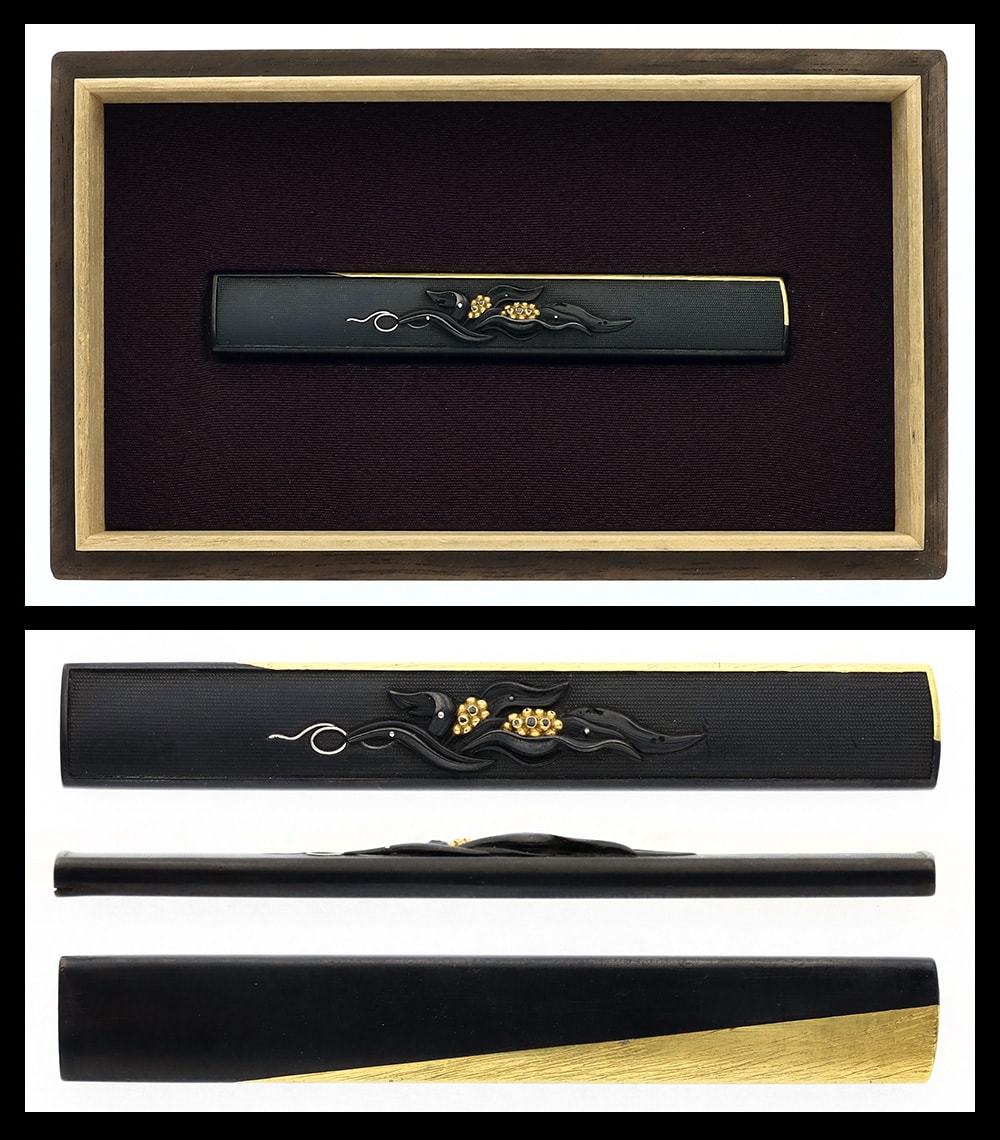
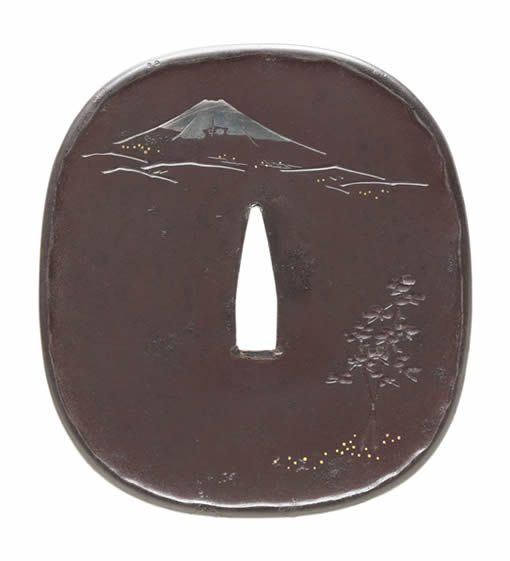
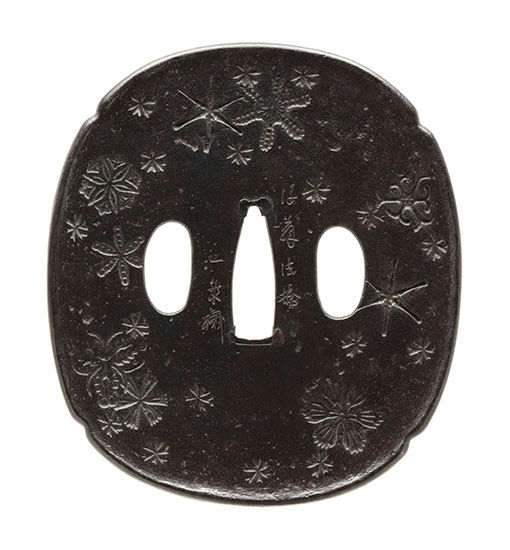
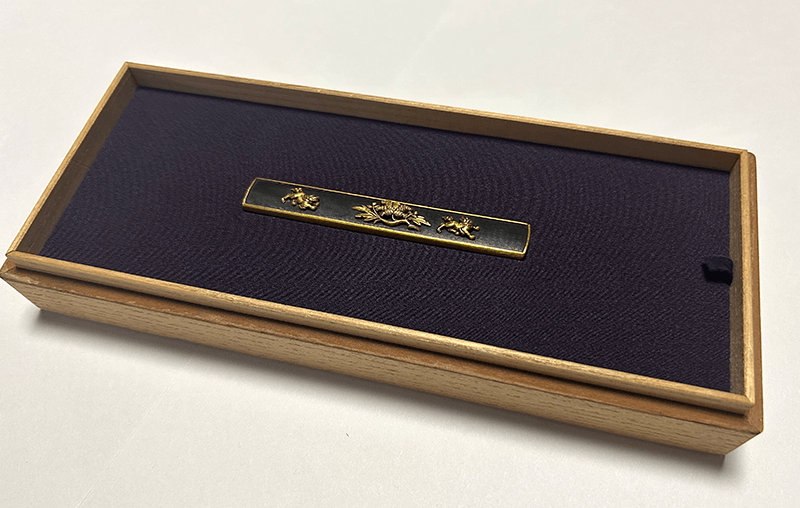
Goto Mitsutaka, known by the art name Enjo, was the eldest son and heir of the twelfth head of the Goto house, Goto Mitsusato (also recorded as Mitsumichi or Mitsuri), who bore the title Jujo. Mitsutaka was born in Kyoho 7 (1722). His childhood name was Kameichi; he later used the name Mitsunari, and his common name was Gennojo. In Kanpo 2 (1742), upon the death of his father, he changed his name to Shirobei Mitsutaka and succeeded as the thirteenth head of the Goto mainline. His tenure was the second-longest in the family's history, surpassed only by the tenth master Renjo, and he remained active over a remarkably extended period. In addition to his own creative production, Mitsutaka served as the foremost authenticator and appraiser of earlier Goto works, issuing judgments and valuations for pieces attributed to masters from the second generation Sojo through to the eighth generation Sokujo. His authentication inscriptions, bearing his , appear on works spanning the full breadth of the Goto legacy.
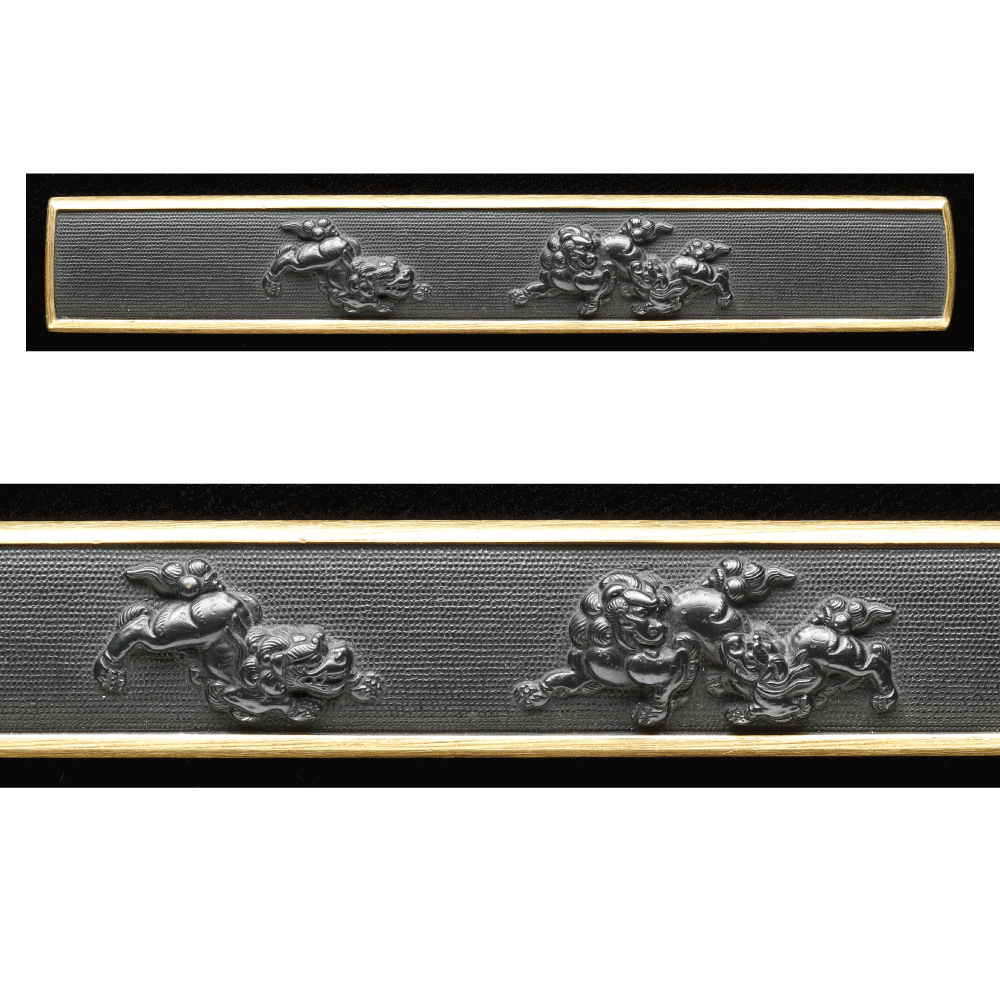
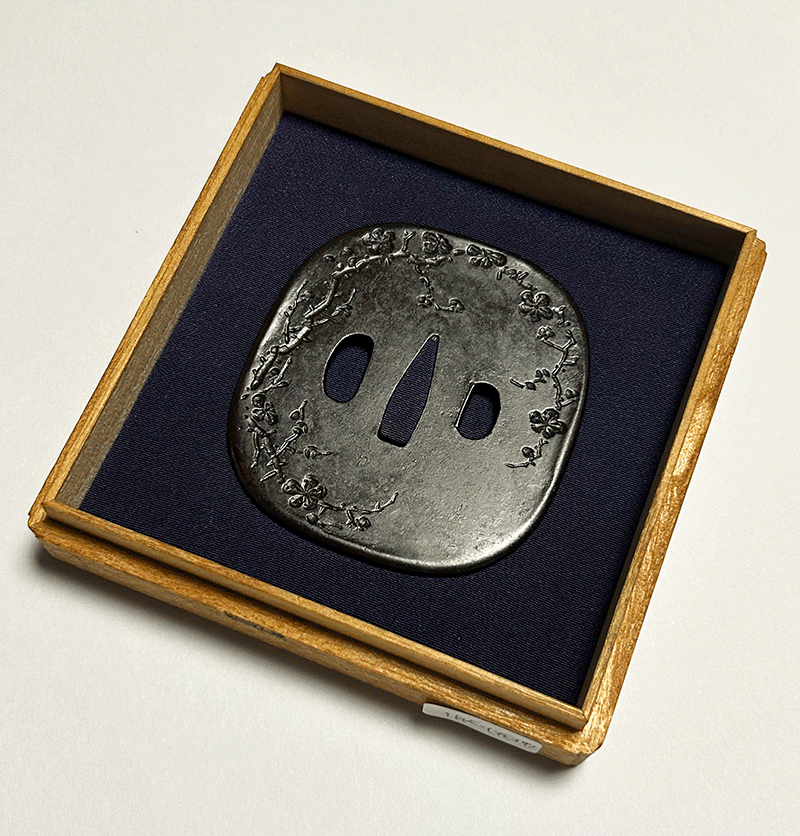
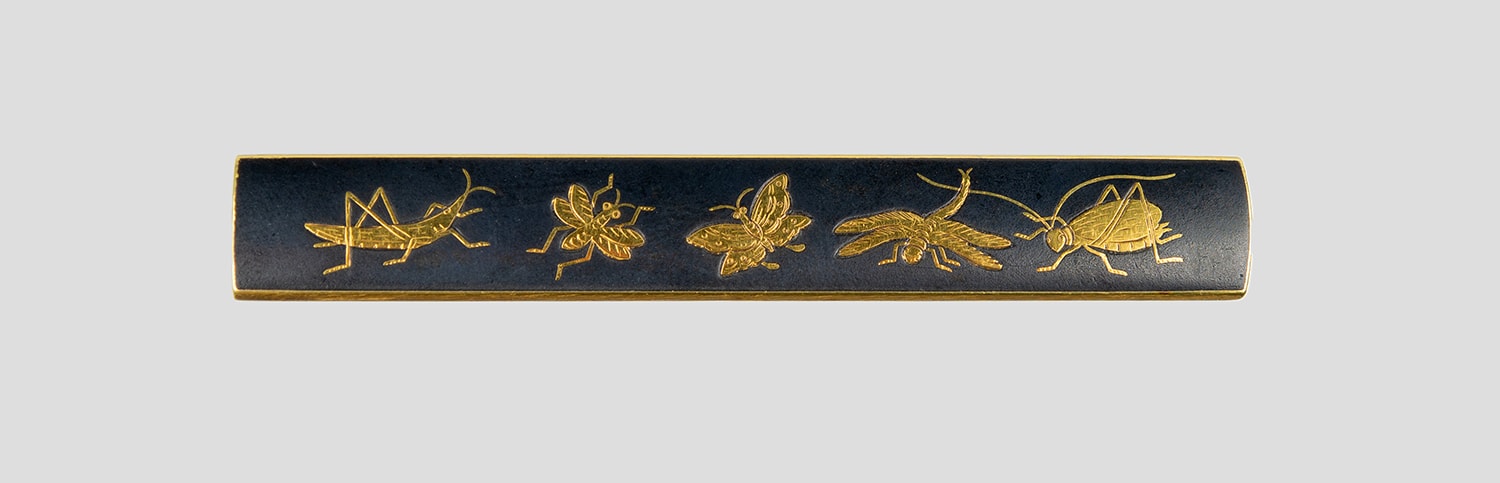
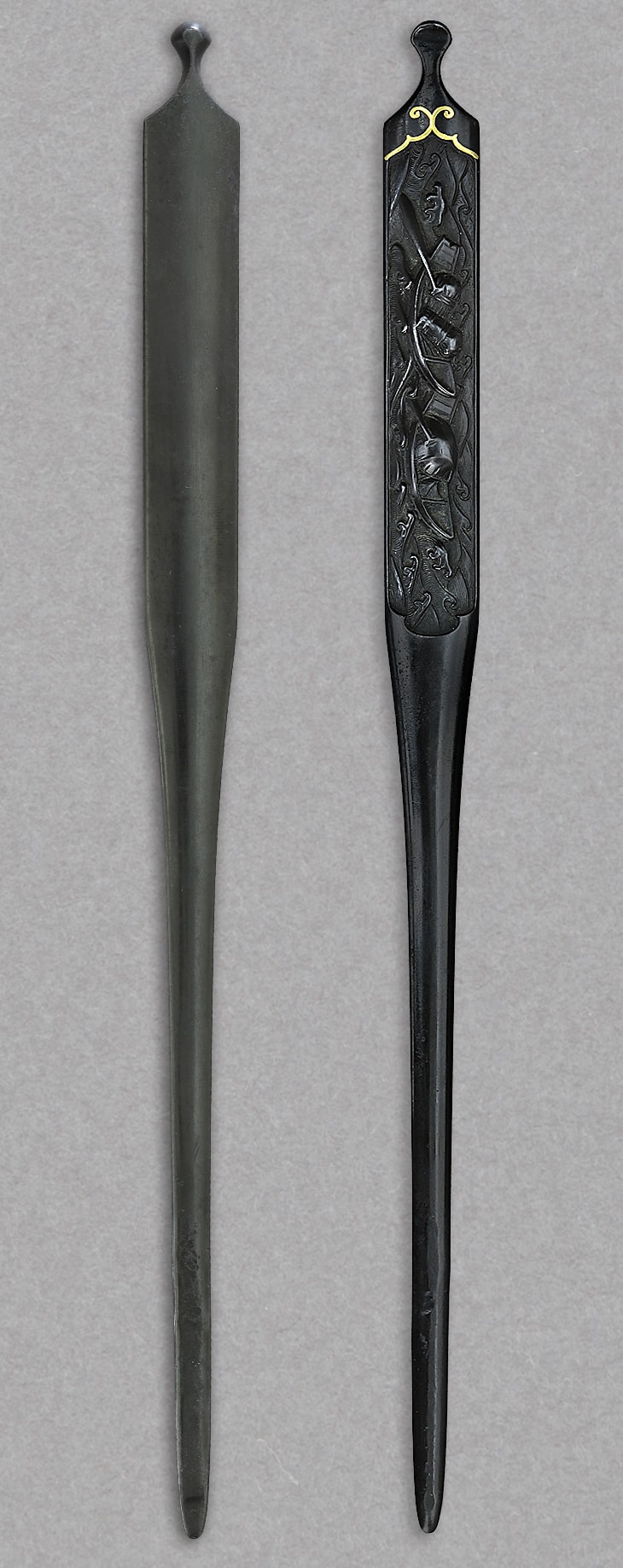
Mitsutaka's style largely inherits and faithfully transmits the established techniques of the Goto house, adhering closely to the canonical iebori tradition. His standard method employs grounds with in gold and silver on the and , ' gilt backing on the reverse, and solid gold () grounds for the carved in rounded relief (yobori or nikubori). His thematic repertoire encompasses the officially sanctioned subjects (okite-mono) of the Goto house: lions (shishi), crawling dragons (hairyu), dancing cranes, the Twelve Zodiac Animals, tigers, phoenixes, horses, paired oxen, roosters, baku spirit-beasts, dragons, rhinoceroses, and literary subjects drawn from The Tale of Genji. Among the 's recurring technical observations, it is noted that Goto works are generally executed with relatively few chisel strokes; while this tendency is visible in Mitsutaka's oeuvre, certain pieces stand out as exceptionally meticulous, displaying a greater density of chisel work and a carefully executed finish. His production strongly favors and sets, whereas his output is comparatively scarce, a pattern noted explicitly in the evaluations.
The characterizes Mitsutaka's works as possessing a "poised dignity expressed with breadth" that represents the very forte of the Goto mainline. His lion carvings combine dignity with martial boldness; his monochrome compositions convey expressive power through the intensity of the black modeling alone; and his narrative scenes, such as the Kumagai-Atsumori temamono, achieve calm dignity amid dense, labor-intensive detail. Evaluative language across his designated works consistently invokes "elevated dignity," "serene spaciousness," and the "prestige and authority of the Goto mainline." Early-period works bearing his self-signature cut into the filed ground of the gilt back plate are identified as spirited masterpieces from his twenties, while mature productions demonstrate the full measure of Got tradition and formality. Mitsutaka occupies a pivotal position within the Goto lineage as the master who, across an exceptionally long career, consolidated and transmitted the iebori manner at its most authoritative, sustaining the house's institutional prestige through both his own accomplished carving and his role as the principal arbiter of the Goto canon.