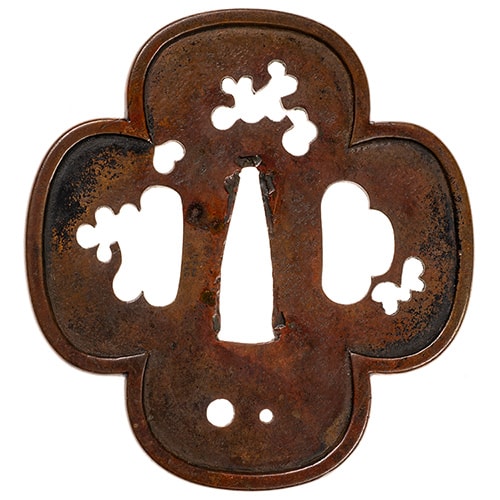
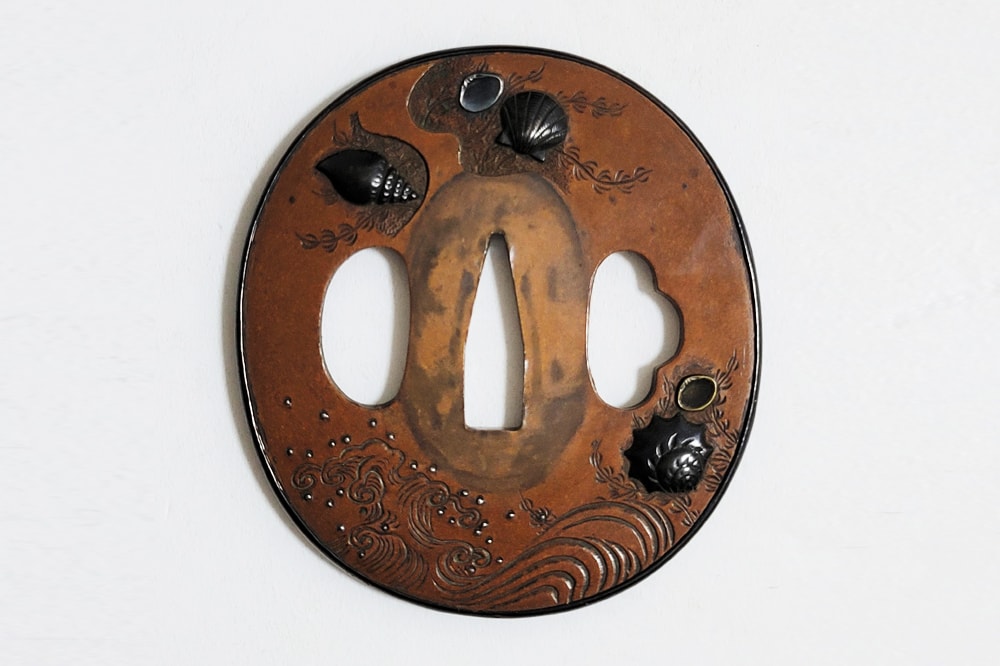
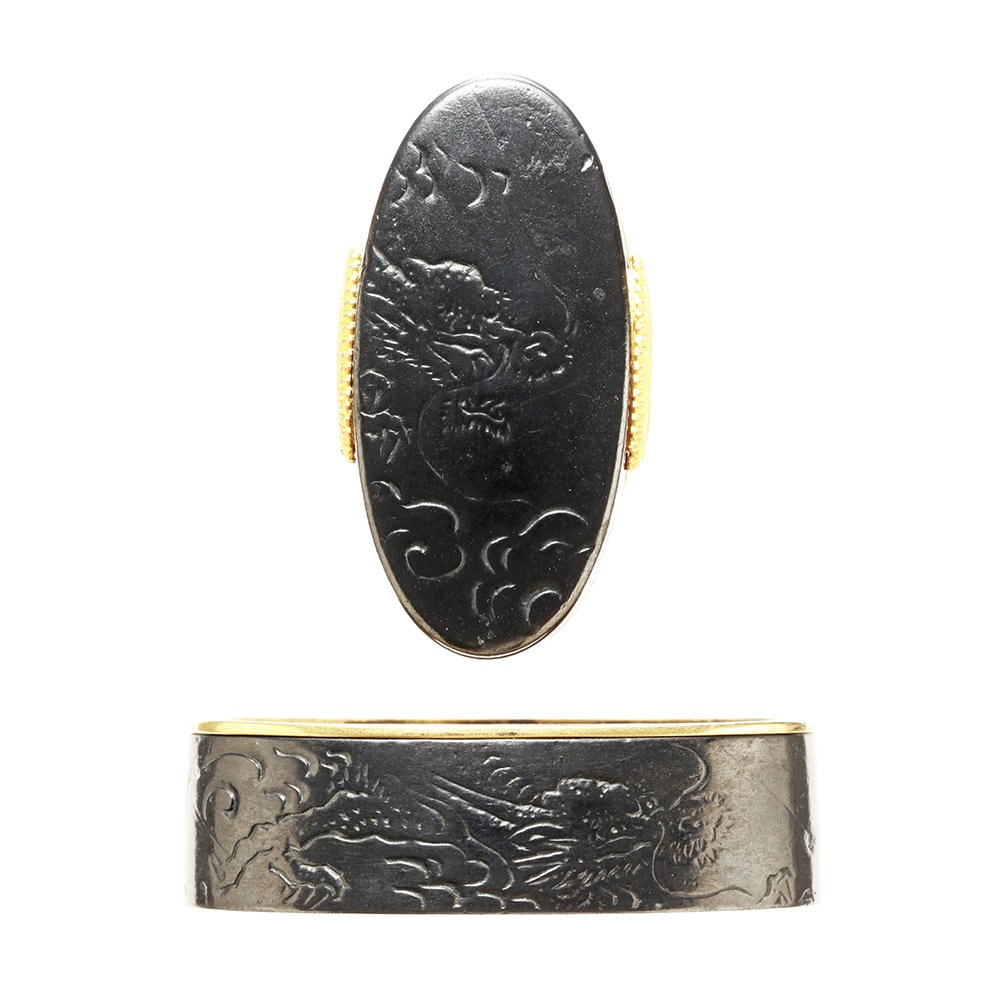
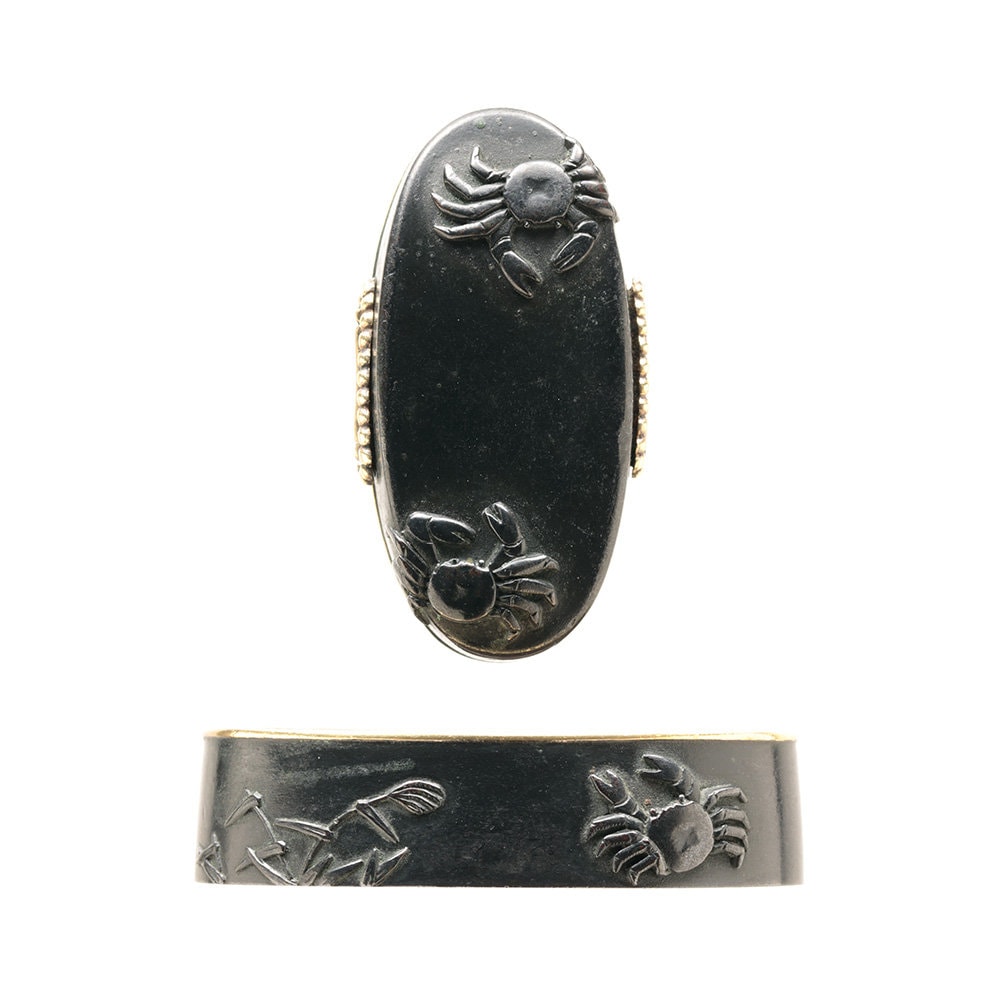
Washida Mitsunaka was the younger brother of the fourth-generation head Mitsuchika of the Washida school, hereditary metalworkers retained by the Sakai lords of Shonai domain. Born in Bunsei 13 (1830), Mitsunaka used the art-names Kyozan and Kozenkyo. Following the established practice of his lineage, he traveled to to study under the Yanagawa school before returning to Shonai, where he and his elder brother brought the Washida tradition to its brilliant culmination. He remained active through the end of the Tokugawa period and into the early Meiji era, dying in Meiji 22 (1889).
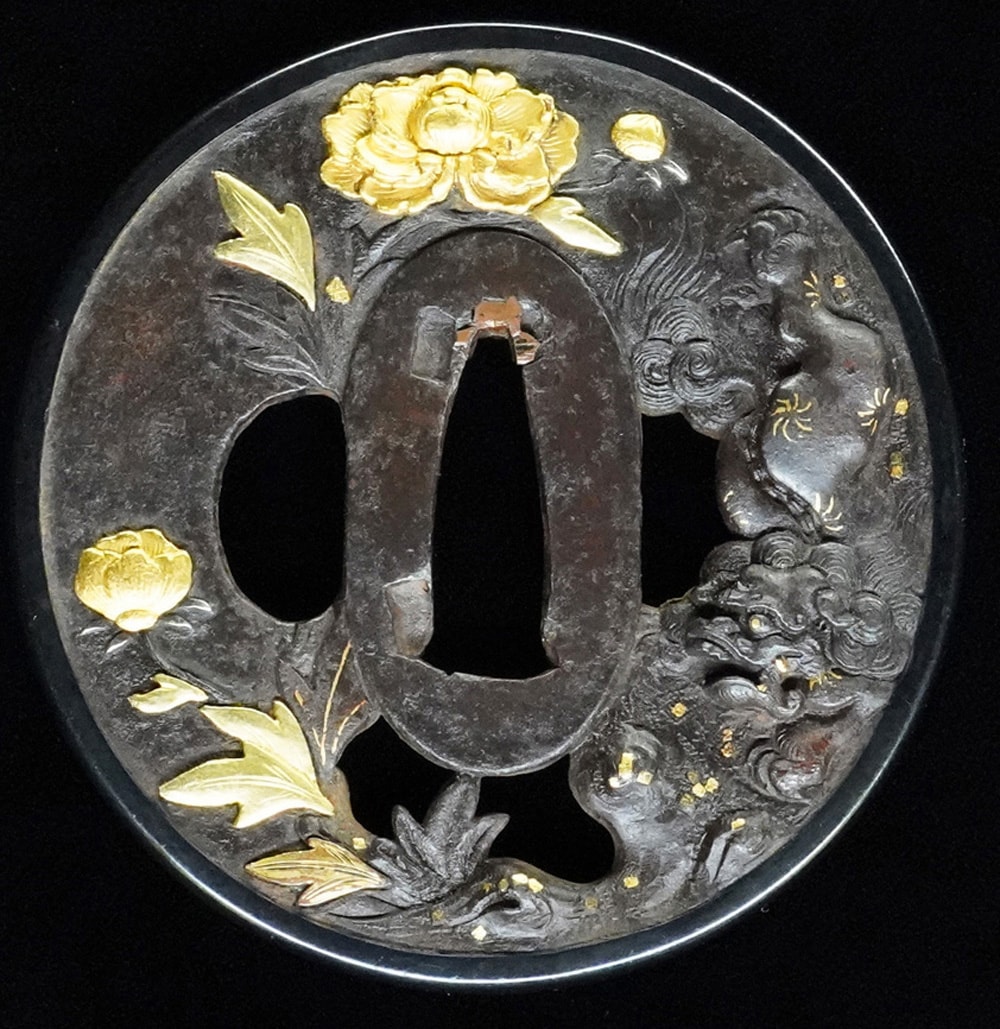
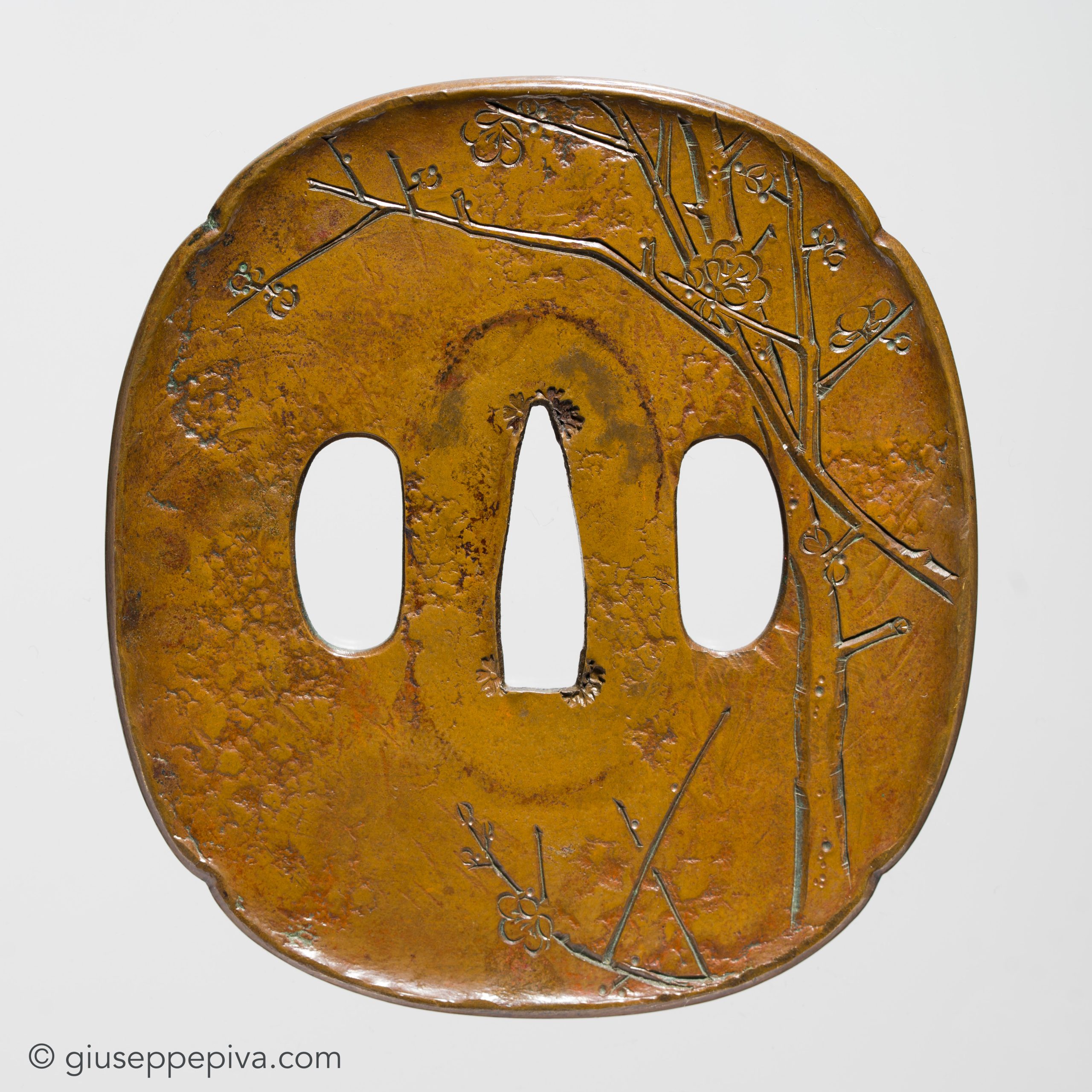
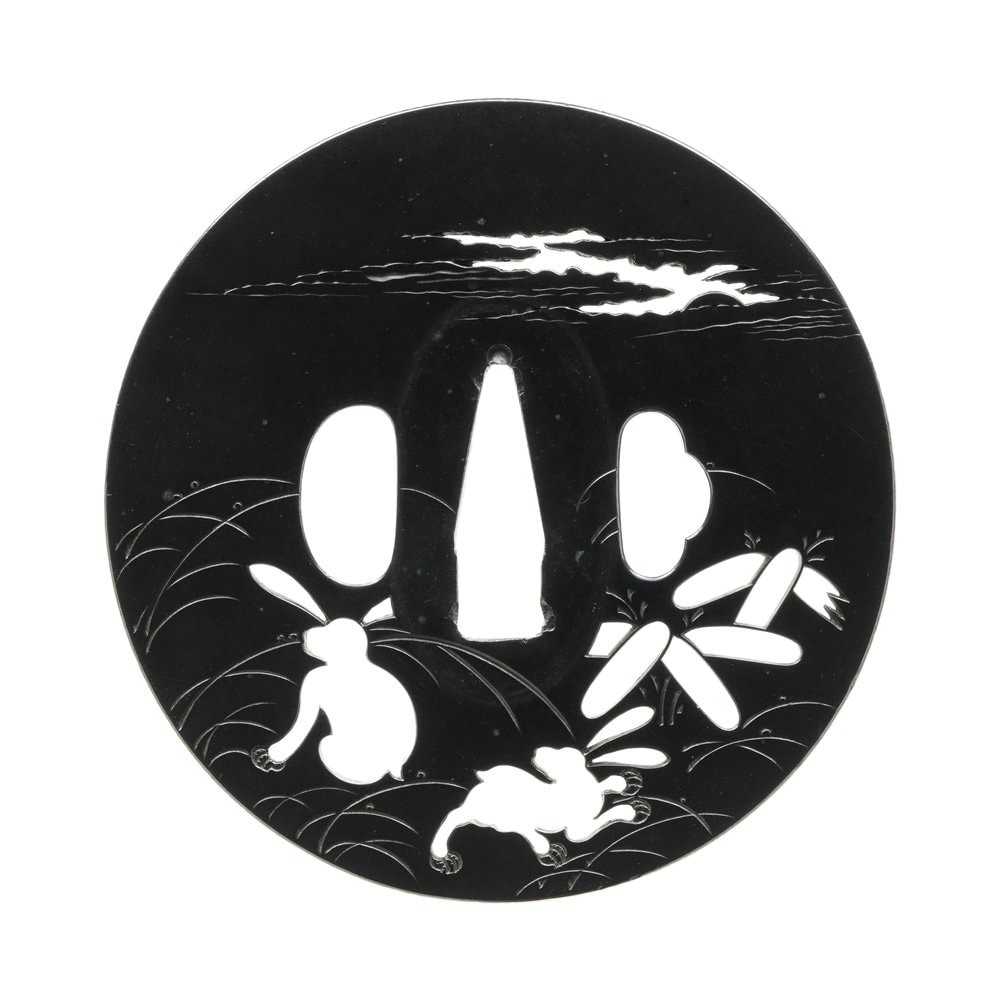
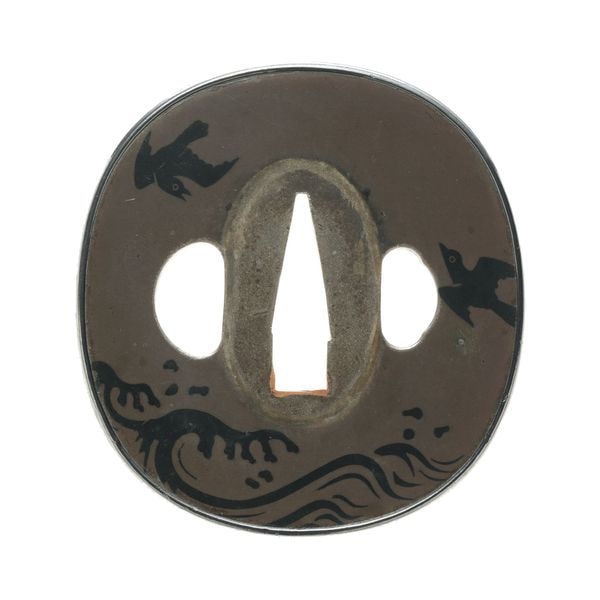
Mitsunaka's work is defined by his extraordinary command of - (flat inlay), executed with an array of colored metals including gold, silver, , , , and . His mature pieces display a sumptuousness that calls to mind the inlay tradition, with dense polychrome compositions carried to the utmost minuteness and showing no slackness of execution. Earlier in his career he also produced works employing brass inlay in a manner reminiscent of the Heianjo tradition. His preferred ground is polished (), providing a deep, lustrous surface against which the multi-metal inlays achieve striking chromatic contrast. His fittings encompass , , and , often conceived as coordinated ensembles of refined formal character.
Mitsunaka stands among the foremost metalworkers of the late period, an artist whose technical precision and aesthetic sensibility are inseparable. His celebrated "Swarm of Butterflies" pair, later reunited and elevated to status as a set, is recognized as a consummate masterwork in which design consciousness, likened by examiners to the worlds of lacquer and yuzen textile dyeing, achieves full expression through the medium of metalwork. His oeuvre represents the apex of the Washida school's contribution to the art of sword fittings.