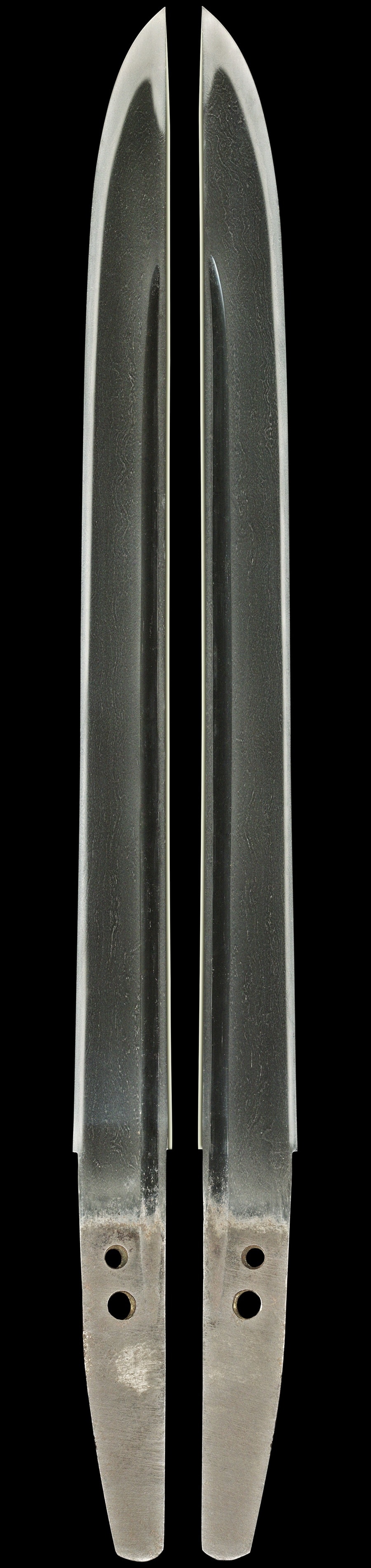
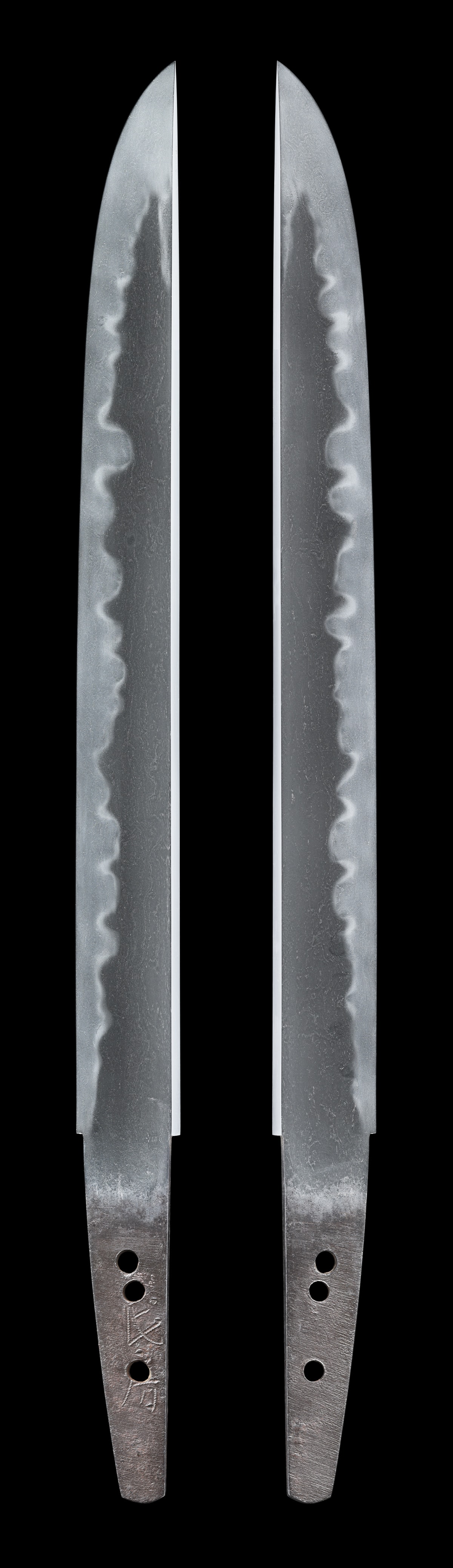
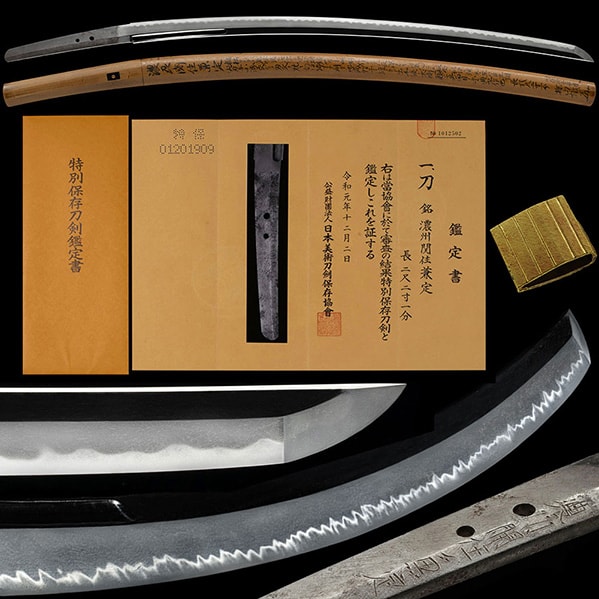
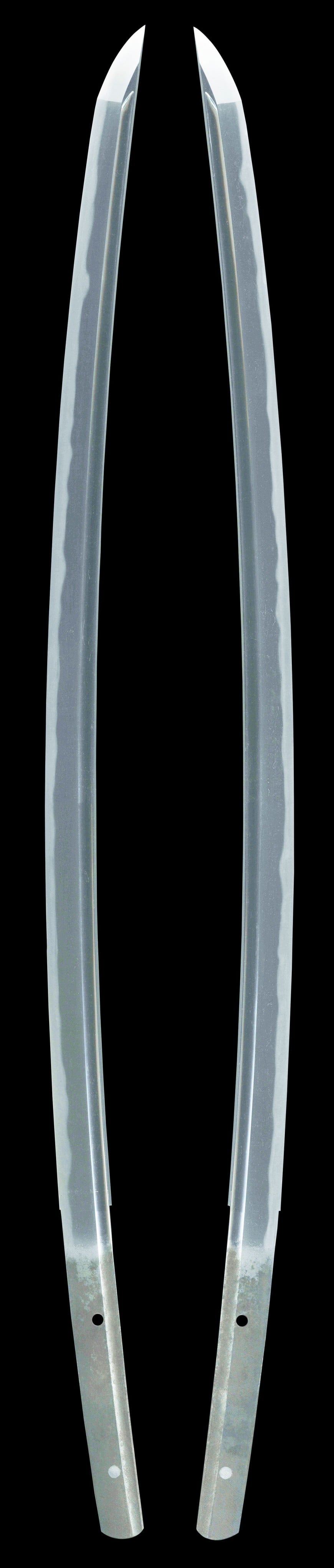
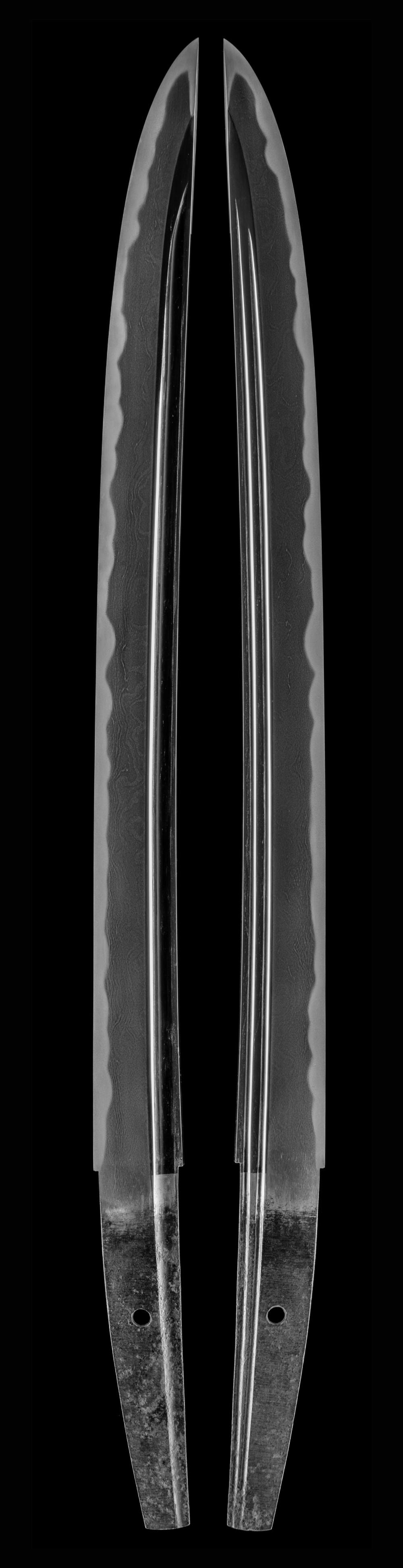
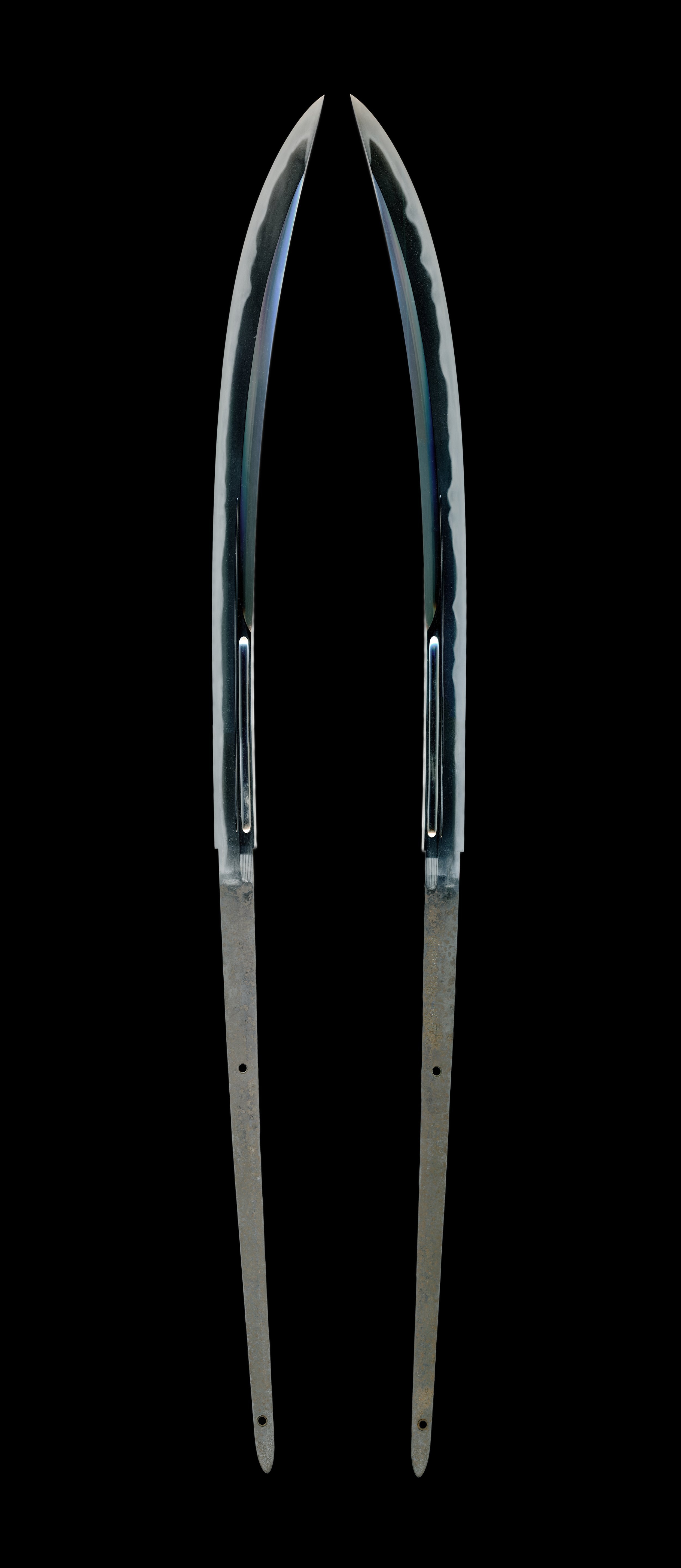
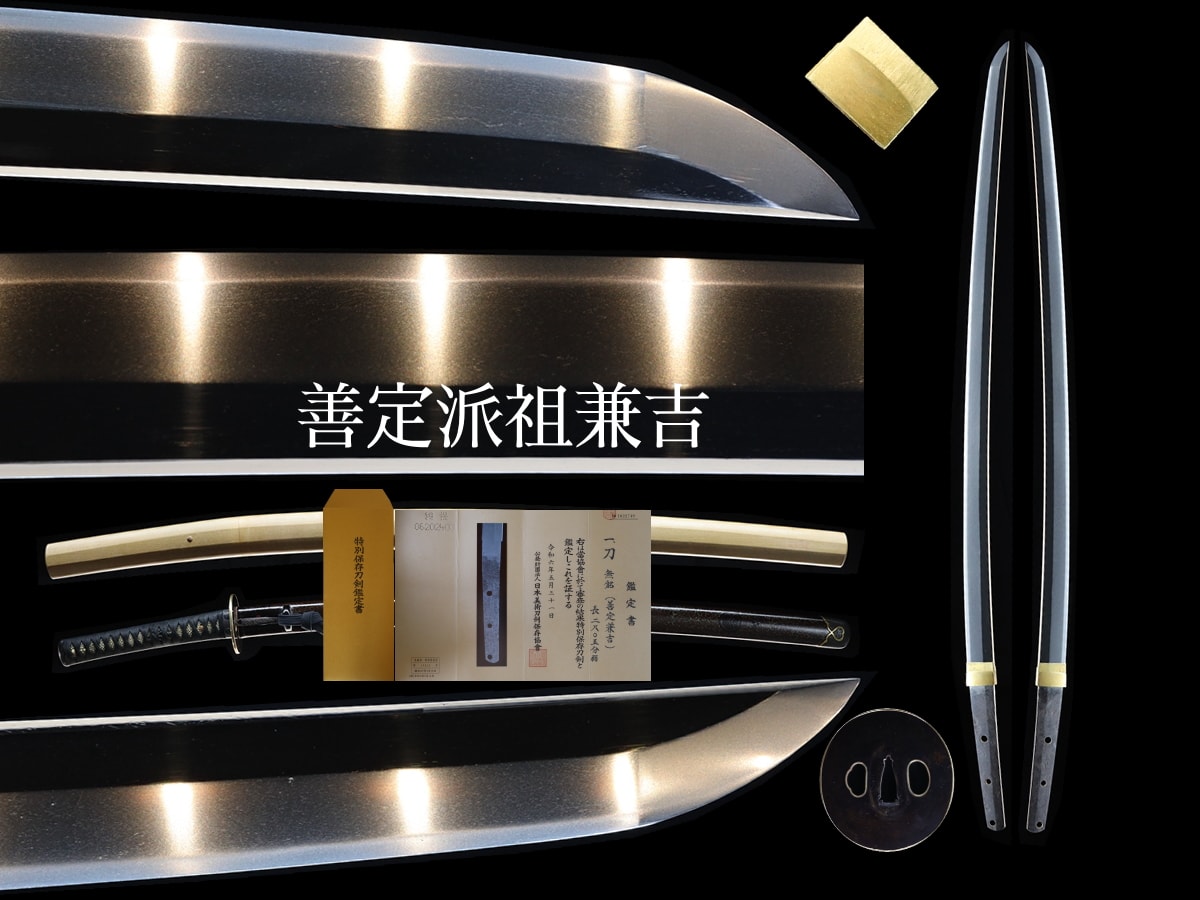
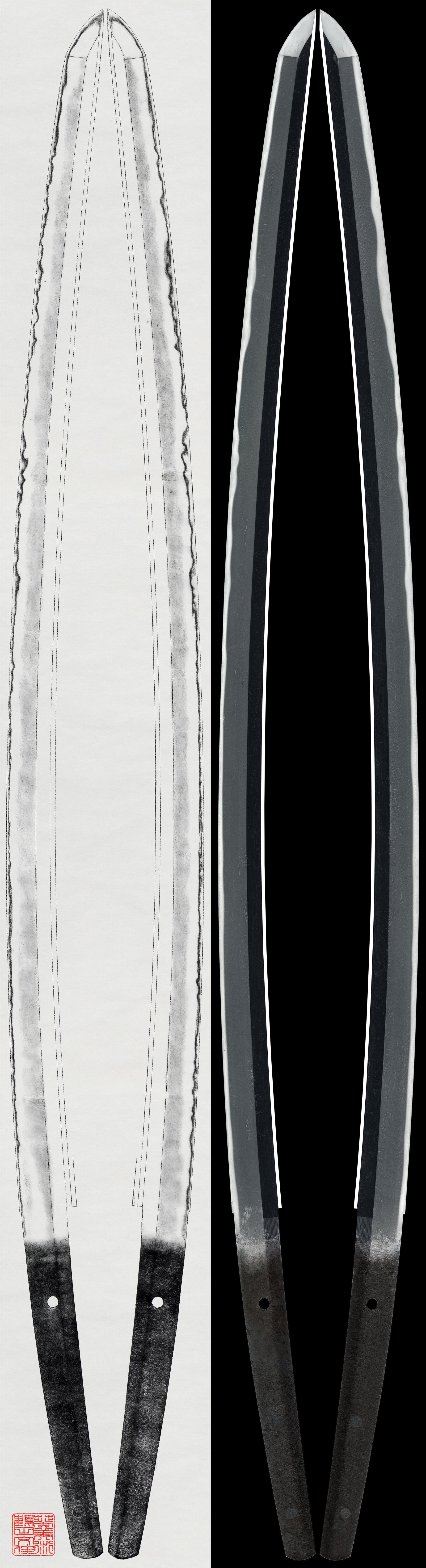
Kaneyuki (金行) is described as either the younger brother or the son of Kaneshige, who together with Kaneuji stands at the fountainhead of swordmaking. According to the Kokon Meizukushi, Kaneshige — whose Buddhist name was Doa — was a native of and a resident of Tsuruga, praised as an outstanding master who crossed into Seki and took up residence there. Kaneyuki inherited the style of his master's line and is said to have styled himself Uemon no Jo. As with Kaneshige, securely signed works by Kaneyuki are exceedingly rare, and no dated examples are known. The Kozan records two by Kaneshige dated Joji 2, which helps establish the active period of the group; Kaneyuki's own period of activity is inferred from this lineage and from the character of his surviving works, placing him in the late to period.
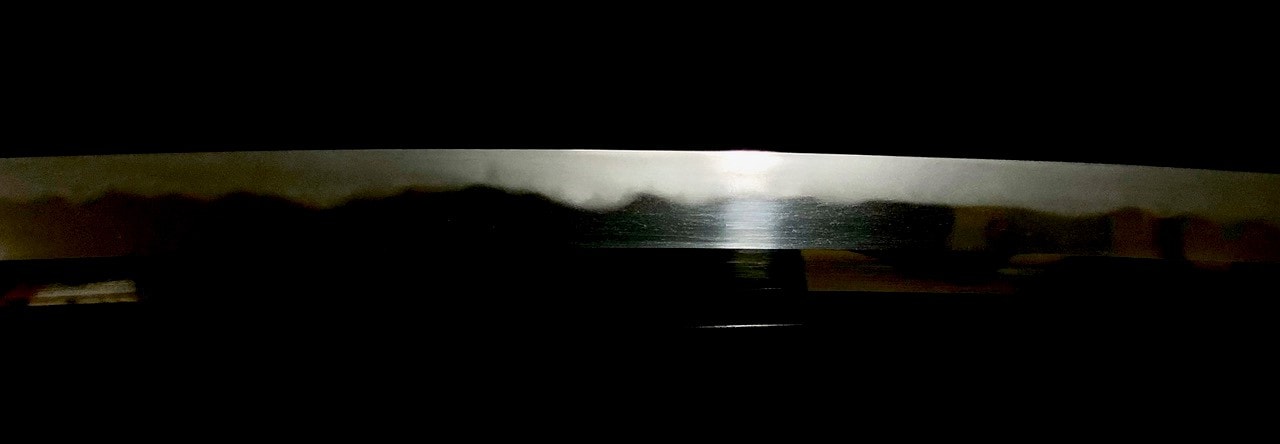
The workmanship of Kaneyuki shows a forging of mixed with , often tending toward with areas of and traces of near the edge or spine. Thick adheres, enters frequently, and a faint or -like effect stands out — features that reveal what the consistently describe as a Hokuriku-region temperament with a certain rustic flavor. The commonly emphasizes round-headed and running in linked sequences, mixed with and , presenting a comparatively calm tempering style. adheres, and and fine appear within the temper. In his more vigorous works, the is bright and clear, with and occasional adding complexity to the hardened edge. Compared with works of the line, the style of the Kaneshige group shows more standing grain in the , and this tendency toward combined with a -laden temper carrying constitutes the shared points of appreciation common to the group.
Within the broader landscape of early swordmaking, Kaneyuki occupies a distinctive position as a smith whose work, while connected to Kaneshige's manner, differs in character from the group's output. His blades characteristically display firm, substantial construction with ample , and the best examples are praised for forging that is especially well refined and rich in . Many of his attributed works survive as blades of imposing -period form — wide , shallow , and — reflecting the bold proportions of the era. The repeatedly note that pieces in sound, condition with no slackness in either or are held in particularly high regard. Though works with reliably authentic signatures remain extremely scarce, the accumulated body of traditional attributions, grounded in the distinctive Hokuriku-inflected forging and the characteristic linked temper, establishes Kaneyuki as a significant figure in the formative generation of -Seki swordsmithing.