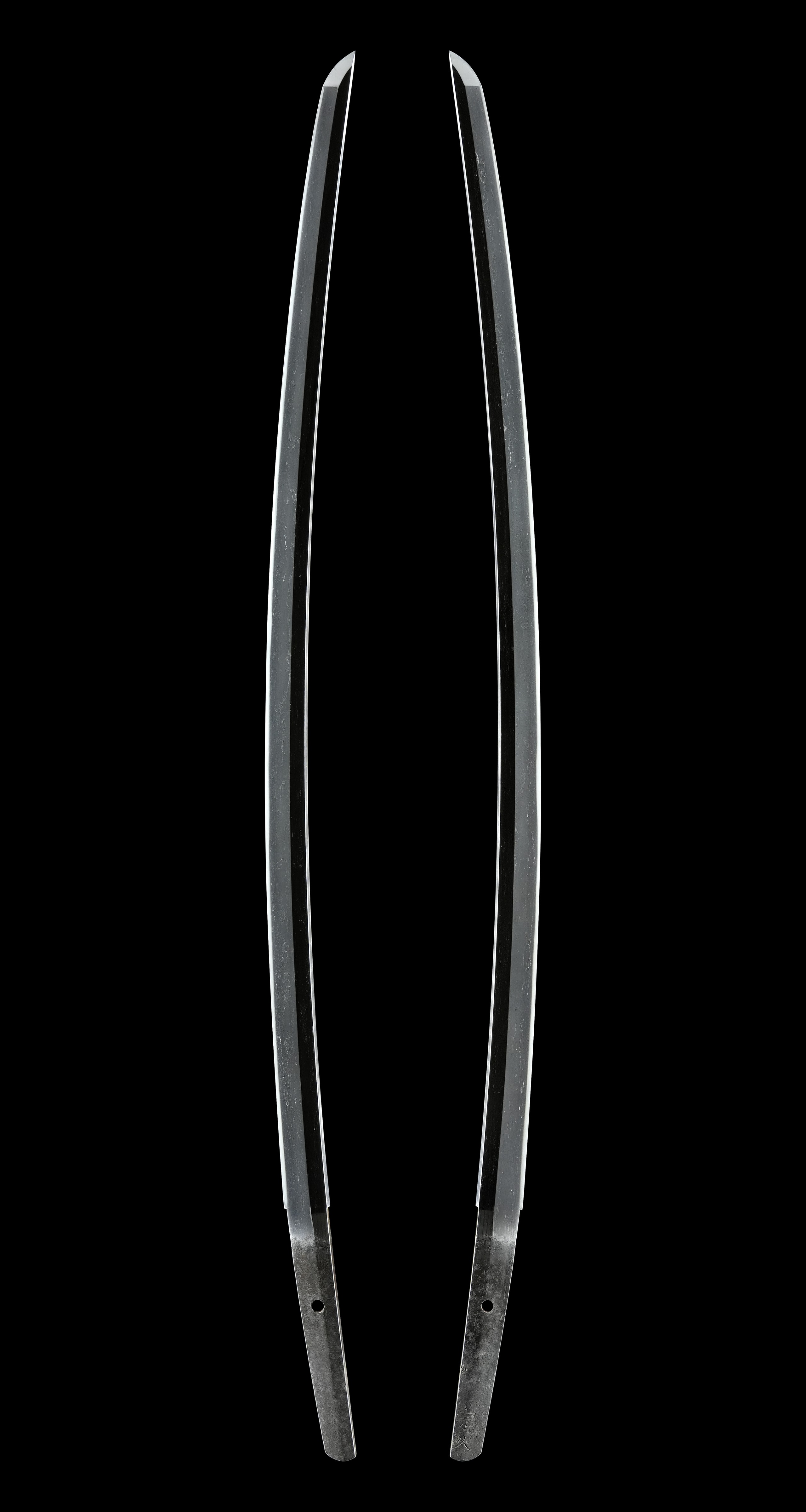
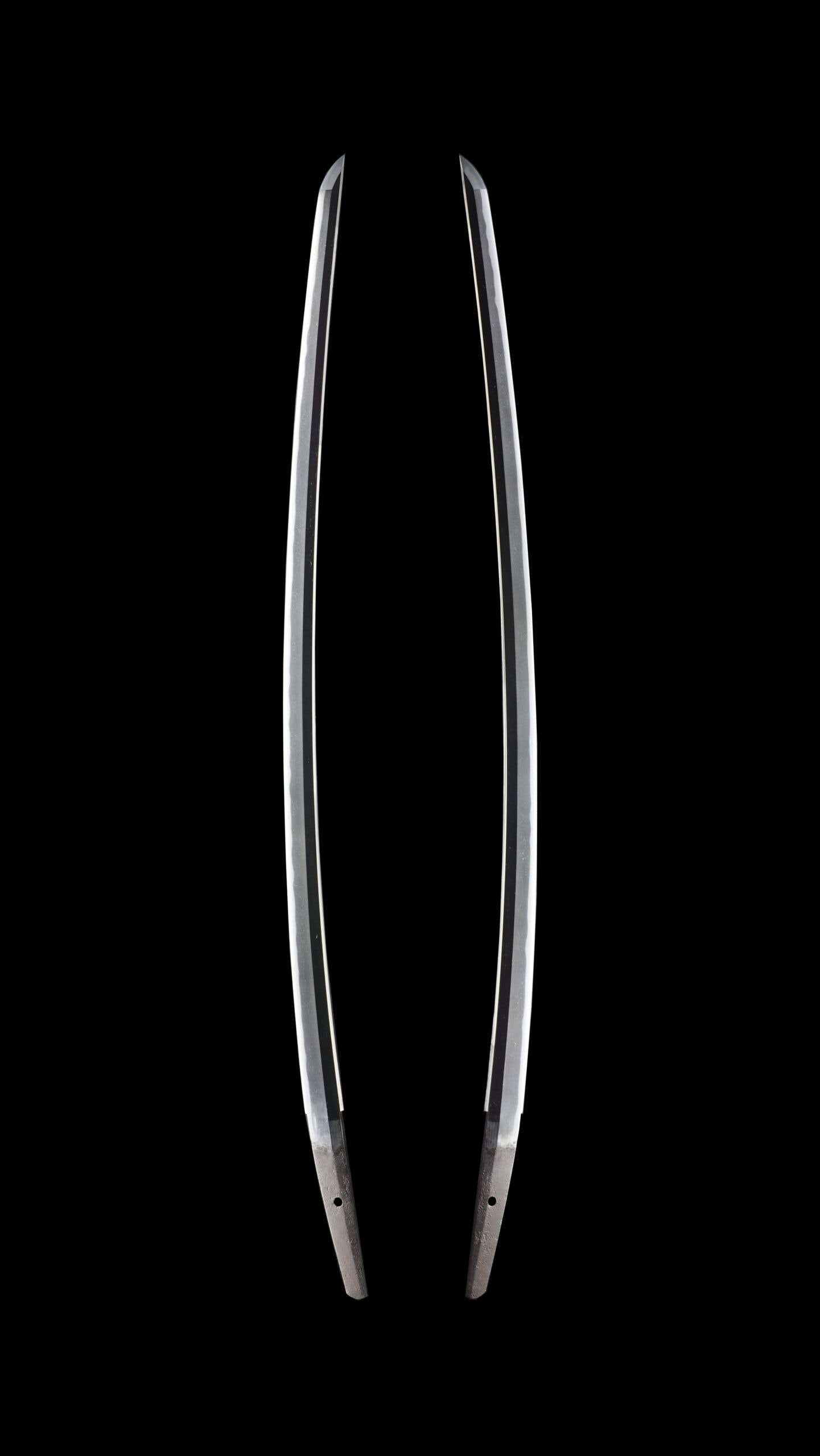
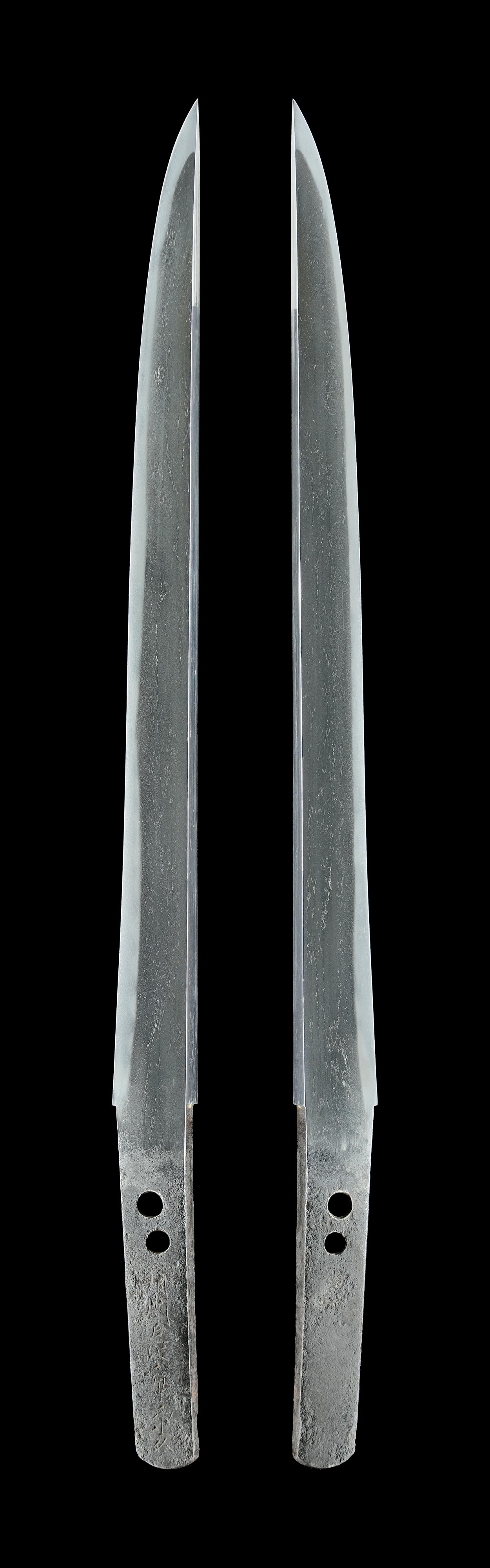
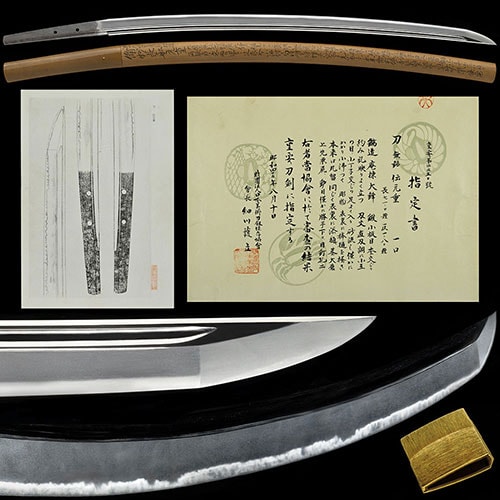
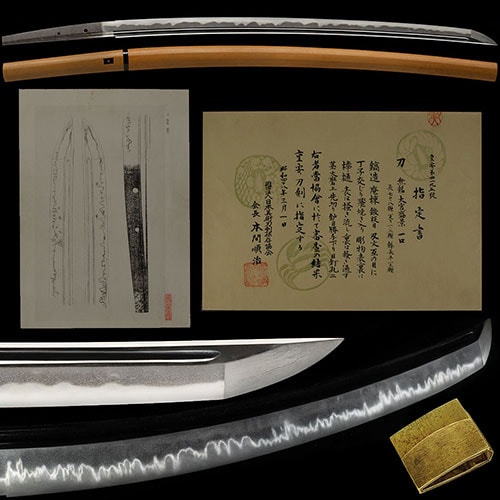
Hidemitsu is recorded in the as a lineage of smiths bearing the name across four generations, beginning with a first generation placed in the Kenmu era and continuing through the , Shitoku, and Ōei eras into the early period. However, as the consistently observes, strict generation-by-generation differentiation remains a matter that must await further research. Hidemitsu belongs to the Koreha branch of the school and is regarded as a representative smith of the group known as — makers of "small-curvature" blades active in the late period who stand apart from the Kanemitsu lineage and from Chōgi, Motoshige, and the group. Among the Koreha school smiths, Hidemitsu is recognized as one of the most accomplished. At least one generation held the official title Saemon no Jō, as attested by signed works bearing the full inscription Bishū Saemon no Jō Hidemitsu. Extant dated works span roughly from through Shitoku and into Meitoku, providing valuable reference material for the chronology of late production.
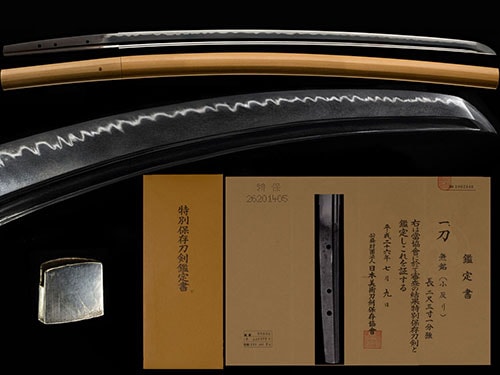
Hidemitsu's characteristically presents mixed with , forged tightly, with fine adhering and entering well. Various forms of appear — -, , and — standing out distinctly in the ground. The takes as a principal element, frequently mixed with angular forms, , , and , sometimes showing a reverse inclination described as — a manner closely resembling that of the neighboring school. The temperline overall tends toward , a slightly subdued quality that the identifies as a conspicuous characteristic shared across the category. The temper is predominantly -based with attaching, and fine and appear within. Hidemitsu also produced works in purely straight temper — with slight — which are regarded as documentary-valuable materials for understanding the working range of this school and this smith. Additionally, certain works show the Yoshii-mono tendency of aligning small in a uniform manner, further demonstrating the breadth of Hidemitsu's repertoire. The varies between with turnback, ending in a pointed tip, and forms showing , with turnbacks generally kept short.
Across the designated corpus, the consistently highlights the brightness and clarity of the in both and as the foremost attraction of Hidemitsu's work, describing it as healthy, bright, and vividly clear. Works in sound condition are praised as — well-preserved blades in which the forging is well-refined and delicate. The dated inscriptions that survive on numerous pieces are repeatedly characterized as excellent reference material and valuable source material for understanding late production. The open-based found in certain works is noted as already suggesting an anticipation of the stylistic approach of Ōei-period , positioning Hidemitsu at a transitional moment within the tradition. While the acknowledges that the workmanship of the group is generally considered not to reach the level of the Kanemitsu faction and similar lines, Hidemitsu's finest examples are singled out as outstanding among this smith's works — blades whose earnest, straightforward craftsmanship and luminous secure his standing as the leading figure of the tradition.